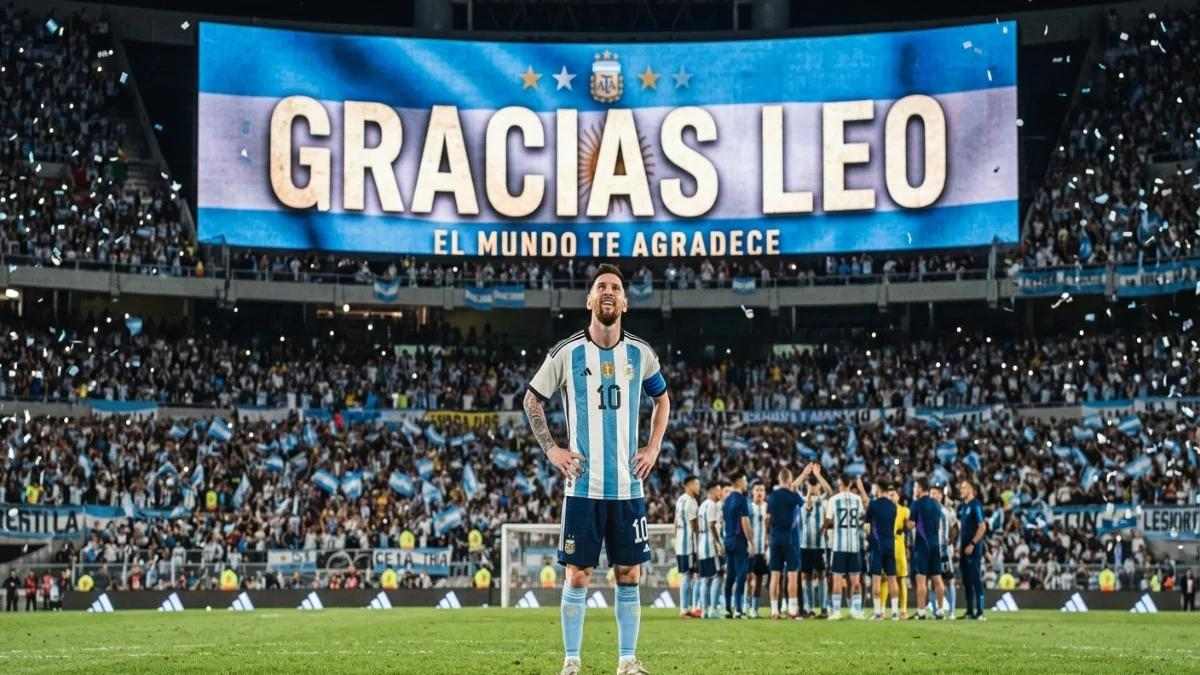
Argentina supporters turn Lionel Messi’s farewell into a giant thank-you as “Gracias Leo” dominates the Monumental.
Lionel Messi Argentina farewell was never going to be just another football goodbye.
For 21 years, Messi’s relationship with Argentina has been about far more than goals, trophies and records. It has been a story of enormous expectations, painful defeats, perseverance, redemption and, eventually, glory.
When Messi walked onto the Monumental pitch for his final Argentina appearance, he was not simply retiring from international football. He was closing one of the most remarkable chapters in the history of the Argentine national team.
The teenager who first appeared for Argentina in 2005 had become its captain, record goalscorer, most-capped player and World Cup-winning leader.
And on this final night, Argentina was not asking Messi to prove anything.
It was thanking him.
Gracias.
Reuters reported on Messi’s emotional final Argentina appearance as the veteran forward scored his 126th international goal and helped Argentina secure a 3–0 victory before a packed Monumental.
At the end, there was no trophy to chase and no unfinished national-team dream left to pursue. There was only a stadium full of people saying what the giant shirt had already said:
Gracias, Lionel.
A Farewell Written in Argentina’s Colours
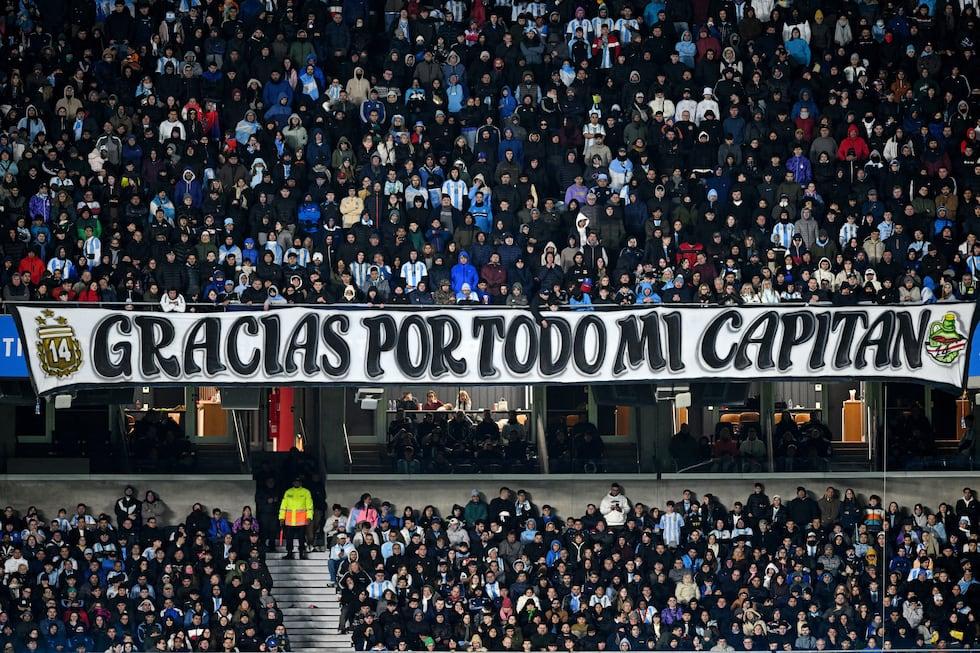
The night had been carefully shaped as a celebration of Messi’s extraordinary relationship with the Argentina shirt.
The Monumental became a stage for a farewell that felt closer to a national ceremony than an ordinary football fixture. Supporters filled the stadium, a giant Argentina jersey carrying the word “Gracias” appeared as the defining visual symbol, and Messi entered the field with his three children.
His wife, Antonela Roccuzzo, and his mother, Celia, watched from the VIP area.
The national anthem was followed by a special tribute in the 10th minute — an unmistakable reference to the number Messi had made iconic.
For a player who had spent more than 20 years carrying Argentina’s expectations, the symbolism was impossible to miss.
The Argentine Football Association also described the Monumental as packed for Messi’s farewell, with the 3–0 victory over Benin serving as the final appearance in Argentina for the national team’s captain. Read the AFA’s official match report.
Every element of the evening pointed toward the same reality: this was the final chapter.
Messi had already announced his retirement from international football. His farewell had therefore been anticipated, but anticipation could not remove the emotion of actually seeing the moment arrive.
The journey had finally reached its last night.
Messi Gave Argentina the Perfect Final Performance
Then Messi did what Messi had done so many times before.
He played.
Argentina eventually won 3–0 against Benin, but the most fitting part of the performance was that Messi remained central to the football.
He provided the assist for Nicolás Otamendi to open the scoring in the 48th minute before setting up Nico Paz for Argentina’s second goal in the 61st.
Then, in the 71st minute, Messi stepped up to take a penalty.
He scored.
It was his 126th international goal and his final goal for Argentina, taking his extraordinary scoring record even further.
His 208th appearance also confirmed his status as Argentina’s most-capped player.
So the farewell contained everything that had defined much of his international career: creativity, responsibility, goals and the ability to decide a match.
There was something fitting about that.
Argentina was not watching a diminished symbol simply being carried through a farewell ceremony. Messi was still able to influence the game.
Even on the night when the story was supposed to be about saying goodbye, he reminded everyone why he had occupied the centre of Argentina’s football story for so long.
The Emotion Came Before the Final Whistle
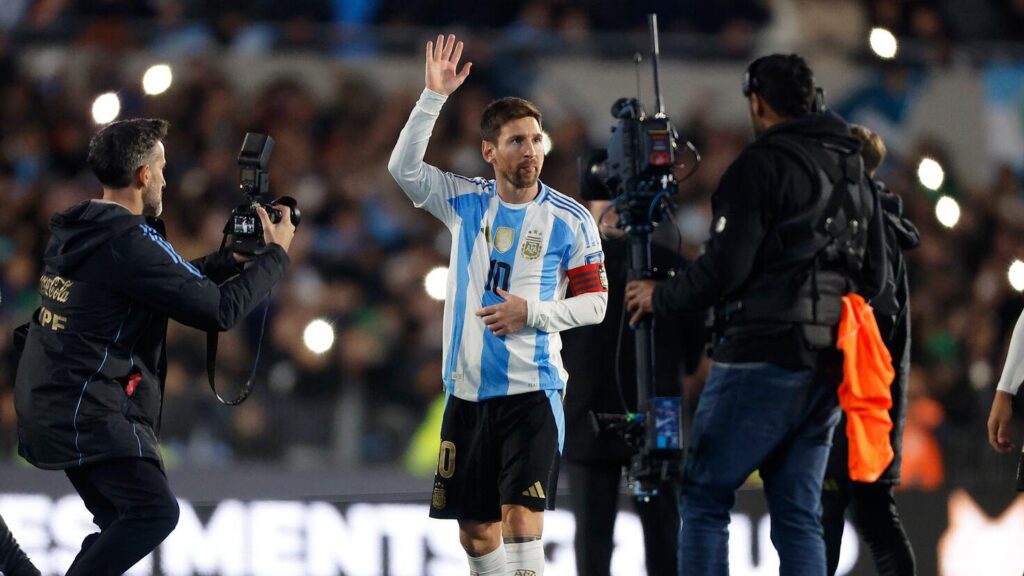
Yet the most powerful moments were not necessarily the goals.
Messi had been visibly emotional before the match, wiping away tears during his journey to the stadium.
Inside the Monumental, the emotion continued to build.
The crowd knew what it was witnessing.
Messi had worn the Argentina shirt for 21 years. He had experienced the enormous expectations that came with being regarded as the country’s greatest football talent. He had experienced criticism, disappointment and heartbreak before eventually reaching the summit.
Now there was nothing left to prove at international level.
The final speech became one of the evening’s defining moments.
Messi described himself as grateful, proud and at peace. He spoke about the meaning of representing Argentina and said that playing for the national team was the most beautiful thing.
There was also a deeply personal element.
The match was Messi’s first Argentina appearance since the death of his father, Jorge Messi. During his speech, Messi said his father was the first person who came to mind.
That detail gave the farewell another layer.
This was no longer simply about the retirement of a footballer.
It was about family, memory, identity and the end of a chapter that had shaped Messi’s adult life.
Twenty-One Years in the Albiceleste
Messi’s Argentina career began in 2005.
His first senior appearance came against Hungary, a match that became memorable for the wrong reason when the young Messi was sent off shortly after coming onto the field.
It was the beginning of a national-team journey that would contain almost every possible emotional extreme.
There were moments when Messi appeared destined to win everything with Argentina.
There were also periods when international success seemed to continually escape him.
The pressure was immense because Messi was not simply expected to perform. He was expected to carry the expectations of a football nation.
For years, comparisons with Argentina’s past and Diego Maradona’s legacy accompanied him.
The question was always the same:
Could Messi win the biggest trophies with Argentina?
The answer eventually became one of the greatest transformations in international football.
Messi went from a superstar still searching for a major senior international trophy to the leader of an Argentina team that conquered South America and the world.
His numbers tell part of that story.
He finished with 208 international appearances and 126 goals, records that underline both his longevity and extraordinary production for the national team.
But numbers alone cannot explain what changed.
From Heartbreak to Glory
Messi’s international story was once defined by near misses.
Argentina reached the 2014 World Cup final but lost to Germany.
There were other painful moments in major tournaments, and the disappointment eventually became part of the public conversation surrounding Messi’s national-team career.
Then came the transformation.
Argentina won the Copa America in 2021, giving Messi his first major senior international trophy with the national team.
Another Copa America title followed in 2024.
Then came Qatar.
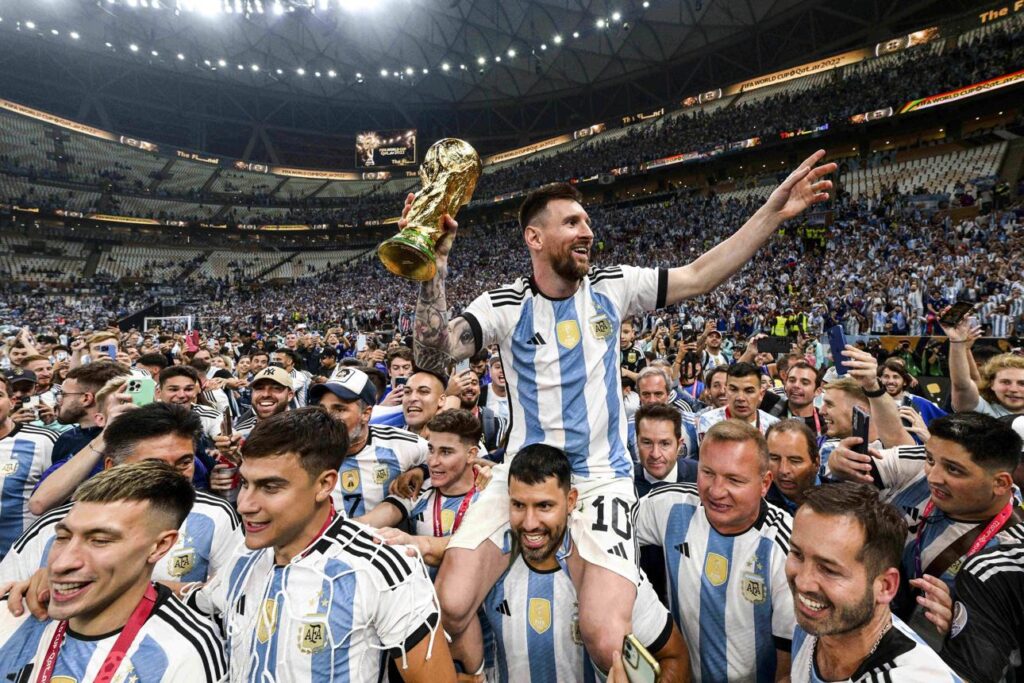
The 2022 World Cup became the defining achievement of Messi’s Argentina career.
Argentina eventually lifted the World Cup, ending the country’s 36-year wait for football’s biggest prize.
FIFA’s official retrospective of Messi’s Argentina career records how the 2021 Copa America triumph changed Messi’s relationship with Argentina before the team went on to win the 2022 World Cup.
The story of Argentina and international football has continued into the 2026 FIFA World Cup era, with global attention once again focused on the tournament and its competing national teams.
For Messi, however, the 2022 triumph completed the dream that had followed him throughout his career.
The player who had spent years being questioned about what he had achieved for Argentina was now a world champion with his country.
The criticism did not simply disappear because of one tournament. Rather, the achievement changed the historical context in which his entire Argentina career would be remembered.
The World Cup became the centrepiece of his national-team legacy.
The Player Argentina Once Questioned Became Its National Icon
That transformation is perhaps the most important part of Messi’s Argentina story.
At one point, the debate around Messi’s national-team career focused heavily on what he had not won.
By the time of his farewell, the conversation had fundamentally changed.
Argentina had a World Cup champion.
A two-time Copa America winner.
Its most-capped player.
Its record international goalscorer.
And a player whose relationship with the national team had moved beyond statistics.
The final years of Messi’s Argentina career were therefore not about answering whether he belonged among the country’s greats.
They were about acknowledging that he had already secured his place.
His story had changed from one of expectation to achievement, from frustration to fulfilment.
And perhaps most importantly, from individual brilliance to national identity.
A Final Night Filled With Symbols
The farewell ceremony reflected that transformation.
The giant “Gracias” shirt was perhaps the clearest symbol.
It was not a complicated message.
Argentina was simply thanking Messi.
The crowd’s tribute in the 10th minute reinforced the relationship between player and supporters. Fireworks and a drone show added spectacle to the evening, while Messi’s final speech provided the emotional centre.
There was also recognition beyond the football field.
Messi received an honorary doctorate from the University of Buenos Aires during the celebrations, another indication of the wider cultural significance attached to his career.
These moments mattered because Messi’s influence had expanded beyond the conventional boundaries of sport.
For an entire generation of Argentines and football supporters around the world, his No. 10 had become instantly recognizable.
His movements, goals and celebrations had become part of the visual language of modern football.
That connection between football and global popular culture is also evident in the way the 2026 World Cup has become a platform for African music and entertainment. DSG Herald News explored that crossover in its report on Burna Boy’s FIFA World Cup song and the global rise of Afrobeats.
But on this night, Argentina was not asking Messi to produce another miracle.
It was simply allowing itself to appreciate everything that had already happened.
What Messi Leaves Behind
Messi leaves Argentina with a legacy built on records and trophies, but also on endurance.
He played for the national team across more than two decades.
He remained at the centre of Argentina’s football identity through changing generations, managers, teammates and expectations.
His final numbers are extraordinary:
- 208 international appearances
- 126 international goals
- 1 World Cup
- 2 Copa America titles
- 21 years representing Argentina
Those figures provide the statistical outline of his career.
But Messi’s legacy is larger than the numbers.
He became the player through whom a generation experienced some of Argentina’s most important football moments.
He was there for the pain.
He was there for the disappointment.
He was there when the trophies finally arrived.
And he was there when Argentina finally lifted the World Cup again.
That is why the farewell carried such emotional weight.
Argentina was not simply losing its most productive international footballer.
It was losing the central character of an era.
The End of an Era, Not Just a Career
There is a temptation whenever a great athlete retires to reduce the moment to statistics.
How many matches?
How many goals?
How many trophies?
For Messi, those questions have straightforward answers.
But they do not fully explain what happened at the Monumental.
The emotional force of the night came from the passage of time.
Supporters had watched Messi grow from a teenage debutant into the captain and leader of a World Cup-winning Argentina team.
They had watched him experience defeat and criticism.
They had watched him contemplate international retirement.
They had watched him return.
And eventually, they watched him lift the trophy that had once seemed beyond his reach.
The farewell therefore represented something larger than retirement.
It marked the closing of a shared national experience.
For 21 years, Messi’s Argentina career had provided a continuing storyline — one that began with a gifted teenager and ended with a world champion leaving the stage with nothing left to prove.
Messi’s Argentina Farewell Was About Gratitude
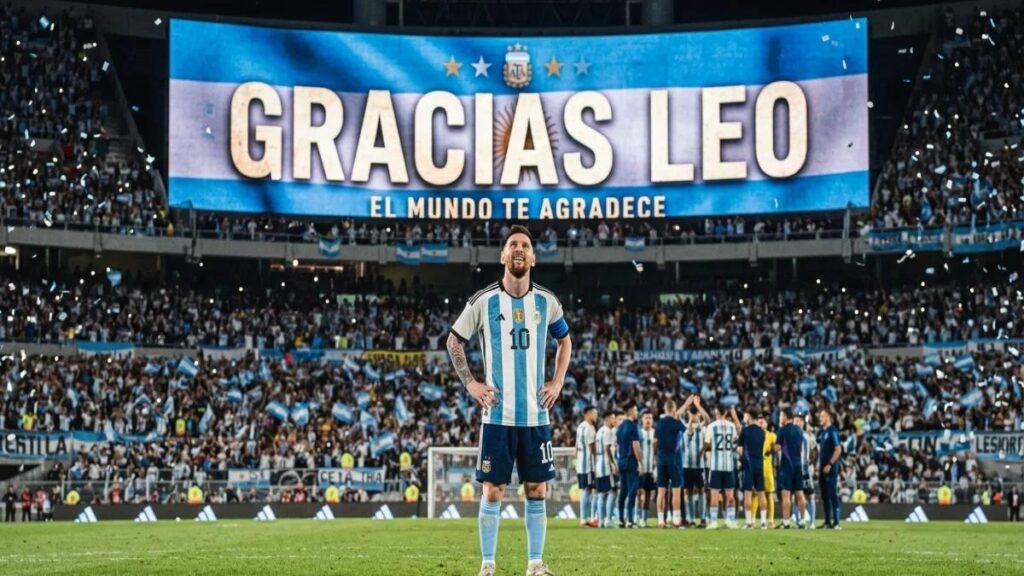
The most powerful word of the night was not “retirement.”
It was “Gracias.”
That distinction matters.
Retirement focuses on what is ending.
Gracias focuses on what has been given.
Argentina thanked Messi for the goals, the trophies and the records.
But the gratitude went deeper.
It was for the memories.
For the nights when Messi made impossible football appear ordinary.
For the disappointments endured along the way.
For the determination to keep returning after setbacks.
For the 2021 Copa America triumph.
For the 2022 World Cup.
For the celebrations that followed.
For giving millions of supporters a player they could identify with as part of their national story.
And for carrying the weight of the No. 10 shirt for more than two decades.
Messi himself appeared to understand the significance of the moment.
He said he had nothing left to do but thank the shirt, while describing playing for Argentina as the most beautiful thing.
It was a fitting conclusion.
There Was No More Trophy to Chase
Perhaps that is what made this farewell different from the disappointments of Messi’s earlier years.
When he walked onto the pitch for his final Argentina match, there was no major unanswered question.
The World Cup dream had been fulfilled.
Argentina had won the Copa America.
The records belonged to him.
The national-team appearances belonged to him.
The goals belonged to him.
The memories belonged to everyone.
His international story did not end because something was missing.
It ended because there was nothing left that Messi needed to prove.
His professional career continued elsewhere, with his Inter Miami contract extending through 2028, but his Argentina chapter had reached its conclusion.
That distinction gives the farewell its unusual sense of peace.
This was not an escape from failure.
It was a departure after fulfilment.
The Final “Gracias”
When the lights, fireworks and celebrations eventually gave way to the reality of the final whistle, the meaning of the evening became clear.
Messi had walked into the Monumental as Argentina’s No. 10 for the final time.
He left as something more enduring.
A record-holder.
A World Cup champion.
A two-time Copa America winner.
Argentina’s most-capped player.
Its record international goalscorer.
And, for millions of supporters, the player who had defined their football lives.
The giant shirt had carried one word:
Gracias.
It was enough.
Because after 21 years, 208 appearances and 126 goals, Argentina was not searching for another statistic to describe Lionel Messi.
It was saying goodbye.
The final chapter had been written in Buenos Aires, in front of more than 85,000 people, with Messi scoring one last goal and helping Argentina win one last match.
But the deeper story was never really about that final score.
It was about a journey that began with a young player in 2005 and ended with a world champion finally at peace with his national-team legacy.
Argentina had watched Messi chase the dream for more than 20 years.
On this night, there was no more trophy to chase.
Only one final word remained.
Gracias, Lionel.
About the Author