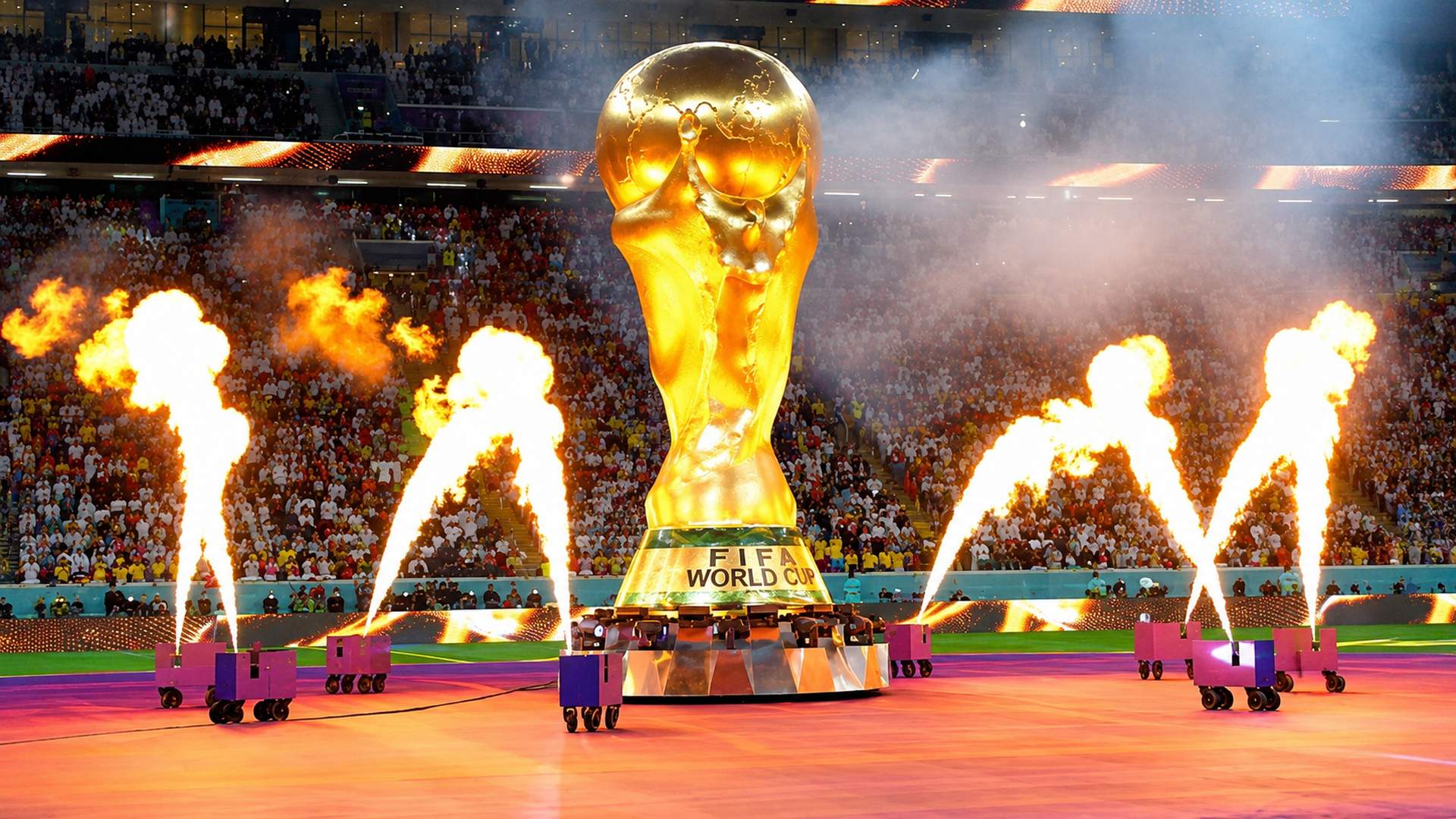
FIFA World Cup Halftime Show Changes Final Forever
TheFIFA World Cup Halftime Show made history on Sunday, July 19, as football’s governing body introduced a Super Bowl-style entertainment spectacle during the 2026 FIFA World Cup Final between Spain and Argentina at New York New Jersey Stadium in East Rutherford, New Jersey. Featuring an international lineup that included Madonna, Shakira, Burna Boy, BTS, Justin Bieber, conductor Gustavo Dudamel, Coldplay’s Chris Martin, the PS22 Chorus and appearances by the Muppets, the 11-minute production marked one of the most significant changes ever made to football’s biggest event. Rather than simply adding musical entertainment, FIFA signaled a broader ambition to reshape the commercial and cultural experience of the World Cup Final.
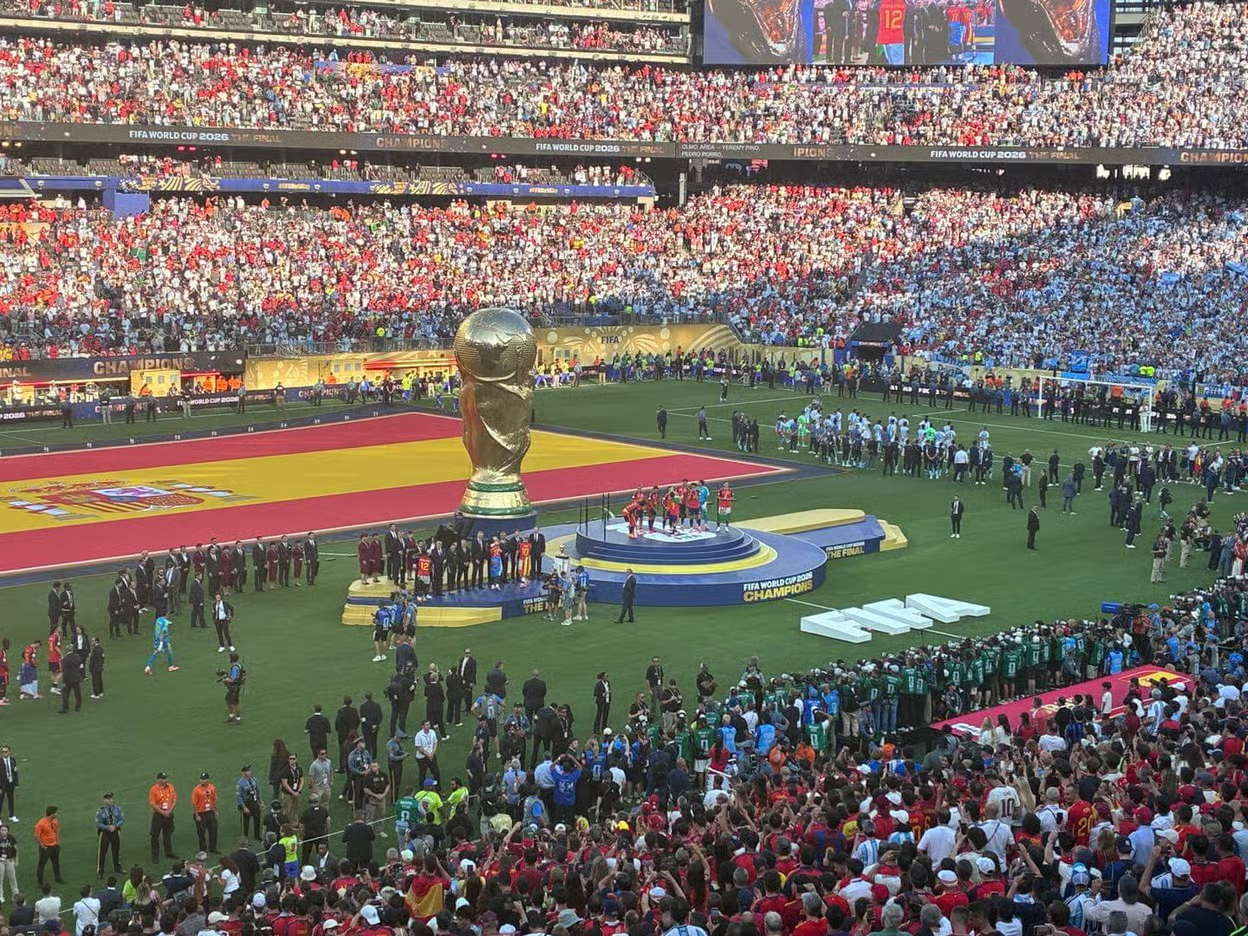
For decades, the FIFA World Cup Final has stood apart from other major sporting events. While opening and closing ceremonies have become standard features of international tournaments, the match itself has traditionally remained uninterrupted apart from the players’ halftime break. The introduction of a halftime show therefore represents more than a programming decision—it reflects a strategic shift in how FIFA sees the future of its flagship competition.
The move has generated excitement among millions of viewers while also provoking concern among football traditionalists who believe the sport’s greatest occasion should remain focused solely on the game. That debate may ultimately prove as significant as the performances themselves.
A Historic Departure From World Cup Tradition
Unlike the NFL’s Super Bowl, whose halftime show has evolved into one of the world’s biggest entertainment events, FIFA has historically treated the World Cup Final as a celebration of football first and entertainment second.
The 2026 tournament changed that formula.
Instead of allowing halftime to remain a relatively quiet period for tactical adjustments and fan discussion, FIFA transformed the interval into a carefully choreographed global production featuring internationally recognised musicians, orchestral performances, celebrity appearances and elaborate stage effects. The result was an event designed to appeal not only to football supporters but also to music fans, casual viewers and global television audiences.
The decision reflects a broader trend across international sports, where governing bodies increasingly seek to create experiences that extend beyond competition. Modern sporting events now compete for attention in an increasingly crowded entertainment landscape, where streaming platforms, concerts, gaming and social media all vie for audience engagement.
For FIFA, the halftime show represents another step in positioning the World Cup as not only the world’s most watched football tournament but also one of its largest entertainment properties.
More Than a Concert During Halftime
Although global stars dominated headlines, the halftime show was structured around a wider message of international unity rather than individual celebrity.
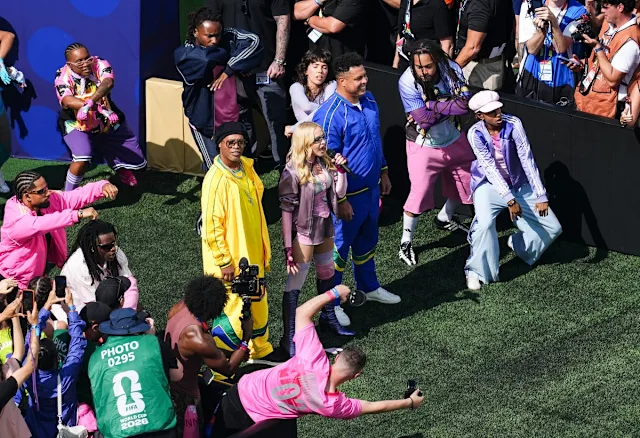
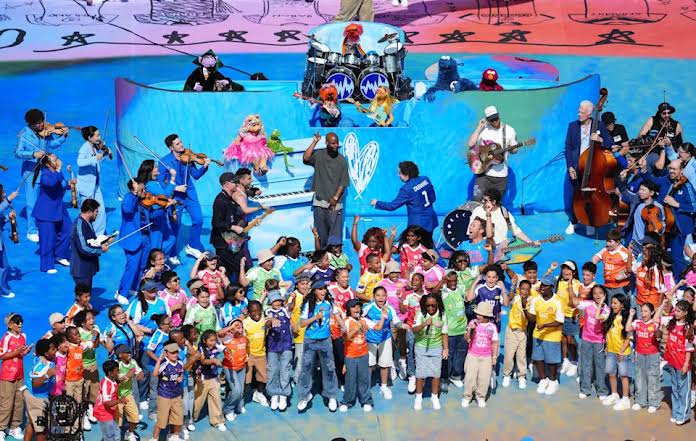
Madonna opened the programme with her hit song “Music,” arriving alongside Brazilian football legends Ronaldo and Ronaldinho before handing the spotlight to Venezuelan conductor Gustavo Dudamel. Dudamel then led musicians from the New York Philharmonic and Venezuela’s Simón Bolívar Symphony Orchestra in a symphonic interpretation of “Seven Nation Army,” blending classical performance with one of football’s most recognisable stadium anthems.
South Korean group BTS followed with a high-energy performance of “Dynamite,” while actor Jason Sudeikis briefly returned to his fictional football manager role from Ted Lasso to introduce Justin Bieber. Bieber chose a contrasting approach, performing an acoustic version of “Everything Hallelujah,” providing one of the few quieter moments in an otherwise fast-paced production.
The show reached one of its emotional peaks when Colombian superstar Shakira joined Nigerian Afrobeats icon Burna Boy to perform “Dai Dai,” the tournament’s official World Cup song. Their appearance, supported by Uganda’s Ghetto Kids, reflected FIFA’s emphasis on showcasing artists from multiple continents and reinforcing football’s claim as a truly global sport.
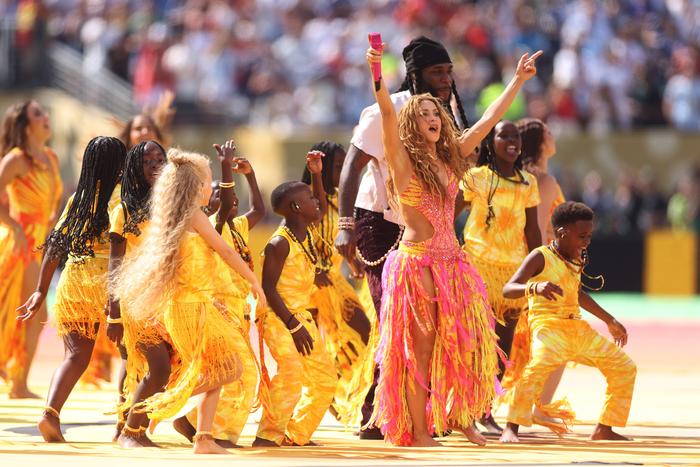
Rather than functioning as disconnected musical performances, each segment contributed to a broader narrative celebrating cultural diversity, international collaboration and worldwide participation.
Why FIFA Is Following the Super Bowl Model
Comparisons with the NFL’s Super Bowl were inevitable long before kickoff.
For years, the Super Bowl halftime show has demonstrated that live sport can attract enormous additional audiences through entertainment. Performances routinely dominate social media, generate billions of online impressions and become cultural moments independent of the game itself.
FIFA appears to recognise similar opportunities.
Unlike domestic leagues, the World Cup already commands a truly global television audience. Adding internationally recognised performers provides another reason for casual viewers to tune in while also expanding commercial opportunities for sponsors, broadcasters and event partners.
From a business perspective, the strategy makes sense.
Entertainment attracts advertisers.
Advertisers increase broadcast value.
Higher broadcast value strengthens sponsorship opportunities.
Sponsors, broadcasters and organisers all benefit when major sporting events remain conversation topics long after the final whistle.
The halftime show therefore represents not simply an artistic decision but part of FIFA’s broader commercial strategy as international sport becomes increasingly integrated with global entertainment industries.
Global Citizen’s Broader Mission
Beyond its entertainment value, the halftime show also carried a philanthropic objective.
The programme was curated by Coldplay frontman Chris Martin and produced in partnership with Global Citizen, the international advocacy organisation that has frequently combined music with fundraising campaigns addressing education, health and poverty.
According to information released before the event, the initiative supports the FIFA Global Citizen Education Fund, which aims to raise 100 million US dollars to improve educational opportunities worldwide. Tournament organisers also announced that one dollar from every World Cup ticket sold would contribute to the campaign.
This charitable component distinguished the event from purely commercial entertainment shows by linking the performances to a wider humanitarian objective.
For FIFA, integrating philanthropy into one of its most watched broadcasts also reinforces efforts to present football as a platform capable of delivering social impact alongside sporting excellence.
Football’s Purists Remain Divided
Despite the spectacular production, not everyone welcomed the change.
Many lifelong football supporters argue that the World Cup Final occupies a unique place in global sport precisely because it has historically resisted adopting the entertainment formula seen in American professional leagues.
For these fans, halftime serves an important sporting purpose. Players receive tactical instructions, coaches make adjustments and supporters reflect on the first half before the decisive stages of the match begin.
Introducing a major entertainment production inevitably changes that rhythm.
Some critics worry that expanding halftime entertainment risks shifting public attention away from the football itself, while others fear future tournaments could gradually place greater emphasis on celebrity culture than sporting achievement.
Supporters of FIFA’s decision, however, contend that football has always evolved. From technological innovations such as goal-line technology and VAR to increasingly elaborate opening ceremonies, the sport has repeatedly adapted to changing audience expectations without losing its essential character.
Whether the halftime show becomes a permanent World Cup tradition may ultimately depend on how successfully FIFA balances entertainment with respect for football’s long-established traditions.
Entertainment Is Becoming Sport’s New Growth Engine
The FIFA World Cup has long been more than a football tournament. It is a global media event that attracts billions of viewers, commands enormous sponsorship deals and provides host nations with an opportunity to showcase themselves before an international audience. The introduction of the FIFA World Cup Halftime Show reflects how elite sporting organisations increasingly view entertainment as an essential part of that global package rather than an optional extra.
Across the sports industry, organisers are searching for new ways to keep audiences engaged before, during and after live events. Younger viewers, in particular, consume sport differently from previous generations. They often experience major tournaments through short-form videos, livestreams, social media highlights and celebrity-driven content alongside traditional television broadcasts.
By combining football with internationally recognised musicians and performers, FIFA is attempting to reach audiences who may not ordinarily watch an entire World Cup match but will tune in for a major cultural event. This strategy broadens the tournament’s appeal without changing the game itself, although whether supporters accept that distinction remains an open question.
For broadcasters, the implications are significant. A halftime show creates additional premium advertising opportunities, increases audience retention during the interval and generates substantial online discussion that extends well beyond the final whistle. These factors can enhance the commercial value of future broadcasting rights and sponsorship agreements.
A Truly Global Cast Reflecting Football’s Worldwide Reach
One of the defining characteristics of the inaugural halftime show was its deliberate international composition. Rather than relying on performers from a single country or region, FIFA assembled artists representing different continents, musical traditions and generations.
Madonna brought decades of pop influence from the United States, while Colombian superstar Shakira reinforced her long-standing association with the World Cup after previously performing iconic tournament songs. Nigeria’s Burna Boy represented the continued global rise of Afrobeats, BTS highlighted the worldwide influence of K-pop, and Justin Bieber added another internationally recognised pop voice. Orchestral contributions from Gustavo Dudamel, together with musicians from the New York Philharmonic and Venezuela’s Simón Bolívar Symphony Orchestra, expanded the production beyond mainstream pop music.
This diversity was not accidental.
Football remains the world’s most internationally followed sport, and FIFA’s programming reflected an effort to mirror that global audience. Instead of presenting entertainment from one cultural perspective, the show emphasised collaboration across languages, musical styles and regions.
The inclusion of Uganda’s Ghetto Kids, the PS22 Chorus from Staten Island and appearances by beloved Muppets characters further reinforced a message of inclusiveness, family entertainment and international participation.
What the Halftime Show Means for Africa
For African audiences, Burna Boy’s prominent role carried significance beyond celebrity recognition.
Afrobeats has evolved into one of the fastest-growing music genres in the world, with African artists increasingly headlining international festivals, winning prestigious awards and collaborating with global superstars. Burna Boy’s appearance during the first FIFA World Cup Final halftime show demonstrated how African music has become central to mainstream global entertainment rather than existing on its margins.
The performance also highlighted Africa’s growing influence within football culture itself. African players continue to shape elite club football across Europe, while African music regularly features in international sporting events, promotional campaigns and commercial partnerships.
For Nigerian audiences especially, Burna Boy’s participation represented another milestone in the country’s expanding cultural influence. His performance alongside Shakira during the official World Cup song illustrated how Nigerian artists are increasingly positioned as equal partners in global productions rather than regional additions.
The inclusion of Uganda’s Ghetto Kids further reflected FIFA’s attempt to showcase talent from across the African continent, reinforcing football’s identity as a genuinely global game.
Tradition Versus Innovation
Perhaps the most fascinating aspect of FIFA’s decision is not the performance itself but the debate it has triggered.
Football has always balanced tradition with change. Every major innovation has faced resistance before gradually becoming accepted.
The introduction of substitute players, goal-line technology, the Video Assistant Referee (VAR), expanded World Cup formats and new broadcasting technologies all generated intense discussion when first introduced. Many eventually became normal parts of the modern game.
The halftime show now joins that list of transformative ideas.
Supporters argue that the entertainment does not alter the rules, affect competitive fairness or interfere with the outcome of the match. Instead, they see it as an opportunity to celebrate football’s cultural impact on a global stage while enhancing the viewing experience for billions of fans.
Critics take a different view.
For many traditional supporters, the World Cup Final derives much of its emotional power from its simplicity. The players leave the field, supporters analyse the first half and anticipation builds naturally before the decisive closing stages. Introducing an elaborate entertainment production changes that atmosphere and risks shifting public attention away from the sport itself.
Neither perspective can be dismissed easily.
The debate reflects broader questions about how modern sport should evolve in an era where entertainment, technology and commercial interests increasingly shape the fan experience.
Social Media Ensures the Conversation Continues
Long after the final whistle, discussions surrounding the halftime show continued across social media platforms.
Fans shared clips of performances, debated whether FIFA should repeat the concept in future tournaments and compared the production with the NFL’s famous Super Bowl halftime shows. Others focused on individual performances, while many questioned whether football should embrace American-style entertainment traditions.
This sustained online conversation may ultimately represent one of FIFA’s biggest successes.
Modern sporting events no longer end when the match concludes. Their impact continues through digital platforms where highlights, reactions, interviews and commentary generate millions of additional interactions.
The halftime show provided countless moments designed for this environment—from celebrity entrances and orchestral performances to fireworks and large-scale choreography. These moments naturally lend themselves to short-form video clips, trending hashtags and global discussion, extending the tournament’s visibility far beyond the stadium.
For FIFA and its commercial partners, that digital engagement represents an increasingly valuable asset in an era where online attention often translates into long-term brand value and commercial opportunity.
Will the FIFA World Cup Halftime Show Become Permanent?
Whether the FIFA World Cup Halftime Show becomes a permanent feature of future tournaments remains one of the biggest unanswered questions following its historic debut.
FIFA has not indicated whether the concept will automatically return at the next World Cup Final, but the scale of planning behind the production suggests that organisers view it as more than a one-time experiment. The event brought together internationally acclaimed performers, world-class orchestras, major entertainment producers and Global Citizen, reflecting months of preparation and significant financial investment. As reported by both The Hollywood Reporter and Billboard, the show was curated by Coldplay frontman Chris Martin and produced in partnership with Global Citizen, with the aim of creating a globally inclusive entertainment experience alongside football’s biggest match.
If audience engagement, television ratings and digital interaction meet FIFA’s expectations, there is every possibility that halftime entertainment could become another defining feature of future World Cup Finals. However, football’s governing body is also likely to consider feedback from players, coaches, supporters, broadcasters and commercial partners before making any long-term commitment.
Maintaining the delicate balance between spectacle and sporting integrity will be essential. Unlike the Super Bowl, where halftime entertainment has become deeply rooted in the event’s identity, the FIFA World Cup Final carries decades of football tradition that many supporters regard as untouchable.
Commercial Success Must Be Balanced With Football’s Identity
The commercial advantages of a halftime show are clear.
Global entertainment attracts additional sponsorship opportunities, increases advertising value and creates fresh revenue streams through partnerships, merchandising and digital content. In today’s competitive media environment, major sporting organisations increasingly compete not only against one another but also against streaming platforms, gaming companies and social media creators for audience attention.
Yet football’s enduring strength has always been its simplicity.
The World Cup Final remains one of the few sporting occasions capable of captivating billions of people regardless of language, nationality or culture. Any future expansion of entertainment programming will need to preserve that universal appeal without allowing celebrity performances to overshadow the competition itself.
FIFA therefore faces a strategic challenge: how to modernise the tournament while protecting the traditions that have made the World Cup the world’s most prestigious football competition.
The success of future halftime shows, if they continue, will depend less on attracting bigger celebrities and more on ensuring that entertainment complements rather than competes with the football.
A Defining Moment in Football’s Evolution
History often remembers the first attempt more than the most polished one.
Regardless of differing opinions about the performances, the 2026 FIFA World Cup Final will be remembered as the tournament that introduced halftime entertainment to football’s grandest stage. Much like the introduction of goal-line technology, VAR and expanded tournament formats, this innovation may eventually become accepted as part of the World Cup experience—or it may remain a unique experiment that FIFA chooses not to repeat.
Either outcome would make this event historically significant.
The performances by Madonna, Shakira, Burna Boy, BTS, Justin Bieber, Gustavo Dudamel and the wider cast will remain part of football history, not simply because of the artists involved but because they represented FIFA’s willingness to rethink one of the sport’s oldest traditions.
The debate now extends beyond music.
It raises broader questions about how football should evolve in the twenty-first century, how governing bodies should balance commercial growth with sporting heritage, and how global audiences increasingly expect major sporting occasions to deliver both elite competition and world-class entertainment.
For supporters, the conversation is likely to continue long after memories of the individual performances fade.
Conclusion
The debut of the FIFA World Cup Halftime Show represents more than an entertainment milestone; it marks a significant shift in how the world’s biggest football tournament is presented to a global audience.
By introducing a Super Bowl-style production during the World Cup Final, FIFA demonstrated its willingness to embrace new ideas to expand the tournament’s cultural reach and commercial potential. Featuring an international lineup that included Madonna, Shakira, Burna Boy, BTS, Justin Bieber, Gustavo Dudamel and other performers, the show celebrated football’s global character while simultaneously testing the boundaries of long-standing tradition.
Supporters praised the spectacle for reflecting football’s worldwide popularity and introducing fresh excitement to the tournament. Critics questioned whether such entertainment belongs at the centre of the game’s most important match.
Both perspectives highlight the unique position the World Cup occupies in international sport.
As football continues to evolve, the challenge for FIFA will not simply be producing bigger halftime shows but ensuring that every innovation strengthens rather than diminishes the tournament’s identity.
One thing, however, is already beyond dispute: the 2026 World Cup Final will be remembered not only for the football played on the pitch but also for the moment FIFA fundamentally reimagined what halftime at the world’s biggest sporting event could become.
Recommended Coverage
2026 World Cup Final: Messi, Spain and a Night for History
Go beyond the halftime spectacle and relive the dramatic World Cup Final that crowned a new champion while creating unforgettable football history. Discover the defining moments that made the 2026 final one of the tournament’s most memorable matches.
Spain World Cup Champions
Find out how Spain conquered the world to lift football’s biggest prize. Explore the team’s journey, tactical brilliance and the performances that secured another historic World Cup triumph.
2026 FIFA World Cup: Messi, Mbappé Rewrite History
See how Lionel Messi and Kylian Mbappé helped shape the story of the 2026 FIFA World Cup beyond the final. Read about the records, milestones and defining performances that captivated football fans worldwide.
About the Author