World Breaking News | Latest World News & Live Updates
Welcome to the Nigeria Breaking News desk of DSG HERALD NEWS. This page is updated throughout the day with the latest verified headlines and developing stories from across Nigeria. Our editorial team provides timely coverage of politics, governance, security, business, the economy, education, health, technology, sports, entertainment, and more. Check back regularly for real-time updates on the stories shaping Nigeria today.
Global security tensions are intensifying across several strategic regions. Governments are preparing for possible conflict, while major powers compete for influence, territory and critical resources. Taiwan is strengthening its ability to withstand a potential Chinese attack. The Arctic is emerging as a new centre of geopolitical rivalry. The United States is deepening its security partnership with Colombia. And artificial intelligence is opening a new frontier in biological science, bringing both medical possibilities and serious global safety concerns. These are the developments shaping international affairs today.
GLOBAL HEADLINE FLASHES
• Taiwan puts its military and civilian systems through realistic war preparations.
• Greenland becomes a growing battleground for American, Russian and Chinese influence.
• Washington pledges one billion dollars to strengthen Colombia’s security forces.
• Artificial intelligence successfully designs viruses capable of attacking E. coli.
WORLD BREAKING NEWS TODAY
Taiwan Expands War Preparations As China Threat Persists
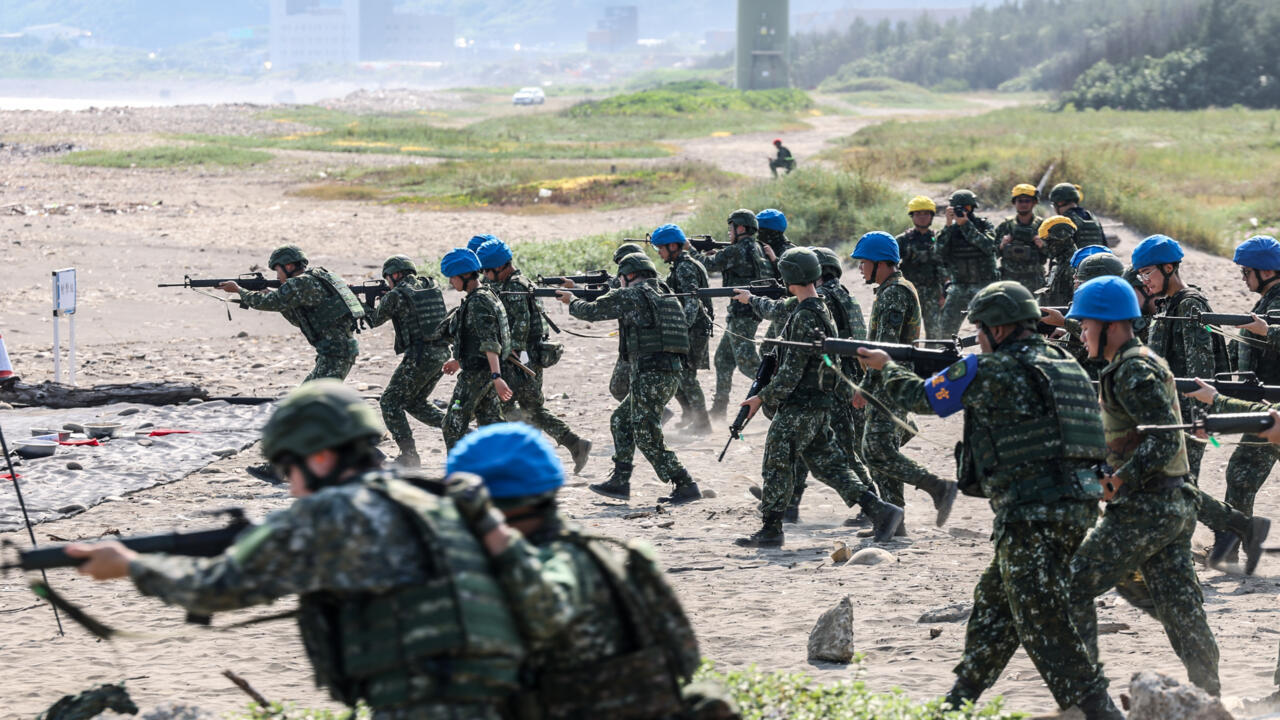
Taiwan is intensifying preparations for a possible conflict with China, with its largest annual military exercise testing not only troops but the wider society.
The ten-day Han Kuang exercise began this week and includes more than 20,000 reservists.
Taiwan is testing how its military would respond if Chinese forces launched a major attack.
The scenarios include communications disruption, attacks on critical infrastructure, rapid mobilisation and the relocation of important weapons.
For the first time, the exercises are deliberately slowing mobile internet services to simulate wartime communications problems.
Civilian factories are also being mobilised, while convoys are being trained to protect important supplies.
President Lai Ching-te has personally observed the exercises, including coastal defence operations in Kaohsiung.
The drills also involve Taiwan’s coast guard and civilian authorities.
Beijing claims Taiwan as Chinese territory and has repeatedly refused to rule out using force.
Taipei says the exercises are necessary to strengthen deterrence and protect the island.
Any conflict could have global consequences because Taiwan plays a central role in semiconductor production and sits near major Asian shipping routes.
Greenland Emerges As Major Arctic Power Battleground
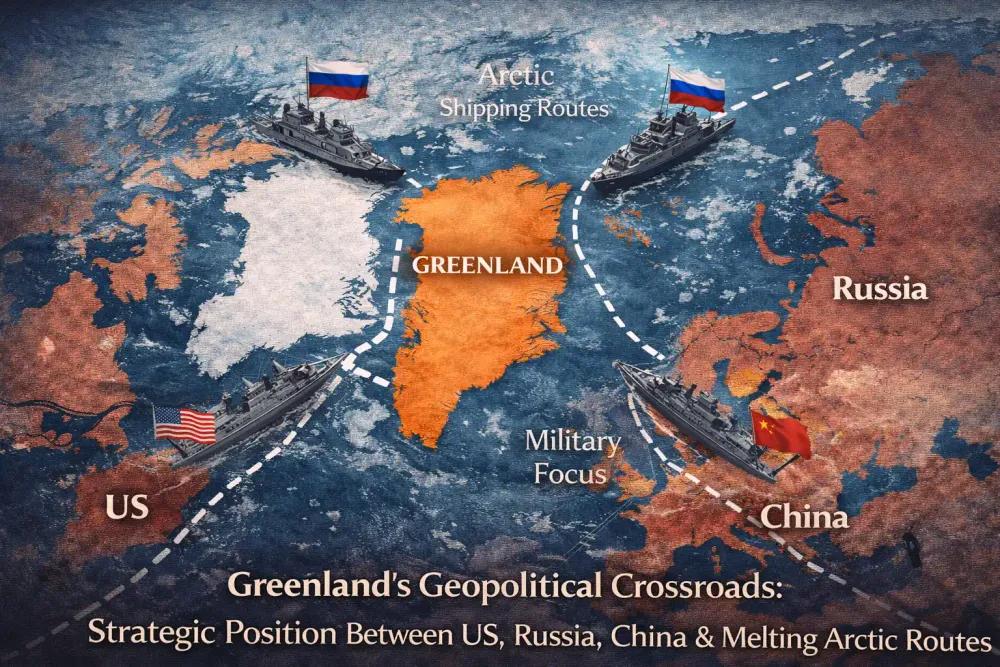
Turning now to the Arctic, Greenland is becoming a major centre of global strategic competition.
The United States, Russia and China are all expanding their focus on the region.
Greenland is an autonomous territory within the Kingdom of Denmark.
Its position between North America, Europe and the Arctic gives it major military and economic importance.
The United States already operates Pituffik Space Base in northern Greenland.
The facility supports missile warning, missile defence and space surveillance.
Russia maintains extensive military infrastructure across the Arctic, while China has sought greater economic and strategic access to the region.
Climate change is also reshaping the Arctic.
Declining sea ice is opening new possibilities for shipping, resource exploration and military activity.
Greenland’s mineral resources are another major attraction.
But Greenlanders insist that their own political choices must remain central to the debate.
A 2025 poll found that 85 percent opposed Greenland becoming part of the United States.
Only six percent supported joining America.
The issue therefore goes beyond American security interests.
It involves sovereignty, Arctic resources, NATO security and the future balance of power between the United States, Russia and China.
Greenland is increasingly becoming a test of whether great-power competition can coexist with the right of a small population to determine its own future.
US Plans One Billion Dollars In Security Aid For Colombia
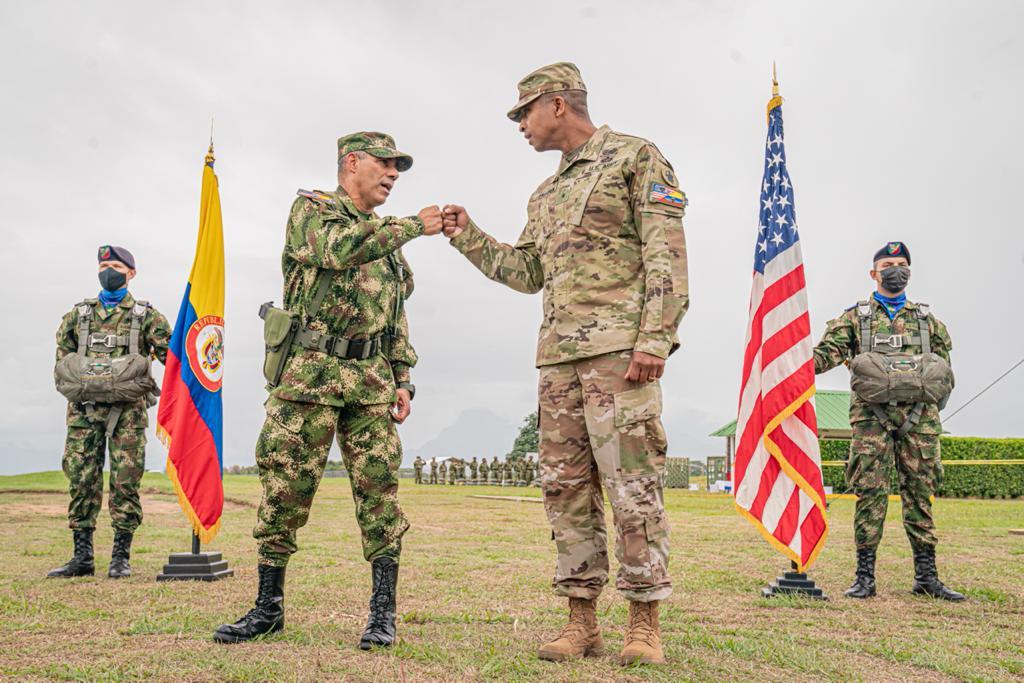
Meanwhile in the Americas, Washington is moving to strengthen its security partnership with Colombia.
The United States plans to provide one billion dollars in security assistance to the government of newly inaugurated President Abelardo De La Espriella.
The announcement came as De La Espriella took office on Friday in Colombia.
The new president has promised a tougher campaign against drug trafficking and armed groups.
Washington says the proposed assistance will strengthen Colombia’s security forces and improve cooperation between the two countries.
The package is expected to support law enforcement, counter-narcotics operations, military capabilities and defence coordination.
De La Espriella has presented security as a central part of his administration.
His government also wants to deepen cooperation with President Donald Trump’s administration.
The partnership has wider international significance because Colombia remains one of the world’s most important countries in the fight against cocaine trafficking.
The country is also a key security partner for Washington in Latin America.
The new assistance could therefore reshape regional efforts against organised crime and drug networks.
It also signals that the Trump administration is placing stronger security partnerships at the centre of its strategy across the Western Hemisphere.
The success of the plan will depend on how effectively Colombia converts American support into measurable security gains while maintaining institutional stability.
AI Researchers Create Viruses In Major Biology Breakthrough

Staying with international developments, artificial intelligence is pushing biological research into previously unexplored territory.
Researchers have used AI models called Evo 1 and Evo 2 to design complete genomes for bacteriophages.
Bacteriophages are viruses that attack bacteria rather than humans.
The researchers focused on viruses capable of targeting E. coli, including strains that can resist antibiotics.
The AI systems generated large numbers of possible viral genomes.
Scientists then selected 302 designs for laboratory testing.
Sixteen of those designs successfully produced functional bacteriophages capable of infecting E. coli.
Some combinations were also able to kill several strains of the bacteria.
The research could eventually contribute to new treatments against antibiotic-resistant infections.
That possibility is important because antimicrobial resistance is already recognised as a major global health threat.
But the breakthrough also raises difficult biosecurity questions.
AI systems are becoming increasingly capable of designing biological sequences instead of simply analysing existing ones.
That means researchers could potentially explore biological functions much faster than traditional laboratory methods allow.
The scientists in this study worked with bacteriophages rather than viruses that infect humans.
Even so, the research demonstrates how quickly artificial intelligence is expanding the capabilities of modern biology.
The global challenge now is to encourage useful scientific breakthroughs while preventing powerful biological design tools from being misused.
Title

Text
About the Author

DURU SUNNY-GEORGE
Administrator
Duru Sunny George is a Media Practitioner | Journalist | Cinematographer | Photographer | Lecturer - popularly known as DSG, is a versatile media entrepreneur and educator. He is the Founder & CEO of DSG STUDIOS, DSG HERALD NEWS, and DSG RADIO, leading platforms in journalism, photography, cinematography, and digital broadcasting.