Nearly ₦1 Trillion in New Spending Rekindles Debate Over Nigeria’s Fiscal Priorities
Nigeria’s 2026 budget has ignited a fresh national conversation about how Africa’s largest economy should spend borrowed money. At the centre of the debate is a proposed allocation of ₦962.83 billion for Sport Utility Vehicles (SUVs) and thousands of empowerment projects, even as government borrowing continues to rise sharply. While the Federal Government maintains that empowerment programmes can improve livelihoods, civic organisations, economists and political figures argue that the controversy extends far beyond the size of the allocation. They say it raises fundamental questions about transparency, accountability and whether Nigeria’s spending priorities are aligned with long-term economic development.
The controversy comes at a particularly sensitive period for the Nigerian economy. Inflationary pressures, exchange rate volatility, rising debt obligations and persistent infrastructure deficits have forced policymakers to make difficult choices over where limited public resources should be directed. Every major budget decision now attracts closer scrutiny because it affects not only current public services but also the country’s future fiscal health.
For many observers, the issue is not simply whether empowerment programmes deserve funding. Rather, it is whether a nation financing a substantial portion of its budget through borrowing should prioritise short-term interventions over investments capable of generating sustained economic growth.
That broader question transforms what might have appeared to be an ordinary budget announcement into one of the country’s most significant governance debates of the year.
Why Nigeria Budget Spending Is Under Fresh Scrutiny
The immediate trigger for the debate was an analysis of the 2026 Appropriation Act by civic technology organisation Tracka, which examined how public funds have been allocated across government institutions.
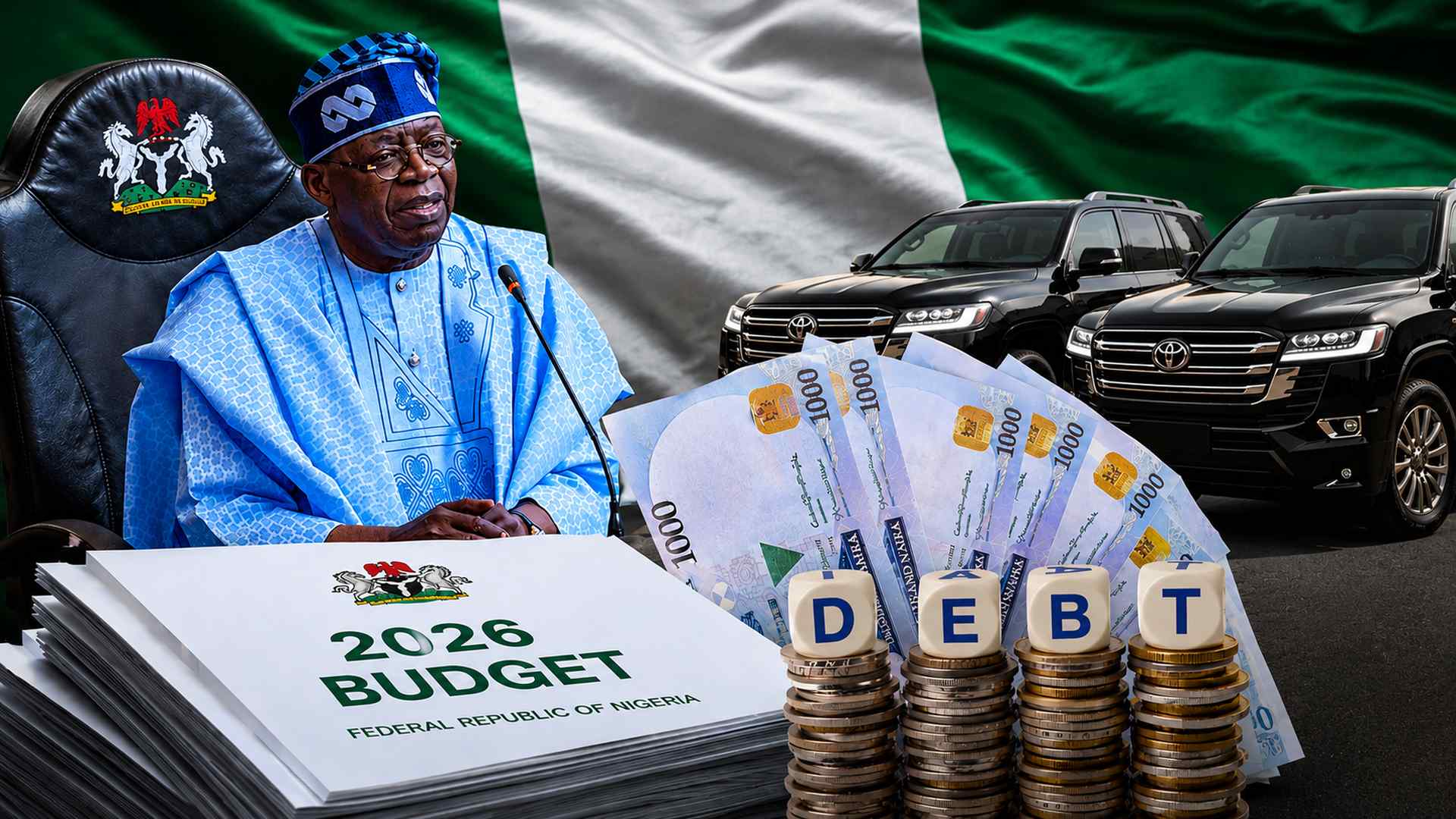
According to the organisation’s review, approximately ₦15.13 billion has been earmarked for the procurement of 39 Sport Utility Vehicles, while another ₦947.70 billion has been allocated to 2,579 empowerment projects, bringing the combined total to ₦962.83 billion.
Perhaps even more striking than the amount itself is the comparison with other sectors of government.
Tracka noted that the combined allocation for SUVs and empowerment projects exceeds the total budgets of seven federal ministries responsible for sectors widely regarded as critical to national development. These include the ministries overseeing:
- Industry, Trade and Investment
- Housing and Urban Development
- Women Affairs
- Justice
- Livestock Development
- Aviation and Aerospace Development
- Petroleum Resources
Together, these ministries reportedly received a combined allocation slightly below the amount proposed for the SUV and empowerment package.
The figures have naturally prompted questions about how government determines spending priorities during periods of constrained public finances.
Budgeting, after all, is fundamentally about making choices.
Every naira allocated to one programme represents a naira unavailable for another.
That reality makes national budgets not merely financial documents but policy statements that reveal what governments consider most important.
Beyond the Numbers: Why Transparency Matters
The size of the allocation alone is not the only source of public concern.
Tracka’s analysis drew attention to what it described as significant transparency gaps surrounding many of the proposed empowerment projects.
According to the organisation, only 70 of the 2,579 projects clearly identify where implementation will take place. Without clearly stated project locations, the organisation argues that citizens may struggle to determine whether projects were ever executed or whether intended beneficiaries ultimately received support.
That observation introduces an issue that extends beyond politics and directly into public administration.
Effective budgeting depends not only on allocating funds but also on ensuring those allocations can be monitored, evaluated and independently verified.
When projects specify:
- implementation locations,
- responsible agencies,
- intended beneficiaries,
- measurable outcomes,
citizens, oversight institutions and auditors have objective standards against which performance can be assessed.
Where those details are absent, accountability inevitably becomes more difficult.
Tracka therefore questioned how taxpayers could effectively monitor projects whose implementation locations remain unspecified and how oversight bodies could verify whether public funds ultimately achieved their intended objectives.
These concerns resonate because public confidence in government spending depends not only on how much money is allocated but also on whether citizens can clearly see where that money goes and what results it produces.
The Bigger Issue Is Not Empowerment Itself
One of the most important distinctions emerging from this debate is often overlooked in public discussion.
Neither Tracka nor several of the economists cited in the public debate argue that empowerment programmes are inherently undesirable.
In fact, the organisation explicitly acknowledged that well-designed empowerment initiatives can improve livelihoods, expand economic opportunities and support vulnerable Nigerians when implemented transparently and effectively.
That distinction matters.
Around the world, governments routinely invest in programmes intended to:
- reduce poverty,
- encourage entrepreneurship,
- support farmers,
- assist young people,
- expand vocational training,
- stimulate small businesses.
When carefully targeted and professionally administered, such programmes can contribute meaningfully to economic inclusion.
The central issue raised in Nigeria’s latest budget debate is therefore not whether empowerment should exist, but how empowerment should be designed, monitored and evaluated.
Critics argue that without clearly defined implementation mechanisms, transparent beneficiary selection processes and measurable performance indicators, even well-intentioned programmes may struggle to deliver lasting economic value.
That concern becomes even more significant when public expenditure is increasingly financed through debt rather than revenue growth.
Why Borrowing Has Become the Centre of the Debate
Every government borrows.
From the United States and Japan to emerging economies across Africa, borrowing is a common tool for financing development, responding to emergencies and funding major infrastructure projects. Borrowing, by itself, is neither unusual nor necessarily irresponsible.
The real question is what the borrowed money is used for.
Economists generally distinguish between borrowing that creates future economic value and borrowing that primarily finances short-term consumption. Investments in transport networks, electricity generation, healthcare, education, technology and industrial expansion can increase productivity, create jobs and expand future government revenues. By contrast, spending that delivers limited long-term economic returns may place greater pressure on future budgets because the debt still has to be repaid, often with interest.
This distinction explains why Nigeria’s 2026 budget has attracted such close attention.
According to figures cited in the source material, the Federal Government has increased its planned borrowing for 2026 to ₦29.20 trillion, following an expansion of the proposed national budget. Total expenditure is estimated at ₦68.32 trillion, while projected revenues stand at ₦36.87 trillion, leaving a fiscal deficit of approximately ₦31.46 trillion.
These figures illustrate the scale of the financing challenge confronting policymakers. As borrowing becomes a larger component of public finance, scrutiny over how those borrowed funds are allocated naturally intensifies.
For many analysts, the debate is therefore less about whether government should borrow and more about ensuring that every borrowed naira generates measurable public value.
Debt Sustainability: A Warning from Economists
Several economists quoted in the debate argue that Nigeria must carefully protect the macroeconomic stability achieved in recent months.
Among them is Dr. Muda Yusuf, Chief Executive Officer of the Centre for the Promotion of Private Enterprise (CPPE), who warned that persistent deficits and rising debt levels could gradually narrow the country’s fiscal space.
According to Yusuf, excessive borrowing carries the risk of creating a cycle in which governments increasingly borrow simply to service existing obligations rather than finance productive investments. He cautioned that such a trend could eventually place renewed pressure on inflation, exchange rates and overall economic stability if not carefully managed.
His remarks reflect a broader economic principle.
When governments devote growing portions of annual budgets to debt servicing, fewer resources remain available for:
- Education
- Healthcare
- Infrastructure
- Agriculture
- Scientific research
- Social services
Over time, this can reduce the state’s capacity to invest in the very sectors capable of expanding future economic growth.
Yusuf therefore urged government to build on improvements in revenue generation by moderating deficits rather than allowing debt exposure to continue rising. His position suggests that stronger revenues should create opportunities to reduce borrowing, not increase dependence on it.
Transparency Is More Than a Governance Principle
The debate has also highlighted an issue that extends beyond economics.
Transparency.
Citizens generally accept that governments must make difficult budget decisions. What often determines public confidence is whether those decisions can be independently examined and verified.
Tracka argued that many of the empowerment projects contained in the budget lacked clearly stated implementation locations and questioned whether oversight institutions would be able to effectively monitor project delivery. It also observed that some projects had been assigned to agencies whose statutory mandates do not ordinarily centre on empowerment programmes.
These observations do not, by themselves, establish wrongdoing. Rather, they underscore the importance of designing budgets in ways that make implementation easier to monitor.
International public finance standards increasingly encourage governments to provide sufficient information for citizens to answer straightforward questions:
- What project is being funded?
- Where will it be implemented?
- Which agency is responsible?
- Who are the intended beneficiaries?
- How will success be measured?
Providing such information strengthens accountability, improves oversight and can help build public trust in government spending.
Could Empowerment Programmes Deliver Better Results?
One of the more nuanced contributions to the discussion came from Professor Sheriffdeen Tella of Olabisi Onabanjo University.
Rather than rejecting empowerment initiatives outright, Tella argued that their effectiveness depends largely on how they are structured.
He cautioned that if significant portions of empowerment funding are used to purchase imported vehicles, equipment or other goods, much of the economic benefit could leave Nigeria instead of stimulating domestic production. In his view, directing public spending toward locally manufactured goods would help create jobs, retain value within the national economy and support local industries.
This perspective aligns with a broader development strategy adopted by many countries.
Public procurement is often used not only to purchase goods and services but also to strengthen domestic industries, encourage manufacturing and expand employment.
When governments deliberately source locally produced materials, the economic impact frequently extends beyond the immediate project itself, supporting suppliers, manufacturers, transport companies and workers throughout the value chain.
Seen from that perspective, the debate is not simply about how much government spends on empowerment but about whether those expenditures generate lasting economic multipliers.
The Question of Fiscal Priorities
Another economist, Adewale Abimbola, approached the issue from a different angle.
He argued that the proposed spending pattern could send unintended signals about the government’s fiscal priorities, particularly at a time when borrowing remains high. While acknowledging that empowerment programmes have a legitimate place in public policy, he suggested that infrastructure and human capital investments generally offer stronger foundations for sustainable long-term development.
That observation reflects one of the oldest debates in economic policy.
Should governments focus on immediate social interventions that provide short-term relief, or should they concentrate on long-term investments whose benefits may take years to materialise?
In reality, successful economies often pursue both objectives. The challenge lies in maintaining the right balance while ensuring that limited public resources produce measurable results and remain consistent with broader fiscal realities.
For Nigeria, where development needs remain extensive across transportation, electricity, education, healthcare and industrialisation, determining that balance has become an increasingly important policy question.
Historical Lessons: What Other Countries Can Teach Nigeria
Nigeria is not the first country to face difficult questions about borrowing, public spending and fiscal priorities. Around the world, governments have repeatedly confronted the challenge of balancing immediate social needs with long-term economic investments.
Countries such as South Korea, Singapore and Rwanda have often been cited in development studies for directing significant public resources toward infrastructure, education, technology and industrial capacity during critical phases of economic transformation. Those investments were not without challenges, but they were generally linked to measurable development goals, institutional reforms and systems for evaluating outcomes.
Nigeria’s circumstances are different, and direct comparisons have limitations. However, one principle appears consistently across successful public finance systems: the effectiveness of spending often matters more than the amount spent.
Whether governments allocate billions or trillions, citizens ultimately judge public expenditure by visible improvements in their daily lives:
- Better roads
- Reliable electricity
- Functional hospitals
- Quality education
- Employment opportunities
- A stronger business environment
For this reason, debates about national budgets rarely end with the announcement of spending figures. They continue until citizens begin to see tangible results.
Why Public Trust Matters as Much as Public Spending
Budgets are more than accounting documents.
They represent a social contract between government and citizens.
Taxpayers expect that public funds—whether generated through taxation, oil revenues or borrowing—will be managed transparently, efficiently and in the public interest.
That expectation becomes even stronger during periods of economic hardship.
When inflation remains high, businesses face financing challenges and households struggle with rising living costs, every major spending decision attracts closer public attention. Citizens naturally ask whether scarce resources are being directed toward programmes capable of improving national productivity and raising living standards.
The debate surrounding the proposed allocation of nearly ₦1 trillion demonstrates that Nigerians are increasingly interested not only in how much government spends, but also how effectively that spending is managed.
Greater transparency—through clearly identified projects, defined implementation locations, measurable outcomes and effective oversight—can strengthen confidence regardless of the size of the budget.
The Role of the National Assembly and Oversight Institutions
Another issue emerging from the discussion is the importance of legislative oversight.
Nigeria’s budgeting process does not end when appropriations are approved. The implementation stage is equally significant.
Institutions responsible for oversight—including the National Assembly, anti-corruption agencies, auditors and civil society organisations—play an essential role in ensuring that approved projects are executed as intended and that public funds are spent in accordance with the law.
Public participation also matters.
Digital accountability initiatives, budget-monitoring platforms and investigative journalism have increasingly enabled citizens to follow government expenditure more closely than in previous decades. Organisations such as Tracka have contributed to this growing culture of civic oversight by analysing public budget documents and encouraging greater transparency in project implementation.
As public access to budget information expands, expectations for openness and measurable results are likely to grow as well.
Looking Beyond the Headlines
The public discussion surrounding the 2026 budget should not be reduced to a simple argument over SUVs or empowerment programmes.
The larger issue concerns how Nigeria defines development in an era of constrained public finances.
Every budget inevitably reflects difficult choices.
Governments must balance competing priorities that include:
- Infrastructure development
- National security
- Healthcare
- Education
- Agriculture
- Social protection
- Youth employment
- Industrial growth
- Debt servicing
No budget can fully satisfy every sector at once. However, policymakers are increasingly expected to demonstrate that spending decisions are guided by clear development objectives, supported by evidence and implemented transparently.
That expectation becomes even more important when significant portions of public expenditure are financed through borrowing.
What This Means for Ordinary Nigerians
Although budget debates often appear technical, their consequences affect virtually every citizen.
Decisions made during the budgeting process influence:
- The quality of public infrastructure.
- The availability of healthcare and education.
- Employment opportunities.
- Business confidence.
- Inflationary pressures.
- Government borrowing requirements.
- Future tax burdens.
- The pace of economic growth.
For entrepreneurs, investors and manufacturers, fiscal discipline can influence confidence in the broader business environment.
For young Nigerians, effective investment in education, skills development and productive sectors can create more sustainable employment opportunities than short-term interventions alone.
For taxpayers, greater transparency provides assurance that public resources are being managed responsibly.
Ultimately, the discussion is about more than balancing government accounts. It is about determining how public resources can generate the greatest long-term benefit for society.
Conclusion: The Real Question Is Bigger Than ₦1 Trillion
The proposed allocation of nearly ₦962.83 billion for SUVs and empowerment programmes has become one of the most closely watched aspects of Nigeria’s 2026 budget—not simply because of its size, but because of what it reveals about the broader conversation on governance, accountability and economic management.
Supporters of empowerment initiatives argue that, when properly designed and transparently implemented, such programmes can improve livelihoods and expand economic opportunities. Critics, however, contend that periods of significant borrowing require even greater emphasis on measurable outcomes, institutional accountability and investments capable of strengthening long-term productivity. Those differing perspectives underscore the complexity of budgeting in a developing economy facing both immediate social needs and long-term fiscal pressures.
As Nigeria continues to finance substantial public expenditure through debt, the central policy question is unlikely to disappear:
Can increased borrowing deliver lasting national development if citizens cannot clearly measure where the money goes, who benefits and what results are achieved?
Answering that question will require more than larger budgets. It will depend on transparent governance, effective implementation, rigorous oversight and spending decisions that inspire public confidence while supporting sustainable economic growth.
Recommended Coverage
Nigeria’s Economy: The Tinubu Administration — Progress or Crisis?
Government spending tells only part of the story. Explore our in-depth analysis of Nigeria’s economic direction, key reforms and the challenges shaping the country’s future before judging the latest budget priorities.
Tinubu’s $516 Million Loan Seeks Senate Approval
How much borrowing is too much? Read our report on the Federal Government’s latest loan request and what it could mean for Nigeria’s debt profile and economic future.
FAAC Allocation Hits ₦2.257 Trillion in April
Where does government revenue come from, and how is it shared? Discover how FAAC allocations influence public spending and why they matter in Nigeria’s fiscal debate.
About the Author