Bus Preaching Bill Raises Religious Freedom Debate as Nigeria Weighs Road Safety Against Constitutional Rights
Nigeria is witnessing an intense national conversation over the proposed Bus Preaching Bill, a provision within the Federal Road Safety Corps (FRSC) Amendment Bill, 2026, that would impose a ₦50,000 fine on anyone convicted of preaching, hawking or trading inside commercial vehicles. While lawmakers argue the measure is designed to improve road safety by reducing driver distractions, Christian leaders insist it threatens constitutionally protected freedoms of religion and expression. The debate has since evolved beyond a traffic regulation into a broader discussion about the balance between public safety, civil liberties and the role of government in regulating religious activities.
The controversy has drawn reactions from leading Christian organisations, senior clerics, legal commentators and members of the public. It has also prompted the Nigerian Senate to defend the amendment, insisting that the provision has existed in law since 2007 and has merely been retained and renumbered during the current legislative review.
As the amendment awaits presidential assent, attention has shifted from the details of the legislation itself to a more fundamental question: Can a democratic government restrict religious activities in the interest of public safety without infringing constitutional rights?
A Debate That Goes Beyond Commercial Buses
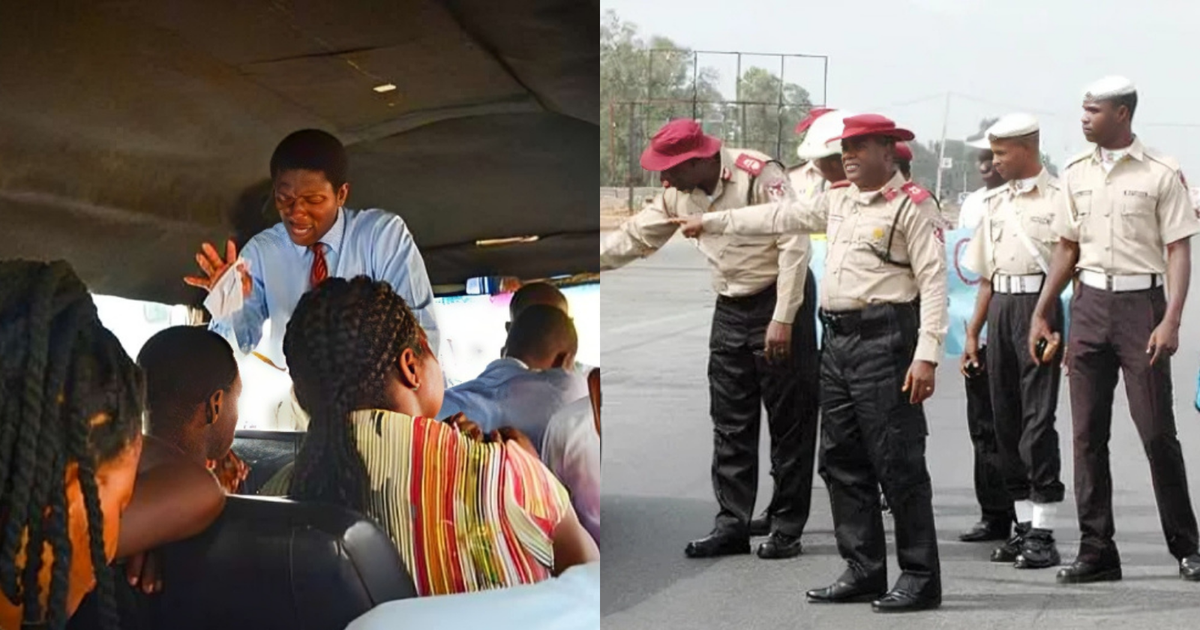
The immediate issue concerns preaching inside moving commercial vehicles, a common form of evangelism across many Nigerian cities. For decades, passengers boarding buses in Lagos, Abuja, Port Harcourt, Kano, Onitsha and numerous other cities have become accustomed to hearing short sermons, prayers or gospel messages during their journeys.
To supporters, the practice represents an accessible way of fulfilling religious obligations and sharing faith with the public.
Critics, however, argue that preaching inside moving vehicles can become a distraction, create tension among passengers with differing beliefs, and potentially divert a driver’s attention from the road.
The proposed amendment has therefore transformed what many regarded as an ordinary aspect of daily commuting into one of the country’s most debated public policy issues.
Rather than remaining solely a transportation matter, it now touches on constitutional law, religious liberty, governance and public confidence in legislative decision-making.
What the FRSC Amendment Bill Actually Says
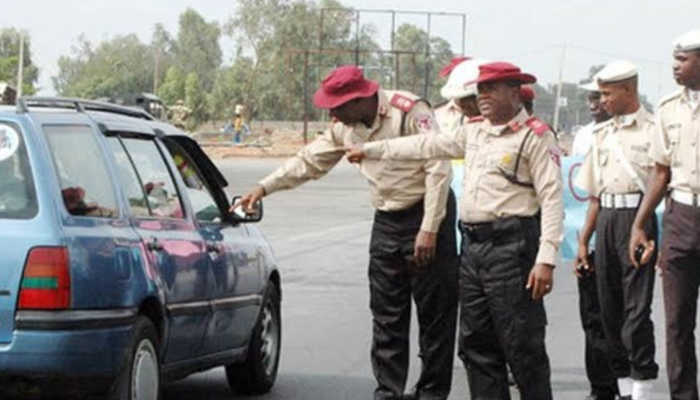
At the centre of the controversy is the ongoing amendment of the Federal Road Safety Commission (FRSC) Establishment Act.
Among several proposed revisions designed to strengthen traffic enforcement is a provision prescribing a ₦50,000 penalty for individuals convicted of preaching, hawking or trading inside commercial vehicles. The amendment also introduces tougher sanctions for a range of traffic offences, including refusing roadside breath tests, driving under the influence of alcohol or drugs, reckless driving and violations of traffic control regulations.
Supporters of the amendment argue that the changes form part of a broader effort to modernise Nigeria’s road safety framework.
According to lawmakers, the objective is not simply to increase penalties but to reduce behaviours capable of distracting drivers and endangering passengers.
The revised legislation contains dozens of traffic-related offences and seeks to strengthen the enforcement powers of the FRSC as road crashes continue to pose significant public safety challenges across Nigeria.
Within that wider legislative package, however, the provision concerning preaching has become the most publicly discussed aspect of the amendment.
Senate Insists the Provision Is Not New
Following widespread criticism, Senate leaders sought to clarify what they described as widespread misunderstanding surrounding the amendment.
According to the Senate, the restriction on preaching inside commercial vehicles did not originate with the current National Assembly.
Officials explained that similar provisions have existed under the Federal Road Safety Commission (Establishment) Act, 2007, as well as the National Road Traffic Regulations, 2012. During the current amendment process, the provision was retained but moved from one section of the schedule to another as part of a broader restructuring of the legislation.
The Senate further argued that the law should not be interpreted as a ban on Christian evangelism or public religious activities.
Rather, lawmakers maintained that the restriction applies specifically to conduct inside commercial vehicles where any activity capable of distracting drivers could compromise passenger safety.
They also rejected suggestions that the amendment was directed at any particular religion, insisting that the provision equally applies to commercial activities such as hawking and trading within moving vehicles.
From the Senate’s perspective, the debate is fundamentally about transportation safety rather than religious regulation.
That explanation, however, has done little to calm growing concerns among several Christian organisations.
Why Many Christian Leaders Reject the Proposal
The strongest opposition has come from the Pentecostal Fellowship of Nigeria (PFN), whose National President, Bishop Francis Wale Oke, described the proposal as an unacceptable restriction on the Christian mandate to preach the gospel.
Addressing members of his congregation, Oke urged Pentecostal believers to continue evangelising in buses and taxis regardless of the proposed legislation, arguing that obedience to religious conviction should not be subordinated to what he considers an unjust law. He further questioned why authorities appeared focused on restricting gospel preaching while Nigeria continued to grapple with violent crime, kidnapping and insecurity.
His remarks quickly attracted national attention, with supporters praising his defence of religious liberty while others cautioned against encouraging citizens to openly disregard legislation.
Other Christian organisations have also expressed concern.
The Christian Council of Nigeria (CCN) and the Organisation of African Instituted Churches (OAIC) argue that peaceful evangelism constitutes an exercise of constitutional rights rather than commercial activity.
In their view, equating religious preaching with hawking or trading fundamentally misunderstands the nature of evangelism and risks diminishing constitutional protections for freedom of religion and expression.
The issue has therefore become more than a disagreement over traffic regulations.
For many religious leaders, it represents a broader test of how Nigeria interprets constitutional freedoms within a democratic society.
Constitutional Questions Move to the Centre of the Debate
Beyond the exchanges between lawmakers and church leaders lies the constitutional question that has transformed the Bus Preaching Bill into a national issue.
Nigeria’s 1999 Constitution guarantees every citizen the right to freedom of thought, conscience and religion under Section 38, while Section 39 protects freedom of expression. These provisions have become central to arguments advanced by opponents of the proposed amendment, who contend that preaching the Christian faith is not merely a public activity but a constitutionally protected right.
However, constitutional rights are rarely absolute.
Like many democratic constitutions around the world, Nigeria’s Constitution recognises that certain freedoms may be subject to lawful restrictions where issues of public safety, public order, public health or the rights of others are involved.
This legal reality explains why the current debate is more complex than simply asking whether people should be allowed to preach inside buses.
The broader constitutional question is whether restricting religious activities inside moving commercial vehicles represents a reasonable limitation designed to protect public safety or an unnecessary interference with fundamental freedoms.
Legal scholars often describe this as the principle of proportionality—whether the restriction imposed by government is appropriate, necessary and proportionate to the problem it seeks to address.
That question remains at the heart of the national conversation.
Road Safety Remains the Government’s Central Argument
From the perspective of lawmakers, the amendment is fundamentally a transportation and public safety issue.
Commercial buses operate in crowded urban environments where drivers are expected to maintain constant concentration while navigating traffic, pedestrians, motorcycles and other hazards.
Supporters of the amendment argue that any activity capable of distracting drivers—including prolonged conversations, commercial hawking or religious preaching—has the potential to increase the risk of accidents.
The Senate has repeatedly maintained that the amendment is intended to reduce such distractions rather than prohibit religious practice itself. Officials insist that the legislation does not ban preaching in churches, marketplaces, streets, open-air crusades or other public spaces. Instead, they argue, it applies only within commercial vehicles where the safety of passengers and other road users must remain the overriding priority.
The amendment therefore forms part of a wider package of tougher traffic regulations.
In addition to the provision attracting public attention, the bill proposes significantly higher penalties for driving under the influence of alcohol or drugs, refusing roadside breath tests, reckless driving, excessive speeding and other offences linked to road safety.
Viewed in that broader context, lawmakers argue the legislation represents a comprehensive effort to modernise Nigeria’s traffic laws rather than an attempt to regulate religious activities.
Critics Say the Measure May Be Too Broad
Opponents of the proposal acknowledge the importance of road safety but question whether the chosen approach is the most appropriate.
Several Christian organisations argue that peaceful preaching inside buses has existed in Nigeria for decades without being widely regarded as a significant contributor to road crashes.
They contend that placing evangelism in the same category as commercial hawking and trading fails to distinguish between fundamentally different activities.
According to these critics, hawking involves commercial transactions that may obstruct movement inside vehicles or distract both drivers and passengers, whereas preaching often consists of brief messages encouraging moral conduct or spiritual reflection.
For this reason, some church leaders believe the amendment could unintentionally criminalise a long-established form of religious expression.
Others have suggested that if driver distraction is the genuine concern, lawmakers should consider regulations that specifically target disruptive behaviour rather than broadly prohibiting preaching inside commercial vehicles.
Such proposals have become part of a wider discussion about whether less restrictive alternatives could achieve the same safety objectives while preserving constitutional freedoms.
Pastor David Ibiyeomie Adds to Growing Opposition
Among the most prominent voices opposing the amendment is Pastor David Ibiyeomie, founder and Presiding Pastor of Salvation Ministries.
During a church service in Port Harcourt, Rivers State, Ibiyeomie criticised the proposal, arguing that lawmakers should prioritise tackling insecurity, poverty and economic hardship instead of introducing measures affecting religious activities.
He warned that attempts to prevent Christians from preaching inside buses could create unnecessary tension and urged believers to become more involved in public affairs and politics to protect their interests.
The cleric also questioned why other forms of public religious expression had not generated similar legislative attention.
His comments have added to growing public discussion surrounding the proposed amendment and illustrate how the issue has expanded beyond legislative chambers into churches and public discourse across Nigeria.
Although opinions differ sharply on the bill itself, Ibiyeomie’s intervention reflects concerns shared by several Christian organisations that government actions should avoid creating perceptions of unequal treatment among religious communities.
Public Reaction Reflects a Deeply Divided Opinion
Outside official statements, the Bus Preaching Bill has generated vigorous debate among Nigerians.
On one side are citizens who believe commercial vehicles should remain free from any activity that could distract drivers or inconvenience passengers.
Some argue that commuters board buses primarily to reach their destinations safely and should not be compelled to participate in religious messages during their journeys.
Others believe public transport should remain neutral spaces where passengers of different faiths can travel without feeling pressured or uncomfortable.
On the other hand, many Nigerians view bus evangelism as an ordinary part of everyday life that has coexisted peacefully with public transportation for decades.
Supporters argue that brief preaching sessions often promote positive values such as honesty, compassion, forgiveness and peaceful living rather than creating danger.
The debate has therefore become less about buses themselves and more about differing views on the relationship between government authority, constitutional rights and everyday religious practice.
A Question of Public Trust
The controversy has also highlighted the importance of effective public communication during the legislative process.
One reason the amendment generated widespread criticism was the initial public perception that the National Assembly had introduced an entirely new prohibition targeting Christian evangelism.
The Senate later clarified that the provision had existed in earlier legislation and had simply been retained during the amendment process. Nevertheless, by the time that clarification emerged, public concern had already intensified.
The episode illustrates how legislative reforms affecting sensitive issues such as religion require clear, timely and transparent communication.
In democratic societies, public confidence depends not only on the content of legislation but also on citizens understanding why changes are being proposed and how they will be implemented.
Where communication gaps exist, misunderstanding can spread quickly, particularly on issues involving constitutional rights and religious identity.
What Happens Next?
With both chambers of the National Assembly having completed work on the FRSC Amendment Bill, 2026, attention now turns to the presidency.
The legislation is awaiting the decision of President Bola Ahmed Tinubu, who may assent to the bill, allowing it to become law, or decline assent in accordance with the constitutional process. Christian organisations and civil society groups have already appealed to the President to reconsider the provision concerning preaching inside commercial vehicles before any final decision is taken.
Even if the legislation eventually receives presidential assent, legal experts note that constitutional questions surrounding the provision could still be tested in court.
Where citizens or organisations believe legislation infringes constitutionally guaranteed rights, Nigeria’s judicial system provides an avenue for constitutional interpretation. Should such litigation arise, the courts would likely be called upon to determine whether the restriction represents a lawful limitation designed to protect public safety or an unconstitutional interference with religious freedom.
For now, however, the debate remains firmly within the public and political arena.
Why the Debate Matters Beyond Religion
Although much of the public discussion has centred on Christianity, the implications of the Bus Preaching Bill extend beyond any single faith community.
The controversy touches on broader principles that shape democratic governance, including how governments regulate activities in public spaces, how constitutional rights are balanced against collective safety, and how legislation is communicated to citizens.
It also raises practical questions for everyday Nigerians.
Millions rely on commercial buses for daily transportation. For decades, these buses have served not only as a means of travel but also as spaces where passengers encounter political discussions, commercial advertising, entertainment, public awareness campaigns and, in many cases, religious messages.
Whether preaching inside commercial vehicles should continue unchanged, be regulated differently or remain prohibited under traffic laws is a matter that many Nigerians believe deserves careful consideration rather than political polarisation.
The debate therefore reflects a wider challenge faced by democratic societies worldwide: balancing individual liberties with legitimate public interests.
Countries across the world routinely regulate behaviour in public transport systems to promote passenger safety and order. At the same time, democratic constitutions seek to ensure that restrictions on fundamental rights remain proportionate, necessary and applied without discrimination.
Nigeria now finds itself confronting that same constitutional balancing exercise.
A Defining Moment for Public Policy
The controversy surrounding the Bus Preaching Bill has demonstrated how legislation affecting everyday life can rapidly evolve into a national conversation about governance and constitutional values.
For supporters of the amendment, the issue is straightforward: reducing unnecessary distractions inside moving vehicles could contribute to safer roads and better protection for commuters.
For critics, however, the concern is that any law perceived as limiting peaceful religious expression risks setting a precedent that may gradually narrow constitutionally protected freedoms.
Neither position dismisses the importance of the other.
Road safety remains a legitimate public policy objective, while freedom of religion and freedom of expression remain among the cornerstones of Nigeria’s constitutional democracy.
The challenge facing policymakers is determining where those two important principles intersect—and where one should yield to the other.
A Decision That Could Shape Future Legislative Debates
Whatever decision eventually emerges from the presidency, the conversation generated by the proposed amendment is likely to influence future discussions on legislation involving religion, public order and civil liberties.
The episode has also underscored the importance of public consultation, transparent legislative communication and careful constitutional scrutiny whenever government seeks to regulate activities closely connected to fundamental rights.
For lawmakers, it highlights the need to clearly explain the objectives of sensitive legislation before public misunderstanding takes root.
For religious organisations, it reinforces the importance of engaging democratic institutions through dialogue, advocacy and, where necessary, constitutional processes.
And for ordinary Nigerians, it serves as a reminder that debates over seemingly narrow legislative provisions often raise much larger questions about the kind of society the country seeks to build.
Conclusion
The Bus Preaching Bill has become far more than a debate about sermons inside commercial buses.
It now represents a broader national conversation about the relationship between public safety and constitutional liberty, the responsibilities of government, and the protections guaranteed to citizens under Nigeria’s Constitution.
The Senate maintains that the amendment simply strengthens existing road safety regulations that have been part of Nigerian law for years. Christian organisations, meanwhile, argue that the proposal could undermine long-standing religious practices and constitutional freedoms.
As the bill awaits presidential consideration, Nigerians continue to weigh two legitimate public interests: protecting lives on the nation’s roads and safeguarding the freedoms that underpin democratic society.
Whether the final outcome comes through presidential assent, legislative review or future judicial interpretation, the debate has already highlighted the enduring challenge of balancing security, governance and individual rights in one of Africa’s most diverse democracies.
Recommended Coverage
37 Constitution Amendment Bills in National Assembly
Discover how lawmakers are proposing sweeping constitutional changes that could reshape governance, rights and democratic institutions across Nigeria. Read the full analysis to understand where the bus preaching debate fits into the country’s broader legislative reforms.
Appeal Court Rebukes Judge in ADC Deregistration Case
Explore another major legal battle highlighting the role of Nigeria’s judiciary in interpreting laws and protecting constitutional principles. See how the courts continue to influence governance and the rule of law.
SERAP Defamation Case Fuels Free Speech Debate
Freedom of expression remains one of Nigeria’s most debated constitutional rights. This report examines another high-profile case testing the limits of civil liberties and legal protections in a democratic society.
About the Author