
Patience Ozokwor: Why She Let Her Children Struggle
Patience Ozokwor has spent decades building a career defined by resilience, discipline and determination. But beyond her success as one of Nigeria’s most recognisable actresses, her story raises a more difficult question about parenting: should parents protect their children from every hardship, or should they allow them to struggle enough to become independent?
For Ozokwor, the answer is clear.
She believes parents should not deliberately make their children suffer, but they should also resist the temptation to remove every difficulty from their lives. Children, she argues, need to experience responsibility, effort and the process of working toward what they want.
Her position is rooted in her own experience.
Before fame and financial success, Ozokwor has recalled taking on small food-selling activities, including frying buns and preparing or dressing chicken at movie locations and audition venues, to raise money for transportation. Her journey from those difficult circumstances to a celebrated Nollywood career shaped how she viewed work, responsibility and raising her children.
Her message is therefore bigger than celebrity parenting.
It is about the difference between protecting a child from suffering and preparing a child for life.
And that distinction may be one of the most important lessons in her story.
THE FIRST LESSON: LOVE SHOULD PREPARE, NOT JUST PROTECT
One of the most difficult responsibilities of parenting is knowing when protection becomes overprotection.
Every parent wants to give a child what they did not have. A parent who struggled financially may want their children to experience comfort. A parent who walked long distances may want their children never to lack transportation. A parent who fought for opportunities may want to open every door for the next generation.
There is nothing wrong with wanting a better life for one’s children.
The question is what happens when the desire to remove every difficulty also removes every opportunity to develop resilience.
This is where Ozokwor’s philosophy becomes relevant.
She has argued that parents should not deliberately make their children suffer, but that children should be allowed to struggle and go through processes that teach them responsibility. Her distinction is important: struggle is not the same thing as suffering.
A child does not need deprivation to become responsible.
But a child may need responsibility to become independent.
For parents, the lesson is therefore not to make life unnecessarily difficult. It is to ask whether the child is being given enough opportunity to solve problems, make decisions, work, contribute and experience the consequences of choices.
Protection can keep a child safe.
Preparation can help a child survive when protection is no longer available.
THE SECOND LESSON: DON’T CONFUSE COMFORT WITH CAPABILITY
Comfort is valuable.
But comfort and capability are not the same thing.
A child can grow up surrounded by everything they need and still lack the ability to build a life independently.
Ozokwor’s concern about children inheriting property without developing the capacity to work reflects this distinction. Property can be transferred. Skills, discipline and responsibility have to be developed.
A house can be inherited.
A business can be inherited.
Money can be inherited.
But the ability to manage them responsibly cannot simply be handed over with the keys.
That is why one of the most important responsibilities of a successful parent may be teaching a child how to function without permanent parental rescue.
The objective is not to make children uncomfortable.
The objective is to make them capable.
THE THIRD LESSON: HONEST WORK IS NEVER BENEATH THE DREAM
Perhaps one of the most powerful details in Ozokwor’s story is not the fame that eventually came.
It is what she says she did before that fame was secure.
She has recalled frying buns and preparing or dressing chicken for sale at movie locations and audition venues, using the proceeds to help pay for transportation.
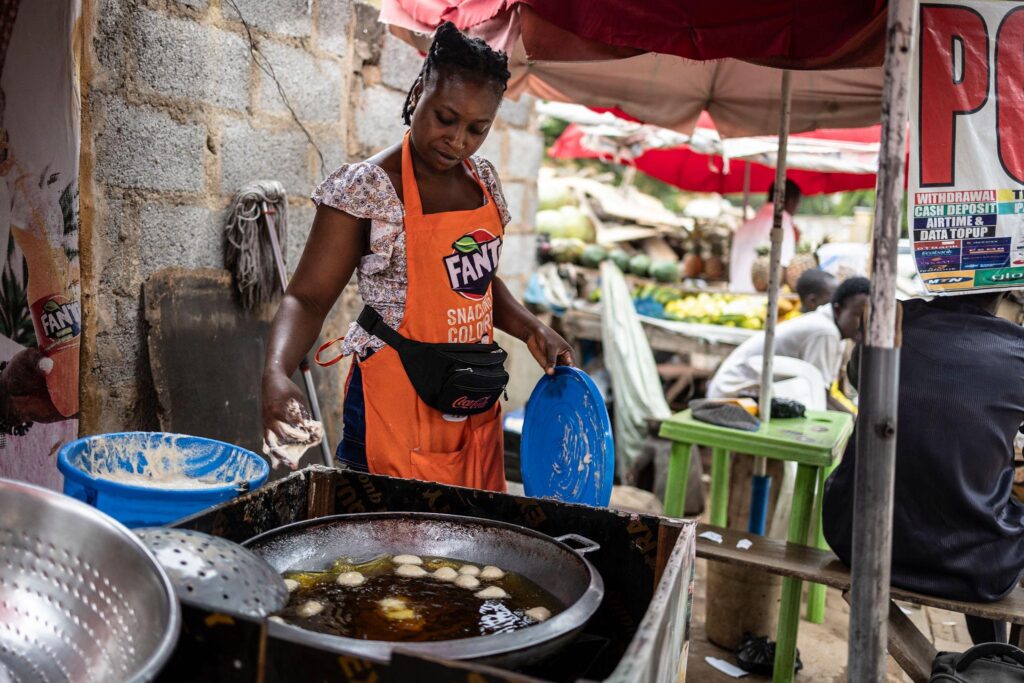
There is something deeply instructive about that image.
The future actress did not wait for the perfect opportunity before beginning her journey.
She found something useful to do.
That principle extends far beyond entertainment.
People sometimes imagine that successful people began with the resources associated with their eventual success. Often, they did not.
The first job may not resemble the dream.
The first income may be small.
The first opportunity may feel insignificant.
But honest work can finance the next step.
For young people, aspiring creatives and people rebuilding after failure, the lesson is simple:
Do not reject honest work simply because it is not your final destination.
The temporary job may pay for the journey toward the permanent dream.
THE FOURTH LESSON: INDEPENDENCE MUST BE TAUGHT BEFORE IT IS NEEDED
A parent cannot suddenly expect an adult child to become independent simply because circumstances have changed.
Independence is developed gradually.
It comes through responsibility.
It comes through making decisions.
It comes through doing work.
It comes through understanding that possessions have costs and opportunities have responsibilities attached to them.
Ozokwor has described teaching her children about the effort behind what the family owned. She also said that three of her sons participated in construction work while they were university students.
These examples illustrate the principle she was trying to communicate: comfort should not erase an understanding of effort.
The wider lesson for parents is that independence should be treated as a process rather than an emergency response.
Children can be given age-appropriate responsibilities long before adulthood.
They can learn to contribute.
They can learn to solve problems.
They can learn to work.
They can learn that being loved does not mean being permanently carried.
THE FIFTH LESSON: CHILDREN SHOULD KNOW THE COST BEHIND COMFORT
There is a difference between enjoying what a parent has built and understanding what it took to build it.
When children see only the finished result, they may assume that comfort is automatic.
They may see the house but not the years of work.
They may see success but not the sacrifices.
They may see money but not the discipline required to earn it.
Ozokwor’s story places unusual emphasis on making children aware of that process.
This does not mean parents should burden children with adult worries.
It means children can gradually learn the value of effort.
A child who understands that something has a cost may treat it differently from a child who believes it simply appears.
The lesson is particularly relevant in an age when success is often presented through its final image rather than its difficult process.
THE SIXTH LESSON: INHERITANCE IS NOT A SUBSTITUTE FOR CAPABILITY
One of the strongest warnings in Ozokwor’s parenting philosophy concerns inheritance.
Leaving something for children can be an expression of love.
But leaving everything without preparing them to manage it can create another problem.
An inheritance can provide opportunity.
It cannot guarantee wisdom.
A family business can provide a platform.
It cannot automatically provide entrepreneurial ability.
Money can provide choices.
It cannot automatically provide discipline.
This is why the greatest inheritance may not always be the visible asset.
Sometimes it is the capacity to create value again.
If everything disappears, can the child begin again?
If the business fails, can the child rebuild?
If the family property is gone, can the child earn?
If the parent is no longer available, can the child stand?
These are uncomfortable questions.
But they are precisely the questions that make independence meaningful.
THE SEVENTH LESSON: A DIFFICULT BEGINNING DOES NOT HAVE TO DEFINE THE ENDING
Ozokwor’s story ultimately moves beyond parenting.
It is also a story about personal transformation.
The woman who has described selling food to help fund transportation eventually became one of Nigeria’s best-known actresses.
Her journey demonstrates an important principle: where a person starts is not necessarily where that person will finish.
The early struggle was part of the journey, not the final identity.
That distinction matters to anyone currently experiencing difficulty.
Financial pressure is not a permanent identity.
Failure is not a permanent identity.
A small beginning is not a permanent identity.
A career setback is not a permanent identity.
What matters is what a person does with the circumstances in front of them.
Ozokwor’s story does not suggest that hardship automatically produces success. Many people struggle without receiving the opportunities or outcomes they hope for.
The lesson is more measured:
When circumstances are difficult, honest effort, adaptability and persistence can keep the possibility of transformation alive.
FROM HER STORY TO OUR LIVES
Patience Ozokwor‘s experience becomes most useful when it moves beyond celebrity.
The central question is not simply:
What did Mama G do?
It is:
What can an ordinary person learn from the principles behind her journey?
For parents, it may mean reconsidering the difference between helping a child and doing everything for a child.
For young people, it may mean understanding that the first step toward a dream does not have to look glamorous.
For professionals, it may mean accepting that progress often begins with work that nobody celebrates.
For anyone facing hardship, it may mean refusing to mistake the present chapter for the entire story.
And for families building wealth, it may mean asking whether they are transferring only assets or also transferring the capacity to create and protect those assets.
The deeper lesson is about preparation.
PRODUCTIVE STRUGGLE VS HARMFUL SUFFERING
This distinction must remain at the centre of the story.
There is a danger in romanticising hardship.
Not every difficult experience makes a person stronger.
Poverty can damage.
Neglect can damage.
Abuse can damage.
Deprivation can damage.
Children should not be intentionally exposed to harmful conditions in the name of building character.
That is not the argument Ozokwor makes in the supplied material. Her own clarification is that she is not advocating suffering; she is advocating allowing children to struggle and go through processes.
The practical interpretation is therefore more balanced:
Give children support, but do not remove every challenge.
Give them security, but also responsibility.
Give them opportunities, but allow them to work for some outcomes.
Give them inheritance, but also teach them capability.
Give them love, but prepare them for a world in which you cannot always rescue them.
That is a much more useful lesson than simply telling parents to make their children suffer.
THE PARENTING QUESTION
Perhaps the most uncomfortable question raised by Ozokwor’s story is this:
When does helping a child become preventing a child from growing?
There is no universal answer.
Every child is different.
Every family is different.
Circumstances differ.
What is appropriate for one child may be inappropriate for another.
But the question itself is worth asking.
A parent who solves every problem may unintentionally prevent a child from learning how to solve problems.
A parent who pays every bill may unintentionally prevent a child from learning financial responsibility.
A parent who constantly intervenes may unintentionally prevent a child from learning how to negotiate difficulty.
The goal should not be to abandon children to hardship.
The goal should be to gradually transfer responsibility.
That is what makes the idea of independence so important.
THE BIGGER LIFE LESSON
The deepest lesson from Patience Ozokwor’s story is not that children should struggle.
It is that children should eventually become capable of standing without the parent who raised them.
That is a very different idea.
A parent may spend decades building a better life for the next generation.
But if that better life produces dependence rather than capability, something important may have been lost.
The greatest measure of parental success may therefore not be how comfortable a child becomes while the parent is alive.
It may also be whether the child has the strength, discipline and skills to continue when the parent is no longer able to provide.
That is the lesson hidden inside Ozokwor’s unconventional philosophy.
She struggled to build.
She succeeded.
Then success created a new responsibility:
teaching the people she loved not to become prisoners of the comfort she had worked so hard to create.
SEVEN PRACTICAL LESSONS TO CARRY FORWARD
1. Don’t confuse love with permanent protection.
Love should create security, but it should also prepare people for independence.
2. Honest work is never beneath the dream.
If the work is legitimate, useful and necessary, it can become part of the journey.
3. Independence must be taught before it is needed.
Do not wait for a crisis before expecting responsibility.
4. Teach children the value behind comfort.
Let them understand that resources, opportunities and possessions usually come with effort.
5. Inheritance should come with capability.
Assets are more useful when the person receiving them knows how to manage, protect and rebuild value.
6. A difficult beginning does not determine the ending.
The first chapter of a person’s life does not have to become the final chapter.
7. The ultimate goal is independence.
Parenting should eventually move from carrying a child to preparing that child to stand.
A QUESTION FOR EVERY PARENT
Imagine that tomorrow you could no longer provide the things your children currently enjoy.
The house remains.
The memories remain.
The lessons remain.
But the money stops.
The rescue stops.
The protection becomes limited.
What would your children have left?
Would they know how to work?
Would they know how to make decisions?
Would they know how to solve problems?
Would they know how to start again?
That is perhaps the most important question raised by Patience Ozokwor’s story.
Not whether a parent has given a child everything.
But whether the parent has given the child enough capacity to build again.
And perhaps that is the real meaning of self-reliance.
Not refusing help.
Not rejecting family.
Not celebrating hardship.
But developing the ability to stand, contribute and rebuild when life demands it.
FINAL REFLECTION
Patience Ozokwor’s story began with a woman who had to find ways to keep moving when resources were limited.
It continued with a career that transformed her circumstances.
But the most revealing chapter may have come after success.
She had to decide what her children should inherit from her struggle.
Not necessarily the struggle itself.
But the discipline.
The responsibility.
The willingness to work.
The understanding that comfort has a cost.
And the confidence to stand independently.
That is the lesson that reaches beyond Nollywood.
A parent can build a better world for a child. But the child must still learn how to live, work and build within that world.
And for anyone who has ever struggled to create a better future, there is another question worth asking:
If everything you built for the people you love disappeared tomorrow, would you have given them enough skills to build again?
Recommended Coverage
Dr. Eberechukwu Uneze — The Rise, Influence & Impact
Patience Ozokwor’s story is ultimately about more than surviving difficult seasons—it is about what a person becomes through them. Read the story of another Nigerian whose journey, influence and impact offer a different perspective on perseverance and achievement.
From Nollywood to Global Screens: Nigerian Cinema
Mama G’s journey is also part of a much bigger Nigerian story. From local productions to international audiences, discover how Nollywood evolved into a global cultural force—and the industry in which performers like Ozokwor built their legacies.
Stanley Anigbogu Wins 2025 Commonwealth Youth Award
The lesson of self-reliance does not belong to one generation. For another powerful example of what young Nigerians can achieve when talent is matched with initiative and persistence, read how Stanley Anigbogu earned international recognition.
About the Author