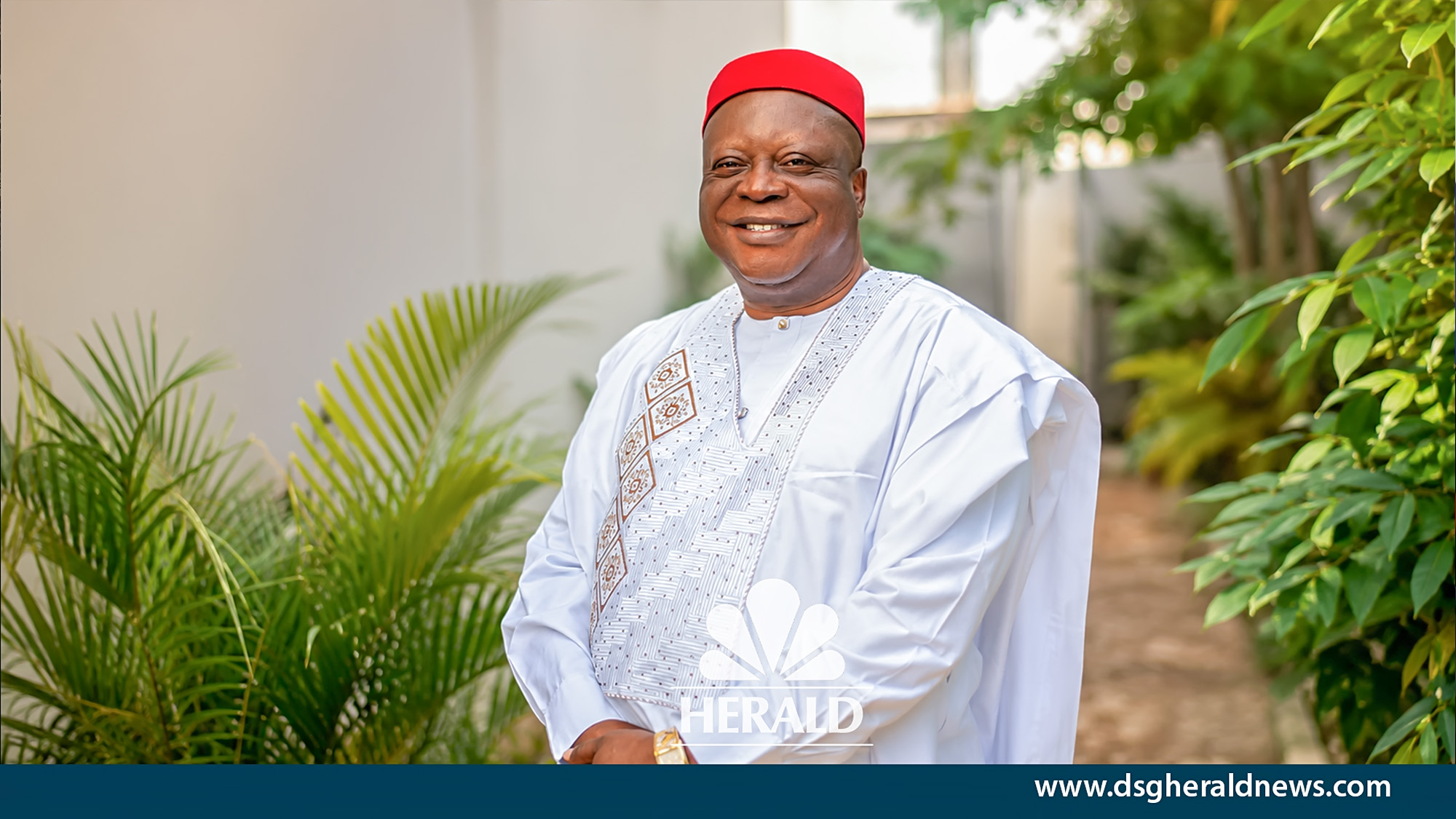
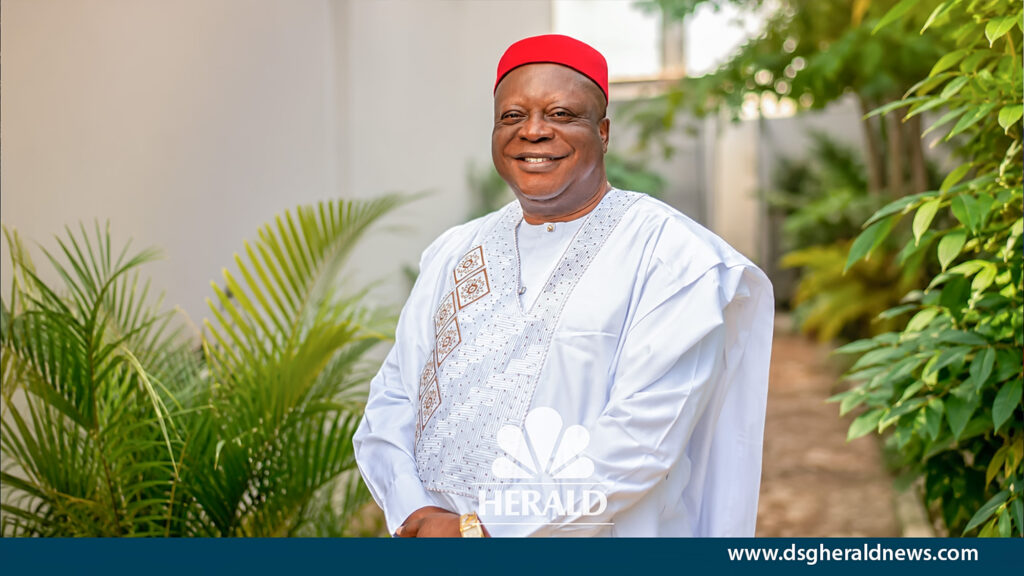
Obioma Success Akagburuonye, whose journey from law and enterprise to philanthropy and community engagement.
Obioma Success Akagburuonye: Beyond Business, A Commitment to People and Community
From law and entrepreneurship to philanthropy, youth empowerment and community development, Chief Barr. Obioma Success Akagburuonye’s journey offers a closer look at how professional achievement can evolve into a wider commitment to people and communities.
Success is often measured by what a person builds for himself: the profession he establishes, the businesses he develops, the investments he makes and the opportunities he creates through enterprise. But there comes a point in some journeys when the meaning of achievement begins to extend beyond personal advancement. The more difficult question becomes what those achievements can make possible for people who may never sit in the same boardroom or share the same opportunities.
That is the more human dimension of the story of Chief Barr. Obioma Success Akagburuonye.
A lawyer by training and an entrepreneur whose interests have extended across several sectors, Akagburuonye has developed a professional profile that reaches beyond legal practice and business into philanthropy, youth empowerment, healthcare, education and community development. Several reports identify a series of his initiatives as one directed at practical needs, from vocational training and scholarships to medical outreaches, humanitarian assistance and community infrastructure.
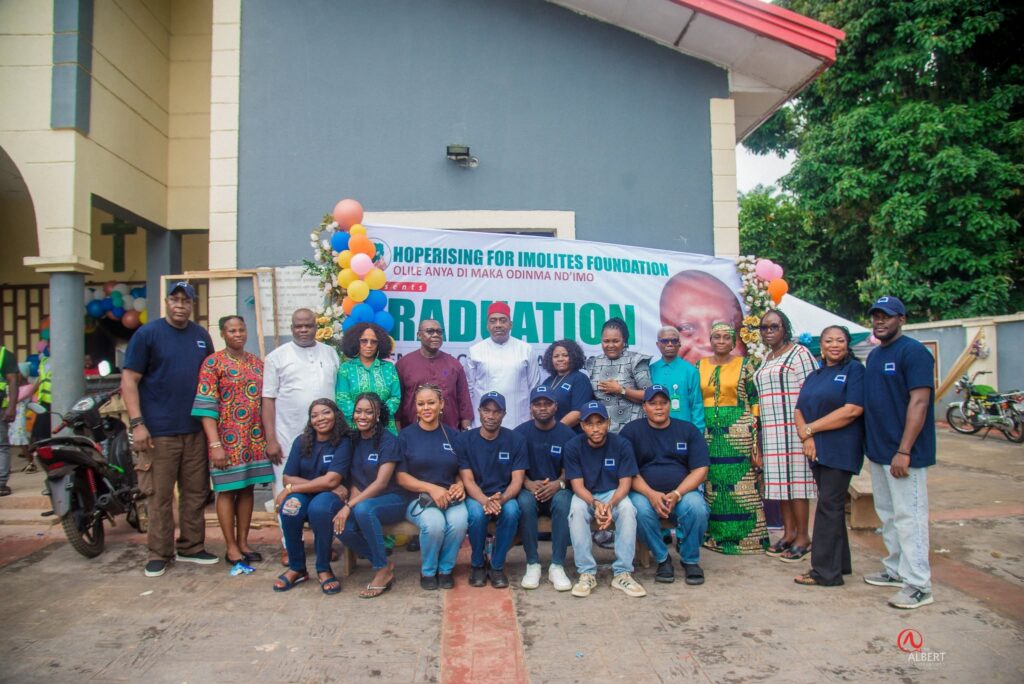
At the centre of much of that work is Hope Rising for Imolites, an organisation associated with programmes intended to support young people and communities across Imo State. Its stated areas of intervention include youth empowerment, sustainable livelihoods, healthcare, education and grassroots community support.
Taken together, these activities present a story that is less about philanthropy as a label and more about the relationship between enterprise and service: what a person who has spent years building professional and commercial capacity chooses to do with some of that capacity when the focus turns towards other people.
Beyond Business: The Man Behind the Enterprise
Long before philanthropy became a significant part of the public profile associated with Akagburuonye, there was a professional journey rooted in law. He studied law at Kogi State University, where he obtained LL.B and LL.M degrees, before proceeding to the Nigerian Law School and being called to the Nigerian Bar in 2012. He subsequently established O.S. Akagburuonye & Co., popularly known as Akara Ugo Chambers, in Abuja.

The legal profession provided an early education in institutions, procedure, rights and responsibilities, but his career did not remain confined to the courtroom or chambers. His interests expanded into entrepreneurship, with businesses including Praco International Company, Psalm 127 Limited, Peace Be Still Hotels, Obisco Foods & Beverages, Lion of Judah Security, Aqua Refresh, Akaraugo Microfinance Bank and Divine Foundation Property.
The breadth of those interests is significant because entrepreneurship exposes a person to a different set of practical challenges. Investment decisions have to be made, people have to be managed, resources have to be allocated and risks have to be considered. A business idea has to move from concept to operation, and an enterprise must continually respond to the economic environment in which it exists.
For Akagburuonye, that experience appears to have provided one of the foundations for a broader understanding of opportunity. The entrepreneurial story is therefore relevant not simply because of the businesses associated with his name, but because it helps explain the perspective from which he approaches the question of creating opportunities for others.
There is also a distinction worth maintaining. Building a business and supporting a community are not the same activity, and success in one does not automatically establish success in the other. Yet the skills involved in identifying problems, mobilising resources and pursuing practical solutions can become useful when professional experience begins to intersect with social responsibility.
That intersection is where the next chapter of Akagburuonye’s story becomes particularly interesting.
When Success Finds a Larger Purpose
Philanthropy can begin with a simple act of giving, but sustained community intervention usually requires something more organised: an understanding of the problem, a means of responding to it and a structure capable of turning resources into practical outcomes.
The reports surrounding Akagburuonye’s activities presents philanthropy in that broader sense. His reported interventions extend across areas that affect different stages of people’s lives, including education, youth training, healthcare, humanitarian support and community infrastructure. The needs may be different, but the underlying objective is similar: to direct resources towards areas where they can provide opportunity, relief or improved living conditions.
This is where Obioma Akagburuonye philanthropy becomes more than a description of charitable activity. It represents an attempt to connect professional success with social needs that are often visible at community level but difficult for individuals and families to address on their own.
Consider the range of people potentially affected by such interventions. A young person looking for a practical skill may need training rather than a one-time donation. A student struggling with educational expenses may need a scholarship. A family dealing with illness may need access to medical assistance. A rural community may require basic infrastructure that benefits households collectively rather than individually.
Each situation calls for a different response.
His interventions involve vocational and entrepreneurial training, scholarships, healthcare initiatives and support for widows, orphans, petty traders and vulnerable families. It also describes community projects involving electrification and boreholes.
That range gives the philanthropic story a development dimension. It moves the focus from the act of giving to the question of what the assistance is intended to make possible.
For a young person, it may be economic independence. For a student, continued education. For a patient, access to care. For a community, an improvement in the basic conditions of everyday life.
The significance of philanthropy, therefore, is ultimately found not in the gesture itself but in what happens after it.
Hope Rising for Imolites: An Avenue for Service
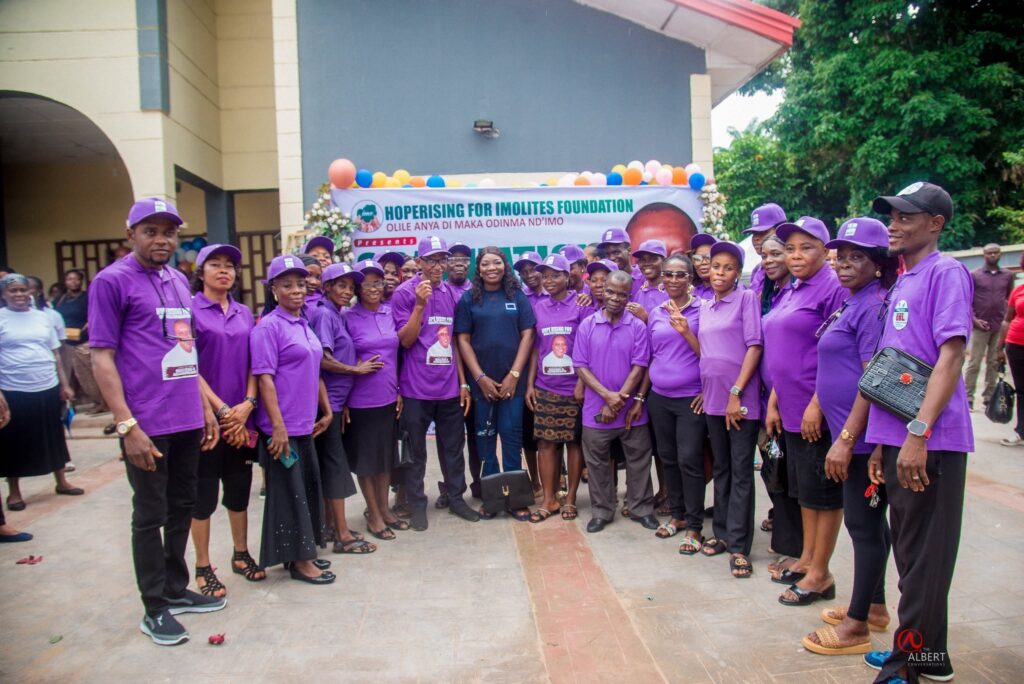
Every sustained programme of community intervention needs an institutional framework. In Akagburuonye’s case, that framework is closely associated with Hope Rising for Imolites, which several reports identify as a principal vehicle for work in education, youth empowerment, healthcare and community development.
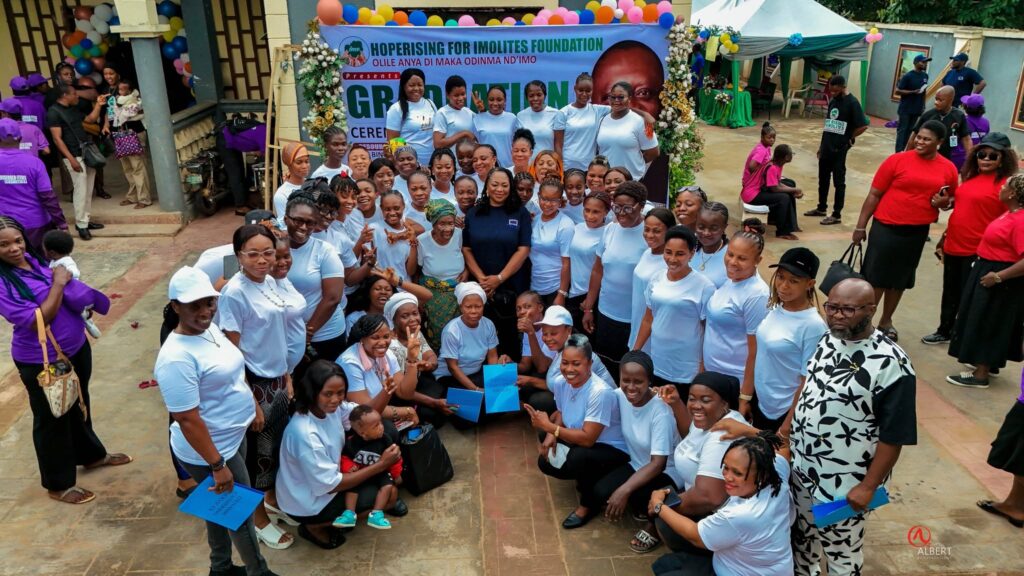
The organisation’s official platform identifies Akagburuonye as its founder and describes a mission centred on empowering young people, promoting sustainable livelihoods and supporting communities. Its published programme areas include practical skills such as solar energy installation, CCTV installation, computer applications and entrepreneurship, alongside healthcare and other community-oriented initiatives.
The importance of an organisation such as Hope Rising lies partly in the ability to bring different forms of intervention under a common structure. Community needs rarely arrive in neat categories. The same community may have young people who need skills, families that require healthcare, students who need educational assistance and households facing broader economic difficulties.
A single intervention cannot address all of those challenges.
A broader programme can at least attempt to respond to several of them.
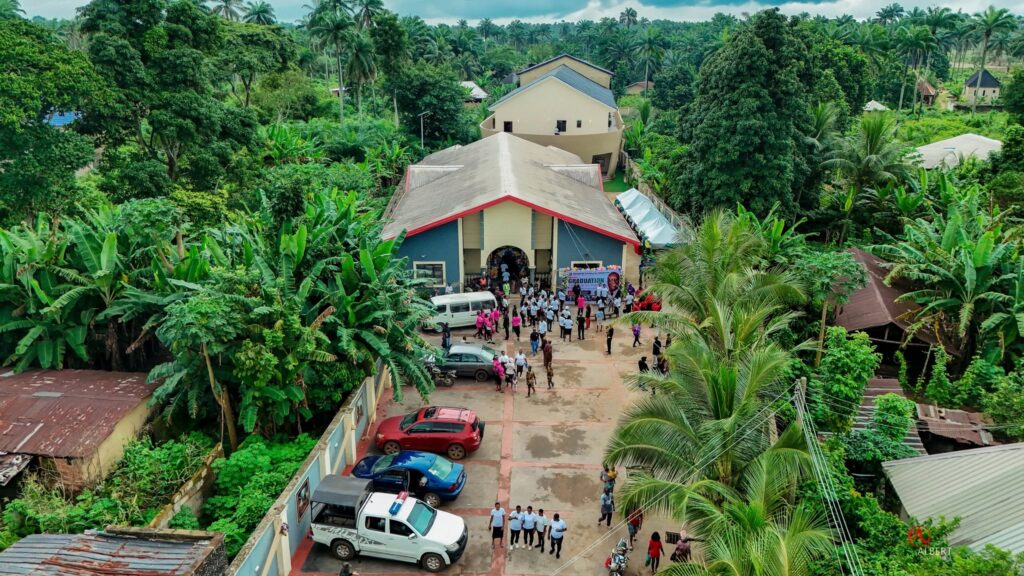
Akagburuonye’s healthcare activities include medical consultations, minor surgeries and palliative distribution. It also lists a free medical outreach held in Aboh Mbaise Local Government Area in June 2024. These activities provide a practical illustration of how the organisation’s stated focus on community wellbeing is translated into specific interventions.
The same principle can be seen in the organisation’s youth programmes. Training in technical and entrepreneurial fields is presented not simply as an educational exercise but as part of a wider effort to help participants acquire capabilities that can support livelihoods.
This distinction is important. Sustainable development is rarely achieved through assistance alone. It requires people to acquire capabilities, communities to gain functional infrastructure and institutions to create conditions in which those capabilities can be used.
That is the larger context in which Hope Rising for Imolites fits into Akagburuonye’s story.
Giving Young People the Tools to Build
Youth empowerment is one of the most visible themes, and its emphasis on practical skills gives the subject a particularly concrete dimension.
Across Nigeria, young people confront a labour market in which formal employment opportunities do not always expand at the same pace as the population entering the workforce. Academic qualifications remain important, but many young people also need technical, digital, vocational or entrepreneurial skills that can provide alternative routes into economic activity.
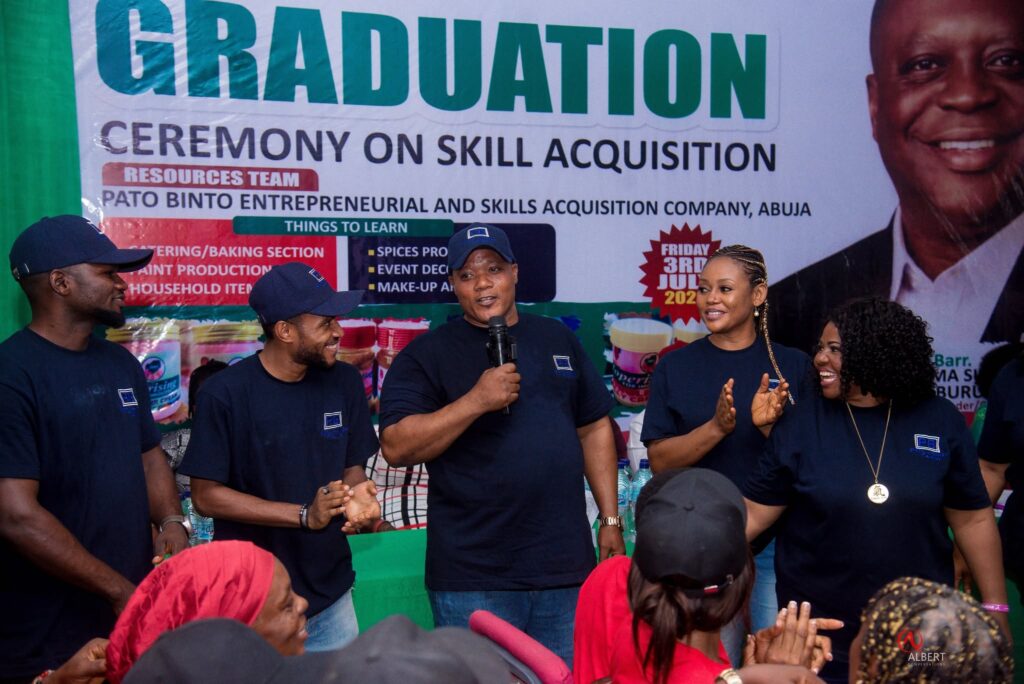
The programmes associated with Akagburuonye’s initiatives include training in solar installation, inverter technology, CCTV systems, computer applications and entrepreneurship. These are not abstract subjects. They relate to services that households, businesses and institutions increasingly require.
A young person trained in solar installation, for example, may acquire a skill that can be used in employment or as the basis for a small enterprise. Someone trained in CCTV installation can potentially enter a technical services market. Entrepreneurship training can help participants understand how a skill can be converted into a service, and how a service can become an income-generating activity.
None of this removes the larger structural challenges facing young Nigerians. Training does not guarantee employment, and entrepreneurship does not eliminate the difficulty of accessing finance, markets, infrastructure or stable economic conditions. But skills can change the range of options available to an individual.
That is the central idea behind Obioma Akagburuonye youth empowerment: moving beyond temporary assistance towards giving people capabilities they can potentially continue using long after a programme ends.
Reports have it that more than 300,000 young people have benefited from empowerment initiatives associated with Hope Rising for Imoolites and related organisations across Imo’s local government areas.
The broader importance of the programmes does not depend entirely on that figure. What stands out is the emphasis on practical empowerment and the attempt to connect training with economic independence.
For communities with large youth populations, that connection is important. A young person does not simply need to be told that the future belongs to them. The more useful question is whether they have access to the knowledge, skills, resources and opportunities required to participate in that future.
Education as an Investment in Possibility
If vocational training can provide one route towards economic independence, formal education provides another foundation on which opportunity can be built.
For many families, the cost of education extends far beyond tuition. Books, uniforms, transportation, examination fees and other expenses can place significant pressure on household finances. When those pressures become severe, a student’s ability to remain in school can be affected.
Scholarships and educational assistance can therefore have consequences that are not immediately visible.
They can keep a student enrolled. They can relieve pressure on parents or guardians. They can give a young person the time and stability required to complete an education that may eventually determine their professional options.
Scholarships and educational support is among the philanthropic interventions associated with Akagburuonye. This fits naturally within the wider emphasis on empowerment because education and skills development address different but complementary aspects of opportunity.
A vocational programme can provide technical competence. Formal education can provide academic and professional foundations. Entrepreneurship can create a pathway for applying knowledge and skills to economic activity.
The combination matters because development is rarely the product of one intervention.
A scholarship may help one student today, but the eventual value may become visible years later when that student enters a profession, establishes a business, employs others or contributes to a community.
Educational philanthropy is therefore often a quiet form of investment. There may be no immediate spectacle attached to it, but the consequences can travel through families and communities for years.
When Help Means Healthcare and Humanitarian Support
There are moments when long-term empowerment cannot substitute for immediate assistance.
Illness is one of them.
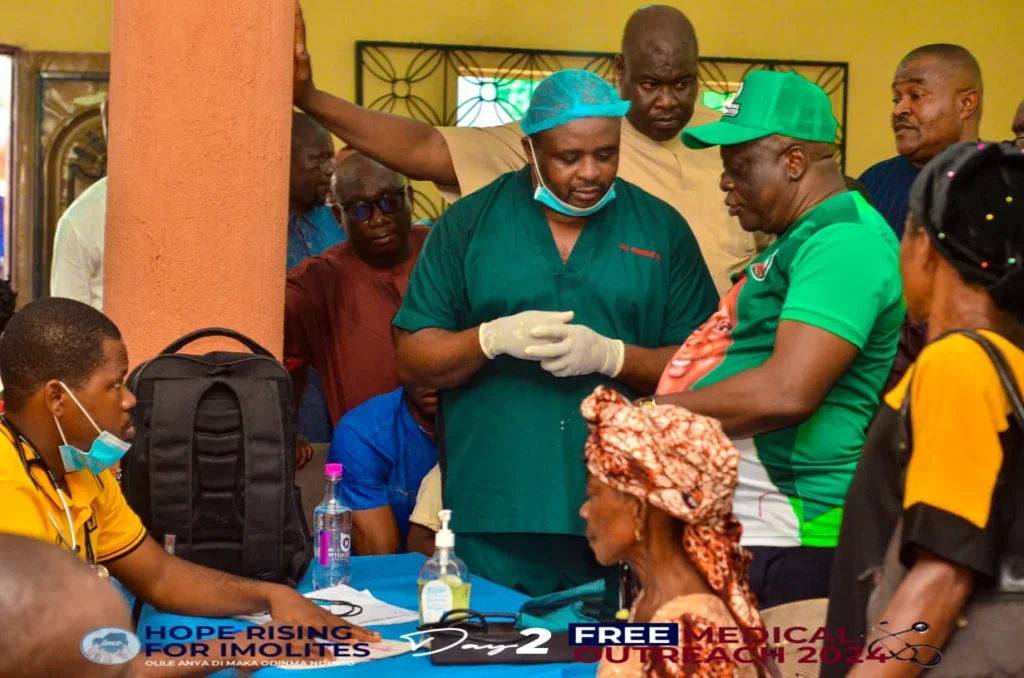
For a family already living under financial pressure, a medical problem can quickly become more than a health issue. Treatment costs can consume savings, disrupt work and place additional pressure on household income. In such circumstances, access to medical assistance can provide relief at precisely the moment when a family has few alternatives.
There is a large record of free medical outreach in Aboh Mbaise Local Government Area in 2024, placing the healthcare component of its work within a specific community setting.
The humanitarian side of the story extends further, with several reports pointing at assistance for widows, orphans, petty traders and vulnerable families.
Such interventions operate differently from skills programmes. Their purpose is often immediate rather than developmental. A person who needs food, medical attention or emergency support cannot always wait for a long-term economic solution.
That does not make humanitarian assistance a substitute for development. Rather, the two can complement each other.
People need relief when circumstances become difficult, but they also need education, skills, employment and functioning communities that can reduce vulnerability over time.
A balanced approach to community support therefore has room for both.
Building Communities, Not Just Giving
There is a point at which philanthropy moves beyond the individual and begins to address the physical environment in which people live.
This is where infrastructure becomes important.
Akagburuonye’s community activities with rural electrification, boreholes and support for community organisations is also very visible and evident. Such interventions are significant because their potential benefits extend across households rather than stopping with a single beneficiary.
Water is an everyday necessity. Electricity affects education, commerce, communication, household activity and security. Community organisations can provide structures through which residents coordinate their own development priorities.
This is the broader meaning of Obioma Akagburuonye community development.
The objective is not simply to distribute resources but to improve the conditions under which people live and work.
A borehole can reduce the difficulty of accessing water. Electricity can extend the hours available for study or business. Support for a community organisation can strengthen local capacity to identify and address problems.
Infrastructure also introduces a different measure of impact because its usefulness can continue after the original intervention has ended.
That makes community development distinct from one-time assistance.
The real question becomes whether a project continues to serve people and whether the community has the capacity to maintain and build upon it.
This is also where philanthropy begins to resemble development planning. Identifying a problem is only the first step. Resources have to be mobilised, the intervention has to be appropriate and there has to be some consideration of what happens after the initial investment.
Where Security Meets Opportunity
Security may not immediately appear to belong in a story about philanthropy, but at community level it is closely connected to economic and social stability.
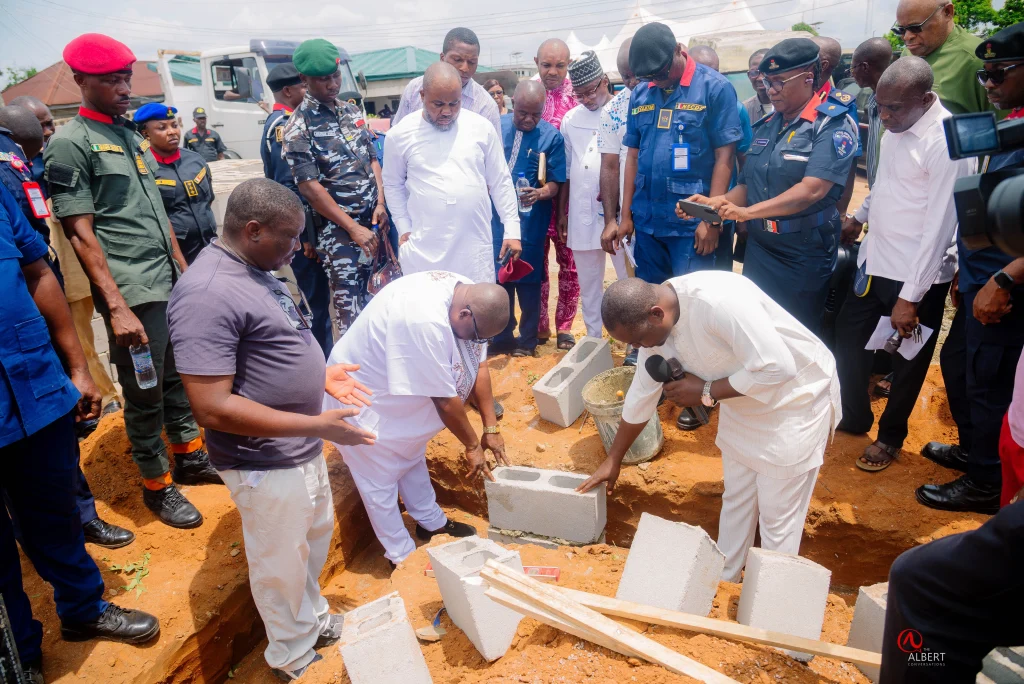
Akagburuonye facilitated the establishment of a Nigerian Security and Civil Defence Corps division in Ogbor Uvuru, supported community-based vigilance and founded Lion of Judah Security Company, which is described as having an employment dimension for young people in Imo.
Viewed outside a political context, the connection between security and opportunity is worth considering.
Businesses require a reasonably secure environment in which to operate. Families need to feel safe moving between home, school, work and markets. Young people need productive opportunities that can give them a stake in the economic life of their communities.
Security alone cannot resolve unemployment or poverty, and employment cannot substitute for professional law enforcement. Effective community safety ultimately depends on formal institutions, trained personnel, coordination and the wider social and economic conditions in which communities operate.
But local initiatives can provide insight into the specific concerns of residents and can create additional opportunities within the community.
The employment dimension is particularly relevant. Where young people are able to earn an income, develop skills and become economically productive, they may gain greater independence and a stronger connection to their communities.
That does not make employment a cure for insecurity, but it demonstrates why development problems are rarely isolated.
Security, employment, infrastructure and social stability often intersect.
The Entrepreneurial Mind Behind the Philanthropy
There is an interesting connection between the way entrepreneurs approach problems and the way sustained philanthropy can operate.
Entrepreneurship involves identifying a need, assessing available resources, testing a solution and trying to create something that works. Philanthropy begins from a different objective, but the process of moving from an identified problem to a practical intervention can sometimes draw upon similar habits of thought.
Akagburuonye’s professional history provides context for that perspective.
His business interests have exposed him to property, hospitality, security, financial services, food and beverages and other areas of enterprise. His philanthropic activities, meanwhile, have focused on problems involving education, healthcare, youth development and community infrastructure.
The connection is not that business experience automatically produces effective philanthropy. Nor does philanthropy by itself establish that someone can solve every social problem.
Rather, the two experiences can provide different forms of exposure.
Enterprise teaches the realities of resource management and sustainability. Community engagement brings a closer understanding of social needs. Philanthropy provides an avenue for applying resources to those needs.
In that sense, the entrepreneurial mindset may help explain the practical character of some of the interventions associated with Akagburuonye.
The focus is frequently on something tangible: a skill to be taught, a scholarship to be provided, a medical need to be addressed, infrastructure to be installed or a community organisation to be supported.
The ultimate measure remains the outcome, not the intention.
But the emphasis on practical intervention gives the story a distinctive character.
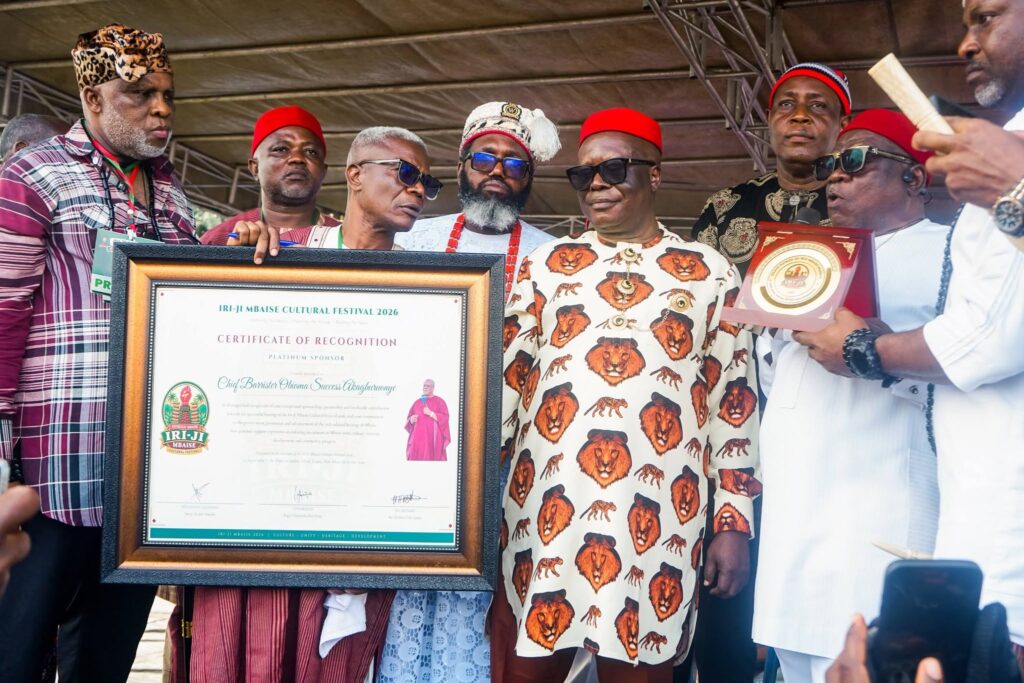
A Measure of Success Beyond the Balance Sheet
There is a familiar way of measuring professional achievement: the companies established, investments made, properties developed and commercial opportunities created.
Those measures remain important. They tell part of the story of what an entrepreneur has accomplished.
But community impact is measured differently.
It can be seen in the student who remains in school because someone helped meet an educational need. It can be found in the young person who acquires a technical skill and begins looking for ways to turn that skill into an income. It can be experienced by a family that receives medical assistance when healthcare costs become difficult to manage. It can be found in a community where access to water or electricity improves everyday life.
These outcomes do not necessarily appear on a balance sheet, but they represent another form of value.
For Obioma Success Akagburuonye, a journey that began with professional training and entrepreneurship and expanded into philanthropy and community engagement. His story therefore sits at an interesting intersection between private achievement and public-minded service.
The most important question is not simply how much has been built or how many initiatives have been announced. It is whether the interventions create opportunities that last, provide assistance when it is needed and strengthen communities in ways that can continue beyond the original act of giving.
That is ultimately the challenge facing every philanthropic effort.
A scholarship matters because of what the student eventually does with the opportunity. A skills programme matters because the participant can potentially turn knowledge into productive work. A medical outreach matters because a person receives care. Infrastructure matters because people continue to use it.
In this sense, philanthropy is not simply about generosity. It is about responsibility, relevance and impact.
Akagburuonye’s professional journey provides one side of the story: the lawyer who entered entrepreneurship and built experience across different areas of enterprise. His philanthropic activities provide another: the decision to direct resources and organisational capacity towards education, healthcare, youth development and communities.
The two sides do not have to be viewed as separate identities.
They can be understood as different chapters in the same journey.
Professional success creates capacity. Experience provides perspective. Philanthropy creates an avenue for service. Community development extends the impact beyond individual beneficiaries.
And somewhere between those chapters lies a broader definition of what achievement can mean.
It is not only what a person builds for himself, but also what that success makes possible for others.
For Chief Barr. Obioma Success Akagburuonye, that is the story that now extends beyond business — into people, opportunity and community.
Recommended Coverage
Dr Eberechukwu Uneze: Examining His Rise and Influence
A related DSG HERALD NEWS profile exploring leadership, public influence and community impact.
Igwejiuba Francis Ugorji: Chieftaincy, Community and Development
A related report examining community leadership, recognition and development activities in Imo State.
Kamdi Okeke Scholarship: Education and Opportunity
A related human-interest report highlighting education, opportunity and the impact of individual intervention.
About the Author