Introduction
Nigeria’s public institutions faced questions about safety, transparency, service delivery and policy implementation in developments reported on Wednesday, 21 October 2026. This Nigeria news review examines eight stories: reported gaseous exposure affecting schoolchildren in Ogun State, a confirmed imported Ebola case, a reported cholera outbreak in Gombe State, conflicting petroleum-import figures, legislative scrutiny of telecommunications operators, a proposed constitutional framework for State Police, the Federal Government’s economic strategy and concerns about artificial intelligence-generated misinformation ahead of the 2027 elections.
Although these developments concern different sectors, they raise a common public-interest question: what has actually been established, what action has been taken, and what evidence is still needed?
The public-health reports underline the importance of timely information, effective surveillance and clear communication. The petroleum and telecommunications developments place institutional records and public-service accountability under scrutiny. The Ekiti State Police proposal highlights the difference between a legislative step and a completed constitutional process, while the economic report illustrates why forecasts and government ambitions must be distinguished from achieved results. The reported warning about AI-generated misinformation raises questions about election preparedness and the verification of digital content.
The stories are not necessarily connected by a single cause. Their significance lies in the separate responsibilities and processes they bring into focus. Across public health, governance, economic policy and technology, Nigerians need reliable information about decisions, implementation and outcomes.
This review preserves the qualifications in the supplied reporting. Where figures remain unreconciled, an investigation has not reached a reported conclusion, or a policy process remains incomplete, those limits matter as much as the headline itself.
Story 1: Nigeria Public Health — Questions After Reported Gaseous Exposure in Ogun State
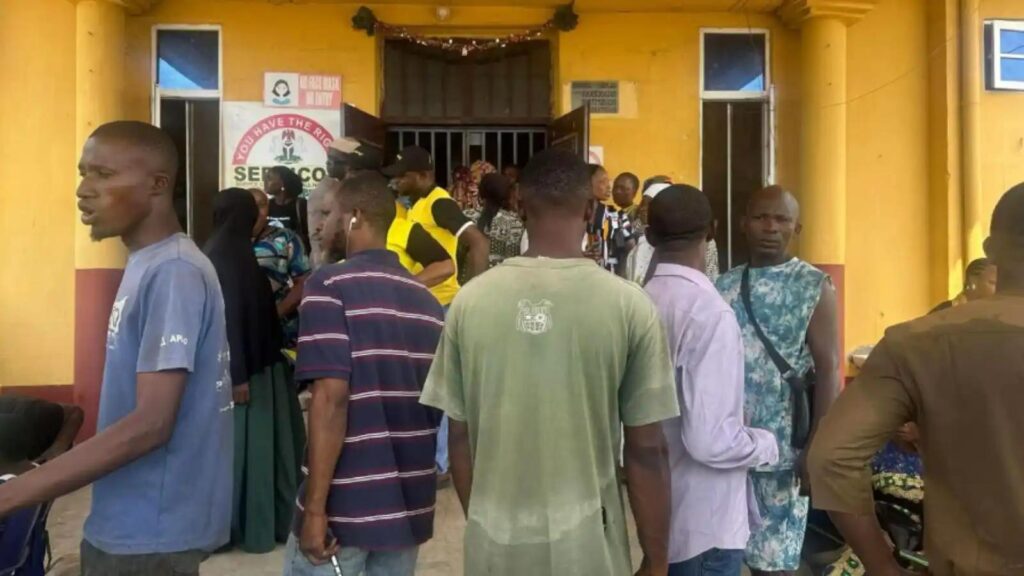
More than 100 students were reportedly hospitalised following a gaseous exposure incident in Ogun State, according to reports published on Wednesday, 21 October. The communities named in the reporting included Ijebu-Ode, Ijebu-Igbo and Ago-Iwoye.
Reports by Punch Newspapers, Channels Television and The Guardian Nigeria described the incident and its impact on schoolchildren. Channels Television reported that state officials linked the recurring emissions to underground gas associated with geological and tectonic fault lines. However, the underlying technical findings are not reproduced in the supplied material, so the precise source and mechanism should be described with care. The reported figure of more than 100 hospitalised students also requires confirmation from official health records.
Those limitations are important. The reported number indicates the scale of the incident as described in the news reports, but it should not be presented as a final, independently verified count without confirmation. Likewise, describing the incident as a gaseous exposure does not establish which substance was involved, how it was released or where the exposure originated.
The immediate public-health questions concern the condition of the affected students, whether school staff or nearby residents were also exposed, and whether any danger remained after the incident. The supplied script does not establish the answers to those questions.
The response therefore requires a clear account from the relevant authorities. Investigators and health officials need to establish what happened, identify the substance where possible, assess the affected people and communicate any necessary safety measures. Information about whether the exposure has stopped and whether affected locations are safe would also help communities understand the situation.
The incident raises questions about school safety, emergency response and environmental monitoring. However, the available information does not establish that a particular school-safety system failed, nor does it identify a responsible person or organisation. Those conclusions would require evidence that is not contained in the supplied report.
This distinction is central to responsible Nigeria public health reporting. The seriousness of a reported incident warrants attention, but urgency does not justify filling gaps with speculation. A definitive explanation should follow investigation and documented findings.
What to watch: Confirmation of the number of students affected, updates on their condition, identification of the substance and source, and official information about any remaining risk or preventive measures.
Story 2: Nigeria Public Health — What Is Known About the Imported Ebola Case?
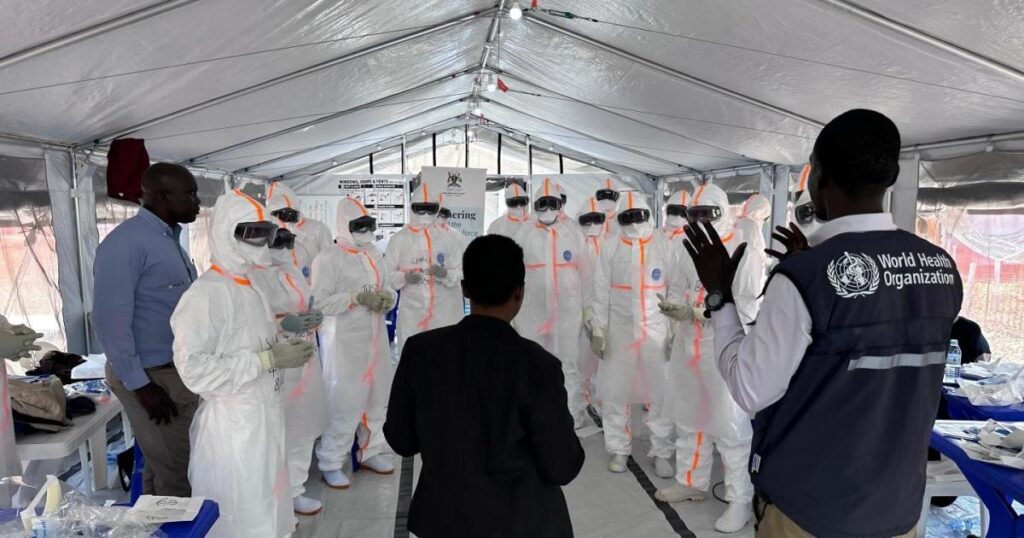
Nigeria’s public-health response also came into focus after the World Health Organization’s Regional Office for Africa reported a confirmed imported case of Ebola Bundibugyo virus disease. The WHO report was published on 20 October and identified the patient as a woman who had recently travelled from Uganda.
According to the World Health Organization’s Regional Office for Africa, the woman’s symptoms began on 7 October. She sought care at a private health facility in Abuja on 11 October, and laboratory confirmation followed on 20 October.
The WHO reported that 44 contacts had been identified and were being monitored. It also said the patient was in isolation and receiving medical care, while the Nigeria Centre for Disease Control and Prevention had activated its incident-management system.
These details describe the initial reported response. They do not establish the final outcome of contact tracing or whether additional cases were subsequently detected. The supplied material does not provide a later confirmed result for either question.
An imported case and widespread transmission are also different situations. The confirmation of a case involving a traveller does not, by itself, demonstrate that sustained transmission has occurred within Nigeria. At the same time, the circumstances make surveillance, contact monitoring, infection prevention and clear public communication important.
The relevant authorities need to provide reliable updates as the response develops. The number of contacts initially identified is useful information, but it does not tell readers whether all contacts have completed monitoring, whether any became symptomatic or whether further investigation identified additional cases.
The patient’s condition is another outstanding question in the supplied account. It states that she was receiving medical care but does not provide a confirmed final outcome. No later status should be inferred from that initial statement.
The institutional responsibilities are clear at a general level: public-health authorities must manage the response, monitor identified contacts and communicate verified developments. The public needs information that is sufficiently clear to understand the situation without exaggerating the risk or creating false reassurance.
For Nigeria public health, the key issue is the quality and timeliness of the follow-up information. A confirmed case is a specific reported event; the wider public-health picture depends on subsequent evidence.
What to watch: Updated information from the WHO and NCDC on contact tracing, any subsequently detected cases and the patient’s condition. The supplied reporting does not establish those later outcomes.
Story 3: Nigeria Public Health — Gombe’s Reported Cholera Outbreak and the Need for Confirmation
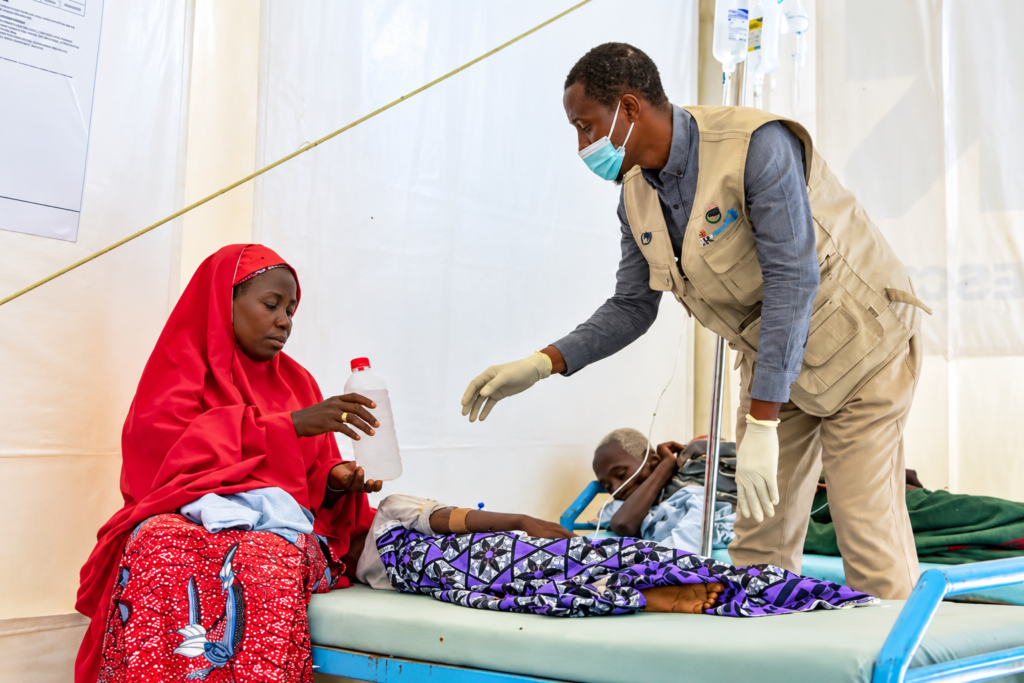
Gombe State reportedly declared a cholera outbreak following two deaths, according to Punch Newspapers’ report. The report stated that 74 patients had been treated and discharged.
The figures were attributed to the state’s account in the supplied material. They should therefore be presented as reported figures, not as a complete and independently verified epidemiological assessment.
The report also indicated that authorities might declare the outbreak over by 24 October if no additional cases were recorded. The News Agency of Nigeria report republished by Peoples Gazette also carried the state’s reported treatment and discharge figures. That was a conditional expectation. It was not confirmation that the outbreak had ended, and the supplied script does not provide a subsequent announcement establishing that it had.
The distinction matters because a proposed date for declaring an outbreak over is not equivalent to a formal declaration. The status depends on the conditions set by the relevant health authorities and the evidence available to them. Without a confirmed update, it would be premature to report that the outbreak had ended.
The reported deaths and patient discharges also describe different outcomes. The two reported deaths indicate the seriousness of the incident as presented in the source, while the 74 discharged patients represent the reported number who had received treatment and left care. Neither figure, by itself, establishes the full number of infections, the geographical extent of the outbreak or whether further cases were detected.
The next public-health update should clarify whether additional cases were recorded, whether the reported totals changed and whether the state formally declared the outbreak over. The supplied material does not identify those later results.
The incident highlights the importance of timely treatment, disease surveillance, prevention measures and reliable communication from health authorities. However, the source does not provide enough information to assess the effectiveness of specific interventions or to attribute the reported deaths to a particular failure.
The Ogun exposure incident, the imported Ebola case and the Gombe cholera report are separate developments. They should not be presented as a common outbreak or as evidence of one shared cause. Their legitimate connection within this daily Nigeria news review is the need for accurate public-health information and careful distinction between initial reports and subsequent confirmed outcomes.
What to watch: An official update on new cases, revised figures and whether Gombe State formally confirms that the outbreak has ended.
Story 4: Nigeria Public Accountability — Senate Scrutiny of Conflicting Petrol-Import Figures
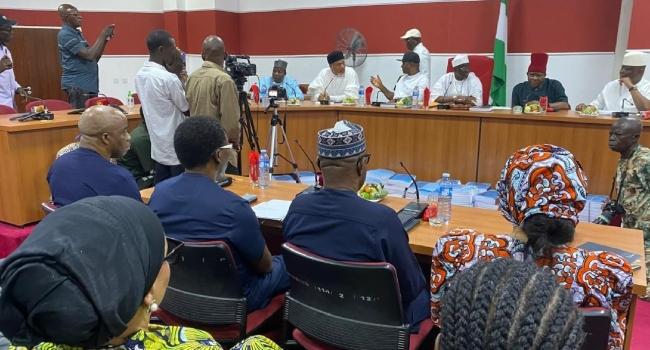
Conflicting petroleum-import figures reportedly came under scrutiny as a Senate committee sought explanations from the Nigerian Midstream and Downstream Petroleum Regulatory Authority (NMDPRA), the Nigerian National Petroleum Company Limited (NNPCL) and the Nigeria Extractive Industries Transparency Initiative (NEITI), as detailed in Punch Newspapers’ report on the Senate committee’s action.
Reports published on 21 October cited substantial differences between figures attributed to NMDPRA and NNPCL for 2022 and 2023.
For 2022, the reported figure attributed to NMDPRA was 3.29 billion litres, compared with 6.27 billion litres attributed to NNPCL. For 2023, the reported figures were 6.02 billion litres from NMDPRA and 3.88 billion litres from NNPCL.
The supplied reporting did not reconcile the figures. It also stated that the Senate committee rejected an explanation from NMDPRA officials and sought engagement involving the relevant institutions.
The central issue is not simply that two sets of figures differ. It is what each figure measures, which records support it and why the reported totals are not aligned. A proper explanation would need to compare the underlying records, including the reporting periods, definitions and categories used by the institutions.
Until that work is documented, the differences should not be treated as proof of fraud, theft, missing fuel or financial loss. Such conclusions go beyond what the reported discrepancy establishes.
The matter is significant because petroleum-sector data inform public understanding of supply, regulation and the performance of the institutions responsible for the sector. When reported figures differ substantially, the public needs to know whether the differences arise from different measurement methods, reporting coverage or another explanation established by the records.
Senate scrutiny provides an opportunity to seek answers, but the existence of an inquiry is not the same as a completed finding. Similarly, an institution’s explanation should be assessed against the underlying evidence rather than accepted or rejected without a documented basis.
The role of the relevant institutions is therefore practical as well as reputational. Their records and explanations need to be sufficiently clear for the committee and the public to understand how the reported figures were produced. The supplied material does not establish that a final reconciliation or definitive committee conclusion had been reached.
For Nigeria public accountability, the next meaningful step is a transparent, documented reconciliation. It should establish what each figure represents, explain the differences and identify any further issues that the evidence genuinely supports.
What to watch: The institutions’ documented explanations, any published comparison of the underlying figures and the Senate committee’s evidence-based conclusions.
Story 5: Nigeria Public Accountability — House of Representatives Questions Telecom Operators
Telecommunications service quality came under legislative scrutiny after the House of Representatives reportedly gave operators seven days to explain persistent poor service. Voice of Nigeria’s report said the hearing was scheduled for 28 October 2026 at 2 p.m.
The inquiry concerns a service that supports banking, education, business transactions, employment and everyday communication. Network reliability can therefore affect how households and businesses carry out routine activities, although the supplied material does not quantify the economic losses or personal consequences associated with the reported service problems.
The House’s reported decision to seek explanations is a step towards scrutiny, not a final finding that a particular operator is responsible. Nor does it establish that corrective action has already been implemented or that network quality has improved.
The next stage should clarify which operators were invited, what evidence lawmakers requested and how the operators’ responses compare with service-quality information from the Nigerian Communications Commission (NCC). The supplied script identifies the need for such information but does not provide the requested evidence, the operators’ responses or the outcome of the hearing.
This distinction is important when evaluating public accountability. A legislative inquiry can create an opportunity to examine complaints and ask institutions or businesses to explain their performance. Its practical value, however, depends on the evidence considered, the conclusions reached and any subsequent action.
For consumers, the central concern is whether the process leads to identifiable improvements. A hearing taking place would establish that a legislative step occurred, but it would not automatically establish that service has improved. Evidence of corrective measures and subsequent service performance would be needed to assess the outcome.
Telecommunications reliability also has a wider public-service dimension. When people depend on digital connections to access financial services, education or business communications, poor service can become more than an inconvenience. Nevertheless, the scale and distribution of any effects should be established through evidence rather than assumed from the general importance of telecommunications.
The reported hearing date offers a specific next point for public scrutiny. The supplied material does not establish whether the hearing subsequently took place, what explanations were provided or whether lawmakers made findings.
What to watch: Confirmation of the hearing, the operators invited, the evidence presented, the NCC’s relevant service-quality information and any measurable corrective action.
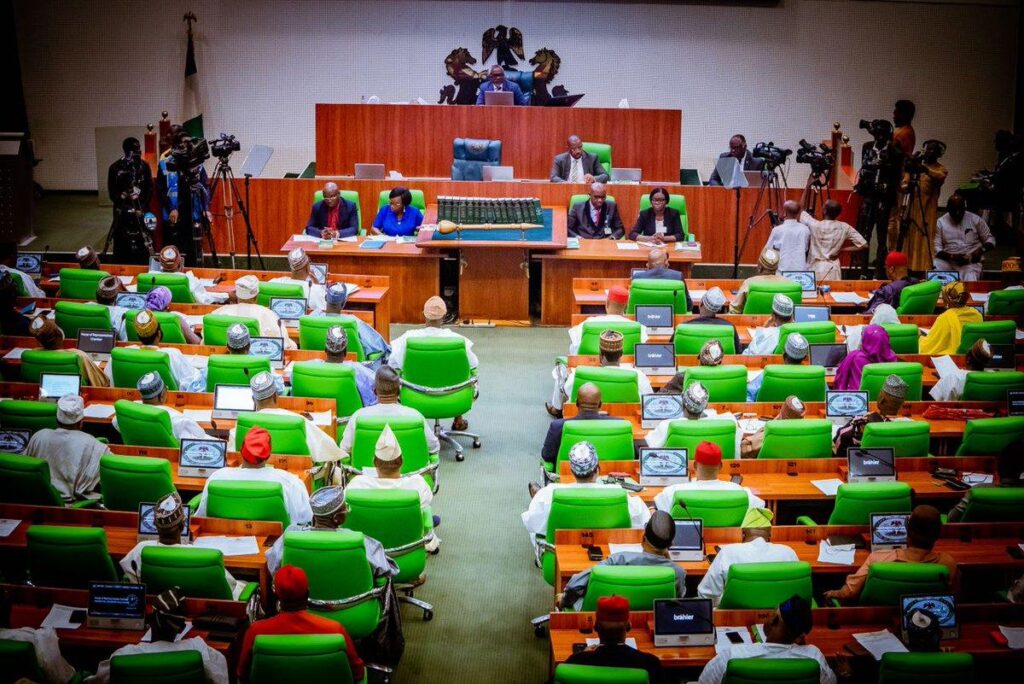
Story 6: Nigeria Public Policy — What Ekiti’s State Police Bill Actually Means
The debate over policing in Nigeria’s federal system gained another legislative development after the Ekiti State House of Assembly passed a bill proposing a constitutional framework for State Police Services. Punch Newspapers’ report on the Ekiti Assembly decision said the Assembly also directed that the bill be transmitted to the National Assembly alongside its observations.
The proposal concerns a longstanding policy question: whether policing powers should be decentralised so that security arrangements can respond more directly to local needs. The supplied material identifies this as the wider issue but does not provide the full text of the bill or enough detail to assess its specific legal provisions.
It is essential to distinguish the reported passage of a bill by a state assembly from the establishment of State Police. The development does not, by itself, mean that State Police have been established in Ekiti. Nor does it establish that the national constitutional-amendment process has been completed.
The next steps identified in the supplied script include confirming the bill’s transmission, examining its provisions and tracking the subsequent constitutional process. The material does not establish whether transmission was completed or what happened after the reported state-level passage.
The policy questions extend beyond the initial legislative action. Any eventual framework would need to address the division of authority, funding, oversight and safeguards against abuse. It would also need to make clear how officers and institutions would be held accountable and how citizens’ rights would be protected.
These are questions for assessing the proposal, not claims that the bill already provides particular answers. Without its full provisions, it would be premature to describe the proposed safeguards, funding arrangements or operational structure as settled.
The distinction between proposal and implementation is especially important in public-policy reporting. A legislative step can begin or advance a process, but the legal and institutional requirements that follow determine whether a proposed change becomes an operating system.
The proposal’s significance will therefore depend on its actual content and the legal steps that follow. Public debate about State Police should consider both the potential purpose of decentralisation and the arrangements needed to ensure accountability.
What to watch: Confirmation of transmission, the bill’s provisions and subsequent constitutional steps. The supplied reporting does not establish that State Police have been established in Ekiti.

Story 7: Nigeria Economic Policy — Private Capital, Growth Ambitions and the Petrol Subsidy Position
Nigeria’s economic direction remained in focus after a Reuters report published on 21 October said the finance minister was seeking private capital to support growth and ruled out a return to petrol subsidy.
The report cited an inflation rate of 14.63 per cent, compared with 21 per cent a year earlier. It also cited approximately 10 million households as receiving transfers, an International Monetary Fund growth forecast of 4.2 per cent for 2026 and 4.3 per cent for 2027, and a ministerial ambition of approximately 7 per cent annual growth over five years.
These figures describe different things and should not be treated as interchangeable measures of economic performance.
The IMF figures are forecasts, not confirmed outcomes. The approximately 7 per cent figure is a government ambition, not an achieved growth rate. The reported number of households receiving transfers describes the reach claimed in the report, but the supplied material does not establish the programme’s full coverage, the regularity of payments or its measured impact on recipients.
The inflation comparison also requires careful interpretation. A lower inflation rate means prices are rising more slowly than before; it does not necessarily mean prices have fallen. If inflation slows, the cost of essential goods may still remain high, even though the rate of increase has eased.
The government’s reported approach centres on attracting private capital while maintaining its position against a return to petrol subsidy. The source does not provide a complete policy implementation plan, a confirmed total for new investment or evidence establishing the effects of the stated approach on employment and household welfare.
Attracting private capital is a stated strategy. Its success would need to be assessed through evidence of investment that actually materialises, productive activity, jobs and other measurable outcomes. Announcements or ambitions alone cannot establish that these results have occurred.
The same principle applies to support programmes. A reported transfer total may indicate intended or reported reach, but a fuller assessment requires evidence about delivery and effectiveness. Without that information, it is not possible to draw a firm conclusion about the programme’s effect on living standards.
These distinctions matter because national growth figures do not automatically reveal how evenly benefits are distributed. An economy can record growth while different households experience different conditions. The supplied material does not establish those distributional outcomes for this report, so they remain questions for assessment rather than conclusions.
For Nigeria economic policy, the key test is whether the stated approach translates into measurable improvements. The forecasts provide expectations, the ministerial ambition identifies a target, and the reported policy position describes an intended direction. None, on its own, proves that the desired results have been achieved.
What to watch: Evidence of private investment actually deployed, subsequent economic growth data, changes in inflation, the documented reach and delivery of household transfers, and measurable outcomes from the government’s stated approach.
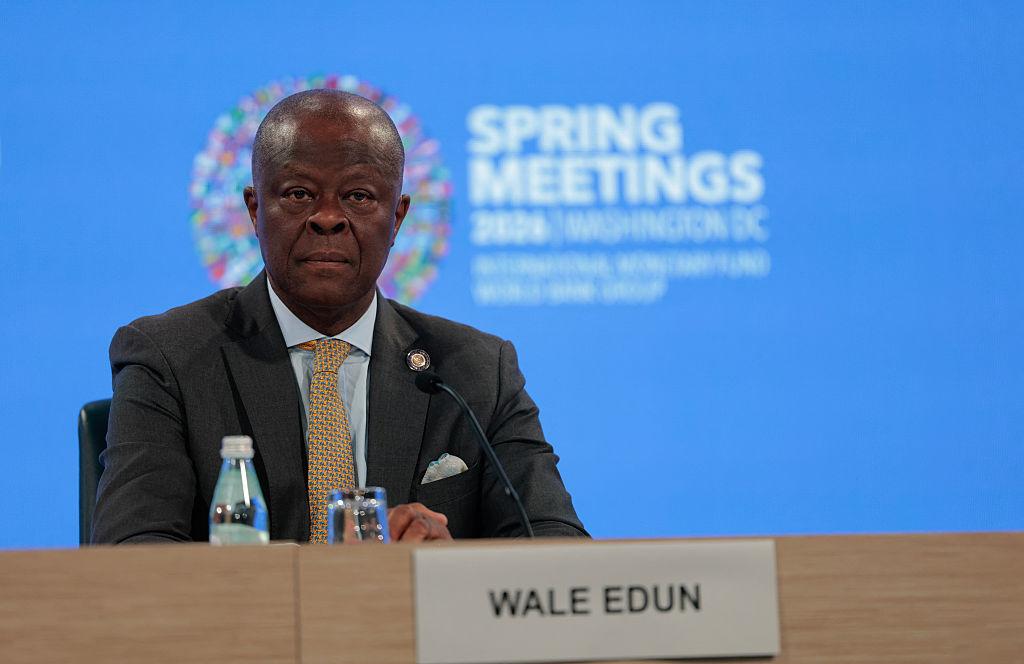
Story 8: Nigeria Public Accountability — NITDA’s Warning About AI Misinformation Ahead of 2027
Concerns about electoral integrity also featured in the news following a warning from the National Information Technology Development Agency (NITDA) about artificial intelligence-generated misinformation ahead of Nigeria’s 2027 elections. Punch Newspapers reported on NITDA’s warning, including concerns about deepfakes and cyberattacks.
The reported concerns included deepfakes, cyberattacks and attempts to manipulate public opinion. AI tools can be used to generate or alter images, audio and video, potentially making fabricated material appear authentic to people who encounter it online.
During an election period, the circulation of deceptive material could make it harder for voters to distinguish genuine evidence from manipulation. But the possibility of such activity must be distinguished from evidence that a particular incident has occurred.
The supplied reporting does not establish the scale of AI-enabled electoral manipulation in Nigeria, nor does it identify a specific election incident proven to have involved AI-generated misinformation. Separately, Voice of Nigeria reported on INEC’s preparations to address AI-related digital threats; that is related election-preparedness context, not proof that a particular manipulation incident has occurred. NITDA’s reported warning should therefore be understood as a statement about potential risks, not proof that an election has already been compromised.
The practical questions concern preparedness and accountability. What safeguards are in place? Which institutions are responsible for responding to incidents? How will suspicious material be assessed, and how will reliable information reach the public when disputed content circulates online?
The supplied script raises these questions but does not provide enough evidence to describe a complete national response framework or establish how effective any safeguards have been.
News organisations have a direct responsibility to verify digital material before publishing or broadcasting it. A convincing video or familiar-sounding voice is not, by itself, proof of authenticity. Verification should seek reliable corroboration and the original source wherever possible.
Members of the public also have a role in limiting the spread of false information. Checking the origin of dramatic political claims and seeking corroboration before sharing them can help prevent unverified material from being treated as established fact. These practices are useful safeguards, but they do not eliminate every risk.
The institutional test is whether warnings are followed by credible preparation and demonstrable action. Public statements can identify a concern, but the effectiveness of a response must be assessed through evidence of implementation and how actual incidents are handled.
For Nigeria public accountability, the important distinction is between identifying a potential threat and establishing that a specific event has occurred. Responsible reporting should neither dismiss the warning nor inflate it into an unsupported claim about electoral manipulation.
What to watch: Further documented details of the safeguards, the institutions responsible for responding to incidents and evidence of how actual cases of suspected AI-generated misinformation are assessed and handled.

Conclusion: Nigeria News Review and the Test of Evidence
The developments examined in this Nigeria news review span public health, petroleum-sector oversight, telecommunications, constitutional reform, economic policy and electoral preparedness. They do not establish a single national cause or a common failure. They do, however, highlight the importance of distinguishing reported events from confirmed outcomes.
In Ogun State, the substance behind the reported student hospitalisations remains unidentified in the supplied material. The Ebola and Gombe cholera reports require follow-up information before their subsequent outcomes can be established. In the petroleum sector, conflicting figures require a documented reconciliation before conclusions about their meaning can be drawn. The telecommunications inquiry must be assessed by the evidence received and any subsequent improvements, while Ekiti’s State Police proposal must be followed through the relevant constitutional process.
The economic report presents another important distinction: forecasts and government ambitions are not achieved results. Likewise, a warning about AI-generated misinformation identifies a potential risk but does not prove that a particular election has been compromised.
Across these stories, the central questions remain consistent: what happened, what evidence supports the claims, what action has followed and what remains unresolved?
For Nigeria’s institutions, transparency and implementation are essential to demonstrating progress. For the public and the media, careful verification is essential to understanding what those developments actually mean. Accountability depends not only on announcements and inquiries, but also on documented explanations, effective action and results that can be assessed.
About the Author