Introduction
International headlines can report an attack claim, a government restriction, a military exercise, a financial commitment or a rise in borrowing costs. Understanding what those developments mean, however, requires more than repeating the announcement. It requires examining what is established, what remains uncertain and what consequences may follow.
This edition of the DSG Herald News Global Daily News Review examines five developments across international security, artificial intelligence, military cooperation, defence assistance and public finance. In the Gulf, claims involving Saudi targets raised questions about energy-market risk, while the reported movement in oil prices highlighted how expectations of disruption can influence markets before a physical interruption to supply is established. In the United States, restrictions involving DeepSeek brought renewed attention to national security and the boundaries of government technology policy.
Elsewhere, Japan–US military cooperation illustrated the role of exercises in operational readiness, while Ukraine’s continuing air-defence needs raised questions about the distance between financial commitments and equipment that can be deployed. In France, reported increases in government bond yields focused attention on borrowing costs, investor confidence and the challenge of managing public finances amid political uncertainty.
These stories concern different countries and institutions, and they should not be forced into a single causal narrative. Yet each demonstrates why global security and economic pressure must be assessed through evidence and context. What do the available reports establish? What do they leave unanswered? And what should readers understand before drawing conclusions?
Story 1. Gulf Security and Oil Prices: Risk Is Not the Same as Confirmed Disruption
Claims involving Saudi targets have drawn attention to security risks in the Gulf and the potential consequences for international energy markets. The reports described in the source material included claims by Yemen’s Houthi movement involving energy facilities, airports and military installations.
An essential qualification remains: the broader allegations had not been independently verified in the reporting described, and Saudi authorities had not immediately confirmed them. The claims therefore should not be presented as proof that the listed targets were struck, that damage occurred or that oil production was interrupted.
That distinction is central to responsible security reporting. An allegation may warrant scrutiny because of the potential consequences, but its significance cannot be established solely by the fact that it has been made. Confirmation of an incident, evidence of physical damage and proof of an interruption to production or transport are separate questions.
Why oil markets respond to the possibility of disruption
Energy markets can react to risk before a supply interruption is confirmed. Traders assess not only the oil already being produced and transported, but also the possibility that future production, export facilities or shipping routes could be affected.
The source script cites a Reuters report that recorded Brent crude reaching $111.05 per barrel during the trading session covered by that report, amid heightened geopolitical concerns. This figure should be understood in its original reporting context, not treated as a live price or as proof that a particular alleged attack caused the market movement.
When traders anticipate a possible interruption, prices may reflect the risk they believe they are facing. That response does not establish that the feared event has happened. It shows why markets and physical supply conditions must be examined separately.
The distinction matters for readers interpreting reports of conflict and energy prices. A market can react to uncertainty even while the factual status of an incident remains unresolved. Conversely, a confirmed security incident does not automatically establish the scale or duration of any resulting supply loss.
What higher crude prices could mean for Nigeria
For Nigeria, higher international crude prices can create the potential for increased export revenue. But the relationship between a global benchmark price and the country’s eventual financial benefit is not automatic.
The outcome depends on several factors, including production levels, operating costs, domestic pricing arrangements, exchange rates and wider economic conditions. Higher prices cannot, by themselves, establish how much additional revenue will reach government finances or what households will experience.
The wider issue is therefore not simply whether oil prices rise. It is whether a price movement is accompanied by a confirmed supply change and how that change affects producers, governments, businesses and consumers.
What remains unresolved
The central question is what happened on the ground and whether any of the reported incidents caused measurable damage or disrupted oil production, exports or shipping. The source material does not establish those outcomes.
Until the claims and their consequences are verified, reporting should preserve the distinction between a security allegation, a market reaction and a confirmed change in energy supply. Each may be important, but none automatically proves the others.

Story 2. DeepSeek US Restrictions: Understanding the Scope of Technology Policy
The United States’ restrictions involving DeepSeek have brought renewed attention to the relationship between artificial intelligence, data protection and national security. The key issue is not merely whether a restriction exists, but precisely what it covers and what evidence supports the concerns behind it.
The Federal Register notice described in the source script concerned covered DeepSeek products and services within federal civilian executive-branch information technology systems and procurement. That scope matters. It should not automatically be interpreted as a universal prohibition on every private individual or business in the United States using the technology.
A headline that describes a restriction as a blanket ban may give readers a broader impression than the measure supports. Understanding a government action requires examining the relevant rule, the institutions and systems it applies to, and the activities it prohibits.
National security concerns and the evidence
American officials cited security concerns, including potential risks involving data and access. Those concerns need to be distinguished from technical allegations that have been independently demonstrated.
A government may decide that certain technology should not be used in particular systems because of the sensitivity of the information those systems handle or the security risks officials believe the technology presents. But the existence of a restriction does not, on its own, prove every allegation that may be made about a product.
The reasoning behind the decision, the formal scope of the rule and the evidence available for scrutiny are separate elements of the issue. Keeping them distinct helps the public understand both the policy and the limits of what can be concluded from it.
The wider implications for AI adoption
The question extends beyond DeepSeek. Organisations adopting artificial-intelligence tools need to consider how information is handled, who can access it, how long it is retained, what protections a provider offers and what human oversight is required.
These considerations are especially important where AI tools may encounter confidential business information, personal data or sensitive institutional records. An organisation’s decision to adopt a technology should take account of its intended use and the risks associated with the information involved.
The broader policy challenge is how governments can protect sensitive systems while maintaining transparency and accountability. Restrictions can have consequences for technology access and institutional choices, so their scope and justification should be understood accurately.
What remains unresolved
The source material identifies the general scope of the restriction and the security concerns cited by officials, but it does not provide enough detail to independently assess the technical evidence behind those concerns.
The defensible conclusion is therefore limited: the described measure concerns covered products and services in specified federal civilian systems and procurement. A wider claim about every private user’s access would go beyond the information supplied.

Story 3. Japan–US Military Cooperation: What Keen Sword 27 Can—and Cannot—Tell Us
The Keen Sword 27 exercise highlighted efforts by Japan and the United States to strengthen military readiness and operational coordination. The exercise also drew attention to the strategic importance of Japan’s southwestern islands and the wider Indo-Pacific region.
Japan’s Joint Staff described the exercise as an opportunity to improve joint response capabilities and integrated operations. Activities outlined in the source material included command coordination, logistics, troop movement and operations involving space, cyber and electromagnetic activities. Australia’s Defence Department was also identified as announcing participation in the exercise.
These activities illustrate how joint exercises allow participating forces to practise communication, coordinate decisions and test the movement and use of personnel and equipment. They can help identify operational weaknesses and improve interoperability before an actual emergency occurs.
Readiness is not proof that conflict is imminent
Military exercises can carry strategic significance, particularly when conducted in regions where security concerns and competing interests are important. However, the existence of an exercise does not, by itself, establish that conflict is imminent.
Its significance must be assessed in relation to its stated objectives, the participating forces, the activities being conducted and the wider regional context. A claim that an exercise proves a war is about to begin would require evidence beyond the exercise alone.
The distinction is important because military readiness can serve several purposes. Forces may train to improve coordination, test procedures, strengthen alliance cooperation or prepare for a range of possible contingencies. The fact that a capability is being practised does not establish that it will be used in a specific conflict.
A figure that requires reconciliation
The source script contains differing estimates of US participation in Keen Sword 27, ranging from approximately 11,000 to 12,000 personnel. Those figures require reconciliation against the relevant official announcements before publication.
The discrepancy should not be silently resolved by choosing one figure without evidence. Participation totals are material details, and the relevant source, scope and reporting period should be checked to determine whether the figures describe the same measure.
The wider security question
The broader issue is how alliance coordination and military readiness influence deterrence, regional security and the risk of heightened tensions. Exercises can provide information about cooperation and preparedness, but their meaning must be assessed carefully.
The supplied material supports the conclusion that Keen Sword 27 was presented as an exercise intended to improve coordination and readiness. It does not establish that a particular conflict is imminent. Resolving the participation figures and examining the official exercise details would strengthen any further assessment.

Story 4. Ukraine’s Air Defence: Why Funding Is Only One Stage of Military Assistance
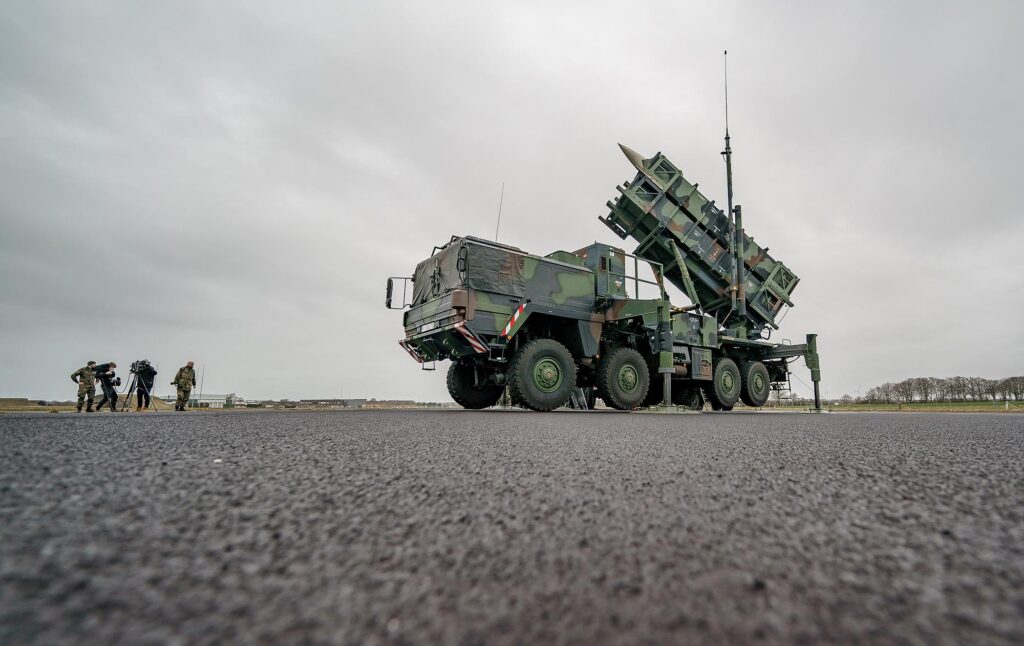
Ukraine’s air-defence needs remain a central issue in the debate over military assistance from Europe and the United States. The challenge is not only how much funding is committed, but how financial support becomes equipment and operational capability.
The European Commission announcement cited in the source script described a disbursement of €2.86 billion under the defence component of a €90 billion Ukraine Support Loan. The funding was intended to support defence-related needs, including drones, air-defence systems, missiles, radars, electronic-warfare systems and ammunition.
These figures describe the funding framework reported in the source. They do not, by themselves, establish that specific weapons have arrived in Ukraine or are ready for use.
From financial commitment to operational capability
Military assistance involves several stages. Funding may support procurement, but equipment must also be acquired, delivered, deployed and integrated into operational systems. Personnel may require training, while equipment needs maintenance and a continuing supply of relevant support.
Each stage can affect when a financial commitment produces practical capability. The amount of funding announced is therefore an important measure of support, but it is not a substitute for evidence about equipment, quantities, delivery schedules and readiness.
For air defence, the distinction is particularly consequential. The practical value of assistance depends on whether the required systems and supporting resources are available when and where they are needed. The supplied script, however, does not provide a complete system-by-system inventory of Ukraine’s requirements or deliveries.
The reported question of Patriot transfers
The source script also referred to a Washington Post report that certain transfers of Patriot interceptor missiles to Ukraine were awaiting US approval at the time of publication.
That report should not be interpreted as proof that every form of American assistance had stopped. It concerns the reported status of certain transfers, not necessarily all US military support or every category of equipment.
To understand the practical implications, the relevant questions include which systems and quantities were involved, what approvals were required, whether those approvals were subsequently granted and when equipment could be delivered. The source material does not settle those questions.
Can European support compensate for a shortfall?
Whether European countries can compensate for any shortfall in US support depends on the specific capability required and the assistance that can be supplied. A financial commitment alone cannot establish that one source of support can replace another.
A reliable assessment would require a system-by-system comparison of Ukraine’s needs, available equipment, approved transfers, delivery schedules and operational requirements. The source script does not provide sufficient detail to reach a definitive conclusion about whether European assistance can fully compensate for any shortfall.
What the figures establish—and what they do not
The reported €2.86 billion disbursement is evidence of a financial development described by the European Commission announcement cited in the script. It should not be treated as proof that all the listed categories of equipment have been purchased, delivered or deployed.
Likewise, the report about certain Patriot transfers awaiting approval should not be expanded into a claim that all US assistance had ceased.
The central question remains how financial support translates into deployable air-defence capability. Answering it requires evidence about the equipment itself, the approvals and delivery processes, and the operational requirements Ukraine faces.
Story 5. France’s Government Bond Yields: Borrowing Costs and Investor Confidence
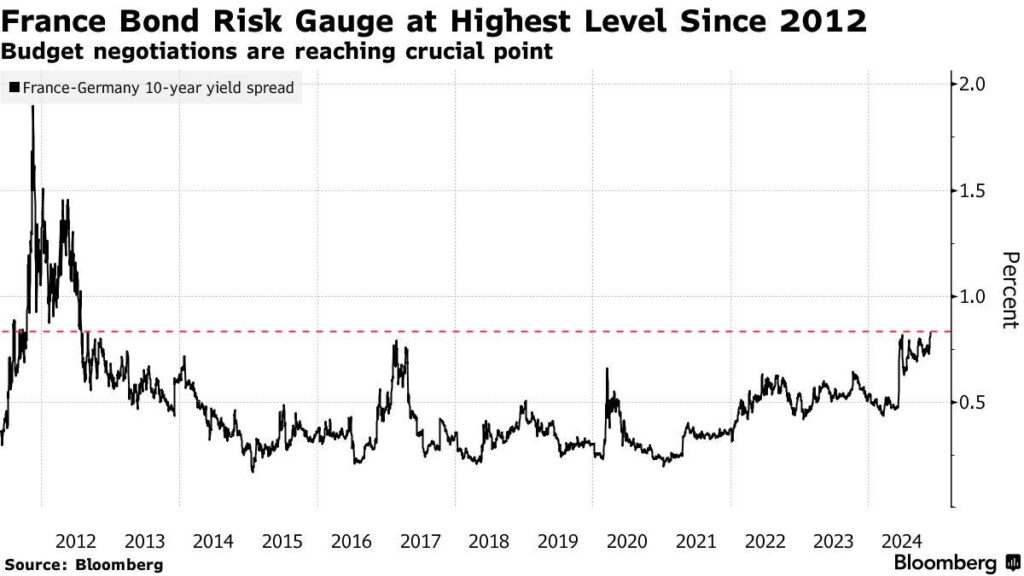
France’s fiscal position and political uncertainty have drawn attention to the cost of government borrowing and investor confidence. Government bond yields are important because they influence borrowing costs and can reflect investors’ assessments of public finances, political conditions, inflation, interest rates and wider economic risks.
The Reuters report cited in the source script placed the yield on French ten-year government bonds at 4.96 per cent. It also reported a spread of approximately 152.5 basis points over comparable German bonds.
These figures should be read in the context of the cited report, rather than presented as live market data. Their significance lies in what yields and spreads measure and what they may indicate about investors’ assessments.
What a bond yield tells us
A government bond is a way for a government to borrow money from investors. Its yield is a measure of the return associated with the bond at the relevant market price. Changes in yields can affect the cost at which a government borrows or refinances debt, although the precise impact depends on its debt structure and financing needs.
A higher yield can reflect investors demanding a greater return to hold a government’s debt. But yields are influenced by several factors, and a single movement does not provide a complete explanation of market sentiment or fiscal conditions.
Why the France–Germany spread matters
The spread between French and German government bond yields compares the returns investors demand for the two countries’ debt over comparable maturities. A widening gap can indicate that investors are demanding greater compensation to hold French debt rather than German debt.
That comparison can help explain how investors are assessing relative risks. It does not, by itself, identify the precise cause of a change in the spread or prove that one political event produced it.
The source material links the market discussion to concerns about France’s public finances and political uncertainty. Those factors may influence investor expectations, but broader economic conditions and interest-rate expectations can also contribute.
Avoiding a single-cause explanation
The rise in French yields should not be attributed solely to demonstrations or one political event. Market movements rarely have only one cause, and an accurate explanation requires evidence about the relevant period and the factors influencing investors.
Political uncertainty and disputes over the budget may be relevant to confidence in a government’s fiscal plans. But their relative contribution cannot be established from the reported yield and spread alone.
This matters because a dramatic financial figure can be easy to turn into an overly simple story. The numbers show a reported market position; they do not independently establish the full chain of causes behind it.
The fiscal challenge ahead
The broader question is whether France can establish a credible and sustainable fiscal path while securing sufficient political support to implement its budget plans.
Higher borrowing costs can complicate that task over time, but the actual effect depends on the structure of government debt, refinancing needs, economic growth and policy decisions. The supplied material does not establish a definitive future outcome for France’s finances.
The important distinction is between identifying pressure and predicting its consequences. The reported yields and spread provide context for the borrowing-cost debate, but assessing what happens next requires additional evidence about fiscal policy, financing conditions and the wider economy.
Conclusion: Why Evidence and Context Matter
These five developments demonstrate why international news should be examined beyond the initial headline. In the Gulf, reported attacks must be distinguished from confirmed damage and measurable disruption to energy supply. In artificial intelligence, a government restriction must be understood within its actual scope rather than presented as a universal ban without evidence.
Keen Sword 27 highlights the role of military exercises in improving readiness, but an exercise alone does not establish that conflict is imminent. In Ukraine, funding commitments and reports about approvals must be distinguished from equipment delivered and operationally ready. In France, bond yields and spreads provide information about borrowing costs and investor assessments, but they do not prove that one political event caused a market movement.
The broader lesson is not that these developments are unimportant. It is that their importance must be assessed accurately. Claims, announcements, market reactions and operational outcomes represent different kinds of evidence, and they should not be treated as interchangeable.
The available material leaves important questions unresolved, including the verification and consequences of the reported Gulf incidents, the evidence behind the DeepSeek security concerns, the reconciled participation figures for Keen Sword 27, the delivery status of specific Ukrainian air-defence capabilities and the factors behind France’s reported bond-market movements.
Understanding global security and economic pressure therefore requires continued attention to evidence, source attribution and context. Where the facts do not yet settle a question, responsible reporting should make that limitation clear rather than substitute certainty for proof.
That is the essential task of Beyond the Headlines: to explain what the evidence supports, identify what remains uncertain and help readers understand the bigger story.
About the Author