Introduction
The distance between what institutions promise and what they deliver is one of the defining questions in global public affairs. Climate targets, electoral participation, digital-platform decisions, street protests and security strategies may appear to belong to separate debates. Yet each raises a fundamental question: how can the public distinguish an announced ambition, an institutional explanation or a measurable social pressure from an outcome that has actually been demonstrated?
This edition of Beyond the Headlines examines five developments through that lens. The global emissions gap raises questions about whether existing climate commitments match the scale of reductions associated with a pathway towards the 1.5-degree Celsius goal. In Serbia, a student-backed political list entered the formal electoral process ahead of a scheduled parliamentary election. In Brazil, a temporary restriction involving a political advertising account associated with President Luiz Inácio Lula da Silva prompted questions about the independent scrutiny of platform decisions.
Across Europe, housing affordability and overcrowding provide evidence of economic pressure, but do not by themselves explain why particular protests occur. Meanwhile, the European Union’s announced Arctic strategy sets out a policy direction whose practical significance depends on implementation, resources and measurable results.
These are distinct stories, not proof of one common crisis. Their connection is the challenge of global policy accountability: testing commitments against action, claims against evidence and strategic ambitions against documented consequences. Examining that distinction reveals not only what the reported developments establish, but also what remains unresolved.
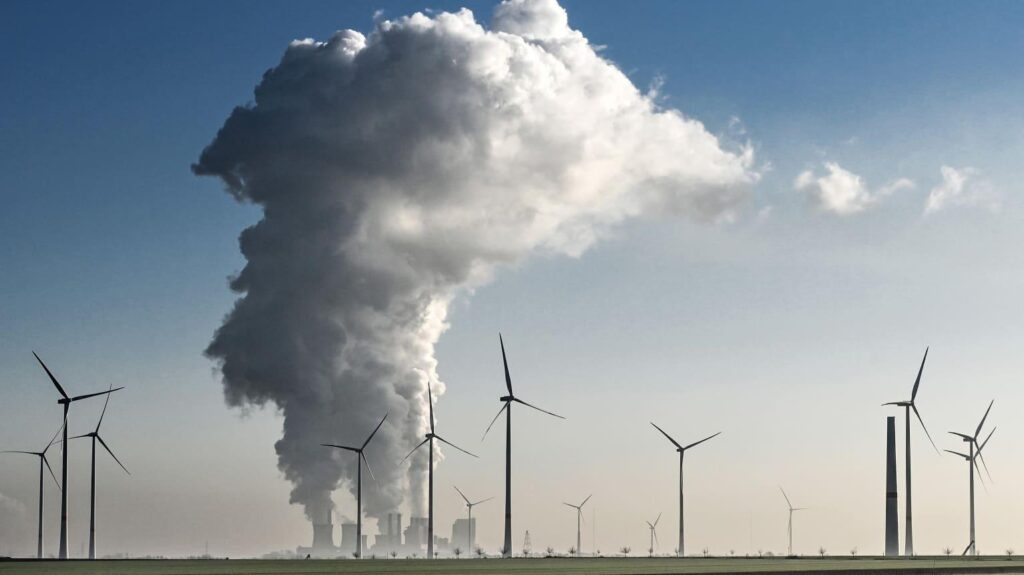
Story 1: The Global Emissions Gap: Do Climate Commitments Match the Required Reductions?
Climate policy is frequently expressed through international agreements, national pledges and long-term targets. But a target does not demonstrate that the policies needed to achieve it have been implemented. Nor does implementation, by itself, guarantee that measured emissions will fall at the required rate.
That distinction sits at the centre of the global emissions gap.
The United Nations Environment Programme (UNEP) is identified in the research behind this edition as the source of a 2026 global emissions assessment describing a modelled pathway intended to limit temperature overshoot and return to the 1.5-degree Celsius goal by the end of the century.
According to the figures recorded in the research dossier, global emissions would need to fall by 18 per cent by 2030, 45 per cent by 2035 and 69 per cent by 2040, compared with 2025 levels, under that pathway.
The same dossier records estimates that full implementation of current national climate commitments would be associated with smaller reductions: between 5 and 8 per cent by 2030, and between 11 and 15 per cent by 2035, also relative to 2025.
If the figures use comparable baselines, scenarios and definitions, they indicate a substantial gap between the emissions reductions associated with the modelled pathway and those expected from current commitments.
That qualification is important. The figures describe projected pathways, not reductions already achieved. The interpretation depends on the assumptions behind the calculations, the baseline used and the precise scenarios being compared. The full UNEP report and its tables must be checked before drawing more detailed conclusions about the scale of the gap or the responsibilities of individual countries and industries.
Three tests for climate accountability
The figures point to a wider question: how should the public assess whether climate commitments are translating into progress?
The first test is what governments have promised. National climate commitments describe intended action, but a pledge does not establish that the necessary laws, regulations and investments have been adopted.
The second test is implementation. Budgets, energy decisions, industrial policies, regulations and enforcement measures help determine whether a commitment has moved from paper into practice. Even an adopted policy may fall short if it lacks adequate funding, coordination or enforcement.
The third test is the measured outcome. Emissions data are needed to establish whether implemented policies are delivering the reductions expected. Results can take time to emerge, and other developments can influence the figures, so a credible assessment must examine both policy measures and actual emissions.
These three tests are related, but they are not interchangeable. A government may announce an ambitious target without implementing sufficient measures. A policy may be implemented without producing the expected reduction. And an observed change in emissions does not, by itself, establish which policy or economic development caused it.
What the emissions gap does—and does not—establish
The modelled reductions are not a complete policy blueprint. The headline percentages alone cannot establish precisely how much each country must contribute, which sectors must deliver particular reductions or which combination of measures will be sufficient.
Those questions require more detailed evidence about energy production, transport, buildings, industry, land use, investment and the assumptions used in the relevant climate scenarios.
Nor does a modelled pathway establish that its projected outcome is inevitable. It describes a set of conditions associated with a particular objective. It does not prove that governments will follow the pathway, that every measure will be politically achievable or that all assumptions will hold.
The significance of the global emissions gap is therefore the need to compare the reductions associated with climate objectives with existing commitments, implemented measures and measured outcomes. It highlights the scale of the challenge without proving that a particular future result is guaranteed.
The central question for climate accountability is not simply whether governments have announced ambitious goals. It is whether their commitments and actions can be shown to match the reductions required.
Story 2: Serbia’s Student Movement: Can Electoral Participation Become Political Influence?
The research dossier identifies the list as “Student List – Students Win” and attributes its formal proclamation to the Republic Electoral Commission.
That proclamation was a procedural milestone. It established that the list had entered the formal electoral process, but it did not determine how much public support the list would receive, how it would perform at the ballot box or whether the wider election would meet every standard of credibility.
The distinction between political mobilisation and electoral influence is central to understanding the development.
The background to student mobilisation
The movement’s wider context includes the collapse of a railway station canopy in Novi Sad on 1 November 2024. The disaster killed 16 people and became an important reference point in subsequent public anger and student mobilisation.
The disaster provides historical context for understanding the political environment in which the movement developed. It should not, however, be used as evidence for every later allegation, every participant’s motivation or every claim about the conduct of institutions.
The demands of a public movement need to be established through its own statements and documented actions. Participants may have different priorities, and the movement’s public identity alone cannot establish the motivations of everyone involved.
This matters when a movement seeks to move from demonstrations and public campaigning into electoral competition. Mobilisation can bring attention to grievances, but electoral influence requires additional steps: organisation, a programme voters can assess, campaigning under the applicable rules and sufficient support at the ballot box.
What formal participation tells us
The proclamation of a political list establishes a procedural fact. It does not provide a reliable measure of voter support or predict the eventual result.
Campaign activity may offer evidence of organisation and visibility. Reliable polling, where available, may provide an indication of voter preferences, although it does not replace the official result. Once voting takes place, the results and credible evidence about the conduct of the election become essential to assessing the outcome.
At the reporting cut-off recorded in the source script, the election scheduled for 25 October 2026 had not yet taken place. The result and the movement’s electoral performance therefore remained unresolved.
The same care is required when assessing claims about electoral fairness. Allegations must be attributed to the people or organisations making them, and relevant responses should be included where available. Earlier assessments of Serbia’s electoral environment may provide background, but they cannot automatically establish what will happen in a later election.
A defensible assessment must be based on evidence specific to the campaign, voting process, official results and any documented complaints or observations.
The unresolved question
A large protest does not automatically translate into a corresponding share of votes. Equally, entering an election does not guarantee success or establish that the wider electoral process is credible.
The documented development was the student-backed list’s entry into the formal electoral process. Whether that participation would translate into electoral influence remained to be determined.
Serbia’s case therefore illustrates a wider issue of political accountability: public mobilisation and formal participation are important stages, but neither should be confused with an outcome that has yet to be established.
The next case concerns a different form of institutional influence: the ability of digital platforms to restrict or distribute political advertising.

Story 3: Meta and Brazil’s Election: Can Platform Decisions Be Independently Audited?
Digital platforms can affect how political messages are distributed, how campaigns reach audiences and how quickly information circulates. When a political advertising account is restricted, the reasons for that decision can become a matter of public interest.
But the significance of a platform decision is not, by itself, proof of wrongdoing.
The research dossier records that an advertising account associated with Brazilian President Luiz Inácio Lula da Silva was disabled for a little over an hour on 23 September 2026. Meta described the restriction as a mistake and denied political interference.
That is the company’s explanation. It is relevant to the account of what happened, but does not independently establish the technical or administrative sequence that led to the restriction.
The dossier also refers to a separate statement concerning an order from Brazil’s Superior Electoral Court, known as the TSE, involving election advertisements. Reuters also reported Meta’s response to Brazil’s electoral court. The two matters should not be combined into one event without evidence establishing how they were connected. A temporary account restriction and a separate order from an electoral authority may involve different decisions, rules and procedures.
What would an independent audit require?
A reliable reconstruction would require evidence such as the original account notices, relevant platform records, the precise timing of the restriction and restoration, the rules applied to the account, and pertinent documentation from the electoral authority.
Where comparable cases can be documented, they could help establish whether the decision followed a general rule, reflected an error or involved treatment different from that applied to similar accounts.
Without these records, it is difficult to establish the cause of the restriction or determine whether it had a measurable effect on political communication.
The distinction between an explanation and independent verification is central. Meta’s denial should be reported fairly, but the denial alone cannot settle every question. At the same time, the existence of a restriction does not prove that the company deliberately sought to favour or disadvantage a political campaign.
Three separate questions must be kept distinct: what caused the restriction, whether there was any deliberate intent behind it, and whether the restriction had a measurable electoral impact. Evidence supporting one of these propositions would not automatically prove the others.
Why transparency matters
The broader accountability issue extends beyond this individual incident. If a platform’s decisions affect political advertising, the public interest includes whether those decisions can be reconstructed and assessed against transparent records and consistent standards.
That requires more than speculation about motive. It requires an evidence trail that can be examined, alongside an opportunity to consider the platform’s explanation and any relevant records from the electoral authority.
The material identified in the research dossier does not establish that political interference occurred, nor does it establish that the temporary restriction produced a measurable electoral effect.
The defensible conclusion is narrower: the reported restriction raises questions about transparency and independent scrutiny, but the cause, intent and consequences cannot be settled without further evidence.
From a specific dispute over political advertising, the focus shifts to wider social and economic pressures reflected in protests across Europe.

Story 4: Europe’s Protests: What Housing Statistics Can—and Cannot—Explain
Protests across Europe can emerge from different combinations of economic hardship, public-service concerns, political disagreement and demands for institutional change. Demonstrations occurring in several countries, however, should not automatically be treated as one movement or attributed to a single cause.
A credible comparison requires evidence about when the protests took place, who organised them, what participants demanded and how national authorities responded. The cases must be documented consistently before conclusions about shared causes can be drawn.
Housing affordability offers one measurable indicator of economic pressure, particularly among younger people.
What the housing figures show
Eurostat figures recorded in the research dossier indicate that, in 2025, 9.1 per cent of European Union residents aged 15 to 29 lived in households where housing costs amounted to at least 40 per cent of disposable income. The comparable figure for the total population was 7.7 per cent.
The dossier also records that 26.9 per cent of young people aged 15 to 29 experienced housing overcrowding, compared with 16.8 per cent of the overall population, according to Eurostat’s housing-conditions data.
These figures indicate that younger people experienced higher levels of housing-cost overburden and overcrowding under the measures reported. They provide useful context for examining the pressures facing young Europeans.
However, the figures do not establish why a particular demonstration took place. They do not show that housing costs were the principal concern of every protester, that all demonstrations shared the same demands or that conditions in one country explain events in another.
A statistical pattern can identify an issue worth investigating. It cannot replace evidence about the participants, demands and circumstances of a specific protest.
Avoiding a false Europe-wide explanation
Two errors are possible when comparing demonstrations across countries. One is to assume that protests have nothing in common simply because they occur in different national settings. The other is to treat them as manifestations of the same crisis merely because they occur within the same region.
A stronger comparison would focus on a small number of well-documented protest movements and examine their chronology, organisers, demands, participating groups and government responses using consistent criteria.
Such a comparison could help identify pressures that recur across countries while distinguishing them from grievances specific to individual national circumstances.
The evidence recorded in the research dossier supports a limited conclusion: housing affordability and overcrowding are measurable pressures, particularly among younger people. It does not establish that those pressures caused any particular protest.
The distinction matters for public understanding. Economic statistics can help explain the conditions in which social discontent develops, but a causal claim requires evidence connecting those conditions to the specific event being examined.
A credible Europe-wide account should therefore emerge from documented comparisons rather than from the assumption that different demonstrations share one explanation.

Story 5: The EU Arctic Strategy: From Strategic Ambition to Measurable Action
The Arctic occupies an important position in climate science, economic activity, infrastructure and international security. Decisions affecting the region can have consequences for governments, businesses and the communities that live there.
According to the research dossier, the European Union announced a new Arctic strategy on 20 October 2026.
The priorities recorded in the dossier include security and resilience, climate concerns, economic prosperity, the interests of Arctic communities, maritime monitoring, protection of undersea cables, satellite surveillance and icebreaker capacity, as described in coverage of the EU’s Arctic strategy.
These priorities describe a broad strategic direction. The central question is what the announcement means in practical terms.
A strategy is not an operational capability
A strategy can establish objectives, set priorities and signal political intent. Delivering those objectives may require funding, procurement, coordination among institutions, cooperation with partners and a clear timetable for implementation.
The distinction is particularly important when a policy refers to infrastructure protection and security capacity. Identifying undersea cables as infrastructure requiring protection does not establish that additional monitoring or protection systems are already operational. An expressed interest in icebreaker capacity does not, by itself, establish how many vessels will be available, when they will be deployed or what funding has been secured.
The same principle applies to the strategy as a whole. Its effectiveness cannot be measured solely by the language used to announce it.
The research dossier identifies several questions requiring further verification: the precise funding commitments, the implementation timetable, the views of affected Arctic communities and the responses of relevant parties. The exact wording of the strategy’s fossil-fuel policy also needs to be checked before concluding that the EU has changed its position.
These are substantive issues, not merely technical details. Funding and procurement affect whether a strategic objective can be delivered. Implementation arrangements affect who is responsible for carrying it out. Community perspectives matter when regional policy affects the people who live in the Arctic.
What should be measured next?
A meaningful assessment would ask which measures have been formally adopted, which have secured funding, what timetable applies and how implementation will be measured.
It would also examine whether announced capabilities become operational, whether institutions coordinate effectively and how the interests of Arctic communities are reflected in decisions taken at the European level.
The announcement alone does not establish that the strategy will prevent future tensions, guarantee regional security or inevitably intensify conflict. Such conclusions concern future outcomes and require evidence beyond the announcement itself.
For now, the reported development establishes a policy direction. Its practical significance will depend on what follows: the resources committed, the measures implemented and the results that can eventually be demonstrated.
This distinction between ambition and delivery returns the discussion to the wider issue running through all five subjects: the need to judge consequential decisions by evidence, not by declarations alone.

Conclusion
Global policy accountability ultimately depends on whether decisions can be assessed against evidence of what has happened, what has changed and what remains outstanding.
The global emissions gap highlights the difference between a modelled climate pathway and the reductions associated with current commitments. Serbia’s student-backed list demonstrates the distinction between formal electoral participation and a result that had not yet been determined at the reporting cut-off. The Meta case raises questions about transparency without establishing political interference. European housing statistics identify economic pressures without proving the causes of individual protests. And the EU Arctic strategy sets out priorities whose effectiveness will depend on funding, implementation and measurable outcomes.
Together, these cases reinforce a common standard of evidence, not a common explanation for the events themselves. Commitments must be compared with action, institutional accounts must be open to scrutiny, statistics must be interpreted within their limits, and strategic ambitions must be assessed against delivery.
For journalists and the public, the task is to resist conclusions that go beyond the record. That means acknowledging what has been established while identifying the questions that remain unanswered.
Global policy accountability is not measured by the strength of a promise or the ambition of an announcement. It is measured by what can ultimately be demonstrated.
About the Author