INTRODUCTION
Nigeria’s major developments during the week of October 26 to November 1, 2026, brought several national challenges into sharper focus. From military operations and deadly attacks on communities to preparations for the 2027 general elections, government borrowing plans, workers’ welfare and developments in the petroleum and electricity sectors, the country’s institutions faced continuing pressure to demonstrate that their decisions can produce practical results.
The week’s Nigeria news was shaped by five major narratives: the continuing struggle to secure communities, the credibility of preparations for the next general elections, the management of public finances and workers’ welfare, the future of energy investment and infrastructure, and the responsibility of public institutions to protect citizens.
The military reported significant operational gains against terrorists and criminal groups, but the attack on Binnari community in Taraba State underlined the continuing vulnerability of civilians. At the same time, the Independent National Electoral Commission (INEC) faced questions about its preliminary voters’ register and preparations for the 2027 elections.
Economic developments included President Bola Tinubu’s proposed external borrowing programme, a temporary transport allowance for public workers and the closure of Dangote Refinery’s public share offer. In the energy sector, proposed regulatory appointments and the restoration of a major transmission line offered further developments.
Beyond politics and economic management, a federal panel’s findings on deaths in the custody of the Nigeria Security and Civil Defence Corps (NSCDC), the monitoring of a confirmed Ebola case, a school health incident in Katsina and the return of Nigerians from Libya raised questions about public protection and institutional accountability.
Together, these developments present a picture of institutions taking action while facing the continuing challenge of demonstrating effectiveness, transparency and lasting results.
STORY 1: Nigeria Security: Military Reports Operational Gains as Attacks on Communities Continue
Nigeria’s security situation remained one of the most consequential issues during the review period. Military authorities reported substantial operational gains against terrorists and other criminal groups, but deadly violence continued to affect communities, highlighting the distance between reported operational achievements and the protection civilians expect.
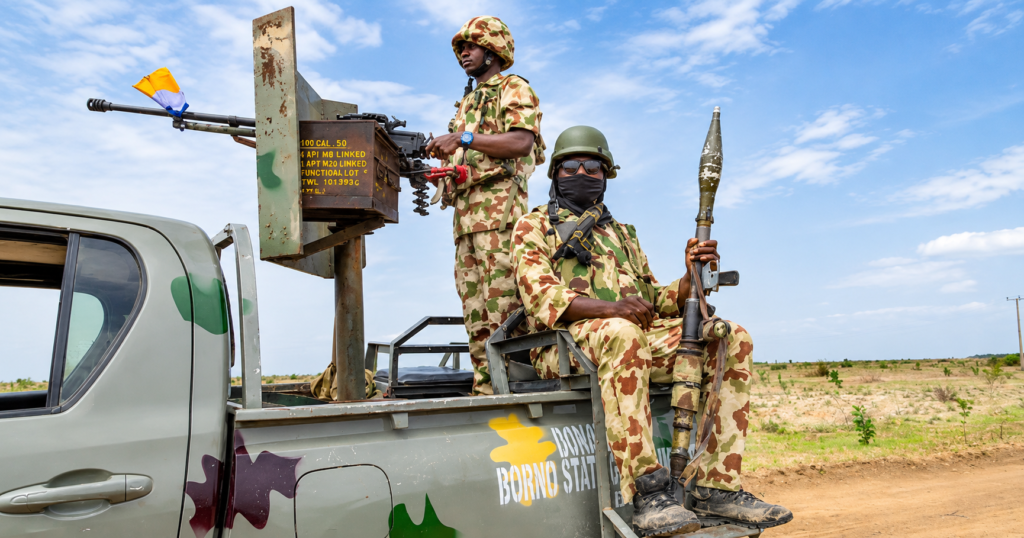
According to figures released by the military, troops killed 217 terrorists and criminal elements, arrested 333 suspects and rescued 349 kidnapped people during the period covered by the report. The military also reported that 70 insurgents surrendered.
The operational account included the recovery of firearms, ammunition and stolen petroleum products, alongside the dismantling of illegal refining sites. These activities formed part of the military’s wider operations against armed groups and criminal networks.
Military authorities also reported that troops repelled attacks on military bases in Borno and Yobe States, killing 48 fighters. The reported engagements showed that military installations remained targets even as security forces continued their operations.
These figures represent the military’s reported operational results. They have not been independently verified and should be understood as official claims rather than independently established casualty or arrest figures.
The continuing threat to communities
The reported operational gains came against a continuing pattern of violence affecting communities. One of the most serious incidents reported during the week occurred in Binnari community in Taraba State.
The Associated Press reported that at least 62 people were killed and 52 wounded in the attack, citing the state emergency agency. The report further stated that 52 bodies had been recovered, including 15 from the Benue River.
The casualty figures require further confirmation. The reported number of people killed, the number wounded and the recovery of bodies from the river remain important details that need to be assessed against subsequent statements from the relevant authorities.
The incident nevertheless brought renewed attention to the difficulties facing communities exposed to armed violence. For residents, the measure of security is not simply the number of arrests, weapons recovered or fighters reported killed. It is whether they can live, work, travel and carry out their daily activities without the constant threat of attack.
This distinction is central to understanding Nigeria’s security challenge. Operational activity may produce measurable results, but those results must ultimately translate into effective protection for civilians and communities.
The reported attacks on military bases in Borno and Yobe also demonstrate that the security environment remains complex. The military’s account of repelling the attacks and killing 48 fighters is an important part of the week’s security picture, but it does not remove the need to examine the continuing capacity of armed groups to mount attacks.
The Taraba incident and the military’s reported operations were separate developments. There is no basis for treating them as connected incidents. Considered together, however, they illustrate two important aspects of the country’s security situation: the actions being taken by security forces and the continuing exposure of civilians to violence.
The wider security debate
The debate over state police also remains part of Nigeria’s wider security discussion. However, no new constitutional development on the issue is established within this review period. It is therefore more appropriate to treat it as an ongoing policy question rather than a fresh development of the week.
The immediate issues to watch include further military operational reports, confirmation of the Binnari casualty figures and evidence that security operations are improving protection for vulnerable communities.
For Nigeria, the central measure of progress must extend beyond official operational statistics. It must include the ability of people to live safely and the capacity of institutions to prevent attacks, respond effectively and protect communities.
That question of institutional performance also extends to the electoral process. With the 2027 general elections approaching, attention is increasingly focused on the preparedness and credibility of the institutions responsible for conducting the polls.
STORY 2: Nigeria Politics: INEC Faces Questions Over Voter Register and 2027 Election Preparations
Preparations for Nigeria’s 2027 general elections featured prominently in the week’s political developments, with the Independent National Electoral Commission facing questions about the accuracy of its preliminary voters’ register, election technology and disputes involving political candidates.
On October 26, INEC published its preliminary voters’ register. Concerns were subsequently raised about questionable photographs appearing in the register, including images suspected of being artificially generated.
The commission acknowledged the concerns and said it would review the matter and take corrective action.
The issue is significant because the voters’ register is a central component of the electoral process. Its accuracy affects public confidence in the system and the credibility of preparations leading to an election.
Questionable photographs and entries require proper examination. Where errors or irregularities are established, the commission must demonstrate that they can be identified and corrected through a transparent process.
The fact that the register was described as preliminary is also important. The concerns raised during the week should not automatically be treated as proof that the final register will contain the same problems. The immediate test is how effectively INEC addresses the reported irregularities and communicates the outcome of its review.
INEC’s BVAS procurement
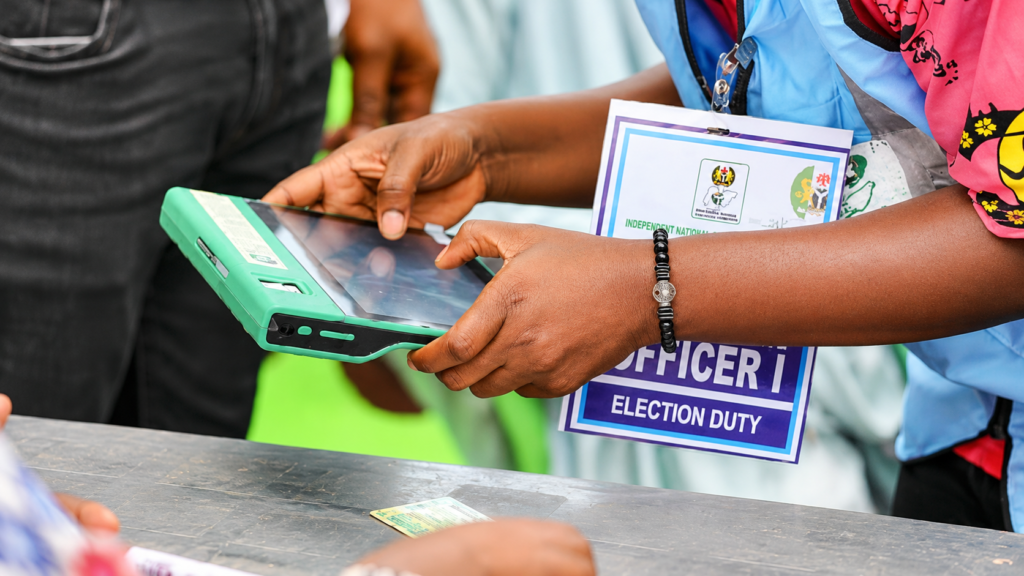
Alongside the register issue, INEC announced the procurement of 57,000 additional Bimodal Voter Accreditation System devices, commonly known as BVAS, as part of preparations for the 2027 elections.
The announcement was associated with INEC Chairman, Professor Joash Amupitan. The procurement represents another step in the commission’s preparations, particularly in relation to the technology intended for voter accreditation.
However, acquiring additional devices is not the same as demonstrating full operational readiness. The procurement announcement does not, by itself, establish that all the equipment has been delivered, deployed, tested or made ready for use.
The commission will therefore need to demonstrate progress beyond the acquisition stage. The effectiveness of the technology will depend on the subsequent processes required to prepare it for deployment.
Court ruling over the Imo West senatorial ticket
Political and legal disputes also featured during the period.
On October 29, the Federal High Court ordered INEC to recognise former Imo State Governor Rochas Okorocha as the All Progressives Congress candidate for the Imo West senatorial district.
The court also restrained Governor Hope Uzodimma from presenting himself as the candidate for the same position.
The ruling was a significant development in the dispute over the APC’s Imo West ticket. It placed the commission and the political actors involved before a judicial decision with implications for the party’s candidate representation in the district.
Further legal proceedings, including any appeal or other court action, may affect how the matter progresses. The ruling should therefore be understood in the context of the order issued, without assuming that no further legal developments are possible.
Sowore incident in Ekiti
Another political development occurred in Ekiti State, where activist Omoyele Sowore was involved in an incident in Ado-Ekiti on October 30.
Sowore alleged that he was attacked. The Ekiti State Police Command, however, described the incident as an altercation and ordered an investigation.
The two accounts differ. The police investigation is expected to establish further details, and neither account should be presented as a settled finding while the circumstances remain under examination.
The response of the police and the findings of the investigation will matter in determining what happened and whether further action is required.
Taken together, these developments show that preparations for the 2027 elections involve more than the announcement of an election timetable or the acquisition of technology. They also involve the accuracy of voter information, the handling of political disputes and the ability of institutions to respond transparently to allegations.
For INEC, the preliminary register presents an immediate test of administrative credibility. The procurement of 57,000 BVAS devices is a further step, but the commission will need to demonstrate that the equipment is ready for effective use.
For political parties and candidates, disputes over nominations and representation must proceed through established legal channels. For law enforcement institutions, allegations involving political actors require impartial investigation and clear communication.
The broader question is whether the institutions responsible for the electoral process can maintain public confidence as preparations intensify. The credibility of the 2027 elections will depend not only on the rules and equipment put in place but also on how consistently those rules are applied.
Public confidence, however, is not shaped by electoral institutions alone. Economic conditions and the performance of government policies also influence how citizens assess public leadership. That brings the focus to the Federal Government’s borrowing proposal, workers’ welfare measures and the search for investment.
STORY 3: Nigerian Economy: Borrowing Proposal, Workers’ Welfare and Investment
Government borrowing, workers’ welfare and investment were among the major economic issues during the review period, bringing attention to the competing demands facing Nigeria’s public finances and development priorities.
President Bola Tinubu submitted a proposed external borrowing programme to the National Assembly, comprising 20.52 billion dollars and 1.045 billion euros. The combined value was reported at approximately 21.7 billion dollars.
The proposed financing is intended to support projects across several sectors, including power, transport, agriculture, healthcare, education, water, security and employment.
The request was referred to the Senate Committee on Local and Foreign Debts for consideration. At the point covered by this review, the proposal had not received legislative approval.
That distinction is essential. The submission of a borrowing request does not mean that the funds have been approved, obtained or disbursed. The proposal remains subject to legislative consideration.
The scale and intended uses of the proposed financing place attention on the projects that may benefit if the programme is approved. The National Assembly’s consideration will be important in determining whether the proposal proceeds and under what conditions.
The terms of the borrowing and the intended use of the funds are also central to assessing its significance. The government has identified several areas for possible financing, but the practical value of the proposal will depend on what is eventually approved and how any funds are applied.
The borrowing proposal therefore represents a major policy decision still awaiting a legislative outcome. It should not be reported as an accomplished financing arrangement.
Government transport allowance and labour disagreements
Another important economic development concerned the welfare of public service workers.
The Federal Government approved a monthly transport allowance of ₦70,000 for public service workers for six months, beginning in November 2026.
The reported agreement also included provisions concerning peculiar allowance arrears and outstanding allowances for health workers. These measures formed part of wider discussions over workers’ welfare and the implementation of employment-related obligations.
However, the arrangement did not resolve all labour disagreements. The Trade Union Congress rejected the transport allowance arrangement, while disagreements over the effective date of the minimum wage remained unresolved.
This disagreement is significant because the government’s intervention is temporary. The six-month transport allowance should not be confused with a permanent increase in basic salaries or a final settlement of wider labour issues.
The reported agreement also included provisions relating to arrears and outstanding allowances. Their implementation will be another important measure of whether the arrangements produce the intended relief for affected workers.
The next stage will involve the commencement of the allowance in November and the handling of the other commitments contained in the reported agreement. The continuing disagreement over the minimum wage effective date also means that wider labour discussions remain relevant.
Dangote Refinery’s public share offer closes
Investment was another major part of the week’s economic developments.
Dangote Refinery’s public share offer closed on October 27. The offer involved 4.1 billion shares at ₦525 per share.
The closure marked the end of the offer period, but verification and allocation were still outstanding. Investors therefore remained at a stage in the process where applications had to be assessed and the allocation process completed.
The distinction between closing an offer and allocating shares is important. The end of the subscription period does not, by itself, confirm that investors have received shares.
The next developments will include completion of the verification process and the announcement or implementation of the allocation arrangements. Until those steps are completed, the offer should be understood as having closed rather than as a fully concluded allocation process.
Nasarawa approves gratuities for retirees
At the state level, Nasarawa State approved ₦2.13 billion in gratuity payments for 608 retirees.
The approval addresses an outstanding obligation to former public servants. For the retirees concerned, however, the practical significance will depend on when the approved payments are actually made.
The approval and the disbursement are separate stages. The payment schedule and evidence that the funds have reached the beneficiaries remain important next steps.
These developments reflect different dimensions of economic management. The proposed external borrowing programme concerns the financing of public projects; the transport allowance addresses temporary support for public workers; the Dangote share offer represents an investment process; and the Nasarawa gratuity approval concerns the settlement of public obligations.
Their practical value will depend on implementation.
The National Assembly must consider the borrowing proposal. The transport allowance is due to begin in November, while the other reported labour commitments require follow-through. Dangote Refinery’s verification and allocation process remains to be completed, and Nasarawa’s approved gratuities must reach the retirees.
For the Nigerian economy, the week’s developments raised a common question: how will announcements, approvals and proposals translate into actual outcomes?
The answer will depend on legislative decisions, administrative implementation, investment processes and the fulfilment of obligations to workers and retirees.
The energy sector provides another illustration of the importance of turning decisions into operational results. Alongside the Dangote investment process, the week brought proposed regulatory appointments and the restoration of electricity transmission infrastructure into focus.
STORY 4: Nigeria’s Energy Sector: Refinery Investment, Regulatory Appointments and Power Infrastructure
Nigeria’s energy sector recorded developments in investment, petroleum regulation and electricity transmission during the review period. Together, these issues highlighted the importance of regulatory oversight and infrastructure reliability in supporting the country’s energy ambitions.
One of the major investment developments was the closure of Dangote Refinery’s public share offer on October 27. The offer involved 4.1 billion shares at ₦525 per share.
Although the offer period had ended, verification and allocation remained outstanding. The next stage is therefore the completion of the process through which applications are assessed and shares allocated to investors.
The closure of the offer should not be confused with confirmation that all applicants have received shares. The investment process is relevant to the wider discussion about the refinery and its place in Nigeria’s petroleum industry, but the immediate development was the end of the offer period and the outstanding work required to complete verification and allocation.
Proposed NMDPRA leadership appointments
Regulatory leadership was another area of attention.
President Bola Tinubu nominated six executive directors for the Nigerian Midstream and Downstream Petroleum Regulatory Authority (NMDPRA) and submitted their names to the Senate for confirmation.
The President also appointed Jumoke Gafar as Secretary to the Board and Authority, as well as Legal Adviser, subject to the applicable statutory processes.
The nominations represent a proposed change or continuation of leadership arrangements within an institution responsible for oversight of Nigeria’s midstream and downstream petroleum industry.
However, the six executive director nominees remain subject to Senate confirmation. Their nomination should therefore be distinguished from completed confirmation and assumption of office.
The next stage will be the Senate’s consideration of the nominees. The outcome will determine whether the proposed appointments proceed through the required confirmation process.
The appointments matter because regulatory institutions are expected to perform their responsibilities within the petroleum industry. The immediate issue is not simply the names submitted but the completion of the statutory process and the authority’s subsequent performance.
TCN restores Karu–Keffi–Akwanga transmission line
There was also a significant development in electricity transmission infrastructure.
The Transmission Company of Nigeria announced that the Karu–Keffi–Akwanga 132-kilovolt transmission line was restored on October 28 at 5:31 p.m.
The line had been affected by the collapse of towers T78, T79 and T80 on October 7. TCN attributed the collapse to heavy rain and strong winds.
The restoration returned the affected transmission infrastructure to service, marking an important step after the damage to the three towers.
The announcement provided a specific restoration date and time and identified the affected line and towers involved. It was a concrete infrastructure development during the week.
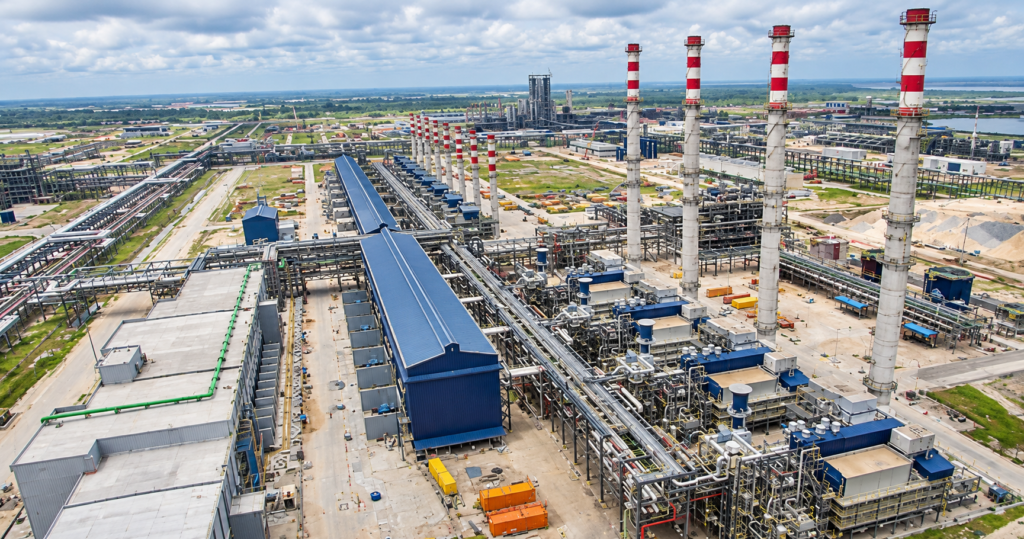
However, the restoration of one transmission line does not, by itself, establish a general improvement in electricity supply across Nigeria. Its wider impact will depend on the continued reliability of the line and how its operation contributes to electricity delivery in the affected areas.
The distinction matters because the restoration of damaged infrastructure is one part of the broader task of maintaining a reliable electricity transmission system. The immediate development is the return of the Karu–Keffi–Akwanga line to service, while its sustained performance remains something to watch.
The week’s energy developments therefore covered three different areas of the sector. Dangote Refinery’s public share offer moved beyond the subscription period but still required verification and allocation. The proposed NMDPRA executive director appointments entered the Senate confirmation process, while TCN announced the restoration of a damaged 132-kilovolt transmission line.
Each development has a different next step. Investors await completion of the share allocation process; the regulatory nominees await Senate consideration; and the restored transmission line must continue to perform reliably.
The wider significance lies in implementation. Investment processes must be completed, regulatory appointments must follow the required procedures, and repaired infrastructure must remain operational.
These developments also reinforce a broader theme running through the week’s Nigeria news: the effectiveness of public institutions is measured not only by announcements and decisions but by what follows them.
That measure becomes even more important when public institutions are responsible for people’s safety, health and welfare. The week’s findings on deaths in custody and developments in public health and humanitarian response brought those responsibilities into sharp focus.
STORY 5: Public Accountability in Nigeria: Deaths in Custody, Health Emergencies and Citizen Protection
The responsibility of public institutions to protect citizens came under scrutiny during the week through a federal panel’s findings on deaths in the custody of the Nigeria Security and Civil Defence Corps, the monitoring of a confirmed Ebola case, a school health incident in Katsina State and the return of Nigerians from Libya.
These developments involved different circumstances, but each raised questions about the responsibilities of authorities towards people whose safety or welfare depends on institutional action.
Federal panel reports findings on deaths in NSCDC custody
One of the most serious developments was the submission of findings by a federal panel investigating the deaths of illegal miners in NSCDC custody.
The panel submitted its findings on October 27. According to the panel’s findings, the deaths were associated with overcrowding, poor ventilation, heat, dehydration and failures of custodial supervision.
It described the deaths as preventable and recommended disciplinary action, institutional reforms and approximately ₦1.4 billion in compensation.
The panel also reported that 14 minors were among the detainees.
The findings raise serious questions about the conditions under which the detainees were held and the responsibility of authorities to protect people in custody. The panel’s description of the deaths as preventable places particular attention on custodial supervision, detention conditions and the institutional measures required to prevent similar incidents.
There is, however, a discrepancy in the reported death toll.
The panel’s reported figure was 37 deaths, while Channels Television reported 33 verified deaths and 44 survivors. These figures should not be treated as interchangeable. Clarification from the original panel report and the relevant authorities is needed before the discrepancy can be resolved.
The recommendations also require follow-through. Disciplinary action, institutional reforms and the proposed compensation will be important developments to monitor. The submission of recommendations does not establish that they have already been implemented or that compensation has been paid.
The presence of 14 minors among the detainees adds another important dimension to the findings. It underlines the need for clarity about detention conditions and the treatment of all people held in institutional custody.
Bundibugyo Ebola case and contact tracing
Public health was another area of concern during the week.
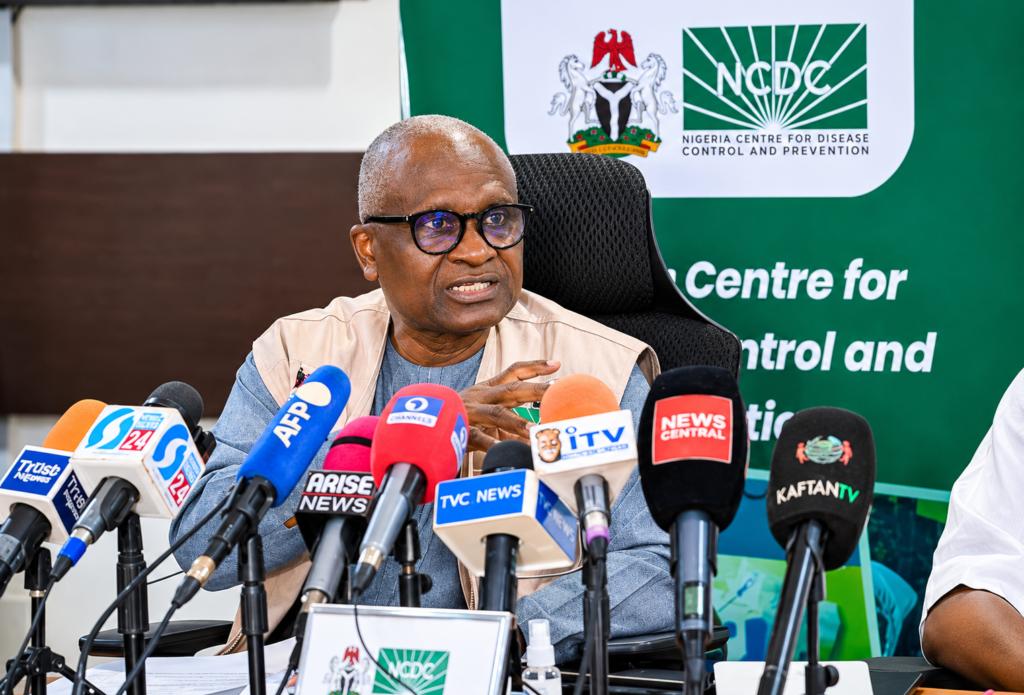
Health authorities continued monitoring a confirmed case of Bundibugyo Ebola in the Federal Capital Territory. The patient was a 42-year-old woman who travelled from Uganda through Addis Ababa and arrived in Nigeria on October 3.
An October 24 report by the Nigeria Centre for Disease Control identified 53 contacts linked to the case. An additional contact was subsequently mentioned, bringing the reported total to 54.
Three primary contacts tested negative. No deaths were reported in the figures covered by this review.
The contact-tracing exercise and continued surveillance remained important parts of the public health response. The identification of contacts is a key element of monitoring a confirmed case, but the three negative test results should not be interpreted as confirmation that all identified contacts have been cleared.
The reported figures provide a snapshot of the response during the period covered. Further updates from health authorities will be important in understanding the progress of contact tracing and the status of the identified contacts.
Katsina school health incident under investigation
A separate health incident occurred in Katsina State at Government Science Secondary School in Batagarawa.
Students reportedly became ill following the administration of praziquantel during a bilharzia prevention exercise on October 26, according to the police update reported by Channels Television.
An initial report said at least 64 students had been hospitalised. A later police update stated that 154 affected students had recovered and been discharged. No fatalities were reported.
The cause of the reported reactions remained under investigation.
The difference between the initial figure of at least 64 hospitalised students and the later report of 154 affected students who had recovered and been discharged should be preserved. The figures describe different reported stages or categories and should not be presented as though they are identical.
The recovery and discharge of the affected students were important developments. However, the investigation remains necessary to establish the circumstances surrounding the incident and the reported reactions following the administration of the medication.
The incident also highlights the importance of proper supervision and clear communication during public health interventions involving students. The reported sequence of events does not, by itself, establish a final cause for the students’ illness.
NEMA receives Nigerians returning from Libya
There was also a humanitarian development involving Nigerians returning from Libya.
The group comprised 143 adults, 26 children and 11 infants.
NEMA said the reception arrangements included documentation, medical screening, food, water and reintegration support. These measures were intended to provide assistance following the returnees’ arrival.
The breakdown of the group identifies the number of adults, children and infants received. The provision of screening and basic support also forms part of the immediate reception arrangements described by the agency.
The returnees’ arrival highlights the importance of support for Nigerians returning through migration routes. The assistance described by NEMA covers the initial reception, while reintegration support remains part of the broader process identified in the agency’s account.
These four developments involved different circumstances and should not be treated as evidence of one common institutional failure.
The deaths in NSCDC custody concern detention conditions and custodial responsibility. The Ebola case concerns disease surveillance and contact tracing. The Katsina incident concerns a public health intervention and an investigation into reported adverse reactions. The returnees from Libya concern humanitarian reception and support.
Their common editorial significance lies in the responsibilities of public institutions towards people whose safety or welfare depends on their actions.
Those responsibilities include safe and lawful detention conditions, effective disease surveillance, proper supervision during public health interventions and appropriate assistance for returning citizens.
The next developments will be important. The original panel findings and the discrepancy in the reported death toll require clarification. The implementation of recommendations and compensation should be monitored. Health authorities will need to provide relevant updates on Ebola contact tracing, while the investigation into the Katsina incident must establish the circumstances surrounding the reported reactions.
The returnees’ reception and reintegration support also remain important parts of the humanitarian response.
Ultimately, public confidence depends on more than the existence of institutions or the announcement of interventions. It depends on whether those institutions meet their responsibilities and whether their actions produce outcomes that protect people.
Conclusion
The week of October 26 to November 1, 2026, brought Nigeria’s institutional responsibilities into focus across security, politics, economic management, energy and public protection.
The military reported operational gains, but continuing attacks on communities showed that security operations must translate into greater protection for civilians. INEC advanced preparations for the 2027 elections, while questions about the preliminary voters’ register, election technology and political disputes placed public confidence under scrutiny.
The Federal Government’s proposed external borrowing programme, temporary transport allowance for public workers and other investment and welfare developments highlighted the importance of implementation. In the energy sector, proposed regulatory appointments and the restoration of transmission infrastructure created further milestones to monitor.
Meanwhile, the findings on deaths in custody, the Ebola response, the Katsina school incident and the return of Nigerians from Libya reinforced the responsibility of public institutions to protect citizens and account for their actions.
The larger message from this week’s Nigeria news is that institutional activity must be matched by measurable results. Proposals require scrutiny, approvals require implementation, investigations require answers and public commitments require follow-through.
For Nigerians, the real test of leadership and public administration is not simply what institutions announce, but whether their decisions deliver effective, accountable and lasting outcomes.
RECOMMENDED ARTICLES
Explore more in-depth reports, weekly reviews and analysis from DSG HERALD NEWS.
1. Nigeria News Today: Education Funding, Workers’ Welfare and Election Readiness Under Scrutiny
A closer look at Nigeria’s education funding, proposed transport support for federal workers, preparations for the 2027 elections, military operations and startup investment. The report examines public accountability and the difference between government announcements and measurable results.
2. Africa News Review: Gabon Rig Disaster, Russia Summit and Mining Investment
From the fatal offshore drilling rig disaster in Gabon to Russia–Africa cooperation, South Africa’s anti-corruption reforms and proposed US$2 billion mining investment, this review examines important developments shaping the continent.
3. AI Investment, Global Finance and Oil Risks: What the Headlines Reveal
How much will artificial intelligence investment cost, and will the returns justify it? This analysis explores AI regulation, global capital movements, oil-market uncertainty and foreign investment in Indian government bonds.
4. Nigeria’s Week in Review: Election Politics, Economic Pressure, Security Reform and Floods
A five-narrative review of the developments that shaped Nigeria between October 19 and 25, 2026, covering election politics, labour tensions, economic pressures, security reforms, public health and flood-related displacement.
5. Africa News Review: Ebola Concerns, Conflict, Power Challenges and Political Decisions
A weekly examination of major African developments, including Ebola concerns, regional security challenges, civilian casualties, infrastructure ambitions and political decisions. Discover the issues shaping the continent and the questions that remain unresolved.
6. Global News Review: Ukraine War, Middle East Security, AI and Climate Challenges
A review of five major global narratives from October 19–25, 2026, examining the Russia–Ukraine war, Middle East security, artificial intelligence, environmental emergencies and protests in Europe.
About the Author