Introduction
Artificial intelligence investment, international financial flows and energy-market uncertainty are raising difficult questions about how the global economy is changing. Technology companies are committing substantial resources to computing infrastructure, while investors and policymakers are examining whether the financial returns will justify the cost. At the same time, debates over artificial intelligence regulation are bringing questions of public safety, legal accountability and corporate responsibility into sharper focus.
Beyond the technology industry, movements in global capital markets and developments involving oil infrastructure can influence expectations about economic risk. Reports of geopolitical threats may affect market sentiment even when the underlying events remain unconfirmed. Similarly, changes in foreign holdings of government bonds can attract attention without necessarily proving that a country’s economic outlook has deteriorated.
This edition of Beyond the Headlines examines five developments: the financial cost of artificial intelligence, the debate over whether courts should be able to restrict dangerous AI models, the relationship between technology investment and global capital flows, a reported attack involving a Saudi Arabian refinery, and changes in foreign investment in Indian government bonds.
The stories do not necessarily share a direct cause. Their common significance lies in the decisions they raise for businesses, investors and governments. What does the available evidence establish? Which explanations remain uncertain? And how can the public distinguish a confirmed development from a claim, an interpretation or a possible consequence?
Those questions are essential to understanding the bigger story behind the headlines.
AI Investment: Can the Financial Returns Justify the Cost?
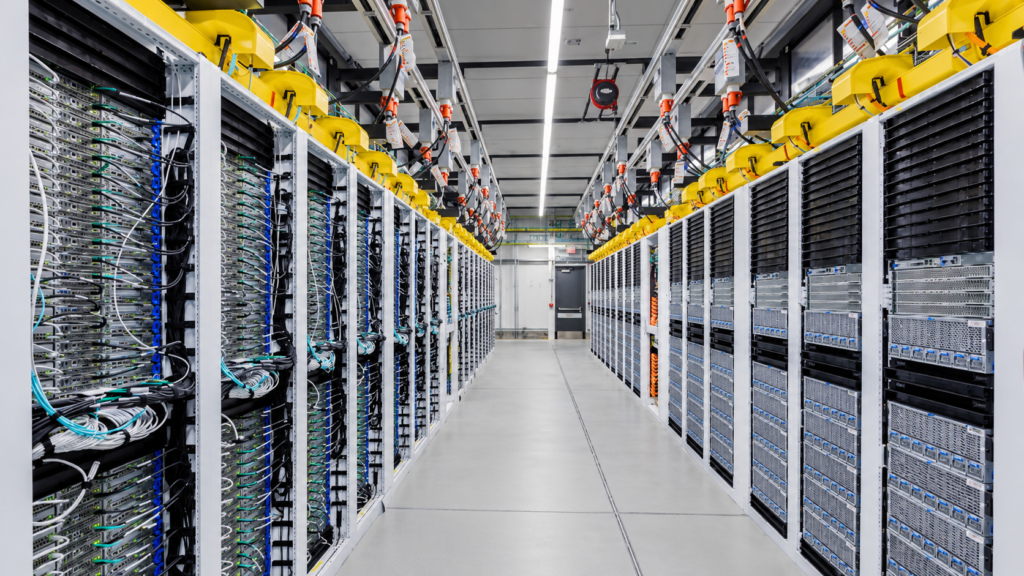
Artificial intelligence has become a major investment priority for the global technology industry. Companies are committing resources to data centres, advanced computing equipment, cloud infrastructure and increasingly capable AI systems. The scale of this spending has made a central question unavoidable: will the revenue and productivity gains generated by AI justify the cost of building and operating the technology?
The answer cannot be established by looking at investment announcements or a single company’s earnings alone.
Financial results published by Microsoft for its 2026 fiscal year show the scale of its business. Microsoft reported annual revenue of approximately $331.8 billion and operating income of $155.2 billion for the year ended June 30, 2026. These figures provide useful financial context, but they do not independently establish the returns attributable specifically to AI.
Other technology companies are also investing heavily in infrastructure. Alphabet’s second-quarter financial filing reported substantial spending on technical infrastructure, including data centres and computing equipment. South Korean semiconductor manufacturer SK Hynix’s third-quarter 2026 results reported preliminary revenue of approximately 104.62 trillion won and operating profit of 83.33 trillion won, with the company identifying strong demand for AI memory products as an important factor.
These companies occupy different positions in the technology ecosystem. Microsoft provides software, cloud and other technology services. Alphabet operates across digital services and cloud computing. SK Hynix manufactures memory semiconductors used in computing infrastructure.
Their financial performance illustrates activity across several parts of the AI supply chain. However, the figures measure different things and must be interpreted accordingly.
Revenue shows the income generated by a business over a defined period. Operating income reflects earnings from operations after relevant operating expenses. Capital expenditure measures spending on longer-lived assets, while cash-flow figures help indicate how money moves through a business.
A company can report strong revenue and operating income while simultaneously committing substantial resources to infrastructure. That does not automatically mean the investment is excessive or sustainable. It means the financial picture must be assessed across several measures.
The Difference Between Spending and Returns
AI infrastructure is expensive to build and operate. Data centres require computing equipment, electricity, cooling systems, maintenance and continuing investment as technology develops. Companies must also attract customers willing to pay for the services those systems support.
The investment case therefore depends on more than the existence of demand for AI.
Technology companies must establish whether their products generate sufficient recurring revenue, whether customers continue using paid services, and whether the productivity gains from AI justify the cost of adoption. Investors must also consider how quickly infrastructure spending might translate into sustainable earnings and cash flow.
The benefits are distributed across different parts of the industry. Semiconductor manufacturers may benefit from demand for processors and memory. Cloud providers can earn revenue by supplying computing capacity. Software companies may incorporate AI into existing products or develop new services.
Businesses outside the technology sector may also benefit if AI helps them reduce costs, improve workflows or provide better services. Yet these benefits are not automatic. Their scale will depend on how the technology is implemented, the costs involved and the nature of the work being performed.
Strong results from one company cannot establish that every company investing in AI will achieve comparable returns. Nor does a large capital expenditure figure, on its own, prove that an investment strategy will fail.
What Investors and Governments Should Examine
A more complete assessment requires attention to operating margins, cash flow, customer demand, capital commitments and the time required to recover investment costs.
It also requires a distinction between demonstrated results and future expectations. A company may invest because it anticipates rising demand. That expectation may eventually prove correct, but the investment decision itself is not evidence that the anticipated return has already materialised.
Governments and the public face another question: who ultimately benefits from the expansion of AI infrastructure?
If the technology improves productivity, its benefits could appear through lower operating costs, better services or new economic opportunities. Whether those gains reach workers, consumers and smaller businesses will depend on how AI is adopted and how its benefits are distributed.
For now, the financial figures provide a starting point for assessing the scale of AI investment, not a definitive verdict on the industry’s future.
The central issue is whether AI investment creates durable economic value, not simply how much money technology companies spend.
Artificial Intelligence Regulation: Who Should Have the Power to Intervene?
The expansion of AI investment has intensified a separate debate over the governance of powerful AI systems. As these technologies become more capable and widely used, questions arise about who should determine acceptable levels of risk and who should have the authority to intervene when serious concerns emerge.
On October 28, Reuters reported that Anthropic had urged California Governor Gavin Newsom to support allowing government officials to seek court orders blocking the release of AI models considered to pose a serious public risk. The report said the proposal was contained in an October 15 letter and formed part of a broader debate over AI safety requirements.
The proposal raises questions about the respective roles of technology companies, government regulators and judicial institutions.
It is essential to distinguish a company’s policy position from existing law. A proposal that courts should have particular powers does not establish that those powers already exist in every jurisdiction. Nor does a proposal, by itself, demonstrate that a particular AI model has been legally determined to be dangerous.
The Competing Responsibilities
Technology companies possess detailed knowledge of the systems they develop. They may be able to identify technical vulnerabilities, evaluate model behaviour and implement safety measures. But they also operate in competitive markets and have commercial incentives that may not always align with public interests.
Government regulators can establish standards and enforce rules. Their challenge is to create workable safeguards for technology that can evolve rapidly, while ensuring that requirements remain proportionate and enforceable.
Courts can provide a legal process for resolving disputes and examining whether actions comply with applicable law. Their authority depends on the relevant legal framework, the evidence presented and the jurisdiction involved.
Giving courts a role in restricting dangerous AI systems could strengthen accountability, depending on how the legal framework is designed. It could also raise difficult questions about what evidence should justify a restriction, how quickly a case can be heard and how a decision might affect research or commercial activity.
These considerations are not mutually exclusive. A system of oversight could involve developers, regulators and courts performing different functions.
Balancing Safety and Innovation
The challenge is to protect the public without creating rules so broad or uncertain that they unnecessarily restrict beneficial research or place disproportionate burdens on smaller developers.
Weak safeguards may leave serious risks inadequately addressed. Poorly designed restrictions can create uncertainty and make it difficult for companies to determine what is permitted.
An effective approach would require clear responsibilities, credible evidence, appropriate procedures and a way to review decisions as technology and circumstances change.
The debate also concerns public trust. As AI becomes more deeply embedded in workplaces, services and everyday life, people need to understand how high-stakes decisions are made and what forms of accountability are available.
Yet the details matter. The precise legal powers being proposed, the standards for demonstrating danger and the procedures for intervention cannot be inferred from a broad description of a policy position.
The reported proposal supports a discussion of the issues raised by AI governance, but it should not be presented as enacted law or as proof that a particular model has been found dangerous by a court.
The central question is how society should determine who can intervene when credible AI risks emerge, and what evidence and legal safeguards that intervention should require.
Global Capital Flows: What Do Financial Markets Reveal About the AI Boom?
AI investment is taking place within a wider global financial system in which investors continually assess returns, risk, liquidity and the relative attractiveness of different markets.
The research material for this edition brings together three types of indicators: US international capital-flow data, a broad measure of the US dollar’s value, and the dollar’s reported share of disclosed global foreign-exchange reserves.
These measures offer different insights into international finance. They should not be treated as interchangeable indicators of AI investment.
According to the US Treasury’s August 2026 international capital-flow report, the United States recorded a net inflow of $199.8 billion across the categories included in its Treasury International Capital data. Foreign residents’ net purchases of long-term US securities were reported at $300.7 billion before adjustments.
These figures describe broad international financial activity. They do not mean that the same amount was invested in AI companies or infrastructure.
Foreign purchases of US securities can reflect expected returns, interest-rate expectations, perceptions of risk and the attractiveness of US assets compared with alternatives. Such purchases do not necessarily represent direct investment in artificial intelligence companies or infrastructure.
Similarly, a change in the dollar’s value can reflect a combination of economic growth expectations, inflation, interest rates, geopolitical developments and demand for liquid assets.
The International Monetary Fund’s second-quarter 2026 reserve data showed that the US dollar’s share of disclosed global foreign-exchange reserves declined to 56.70 per cent from 57.18 per cent in the first quarter. The IMF noted that changes in reserve shares reflected movements in currency holdings and other portfolio factors.
A change in the dollar’s share of disclosed reserves does not, by itself, establish that the dollar has immediately lost its wider international role.
Correlation Is Not Causation
The connection between global capital movements and AI investment must therefore be examined carefully.
AI infrastructure requires substantial financing. Companies building data centres and expanding computing capacity need access to capital, while investors may seek opportunities among semiconductor manufacturers, cloud providers and technology companies.
But broad financial data can reflect activity across many industries and asset classes.
An increase in foreign purchases of US securities may occur during a period of expanding AI investment without being caused by it. A movement in the dollar may coincide with a technology investment cycle while being driven by interest-rate expectations or other macroeconomic conditions.
To establish a direct relationship, analysts would need evidence showing how much investment was directed towards AI, how that investment affected the relevant financial measures and whether alternative explanations were considered.
The figures must also be checked for their precise reporting periods and definitions. A monthly capital-flow figure, a daily currency-index reading and a quarterly reserve-composition estimate describe different periods and different aspects of the financial system.
Without that distinction, readers could be led to draw conclusions the data do not support.
Why the Wider Investment Environment Matters
The broader issue is how countries and businesses position themselves to benefit from technology investment.
Attracting investment requires more than announcing large financial commitments. Infrastructure, reliable electricity, skilled workers, regulatory certainty and the ability of domestic businesses to participate can all influence the long-term benefits.
For emerging economies, the nature of the investment matters as much as its headline value. Investment that develops local skills, supports productive businesses and strengthens supply chains may have different effects from investment that generates limited domestic participation.
For investors, the lesson is to separate a compelling technological trend from the performance of individual assets. A technology may have significant long-term potential while some companies operating within that market still face financial or operational risks.
For policymakers, the challenge is to understand technology investment within the broader context of economic resilience and competitiveness.
The available figures do not establish that AI spending caused the cited movements in US capital flows, the dollar or global reserve composition. Those relationships should not be presented as findings without further evidence.
Global capital flows can help explain the investment environment, but they cannot be used to attribute every market movement to artificial intelligence.

Oil Markets and Geopolitical Uncertainty: The Reported Saudi Refinery Attack
Energy markets illustrate how geopolitical developments can influence economic expectations, even when the details of a reported incident remain uncertain.
On October 28, Reuters reported that oil prices had risen after Yemen’s Houthi movement claimed to have attacked Saudi Arabia’s largest oil refinery with a missile. Saudi authorities had not immediately confirmed the strike at the time covered by the report.
The Reuters report on the oil-market reaction cited Brent crude futures at $115.36 a barrel and US West Texas Intermediate crude at $101.12 at a specified point in the trading session. Prices and the timing of the report should be read in that context rather than treated as fixed market values.
A claim by an armed group is not, on its own, confirmation that an attack occurred as described. The incident’s status must remain clear, and any later confirmation or contradiction should be incorporated before publication.
Why an Unconfirmed Report Can Matter to Oil Markets
Oil prices respond to expectations about supply and demand, production decisions, inventories, shipping conditions and geopolitical risks.
A report involving major energy infrastructure may therefore attract traders’ attention because it raises questions about possible disruption. If an incident were confirmed to have damaged a significant facility or threatened the movement of oil, its economic consequences would depend on the scale of the damage, the duration of the disruption, available replacement supplies and the possibility of further escalation.
Those are conditional outcomes, not evidence that a disruption has occurred.
A price movement recorded after a news report also does not prove that the report was its sole cause. Other market developments may have influenced prices during the same period.
The reported Brent and West Texas Intermediate prices should be understood as time-specific market observations. Oil prices can change throughout a trading session, and different reports may quote different values because they were published at different times.
From Oil Prices to the Cost of Living
Sustained higher oil prices can have consequences beyond energy markets.
Countries that import substantial quantities of petroleum products may face higher import costs. Depending on exchange rates, domestic pricing arrangements and the duration of the increase, those pressures can affect transport, manufacturing, electricity generation and the cost of distributing goods.
Businesses may experience higher operating costs, potentially narrowing profit margins or contributing to higher prices for consumers. Households may feel the effects through transport and other everyday expenses.
Oil-producing countries may benefit from higher export earnings, but the gains are not distributed evenly. Domestic fuel prices, refining capacity, public finances and the structure of the energy market influence how changes in international prices affect local economies.
The duration of a price increase also matters. A brief market reaction may have a different effect from a prolonged supply disruption.
For these reasons, three questions should be considered separately: what has been confirmed about the reported incident, how oil prices actually moved during the relevant period, and what economic consequences might follow if supply risks increase.
The first is a question of verification. The second requires reliable market data. The third requires a careful assessment of potential consequences rather than an assumption that they have already occurred.
The significance of geopolitical risk lies not only in what is reported, but in whether the threat produces a verified disruption to energy supply.

Indian Government Bonds: Why Foreign Investors Reassess Risk
The final development concerns foreign investment in Indian government bonds.
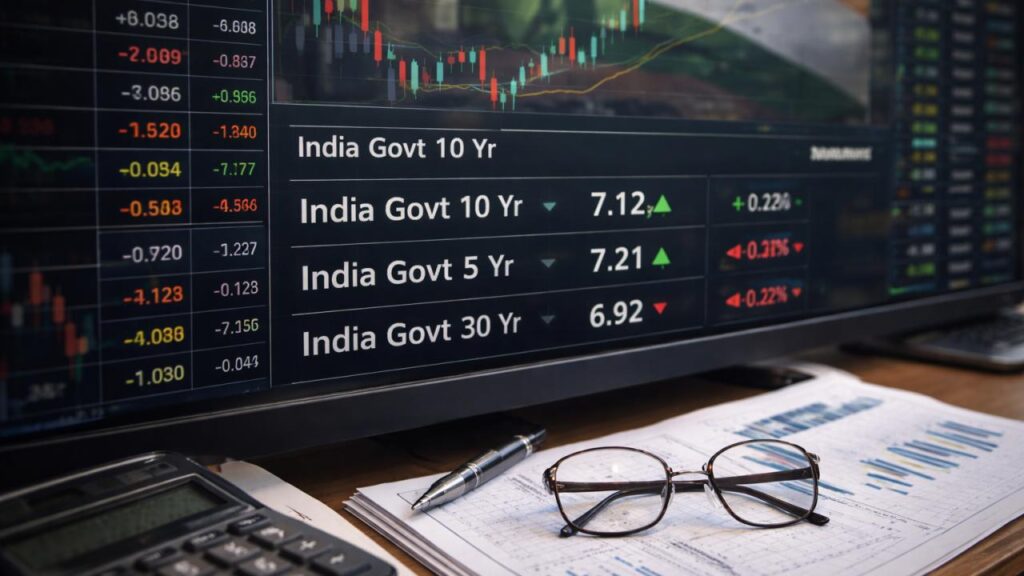
A Reuters report published on October 28 reported that foreign holdings of Indian government bonds eligible for global emerging-market indexes had fallen to their lowest level since June 17.
The report said foreign investors had sold a net 52 billion rupees of securities through India’s fully accessible route in October, following net sales of 106 billion rupees in September. Holdings of the eligible securities were reported at 3.57 trillion rupees.
Reuters identified elevated crude prices, rising US Treasury yields, uncertainty surrounding the domestic interest-rate outlook and other market factors among the issues weighing on investor demand.
These details provide more specific context than a general claim that foreign investors are losing confidence in India. They also underline the importance of distinguishing reported market data from explanations for investor behaviour.
The Role of US Treasury Yields
Foreign investors assess bonds by considering expected returns, inflation, exchange-rate movements, interest-rate expectations, liquidity and the risks associated with holding assets in a particular market.
A bond may offer an attractive interest rate, but its appeal can diminish if investors expect the currency to weaken or believe that comparable investments elsewhere offer better returns after adjusting for risk.
US Treasury yields can influence investment decisions beyond the United States. When yields on US government debt rise, investors may reconsider the additional return available from other markets and whether it adequately compensates them for currency exposure and other risks.
That does not mean every increase in US yields automatically causes foreign investors to sell Indian government bonds. Investment decisions depend on the scale of the change, expectations about future returns and conditions in individual markets.
Oil prices may also matter to India’s economic outlook. Higher international oil prices can increase costs for an energy-importing economy, although the final effect depends on the size and duration of the price change, exchange-rate movements, domestic policy and other conditions.
Interest-rate expectations are another possible influence. Investors may adjust their portfolios when they anticipate changes in inflation, monetary policy or future bond yields.
These factors provide plausible areas for investigation, but their presence does not establish that any one of them caused the reported decline in foreign holdings.
What a Decline in Holdings Does—and Does Not—Mean
A decline in foreign holdings should not automatically be interpreted as a complete withdrawal of international investors or proof of a broad loss of confidence in India’s economy.
Its significance depends on the size of the change, the period covered, the composition of the holdings and the wider condition of the bond market.
Changes in foreign investment can provide information about investor decisions, but they are not a complete measure of a country’s economic performance. Other domestic and international investors may respond differently, and changes in one part of the financial market do not necessarily describe the condition of the entire economy.
For policymakers, sustained changes in investment flows may warrant closer examination of market conditions, economic policy and investor expectations. Credible policy, transparent rules and a stable framework for managing inflation and public finances can influence how investors assess risk, although they cannot eliminate market volatility.
For investors, the task is to compare risk-adjusted returns rather than focus on interest rates alone.
The reported movement in foreign holdings and the possible influences identified by Reuters provide a basis for further analysis. They do not establish that oil prices, US Treasury yields or Indian interest-rate uncertainty alone caused the decline.
The important issue is not simply whether foreign investors are buying or selling Indian government bonds. It is what the data establish, why portfolio decisions are changing and what the consequences may be for the market.
The Bigger Story: Investment, Accountability and Economic Risk
The five developments examined in this edition reveal different dimensions of economic uncertainty.
AI investment raises questions about the relationship between spending and sustainable returns. The debate over artificial intelligence regulation concerns the balance between innovation, public safety and legal accountability. Global capital-flow indicators offer insight into international investment, but they do not establish that AI caused movements in currencies or financial markets.
The reported Saudi refinery incident demonstrates why claims involving energy infrastructure must be verified before their consequences are assessed. The reported decline in foreign holdings of Indian government bonds raises questions about investor behaviour, but its significance must be understood within the wider financial context.
These stories do not establish one coordinated global trend. Their wider importance is that businesses, investors and governments must make decisions in environments where risks, incentives and expectations are constantly changing.
The value of AI investment will depend on the returns it delivers. Effective AI oversight will depend on credible evidence and clear legal responsibilities. Financial-market analysis will depend on accurate data and careful distinctions between correlation and causation. Energy and bond-market reporting will depend on verified developments rather than assumptions.
Understanding AI investment therefore requires more than tracking spending announcements or market reactions. It requires examining what the evidence establishes, what remains uncertain and who may ultimately benefit or bear the costs.
That is how the bigger story emerges from the headlines.
RECOMMENDED ARTICLES
1. Global News Analysis: Elections, AI and Investment
Explore major global developments, from Brazil’s presidential election and political change in Serbia to an AI copyright lawsuit and Audi’s planned US investment. This analysis examines what the available evidence establishes—and what remains uncertain.
Category: Global News Analysis
2. Africa News Review: Ebola Preparedness, Regional Security and Political Accountability
Read about Uganda’s Ebola-related precautions, Algeria’s approved military deployment to Niger, Somalia’s political dialogue and a deadly road crash in Kenya. The report examines public safety, regional cooperation and the need to verify official actions.
Category: Africa News Review
3. Nigeria Daily News Review: State Police, Inflation, Ebola and 2027 Politics
Catch up on Nigeria’s latest developments in security reform, economic policy, public health, cybercrime enforcement and preparations for the 2027 elections. Discover what has been reported, what remains unresolved and what Nigerians should watch next.
Category: Nigeria News Review
4. Global News Review: October 19–25, 2026
Review the major international developments from the week and understand the political, economic and technological issues shaping the global agenda. This weekly roundup offers a broader perspective on the events and decisions making headlines around the world.
Category: Global Weekly Review
5. Africa News Review: Ebola Concerns, Conflict, Power Challenges and Political Decisions
From public-health concerns and conflict-related civilian risks to infrastructure ambitions and political decisions, this Africa review explores the developments influencing the continent. It separates reported claims from established facts and examines what needs to happen next.
Category: Africa Weekly Review
6. Nigeria’s Week in Review: Election Politics, Economic Pressure, Security Reform and Floods
Get a wider view of Nigeria’s week, including President Bola Tinubu’s campaign launch, labour tensions, economic uncertainty, proposed state-police reform, public-health concerns and flooding. The review explains the issues behind the headlines and the evidence needed to assess government responses.
Category: Nigeria Weekly Review
About the Author