Introduction
The global news landscape between November 2 and 8, 2026, was shaped by developments across international security, political institutions, financial stability, diplomacy and technology. From tensions involving the United States and Iran to a projected change in the balance of power in the American Congress, the week brought important developments with implications extending beyond the countries directly involved.
In the Middle East, a reported US military strike on Iranian positions on Qeshm Island and incidents involving commercial vessels around the Strait of Hormuz renewed concerns about the security of a major international energy route. The economic implications of geopolitical instability also featured in monetary policy discussions, including the Bank of England’s decision to raise its benchmark interest rate.
In the United States, the Associated Press projected Democratic victories in both chambers of Congress following the midterm elections, setting the stage for a different relationship between President Donald Trump and the legislature. In Paraguay, a banking crisis involving Ueno Bank developed into a wider political and criminal investigation, with President Santiago Peña facing removal from office and subsequent criminal charges.
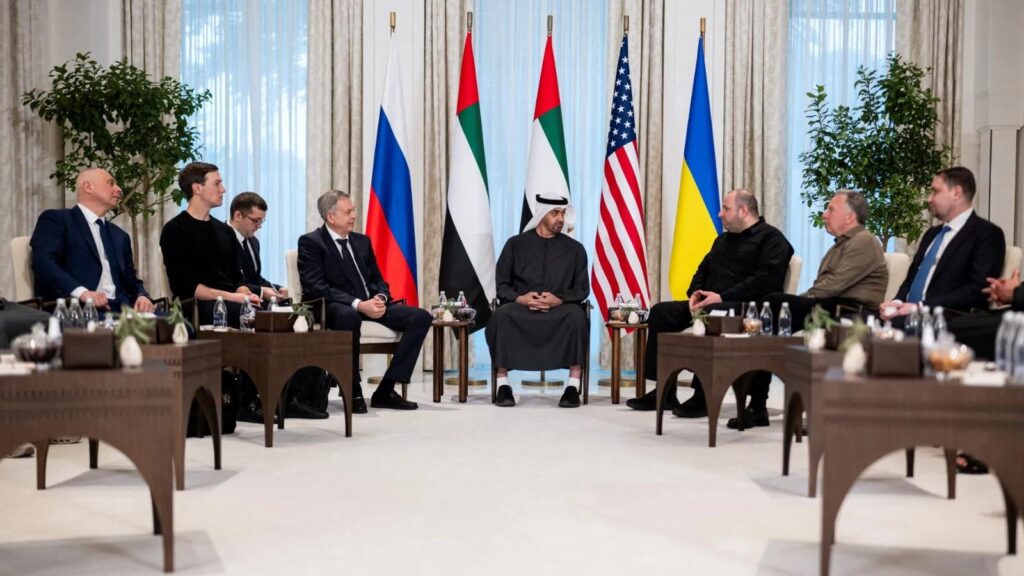
Diplomacy also returned to the international agenda as Washington prepared for planned discussions involving Russia and Ukraine in Abu Dhabi. Meanwhile, major announcements by Marvell Technology, Lumentum and Oracle highlighted the enormous financial commitments being made to artificial intelligence infrastructure.
These five developments form the central themes of this global news review: how governments respond to security challenges, how political and financial institutions are tested, and how decisions made by governments and corporations may influence the economic and technological landscape.
STORY 1: International Security and the Global Economy — US-Iran Tensions Raise Concerns Over Energy Supply
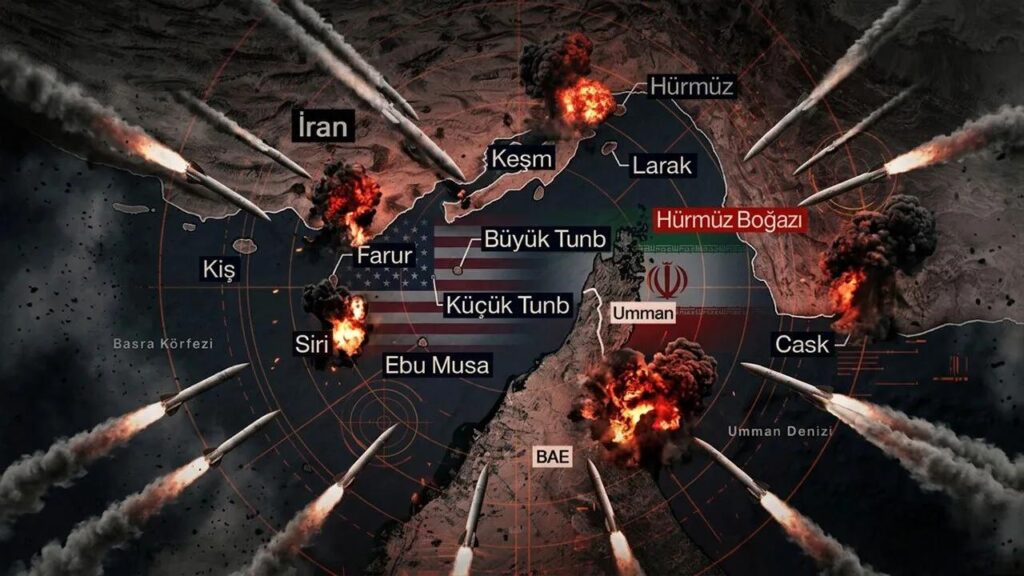
The confrontation involving the United States and Iran remained a major international security concern during the week of November 2–8, 2026. A reported US military strike on Iranian positions on Qeshm Island, together with reports of incidents involving commercial vessels around the Strait of Hormuz, renewed attention on the relationship between regional instability and the wider global economy.
On November 2, US forces struck Iranian positions on Qeshm Island. American officials described the operation as defensive action against missile threats. The development added to concerns about the confrontation between Washington and Tehran and its potential implications for security in the surrounding region.
The location is particularly important because of its proximity to the Strait of Hormuz, a strategically significant passage for international energy transportation. The waterway is a major route for the movement of energy supplies, making its security an issue of international economic interest.
During the week, reports of incidents involving commercial vessels around the Strait of Hormuz raised further concerns about maritime safety. However, accounts of some incidents included competing claims, and the details and attribution of individual events require careful verification. Reports of maritime incidents should not automatically be treated as confirmation of responsibility or of a wider coordinated operation.
For further reporting on the military developments and maritime incidents, see the Council on Foreign Relations’ Global Conflict Tracker and The Washington Post’s November 2 coverage.
Why the Strait of Hormuz matters to the global economy
The significance of the confrontation extends beyond military developments. The security of important shipping routes is closely connected to the movement of energy supplies and the cost of transporting them.
Prolonged instability around a major maritime passage could increase the risks faced by commercial shipping operators. It could also place upward pressure on insurance costs and the expenses associated with transporting energy. These pressures may eventually affect businesses and consumers beyond the immediate region.
Energy costs influence several areas of economic activity. Businesses that depend on transportation, manufacturing and other energy-intensive operations may face higher operating expenses. Increased transport and production costs can also affect the prices of goods and services, potentially placing additional pressure on households.
These are potential economic transmission channels, not proof that every reported incident has already produced a measurable global price increase. The scale of any economic impact depends on how the security situation develops and whether commercial shipping can continue operating safely.
For countries that depend on imported energy and international trade, uncertainty around important shipping routes can also complicate economic planning. Businesses need to assess the cost and reliability of transporting goods, while governments must consider how external developments could affect domestic prices and economic stability.
Central banks face inflation concerns
The week’s developments also included monetary policy decisions that highlighted the importance of energy prices in economic assessments.
On November 5, the Bank of England raised its benchmark interest rate by a quarter of a percentage point, bringing it to four per cent. The decision was supported by eight members of the Monetary Policy Committee, while one member voted against it.
The Bank identified elevated energy prices and risks associated with the conflict in the Middle East among its inflation concerns. The decision therefore placed energy-related uncertainty within the wider discussion of inflation and monetary policy.
The Bank of England’s November 2026 Monetary Policy Summary and Minutes provide the official details of the decision and the committee’s assessment.
Interest-rate decisions are important because they influence borrowing costs and financial conditions. When central banks are concerned about inflation, they must consider whether monetary policy needs to remain restrictive or become tighter. Higher borrowing costs can affect households, businesses and investment decisions.
Australia’s cash-rate target also stood at 4.85 per cent from November 4. However, the Australian rate position should be treated as a separate monetary policy development. The reporting considered here does not establish that the confrontation involving Iran was the primary reason for Australia’s rate position.
The Reserve Bank of Australia’s official cash-rate information confirms the 4.85 per cent target and its effective date.
This distinction is important when assessing the relationship between international security and the global economy. Similar economic indicators or policy decisions in different countries do not necessarily have the same causes. Each central bank makes decisions in response to its own economic circumstances and assessment of inflation risks.
The Bank of England’s next scheduled monetary policy decision was identified as December 17, while Australia’s next scheduled update was expected on December 8.
What happens next?
Attention remains on developments around the Strait of Hormuz, further official information about maritime safety and any confirmed progress in mediation efforts. The duration and intensity of the confrontation will be important in determining whether concerns about shipping and energy transportation become more pronounced.
For governments and businesses, the central issue is how to assess risks around an important international route without treating every incident as evidence of a prolonged disruption.
The developments involving the United States and Iran demonstrate why international security is also an economic concern. Military decisions, maritime safety and energy transportation can influence economic confidence far beyond the immediate theatre of conflict.
The United States was also central to another major development during the week, but this time the focus was domestic: the changing balance of political power in Washington.
STORY 2: American Politics — US Midterm Elections Project a Shift in Congressional Power
The United States midterm elections produced a major projected change in the country’s legislative balance, with the Associated Press calling both chambers of Congress for the Democrats. The projections placed President Donald Trump in a different political environment, with the opposition party positioned to exercise greater influence over the legislative process and congressional oversight.
American voters went to the polls on November 3. The Associated Press called the Senate for the Democrats at 11:36 p.m. Eastern Time on election night. Early the following morning, at 1:24 a.m. on November 4, the organisation also called the House of Representatives for the party.
These calls indicated projected Democratic control of both the Senate and the House. The development was significant because control of Congress affects the relationship between the executive and legislative branches of the American government.
The Associated Press published a detailed account of how it called control of Congress in the 2026 midterm elections, including the timing of its Senate and House projections.
The projections should be distinguished from a final account of certified results and the organisation of the incoming Congress. The precise composition of the chambers and the size of the party majorities remain important to understanding how much influence the Democrats will be able to exercise.
What control of Congress means
The United States Congress has responsibility for making federal laws, approving government spending and scrutinising the executive branch. Control of its chambers gives a political party considerable influence over legislative priorities, committee structures and the direction of congressional oversight.
If Democrats assume control of both chambers as projected, they will have greater opportunities to shape the legislative agenda and challenge aspects of the Trump administration’s policies.
Congressional leadership will be central to this process. Hakeem Jeffries in the House and Chuck Schumer in the Senate are among the Democratic leaders identified as important figures in determining the party’s priorities.
Their responsibilities will include helping organise the incoming Congress, coordinating legislative positions and determining how the party uses its influence in the two chambers.
For President Trump, the projected result represents a different legislative environment during the remaining two years of his term. A Congress controlled by the opposition could make it more difficult for the administration to secure support for parts of its legislative agenda.
However, the election does not remove Trump from office or transfer executive authority to Congress. The president retains his constitutional powers, including the power to veto legislation. The administration will continue to exercise executive authority even if Democrats control both legislative chambers.
This distinction is essential to understanding the American political system. Congressional control and presidential authority are separate elements of government. A party can lose its legislative majority while continuing to hold the presidency.
The coming test: legislation, spending and oversight
The practical consequences of the projected Democratic victories will depend on several factors.
First is the final composition of Congress. The size of the majorities will influence the ability of party leaders to secure support for legislation and manage internal disagreements.
Second is party unity. Holding both chambers does not automatically guarantee agreement among all members on every legislative priority. The ability of Democratic leaders to maintain support within their party will matter.
Third is the relationship between Congress and the White House. Government spending, budget negotiations and oversight of the administration could become important areas of political disagreement.
Committee appointments and leadership structures will also shape the incoming Congress. These arrangements influence which issues receive attention, how hearings are conducted and how legislative work is organised.
The projections therefore mark a shift in the political balance, but they do not by themselves determine the policies that will eventually be adopted. Those outcomes will depend on decisions made after the new Congress is organised.
Implications for the wider global picture
The American political system has international significance because decisions made in Washington can affect diplomacy, economic policy and relations with other governments.
However, the immediate meaning of the election is domestic: the projected change in the relationship between the presidency and Congress. Its wider consequences will become clearer as the incoming legislature establishes its priorities and responds to the administration.
The election illustrates how democratic processes can alter the balance of institutional power without changing the constitutional structure of government.
While the United States faces a political transition through its electoral system, Paraguay experienced a more dramatic institutional crisis, in which a banking failure was followed by a presidential removal vote and criminal proceedings.

STORY 3: Paraguay’s Financial Crisis — Ueno Bank Collapse Develops into a Political and Institutional Emergency
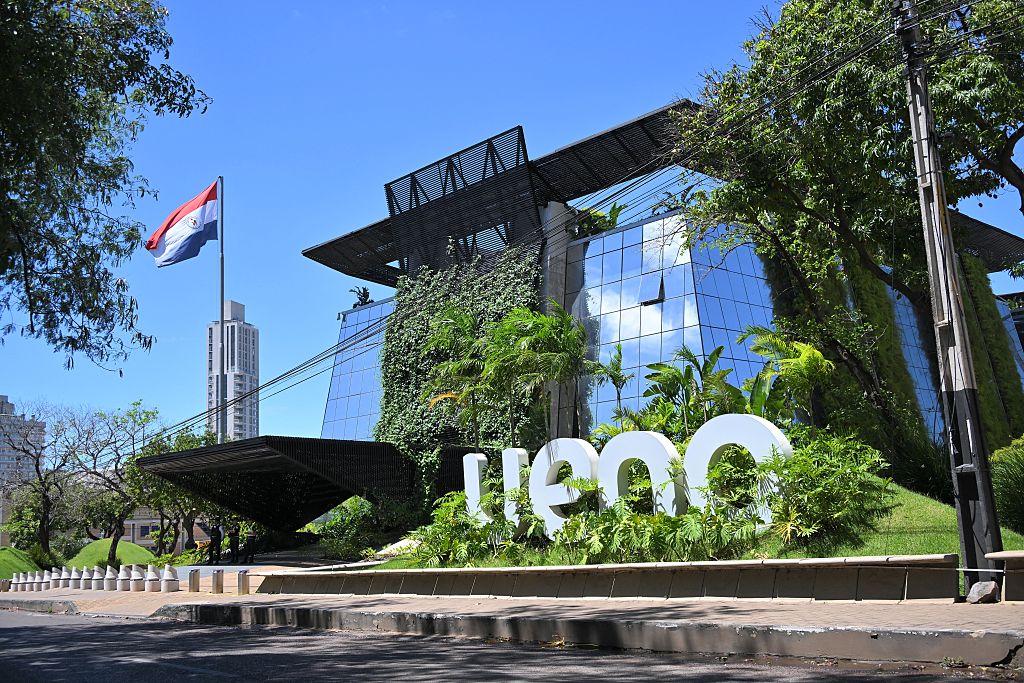
A crisis involving Ueno Bank developed into a wider political and criminal investigation in Paraguay during the week of November 2–8, 2026. The reported banking intervention, allegations involving public funds and the removal of President Santiago Peña created a series of developments that raised questions about financial regulation, public accountability and confidence in government institutions.
Ueno Bank was placed under regulatory control on November 3 amid concerns about its financial condition. The intervention disrupted customers’ access to banking services and payments, creating uncertainty for individuals and businesses that depended on the institution.
The consequences extended beyond the immediate banking difficulties. Allegations emerged concerning the bank’s relationship with government officials and the handling of public funds.
On November 6, Paraguay’s Senate voted to remove President Santiago Peña from office. The following day, prosecutors charged Peña with breach of trust and administration for personal gain. A judge ordered his pretrial detention.
Peña denied wrongdoing. The charges remain allegations, and the judicial process has not established criminal guilt. Vice President Pedro Alliana succeeded him as president.
For additional reporting, see Al Jazeera’s November 7 report on the charges against Paraguay’s ousted president and Reuters’ investigation into how the Ueno crisis developed into a political emergency.
The sequence of developments placed the banking crisis at the centre of a wider national political emergency.
Allegations over public funds
Questions about public money became an important part of the controversy.
Reports referred to allegations involving more than 800 million dollars in public funds reportedly injected into Ueno Bank. Another allegation concerned a 355-million-dollar deposit by the state pension fund, reportedly above the legal limit.
These figures require careful treatment. They are allegations reported in connection with the investigation, not established findings of criminal wrongdoing. Their inclusion in the public debate does not, by itself, establish that any individual has committed an offence.
The distinction between allegations and proven findings is particularly important in a case involving senior political figures and a financial institution. Prosecutors may bring charges, but the judicial process must determine the evidence and whether criminal responsibility has been established.
The reported circumstances also raise broader questions about the oversight of financial institutions and the management of public funds. Those questions cannot be resolved simply by the existence of an investigation. They depend on the evidence, the applicable rules and the findings of the relevant institutions.
The impact on depositors and businesses
For customers, the immediate concern has been access to savings and reliable banking services.
A disruption involving a financial institution can affect more than the availability of cash. Individuals may depend on their accounts for everyday payments, while businesses rely on banking services to pay suppliers, employees and other obligations.
The Central Bank reported that 1.2 million customers had received partial or full reimbursement of insured deposits. This was an important development for affected depositors, but it should not be interpreted as confirmation that every customer had recovered all funds.
The distinction between partial and full reimbursement matters. A reported number of customers receiving some level of reimbursement does not necessarily establish that all claims have been settled or that the institution’s wider financial problems have been resolved.
For businesses and households, confidence in the banking system depends not only on whether a reimbursement programme exists, but also on whether customers can access their funds and understand the status of their claims.
A challenge for the new administration
The succession of Pedro Alliana places responsibility on the new administration to address the political and institutional consequences of the crisis.
Restoring confidence in the banking system will require clarity about the intervention, the status of depositors’ funds and the findings of any investigations. At the same time, criminal proceedings must be allowed to follow the judicial process.
The situation therefore involves several issues that should not be treated as interchangeable: the financial condition of Ueno Bank, the handling of public funds, the political removal of the president, the criminal charges against Peña and the reimbursement of depositors.
Each requires its own evidence and institutional response.
The coming period will be important for determining what happened within the bank, how public funds were handled and how the legal proceedings develop. Eligible depositors will also be looking for clarity on the completion of reimbursement arrangements.
Paraguay’s crisis demonstrates how difficulties within a financial institution can develop into a wider challenge to public confidence and political accountability. It also highlights the importance of transparent regulation and credible institutions in maintaining trust.
From a domestic crisis involving banking and political authority, the international focus turns to diplomacy, as the United States prepared for planned discussions involving Russia and Ukraine.
STORY 4: Ukraine Diplomacy — Planned Abu Dhabi Talks Raise Hopes of a New Negotiating Opening
A new diplomatic effort to address the war in Ukraine emerged during the week of November 2–8, as Washington announced plans for trilateral discussions involving Russia and Ukraine in Abu Dhabi. The proposed meetings, scheduled for November 10 and 11, represented another attempt to bring the parties into negotiations, although no peace agreement or ceasefire had been confirmed.
On November 2, US envoy Steve Witkoff announced plans for a new round of trilateral talks. The proposed discussions were expected to address security arrangements, de-escalation, humanitarian measures and possible steps towards ending the war.
Russian President Vladimir Putin had agreed to a new round following his meeting with Witkoff, while Ukraine was expected to participate. Jared Kushner, US President Donald Trump’s son-in-law, was also expected to represent Washington.
The planned meeting attracted attention because of the continued importance of diplomatic efforts to end the conflict. However, the announcement of talks should not be confused with evidence that the parties have reached an agreement.
Reuters’ report on the planned November 10–11 Abu Dhabi talks provides further details about the proposed agenda and the expected American representatives.
European participation enters the discussion
European involvement also became part of the diplomatic picture.
On November 8, French Foreign Minister Jean-Noël Barrot said European countries would take part in the discussions. France had not yet named its representative.
The involvement of European countries matters because any future security arrangement for Ukraine could have implications for the wider European security framework, defence commitments and reconstruction.
The war has consequences beyond the immediate parties. Questions about Ukraine’s future security and the terms of any settlement are closely connected to the security interests of European countries.
However, the precise role that European representatives would play in the planned discussions remained to be established. An announcement that countries intend to participate does not, on its own, confirm the final composition of delegations or the details of their involvement.
The difference between negotiations and a settlement
The most important qualification is that the Abu Dhabi meeting was planned as a diplomatic initiative. It was not a peace agreement.
No ceasefire or settlement between Russia and Ukraine had been confirmed in the developments covered during the review period. The positions of the parties remained divided, while difficult questions surrounding security guarantees, territorial issues and the terms of a possible settlement remained unresolved.
These issues are central to any serious negotiation. Discussions about security arrangements, for example, must address what guarantees might be offered and how they would operate. Questions about territory and the terms of a settlement are also difficult subjects where the positions of the parties remain divided.
The proposed agenda included security arrangements, de-escalation and humanitarian measures. These areas provide possible starting points for discussions, but the announcement of an agenda does not establish that agreement has been reached on any of them.
The distinction is important for readers assessing reports of diplomatic progress. A meeting being scheduled is a development in the diplomatic process. It is not the same as a ceasefire, a negotiated settlement or an end to the war.
What to watch in Abu Dhabi
The immediate test is whether the planned talks can produce practical progress beyond another announcement of negotiations.
The final composition of the delegations will be one important indicator. The issues placed on the agenda and any concrete outcomes will also help determine whether the discussions have moved beyond an initial diplomatic opening.
For now, the planned Abu Dhabi meeting represents another opportunity for diplomacy in a conflict with major implications for European security and international relations.
The coming discussions will need to be assessed on what participants actually agree to, rather than on expectations surrounding the meeting. Until concrete outcomes are established, the status of the war and the unresolved questions surrounding a possible settlement remain central.
As governments continue to confront questions of international security and political stability, another form of global competition is attracting enormous financial resources: the race to build the infrastructure required for artificial intelligence.
STORY 5: Artificial Intelligence Investment — Marvell, Lumentum and Oracle Highlight the Global Race for Digital Infrastructure
The global artificial intelligence race is increasingly about more than developing advanced software and AI models. It is also about controlling the physical infrastructure needed to build, connect and operate these systems. Major announcements by Marvell Technology, Lumentum and Oracle on November 2 highlighted the scale of investment being directed towards this expanding technology sector.
The infrastructure behind artificial intelligence includes advanced semiconductors, optical communications, data centres and cloud computing capacity. These systems support the computing power and connectivity required to develop and deliver advanced AI services.
Two corporate announcements during the review period illustrated the financial commitments involved.
Marvell Technology announced a definitive agreement to acquire Lumentum in an all-stock transaction. The proposed deal placed Lumentum’s implied enterprise value at approximately 115 billion dollars.
Under the announced terms, Lumentum shareholders would receive 4.5 Marvell shares for each Lumentum share. The proposed combination is intended to strengthen the companies’ ability to supply optical and electrical connectivity for infrastructure supporting artificial intelligence.
The transaction is not yet complete. It remains subject to shareholder and regulatory approvals, with completion expected in the first half of 2028.
The companies published the transaction details in their official joint announcement. The announcement sets out the proposed exchange ratio, transaction value and expected strategic benefits.
The proposed acquisition therefore represents a significant corporate commitment, but its final completion depends on the required approvals and the subsequent transaction process.
Oracle announces a $20 billion fundraising programme
On the same day, Oracle announced a 20-billion-dollar fundraising programme involving equity and debt offerings.
The plan included approximately 10 billion dollars in equity and a similar amount in debt offerings. Reuters reported that the financing would support Oracle’s expansion in artificial intelligence and cloud infrastructure.
The company’s announcement also allowed for broader corporate purposes, including capital spending and debt repayment. It would therefore be inaccurate to describe the entire fundraising programme as exclusively reserved for artificial intelligence projects.
Oracle’s official announcement of the pricing of its $20 billion stock and senior notes offerings provides the details of the equity and debt components.
Nevertheless, the announcement highlights the financial scale associated with expanding AI and cloud infrastructure.
Companies seeking to compete in this market require substantial resources to build and operate the systems that support their services. Investment is not limited to software development. It also involves the networks, computing equipment and physical facilities needed to make advanced AI systems available.
The infrastructure behind the AI race
The Marvell-Lumentum agreement and Oracle’s fundraising announcement illustrate different parts of the same broad technology investment landscape.
The proposed Marvell-Lumentum combination focuses on optical and electrical connectivity, which is intended to support the infrastructure behind artificial intelligence. Oracle’s financing plans relate to its broader corporate spending, including the expansion of AI and cloud infrastructure.
These developments point to the importance of advanced chips, optical communications and data-centre capacity in the wider technology sector.
Companies with access to these resources could gain competitive advantages as demand for computing and connectivity grows. At the same time, the financial scale of these commitments raises questions about how quickly the investments can produce returns.
The financial risks behind technological expansion
Large investment programmes involve financial decisions as well as technological ambitions.
The proposed acquisition raises questions about regulatory approval, shareholder support and the eventual integration of the two companies. Oracle’s fundraising programme raises questions about the balance between equity, debt, capital spending and the company’s broader financial commitments.
A central issue is how quickly these investments can generate sustainable commercial returns. Another is how much borrowing companies can support while continuing to fund expansion.
The commercial benefits of artificial intelligence will need to justify the costs of developing and maintaining the infrastructure required to operate it. That outcome cannot be assumed simply because companies have announced large investment plans.
The developments also have implications for countries seeking to participate in the digital economy.
For developing economies, including countries across Africa, access to computing resources, technology investment and the infrastructure needed to support digital services will remain important considerations. The question is how these economies can secure access to the resources required to compete in a technology environment where infrastructure investment is becoming increasingly important.
The announcements do not establish how those opportunities will be distributed or what specific benefits individual countries will receive. They do, however, highlight the scale of corporate investment taking place in the systems that will support future AI services.
What comes next?
For Marvell and Lumentum, the next important developments include shareholder and regulatory decisions on the proposed acquisition. The companies’ ability to complete the transaction will depend on the necessary approvals, with the first half of 2028 identified as the expected completion period.
For Oracle, future financial disclosures will provide further information about its fundraising and the use of the proceeds.
More broadly, the technology sector will be judged not only by the scale of its financial commitments, but also by whether those investments deliver sustainable commercial value.
The global artificial intelligence investment race is therefore about more than technological innovation. It involves finance, industrial capacity, corporate strategy and the future distribution of technological and economic power.

Conclusion
The developments of November 2–8, 2026, highlighted five different challenges facing governments, institutions and major corporations around the world.
In the Middle East, tensions involving the United States and Iran renewed concerns about energy security and the economic consequences of instability around an important shipping route. In Washington, projected Democratic victories in both chambers of Congress pointed to a new legislative environment for President Donald Trump.
Paraguay’s banking crisis developed into a wider political and criminal investigation, raising questions about public funds, financial regulation and institutional accountability. In Ukraine, planned diplomatic discussions in Abu Dhabi offered another opportunity for negotiations, although major questions surrounding a settlement remained unresolved.
Meanwhile, major corporate announcements involving Marvell, Lumentum and Oracle demonstrated the financial scale of the competition to build artificial intelligence infrastructure.
These developments were not consequences of one another, but each revealed a different pressure point in the international system. Security, political authority, financial confidence, diplomacy and technological capacity will continue to shape the global outlook.
This week’s global news review shows that the decisions made by governments and major corporations are not simply domestic or commercial matters. Their consequences can extend across borders, influencing the economic and strategic choices facing countries around the world.
About the Author