INTRODUCTION
Nigeria public institutions faced renewed scrutiny over electoral administration, electricity infrastructure, financial accountability, government spending and public welfare during the 24-hour period ending on 10 November 2026.
The developments examined in this review raise an important question: how effectively are public authorities exercising their responsibilities, managing resources and delivering the services and protections expected of them?
The Independent National Electoral Commission (INEC) announced the removal of more than 1.6 million invalid voter registrations from its preliminary register, while a separate political development involving FCT Minister Nyesom Wike raised questions about financial incentives in grassroots mobilisation ahead of the 2027 general elections.
In the electricity sector, the Minister of Power announced the restoration of the Benin–Egbin transmission line, reporting an improvement in supply to the Lagos Complex. Yet other transmission constraints and broader infrastructure proposals remained outstanding.
Public financial management also came into focus through reported projections of Nigeria’s future debt-service burden and a separate House of Representatives examination of audit queries involving the Nigerian Railway Corporation. At state level, Delta’s Executive Council approved a proposed ₦1.237 trillion budget for 2027, while overcrowding at the National Youth Service Corps orientation camp in Sagamu, Ogun State, raised questions about accommodation and institutional preparedness.
These were separate developments involving different institutions and responsibilities. Their significance lies in what they reveal about the demands placed on Nigeria’s public institutions: maintaining credible electoral records, sustaining essential services, accounting for public resources, planning expenditure and protecting people who depend on public programmes.
This review examines the available evidence, the implications for Nigerians and the issues that remained unresolved at the close of the reporting period.
Story 1: INEC Voter Register Clean-up and Political Mobilisation Ahead of 2027
Electoral credibility came into focus after the Independent National Electoral Commission announced that it had removed 1,608,660 invalid voter registrations from its preliminary register following a review of the 2025 and 2026 Continuous Voter Registration exercise. The development was reported by TheCable and Premium Times.
INEC Chairman, Professor Joash Amupitan, announced the figures during the period under review. The commission also reported the removal of a separate 873 records belonging to verified deceased persons.
The distinction between the two categories is important. The 1,608,660 records were described as invalid registrations, while the 873 additional records related to verified deceased persons. Combined, the two categories accounted for 1,609,533 deleted records.
The commission’s exercise involved the use of its Automated Biometric Identification System, known as ABIS, to identify records requiring further examination. However, a biometric flag did not automatically establish that a registration was invalid. Further review was necessary before a final decision could be made.
That qualification matters because the credibility of the voter register depends not only on removing ineligible records but also on protecting the rights of eligible citizens. An inaccurate register can undermine confidence in electoral administration, but an inaccurate removal process can also exclude legitimate voters.
INEC further identified 54 officials across 10 states for possible disciplinary action, including prosecution, over alleged irregularities. Identification for possible disciplinary action does not amount to a conviction. The status of the individual cases had not been fully established in the material reviewed.
The next important issue is the transparency of the commission’s verification and disciplinary processes. The original data and the outcome of investigations would help establish how the identified irregularities occurred and what action, if any, followed.
A separate political mobilisation development
Another development during the review period raised questions about political mobilisation ahead of the 2027 elections.
At a Rainbow Coalition stakeholders’ meeting in Kwali Area Council, FCT Minister Nyesom Wike promised to give each councillor ₦10 million if they successfully delivered their ward for President Bola Tinubu and APC candidates in the next general election. TheCable’s report on Wike’s pledge confirmed the announcement.
The Federal Capital Territory has 62 councillors. If every councillor qualified under the stated condition, the theoretical total would be ₦620 million.
That figure is a calculation based on the number of councillors and the proposed individual reward. It is not evidence that the money had been appropriated, released or paid.
The source of the proposed rewards had not been established. There was also no established evidence that President Tinubu authorised or funded the pledge.
The announcement raises questions about the financial arrangements behind political mobilisation and the legal boundaries governing electoral conduct. Section 125 of the Electoral Act 2026 is relevant to any legal assessment. The Electoral Act 2026 document provides the legislative text for examination, but determining whether an electoral offence occurred would require consideration of the actual arrangement and available evidence. The pledge alone does not establish a legal violation.
The two electoral developments must remain distinct. INEC’s voter-register clean-up concerned electoral administration and the accuracy of registration records. Wike’s pledge concerned a separate political mobilisation announcement. The available material did not establish a common scheme linking them.
For Nigeria’s public institutions, the broader issue is the need for credible electoral administration, transparent political conduct and clear accountability where public officials make financial commitments connected to political activity.
The issues to watch include the status of INEC’s investigations, the verification safeguards applied to the voter register and any clarification of the funding and administration of Wike’s proposed rewards.
Story 2: Nigeria Electricity Supply: Benin–Egbin Transmission Line Returns to Service
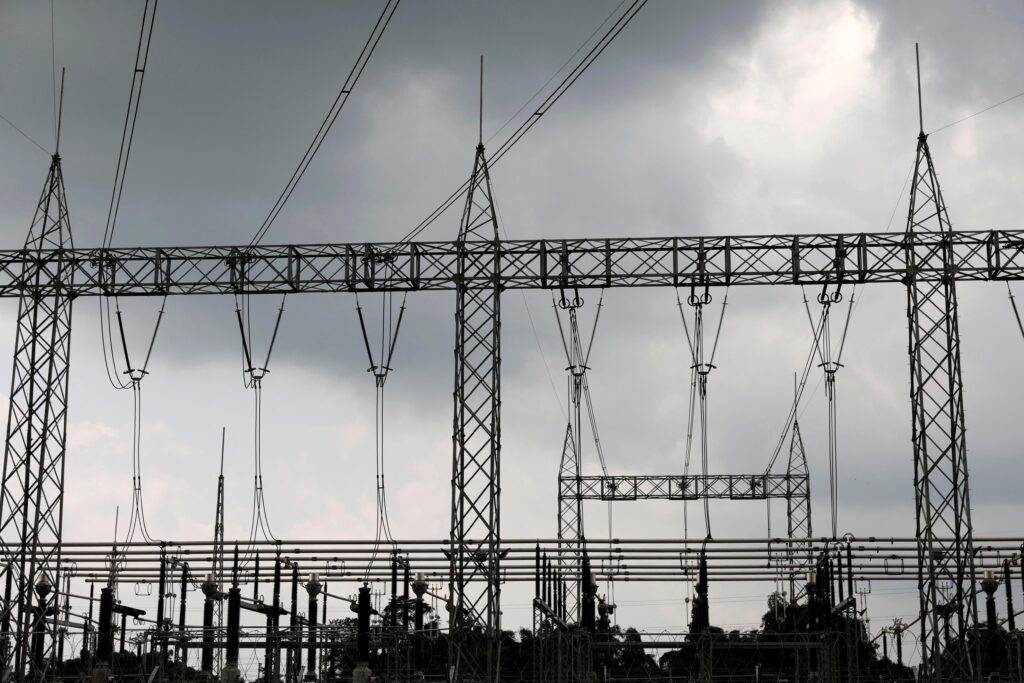
Electricity supply to Lagos and several other areas reportedly improved following the repair and restoration of the Benin–Egbin 330-kilovolt transmission line on 9 November.
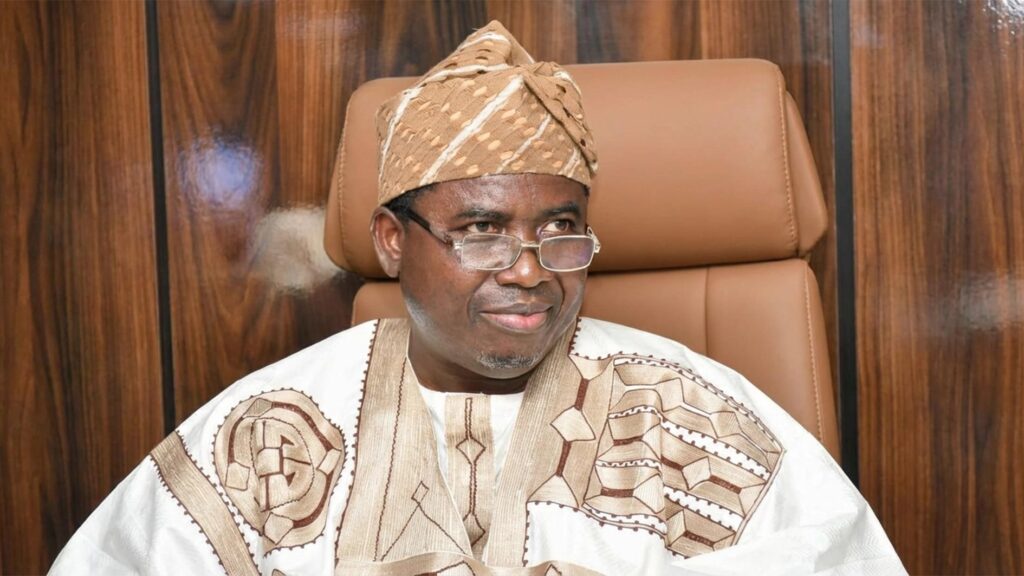
The Minister of Power, Joseph Olasunkanmi Tegbe, announced that the line had returned to service following damage attributed to vandalism. The affected areas identified included Lagos, Ogun, Oyo, Kwara and the Federal Capital Territory. Punch reported the minister’s restoration announcement.
The minister reported that supply to the Lagos Complex had risen above 1,000 megawatts, returning to the level recorded before the disruption.
He also attributed the earlier reduction in supply to a combination of factors. These included maintenance at Egbin Power Station, inadequate gas supply to some thermal power plants and damage to transmission infrastructure.
The restoration was an important development because the transmission network is a critical link between electricity generation and the consumers who depend on power for domestic, commercial and industrial activities.
However, the restoration of one transmission line does not mean that Nigeria’s wider electricity challenges have been resolved.
The electricity system depends on three interconnected stages: generation, transmission and distribution. Electricity must first be produced at power stations, transported through the transmission network and then delivered to homes and businesses through distribution infrastructure.
A problem at any of these stages can affect the supply reaching consumers. Consequently, a repair to a major transmission route can improve the movement of available electricity without necessarily resolving constraints involving generation, gas supply or distribution.
The minister’s above-1,000MW figure related specifically to the Lagos Complex. It should not be interpreted as confirmation that every household or business in Lagos and the other affected areas received uninterrupted electricity.
Other transmission constraints remain
The minister also discussed a separate problem involving the Osogbo–Ikeja West 330kV transmission line, which he said had been out of service for about 18 months.
According to his estimate, restoring the route could add approximately 400 megawatts to electricity supply to Lagos. He also referred to about six transmission towers reportedly affected by vandalism.
The minister stated an end-of-November 2026 target for restoring the route. That remained an announced intention during the reporting period, not confirmation that the repairs had been completed.
Another proposal discussed was a two-billion-dollar east–west super grid, with a stated target of 19,000 megawatts. The project remained a proposal rather than operational electricity infrastructure.
These developments illustrate the difference between restoring an existing transmission route, setting a target for another repair and proposing a major expansion of the electricity network. Each represents a different stage of infrastructure development and must be assessed accordingly.
For consumers, the central concern is not simply whether a transmission line has been repaired. It is whether the improvement translates into more dependable electricity at the point of use.
That requires sustained performance across the electricity value chain, supported by reliable technical infrastructure and adequate supply.
The next issues to watch include technical confirmation of the Benin–Egbin restoration, progress towards the stated Osogbo–Ikeja West target and evidence of how the reported improvement affects electricity delivery across the identified areas.
The restoration marked a specific infrastructure development. Its wider significance will depend on whether the improvement can be sustained and translated into better service for consumers.
Story 3: Nigeria Public Finances: Debt Projections and NRC Audit Queries
Nigeria’s public finances attracted attention through two separate developments during the reporting period: reported projections of the Federal Government’s future debt-service burden and a legislative examination of financial records at the Nigerian Railway Corporation.
Although both concern public financial management, they involve different institutions and questions. The debt projections address the government’s capacity to meet borrowing obligations relative to revenue, while the NRC hearing concerns the documentation and accountability of transactions within a public corporation.
Debt-service projections raise medium-term concerns
The Debt Management Office’s 2024 Debt Sustainability Analysis, as reported by TheCable and The Guardian, projected that the Federal Government’s debt-service-to-revenue ratio could reach 71.7 per cent by 2030 under a baseline scenario.
Under a more adverse shock scenario, the reported projection was 97.3 per cent. The reference threshold cited in the reports was 50 per cent.
The debt-service-to-revenue ratio measures the proportion of government revenue required to meet debt payments. It is an important indicator because governments need revenue not only to service existing obligations but also to fund public services and other spending priorities.
When debt servicing takes up a larger share of available revenue, the amount left for other government responsibilities may become more constrained. This is why the reported projections attracted attention.
However, the figures must be understood correctly. The 71.7 per cent and 97.3 per cent figures were projections for 2030 under different scenarios. They were not the government’s current debt-service ratio, nor did they establish what the ratio would certainly become.
The scenarios depend on assumptions about revenue, economic growth, exchange rates and borrowing costs. Changes in those conditions can affect the eventual outcome.
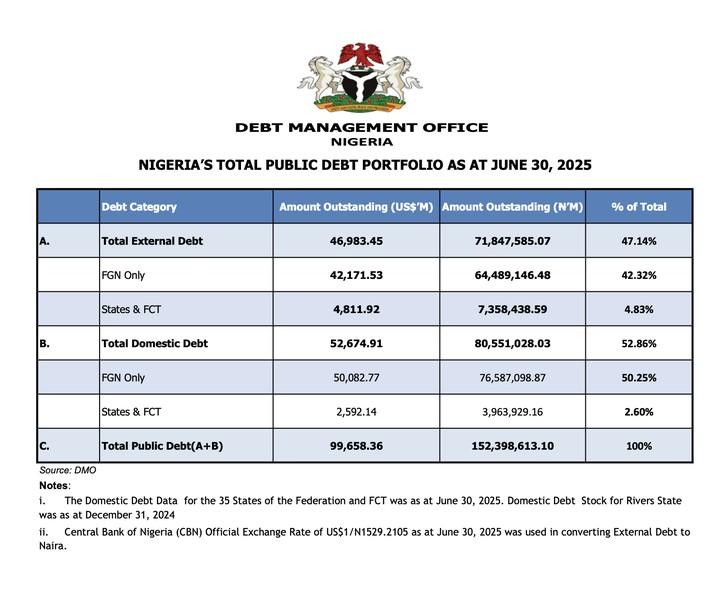
The reports also cited Nigeria’s public debt at ₦133.33 trillion as of 31 December 2024. That figure provides a reference point for the period covered by the reported analysis, but it should not be mistaken for a current debt total as at November 2026.
An important verification limitation also remains: the original DMO analysis was not directly examined in the research supporting this review. The reported projections therefore require confirmation against the primary document before they are treated as independently verified findings.
The issue for policymakers is how to strengthen revenue, manage borrowing costs and maintain the capacity to meet debt obligations without unnecessarily restricting resources available for public priorities.
NRC faces questions over ₦12.91bn in audit queries
A separate public-accountability development involved the Nigerian Railway Corporation.
The House of Representatives Public Accounts Committee questioned NRC officials over approximately ₦12.91 billion in audit queries arising from the 2023 report of the Auditor-General for the Federation. Punch’s report on the committee’s examination outlined the financial issues raised at the hearing.
The queries covered several areas, including transfers to railway outstations, revenue discrepancies, alleged under-remittance, contract approvals, investment income, official travel and unretired advances.
One major issue concerned ₦6.62 billion in transfers to railway outstations. The NRC reportedly presented evidence that ₦5.16 billion of that amount related to diesel purchases. The committee requested further documentation and established reconciliation committees.
Other issues identified in the examination included a ₦2.86 billion revenue-record discrepancy, alleged under-remittance of ₦1.71 billion, 26 contracts valued at ₦858.6 million and ₦410 million in investment income.
There were also questions about a ₦19.6 million chartered flight and ₦39.45 million in unretired advances.
The distinction between an audit query and a proven financial offence is essential. An audit query is a request for an institution to explain a transaction or provide documents supporting the expenditure or financial record. It does not, by itself, establish that money was stolen or missing.
At the same time, an explanation offered by an institution does not automatically resolve an audit query. The relevant documents must be examined, the figures reconciled and the committee must determine whether the responses adequately address the issues raised.
The NRC’s reported explanation concerning diesel purchases therefore forms part of the accountability process; it does not mean that every related query has been closed.
Two different responsibilities, one accountability question
The debt projections and NRC audit examination should not be treated as evidence of one connected financial problem. One concerns national debt sustainability, while the other concerns the records and transactions of a public corporation.
Their shared relevance is the importance of credible financial information, transparent management and effective oversight.
For Nigeria’s public institutions, public accountability requires more than publishing figures or responding to questions. It requires verifiable records, clear explanations and appropriate follow-through where concerns remain unresolved.
The next steps are therefore distinct: confirmation of the original DMO analysis and the outcome of the NRC’s reconciliation process.
Story 4: Delta 2027 Budget: ₦1.237 Trillion Proposal Awaits Legislative Scrutiny
Delta State’s proposed budget for the 2027 fiscal year became another important state-governance development after the State Executive Council approved estimates totalling ₦1,236,874,981,081.
The figure is approximately ₦1.237 trillion.
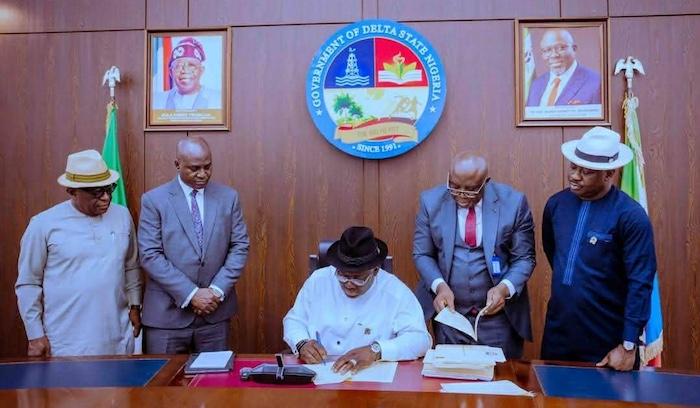
Governor Sheriff Oborevwori presided over the Executive Council meeting at the Government House Annex in Warri on 9 November. The Commissioner for Works, Rural Roads and Public Information, Charles Aniagwu, announced the approval. The Guardian reported the proposed budget and its planned transmission to the State House of Assembly.
According to the state government, the proposed spending priorities included infrastructure, education, judicial facilities and community development. Other reported areas included economic empowerment, electricity and security.
The proposal is significant because a state budget sets out the spending priorities a government intends to pursue and the financial framework through which it plans to implement them.
However, the Executive Council’s approval was only one stage in the budget process. The proposal was expected to be transmitted to the Delta State House of Assembly for legislative consideration. It was not yet an enacted budget and did not establish that the proposed amount had been released or spent.
That distinction is important. A budget proposal expresses the executive government’s intended spending plan. Legislative consideration provides an opportunity for scrutiny and approval before the estimates become an authorised budget.
Comparing the 2027 proposal with the previous budget
The proposed ₦1.237 trillion budget was lower than the ₦1.729 trillion 2026 budget reported as having been approved by the Delta State House of Assembly.
The difference between the two headline figures does not, on its own, establish whether development spending is increasing or decreasing.
A meaningful comparison would require the full budget documents, including the allocations to individual sectors, capital and recurrent expenditure, revenue assumptions and the projects planned for implementation.
For example, a comparison of total budget sizes cannot establish whether infrastructure receives more or less funding without examining the actual allocations. Nor can the headline figures alone show whether the state has increased the resources available for education, healthcare, community development or other services.
The complete 2027 breakdown was not available in the material reviewed. It was therefore not possible to assess the proposed sector allocations, the balance between capital and recurrent expenditure or the assumptions underpinning the state’s revenue expectations.
What the proposal means for residents
For Delta residents, the significance of the proposed budget will ultimately depend on the priorities that survive legislative scrutiny, the resources available to fund them and the government’s ability to translate approved allocations into measurable improvements.
Infrastructure proposals, education spending, judicial facilities and community development can only be assessed properly when the relevant projects, funding provisions and implementation arrangements are clear.
The same applies to the proposed allocations for electricity, economic empowerment and security. The announcement identifies areas of intended priority, but it does not establish the scale of funding or the results residents can expect.
The next stage identified during the reporting period was legislative consideration by the Delta State House of Assembly. The complete budget estimates and revenue framework will also be necessary for a more detailed assessment.
For now, the accurate description is that Delta’s Executive Council approved a proposed ₦1.237 trillion budget for 2027. Its legislative status, detailed allocations and eventual implementation remain separate questions.
Story 5: NYSC Sagamu Camp Overcrowding Raises Questions About Welfare and Preparedness
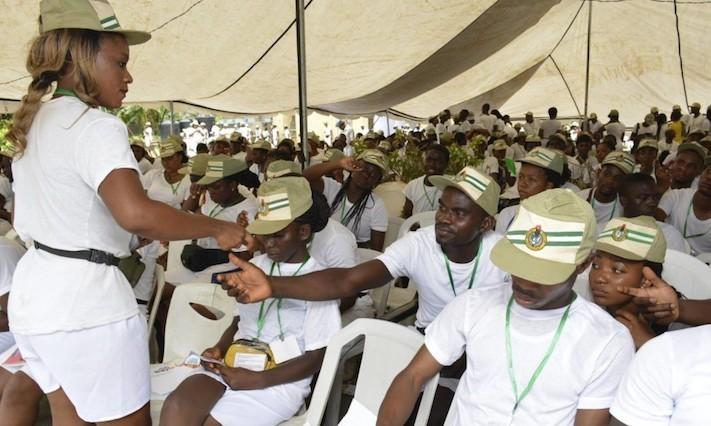
The welfare of prospective corps members came under scrutiny after videos from the National Youth Service Corps orientation camp in Sagamu, Ogun State, showed participants sleeping in a crowded multipurpose hall, with mattresses placed closely together on the floor.
The Ogun State Government attributed the situation to a sharp increase in the number of prospective corps members deployed to the state. Punch reported the government’s explanation of the overcrowding.
According to the government, the camp normally accommodated slightly more than 2,000 participants per batch, while more than 4,300 prospective corps members reportedly arrived for the exercise.
However, published arrival figures were not consistent. The state government’s account and several reports referred to more than 4,300 arrivals, while Galaxy Television reported 4,152 prospective corps members.
The discrepancy had not been reconciled during the reporting period. NYSC registration records would be needed to establish the actual number of participants.
The difference matters because the scale of overcrowding cannot be assessed accurately without a reliable arrival figure and confirmed information about the camp’s capacity.
The government’s explanation and temporary accommodation
Kayode Akinmade, Special Adviser on Media and Strategy to Governor Dapo Abiodun, said NYSC officials handled registration, screening, credential verification and hostel allocation.
He described the use of the multipurpose hall as a temporary arrangement for participants whose registration extended late into the night.
The state government also said it provided 500 mattresses. The Akarigbo of Remo reportedly donated another 100, followed by an additional 200.
These interventions may have helped address an immediate shortage of sleeping materials. However, the provision of mattresses does not establish whether the wider accommodation and welfare arrangements were adequate.
Sleeping space is only one part of the conditions required at an orientation camp. Other important considerations include toilets, bathing facilities, clean water, ventilation, medical support, security and sufficient space for participants.
The material reviewed did not establish whether all these facilities were adequate during the period of overcrowding.
It would therefore be premature to conclude that the reported mattress contributions resolved the wider welfare concerns. Equally, the available evidence did not establish a specific injury or medical outbreak caused by the overcrowding.
Who is responsible for camp welfare?
The incident also raised questions about the division of responsibility between the NYSC and the relevant Ogun State structures.
The NYSC manages the national scheme and its deployment arrangements. Its published organisational structure and governing framework also indicate welfare and accommodation responsibilities at state level. The organisation’s official structure page provides institutional context for its administrative framework.
The Ogun State Government’s explanation of the operational role played by NYSC officials in registration and hostel allocation did not, by itself, settle the wider question of which institutions were responsible for ensuring that the camp could safely accommodate the number of participants deployed.
That distinction is important. Explaining which officials handled registration does not necessarily resolve questions about deployment planning, available accommodation, facility capacity and the broader arrangements required to protect corps members.
The orientation programme is a compulsory stage for participants entering national service. Prospective corps members depend on the institutions responsible for the programme to provide safe and adequate conditions during their stay.
Where the number of arrivals exceeds the camp’s normal capacity, the relevant authorities need to account for how the situation arose, what temporary arrangements were made and how the welfare of participants was protected.
The questions that remain
At the close of the reporting period, several issues still required clarification.
First, the actual number of prospective corps members who arrived at the Sagamu camp needed to be established through registration records. The difference between the government-reported figure of more than 4,300 and Galaxy Television’s 4,152 had not been resolved.
Second, the camp’s normal and maximum accommodation capacity needed to be confirmed. The statement that it usually accommodated slightly more than 2,000 participants provided a reference point, but a complete assessment required the relevant capacity records.
Third, further information was needed about how long the temporary multipurpose-hall arrangement lasted and whether the accommodation, sanitation, water, medical and security facilities were adequate throughout the period.
Finally, a comprehensive response from the NYSC and the relevant state structures would help clarify how deployment arrangements and welfare responsibilities were divided.
The Sagamu situation was therefore more than a question about mattresses or temporary sleeping arrangements. It raised a broader issue of institutional preparedness: whether the authorities responsible had planned adequately for the number of people deployed to the camp and whether the welfare arrangements met the needs of those participants.
For Nigeria’s public institutions, the incident illustrates why the performance of a national programme must be assessed not only by its administrative processes but also by the conditions experienced by the people required to participate in it.
CONCLUSION
The developments reviewed during the 24-hour period ending on 10 November 2026 involved different institutions, policies and groups of Nigerians. They did not share one cause, but each raised questions about public responsibility and the evidence required to assess institutional performance.
INEC’s voter-register clean-up placed electoral accuracy and voter protection in focus, while Wike’s separate pledge to FCT councillors raised questions about political mobilisation, funding and legal scrutiny. The restoration of the Benin–Egbin transmission line offered a specific improvement in electricity infrastructure, but wider supply challenges remained. Reported debt projections and the NRC audit queries highlighted different aspects of financial management and oversight. Delta’s proposed 2027 budget moved attention to state spending priorities, while the Sagamu NYSC situation raised questions about accommodation, deployment planning and welfare.
The central lesson is that announcements, proposals, projections and explanations must be assessed according to what they actually establish. A restored transmission line is not proof of uninterrupted electricity. An audit query is not proof of theft. A proposed budget is not an enacted appropriation. Mattress donations do not settle every question about camp welfare.
The performance of Nigeria’s public institutions will ultimately depend on transparent processes, credible records, effective oversight and the delivery of services and protections that people can experience. The unresolved questions in this review require evidence and follow-through, not assumptions.
About the Author