Introduction
The Africa news agenda between Monday, 9 November and Sunday, 15 November 2026 was shaped by developments that tested the ability of governments and institutions to protect lives, manage public emergencies and maintain public confidence. Across West, East, Central and North Africa, the week’s reports highlighted humanitarian displacement, disease control, electoral preparations, public-safety concerns and the future of international peacekeeping.
In West Africa, new United Nations figures revealed that nearly 64,000 Nigerians had fled violence into neighbouring Niger during 2026. A deadly migrant boat disaster off Senegal and the repatriation of hundreds of migrants from eastern Libya illustrated other, distinct dimensions of movement across the continent. Meanwhile, the Democratic Republic of Congo continued to face a serious Ebola outbreak, even as Kenya discharged its final reported patient and began a countdown towards a possible declaration that it was free of the disease.
Political developments also featured prominently. South Sudan postponed its first national elections since independence for a third time, Cameroon announced a new timetable for legislative and municipal elections, and preparations continued for presidential elections in The Gambia and Cabo Verde. South Africa’s local government election results offered another indication of changing political preferences.
Elsewhere, a deadly confrontation involving anti-illegal-mining personnel in Ghana and the collapse of an unfinished building in Kenya raised questions about public safety and institutional accountability. In the Central African Republic, the United Nations Security Council renewed the mandate of MINUSCA while reducing its authorised military personnel ceiling.
These developments occurred under different national circumstances. They do not constitute one uniform continental crisis. Their significance lies in the different ways they expose the responsibilities of governments, public institutions and international organisations. Five major narratives help explain the week’s developments.
Story 1. African Migration Crisis: Nigerian Displacement, Senegal’s Deadly Sea Crossing and Migrant Returns from Libya
The African migration crisis remained a major humanitarian and policy concern during the week, with new figures from the United Nations refugee agency highlighting the scale of displacement from northern Nigeria into neighbouring countries. The figures also revealed the pressure facing Niger, which is hosting hundreds of thousands of refugees and asylum-seekers while struggling to meet the needs of new arrivals.
In a briefing on 10 November, the United Nations High Commissioner for Refugees (UNHCR) reported that nearly 64,000 people had arrived in Niger after fleeing violence in northern Nigeria since the beginning of 2026. Several hundred Nigerians had also sought refuge in neighbouring Benin.
The new arrivals add to an already substantial refugee population. Niger was hosting more than 500,000 refugees and asylum-seekers, including approximately 327,500 people from Nigeria. The continued movement of families across the border therefore increases the humanitarian responsibilities of a country already accommodating a large displaced population.
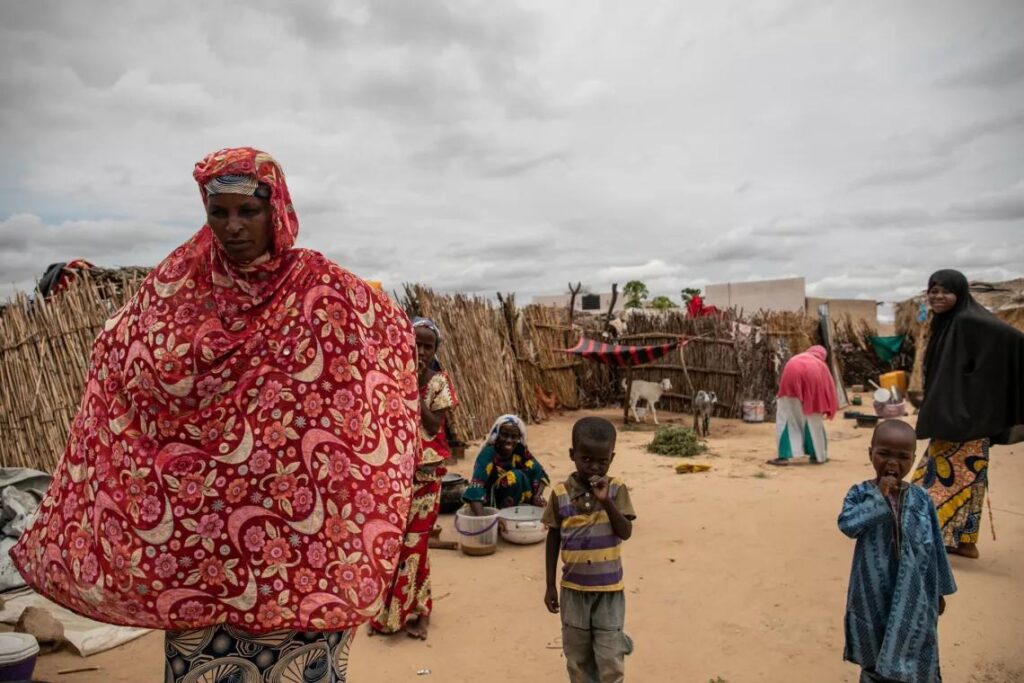
The situation is particularly pronounced in the Diffa region of south-eastern Niger. UNHCR reported that more than 23,000 people had arrived there since the beginning of the year, with more than two-thirds of them children. Many families were living in makeshift shelters and facing limited access to clean water, food, healthcare and other essential services.
The agency also identified a serious registration gap. Only around five per cent of Nigerian refugees who arrived during the year had been formally registered, partly because registration had only recently begun amid limited resources. Without documentation, displaced people can face additional barriers when seeking protection and assistance.
The funding requirement adds to the urgency. UNHCR said it needed US$11.4 million to strengthen emergency assistance across Niger, Nigeria and Benin. The request covers a response to the growing protection and humanitarian needs associated with displacement from northern Nigeria. It also reflects the importance of supporting affected host communities rather than placing the entire responsibility on receiving areas.
The agency’s account and its figures are available in its 10 November briefing on Nigerians fleeing violence into Niger. Reuters also reported on the displacement figures and the funding appeal in its report on the growing refugee pressure in Niger. UNHCR UK+1
The figures have implications beyond the number of people crossing the border. Displacement creates immediate demands for shelter, food, healthcare, water and protection, particularly where large numbers of children are involved. It also places pressure on local services and communities that may already be dealing with insecurity and limited resources.
The movement of people from northern Nigeria into Niger is principally a forced-displacement issue in the context described by UNHCR. It should not be confused with every other form of migration reported during the week.
Off Senegal’s Atlantic coast, at least 39 people were reported dead after a migrant boat capsized near Kébémer while travelling towards the Spanish coast. The Associated Press reported that one passenger survived. The boat had left Saint-Louis in northern Senegal and overturned on Sunday, 8 November, with further bodies discovered on Monday, 9 November.
The disaster illustrates the human cost of dangerous irregular migration routes across the Atlantic. The Associated Press reported that the route is used by people seeking to reach Europe, including young Senegalese pursuing opportunities abroad. The circumstances of the journey are different from those of families fleeing violence into Niger, but the loss of life highlights the risks associated with unsafe sea crossings.
The Associated Press report on the Senegal boat disaster recorded the death toll at 39 and reported one survivor. ABC News
A third development came from eastern Libya. On 12 November, authorities confirmed that 602 migrants had been repatriated to Chad following security operations. Reuters reported that the migrants had been detained in operations across areas controlled by the Libyan National Army, including people accused of attempting to enter Libya illegally. Their transfer to the Chadian border took approximately a day and a half by truck.
The announcement must be understood within the context of migration enforcement. It does not establish that the returns were voluntary, nor does it explain the individual circumstances or protection needs of every person involved. Reuters also reported that Libya remains divided between rival eastern and western authorities and continues to serve as a transit route for people seeking to reach Europe. Its report on the repatriation of 602 migrants to Chad provides further details. Reuters
These three developments involve different circumstances: people escaping violence, people attempting dangerous irregular sea crossings and migrants returned following enforcement operations. Treating them as one uniform migration story would obscure the different responsibilities and protection questions involved.
For Niger, the immediate concern is whether humanitarian organisations and the authorities can secure the resources needed to register and assist displaced families. For Senegal, the boat disaster adds to concerns about the loss of life along dangerous migration routes. In Libya, the conditions surrounding migrant detention and repatriation remain important issues for scrutiny.
The central question is whether governments and relevant institutions can manage migration in ways that protect vulnerable people while addressing the insecurity and conditions that drive movement in the first place.
Story 2. Ebola Outbreak in Africa: DRC Faces Continuing Transmission as Kenya Begins Its 42-Day Countdown
The Ebola outbreak caused by the Bundibugyo virus continued to place significant pressure on public-health institutions during the review period. The Democratic Republic of Congo remained the principal centre of the reported outbreak, while Kenya reached an important stage in its response after discharging its final patient.
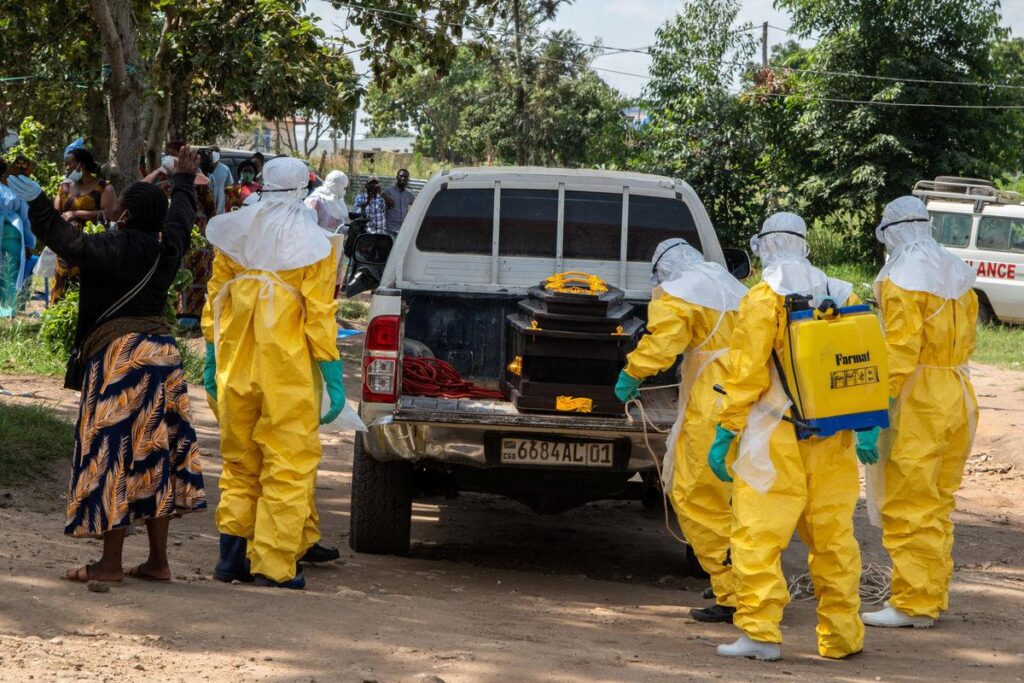
According to the European Centre for Disease Prevention and Control (ECDC), the Democratic Republic of Congo had recorded 11,197 confirmed cases and 5,471 associated deaths as of 12 November, using data up to 11 November. Eight provinces had been affected: Ituri, North Kivu, South Kivu, Tshopo, Haut-Uélé, Bas-Uélé, Sud Ubangi and Nord Ubangi.
The figures underline the scale of the outbreak and the demands it places on health authorities. Continued transmission across several provinces requires surveillance, early detection, access to affected communities and the ability to respond when new infections are identified.
The challenge is not limited to treating patients. Public-health authorities must also identify and monitor contacts, investigate possible transmission chains and maintain effective communication with communities. Healthcare workers require protection and support, while public confidence remains important to the success of outbreak-control measures.
The ECDC’s 13 November epidemiological update on the Bundibugyo virus outbreak provides the case and death figures, the affected provinces and its regional assessment. ecdc.europa.eu+1
Kenya, however, reported a different development. On 11 November, the country discharged its final reported Ebola patient, according to Health Cabinet Secretary Aden Duale and the World Health Organization.
Kenya had recorded nine confirmed cases, including two deaths and seven recoveries. All nine cases were linked to the initial case, and the country’s health authorities reported no evidence of community transmission.
The final patient was discharged after treatment, while the remaining 11 contacts also completed their monitoring and returned home. The World Health Organization said the development meant that, for the first time since the outbreak began, Kenya had no patient undergoing treatment and no contacts remaining in quarantine.
The discharge began a 42-day countdown, starting on 12 November. If no new case is recorded during that period, Kenya is expected to be declared free of Ebola on 23 December 2026.
The 42-day period is twice the longest known incubation period of the virus. It is therefore a monitoring requirement rather than an announcement that the country has already been declared Ebola-free.
The distinction matters. Kenya’s progress is significant, but the country must continue surveillance and prevention measures until the monitoring period is completed. The final discharge does not remove the need for vigilance.
The World Health Organization’s 11 November announcement on Kenya’s final Ebola patient and the 42-day countdown confirms the discharge, the completion of contact monitoring and the expected date for a possible Ebola-free declaration. Regional Office for Africa+1
The situations in the two countries are therefore different. The DRC continues to face an active outbreak with substantial reported case and death figures, while Kenya has completed treatment for its reported cases and entered a post-treatment monitoring period.
The contrast demonstrates why outbreak management requires a sustained institutional response. Treatment, surveillance, contact tracing, community engagement and protection for healthcare workers all contribute to controlling transmission. A country that has discharged its final patient still needs to complete the required monitoring process before declaring the outbreak over.
The developments also underline the importance of regional and international coordination. Public-health institutions need reliable information-sharing and the capacity to respond to cases that may emerge across borders. The WHO has emphasised the importance of preparedness and evidence-based measures in countries at risk.
For the DRC, the priority remains containing transmission and protecting affected communities. For Kenya, the immediate test is to complete the 42-day countdown without recording a new infection.
The next milestone is therefore clear: Kenya’s expected 23 December declaration, conditional on no new cases, while the DRC’s continuing outbreak requires sustained attention.
The ability of institutions to protect citizens is also tested through political processes. During the week, several African countries faced different electoral challenges, ranging from another postponement in South Sudan to new election dates and preparations elsewhere.
Story 3. Africa’s Electoral Transitions: South Sudan’s Third Delay, Cameroon’s New Timetable and Regional Election Preparations
Electoral developments across Africa during the week highlighted different stages of political competition and democratic preparation. South Sudan announced a third postponement of its first national elections since independence, Cameroon set a new timetable for legislative and municipal elections, and preparations continued for presidential elections in The Gambia and Cabo Verde. South Africa’s local government results offered another indication of changing voter preferences.
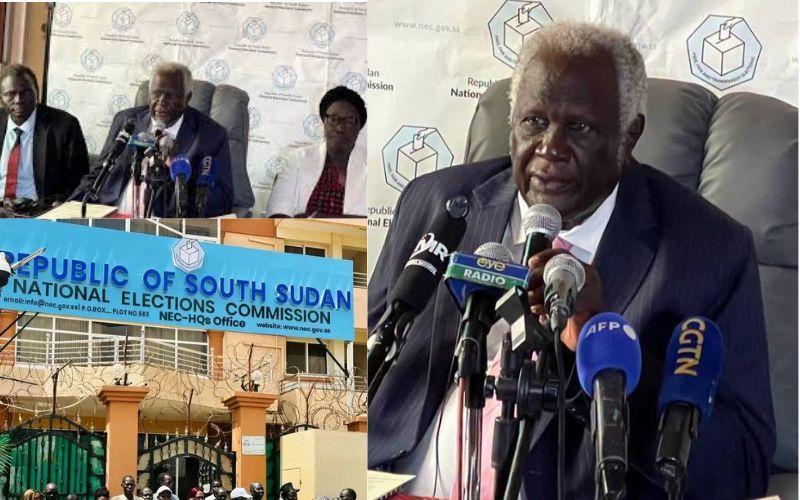
The most consequential announcement came from South Sudan. The National Election Commission moved the country’s first national elections since independence from 22 December 2026 to 11 February 2027. It was the third postponement of the vote.
The commission did not provide a detailed public explanation for the latest delay. The announcement came as voter registration was due to begin, with registration scheduled from 14 to 28 November at 3,161 centres.
The postponement leaves the country’s transition towards elected national leadership unresolved for longer. It also raises questions about the practical preparations required to deliver the vote, including registration, security, political participation and the organisation of the electoral process.
The Associated Press reported that the election had previously been delayed amid concerns about insecurity, funding and readiness. It also reported that election-monitoring advocates had raised questions about the publication of registration-centre locations. These are important contextual issues, but they should not be presented as the commission’s official explanation for the latest postponement, which was not detailed in its announcement.
The Associated Press report on South Sudan’s third election postponement provides further context on the revised date and the outstanding preparations. AP News
Cameroon also announced a new electoral timetable. President Paul Biya signed Decree No. 2026/345 on 9 November, setting 7 February 2027 for legislative and municipal elections.
The announcement ended a period of uncertainty over the renewal of the National Assembly and municipal councils, whose terms had been extended on several occasions. The new date provides a formal timetable for preparations, but the conduct and credibility of the elections will depend on how the process is implemented.
The African Press Agency reported the decree and the new election date in its coverage of Cameroon’s February 2027 elections. APAnews – African Press Agency
In The Gambia, preparations continued for the presidential election scheduled for 5 December 2026. The Independent Electoral Commission completed its nomination process on 14 November and accepted nine presidential nominations.
The commission said 27 nomination forms had been issued. Eleven aspirants or parties withdrew, 16 submitted nomination papers and seven submissions were rejected, leaving nine accepted candidates.
The accepted nominations include incumbent President Adama Barrow, opposition politician Ousainu Darboe and seven other candidates. The commission also announced that the official campaign period would begin on 16 November and end on 3 December.
The nomination process is an important stage in the preparation for the election. It establishes the accepted field of candidates, but the conduct of the campaign and the vote itself remain ahead. The full announcement is available from the Gambia Independent Electoral Commission. Independent Electoral Commission
Cabo Verde was scheduled to hold its presidential election on 15 November. The African Union deployed 37 short-term observers drawn from 22 member states to monitor the process. The AU mission was scheduled to remain in the country from 8 to 20 November and planned to issue a preliminary statement on 17 November.
The election was scheduled for the final day of this review period. However, the reporting cutoff was 6:00 AM WAT on 15 November. Voting was scheduled to begin later that morning, so results and developments after the cutoff are not included in this review.
The African Union’s announcement of its election observation mission in Cabo Verde confirms the number of observers, their member states and the mission’s planned timetable. Peace and Security Department+1
South Africa presented another dimension of the electoral picture after its 4 November 2026 local government elections. The African National Congress remained the largest party, but the results indicated a changed political landscape and a greater role for coalition arrangements in municipal government.
SAnews reported that the ANC received 30.76 per cent of the vote and secured outright control of 53 municipalities. It also reported that the Democratic Alliance secured control of 12 municipalities, while 127 councils were classified as hung councils, where no party obtained more than half of the seats.
There is, however, a discrepancy in government-published results. A separate speech published on the South African government’s official website recorded the ANC’s vote share as 30.89 per cent and its outright control as 51 municipalities. These figures should not be silently combined or treated as identical. The difference requires confirmation against the final Electoral Commission dataset.
The SAnews report on the election results and the official government publication of the Electoral Commission chairperson’s address contain the differing figures. SAnews+1
These developments do not point to one uniform political situation across Africa. South Sudan is dealing with another postponement; Cameroon has announced a new timetable; The Gambia and Cabo Verde are preparing for presidential elections; and South Africa’s local government results show a more fragmented distribution of political control.
Nevertheless, the developments raise a common institutional question: whether electoral systems can deliver credible processes through which citizens participate in government and choose their representatives.
Repeated delays can raise questions about electoral readiness and political legitimacy. Announced dates must be supported by practical preparations, transparent procedures and public confidence. Observation missions can contribute to scrutiny, but their presence does not substitute for the responsibilities of electoral authorities and political institutions.
The next dates to watch include The Gambia’s presidential election on 5 December and the scheduled legislative and municipal elections in Cameroon on 7 February 2027. South Sudan’s revised timetable and the implementation of its registration arrangements will also remain under scrutiny.
Political accountability, however, is not limited to elections. It also involves the conduct of public institutions, the enforcement of regulations and the protection of lives. Separate incidents in Ghana and Kenya brought these responsibilities into focus during the review period.
Story 4. Government Accountability and Public Safety: Ghana’s NAIMOS Clash and Kenya’s Building Collapse
Two deadly incidents in Ghana and Kenya renewed attention on public safety, institutional responsibility and accountability during the week. In Ghana’s Ashanti Region, a confrontation involving personnel of the National Anti-Illegal Mining Operations Secretariat resulted in competing casualty figures and conflicting accounts of the events. In Kenya, the collapse of an unfinished building near Nairobi killed six people.
The incidents were separate and involved different circumstances. Their relevance to the same broader discussion lies in the responsibility of public institutions and safety systems to protect lives.
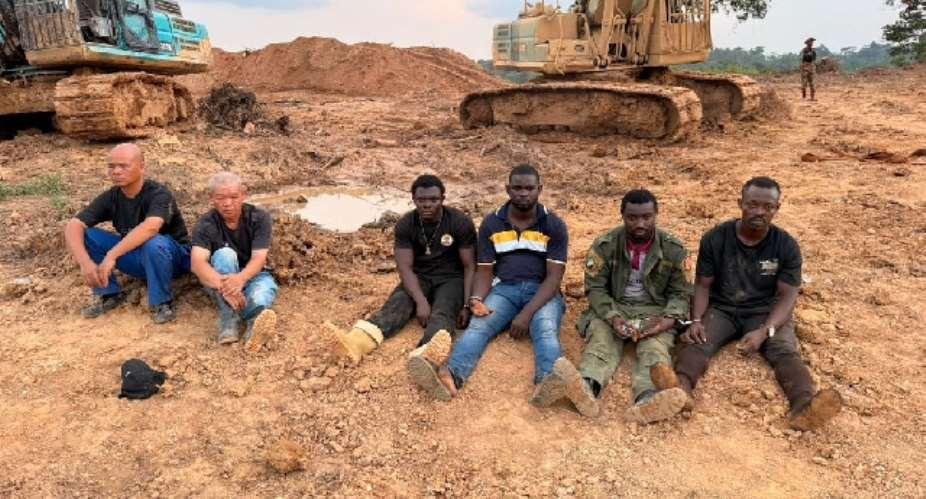
In Ghana, the confrontation occurred at Manso Domi Keniago in the Ashanti Region on 11 November. It involved NAIMOS personnel, residents and suspected illegal miners during an operation connected to the movement of excavators seized by the anti-illegal-mining task force.
The initial casualty figure reported by MyJoyOnline was three deaths. The outlet later reported that the death toll had risen to six, with 15 people injured. A NAIMOS spokesperson, Paa Kwesi Schandorf, subsequently said personnel had acted in self-defence during the confrontation.
The account from the traditional leadership of Manso Domi Keniago differed. Chief Nana Obeng Mensah Ababio appealed for justice for seven people he alleged had been killed and called for an independent investigation.
A further discrepancy emerged in reporting on the Ministry of Lands and Natural Resources’ response. ChannelOne News reported on 13 November that the ministry had begun an investigation and that its statement recorded four deaths and 15 injuries. The ministry’s reported figure therefore differed from the figures attributed to MyJoyOnline, NAIMOS and the traditional leader.
The casualty figures must remain clearly attributed. Three, six, seven and four are not interchangeable figures, and the available reports do not justify presenting any one of them as a final independently established death toll.
The circumstances of the confrontation are also disputed. NAIMOS said its personnel encountered an armed group attempting to obstruct the movement of seized excavators and that officers fired warning shots. Community accounts challenged aspects of that description and questioned the actions of the task force.
The traditional leader’s call for an independent investigation reflects the need to establish what happened and determine the circumstances surrounding the deaths. The ministry’s reported decision to investigate is an important development, but an investigation being opened is not the same as a final finding.
The initial and subsequent reporting by MyJoyOnline on the Manso Keniago confrontation, its report on NAIMOS’s self-defence account, and the Ghana News Agency report on the chief’s allegation of seven deaths illustrate the different accounts. ChannelOne News also reported on the ministry’s investigation and its separate casualty figure. MyJoyOnline+3
The incident raises questions about enforcement procedures, the use of force and the standards expected of agencies carrying out anti-illegal-mining operations. Combating illegal mining is a public-policy responsibility, but enforcement operations must also be conducted within accountable procedures. Establishing the facts is essential where lives have been lost.
In Kenya, a separate incident occurred on 13 November when an unfinished eight-storey building collapsed at Syokimau, near Nairobi, killing six people.
Al Jazeera, citing Reuters and a preliminary report from Nairobi City County’s emergency team, reported that the building’s uppermost concrete slab gave way, bringing down part of the structure. The preliminary report did not establish why the slab failed.
The collapse revived calls for stronger oversight of construction sites, particularly because it followed another deadly building collapse in Nairobi in October. However, the existence of earlier incidents does not establish the cause of the Syokimau collapse. Any conclusion about construction standards, supervision or regulatory failures in this specific case must await the findings of the relevant investigation.
The Al Jazeera report on the Syokimau building collapse provides details of the incident and the preliminary emergency report. Al Jazeera+1
The Ghana and Kenya incidents should not be presented as connected events. They took place in different countries and involved different circumstances. But both underline the importance of reliable investigations and public accountability when institutional operations or safety systems are associated with loss of life.
In Ghana, the immediate priority is to establish the final casualty figures and clarify the circumstances surrounding the confrontation. In Kenya, investigators need to determine why the unfinished building collapsed and whether any failures contributed to the disaster.
Until those findings are available, responsibility should not be assigned prematurely.
The broader question of protecting citizens also extends to national security arrangements. In the Central African Republic, the United Nations has renewed its peacekeeping mandate while changing the mission’s authorised strength and operational priorities.
Story 5. Africa Security: UN Reduces MINUSCA’s Authorised Military Ceiling in the Central African Republic
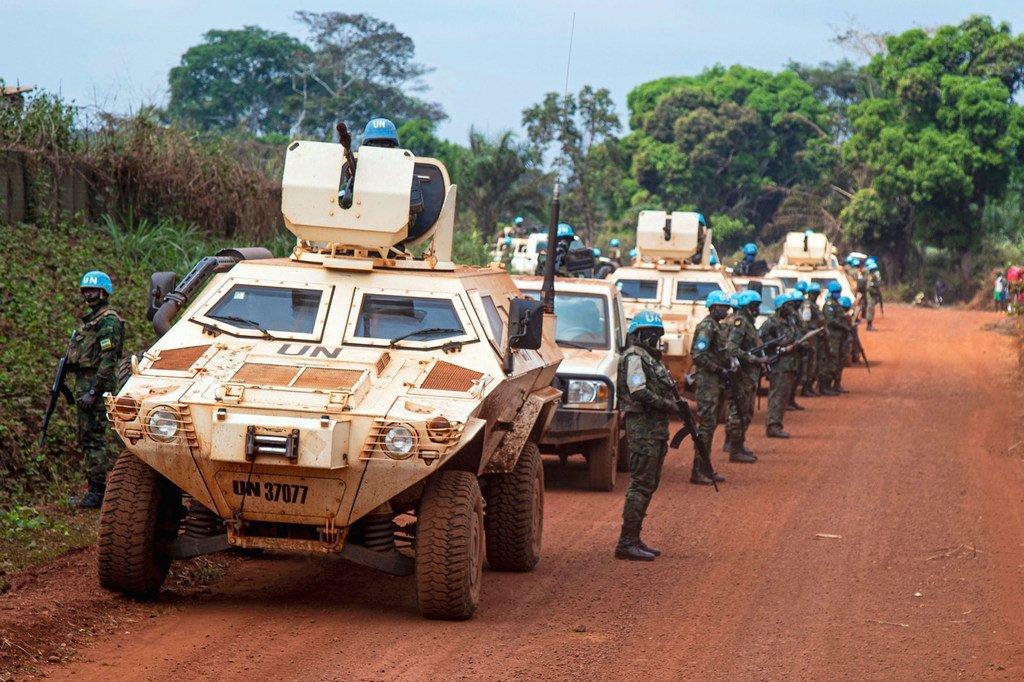
The United Nations Security Council renewed the mandate of its peacekeeping mission in the Central African Republic on 12 November, extending the operation for another year while reducing its authorised military personnel ceiling. The decision maintains an international peacekeeping presence but adjusts the mission’s operational framework and places greater emphasis on the gradual transfer of responsibilities to national authorities.
The Security Council unanimously adopted Resolution 2836 (2026), extending the mandate of the United Nations Multidimensional Integrated Stabilization Mission in the Central African Republic, known as MINUSCA, until 15 November 2027.
Under the resolution, the mission’s authorised military ceiling was reduced from 14,046 to 12,000 personnel. The authorised police component remains at 2,265 personnel, alongside 40 corrections officers.
The resolution also provides for a reconfiguration of the mission’s presence, with resources concentrated in high-risk areas, particularly along borders. It retains rapid-response capabilities for civilian protection and support for the extension of state authority.
The adjustment is significant, but the military ceiling must be understood correctly. It is the maximum number of military personnel authorised for the mission; it is not necessarily the number of personnel physically deployed at a particular time.
The reduction from 14,046 to 12,000 therefore does not establish that 2,046 deployed peacekeepers have already left the country. It is an adjustment to the authorised strength of the mission, not confirmation of a completed withdrawal of that number of personnel.
The Security Council’s decision also includes a gradual, sequenced and conditions-based transfer of responsibilities to national authorities. This is an important distinction because the transition is not simply a matter of reducing the international mission’s personnel ceiling. It requires an assessment of which responsibilities can be transferred, which require further capacity-building and which should remain with MINUSCA.
The United Nations said the mission’s priority tasks continue to include civilian protection, deployment of national security forces, support for the peace process and facilitation of humanitarian assistance. The Council also requested reports on implementation and transition progress in February, June and October 2027.
The United Nations Security Council announcement on Resolution 2836 provides the mandate details, personnel ceilings and provisions for the gradual transfer of responsibilities. UN Meetings Coverage and Press Releases+1
The Central African Republic’s representative welcomed the mandate renewal but cautioned that security gains remained fragile, particularly along the borders. The representative also stressed that responsibilities should be transferred to national authorities only when sufficient capacity and resources exist.
That concern is central to the future of the mission. A planned transfer of responsibilities does not establish that national institutions are already capable of maintaining security independently. The practical test will be whether they can assume additional duties while protecting civilians and maintaining stability.
The revised mandate therefore raises two connected questions. How effectively will MINUSCA concentrate resources in high-risk areas while retaining its rapid-response capacity? And how will national institutions strengthen their ability to protect civilians as responsibilities are gradually transferred?
These questions matter because a reduction in an authorised personnel ceiling should not automatically be interpreted as evidence that the country no longer requires international support. Nor should a planned transition be confused with an already completed transfer of security responsibilities.
The next phase will involve implementation of the revised mandate, monitoring of security conditions and assessment of progress towards the gradual transfer of responsibilities. The Security Council will continue to receive reports on the mission’s implementation and transition arrangements during 2027.
For the Central African Republic, the central concern remains the protection of civilians and the maintenance of security. The revised mandate changes the framework within which MINUSCA operates, but its practical significance will depend on conditions on the ground and the capacity of national institutions to assume greater responsibilities.
The decision forms part of a wider debate about the future of peacekeeping in Africa: how international support can be adjusted without weakening civilian protection, and how national institutions can take on more responsibility when the necessary capacity and resources are in place.
Conclusion: Africa’s Institutions Face Different Tests of Public Responsibility
The developments covered in this Africa news review reveal different pressures facing governments and institutions across the continent. The displacement of Nigerian families into Niger, the deadly boat disaster off Senegal and migrant repatriations in Libya highlight the varied circumstances behind migration and the need to protect vulnerable people.
The Ebola outbreak in the Democratic Republic of Congo and Kenya’s transition to a 42-day monitoring period demonstrate the importance of public-health preparedness and sustained surveillance. Electoral developments in South Sudan, Cameroon, The Gambia, Cabo Verde and South Africa show different tests of political readiness, representation and public confidence.
In Ghana, competing accounts of deaths during an anti-illegal-mining operation underline the need for transparent investigations. In Kenya, the building collapse at Syokimau has renewed attention on construction safety, although its cause remains to be established. In the Central African Republic, the revised MINUSCA mandate raises questions about the relationship between international peacekeeping and national security responsibilities.
These are not identical problems, and they should not be treated as evidence of one uniform continental crisis. Their significance lies in the different ways they test institutional capacity and public accountability.
The issues ahead include humanitarian support and registration in Niger, the containment of Ebola in the DRC, Kenya’s monitoring period, the implementation of electoral timetables, investigations into the incidents in Ghana and Kenya, and the implementation of the United Nations mandate in the Central African Republic.
Across the continent, the measure of institutional performance remains how effectively governments and organisations protect people, maintain stability and respond to the needs of the communities they serve.
About the Author