INTRODUCTION
Global Beyond the Headlines examines the strategic systems, resources and infrastructure shaping the global economy. Global economic security increasingly depends on systems that operate beyond the immediate reach of ordinary consumers: maritime trade routes, export terminals, electricity networks, computing infrastructure and the industrial processes that turn raw materials into valuable products.
When these systems become vulnerable, the consequences can extend far beyond the locations where problems occur. A security incident at sea can raise questions about commercial reliability. A proposed maritime-security initiative can expose the difference between political commitments and operational capability. An electricity-transition target can reveal how difficult it is to turn climate ambition into measurable progress. Meanwhile, the financial disclosures of an artificial intelligence company and India’s latest battery-material export restriction illustrate the growing importance of capital, technology and industrial processing capacity.
Five developments culminating on 11 November 2026 provide a useful perspective on these challenges. They concern the Strait of Hormuz, maritime infrastructure in the Baltic and Black Seas, the COP31 electrification initiative, Anthropic’s financial disclosures and India’s restrictions on specified battery-waste exports.
These developments do not share one direct cause. Their significance lies in the broader question they raise: who will control the strategic systems, resources and infrastructure that increasingly determine global economic security and power?
The evidence also reveals an important distinction between announcements and outcomes. A shipping route can remain open while becoming more difficult to use. A security hub can receive funding without becoming operational. An electrification target does not automatically guarantee lower emissions. Revenue growth does not establish long-term profitability, and restricting raw-material exports does not automatically create a competitive domestic industry.
Through Global Beyond the Headlines, this report examines these distinctions and the wider implications for governments, businesses, investors and citizens.
Understanding these distinctions is essential to understanding the changing global economy.
STORY 1: Strait of Hormuz Security: Why an Open Shipping Route Can Still Become an Economic Risk
The Strait of Hormuz remains one of the most consequential maritime passages in the global energy system. Connecting the Persian Gulf to the Gulf of Oman and the Arabian Sea, it provides a major export route for oil-producing countries in the Gulf.
Its importance is reflected in historical energy-flow figures. According to the United States Energy Information Administration, approximately 20.9 million barrels of petroleum liquids passed through the Strait each day during the first half of 2025. This represented around 20 per cent of global petroleum liquids consumption.
That figure is a historical baseline, not a measurement of current daily traffic. Nevertheless, it demonstrates how heavily international energy markets depend on the waterway. Although some pipelines provide alternative routes, their available capacity is insufficient to replace the normal volume transported through the Strait.
The concentration of energy shipments through a relatively narrow passage makes maritime security a significant economic concern.
What the maritime incident figures actually establish
The International Maritime Organization (IMO) had recorded 133 confirmed incidents and 25 seafarer fatalities on its validated regional incident list as of 10 November 2026.
However, the geographical scope of these figures matters. The list covers the Persian Gulf, the Strait of Hormuz and the Gulf of Oman. It would therefore be inaccurate to describe all 133 incidents as attacks that occurred inside the Strait itself.
The United Kingdom Maritime Trade Operations organisation, known as UKMTO, also issued individual maritime-security notices, including reports dated 10 and 11 November. These notices provide operational information about reported incidents, but an incident report does not necessarily establish who was responsible.
Another figure appeared in reporting on the regional situation. The Washington Institute, in a tally cited by Reuters, counted 37 ships attacked during October.
That number should not be added to the IMO’s 133 incidents or treated as though both organisations were measuring the same category of events. Their reporting periods, geographical coverage and counting methods differ.
Taken together, the figures point to a serious maritime-security problem. They do not establish that the Strait of Hormuz has been completely closed, nor do they prove responsibility for every reported incident.
This distinction is central to understanding the economic implications explored in Global Beyond the Headlines.
Why insecurity matters even without a complete closure
A shipping route does not have to be physically blocked before insecurity affects commercial confidence.
Shipowners must assess risks to vessels and crews. Insurers must evaluate potential exposure. Cargo owners and international traders must consider the reliability of deliveries, possible delays and the security of goods in transit.
These are possible channels through which maritime insecurity can affect commercial activity.
However, the available research does not establish current insurance-premium increases, actual freight-cost changes or the number of vessels avoiding the route. Those questions require current information from insurers, shipping brokers, shipping companies and vessel-tracking records.
Attaching a specific financial cost to the current situation without that evidence would therefore be premature.
The Gem No. 2 case: When a maritime incident becomes a commercial issue
The tanker Gem No. 2 illustrates how an incident at sea can create consequences beyond the immediate safety of a vessel.
Reuters reported that the tanker was struck by an unidentified projectile and leaked off the coast of the United Arab Emirates. The reported leak was later stopped, while cleanup activity continued. Read the Reuters report on the Gem No. 2 tanker and the UAE’s recovered crude-oil tender.
The incident subsequently developed into a commercial matter involving the recovery and sale of crude oil.
The United Arab Emirates tendered recovered Saudi Arab Light crude associated with the incident. The reported quantity was revised to 1.87 million barrels.
However, the final buyer, sale price and completed transaction remained unresolved in the supplied reporting material.
The case demonstrates how a maritime incident can involve vessel safety, cargo recovery, environmental response and commercial arrangements. It does not establish that every incident in the region is producing similar consequences or that a wider pattern of recovered-oil sales has emerged.
What the situation could mean for Nigeria
For countries such as Nigeria, developments affecting international oil markets deserve close attention.
Changes in global oil-market conditions can influence export receipts, public finances and the cost of imported refined petroleum products. But the net effect of the current maritime-security situation on Nigeria cannot be established from incident counts alone.
That assessment would require current evidence covering Nigerian production, export earnings, domestic fuel prices, petroleum import volumes, exchange rates and government revenue.
The available material does not establish those effects.
The key outstanding questions concern actual vessel movements, insurance costs, freight rates, the final outcome of the Gem No. 2 crude tender and the verified environmental consequences of the incident.
The central lesson is that an open maritime route can still become an economic risk. The full consequences will be determined not simply by whether ships can pass, but by whether they can move safely, reliably and at commercially sustainable costs.

STORY 2: Black Sea and Ust-Luga: Maritime Infrastructure Faces Security and Operational Tests
The security of global trade depends on more than major waterways. Ports, export terminals and commercial vessels are also essential infrastructure, connecting producers to international markets.
Two developments illustrate different aspects of this challenge: a reported drone attack at Ust-Luga, a Russian port on the Baltic Sea, and a European Union plan to support a maritime-security hub involving Romania and Bulgaria in the Black Sea.
They are connected by the broader issue of maritime and export-infrastructure security, but they are separate developments in different maritime regions.
The reported incident at Ust-Luga
Leningrad Region governor Aleksandr Drozdenko said a drone attack caused a fire at Ust-Luga, injured three workers and resulted in a power station being disconnected.
Reuters reported the governor’s account but said it could not independently verify it. Read Reuters’ report on the Ust-Luga port incident.
That qualification is important. The reported injuries, fire and power-station disconnection remain an attributed official account rather than independently confirmed findings in the supplied material.
Ust-Luga is a significant Russian export port. Reuters reporting identifies its role in the movement of oil, petroleum products, grain and other commodities.
Damage to a facility of this kind could affect workers, port operations and the movement of goods. But the existence of a reported attack does not, by itself, establish the scale of any export interruption.
Independent imagery, port-operation records, vessel data and information about the condition of affected infrastructure would be needed to assess the actual consequences.
The incident therefore raises important questions about the vulnerability of export facilities without yet providing sufficient evidence to quantify the disruption.
The EU’s proposed €50 million maritime-security hub
A separate development concerns the Black Sea.
The European Commission announced up to €50 million for a maritime-security hub involving Romania and Bulgaria. The objective is for the hub to become operational in 2027. The European Commission’s briefing on the proposed Black Sea maritime-security hub provides details of the funding announcement, working group and planned timeline.
The proposal reflects the Black Sea’s growing security importance during the war in Ukraine. Commercial vessels and regional trade operate in an environment where military activity and maritime incidents can create risks for civilian shipping.
However, the announcement must be understood as a project under development, not as an operational security system.
A joint working group and an implementation plan are required. The proposal should not be described as a NATO base or a new naval force.
Its eventual value will depend on its mandate, the information it can collect, the coordination it enables and the practical response capabilities available to participating authorities.
The distinction is significant: announcing a security structure is not the same as delivering effective protection.
The questions that will determine whether the project succeeds
The proposed hub raises practical questions that cannot be answered by the funding announcement alone.
What will it monitor? Who will manage it? How will Romania and Bulgaria share information? What resources will be available? What actions will participating authorities be able to take when the system identifies a threat?
These details will determine whether the project becomes a useful operational arrangement.
The responsibility for individual attacks on commercial vessels also requires careful assessment. A vessel being damaged in a conflict-affected region does not automatically establish who attacked it or whether it was deliberately targeted.
Where Romanian allegations and Russian denials are relevant, they must be assessed alongside the available evidence. The supplied material does not establish a basis for assigning responsibility for every reported attack.
The human and commercial consequences extend beyond governments. Port workers may face physical danger, seafarers can be exposed to incidents while carrying out civilian commercial activity, and shipping companies must consider crew safety and route reliability.
Yet the scale of export losses, insurance-cost changes and longer-term trade effects has not been quantified in the supplied research.
The Ust-Luga incident requires independent verification, while the proposed Black Sea hub must demonstrate that its institutional arrangements can deliver practical security.
The wider lesson is that ports and commercial vessels are strategic economic infrastructure. Security arrangements should ultimately be judged by what they can detect, coordinate and respond to—not simply by the amount of money announced.

STORY 3: COP31 Electrification Target: Why More Electricity Does Not Automatically Mean Lower Emissions
The global economy is not only trying to protect existing trade and export systems. It is also attempting to transform the way transport, buildings and industry use energy.
COP31, which opened in Antalya, Türkiye, on 9 November 2026 and was scheduled to run through 20 November, became a platform for an electrification initiative known as 35-by-35.
The initiative raises an important question: can increasing the use of electricity deliver meaningful climate progress without changes to the way electricity is generated and distributed?
Understanding the 35-by-35 target
The target seeks to increase electricity’s share of global total final energy consumption to 35 per cent by 2035.
It is not a target for the percentage of electricity generated from renewable sources, nor is it directly an emissions-reduction target.
Total final energy consumption includes the energy used by households, businesses, transport and industry. Electricity is one form of final energy, while other forms include fuels used directly in vehicles, buildings and industrial processes.
The distinction matters because the 35-by-35 initiative concerns the share of total energy consumption supplied through electricity.
The COP31 Presidency announced the target in June 2026. The Global Electrification Pledge was launched in September, and the initiative became part of the wider COP31 programme. The COP31 Presidency’s announcement of the 35-by-35 Global Electrification Pledge explains the target and the planned electrification of buildings, transport and industry.
The Presidency announcement cited a baseline of just over 20 per cent.
The pledge identifies electrification across transport, buildings and industry. It also recognises the importance of renewable energy, energy efficiency, electricity grids, storage and accessible finance.
Electrification and decarbonisation are not interchangeable
When a vehicle moves from a petrol engine to an electric motor, its direct consumption of petrol is reduced. But the climate benefit also depends on how the electricity used to charge the vehicle is generated.
The same principle applies to buildings and industrial processes.
Electrification changes the form in which energy is used. Decarbonisation means reducing greenhouse-gas emissions.
Electrification can support decarbonisation, but it does not guarantee it.
If electricity generation remains heavily dependent on fossil fuels, the emissions benefits of increased electricity use may be smaller than expected.
This is why the 35-by-35 target cannot be treated as proof that global emissions will automatically decline.
The infrastructure challenge
Delivering meaningful electrification requires more than targets and declarations.
Electricity grids must be capable of delivering power where it is needed. Storage can help manage differences between electricity supply and demand. New generation capacity must be developed, and financing must be available.
For developing economies, the challenge is especially complex.
They need reliable electricity to support households, businesses and industrial growth. At the same time, they face pressure to expand cleaner energy systems and avoid locking in infrastructure that could make future emissions reductions more difficult.
The pledge recognises several of these requirements. But recognising a need is not the same as financing or delivering it.
There is also an important institutional distinction. The Global Electrification Pledge is a Presidency-led initiative. It is not automatically a binding treaty commitment negotiated by all participating countries.
The available material does not establish which governments have formally endorsed it, what national plans will follow, how progress will be measured or what the final COP31 negotiating outcome will be.
Those questions require endorsement records, national policy documents, technical modelling and final conference decisions.
The target could support lower emissions, improved energy access and more efficient industrial systems if it is accompanied by clean generation, reliable grids, storage and effective financing.
Without those conditions, greater electricity consumption alone may not deliver the intended climate benefits.
The real test of the COP31 electrification initiative is therefore not simply whether the world consumes more electricity. It is whether that electricity becomes cleaner, more reliable and more accessible.

STORY 4: Anthropic and the AI Economy: What Do the Financial Disclosures Actually Show?
Artificial intelligence has become one of the most closely watched areas of the global technology economy.
Companies are competing to develop advanced models, attract customers and secure the computing infrastructure required to train and operate increasingly sophisticated systems.
The scale of investment has raised expectations about how large the AI market could become. But assessing an AI company’s financial position requires more than relying on a headline revenue figure or an announced valuation.
Anthropic’s regulatory filing provides an opportunity to examine the financial evidence.
The proposed offering and reported financial results
On 10 November 2026, Anthropic filed Amendment No. 2 to its Form S-1 registration statement with the United States Securities and Exchange Commission. Read Anthropic’s Amendment No. 2 to its Form S-1 filing on the SEC website.
The filing proposed 825 million shares at an estimated price range of $70 to $78 per share. It identified Nasdaq as the intended listing venue and ANT as the proposed trading symbol.
These were proposed terms. They did not mean that the public offering had been completed.
The filing reported revenue of $33.242 billion for the nine months ended 30 September 2026. It also reported a net loss of $104.039 billion over the same period.
At first glance, those figures appear difficult to reconcile. How can a company report substantial revenue and an even larger net loss?
The explanation requires examining the accounting information behind the headline numbers.
Why a reported net loss needs context
The filing explained that significant fair-value movements involving convertible notes and derivative liabilities materially affected the accumulated deficit.
Fair-value accounting records changes in the estimated value of certain financial instruments. Those changes can affect reported profit or loss even when they do not represent an equivalent cash payment during the period.
This does not mean the reported loss should be ignored. It means it must be interpreted correctly.
Describing the entire $104.039 billion as an ordinary cash operating loss would be misleading.
The filing also reported $95.6 billion in cash and cash equivalents at 30 September, alongside $36.3 billion in short-term investments. Operating cash flow for the nine-month period was positive at $6.6 billion.
These figures measure different aspects of the company’s financial position.
Revenue is income generated from business activity before expenses. Operating cash flow measures cash generated or used by operating activities. Net income or loss is an accounting measure that includes relevant expenses and other gains or losses. Cash and short-term investments show resources available at a particular reporting date.
None of these figures, on its own, establishes long-term profitability.
Computing infrastructure and commercial sustainability
The financial story also depends on the infrastructure required to develop and operate advanced AI systems.
Companies need access to specialised hardware, data centres, cloud services, electricity and the infrastructure required to keep systems running.
Anthropic’s own filing identifies computing capacity and related commitments as material business risks.
Its future commercial performance therefore depends not only on customer growth, but also on whether it can secure sufficient computing resources and manage the costs and timing of those commitments.
Rapid revenue growth may support strong expectations, but growth does not automatically guarantee profitability. Positive operating cash flow is relevant, but it does not eliminate infrastructure costs, capital requirements or supplier dependence.
Investors must also consider governance.
The filing describes a public-benefit corporation structure and a Long-Term Benefit Trust. These arrangements are relevant because investment is not only about potential returns. It also involves questions about who exercises influence, how decisions are made and what obligations shape the company’s direction.
The unresolved $1.4 trillion valuation claim
A reported valuation of $1.4 trillion appeared in earlier news material, but that figure had not been reconciled with the proposed share count and estimated share-price range in the SEC filing.
The proposed 825 million shares at $70 to $78 each would represent gross proceeds of approximately $57.75 billion to $64.35 billion if all those shares were sold at the indicated prices.
That calculation is not itself a complete company valuation. The treatment of existing shares, the capital structure and the relevant post-offering share count must also be considered.
The important point is that the $1.4 trillion headline cannot be treated as a valuation established by the filing.
Further SEC amendments, the final offering price and share count, disclosures about computing commitments, the composition of reported losses and the company’s governance arrangements are all relevant to evaluating the proposed offering.
The offering could provide access to capital and affect employees, investors, suppliers and competition across the AI industry. But these remain potential consequences, not outcomes already established by the filing.
The broader lesson is that an AI company’s financial strength cannot be judged by a single valuation figure or revenue number. Revenue, cash flow, net income, available capital, computing costs and governance must be examined together.
The central question is whether the financial and infrastructure assumptions supporting extraordinary expectations can be sustained.

STORY 5: India’s Battery Black Mass Export Restrictions: Can Industrial Ambition Become Processing Capacity?
The transition towards electric vehicles and advanced battery technologies has increased the strategic importance of the materials used in batteries.
But a battery’s value does not necessarily disappear when it reaches the end of its useful life. Through recycling, some of its materials can be recovered and potentially returned to industrial supply chains.
One intermediate material in this process is known as black mass.
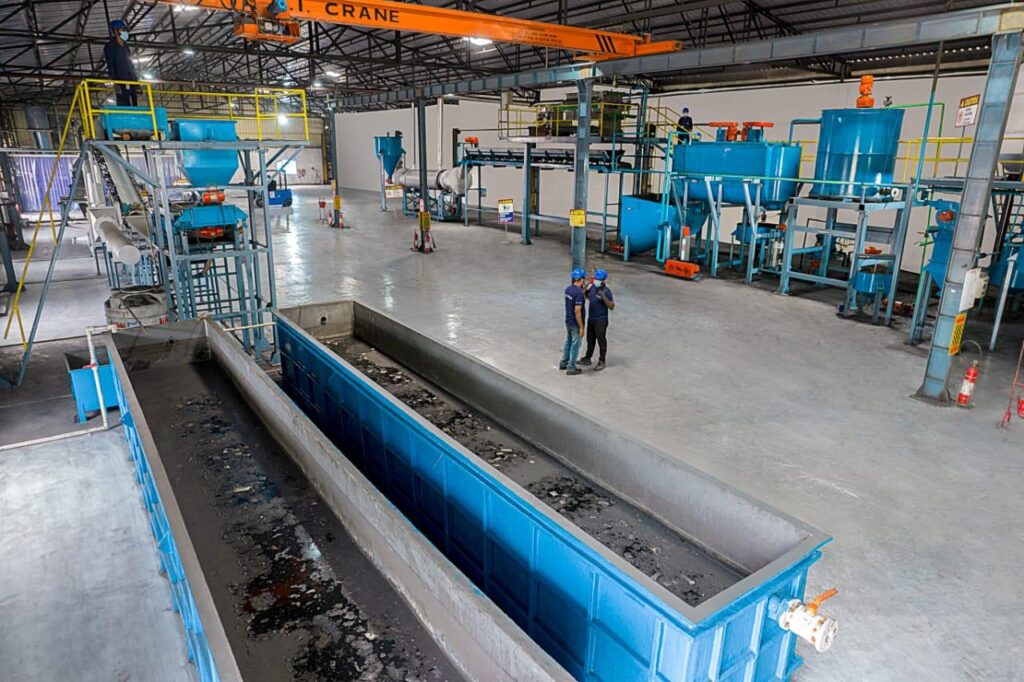
Black mass is produced during the pre-treatment of used batteries. It contains a mixture of materials from which valuable metals can be recovered through further processing.
Producing black mass, however, is not the same as extracting materials to the quality required for industrial use.
That distinction is central to India’s latest policy move and to the wider industrial questions examined in Global Beyond the Headlines.
What India’s export restriction covers
On 10 November 2026, India’s Directorate General of Foreign Trade issued Notification No. 49/2026-27.
The notification changed the export classification of specified unsorted battery waste and scrap under ITC (HS) code 85491400 from “Free” to “Prohibited”. The restriction includes the specified category of lithium-ion battery black mass. Read the Indian government’s official announcement of the DGFT export restriction.
Its scope must be understood precisely. It is not a blanket ban on every form of processed or refined battery material. It concerns the specified classification of unsorted battery waste and scrap.
The wider policy objective is to retain more strategic material within the domestic economy and encourage local critical-mineral recovery and recycling capacity.
India had already approved a critical-mineral recycling incentive scheme in September 2025, with an allocation of ₹1,500 crore over six years. The scheme is intended to support the extraction of critical minerals from secondary sources, including recycled materials. The Indian government’s Cabinet announcement explains the ₹1,500 crore recycling incentive scheme.
The gap between policy ambition and industrial capacity
A 2025 government Gazette document reported that approximately 10 to 12 recyclers had combined higher-stage extraction capacity of around 100 kilotonnes per annum.
The same document indicated that capacity would need to rise to at least 400 kilotonnes per annum by 2030 to meet expected feedstock needs.
These figures require careful interpretation.
The 100-kilotonne figure is a historical baseline reported in 2025. It is not a verified measurement of India’s current capacity in November 2026.
The 400-kilotonne figure was a stated requirement, not an achieved result.
The distinction between pre-treatment and higher-stage extraction is important. A facility may be able to dismantle batteries and produce black mass without having the ability to recover critical minerals at the required scale, purity and commercial quality.
The next stage requires technology, investment, industrial expertise, environmental safeguards and reliable markets.
This is where India’s export restriction faces its central test.
Retaining black mass within the country may create an opportunity for domestic processors. But if local facilities cannot absorb and process the material efficiently, the restriction alone will not create a competitive recycling industry.
Who could benefit, and what risks remain?
The policy could affect Indian battery recyclers, exporters, battery manufacturers, electric-vehicle producers, overseas processors, investors and workers.
Exporters could lose access to existing overseas markets, while international buyers may need to find alternative suppliers. Domestic processors may face pressure to expand capacity.
Environmental regulators and communities near recycling facilities also have a stake in how the industry develops. If recycling expands without adequate environmental controls, the recovery process itself could create risks for workers and surrounding communities.
The available material does not establish that the policy has already created jobs, attracted a specific level of investment, increased production or improved India’s supply-chain security.
Those outcomes must be demonstrated through operating facilities, production figures, scheme disbursements and verified investment records.
The legal detail also requires further confirmation from the original DGFT notification, particularly its exact scope, exemptions and transitional provisions.
The next evidence to watch includes official implementation guidance, the number of facilities actually operating, updated extraction-capacity figures, investment records and the recovery yields and quality of materials produced.
The performance of the incentive scheme will matter too. An approved allocation is not the same as money disbursed, projects completed or industrial capacity built.
India’s policy raises a question that extends beyond batteries: can a country turn control over a strategic raw material into control over the higher-value industrial processes that depend on it?
The answer will not be found in the export restriction alone. It will be found in the facilities built, the materials recovered, the quality achieved, the environmental standards maintained and the commercial competitiveness of the resulting products.
That is the difference between declaring industrial ambition and building the capacity to deliver it.
CONCLUSION
The five developments examined in this edition of Global Beyond the Headlines reveal different dimensions of the challenge facing global economic security.
The Strait of Hormuz demonstrates that a major energy route can remain open while maritime insecurity threatens commercial confidence. The developments involving Ust-Luga and the proposed Black Sea hub show why ports, export facilities and civilian shipping require protection—and why announced security arrangements must be judged by their actual capabilities.
At COP31, the 35-by-35 initiative illustrates the difference between electrification ambition and measurable climate progress. Its value will depend on cleaner electricity, reliable grids, storage and financing.
Anthropic’s financial disclosures show why revenue, cash flow, net losses, computing commitments and governance must be considered together. They also demonstrate why an unreconciled valuation headline should not be treated as an established financial finding.
India’s battery-material restriction, meanwhile, illustrates the difference between retaining a strategic resource and developing the industrial capacity to process it competitively and safely.
These developments are not consequences of one event. They are separate examples of a wider transformation in which economic power increasingly depends on the ability to transport, protect, finance, process and deliver strategic resources.
The central question remains unresolved: who will control the systems and infrastructure that sustain the global economy?
The answer will emerge through evidence—not announcements alone. Shipping records, operational security plans, energy data, financial disclosures and industrial production figures will show whether ambition is becoming reality.
Global Beyond the Headlines looks beyond immediate announcements to examine the evidence, strategic interests and economic consequences shaping the world.
About the Author