AFRICA IN MOTION — Reporting the Changes Shaping Africa and Its Future
Africa news 20 November 2026 examines major developments across the continent, as diplomatic tensions, political disagreements, humanitarian challenges and economic pressures continue to shape national and regional affairs.
From Somalia’s decision to order the United Arab Emirates ambassador to leave the country to Senegal’s struggle to advance its revised national budget, the latest developments highlight the difficult relationship between political authority, national sovereignty and economic stability.
In Kenya, disagreements between opposition leaders and the Independent Electoral and Boundaries Commission have raised questions about preparations for the 2027 general election. Meanwhile, Zimbabwe’s progress in clearing landmines has brought renewed attention to the importance of international humanitarian funding.
The economic picture is equally significant. Egypt has reported substantial external debt repayments alongside record foreign reserves, while the Democratic Republic of Congo has certified nearly $154 million in oil-sector losses and shortfalls.
Together, these developments provide a wider picture of the political, institutional and economic decisions influencing Africa’s future.
STORY 1: SOMALIA-UAE DIPLOMATIC TENSIONS ESCALATE OVER NATIONAL SOVEREIGNTY
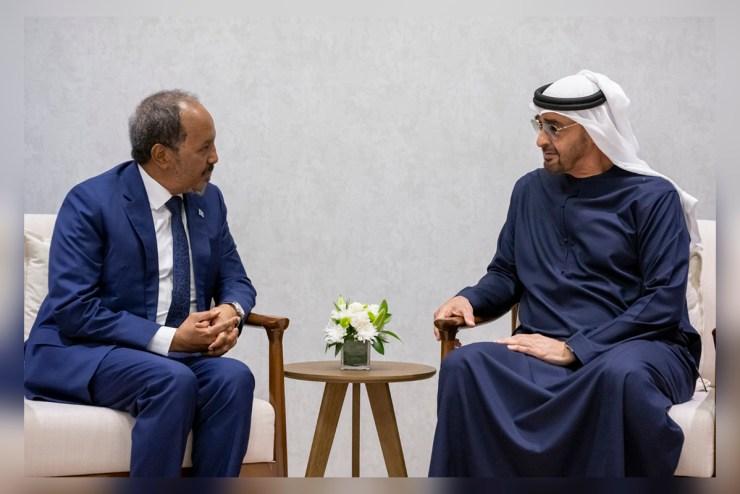
Somalia’s diplomatic relations with the United Arab Emirates have deteriorated further after the federal government ordered the UAE ambassador to leave the country within 72 hours and recalled its own ambassador from Abu Dhabi for consultations.
The decision, announced on 19 November following a meeting of Somalia’s Council of Ministers in Mogadishu, represents a significant escalation in the dispute between the two countries.
According to a Reuters report on the diplomatic confrontation, Somalia accused the UAE of violating its sovereignty and supporting political and security structures outside the control of the federal government.
Somali President Hassan Sheikh Mohamud had recently accused the UAE of supporting regional administrations and armed forces that Mogadishu believes undermine national unity.
The UAE rejected the accusations, describing Somalia’s approach as hostile and escalatory. The Emirates also argued that Mogadishu was drawing the country into Somalia’s internal political disagreements.
The background to the diplomatic dispute
The latest confrontation follows a deterioration in relations that became more pronounced in January 2026, when Somalia announced the cancellation of agreements with the UAE covering ports, government institutions, security and defence cooperation.
The dispute is particularly complicated by the UAE’s relationships with Somaliland, Puntland and Jubbaland.
These regional administrations have maintained varying degrees of cooperation with the UAE, including economic, infrastructure and security arrangements. They have also challenged the authority of Somalia’s federal government to cancel agreements involving their territories.
The disagreement therefore extends beyond conventional diplomatic relations. It touches on the unresolved question of how authority and international partnerships should be managed within Somalia’s federal political structure.
The UAE has played an important economic and security role in Somalia through investments in ports and coastal infrastructure, military training and support for security operations.
What the dispute means for the Horn of Africa
Somalia occupies an important strategic position along the Gulf of Aden and near major international shipping routes connecting the Indian Ocean with the Red Sea.
Its relationships with Gulf countries therefore carry implications beyond its domestic political environment.
A prolonged confrontation with the UAE could affect investment, security cooperation and diplomatic engagement across the Horn of Africa.
The immediate challenge for both governments will be determining whether diplomatic channels can prevent further deterioration.
The expulsion order is a decision by Somalia’s government, while the allegations of interference remain contested by the UAE. The two positions must be distinguished as the dispute develops.
For the region, the broader concern is whether competing political and economic interests can be managed without creating additional instability.
STORY 2: SENEGAL BUDGET CRISIS PUTS GOVERNMENT AND IMF NEGOTIATIONS UNDER PRESSURE
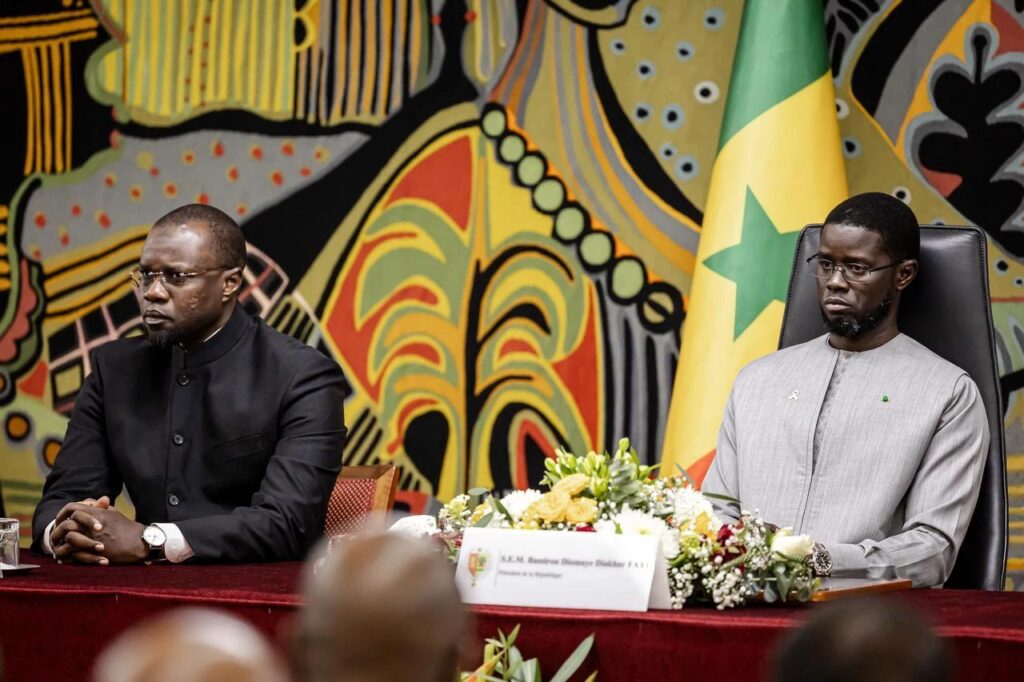
Senegal’s financial difficulties have intensified following President Bassirou Diomaye Faye’s decision to implement changes to the 2026 national budget by decree after parliament rejected the government’s revised budget measures.
The development has exposed growing tensions between the executive and legislative branches of government at a time when Senegal is attempting to secure international financial support and address its public debt burden.
A Reuters report published on 19 November said Faye announced that he would enact the budget changes by decree, bypassing the parliamentary impasse.
The president’s office argued that he was acting in his capacity as guardian of the constitution and the proper functioning of the state.
The disagreement comes amid political tensions involving Faye and former prime minister Ousmane Sonko, who now heads the National Assembly.
Sonko’s Pastef party has opposed the government’s budget proposals, contributing to the political deadlock.
The pressure of the IMF programme
One of the most important issues surrounding the dispute is Senegal’s proposed $2.2 billion International Monetary Fund programme.
The three-year programme had reached staff-level agreement in September 2026 but was still awaiting approval by the IMF Executive Board at the time of the latest report.
The proposed financing is intended to support Senegal’s efforts to address its debt burden and reorganise its public finances.
The country’s financial difficulties became more serious in 2024 after authorities uncovered previously unreported debts associated with the previous administration. Analysts have estimated the misreported obligations at approximately $13 billion.
The discovery raised concerns about the country’s actual financial position, its borrowing obligations and the credibility of previous government accounts.
The IMF programme is therefore important to Senegal’s efforts to restore confidence among international lenders and investors.
However, the parliamentary disagreement has complicated the process of implementing the budget framework required for the programme.
The constitutional and political implications
The decision to implement budget changes by decree raises questions about the relationship between presidential authority and parliamentary oversight.
While the presidency has defended its action as necessary for the functioning of government, the political disagreement illustrates the difficulties of managing a financial crisis within a divided political environment.
The situation also places pressure on the relationship between Faye and Sonko, whose political alliance helped bring the current administration to power.
The immediate concern is whether the government can restore cooperation within its political institutions while meeting the financial conditions associated with international assistance.
For Senegalese citizens, the outcome matters because public debt, budget decisions and international financing can influence government spending, public services and economic opportunities.
The central challenge is finding a way to address the country’s financial obligations without weakening institutional accountability or public confidence.
STORY 3: KENYA 2027 ELECTION PREPARATIONS FACE OPPOSITION OVER ELECTORAL TRANSPARENCY
Preparations for Kenya’s August 2027 general election have encountered another political disagreement after opposition leaders walked out of a consultative meeting with the Independent Electoral and Boundaries Commission.
The meeting, held on 19 November, was intended to provide an opportunity for political parties and the electoral commission to discuss preparations for the next general election.
However, opposition representatives said the agenda did not adequately address concerns they considered essential to ensuring a credible electoral process.
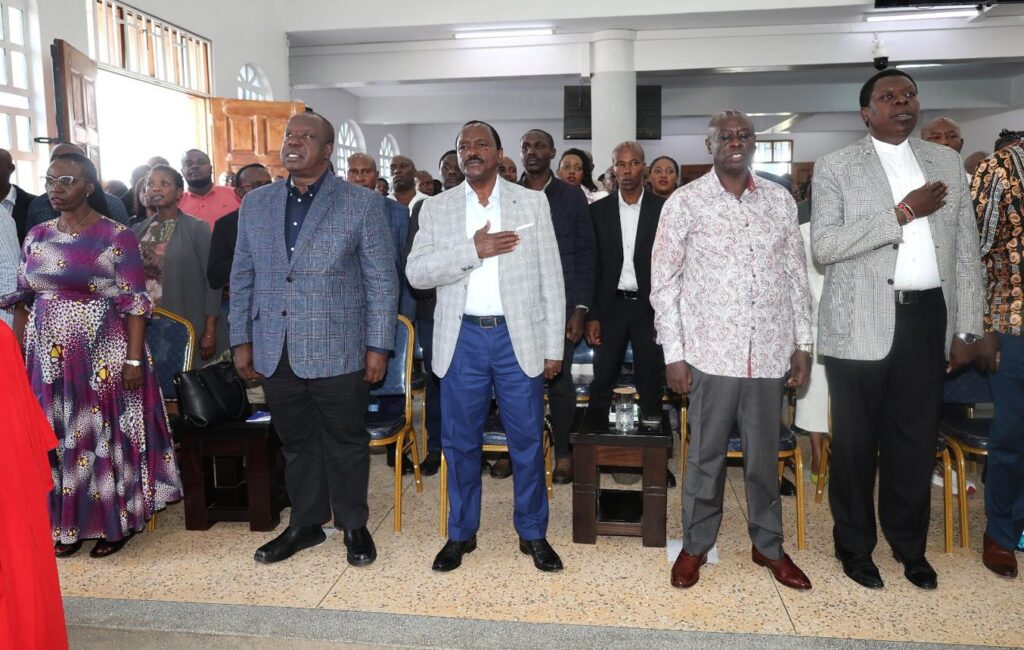
According to The Standard’s report on the opposition walkout, former Deputy President Rigathi Gachagua, Wiper Party leader Kalonzo Musyoka and Nairobi Senator Edwin Sifuna were among those who led the walkout.
The leaders argued that discussions would be inadequate without addressing outstanding questions about electoral reforms and the commission’s preparedness.
Opposition demands and electoral concerns
The opposition has raised several concerns about the organisation of the 2027 election.
Among the issues identified are the cleaning of the voter register, the management of presidential results, the use of election technology and the participation of Kenyans living abroad.
The coalition has also called for greater transparency in the transmission and announcement of election results.
One proposal concerns the role of the national presidential tallying centre at Bomas of Kenya. Opposition leaders want presidential results declared at constituency tallying centres to be final, with the national centre restricted to receiving, aggregating and announcing the results.
They have also called for livestreaming of voting, counting and the announcement of results at polling stations and tallying centres.
Another concern involves the Smartmatic election technology contract, which opposition leaders said was due to expire on 24 November 2026.
They have questioned whether a clear transition plan exists to prevent disruption to voter registration and election preparations.
These are demands and concerns raised by political actors. Their implications and the technical feasibility of the proposals require examination by the electoral commission and relevant institutions.
The IEBC’s responsibility
The Independent Electoral and Boundaries Commission has a central responsibility in preparing for the August 2027 general election.
Its duties include voter registration, maintaining the voter register, organising electoral logistics, managing election technology and ensuring compliance with electoral laws.
The commission must also maintain public confidence in the process.
The opposition’s walkout demonstrates the importance of consultation between electoral authorities and political stakeholders, particularly when disagreements concern the credibility of the electoral process.
The next challenge will be whether the IEBC and opposition representatives can return to discussions and establish a process for addressing the outstanding issues.
For Kenya, the 2027 election preparations are not simply an administrative exercise. They involve questions of public trust, institutional independence and the ability of political institutions to manage disagreements through established democratic procedures.
STORY 4: ZIMBABWE LANDMINE CLEARANCE REACHES MAJOR MILESTONE AS FUNDING CONCERNS EMERGE
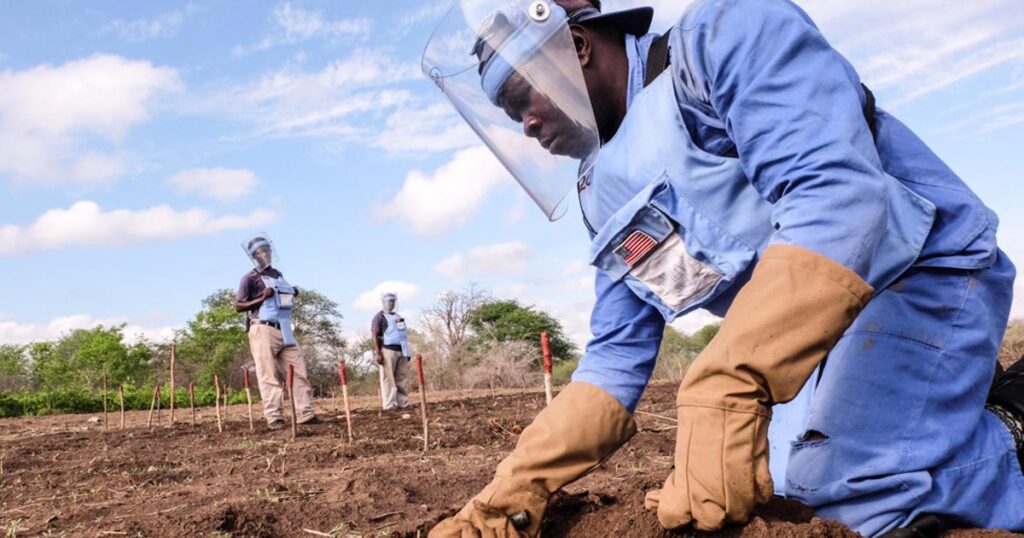
Zimbabwe has recorded a major humanitarian milestone after the HALO Trust announced that its teams had destroyed 250,000 landmines in the country since 2013.
The achievement represents more than a decade of work to remove explosives left behind by the liberation war of the 1970s.
However, the organisation has warned that reductions in international aid could threaten Zimbabwe’s ambition to become free of landmines by 2030.
According to a statement published by the HALO Trust on 19 November, its teams have been clearing minefields in the districts of Rushinga and Mount Darwin in north-eastern Zimbabwe.
The landmines were laid along the country’s borders with Mozambique and Zambia during the liberation war.
The explosives have continued to pose risks to civilians, farmers and livestock decades after the conflict ended.
The human and economic cost of landmines
The HALO Trust said landmines and other explosive remnants have killed or injured more than 1,500 people and 120,000 cattle since Zimbabwe achieved independence in 1980.
The dangers have affected farming communities, restricted access to land and created risks for people travelling through affected areas.
Landmine clearance has therefore become an important part of rural development and community recovery.
In Rushinga, the organisation said its operations have benefited more than 14,000 residents by making it safer for families to cultivate crops, graze livestock and access schools, clinics, markets and water sources.
The programme has also created employment opportunities for local residents, including women trained as deminers.
The organisation reported that women involved in clearance operations often support extended families through their employment.
Why the 2030 target is under pressure
Despite the progress, the HALO Trust warned that global reductions in humanitarian funding could slow the remaining clearance work.
The organisation estimates that approximately four per cent of contaminated land remains to be cleared and that about $6.5 million in donations would be needed to achieve the 2030 target.
The use of drones, advanced detection equipment and smaller excavation machinery has helped improve the speed and safety of operations.
However, technology cannot replace the financial resources required to maintain trained teams, equipment and field operations.
The Zimbabwean experience illustrates a wider development challenge facing African countries emerging from conflict.
Removing the physical remnants of war is not only about preventing injuries and deaths. It also creates opportunities for agricultural production, education, investment and the restoration of community life.
The 250,000-landmine milestone is significant, but reaching the final target will depend on whether sufficient financial support remains available.
STORY 5: EGYPT AND DR CONGO HIGHLIGHT AFRICA’S PUBLIC FINANCE AND ENERGY-SECTOR PRESSURES
Two developments in Egypt and the Democratic Republic of Congo have drawn attention to different aspects of public financial management in Africa.
Egypt has reported substantial external debt repayments alongside an increase in its foreign currency reserves, while DR Congo has certified nearly $154 million in oil-sector losses and shortfalls for the third quarter of 2026.
Although the two situations are different, both illustrate the financial decisions and obligations confronting governments as they attempt to maintain economic stability.
Egypt pays $38.2 billion in external debt service
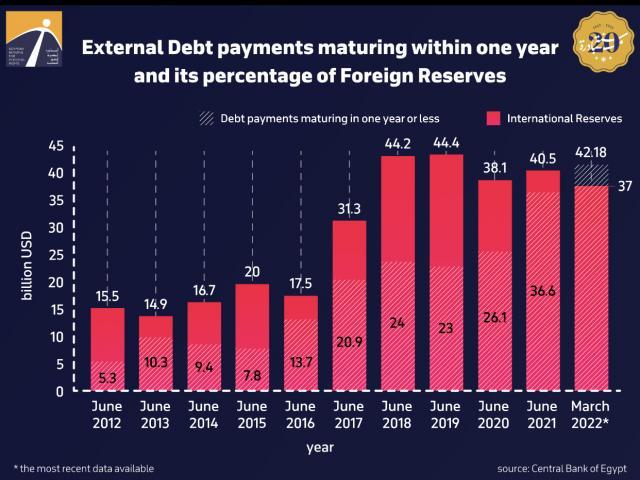
Egypt paid approximately $38.2 billion to service its external debt during the 2025/2026 fiscal year, according to figures reported by Egypt Independent.
The payments represented a reduction of approximately $500 million compared with the $38.7 billion recorded during the previous fiscal year.
The reported $38.2 billion consisted of approximately $30.4 billion in principal repayments and $7.8 billion in interest payments.
Despite the reduction in annual debt-service costs, Egypt’s external debt stock increased by 3.3 per cent to reach $166.7 billion by the end of June 2026.
The Central Bank of Egypt also reported that net international reserves reached approximately $57.5 billion in October 2026, an increase from $57.35 billion in September.
These figures present two important aspects of the country’s external financial position.
Debt service represents the money paid towards existing borrowing obligations, while the external debt stock represents the total outstanding external debt.
Foreign reserves, meanwhile, provide a measure of the country’s available foreign currency assets.
The increase in reserves is a significant financial development, but it does not eliminate the country’s debt obligations.
The broader challenge for Egypt is maintaining sufficient foreign currency resources to meet international payments while supporting imports, investment and domestic economic activity.
DR Congo certifies nearly $154 million in oil-sector losses
In the Democratic Republic of Congo, the Petroleum Products Price Monitoring Committee certified a total of $153,951,330.09 in losses and shortfalls claimed by oil companies for the third quarter of 2026.
The development was reported by Radio Okapi on 20 November.
The certification followed meetings held on 18 and 19 November to assess claims from petroleum companies operating across the country’s four supply zones.
The approved amounts included approximately $14.5 million for the southern zone and $139.45 million for the western and northern zones.
Radio Okapi reported that the certification process took place against a background of rising international petroleum prices associated with the crisis in the Middle East.
The government has maintained its commitment to stabilising pump prices in order to protect household purchasing power and limit the impact of higher international oil prices on the domestic economy.
The certification of the claims is an important step in recognising the amounts assessed by the monitoring committee. It should not, however, automatically be interpreted as proof that the entire amount has already been paid.
What the two developments reveal
Egypt’s external debt-service payments and DR Congo’s oil-sector liabilities involve different financial mechanisms.
Egypt is dealing with the obligations associated with international borrowing, while DR Congo is managing claims arising from its petroleum pricing and supply arrangements.
Nevertheless, both developments demonstrate how financial pressures can influence government decisions.
For Egypt, the challenge involves maintaining external financial stability while managing substantial debt obligations.
For DR Congo, the challenge involves balancing the financial position of petroleum operators with the government’s objective of keeping fuel affordable for consumers.
Across the continent, these questions are important because public finances affect infrastructure investment, social services, energy security and economic growth.
CONCLUSION: AFRICA’S FUTURE DEPENDS ON STRONGER INSTITUTIONS AND FINANCIAL RESILIENCE
The developments examined in this edition of Africa in Motion reveal the different pressures confronting African governments and institutions.
Somalia’s diplomatic confrontation with the UAE highlights the continuing importance of sovereignty, national unity and the management of foreign partnerships.
In Senegal, the budget dispute demonstrates how financial crises can expose disagreements between political institutions and complicate negotiations with international lenders.
Kenya’s election preparations show the importance of consultation, transparency and institutional confidence ahead of a major national vote.
Zimbabwe’s landmine-clearance achievement demonstrates the long-term value of humanitarian investment, while also showing how international funding decisions can affect development targets.
In Egypt and the Democratic Republic of Congo, public financial obligations and energy-sector liabilities illustrate the difficult choices governments face when managing debt, prices and economic stability.
These developments are not connected by a single cause, and each country faces its own circumstances. However, they raise common questions about the capacity of African institutions to manage competing interests, maintain public confidence and deliver sustainable results.
For Africa, the challenge is not simply to respond to diplomatic disagreements, political disputes or financial pressures when they emerge. It is to build institutions capable of preventing avoidable crises, protecting national interests, supporting economic opportunities and ensuring that public resources serve citizens.
The decisions taken today will influence the continent’s political stability, economic resilience and development prospects in the years ahead.
This is Africa in Motion — reporting the changes shaping Africa and its future.
About the Author