INTRODUCTION
Nigeria’s economic conditions, public institutions and political environment came under renewed scrutiny during the 24-hour reporting period ending on Wednesday, 18 November 2026. Developments ranged from household affordability and a proposed rent-control measure in Enugu to new financing for businesses, government directives on university staff allowances and questions about the enforcement of electoral laws.
The day’s Nigeria news today also highlighted the relationship between official announcements and the results Nigerians can actually experience. An African Development Bank financing approval raised questions about access to capital for businesses and farmers. A reported increase in non-oil export earnings drew attention to the country’s trade prospects and the planned digitalisation of export procedures. Meanwhile, a Federal Government directive requiring tertiary institutions to recover certain staff allowance payments brought remuneration, transparency and employee rights into focus.
Political developments added another dimension. Former President Goodluck Jonathan warned of possible post-election instability if political intolerance and violence are not addressed. Separately, comments by Senate President Godswill Akpabio raised questions about INEC’s powers to disqualify candidates over electoral violence, particularly because reports described the relevant legal threshold differently.
Other developments included the distribution of Permanent Voter Cards in Enugu, reported drug-trafficking arrests, an international sextortion investigation and a Federal High Court conviction involving an attempted gold-smuggling operation.
Together, these reports provide a picture of the decisions, institutions and unresolved questions shaping Nigerian public affairs. The central issue is not simply what government agencies, political leaders and other institutions announce, but what the available evidence establishes about implementation, accountability and consequences for Nigerians.
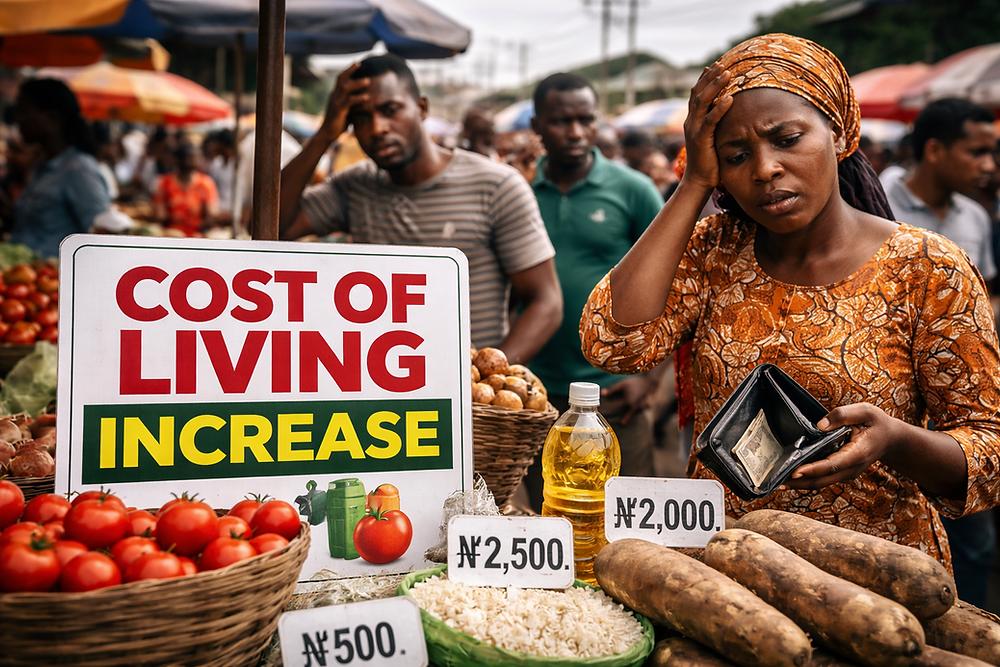
STORY 1: NIGERIA COST OF LIVING — INFLATION FIGURES RAISE QUESTIONS ABOUT HOUSEHOLD AFFORDABILITY
One of the most consequential economic issues during the reporting period was the continuing gap between inflation indicators and the financial pressure experienced by Nigerian households.
The Centre for the Promotion of Private Enterprise (CPPE) warned that improvements in some inflation indicators should not automatically be interpreted as evidence that Nigerians are experiencing meaningful relief from the cost of living.
Its Chief Executive, Dr Musa Yusuf, argued that greater attention should be paid to affordability, particularly the cost of food, transportation, housing, energy and other essential services, according to The Guardian’s report on CPPE’s warning.
Figures contained in the CPPE’s October brief, as reported by The Guardian, showed that month-on-month headline inflation moved from 0.06 per cent in September to 0.43 per cent in October. The monthly decline in food prices also became smaller, moving from 1.55 per cent in September to 0.75 per cent in October.
Rural inflation reportedly changed from a decline of 0.89 per cent in September to an increase of 0.18 per cent in October.
These figures require careful interpretation because inflation and the general level of prices are not the same thing.
Inflation measures the rate at which prices change over time. When inflation slows, prices may still be increasing, but at a slower rate. It does not necessarily mean that the prices of food, transport, housing and other essential items have returned to their previous levels.
For households whose incomes have already been stretched by earlier price increases, a slower rate of inflation may therefore offer limited immediate relief.
The distinction is important when assessing the Nigerian economy. An improvement in an inflation indicator does not, on its own, establish that purchasing power has recovered or that essential goods have become affordable.
CPPE identified transportation and logistics costs, energy expenses, inadequate infrastructure, storage challenges and insecurity in agricultural communities as factors contributing to continuing price pressures.
These are supply-side concerns. The cost of producing goods, storing them and transporting them to markets can influence the final prices paid by consumers. Problems affecting agricultural communities may also disrupt production and distribution.
The policy challenge, therefore, extends beyond managing inflation figures. It includes addressing the practical conditions that affect production, movement of goods and the ability of households to purchase essential items.
CPPE also referred to a government committee established following concerns raised by the Trade Union Congress. The Guardian reported that the committee was expected to submit its report within two weeks.
There is an important evidence limitation. The September and October figures discussed here were reported from CPPE’s brief by The Guardian. The original National Bureau of Statistics October consumer-price tables and representative household expenditure evidence were not available in the supplied research for independent reconciliation.
The figures should consequently remain attributed to the CPPE brief rather than presented as a complete independent assessment of the financial experience of every Nigerian household.
For policymakers, the wider issue is how to translate improvements in price stability into more sustainable household conditions. For Nigerians, the practical measure remains whether earnings can meet the cost of essential goods and services.
The next important test is whether subsequent inflation data and government measures demonstrate measurable improvements in affordability and purchasing power.
Housing forms a major part of household expenditure. That makes a proposed rent-control measure passed by the Enugu State House of Assembly another relevant development in the wider discussion of affordability.
STORY 2: NIGERIA GOVERNMENT POLICY — ENUGU ASSEMBLY PASSES PROPOSED 2% RENT-INCREASE CAP
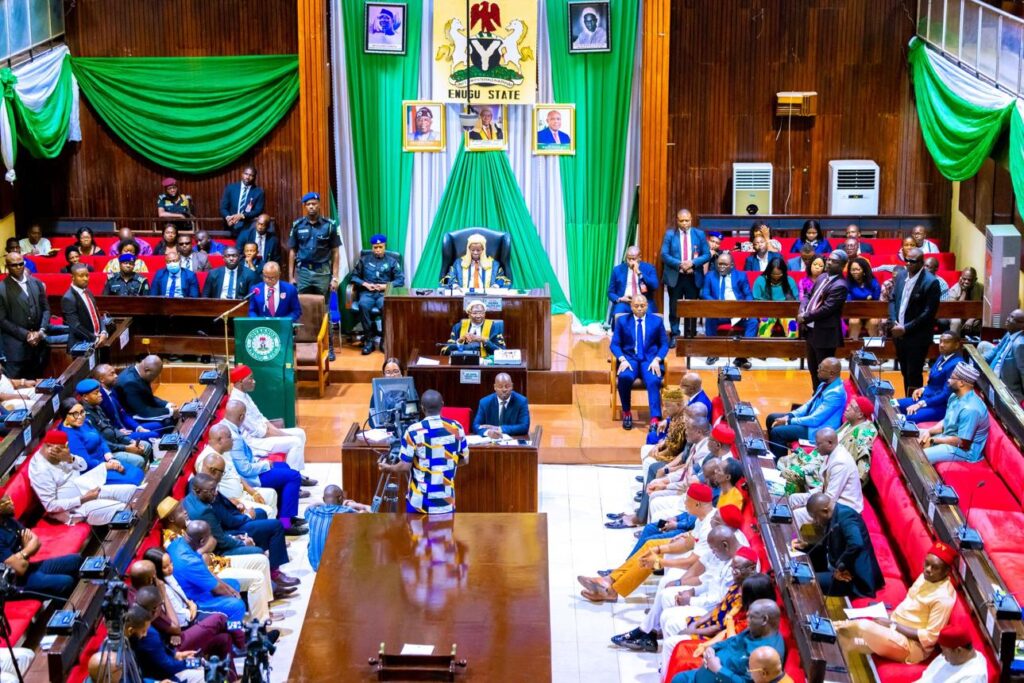
The Enugu State House of Assembly reportedly passed a bill proposing restrictions on ordinary rent increases, introducing a potential change to tenancy regulation in the state.
The proposal, contained in House Bill Number Three of 2025, seeks to limit ordinary rent increases to two per cent of the prevailing rent and separate ordinary rent reviews by at least four years.
Reports also describe an exception of up to ten per cent where qualifying substantial renovations have been carried out.
The Assembly’s reported passage of the proposal on 17 November 2026 followed its earlier second reading in March 2026 and a public hearing, as reported by TheCable’s coverage of the Enugu rent bill.
The development places housing regulation and tenant protection within the broader discussion of the cost of living. Rent is a significant household expense, and the frequency and size of rent increases can affect the ability of tenants to plan their finances.
Under the reported provisions, tenants could have greater predictability over ordinary rent reviews if the proposal becomes law and is properly implemented.
However, the legislative status must be clearly understood.
Passage by the House of Assembly is not the same as the commencement of an operative law. Reports available for the 18 November review indicated that the bill was awaiting Governor Peter Mbah’s assent.
The final authenticated wording, gazettal and commencement provisions still required confirmation at the time covered by the supplied report.
The distinction matters because tenants and landlords should not treat a proposed legislative provision as an enforceable rule before the necessary legal steps have been completed.
The Assembly is presided over by Speaker Uche Ugwu, while Governor Peter Mbah is responsible for the next executive step if the bill is presented for assent.
If enacted, the proposal could establish greater predictability around ordinary rent reviews. But its actual effect would depend on the final provisions, how they are interpreted and how effectively they are enforced.
There are also questions about the implications for landlords, property maintenance, housing supply and tenancy disputes. These are issues that would need to be assessed through implementation rather than assumed in advance.
The reported renovation exception is particularly relevant because it suggests that the proposed restrictions would not necessarily apply identically in every circumstance.
However, the available material does not establish how qualifying renovations would be defined or how disputes about the exception would be resolved under the final law.
For tenants, the immediate issue is whether the governor assents to the bill and what protections the final legal text provides. For landlords, clarity about permitted increases and enforcement would be important.
The development illustrates how state-level legislation can become part of the wider debate about household affordability. It also demonstrates why the distinction between legislative passage and actual implementation matters in reporting public policy.
The next significant development to watch is confirmation of assent, the authenticated bill, gazettal and commencement.
While the Enugu proposal concerns the regulation of household housing costs, another economic development during the reporting period involved access to financing for Nigerian businesses and farmers.
STORY 3: NIGERIA GOVERNMENT POLICY — AfDB APPROVES $102 MILLION FINANCING PACKAGE FOR BUSINESSES
The African Development Bank Group approved a $102 million financing package for Nigerian businesses through Sterling Bank Nigeria Limited, creating a new financing arrangement intended to support small and medium-sized enterprises, sustainable projects, agriculture and trade.
The approval was announced during the reporting period and comprises four separate financing components.
The largest is a $50 million line of credit. The package also includes a $20 million sustainable loan, a $2 million concessional agricultural loan and a $30 million trade-finance transaction guarantee.
The structure is intended to support different areas of business activity rather than provide a single undifferentiated loan.
The African Development Bank stated that at least 30 per cent of the line of credit would be directed towards eligible women-owned, women-led and youth-owned enterprises.
The programme is expected to support at least 200 businesses and more than 5,000 smallholder farmers. It also has the potential to help create up to 6,000 jobs.
These figures provide an indication of the programme’s intended reach, but they must be understood as targets and expectations rather than completed outcomes.
Approval of a financing package does not establish that all the money has been disbursed or that the targeted businesses and farmers have already received support.
For Nigerian businesses, access to financing can be important when expanding production, purchasing equipment, improving operations or employing additional workers.
Agricultural businesses may require capital for production-related activities, while manufacturers and other small enterprises may need funding to increase capacity or improve their ability to compete.
However, the practical value of the package will depend on the conditions under which businesses can access it.
Sterling Bank’s lending conditions, eligibility requirements, beneficiary-selection process and disbursement arrangements will influence which enterprises receive funding and how accessible the facility becomes.
The distinction between an approved facility and money actually reaching beneficiaries is therefore central to assessing the programme.
A financing approval is an institutional decision. Its economic impact must be demonstrated through subsequent implementation and measurable results.
For example, the announced target of supporting at least 200 businesses should eventually be assessed against the number of businesses that actually receive funding. The same applies to the expected support for more than 5,000 smallholder farmers and the potential creation of up to 6,000 jobs.
The available report does not establish the detailed lending terms, the complete beneficiary-selection criteria or the timetable for disbursement.
Those details will be important in determining whether the financing reaches viable businesses on workable terms.
The 30 per cent allocation commitment for eligible women-owned, women-led and youth-owned enterprises is also a significant element of the arrangement. Its practical effect will depend on how eligibility is defined and how the commitment is implemented.
The programme’s success should ultimately be assessed against actual access to finance, the conditions attached to the funding and the economic results achieved by the beneficiaries.
The AfDB approval is therefore an important financing development, but the evidence of its impact will emerge through implementation, according to the African Development Bank’s official announcement of the $102 million Sterling Bank package.
Alongside access to capital, the ability of Nigerian businesses to reach international markets is another factor relevant to economic activity. A separate report on non-oil exports and trade digitalisation provided another perspective on the country’s productive and commercial prospects.

STORY 4: NIGERIA ECONOMY — NON-OIL EXPORT EARNINGS REPORTEDLY REACH $6.1 BILLION
Nigeria’s non-oil export earnings reportedly reached $6.1 billion in 2025, representing an increase of 11.5 per cent, according to figures reported by The Guardian.
The reported export volume also rose by 10 per cent to 8.02 million metric tonnes.
The figures indicated that Nigeria exported 281 products to 120 countries, including 36 African countries.
The reported performance provides an indication of activity in the non-oil export sector and highlights the importance of products outside the country’s traditional oil-export base.
For Nigerian producers, manufacturers and farmers, access to international markets can create opportunities to expand sales beyond domestic demand. However, the ability to benefit from those opportunities also depends on production capacity, regulatory processes and the administrative requirements involved in exporting goods.
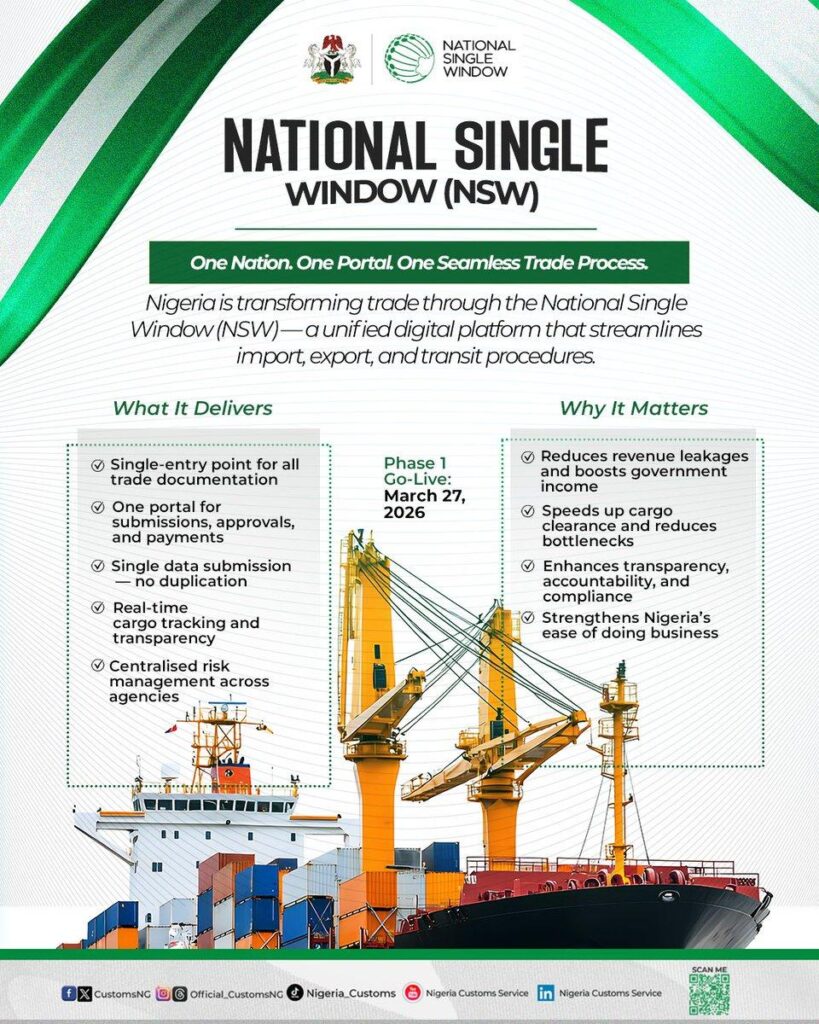
During the reporting period, attention was also drawn to the planned export phase of the National Single Window project.
The export phase was scheduled for 14 December 2026. Project Director Tola Fakolade said the platform was intended to provide exporters with a single digital system for regulatory licences, permits, certificates and other documentation.
The first phase, which focused on imports, was reported to have processed more than 169,000 documents.
The broader objective of the National Single Window is to simplify trade administration by reducing the need for businesses to navigate multiple separate documentation processes.
For exporters, a centralised digital system could provide a more organised way to manage regulatory requirements. Nigerian producers may benefit if the platform improves the efficiency of obtaining licences, permits and certificates needed to move goods into international markets.
However, the expected benefits must be distinguished from demonstrated results.
The reported processing of more than 169,000 documents during the import phase is an administrative output. It does not, by itself, establish that exporters have experienced lower costs, faster approvals or increased earnings.
The performance of the export phase will need to be assessed separately after implementation.
Similarly, the reported $6.1 billion in non-oil export earnings and the 8.02 million metric tonnes in export volume were attributed to the reporting and officials cited in the supplied material. The underlying National Export Promotion Council dataset and methodology were not available for independent reconciliation.
The figures should therefore retain their attribution until the original dataset and methodology can be examined.
There are two distinct issues here. One concerns the reported scale of Nigeria’s non-oil export activity in 2025. The other concerns a planned digital system intended to simplify the administrative process for exporters.
The two developments are relevant to the broader trade environment, but the available evidence does not establish that the planned National Single Window export phase caused the reported 2025 export performance.
The immediate implementation question is whether the export phase begins on its scheduled date and whether subsequent evidence demonstrates measurable improvements in processing times, documentation and costs.
For businesses, the ultimate value of trade digitalisation will be determined by whether it reduces practical obstacles to exporting rather than merely increasing the number of documents processed.
The wider issue is how effectively Nigeria can support producers and exporters through better trade administration and access to international markets, as detailed in The Guardian’s report on non-oil export earnings and the National Single Window project.
These economic developments concern businesses and producers. Another government policy reported during the same period dealt directly with the remuneration of workers in federal tertiary institutions.
STORY 5: NIGERIA GOVERNMENT POLICY — FG ORDERS FEDERAL TERTIARY INSTITUTIONS TO RECOVER EXCESS STAFF ALLOWANCES
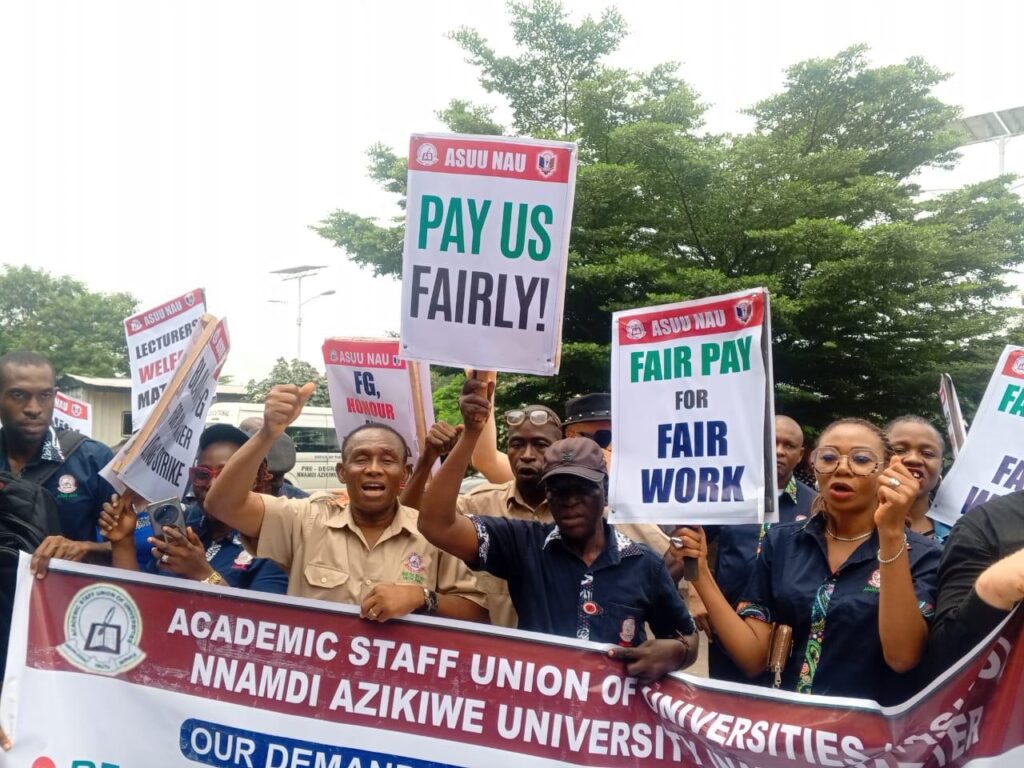
A Federal Government directive requiring federal tertiary institutions to recover payments described as excess staff allowances within three months became a significant public-sector development during the reporting period.
The instruction applies to federal universities, polytechnics and colleges of education. It concerns payments described by government as overpayments arising from the implementation of 2025 and 2026 remuneration agreements with education unions.
The directive is contained in a circular dated 11 November 2026, issued by the National Salaries, Incomes and Wages Commission.
The circular carries reference number SWC/S/04/S.149/T/187 and was signed by Major General Junaid S. Bindawa.
Under the instruction, affected institutions have three months to carry out the recovery.
The circular also sets a ceiling of 52 hours per month for excess workload allowance payments to specified academic and non-academic staff in federal universities.
It further clarifies eligibility for certain allowances, including tools allowances and the treatment of Earned Academic Allowance.
The directive has raised concerns among some non-teaching staff organisations, particularly over the treatment of healthcare professionals.
A non-teaching staff coalition has challenged aspects of the exclusions, arguing that some workers may have been unfairly left out.
The disagreement places the interpretation of remuneration agreements and the application of public-sector payment rules at the centre of the issue.
Government has a responsibility to protect public funds and correct genuine overpayments. Where payments have been made outside applicable agreements or rules, institutions may be required to address the situation.
However, the recovery process also raises questions about employee rights, transparency and the accuracy of payroll calculations.
Workers need clear information about the payments being questioned, the basis for the recovery, the calculations used and the procedure for challenging disputed deductions.
Without those details, it may be difficult for affected employees to understand their individual obligations or assess whether the recovery has been correctly applied.
The available reporting does not establish the total amount government intends to recover, the number of affected employees or the amount individual workers may be required to repay.
These omissions limit the extent to which the financial impact of the directive can be assessed.
The full circular, the signed remuneration agreements, institutional payroll calculations and responses from the relevant unions are necessary to establish how the instruction will affect different categories of workers.
The three-month recovery period is consequently an important implementation issue.
The directive also highlights the responsibilities of public institutions in administering remuneration agreements. Consistent interpretation and transparent calculations are important where government decisions affect the earnings of workers across different institutions.
For employees, the central questions concern how the disputed payments are identified, whether the recovery is based on accurate calculations and what process exists for challenging decisions.
For government, the challenge is to demonstrate that the recovery process follows the applicable agreements and rules while protecting public funds.
The issue should not be reduced to a simple disagreement between government and workers. Its full implications depend on the documents governing the payments, the calculations made by institutions and the treatment of different employee categories.
The next important development will be the availability of the full circular, further clarification from the relevant authorities and responses from the affected unions, as reported by Punch in its coverage of the Federal Government’s recovery directive.
The university allowance directive was one of two public-payment issues covered in the daily review. Another concerned delayed October allowances for some National Youth Service Corps members in Oyo State.
STORY 6: NYSC REPORTS PAYMENT OF DELAYED OCTOBER ALLOWANCES TO AFFECTED OYO CORPS MEMBERS
The National Youth Service Corps reported that delayed October 2026 allowances had been paid to affected corps members in Oyo State who completed their service year on 29 October.
The scheme attributed the delay to a technical problem involving the Government Integrated Financial Management Information System, commonly known as GIFMIS.
According to the NYSC account, Director-General Brigadier General Olakunle Nafiu met some of the affected corps members at the Iseyin orientation camp on 14 November.
The scheme subsequently said the delayed payments had been completed by 17 November.
The Director of Information and Public Relations, Caroline Embu, advised members who remained unpaid by the close of business on 18 November to contact the Oyo State Coordinator.
The announcement was relevant because corps members depend on the administration of their allowances as part of their service-year arrangements. Delays in public payment systems can create practical financial difficulties for people relying on those payments.
However, the reported confirmation from NYSC must be distinguished from an independently reconciled record showing that every affected corps member received the money.
The number of people affected was not established in the available report. The precise technical cause of the delay was also not independently explained.
The incident raises two related institutional questions: whether all affected members were credited and whether the technical problem responsible for the delay has been fully addressed.
A payment announcement is important, but the practical outcome is whether the intended recipients actually receive the funds.
The matter also highlights the importance of reliable public payment systems. Where a technical problem interrupts payments, affected individuals need clear information about the cause, the corrective action and how unresolved cases can be addressed.
NYSC’s reported confirmation is the latest position contained in the supplied material. Further payment reconciliation would be necessary to establish whether every affected member received the allowance.
The scheme’s position and its explanation of the delay were reported in Punch’s coverage of the delayed Oyo corps members’ allowances.
While these public-sector payment issues concerned the administration of workers’ and corps members’ entitlements, political developments during the reporting period raised questions about the conduct of the 2027 general elections and public confidence in democratic institutions.

STORY 7: NIGERIA POLITICAL ACCOUNTABILITY — JONATHAN WARNS OF POST-ELECTION CRISIS AHEAD OF 2027
Former President Goodluck Jonathan warned that Nigeria could face a serious crisis after the 2027 general elections if political intolerance, thuggery, ethnic rivalry and declining confidence in democratic institutions are not addressed.
He made the remarks at the 2026 Goodluck Jonathan Foundation Peace Conference in Abuja on 17 November.
Jonathan’s warning focused on the potential consequences of allowing political competition to deteriorate into intimidation, violence and declining confidence in the democratic process.
The comments placed renewed attention on the responsibilities of political parties, electoral authorities, security agencies and the courts ahead of the next general elections.
The Chairman of the Independent National Electoral Commission, Professor Joash Amupitan, also condemned attacks on campaign convoys and supporters.
Amupitan warned that those responsible for such attacks would face the law.
Former ECOWAS Commission President Dr Omar Alieu Touray called for responsible political competition, stronger early-warning mechanisms and a renewed democratic consensus.
The statements at the conference highlighted different aspects of electoral responsibility.
Political parties are expected to manage the conduct of their candidates and supporters. INEC has responsibilities within the electoral process, while security agencies are responsible for investigating reported offences. The courts provide lawful channels for resolving disputes and determining matters brought before them.
The conference remarks also need to be considered alongside the distinction between political claims and independently established facts.
The Guardian’s coverage included competing accusations between the All Progressives Congress and the African Democratic Congress.
However, those accusations remain political claims in the available material. The supplied evidence did not independently establish the APC’s allegations that the ADC and the National Democratic Congress sponsored violence.
Nor did the available evidence establish a nationwide increase in political violence.
Jonathan’s remarks should therefore be understood as a warning about potential risks, not proof that a post-election crisis is inevitable.
The broader public-interest concern is that intimidation and violence can discourage citizens from participating in elections and weaken confidence in democratic institutions.
Political competition is an important part of democratic life, but its legitimacy depends on the ability of citizens, candidates and political organisations to participate without intimidation.
The responsibilities of public institutions are also significant. INEC must carry out its electoral functions within the law, security agencies must investigate reported offences and the courts must determine legal disputes through established procedures.
The next important issue is whether specific reported incidents lead to documented investigations, lawful enforcement and effective protection for voters, campaign workers and journalists.
Jonathan’s warning also raises a question about the legal tools available to electoral authorities when candidates or their agents are accused of inciting violence.
His remarks and the reactions at the peace conference were reported in The Guardian’s coverage of Jonathan’s warning ahead of the 2027 elections.
That question became more specific during the reporting period following comments by Senate President Godswill Akpabio.
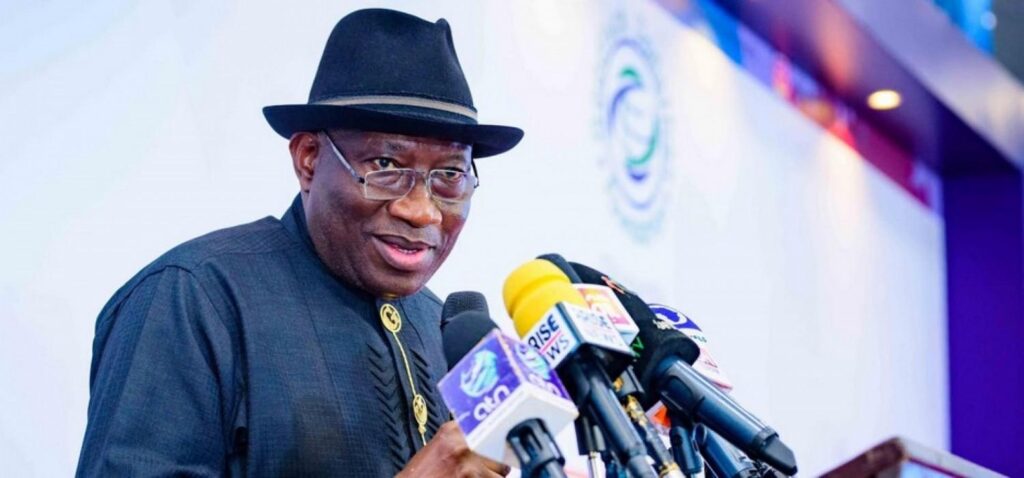
STORY 8: NIGERIA POLITICAL ACCOUNTABILITY — AKPABIO URGES INEC TO DISQUALIFY CANDIDATES OVER ELECTORAL VIOLENCE
Senate President Godswill Akpabio urged the Independent National Electoral Commission to apply provisions of the Electoral Act 2026 against candidates whose agents are proven to have incited electoral violence.
His comments followed an allegation raised by Senator Babangida Hussaini concerning an African Democratic Congress candidate in Jigawa State.
Hussaini alleged that the candidate had been seen carrying a pistol at a campaign rally. However, the allegation had not been established as a criminal finding in the supplied material. The candidate’s response and any formal police findings were also not established.
The most important issue arising from the comments concerns the legal threshold for disqualification.
TheCable reported Akpabio referring to a prima facie case as a possible basis for INEC to act.
A separate report from the Federal Ministry of Information and National Orientation described the Senate’s position as requiring established court convictions and compliance with applicable law.
These accounts describe the legal condition differently.
A prima facie case and an established court conviction are not interchangeable descriptions of a legal threshold. The distinction matters because the conditions under which an electoral candidate can be sanctioned must be established by the applicable law.
The authenticated text of the Electoral Act 2026 and an authoritative legal interpretation are needed before the precise threshold can be explained with certainty.
The supplied material did not establish that INEC had disqualified the candidate or commenced a formal disqualification process in the matter.
The broader principle is that electoral violence must be investigated and addressed, but any sanction against a candidate must be grounded in law and due process.
Voters have an interest in being protected from intimidation. Candidates also have a right to a fair process in which allegations are not treated as automatic proof of wrongdoing.
This is why the legal basis for any proposed disqualification matters. Electoral accountability requires both effective enforcement and compliance with established legal procedures.
The next important development is whether the relevant legal provisions are clarified and whether INEC or other authorities take any documented action.
The issue is particularly relevant ahead of the 2027 general elections, when public confidence will depend partly on whether electoral laws are applied consistently and fairly.
The competing descriptions of the legal threshold can be examined in TheCable’s report on Akpabio’s call for INEC action and the Federal Ministry of Information and National Orientation’s account of the Senate’s position.
Alongside the debate about candidate eligibility and electoral violence, another electoral administration development concerned the availability of Permanent Voter Cards in Enugu State.
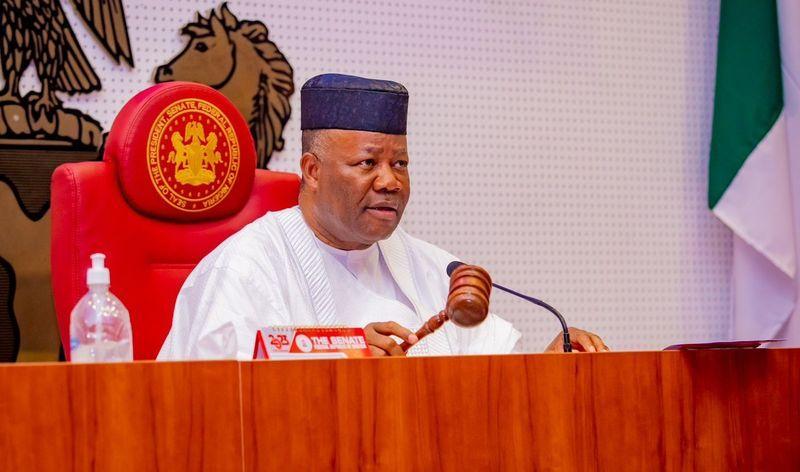
STORY 9: NIGERIA POLITICAL ACCOUNTABILITY — INEC RECEIVES 78,112 PVCs FOR ENUGU STATE
The Independent National Electoral Commission reported that it had received 78,112 newly produced Permanent Voter Cards for distribution across Enugu State’s 17 local government areas.
The Enugu Resident Electoral Commissioner, Dr Chukwuemeka Chukwu, announced the figures.
According to INEC, the total comprised 17,220 cards for transfers and replacements, 20,137 cards from the first phase of registration and 40,755 cards from the second phase.
The commission said the cards would be made available to their rightful owners and that collection by proxy would not be permitted.
Registered voters were directed to their respective local government offices for collection arrangements.
The figures represent a reported production and receipt milestone in the administration of voter registration materials.
However, the distinction between cards received and cards collected is important.
The availability of 78,112 newly produced PVCs does not establish that the same number of voters have received them. Production, delivery to INEC and collection by registered voters are separate stages.
The available report did not establish how many cards had actually been collected by their owners. It also did not provide a collection rate or a final deadline.
The practical measure of progress will therefore be the number of registered voters who successfully receive their cards and the effectiveness of distribution across the 17 local government areas.
The commission’s position that collection by proxy would not be permitted also makes the collection arrangements important for voters who must personally visit the relevant offices.
For the electoral process, the distribution of voter cards is a practical administrative responsibility. The receipt of cards by the commission is only one stage of the process. The intended beneficiaries must still be able to collect them.
Further information about collection figures would help establish the extent to which the distribution exercise has reached registered voters.
The next important development is therefore not simply another production figure, but evidence of how many cards have been collected and whether distribution has been effective across Enugu State.
The figures and collection arrangements were reported in Punch’s report on INEC’s receipt of 78,112 PVCs in Enugu.
While the Enugu PVC report concerned electoral administration, another law-enforcement report during the review period dealt with suspected cocaine trafficking operations in Lagos and Kano. The two developments are separate matters.

STORY 10: NIGERIA SECURITY — NDLEA REPORTS EIGHT SUSPECTED COCAINE COURIERS ARRESTED
The National Drug Law Enforcement Agency reported the arrest of eight suspected cocaine couriers in operations conducted in Lagos and Kano.
The agency said it recovered 634 cocaine pellets weighing a total of 13.795 kilograms.
The chronology of the operation is important. The arrests took place between 30 and 31 October 2026. The report was published in November and fell within the reporting period for the 18 November edition, but the operations themselves did not take place during that November reporting window.
According to the NDLEA, the suspects had swallowed cocaine pellets for transportation and the wraps were recovered after they were excreted in custody.
The agency described an alleged trafficking route from Lagos through Kano, across the Sahara via Niger Republic and Libya, with Europe as the intended destination.
Reuters and the NDLEA’s official account of the eight arrests and 634 recovered pellets reported the agency’s account.
The reported route illustrates the challenges authorities face when investigating criminal operations that involve domestic transport links and international corridors.
However, the eight individuals remain suspects. Their arrests and the reported recovery of the cocaine do not amount to convictions.
The available information did not establish who financed the operation, who organised the wider network or whether the entire trafficking structure had been dismantled.
Those questions are relevant because the arrest of suspected couriers does not, by itself, establish the full structure of an alleged trafficking operation.
Further information about charges, court proceedings and investigations into alleged organisers would be necessary to establish the next stages of the case.
The operation also illustrates the importance of maintaining clear distinctions between an agency’s account of an arrest, the evidence presented in court and any eventual judicial findings.
The NDLEA’s report provides the figures and alleged route as described by the agency. The legal status of the suspects must continue to be treated separately from those reported operational details.
The next developments to watch include confirmation of charges, court status and any further investigation into the alleged organisers.
The daily review also included a separate international investigation concerning alleged online sexual exploitation. That case is unrelated to the cocaine-trafficking operations.

STORY 11: NIGERIA PUBLIC ACCOUNTABILITY — INTERNATIONAL SEXTORTION INVESTIGATION RAISES ONLINE-SAFETY CONCERNS
An investigation by the Associated Press and FRONTLINE, reported in Nigeria by TheCable, brought allegations of online sexual extortion involving a Canadian teenager and a Nigerian university student into public view.
The person identified in the investigation as Ayomide was alleged to have used an impersonated identity on TikTok, posing as a young woman to establish contact and persuade victims to share intimate images.
The AP investigation reported that the Canadian teenager was 15 years old at the time of the alleged grooming.
After an intimate image was reportedly shared, the teenager was threatened with exposure. The investigation said the victim lost nearly US$2,000.
The allegations raise serious questions about online exploitation, child protection, victim support and the ability of investigators to pursue cases involving individuals and victims in different countries.
The reported circumstances also highlight the risks associated with online contact that develops into coercion or threats involving private images.
However, the legal distinction is essential.
The AP/FRONTLINE investigation is not a criminal conviction. The supplied material does not establish that the person identified has been arrested or formally charged in Nigeria or Canada.
The individual’s current legal status and the formal response of law-enforcement authorities remain to be confirmed.
The absence of an established conviction means that the allegations must continue to be attributed to the investigation rather than presented as a judicial finding.
The teenager’s privacy must also be protected. The victim’s identity and private information should not be exposed, and intimate material must never be reproduced.
Beyond the specific allegations, the case raises broader public-interest questions about online safety and the protection of young people.
Digital platforms, families, educational institutions and law-enforcement agencies all have roles in addressing online exploitation, although the supplied material does not establish what specific actions have been taken by the relevant authorities in this case.
Cross-border investigations can also involve cooperation between agencies in different jurisdictions. The legal and investigative status of the matter will therefore be important in determining what action, if any, follows.
The case should not be used to generalise about Nigerian university students or young people. Allegations involving an individual do not establish the conduct of an entire institution or group.
The next important development will be confirmation from the relevant authorities about any formal investigation and the legal status of the allegations.
The investigation and its findings were published by the Associated Press in collaboration with FRONTLINE.
The final major law-enforcement and justice-related development in this edition involved a reported Federal High Court conviction over an attempted gold-smuggling operation.

STORY 12: NIGERIA POLITICAL ACCOUNTABILITY — COURT CONVICTS AIRPORT SECURITY OFFICER OVER ₦4.4 BILLION GOLD-SMUGGLING ATTEMPT
A Federal High Court in Kano reportedly convicted an airport security officer over an attempt to smuggle 22.2 kilograms of unprocessed gold out of Nigeria.
The gold was valued at more than ₦4.4 billion.
The court, presided over by Justice Sale Shuaibu, ordered that the gold be forfeited to the Federal Government.
The convicted individual, Ali Baffa, was identified by the Economic and Financial Crimes Commission as an Inspector One in the Aviation Security section at the Mallam Aminu Kano International Airport.
According to the EFCC, Baffa was arrested on 11 June 2026. The commission’s account described the concealment of gold bars in an attempt to evade airport security checks. The conviction and forfeiture order were reported in TheCable’s coverage of the Kano Federal High Court case.
The reported conviction represents a significant development because the matter has moved beyond arrest and prosecution to a judicial outcome and a forfeiture order.
The case raises questions about the protection of Nigeria’s mineral resources and the effectiveness of security procedures at major airports.
Airport security personnel have responsibilities central to the integrity of screening operations. A reported conviction involving an individual working within airport security therefore raises legitimate questions about institutional oversight and controls against insider risks.
However, the limits of the available evidence must be respected.
The full judgment was not reproduced in the supplied report. The material did not establish that other airport employees were involved or that a wider airport smuggling network had been dismantled.
The appeal status and execution of the forfeiture order also remained to be confirmed.
These are important distinctions. A reported conviction involving one individual does not automatically establish the involvement of other personnel or prove that an entire airport security system is compromised.
Further scrutiny would require the certified judgment, confirmation of any appeal, evidence that the forfeiture order has been executed and an account from the airport authorities on any internal review.
The value and quantity of the recovered gold also make the case relevant to questions about the protection of Nigeria’s mineral resources.
However, the available report does not establish the wider economic impact of the attempted operation or identify any additional participants.
The reported conviction is a concrete judicial outcome. Conclusions about broader institutional failures or the involvement of other personnel must be supported by further evidence.
The next important questions concern the full judgment, the status of any appeal, the execution of the forfeiture order and any documented response from the airport authorities.

CONCLUSION
The developments covered in this edition of Nigeria news today reveal different but important challenges facing the country’s economy, public institutions and political system.
Households continue to face questions about affordability, even as some inflation indicators show changes. A proposed rent-control measure in Enugu has brought housing regulation into focus, while the AfDB financing approval and non-oil export figures have highlighted the importance of business finance and trade administration.
For public-sector workers, the directive on university allowance recovery raises questions about transparency, the interpretation of remuneration agreements and fair implementation. The NYSC payment report similarly demonstrates why reliable public payment systems and accurate reconciliation matter to those who depend on government-administered entitlements.
Political developments have drawn attention to the need for responsible electoral competition, effective protection against violence and respect for due process. The reported court conviction involving attempted gold smuggling has also raised questions about institutional oversight and the protection of national resources.
These developments are not all connected by one event or cause. Their common significance lies in the need to examine official decisions alongside implementation, evidence and measurable outcomes.
For Nigerians, the essential questions remain practical: Are policies being implemented as announced? Are public institutions meeting their responsibilities? Are citizens receiving the benefits and protections intended? And where allegations or disputes arise, are they being addressed through transparent and lawful processes?
The answer to those questions will depend on evidence from the institutions involved and the outcomes that follow their decisions. That is why Nigeria’s public affairs must be examined not only through announcements, but also through accountability and demonstrated results.
About the Author