INTRODUCTION
Nigeria’s public institutions faced important questions over security, government spending and accountability during the 24-hour reporting period ending on 25 November 2026. Developments in Delta and Bayelsa States brought public safety and the responsibilities of security and regulatory authorities into focus. At the federal level, President Bola Tinubu proposed a reduction in the 2026 budget, although the reported deficit and borrowing figures remained substantial. Separate legal and administrative proceedings also placed the Nigerian Governors’ Forum and the Daura traditional institution under scrutiny.
These developments form part of the wider picture behind Nigeria news today: not simply what happened, but what the available evidence establishes, which institutions are responsible and what remains unresolved.
The Delta campaign incident raised questions about the investigation of political violence and the conduct of officers deployed to protect the public. In Bayelsa, conflicting casualty and passenger figures made reliable records and waterway safety enforcement central concerns. The proposed federal budget revision raised questions about the relationship between expenditure, revenue and borrowing, while an interim court order involving $100 million linked to the Nigerian Governors’ Forum required a clear distinction between preserving disputed funds and determining ownership.
In Katsina, a government investigation followed an allegation against the Emir of Daura, while the death of veteran actor and broadcaster Pete Edochie brought attention to Nigeria’s broadcasting and screen heritage.
Although these developments involved different institutions and circumstances, they shared an important public-interest concern: decisions and official actions must be examined against evidence, due process and their consequences for Nigerians.
STORY 1: Delta Campaign Violence Leaves Six Dead as Police Investigation Raises Questions About Security and Accountability
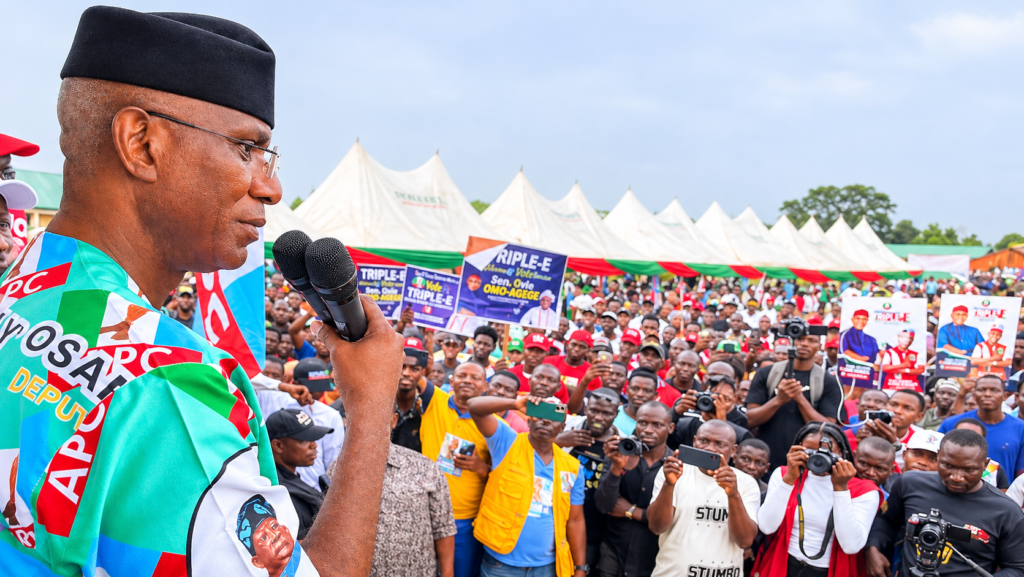
A political campaign visit in Uduere Community, Ughelli North Local Government Area of Delta State, turned violent on 23 November 2026, leaving several people dead and others injured. The incident involved a campaign visit associated with former Deputy Senate President Ovie Omo-Agege.
The casualty figures reported after the incident differed. Omo-Agege’s campaign organisation initially reported four deaths, including two of its aides. The Nigeria Police Force subsequently gave a preliminary figure of six deaths, with several others injured, as reported by The Punch in its account of the Delta campaign attack.
The difference between the two accounts remained unresolved at the time of the 25 November review. The police figure was preliminary, and a final casualty record was still needed to establish the confirmed number of people who died.
The police also invited seven individuals for questioning. Those named included Ovie Omo-Agege and Ughelli North Local Government Chairman, Jaro Movudu Egbo. According to the police, the invitations were intended to establish the individuals’ possible levels of involvement in the incident.
The invitations and scheduled appearances were reported by Channels Television. Omo-Agege was scheduled to appear on 26 November at 11 a.m., while Egbo was expected at 2 p.m. Five other invitees were scheduled to report on 27 November.
These invitations must be understood in their proper context. Being invited for questioning does not establish that an individual committed an offence. The investigation is expected to establish what happened and determine responsibility where the evidence supports it.
The investigation also concerns police conduct
An important dimension of the case was the direction by the Inspector-General of Police, Olatunji Rilwan Disu, for an impartial investigation that would also examine the deployment and conduct of police officers at the campaign venue.
This widened the accountability question. Beyond determining the possible involvement of political actors or other individuals, investigators were expected to examine whether security arrangements at the event were adequate and whether officers deployed there carried out their responsibilities properly.
That distinction matters because public safety at political events depends not only on identifying those responsible when violence occurs, but also on examining the preparedness and conduct of the institutions assigned to prevent it.
The Delta State Government also imposed a curfew from 6 p.m. to 6 a.m. in Ughelli North. For affected families and the Uduere community, the immediate consequences included loss of life, injuries, disruption and uncertainty.
At the time of the review, the scheduled police appearances and the findings of the investigation remained outstanding. Confirmation of the final casualty figures was also required.
The central issue was whether the investigation would provide a complete and impartial account of the incident, including the conduct of the security personnel responsible for protecting the public.
The incident should not be treated as proof of a wider national pattern on the basis of the information in this edition alone. Its significance lies in the specific questions it raises about political-event security, police responsibility and the need for a credible investigation.
STORY 2: Bayelsa Boat Disaster Raises Questions Over Conflicting Death Toll and Waterway Safety
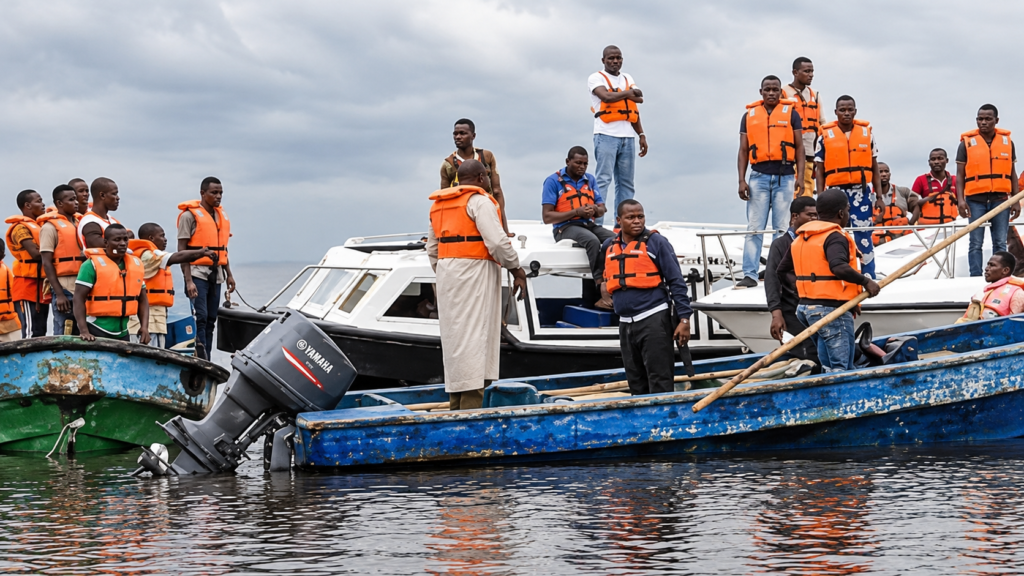
A boat disaster in Southern Ijaw Local Government Area of Bayelsa State prompted calls from both chambers of the National Assembly for a nationwide safety audit of boats and ferries operating on Nigerian waterways.
The incident occurred on 20 November 2026, when a passenger boat capsized near a river junction between Oweikorogha and Otuan. The disaster brought renewed attention to passenger safety, vessel capacity, operator responsibility and the enforcement of water transport regulations.
However, the full human toll remained unclear at the time of the daily review.
A parliamentary report published on 25 November referred to 29 recovered bodies. An earlier police account, published on 23 November, had reported that the death toll had risen to 32.
The National Assembly’s account of the disaster, including its call for a nationwide boat safety audit, was reported by The Punch.
The passenger estimates also differed. The Senate account referred to more than 300 people, while the House account cited more than 150. An earlier police account reported more than 500 passengers on a vessel said to have a capacity of 200.
These figures describe different reports and cannot responsibly be combined into one definitive account. The distinction between recovered bodies, reported deaths and estimates of the number of passengers is important. Without reliable records, presenting one figure as the final toll would risk giving readers a misleading account of the disaster.
Official rescue records, passenger information and the accident investigation were still needed to establish the final number of people involved, the confirmed death toll and the cause of the incident.
National safety audit and the question of enforcement
The National Assembly’s response included calls for compulsory life jackets, routine vessel inspections, improved certification of operators and access to safer boats.
The Bayelsa State Government had also announced plans for a marine safety taskforce covering 30 jetties. The Federal Government announced stiffer waterway safety measures.
These announcements point to several areas of concern: whether vessels are inspected regularly, whether operators meet the required standards, whether passenger limits are respected and whether people travelling by water have access to life-saving equipment.
But announcing safety measures is not the same as implementing them. The practical value of the proposed responses will depend on whether inspections are carried out, operators are held to applicable standards and safety requirements are consistently enforced.
For many riverine communities, boats are essential for reaching markets, schools, healthcare facilities and other services. Water transport safety is therefore not simply a technical regulatory matter. It affects people’s ability to travel and access essential services without avoidable danger.
The National Assembly had called for action, while state and federal authorities had announced responses. What remained to be established was whether these measures would lead to a properly enforced national waterway safety system.
The Bayelsa disaster also demonstrated why reliable public records matter during emergencies. A clear account of passengers, rescued people, missing persons and confirmed fatalities is essential to understanding the scale of a disaster and informing the response.
Until the available figures are reconciled through official records and investigation, the casualty and passenger estimates must remain attributed to the institutions that reported them.
STORY 3: Tinubu Proposes ₦3.15 Trillion Reduction in 2026 Budget as Borrowing Remains High
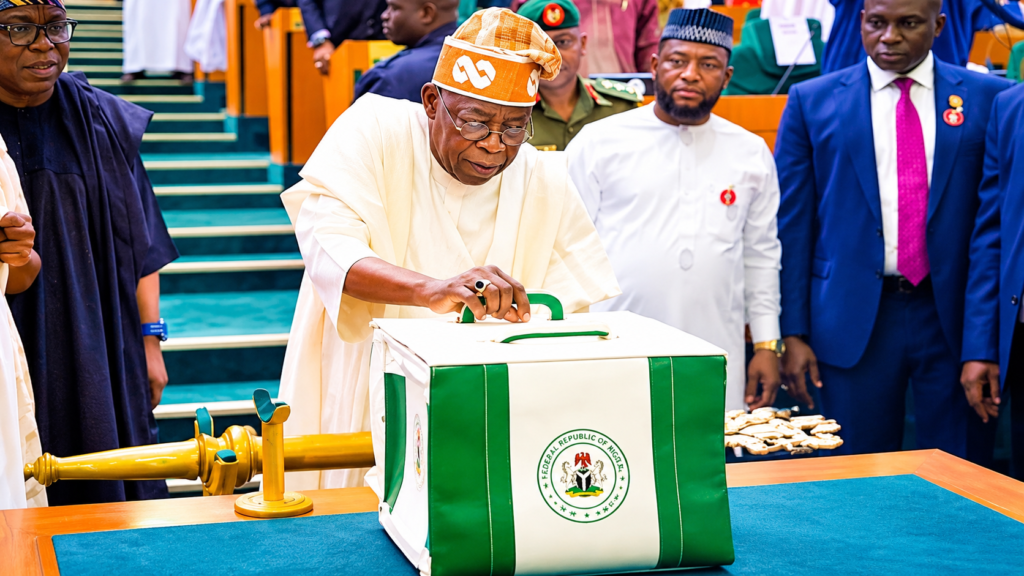
President Bola Tinubu asked the House of Representatives to consider a revised 2026 federal budget that would reduce proposed total expenditure from approximately ₦68.323 trillion to ₦65.176 trillion.
The proposed reduction amounted to about ₦3.147 trillion. The President’s letter, dated 20 November, was read during plenary in the House of Representatives on 24 November.
The proposed revision placed federal spending and the management of public resources under renewed scrutiny. However, the headline reduction did not automatically mean that the government’s financing requirements would fall by the same amount.
The proposed changes and the retained borrowing framework were reported in detail by Premium Times.
The reported figures showed proposed federal revenue of ₦33.720 trillion and capital expenditure of ₦26.232 trillion. The fiscal deficit remained at approximately ₦31.457 trillion, equivalent to 5.64 per cent of Gross Domestic Product.
Proposed new borrowing also remained at ₦29.22 trillion. This comprised ₦18.43 trillion in domestic borrowing and ₦10.79 trillion in foreign borrowing.
The figures illustrate why total expenditure, revenue, deficit and borrowing should not be treated as interchangeable measures.
The proposed reduction concerns the overall size of expenditure. The deficit represents the gap between government spending and revenue under the reported framework, while borrowing is one of the ways the government proposes to finance its requirements.
A smaller proposed expenditure figure does not, by itself, establish that the financing gap has narrowed. The reported deficit and borrowing figures remained substantial in the revised framework.
Why the proposed revision matters
President Tinubu’s stated reasons for the revision included regularising certain Nigerian National Petroleum Company Limited expenditures incurred on behalf of the Federation, addressing underprovided debt-service obligations, recognising capital warrants and supplementation commitments, and making provisions for refunds to ministries, departments, agencies and special accounts.
These explanations indicate that the proposed changes involved several aspects of federal financial management. However, the headline reduction did not establish which projects or government institutions would gain or lose funding.
That question requires a detailed comparison of the original and revised budget schedules. Without those allocation details, it would be premature to conclude which public services, projects or institutions would experience a reduction or increase.
There was also an important legislative step. The proposed revision had not become law at the time of the review. The National Assembly still had to scrutinise and approve the bill before it could become the revised appropriation.
This means that the ₦65.176 trillion figure should be understood as a proposed revised expenditure level, not an already enacted budget.
For Nigerians, the important issue is not simply whether the proposed budget has become smaller. It is what the revised spending plan means for public services, infrastructure, government obligations and national priorities.
The detailed allocation schedules and the outcome of legislative scrutiny remained important outstanding developments. They would provide a clearer basis for assessing the practical implications of the proposal.
The budget debate therefore raises two connected questions: how the Federal Government intends to manage its spending commitments and how effectively the National Assembly will examine the revised figures before any new appropriation becomes law.
STORY 4: Court Restricts Dealings With $100 Million Linked to Nigerian Governors’ Forum
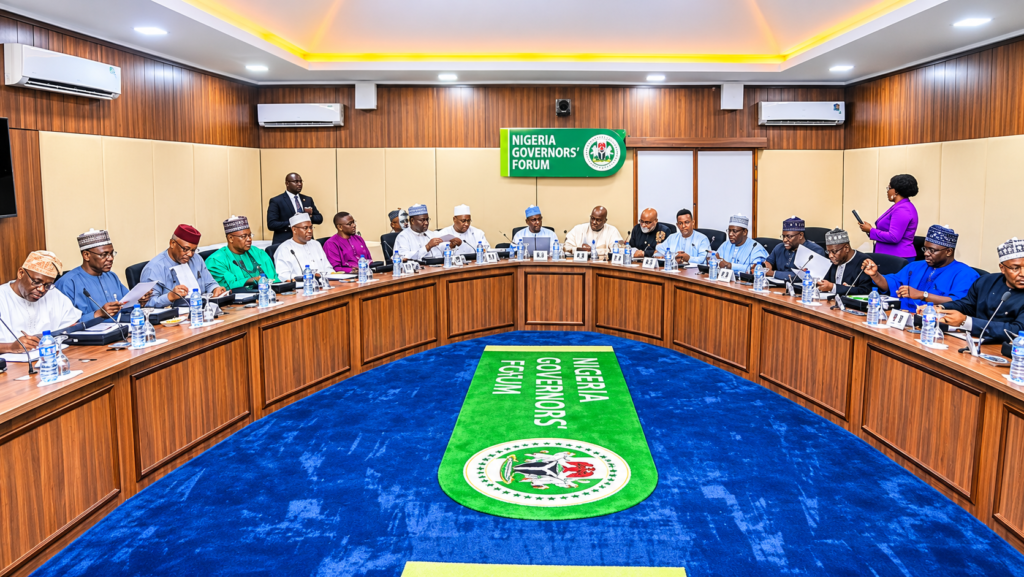
A High Court of the Federal Capital Territory in Abuja issued an interim order on 19 November 2026 restricting dealings with $100 million linked to the Nigerian Governors’ Forum.
The amount was reported to be approximately ₦135.58 billion. The order was granted by Justice O.C. Agbaza following an application by Dr Ted Iseghohi-Edwards.
The Nigerian Governors’ Forum and 29 commercial banks were among the respondents. The order also required disclosure of relevant bank accounts and balances.
The details of the interim order and the claimant’s case were reported by The Punch.
The dispute was connected to claims involving London and Paris Club refunds. The claimant said he represented the 774 local government councils through the Association of Local Governments of Nigeria in matters relating to those refunds.
He relied on an alleged indemnity issued by the Governors’ Forum in December 2018. He argued that the document entitled him to the disputed $100 million if specified conditions had been met.
The claimant also referred to an earlier Federal High Court judgment and a reported part-payment by the Federal Government through promissory notes.
These details form part of the claimant’s case. They require examination against the original legal and financial documents and should not be treated as final findings simply because they were presented in support of the application.
An interim order is not a final ownership judgment
The most important legal distinction is the nature of the court order.
The order was an interim preservation measure. It restricted dealings with the disputed funds while the case proceeded. It did not amount to a final decision establishing who owned the money or whether the claimant was legally entitled to receive it.
This distinction is important because a court may preserve disputed assets while considering the arguments and evidence presented by the parties. Such an order does not, by itself, settle the substantive dispute.
The next reported hearing of the motion on notice was scheduled for 1 December 2026.
The substantive response from the Governors’ Forum, the court proceedings and the relevant financial records remained important to understanding the dispute. Those materials would help clarify the legal basis of the claim, the nature of the indemnity and the financial transactions being challenged.
The case raises questions about public financial accountability and the handling of funds connected to local government refund arrangements. But those questions must be examined through the court process and the evidence placed before it.
At the time of the review, the central point was that the disputed funds had been placed under an interim restriction. The court had not made a final ownership determination.
For readers following Nigeria news today, understanding that difference is essential to avoiding the misleading conclusion that the claimant had already been awarded the money.
STORY 5: Katsina Suspends Emir of Daura Following Sexual Assault Allegation as Investigation Begins
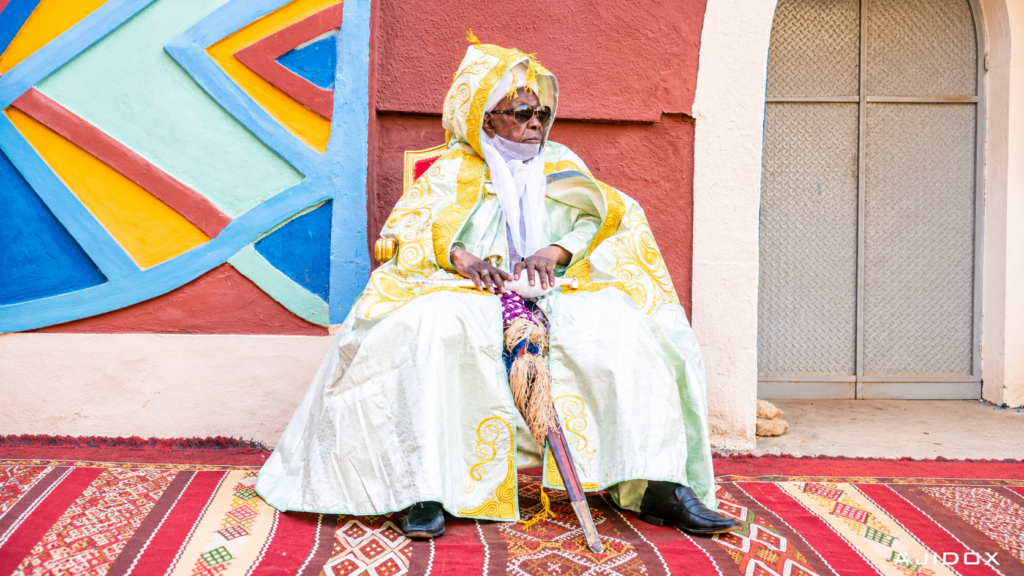
The Katsina State Government suspended the official engagements and travel of the Emir of Daura, Umar Faruk Umar, following a sexual assault allegation made by a foreign tourist identified in media reports as Mirka Czee.
The government also established an investigative committee following a directive from Governor Dikko Umaru Radda. The announcement was made by the state’s Commissioner for Information, Culture and Tourism, Dr Bala Zango.
The government’s decision to suspend the Emir’s official engagements and establish an investigative committee was reported by TheCable.
The allegation reportedly related to a private audience at the Emir’s palace on 14 November. The tourist alleged unwanted touching.
The Daura Emirate Council reportedly said it was reviewing the authenticity of the video associated with the allegation, including whether it had been altered or manipulated.
The matter required careful treatment because an allegation, an administrative suspension and a judicial finding are three different things.
The government’s announcement established that an administrative measure had been taken and an investigation initiated. It did not establish the allegation as proven fact.
The suspension of the Emir’s official engagements and travel was an administrative measure pending investigation. It was not a criminal conviction or a judicial finding.
Evidence and due process remain central
The government investigation carried the responsibility of establishing the facts through a fair and transparent process.
That process needed to respect the rights of the complainant while also protecting the Emir’s right to a fair hearing. Neither the allegation nor the administrative suspension should be treated as a substitute for an examination of the evidence.
Several important details remained outstanding at the time of the review. These included the investigative committee’s membership, its terms of reference and the deadline for submitting its findings. The Emir’s full direct response had also not been established in the supplied reporting.
The council’s reported review of the video raised another evidential question: whether the material being examined was authentic and had been preserved in a form that allowed its provenance and integrity to be assessed.
The credibility of the process would depend on the quality of the evidence, the fairness of the investigation and the transparency of its eventual findings.
The case places a traditional institution and the state government’s administrative authority under scrutiny. However, responsible reporting must distinguish between what the government has formally announced, what the complainant has alleged and what an investigation or court may eventually establish.
For the public, the important development was the commencement of a government investigation and the administrative suspension. The central question remained whether the process would establish the facts fairly and transparently.
STORY 6: Pete Edochie Dies at 79, Remembering the Broadcaster Behind the Screen Legend
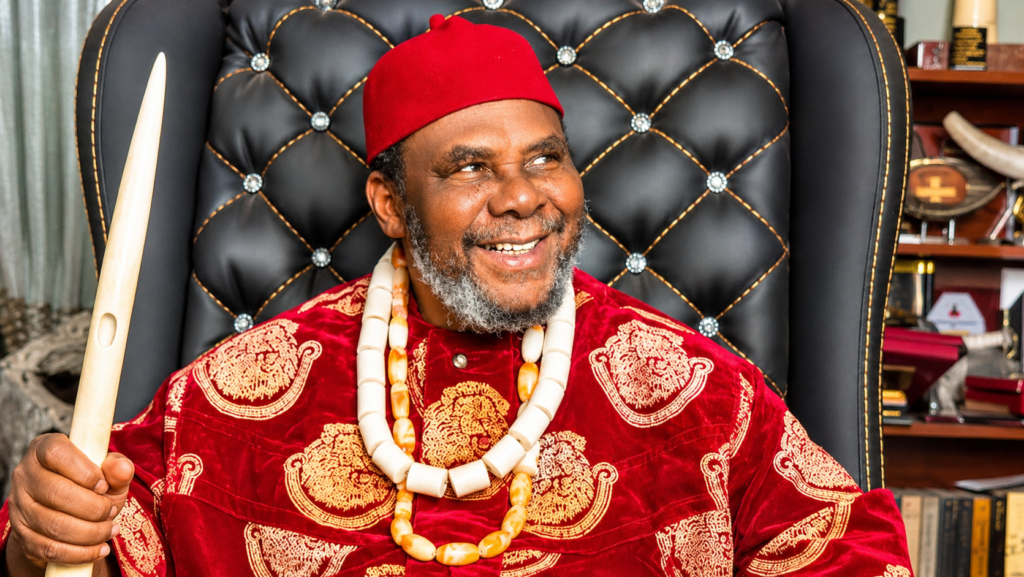
Veteran Nigerian actor and broadcaster Pete Edochie died at the age of 79, according to an announcement released by his family on 25 November 2026.
The statement was attributed to his son, Leo Pete Edochie, and said he died at 12:30 a.m. in Enugu. The family announcement was reported by The Guardian.
Although he became widely recognised for his work as an actor, Pete Edochie’s professional history extended well beyond the screen. His career connected broadcasting, literature and Nigerian cinema.
He joined the Eastern Nigeria Broadcasting Corporation as a junior programmes assistant in February 1967. During the Nigerian Civil War, he worked with the Voice of Biafra.
In 1980, he received training at the British Broadcasting Corporation. Seven years later, in 1987, he became the first director of ABS 3 FM Stereo in Enugu.
These milestones show that his professional experience included broadcasting responsibilities before and alongside the acting career for which he became widely known. His broadcasting career and early professional history are also documented in The Guardian’s retrospective on his life and career.
From broadcasting to a defining screen role
Edochie later became widely recognised for portraying Okonkwo in the television adaptation of Chinua Achebe’s celebrated novel, Things Fall Apart.
The role connected an important Nigerian literary work with television storytelling and became a major milestone in accounts of his screen career.
His professional journey therefore crossed several areas of Nigeria’s cultural and media history: radio broadcasting, television production, literary adaptation and acting.
His death marked the passing of a prominent figure whose career reflected the relationship between the country’s broadcasting institutions and its creative industries.
It also drew attention to the importance of documenting Nigeria’s audiovisual heritage. Historic productions, broadcasting records and the contributions of professionals who helped shape the industry form part of the country’s cultural record.
Preserving that history requires more than remembering celebrated screen performances. It also involves recording the careers, institutions and professional contributions that helped build Nigeria’s media landscape.
At the time of the family announcement, funeral arrangements had not yet been provided. The family said further details would be communicated later.
Edochie’s death was therefore both a moment of remembrance and an opportunity to recognise the broader professional history behind a familiar screen figure.
Conclusion
The developments examined in this edition of Nigeria news today reveal different dimensions of the responsibilities carried by public institutions, political actors and other influential organisations.
In Delta State, the investigation into campaign violence must establish what happened, reconcile the casualty figures and examine the conduct of the police officers deployed at the venue. In Bayelsa, the boat disaster has exposed the importance of reliable emergency records and effective water transport safety enforcement. The proposed federal budget revision has placed public spending, borrowing and legislative scrutiny under examination, while the NGF-linked court dispute demonstrates why interim legal orders must be distinguished from final decisions.
In Katsina, the investigation involving the Emir of Daura must establish the facts through a fair process. Meanwhile, Pete Edochie’s death has drawn attention to the need to preserve Nigeria’s broadcasting and screen heritage.
These are separate developments, but each reinforces the importance of evidence, institutional responsibility and transparent processes. Police investigations must be impartial, safety announcements must lead to implementation, budgets must receive legislative scrutiny and legal claims must be resolved through due process.
The questions that remained unanswered at the reporting cut-off were significant: the final casualty figures in Delta and Bayelsa, the outcome of the proposed budget revision, the progress of the NGF court proceedings and the findings of the Katsina investigation.
Understanding these developments requires looking beyond announcements and headlines to examine what institutions actually do, what the evidence establishes and what consequences follow for Nigerians.
DSG HERALD NEWS — Nigeria: Power, Policy & People.
About the Author