INTRODUCTION
Global Daily News Review examines five major international developments shaping the world, including a deadly drone attack in Libya, a hostage crisis in Colombia, rising femicide, a mining disaster in Indonesia and a major US court verdict involving Chinese technology giant Huawei.
In North Africa, the Russia–Ukraine war has taken another worrying turn following a drone attack on a Russian naval vessel in Libya, leaving two Libyan naval officers dead. In Colombia, a supermarket hostage crisis in the tourist city of Cartagena ended after security forces rescued those held inside. Meanwhile, a new United Nations report has revealed that approximately 47,000 women and girls were killed by intimate partners or family members in 2025.
Elsewhere, rescue teams in Indonesia are searching for miners trapped underground after flooding at an unauthorised gold mine, while a United States jury has convicted Chinese telecommunications giant Huawei and subsidiaries on multiple criminal counts involving trade secrets, fraud and sanctions violations.
These five developments offer a window into some of the security, humanitarian, economic and technological issues shaping the world.
STORY 1: Two Libyan Naval Officers Die After Ukrainian Drone Attack on Russian Warship
Two Libyan naval officers have died from injuries sustained during a Ukrainian drone attack on a Russian warship docked at the Benghazi Naval Base in eastern Libya, extending the Russia–Ukraine conflict into another strategically important region.
The deaths were confirmed by authorities aligned with the Libyan National Army (LNA), which said the officers had been wounded during the attack on Sunday, November 22, and died on Tuesday evening.
According to the Associated Press report on the attack, the Russian naval vessel had docked at the Benghazi base to refuel and resupply when it was targeted by Ukrainian sea drones.
Ukrainian President Volodymyr Zelenskyy said seven drones were deployed in the operation. Officials briefed on the initial investigation said at least four drones were intercepted, while two struck the Russian corvette.
At least 10 people, including Libyan and Russian nationals, were initially reported wounded.
The Libyan National Army, commanded by General Khalifa Haftar, subsequently vowed retaliation, saying it would respond at a time and place of its choosing.
The incident is significant because it places Libya more directly within the wider confrontation between Russia and Ukraine. The country has remained politically divided since years of civil conflict, with rival administrations and foreign-backed forces exercising influence in different parts of its territory.
Eastern Libya, where the attack occurred, is controlled by forces aligned with Haftar, who maintains close relations with Moscow. The internationally recognised authorities in Tripoli have developed relationships with Ukraine and Western governments.
This complicated political arrangement makes Libya particularly vulnerable to external military and diplomatic rivalries.
Why This Matters Beyond Libya
Libya occupies a strategically important position in North Africa, with substantial oil resources, a Mediterranean coastline and borders with six countries. Instability within the country can affect regional security, migration routes, energy infrastructure and international diplomatic relations.
The reported use of a Ukrainian military base in western Libya, if independently established, would raise further questions about the extent of foreign military involvement in the country.
For African governments, the incident is another reminder of the risks associated with becoming an arena for geopolitical competition between powerful international actors.
The central question is whether Libya can prevent its divided political and security environment from becoming a more active extension of the Russia–Ukraine confrontation.

STORY 2: Colombia Supermarket Hostage Crisis Ends as Security Forces Rescue Captives
A tense hostage crisis at a supermarket in Cartagena, one of Colombia’s major tourist destinations, has ended after security forces rescued all the people held inside the building.
The incident began on Tuesday, November 24, when armed men reportedly attempted to seize an armoured vehicle transporting cash. After the attempted robbery attracted the attention of security personnel, the suspects fled into a nearby Éxito supermarket in the La Castellana neighbourhood, taking people inside hostage.
Initial reports indicated that approximately 25 to 30 people were being held.
The situation triggered a major security operation involving police officers, military personnel and special forces. Armed officers surrounded the supermarket, nearby streets were sealed off and snipers were deployed as authorities worked to bring the situation under control.
The operation created considerable concern among residents and people in the surrounding area.
According to Al Jazeera’s report on the hostage situation in Colombia, Colombian President Abelardo de la Espriella said all 20 people held hostage had been rescued after security forces stormed the supermarket early Wednesday, ending the daylong standoff.
The president also reported that one of the captors was killed during the operation.
The incident reportedly followed an unsuccessful attempt to rob an armoured cash-transport vehicle. Security camera operators had alerted police after detecting the attempted robbery.
Security Concerns and Public Safety
The hostage incident has renewed attention on public security in Colombia, where criminal violence and armed groups remain major concerns.
Cartagena is an internationally recognised tourist destination, known for its historic architecture, beaches, hotels and cruise-ship activities. An incident of this nature can therefore have implications beyond the immediate victims, raising questions about the security of commercial facilities, tourism infrastructure and public spaces.
It also highlights the difficult decisions confronting security agencies during hostage situations: protecting captives, containing armed suspects and preventing an already dangerous situation from escalating.
A Wider Lesson for Public Security
For countries such as Nigeria, where armed robbery, kidnapping and hostage-taking remain significant security concerns, the incident provides an opportunity to examine emergency response systems and the protection of civilians in public places.
The successful rescue of the hostages demonstrates the importance of intelligence, coordination and rapid response. However, the wider challenge remains preventing criminal operations from reaching the point where innocent people become bargaining instruments.

STORY 3: UN Report Reveals 47,000 Women and Girls Killed by Partners or Relatives in 2025
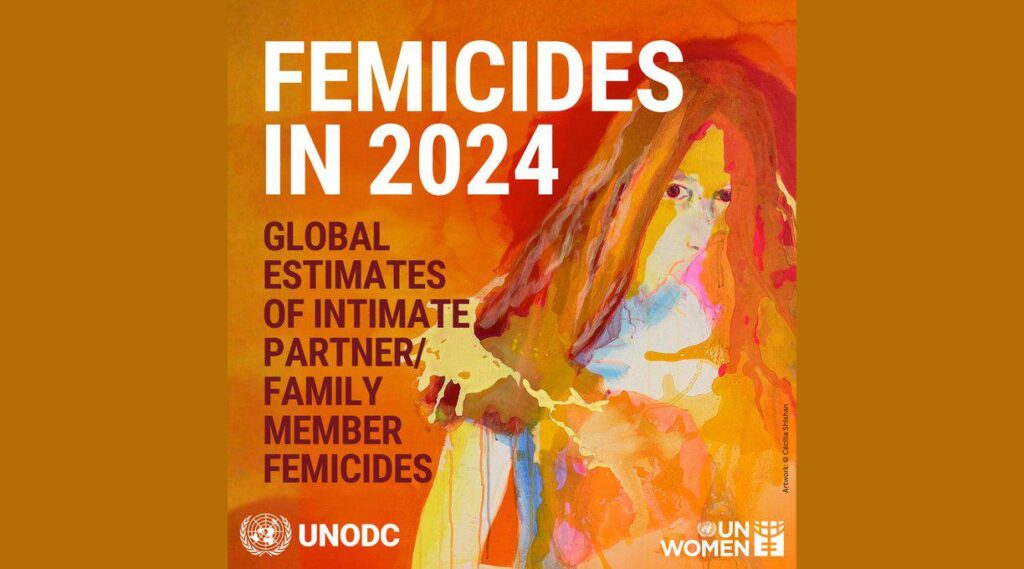
Approximately 47,000 women and girls were killed by intimate partners or family members across the world in 2025, representing an average of five deaths every hour, according to new figures released by the United Nations.
The findings were contained in the 2026 Femicide Brief, published by the United Nations Office on Drugs and Crime (UNODC) and UN Women ahead of the International Day for the Elimination of Violence against Women.
The report estimates that 78,000 women and girls were intentionally killed globally in 2025. Of that number, approximately 60 per cent were killed by intimate partners or family members.
The figures translate to about 129 women and girls losing their lives every day in circumstances involving people within their homes or families.
One of the most significant findings is that Africa recorded the highest regional rate of intimate partner and family-related femicide.
According to the report, Africa recorded 2.9 victims per 100,000 female population. The Americas followed with 1.4, Oceania with 1.1, Asia with 0.6 and Europe with 0.5.
The figures highlight the continuing danger faced by women and girls, particularly within environments where violence, threats and abuse may remain hidden until they result in fatal consequences.
The findings are detailed in the UN Women report on women killed by partners or close relatives in 2025.
Violence Often Begins Before the Final Act
The UN agencies stressed that femicide is rarely an isolated event. For many victims, the killing represents the final stage of a longer pattern of domestic violence, threats, intimidation and abuse.
The report also identifies barriers that prevent many survivors of physical and sexual violence from seeking assistance from relatives, community organisations or law enforcement agencies.
UNODC Executive Director Monica Juma called for sustained action to address harmful social attitudes and institutional failures that allow violence against women to continue.
UN Women Executive Director Sima Bahous also emphasised the importance of ensuring that women can report violence safely, access protection and receive support before situations become fatal.
The report further observed that while global homicide rates have declined, femicide rates have fallen more slowly.
Why Africa Must Pay Attention
Africa’s position as the region with the highest rate of intimate partner and family-related femicide makes the findings particularly significant for governments, law enforcement agencies, civil society organisations and community leaders across the continent.
The figures raise important questions about the effectiveness of domestic violence laws, the accessibility of protection services, the handling of complaints and the ability of institutions to intervene before abuse becomes deadly.
For Nigeria, the report provides an opportunity to examine the systems available to protect women and girls from domestic and gender-based violence.
Public awareness campaigns are important, but they cannot replace accessible reporting channels, effective investigations, survivor support, safe shelters and the consistent enforcement of existing laws.
The challenge is not only to respond when violence occurs, but also to identify warning signs and intervene before lives are lost.
STORY 4: Twenty-Nine Miners Feared Trapped After Flooding at Illegal Gold Mine in Indonesia
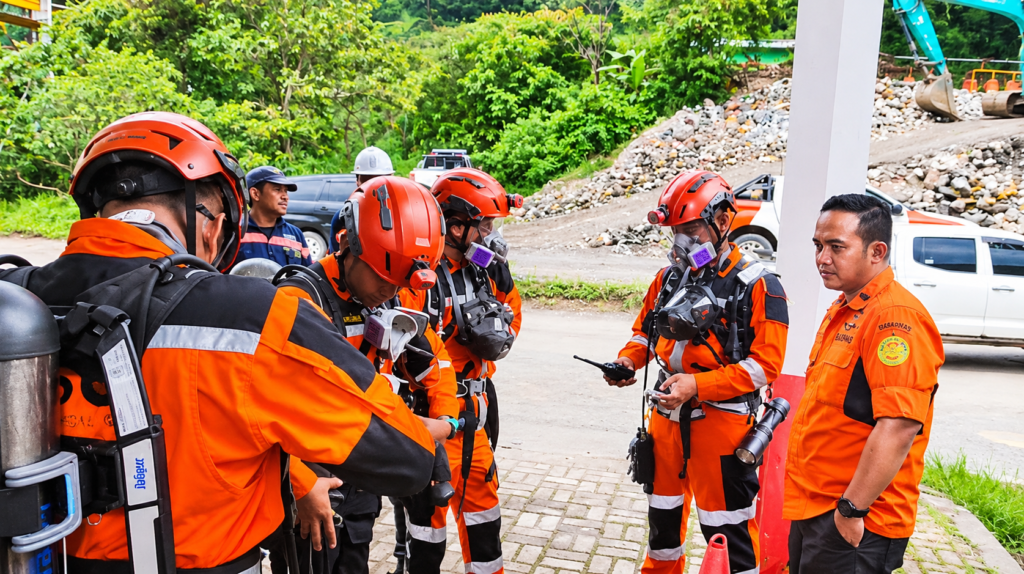
Rescue teams in Indonesia are searching for 29 miners believed to be trapped underground after heavy rainfall caused flooding at an unauthorised gold mine in West Java.
The incident occurred in the Bogor regency, south of the Indonesian capital, Jakarta. The miners were reportedly working underground when heavy rain caused the Ciseureuh River to overflow into the mining shaft.
The flooding left the workers trapped in an underground area estimated to be approximately 100 metres deep.
According to The New Indian Express report on the Indonesian mining disaster, authorities had not confirmed whether any of the missing miners had escaped or established their condition at the time of publication.
Rescue teams deployed submersible water pumps to remove water from the mine and attempted to block openings through which groundwater was entering the shaft.
However, the operation faced significant challenges.
The depth of the mining shaft, narrow access routes, poor lighting and continuing water infiltration made it difficult for rescuers to reach the trapped workers.
Desiana Kartika Bahari, head of the Jakarta Search and Rescue Agency, said the water had not receded and that removing it could take considerable time.
The Dangers of Unregulated Mining
The incident has once again exposed the dangers associated with informal and unauthorised mining operations.
In resource-rich countries, illegal mining often provides livelihoods for people who have limited access to formal employment. However, workers frequently operate without adequate safety equipment, engineering supervision, emergency exits or effective disaster-prevention systems.
Flooding, tunnel collapses and landslides are among the major hazards confronting miners.
Gold processing can also expose workers and surrounding communities to dangerous chemicals, including mercury and cyanide, particularly where environmental and occupational safety standards are not properly enforced.
Indonesia’s mining sector has experienced repeated accidents involving informal operations, highlighting the difficulty of regulating mining activities in remote areas.
Lessons for African Mining Communities
The incident has relevance for several African countries where informal and illegal mining activities remain widespread.
Nigeria, Ghana, South Africa and other resource-producing countries face continuing challenges involving unsafe mining practices, environmental degradation and the protection of workers.
The central issue is not simply the existence of illegal mining. It is also the economic and regulatory environment that allows dangerous operations to continue.
When workers enter deep underground shafts without adequate protection, a single incident involving heavy rainfall or structural failure can become a major disaster.
The Indonesian rescue operation therefore raises a wider question about how governments can protect mining communities while addressing the economic conditions that push people into hazardous informal work.
STORY 5: US Jury Convicts Huawei in Trade Secrets, Fraud and Sanctions Case
Chinese telecommunications giant Huawei Technologies and three of its subsidiaries have been convicted by a federal jury in the United States following a lengthy criminal trial involving allegations of trade-secret theft, fraud, money laundering and violations of American sanctions.
The verdict was returned on Tuesday, November 24, in the Eastern District of New York after a three-month trial.
According to the United States Department of Justice’s announcement of the Huawei verdict, the jury found Huawei and its subsidiaries guilty of multiple offences connected to alleged efforts to obtain confidential technology from American companies, conduct business involving sanctioned countries and mislead financial institutions and government officials.
The convictions involved conspiracy to steal trade secrets, wire fraud, bank fraud, conspiracy to defraud the United States, violations of the International Emergency Economic Powers Act and money-laundering-related offences.
An Associated Press report published by The Washington Post stated that Huawei was convicted on 10 of the 12 counts it faced.
However, the jury acquitted the company of the most serious racketeering conspiracy charge, as well as a separate conspiracy to obstruct justice charge.
No individual executives or employees faced trial in this case.
What the Case Was About
US prosecutors accused Huawei of engaging in a long-running pattern of conduct involving the alleged theft of proprietary technology and attempts to conceal business activities involving countries subject to American sanctions, including Iran and North Korea.
The case included allegations involving confidential information belonging to several technology companies, including Cisco Systems, Motorola Solutions, T-Mobile, Quintel USA and Fujitsu.
Prosecutors argued that Huawei’s conduct involved more than isolated disputes over intellectual property, describing it as a broader pattern of criminal activity.
Huawei rejected the government’s characterisation of the case.
The company’s lawyers argued that prosecutors had taken isolated incidents involving some employees and used them to construct a misleading picture of the organisation. Huawei also maintained that it had respected intellectual property rights and complied with applicable laws.
Following the verdict, the company’s legal team indicated that it intended to appeal the convictions.
The Department of Justice said the case involved conduct extending over several decades and described the verdict as an important step in holding the company accountable under US law.
Potential Financial and Global Implications
The conviction could expose Huawei to substantial financial penalties when sentencing takes place.
The case also comes against the background of a prolonged technology and trade dispute between the United States and China, particularly over telecommunications infrastructure, cybersecurity, semiconductor technology and the global supply of advanced digital equipment.
Despite restrictions imposed by the United States and some of its allies, Huawei continues to conduct business in other international markets and remains a significant participant in the global telecommunications industry.
The company has also expanded its activities in areas such as smartphone production, chipmaking and artificial intelligence-related technology.
Why This Matters to Africa and Nigeria
Huawei has maintained a significant presence in telecommunications and digital infrastructure markets across Africa.
Its equipment and services have been used in the development and expansion of mobile networks, broadband infrastructure and other digital systems.
Consequently, developments involving the company can attract attention from African telecommunications operators, regulators, governments and technology investors.
The verdict also raises broader questions about the relationship between technology partnerships, national security, intellectual property protection and international trade.
For Nigeria and other African countries seeking to expand their digital infrastructure, the issue is not simply whether to work with one technology supplier or another. It is also how to establish strong procurement standards, protect sensitive data, maintain regulatory independence and avoid excessive dependence on any single foreign technology provider.
The case does not, by itself, establish that Huawei’s operations in African countries are affected by the verdict. Its wider implications will depend on the legal process, any eventual penalties and how governments and business partners respond.

CONCLUSION: GLOBAL DEVELOPMENTS, SHARED CONSEQUENCES
The five developments examined in this edition reveal how events unfolding in different parts of the world can carry consequences beyond their immediate locations.
The drone attack in Libya demonstrates the potential for international conflicts to spread into politically divided territories. The Colombia hostage crisis highlights the importance of effective public security and emergency response. The United Nations femicide report exposes a continuing global human rights challenge, with Africa recording the highest regional rate of intimate partner and family-related killings.
In Indonesia, the search for trapped miners highlights the human cost of unsafe and unregulated economic activities. Meanwhile, the Huawei verdict illustrates how international technology competition is increasingly shaped by questions of national security, intellectual property, sanctions and corporate accountability.
For Africa, these are not distant stories without relevance. They connect directly to issues of security, governance, economic development, public safety, human rights and technological independence.
Understanding global developments is therefore essential to understanding the forces that influence Africa’s present and future.
DSG HERALD NEWS — Clear reporting. Deeper understanding. A closer examination of the forces shaping our world.
About the Author