Nigeria’s public institutions faced several important tests during the 24-hour reporting period ending at 10:07 a.m. on Thursday, 26 November 2026. From the investigation into the deaths of 37 artisanal miners in the custody of the Nigeria Security and Civil Defence Corps to renewed violence in Niger State’s Borgu Local Government Area, the developments raised questions about public safety, institutional responsibility and the protection of citizens.
At the same time, the Independent National Electoral Commission announced that Nigeria’s verified voter register had exceeded 100 million, placing electoral administration and preparations for the 2027 general elections under renewed attention. A major drug enforcement operation in Enugu, reported demand for armoured vehicles ahead of the elections, a significant development in the Atlantic Energy petroleum case and continuing demands by retired Nigerian Airspace Management Agency workers added further dimensions to the day’s public-interest issues.
These developments are distinct. They do not establish a single cause or point to one common institutional failure. However, they offer an opportunity to examine an important question in Nigeria public accountability: how should citizens assess the performance of institutions entrusted with public authority?
Announcements, investigations, official statistics and financial commitments are important parts of public administration. But their significance ultimately depends on the evidence behind them, the actions that follow and the outcomes that can be demonstrated.
This review examines eight important developments, distinguishing confirmed events from official claims, disputed figures and issues that remain unresolved.
STORY 1. Niger State Miners’ Deaths: Commission Report Raises Questions About Accountability
The submission of a judicial commission’s report to the Niger State Government has marked an important development in the investigation into the deaths of 37 artisanal miners while in the custody of the Nigeria Security and Civil Defence Corps.
The miners died in Minna on 17 September 2026, following their reported arrest during operations against suspected illegal mining. Governor Mohammed Umaru Bago confirmed the deaths on 18 September and announced the suspension of the state NSCDC commandant and other officers pending investigation.
The Federal Government subsequently announced an independent investigation into the reported deaths, while the National Human Rights Commission also called for an investigation and raised concerns about the protection of people in custody.
The incident raised serious questions about the circumstances surrounding the deaths and the responsibilities of security personnel towards people held in their custody.
On Wednesday, 25 November, the Niger State judicial commission established to examine the incident submitted its report to Governor Bago. The commission was chaired by Justice Mohammed Mohammed, and its findings were presented in three volumes.
According to reporting by the News Agency of Nigeria, carried by the Gazette, the commission received nine memoranda, held public hearings and inspected two mining sites, two NSCDC offices and the General Hospital in Minna.
These activities indicate the scope of the commission’s inquiry as described during the submission. However, the detailed findings have not been made public in the material available for this review. It is therefore not possible to establish from the supplied information what the commission concluded about the precise circumstances of the deaths or whether it identified particular individuals as responsible.
The distinction is important. The submission of an investigation report represents a procedural milestone, but it does not automatically establish that accountability has been achieved.
There are also two separate investigative processes that must not be confused. The Federal Government established an independent committee through the Ministry of Interior, while the Niger State Government established its own judicial commission. The existence of the state report does not, by itself, establish the outcome of the federal investigation.
Governor Bago said his administration would pursue the recommendations contained in the state commission’s report and forward a copy to the Presidency. That commitment indicates an intention to act on the findings, but the material available does not provide a detailed implementation timetable or establish which recommendations will be adopted.
For the families of the deceased miners, the central questions remain practical and consequential. What caused the deaths? What happened while the miners were in custody? Were the required procedures followed? What did the investigations establish about the conduct of the officers involved? And what remedies, if any, will be available to the affected families?
These questions concern more than the completion of an inquiry. Security agencies exercising authority over detained persons also carry responsibilities for their safety and welfare. The circumstances of deaths in custody therefore demand a clear account of what happened and an appropriate response based on the evidence.
The next important developments will be the publication or official communication of the commission’s findings, clarification of the federal committee’s work and the government’s response to the recommendations.
For Nigeria public accountability, the central test is not simply whether a report has been submitted. It is whether the findings are transparently addressed and whether appropriate action follows.

STORY 2. Oke-Kura Custodial Centre: Three Inmate Deaths Raise Questions About Detention Safety
The deaths of three inmates following an escape attempt at the Oke-Kura Custodial Centre in Ilorin, Kwara State, have raised further questions about safety and the responsibilities of correctional authorities towards people in detention.
The incident began on 18 November, when seven inmates reportedly attempted to escape from the facility. Two escaped, while five were intercepted by correctional personnel.
The Controller-General of the Nigerian Correctional Service, Sylvester Nwakuche, confirmed that three of the five intercepted inmates subsequently died. The circumstances surrounding those deaths remain subject to investigation.
According to TheCable’s report on the incident, Nwakuche said an investigation had been established, while the Minister of Interior, Olubunmi Tunji-Ojo, directed that the incident be thoroughly examined.
The minister’s directive and the correctional service’s investigation are important steps in establishing what happened. However, they should not be mistaken for completed findings. The available material does not establish the medical cause of death or determine whether any individual officer was responsible.
The Controller-General also described the custodial facility as a colonial-era institution facing overcrowding. Reports cited an inmate population of approximately 685, including more than 70 condemned prisoners.
Those figures provide context about the facility’s reported conditions, although the available information does not independently establish the precise effect of overcrowding on the escape attempt or the subsequent deaths.
There have also been allegations of possible officer misconduct published by The Guardian, based on anonymous sources. Those allegations remain unproven and should not be presented as established findings.
A credible investigation will need to establish the sequence of events, the circumstances in which the inmates were intercepted, the medical causes of the deaths and whether the actions of correctional personnel complied with their responsibilities.
Relevant evidence would include medical findings, incident records, available CCTV footage and witness accounts. The results of the investigation would help clarify whether the deaths resulted from the circumstances of the escape attempt, a medical emergency, the conduct of officers or another cause.
The public-interest issue extends beyond the immediate incident. A custodial institution has a responsibility to maintain security, but that responsibility also includes protecting the lives of people held within its facilities.
An attempted escape does not remove an inmate’s entitlement to lawful treatment or establish that any subsequent use of force was justified. Equally, allegations against officers must be assessed through evidence rather than assumption.
The next important development is the outcome of the official investigation and the release of sufficiently clear findings to explain how the three inmates died.
The Oke-Kura incident is separate from the deaths of miners in NSCDC custody in Niger State. However, both developments raise questions about the responsibilities of institutions that exercise control over people who cannot freely leave their custody.
For Nigeria public accountability, the standard must include not only the security of detention facilities but also the protection of those detained.

3. Borgu Violence: Conflicting Death Figures Put Casualty Reporting Under Scrutiny
Violence in Borgu Local Government Area of Niger State has raised serious questions about community security, the reconciliation of casualty figures and the response to families affected by the attacks.
The initial attack occurred on 21 November in Lumma Ba’are. Among those reportedly killed was the village head, Mallam Bawa Muhammed.
The Nigeria Police Force subsequently provided a more detailed account of the casualties. According to the police, six people died in the initial attack, while a suspected reprisal attack in Wawa resulted in 30 deaths.
However, earlier media reports had put the reprisal death toll at 64. The difference between the two figures remains an important unresolved issue.
In its report, Reuters documented the 64-death figure attributed to Fulani representatives and residents, while also noting that the figure had not been independently verified.
The police subsequently gave a different account. In a statement reported by Punch, the police confirmed 30 deaths in the reprisal attack, rejecting the higher figure reported earlier.
The police account is an official statement, but the material available for this review does not establish an independently verified casualty register capable of resolving the discrepancy. The two figures must therefore remain clearly attributed to their respective sources.
This distinction matters. Casualty figures help establish the scale of a security incident and inform public understanding of its consequences. Where different accounts provide significantly different totals, authorities and other relevant sources need to clarify the position through reliable records.
The police response also included an operational assessment visit led by Deputy Inspector-General of Police Shehu Umar Nadada. Additional tactical personnel were deployed following the violence.
These actions indicate a security response, but the available information does not establish whether the deployment has prevented further attacks or how long the additional personnel will remain in the affected area.
Governor Mohammed Umaru Bago also announced financial assistance for affected families. According to the governor, each of 74 affected families would receive ₦2 million, bringing the announced total to ₦148 million.
That commitment is significant in the context of assistance to affected households. However, an announcement is not the same as a completed payment. The actual disbursement of the ₦148 million has not been verified in the material available for this review.
The distinction between an announced commitment and money received by beneficiaries is important in assessing the practical response to the violence. Affected families need to know whether the assistance will reach them, when it will be paid and what process will be used to establish eligibility.
There are also wider security responsibilities. Authorities must investigate the attacks, establish individual responsibility through evidence and take measures to protect communities from further violence.
Reprisal attacks and collective blame can deepen insecurity. Responsibility should be established against individuals on the basis of evidence, rather than attributed broadly to communities or groups.
The questions now include whether the casualty figures can be reconciled, whether the police deployment will improve security and whether the financial assistance announced by the governor will reach all eligible families.
The Borgu violence demonstrates why accurate information is part of public accountability. Families and affected communities need a reliable account of what happened, alongside practical protection and support.
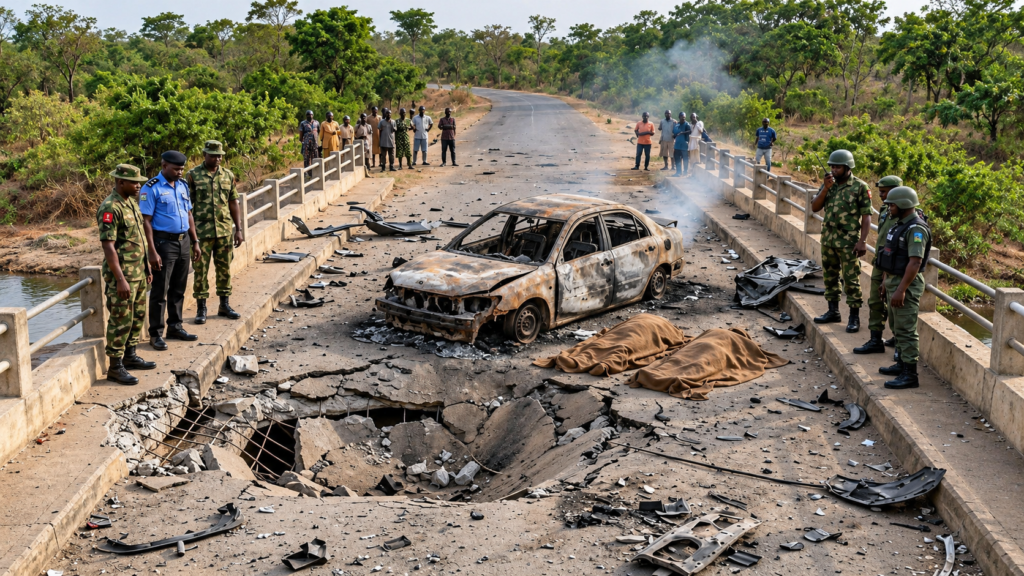
STORY 4. Enugu Methamphetamine Laboratory: NDLEA Reports Major Drug Seizure
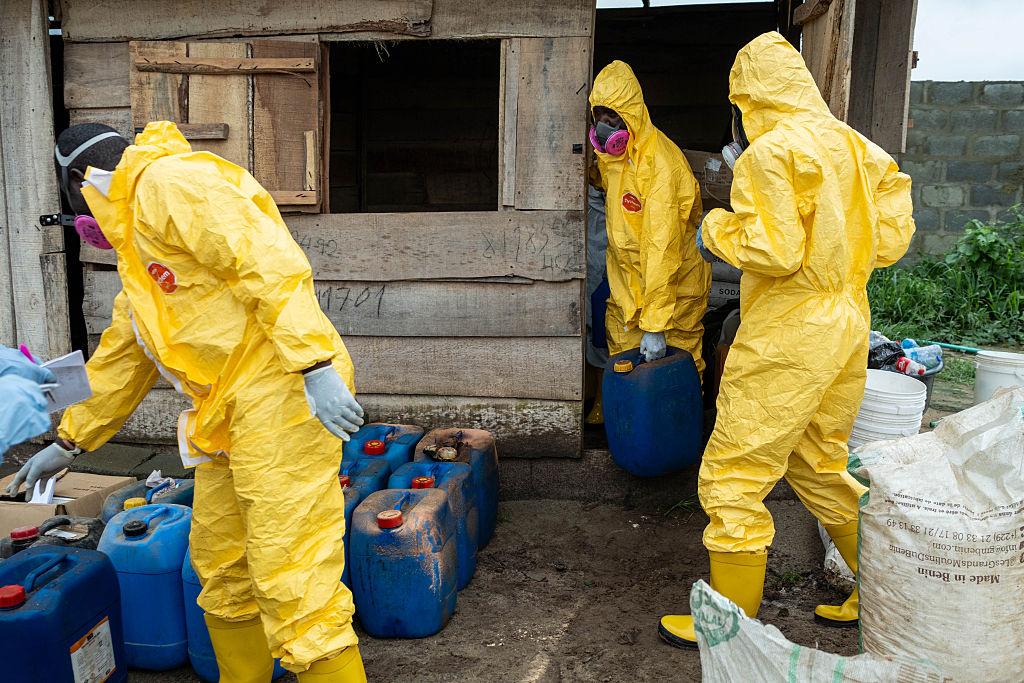
The National Drug Law Enforcement Agency has announced the dismantling of what it described as an industrial-scale methamphetamine laboratory in Emene, Enugu State.
The operation was reportedly conducted on 11 November, although the agency announced the discovery on 25 November.
According to the NDLEA’s official announcement, operatives recovered 1,512 kilogrammes of methamphetamine and 6.68 tonnes of precursor and essential chemicals. The agency estimated the value of the seizure at ₦303.913 billion, equivalent to approximately US$226.8 million.
The agency also announced the arrest of a Nigerian businessman, Chuks Enoch Ezeike, and five Mexican nationals.
The NDLEA alleged that the operation involved an international criminal network. That allegation remains subject to investigation, and the arrests do not establish the guilt of the suspects.
The quantities and financial valuation reported by the agency are significant figures within the operation. However, they remain the NDLEA’s reported figures and should not be presented as independently audited valuations.
The discovery also raises questions about the operation of the facility, the sourcing of the chemicals used in production, the organisation of the alleged activity and the possible distribution networks involved.
These are investigative questions rather than established conclusions. The supplied information does not establish who financed the operation, where the chemicals originated or where the finished methamphetamine was intended to be distributed.
The agency’s work must therefore extend beyond the physical seizure. Investigators will need to establish the evidence supporting the alleged network, examine any relevant financial and distribution connections and determine which charges are supported by the available evidence.
The legal process will also be important. Those arrested remain suspects unless and until guilt is established through the appropriate judicial process.
For public safety, the significance of the operation lies not only in the reported quantity of drugs recovered but also in whether the investigation can establish how the facility operated and identify any wider network supported by the evidence.
A large seizure can disrupt an illegal operation. Establishing the people, relationships and financial arrangements behind it requires further investigative work.
The next developments to watch are the formal charges, the forensic evidence and any verified findings concerning the alleged network.
The Enugu operation is therefore an important enforcement development, but its full significance will depend on what the investigation and subsequent legal process establish.
STORY 5. INEC Voter Register: Nigeria’s Verified Register Exceeds 100 Million
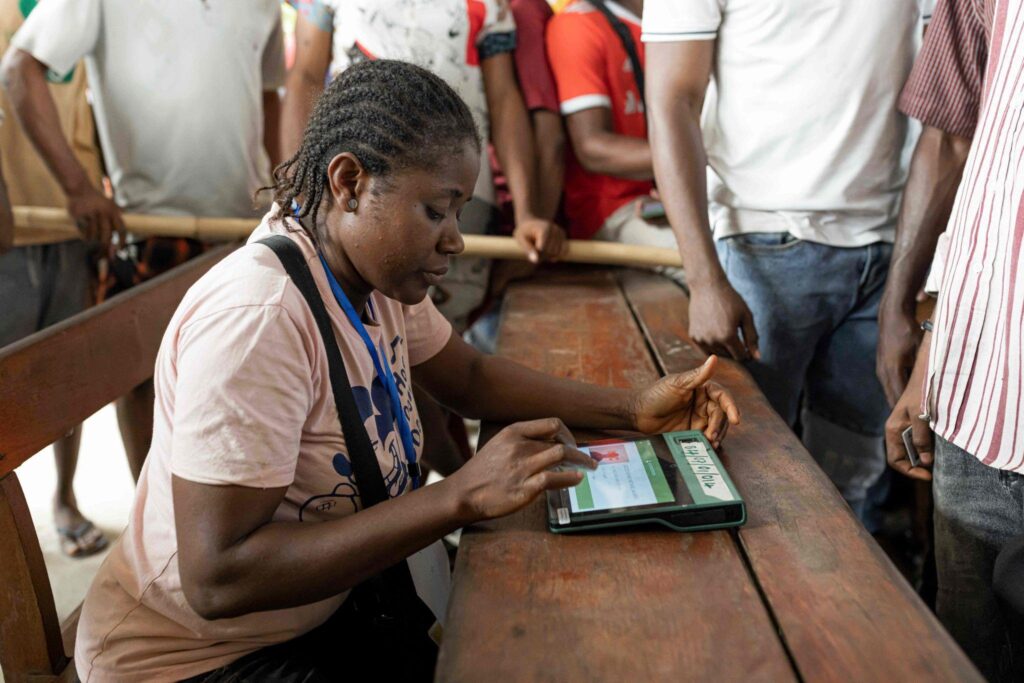
The Independent National Electoral Commission has announced that Nigeria’s verified voter register now exceeds 100 million, a development that places electoral administration and preparations for the 2027 general elections under renewed attention.
INEC Chairman, Professor Joash Amupitan, announced the figure during a meeting with Resident Electoral Commissioners in Abuja.
According to the commission, more than 1.6 million records classified as invalid, duplicate or belonging to deceased persons had been removed. INEC said the earlier register stood at approximately 103 million.
The commission also reported receiving about 311,000 complaints through its claims-and-objections process. Of these, approximately 232,000 were said to be genuine and addressed.
In addition, INEC said more than 10.77 million new registrants were retained following three phases of Continuous Voter Registration conducted since 2025.
These figures provide an account of the commission’s reported registration and verification work. They are, however, figures announced by INEC; independent verification of the overall accuracy of the register has not been established in the material available for this review.
The announcement was reported by Channels Television, which also detailed the commission’s voter-register update.
The size of the voter register is important, but the number of registered voters is only one measure of electoral administration. A credible register must include eligible voters while preventing invalid or duplicate records from undermining the process.
The correction of errors also matters. Citizens need accessible procedures for checking their registration details and raising objections where records are incorrect. The commission’s reported handling of complaints is therefore relevant to understanding the verification process, although the supplied figures do not independently establish the outcome of every individual complaint.
INEC also announced plans for a mock accreditation and electronic result-upload exercise scheduled for 28 November. The exercise was expected to cover 17,676 polling units and use 57,000 newly procured Bimodal Voter Accreditation System devices, commonly known as BVAS.
The scheduled exercise had not yet taken place within the reporting period ending on 26 November. Its outcome must therefore not be anticipated or described as completed.
The planned test is important because electoral preparedness involves more than compiling a large register. The commission must demonstrate that eligible voters can be accurately identified and that the technology supporting accreditation and result transmission works reliably under operating conditions.
For voters, the practical consequences are clear. An eligible person should not be wrongly excluded from the register, while the systems used during elections should function in a way that supports an orderly and credible process.
The next development to watch is the outcome of the scheduled mock exercise and any subsequent information INEC provides about its operational performance.
The announcement that the INEC voter register exceeds 100 million is an important administrative milestone. But the credibility of the register will ultimately depend on its accuracy, the accessibility of correction procedures and the reliability of the systems used when Nigerians go to vote.
STORY 6. 2027 Elections: Armoured Vehicle Demand Raises Security Questions
A report published by Punch on 26 November has drawn attention to increased demand for armoured vehicles in Nigeria as the country approaches the 2027 general elections.
The investigation reported that some dealers and manufacturers had received more enquiries or orders, while others said they had not experienced any significant increase in sales.
The reported prices ranged from US$50,000 to US$1.5 million, depending on the specifications of the vehicles.
The report, titled “2027: Bulletproof vehicles in demand amid campaign attacks,” placed these market observations alongside wider concerns about political violence. Global Rights’ October 2026 election-violence monitoring recorded 12 incidents, including three deaths.
The figures and dealer accounts provide context for discussing security concerns ahead of the elections. However, the available evidence does not establish a national sales trend or show that all purchases of armoured vehicles are connected to the 2027 electoral process.
There is also no national sales dataset or verified profile of the buyers in the report. It would therefore be inaccurate to treat the reported enquiries and orders as proof that politicians, candidates or other particular groups are driving a nationwide increase.
The public-interest issue is broader than the commercial market for protected vehicles. It concerns whether Nigerians can participate in political activities safely.
Candidates, campaign workers, political supporters and ordinary voters should be able to take part in democratic activities without having to depend on expensive private protection.
The responsibility for public security remains with the relevant authorities. The reported market activity may indicate concern among some buyers, but it does not, by itself, establish that public security has collapsed or that the entire country faces the same level of risk.
The reported election-violence incidents provide a separate measure of documented concern, but the available information does not establish a direct connection between those incidents and the individual vehicle purchases.
As political activities develop ahead of the elections, the important question is whether security arrangements will adequately protect political participants and the public.
The armoured-vehicle report should therefore be understood as an indicator of reported market activity and concern, rather than definitive evidence of a national security trend.

STORY 7. Atlantic Energy Case: Court of Appeal Conviction Raises Petroleum Accountability Questions
A reported decision by the Court of Appeal in Abuja has marked a significant development in the long-running Atlantic Energy petroleum case involving oil businessman Olajide Jones Omokore and two former petroleum officials.
The Court of Appeal reportedly allowed the Economic and Financial Crimes Commission’s appeal in part, overturning significant aspects of a 2023 Federal High Court decision.
According to reporting based on the EFCC’s announcement, Omokore, former Managing Director of the Nigerian Petroleum Development Company Victor Briggs and former NNPC Group Executive Director for Exploration and Production Abiye Membere were convicted on nine counts of a 15-count charge.
They were reportedly sentenced to seven years’ imprisonment each, with the sentences running concurrently. The court also reportedly ordered the winding up of Atlantic Energy Brass Development Limited and Atlantic Energy Drilling Concept Limited.
The development was reported by THISDAY, which outlined the convictions, sentences and the counts on which the defendants were convicted.
However, the certified Court of Appeal judgment was not available in the research material for this review. The precise reasoning, complete terms of the orders and current appeal position therefore require confirmation from the court record. The reported outcome should be understood with that qualification.
The case arose from a Strategic Alliance Agreement between the Nigerian Petroleum Development Company and Atlantic Energy involving four oil mining licences: OMLs 60, 61, 62 and 63.
The EFCC prosecution alleged that more than 7.5 million barrels of crude oil, valued at US$823.08 million, were lifted without payment of a mandatory entry fee of US$123.19 million or fulfilment of other contractual obligations.
The wider case has also been described as a US$1.6 billion oil case. These figures refer to different things and should not be treated as interchangeable. The US$823.08 million figure represents the prosecution’s valuation of the crude oil in question, while US$1.6 billion describes the broader case.
The legal history is also important in understanding the reported appellate development.
In February 2023, the Federal High Court acquitted the defendants on most counts. It convicted Briggs and Membere on lesser offences and fined each of them ₦2 million. The EFCC appealed in March 2023.
The reported Court of Appeal decision therefore represented a significant change from the earlier position. But without the certified judgment, the full legal implications cannot be responsibly explained beyond the reported outcome.
The case raises important questions about the management of petroleum resources and the responsibilities of public officials and private contractors involved in transactions relating to national assets.
Strategic agreements involving public resources require clear contractual obligations, effective oversight and transparent records. Where disputes arise over whether those obligations were fulfilled, the legal process must establish the relevant facts and determine responsibility.
The next questions include what the certified judgment establishes, whether any further appeals will follow and whether public funds or assets have been recovered.
The case is significant to Nigeria public accountability because the management of petroleum resources involves both public institutional responsibility and the financial interests attached to national assets.
The reported appellate development is an important legal milestone, but the certified judgment remains essential to establishing the precise legal position.

STORY 8. NAMA Pensioners: Outstanding Entitlements and the Difference Between Provision and Payment
Retired workers of the Nigerian Airspace Management Agency have continued to demand outstanding pension entitlements they say have remained unresolved for years, bringing the agency’s obligations to former employees into focus.
The dispute concerns pension adjustments and outstanding entitlements reportedly spanning approximately two decades. The retirees were threatening protests over the unresolved payments.
According to Punch’s report on the pension dispute, the retirees’ union announced a two-day protest for 25 and 26 November over alleged unpaid pension increases and arrears.
NAMA’s Managing Director, Umar Farouq, said approximately ₦6 billion had been provided to address the matter. He also cited monthly payments of between ₦400 million and ₦500 million, with payments planned or being made in batches.
However, the retirees disputed whether their outstanding entitlements had actually been resolved.
The difference between management’s reported provision and the retirees’ position is central to understanding the dispute. Money said to have been provided by an agency is not necessarily the same as money already paid into the accounts of eligible pensioners.
A financial provision may indicate that funds have been allocated or made available for a purpose. But it does not, by itself, establish the number of beneficiaries paid, the amount each person received or whether the total outstanding liability has been settled.
The material available also identifies disagreement between management and the retirees’ representatives over the representation of the pensioners and management’s awareness of the union’s position.
That disagreement adds another dimension to the issue because clear communication between an agency and the people making claims against it is important in resolving disputes over entitlements.
The central question is whether NAMA can provide a transparent account of what is owed, what has been approved, what has actually been disbursed and what remains outstanding.
Several records would help establish the position. These include an accurate pensioner register, the approved entitlement schedule, the total outstanding liability and payment records showing how much has reached eligible beneficiaries.
Without those records, it is not possible to determine from the supplied information whether the reported ₦6 billion provision has covered the outstanding obligations or how much remains unpaid.
For retired workers, pension entitlements are more than administrative figures. They form part of the financial security people depend on after completing their working lives. That makes clarity over approved amounts and actual payments a matter of practical importance.
The agency’s reported provision and monthly payment figures are relevant, but the retirees’ dispute shows why the public needs evidence of implementation rather than announcements alone.
The next important development is a clear reconciliation of the agency’s liabilities, approved entitlements and actual disbursements.
Until that information is available, the ₦6 billion cited by management should not be mistaken for proof that the entire pension obligation has been settled.

Conclusion: Public Accountability Must Be Measured by Evidence and Outcomes
The eight developments reviewed during this reporting period cover different aspects of Nigerian public life, from detention safety and community security to drug enforcement, electoral administration, petroleum resources and pension obligations.
They do not establish one common cause or a single institutional problem. But they show why the performance of public institutions must be assessed through evidence and measurable outcomes.
In Niger State, the submission of a judicial commission report has moved the investigation into the deaths of 37 miners forward, but its detailed findings and the actions that follow remain important. At Oke-Kura, the deaths of three inmates require a credible explanation. In Borgu, conflicting casualty figures and unverified assistance payments leave important questions unanswered.
The NDLEA’s reported Enugu seizure and INEC’s voter register announcement are significant institutional developments, but investigations and operational tests must establish what follows from them. The armoured-vehicle report provides an indication of security concerns without proving a nationwide trend. The Atlantic Energy case requires careful attention to the certified court judgment, while NAMA’s pension dispute demands verifiable payment records.
Together, these stories reinforce the importance of Nigeria public accountability. Public institutions must be able to explain their decisions, demonstrate implementation and provide evidence of the outcomes they announce. For citizens, the essential question remains what has actually been established, what has been delivered and what responsibility still needs to be fulfilled.
About the Author