INTRODUCTION
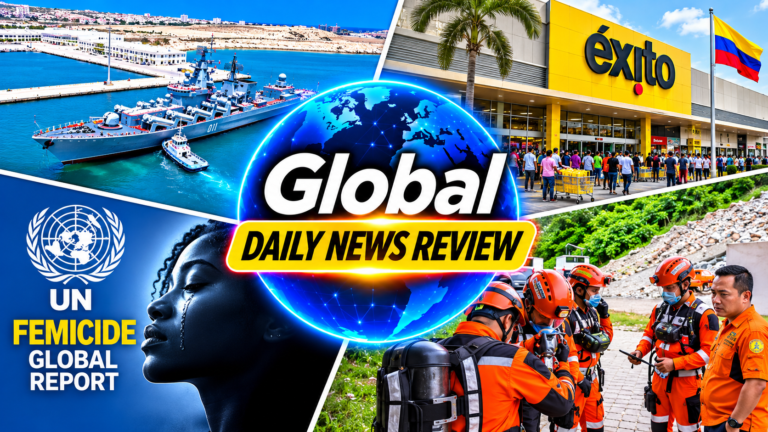
Global systems under pressure are facing renewed challenges across energy security, food exports, international trade, road safety and institutional accountability. Five major developments between 25 and 26 November 2026 reveal who bears the cost and what the evidence tells us. The systems that keep the global economy moving are often most visible when something threatens to disrupt them. A narrow waterway carrying millions of barrels of oil, a network of ports moving agricultural exports, government decisions affecting international trade, roads transporting hazardous materials and institutions making decisions based on security allegations may appear to belong to different worlds. Yet each can have consequences extending far beyond the immediate event.
Between 25 and 26 November 2026, five developments brought these vulnerabilities into focus. Reports of maritime incidents around the Strait of Hormuz renewed attention on a critical energy corridor. In Ukraine, reported attacks on grain-carrying vessels near Odesa raised further concerns about agricultural exports. The United States announced new Section 301 trade determinations involving 14 economies, including proposed tariff measures. In Egypt, a fuel tanker disaster left 31 people dead and 21 injured. Meanwhile, a United Nations tribunal overturned the dismissal of an UNRWA employee after finding that the evidence had not established a sufficient basis for the employment decision.
These events are not part of one connected crisis, and there is no evidence that one caused another. Their significance lies in the different systems they expose to pressure.
This report examines what the available evidence establishes, what remains disputed and how the consequences could extend to governments, businesses and ordinary people. It also asks a central question: when critical systems come under pressure, how strong are the safeguards designed to protect them, and who ultimately bears the cost when those safeguards are tested?
STORY 1: STRAIT OF HORMUZ ENERGY SECURITY — WHY ONE WATERWAY MATTERS TO THE WORLD
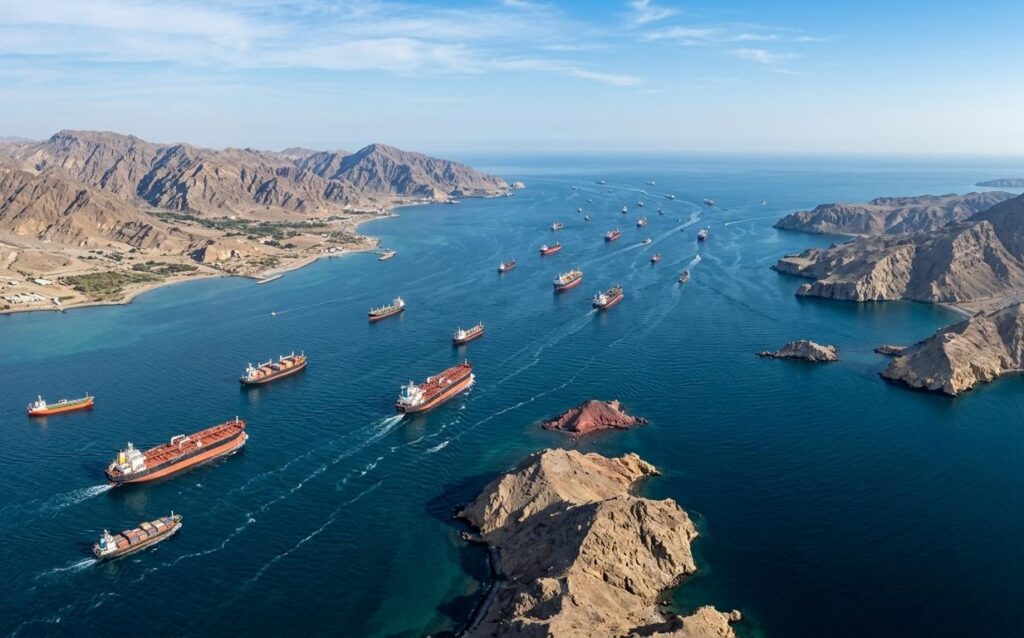
The Strait of Hormuz remains one of the most strategically important waterways in the international energy system. Its significance is not simply geographical. It is measured by the volume of petroleum and liquefied natural gas that passes through it to international markets.
According to the United States Energy Information Administration (EIA), an average of approximately 20.9 million barrels of oil per day moved through the Strait during the first half of 2025.
That represented roughly one-fifth of global petroleum liquids consumption and about one-quarter of the world’s maritime oil trade. More than 20 per cent of global liquefied natural gas trade also passed through the route, according to the EIA’s analysis of global oil transit chokepoints.
The waterway connects the Persian Gulf to the Gulf of Oman and the wider Indian Ocean. Major energy exporters in the Gulf depend on it to transport supplies to international markets.
This concentration of energy movement helps explain why maritime security around Hormuz attracts international attention. A prolonged interruption could affect shipping, insurance, energy prices and the economic decisions of countries that depend on imported energy.
The limits of alternative routes
Saudi Arabia and the United Arab Emirates have pipeline infrastructure that can bypass part of the Strait. However, the EIA estimates that their combined bypass capacity is approximately 4.7 million barrels per day.
That is substantially below the 20.9 million barrels per day that moved through Hormuz during the first half of 2025.
Alternative infrastructure therefore offers some flexibility, but the available capacity does not match the volume normally transported through the waterway. This is one of the reasons why a serious disruption would be difficult to replace quickly through those routes alone.
Two maritime accounts, not one confirmed incident
Reports of maritime incidents during the reporting period brought renewed attention to the security of the wider Gulf region. However, two separate accounts must be distinguished.
First, Iran’s Islamic Revolutionary Guard Corps (IRGC) claimed that two oil tankers exploded or caught fire after hitting sea mines north of Khasab, Oman. The claim was reported by Reuters.
The available information did not independently establish the identities of the vessels, their operators or flags. It also did not provide independently authenticated inspection evidence confirming that sea mines caused the reported incidents.
The mine explanation must therefore remain an attributed claim rather than an established finding.
A separate incident was recorded in United Kingdom Maritime Trade Operations Warning 222-26. The warning followed a report from a tanker master of an explosion involving an unknown projectile near a tanker approximately 50 nautical miles west of Dubai.
The incident was reported at 21:30 UTC on 25 November. According to the original UKMTO Warning 222-26, the crew were safe, and no damage to the tanker or environmental impact was reported.
The warning did not identify the projectile or establish who was responsible. It also did not connect the incident west of Dubai to the separate IRGC claim concerning vessels near Khasab.
The distinction matters. Two reports from different locations, with different evidence and different levels of confirmation, should not be merged into a single account.
A strategic risk is not proof of a supply crisis
The importance of the Strait is established by the volume of energy moving through it. However, the available evidence does not establish that Hormuz was closed during the reporting period.
Nor does it establish that the two reported incidents, by themselves, caused a global energy supply shock or a measurable increase in international energy prices.
A risk of disruption is not the same as a confirmed disruption.
The EIA’s figures also show that exposure is unevenly distributed. Approximately 89 per cent of crude oil and condensate moving through Hormuz went to Asian markets. China, India, Japan and South Korea accounted for 74 per cent of those flows.
For African countries, the implications would vary according to their energy-import dependence and domestic supply arrangements.
Countries that depend heavily on imported refined petroleum products could face pressure through international prices, shipping costs, insurance and exchange-rate movements. Countries with domestic oil production may have a different exposure, but producing crude oil does not automatically protect an economy from changes in international markets or the cost of imported refined products.
For Nigeria, this distinction is important. Being an oil-producing country does not make international energy-market developments irrelevant to domestic fuel supply and prices.
However, the available evidence does not establish that the incidents reported during this period had already increased fuel prices in Nigeria or elsewhere in Africa.
Important questions remain. Which vessels were involved in the alleged incidents near Khasab? What do their operators say? Is there independently verified evidence identifying the cause? What was the unknown projectile reported west of Dubai, and can further evidence establish its origin?
Shipping, insurance and freight records will also be important in determining whether the incidents changed commercial activity.
For now, the evidence supports two conclusions: Hormuz is a critical global energy route, and maritime security incidents were reported in the wider region. It does not establish that the Strait was closed or that a global energy crisis had begun.
STORY 2: UKRAINE’S GRAIN EXPORTS — HOW INSECURITY CAN DISRUPT FOOD SUPPLIES
Energy is not the only essential commodity dependent on secure international shipping. Food must also move through transport networks, ports and commercial supply chains before it reaches importing countries.
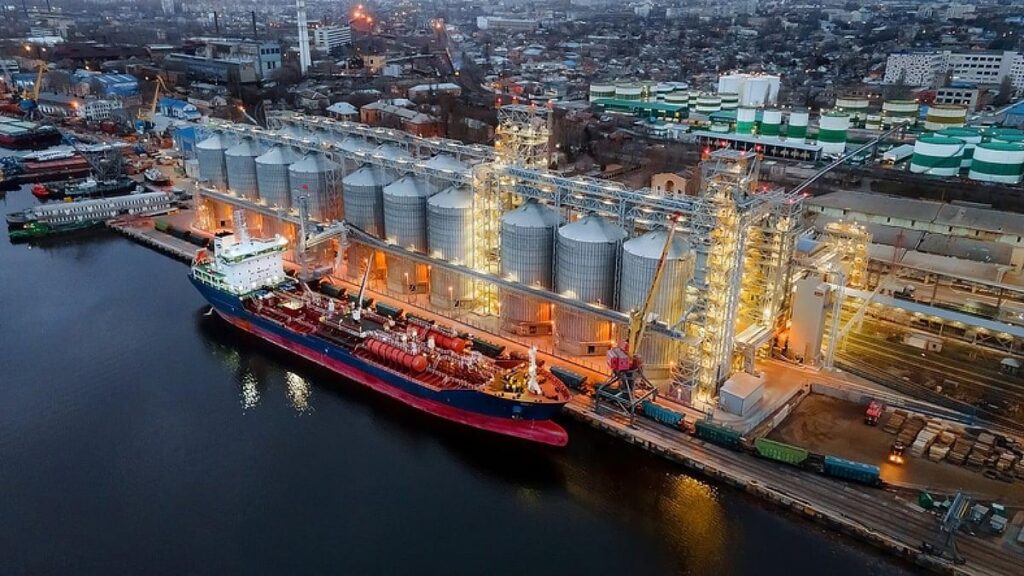
Ukraine’s Black Sea ports around Odesa have historically played a major role in the country’s agricultural exports. The three-port hub previously handled approximately 90 per cent of Ukraine’s agricultural and metallurgical exports.
The vulnerability of this export system came into focus following a report by Ukrainian Prime Minister Sergiy Koretskyi on 26 November.
Koretskyi said Russia had attacked two foreign cargo ships carrying more than 100,000 tonnes of grain near Odesa overnight. The Ukrainian government’s account was reported by Reuters.
The available material did not identify the vessels, establish the ports where the grain had been loaded or independently confirm the extent of any damage. Russia says it does not attack civilian targets.
The reported attack must therefore remain attributed to the Ukrainian government. The available evidence is not sufficient to independently reconstruct the incident.
How a port can remain open while exports slow down
The reported attack is part of a wider concern about the movement of goods through Ukraine’s principal Black Sea ports.
Available reporting indicates that shipments from the principal ports had nearly stopped since late July following increased attacks on grain terminals and merchant vessels.
The ports were not formally closed. However, heightened security risks and insurance concerns discouraged shipowners and traders from using the route.
This distinction is important because a port does not need to be officially closed for its commercial activity to become severely restricted.
If vessel operators consider a route too dangerous, or if insurance becomes too expensive or difficult to obtain, they may decide not to send ships there. Commercial activity can consequently slow even while the port remains technically operational.
The effect can move through several stages:
- Security risks influence shipping decisions.
- Insurance costs and availability affect commercial calculations.
- Shipowners may avoid routes they consider too risky.
- Cargo movement and completed exports can decline.
This helps explain why the status of a port cannot be judged only by whether it has been formally closed.
What the grain export figures show
Figures from APK-Inform indicate that 429 grain wagons were dispatched towards Odesa between 12 and 18 November. That was four times the number recorded during the previous week. The figures were also reported in the Reuters coverage of Ukraine’s grain shipments.
At the same time, Ukraine’s grain exports in the 2026–2027 July-to-June season stood at 7.6 million tonnes, compared with 11.5 million tonnes over the comparable period in the previous season.
The difference indicates pressure on the export environment, but it must be interpreted carefully.
The comparison does not prove that the reported November attack caused the decline. Grain exports depend on production, storage, inland transportation, movement to ports, loading and the actual departure of ships.
A disruption at any stage can affect the final export figure.
Similarly, an increase in the number of grain wagons dispatched towards Odesa does not mean that the same volume of grain has been successfully exported. Rail movement towards a port and completed international shipments are different measures.
What this means for African food markets
The vulnerability of Ukraine’s export system matters to countries that import grain from international markets, including countries in Africa. However, exposure is not the same across the continent.
A country’s dependence on Ukrainian grain will vary according to the type of grain it imports, the location of its suppliers, domestic agricultural production, available food stocks and the cost of foreign exchange.
It would be misleading to suggest that all African countries depend equally on Ukraine’s grain exports.
It would also be premature to claim that the reported November attack has already increased food prices across Africa. The available evidence does not establish such an impact.
The unresolved questions include the identities of the two vessels, their cargo manifests, whether they sustained damage and what their operators, flag states and port authorities can confirm.
More information is also needed about the volume of grain moving through the Black Sea and alternative routes.
The wider lesson is that food security depends on more than the amount of food a country produces. Food must also be stored, transported, insured, loaded and delivered.
When a major export route becomes insecure, pressure can spread through the supply chain. The extent of the consequences, however, must be measured rather than assumed.
STORY 3: US SECTION 301 TARIFFS — COULD GLOBAL TRADE CHANGES CREATE OPPORTUNITIES FOR AFRICA?
International commerce is shaped not only by physical shipping routes but also by government decisions about tariffs, manufacturing and access to markets.
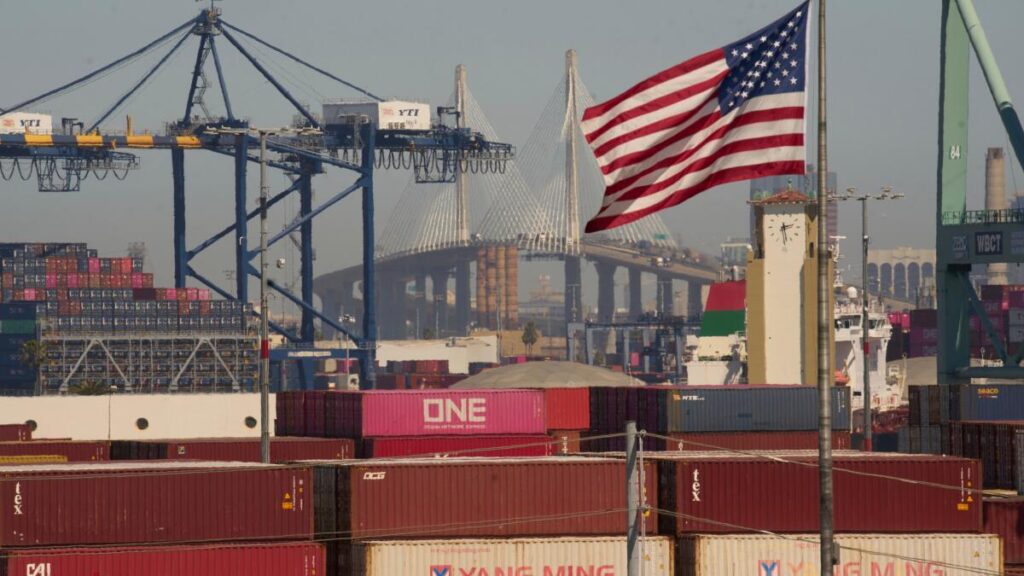
On 25 November 2026, the United States Trade Representative (USTR) announced Section 301 determinations involving 14 economies:
China, the European Union, Singapore, Switzerland, Indonesia, Malaysia, Cambodia, Thailand, South Korea, Vietnam, Taiwan, Bangladesh, Japan and India.
The investigations began on 11 March 2026 and initially covered 16 economies. The USTR indicated that it had not made determinations at that stage concerning Mexico or Norway.
Section 301 is a United States trade law mechanism that allows the government to investigate and respond to certain foreign trade practices it considers harmful to American commerce.
In this case, the USTR says it is concerned about policies relating to structural excess capacity and manufacturing production. That is the US government’s stated position; it should not be presented as an independently adjudicated conclusion accepted by all the affected economies.
The details are contained in the USTR announcement on its 14 Section 301 investigations.
Proposed tariffs are not implemented tariffs
One of the most important distinctions in this development concerns the status of the measures.
The tariff rates being discussed are proposed measures. They should not be described as tariffs that have all already been imposed.
The proposed ceilings vary between economies. The announced proposals include:
- Up to 18 per cent for Bangladesh.
- Up to 25 per cent for India.
- Up to 15 per cent for Japan and South Korea.
- Up to 35 per cent for Vietnam.
The proposals are subject to exemptions and interactions with existing duties.
The process also provides for public participation. Written comments are due by 5 January 2027, while hearings are scheduled to begin on 25 January 2027.
The final outcome therefore remains open to change.
The distinction between proposed and implemented measures matters because governments, companies and investors make decisions based on the trade rules that actually apply. An announcement of possible future tariffs does not, by itself, establish that those tariffs have taken effect.
Africa’s manufacturing position
The developments matter to Africa because changes in trade relationships among major economies can influence where companies manufacture, where they source materials and which markets they consider attractive.
If trade barriers increase between major manufacturing economies and the United States, some companies may consider adjusting their supply chains. That could create opportunities for other regions, including Africa.
But opportunity is not automatic.
The African Development Bank’s Africa Industrialisation Index 2025 reports that the continent accounts for less than 2 per cent of global manufacturing output and approximately 1.4 per cent of global manufacturing exports.
These figures highlight the scale of the continent’s industrial challenge.
Attracting manufacturing investment requires more than a change in trade relationships elsewhere. African economies need reliable electricity, efficient transport, skilled workers, access to finance, industrial infrastructure and predictable market access.
They must also be able to produce goods at competitive costs and meet the standards required by international buyers.
Without these conditions, companies considering alternative manufacturing locations may choose established industrial economies instead.
The risk of trade diversion
There is another side to the potential opportunity.
If major economies impose new barriers on one another, goods that become more difficult to sell in one market may be redirected towards other markets.
That could increase competition for African producers, including local manufacturers already facing infrastructure and financing challenges.
The same international trade changes that might create opportunities for some African industries could therefore put pressure on others.
The available evidence does not establish that manufacturers are already relocating production to Africa because of the proposed US measures. It also does not identify specific African countries or industries that have secured new investment as a result.
Such conclusions would require company-level evidence, investment announcements and product-level trade data.
The next important developments will include the consultation process, the economy-specific reports, the final tariff schedules and responses from affected governments.
For Africa, the central question is whether its economies can compete for investment and market access if global supply chains change. The opportunity may exist, but the industrial capacity required to take advantage of it cannot be assumed.
STORY 4: EGYPT’S TANKER DISASTER — THE QUESTIONS BEHIND 31 DEATHS
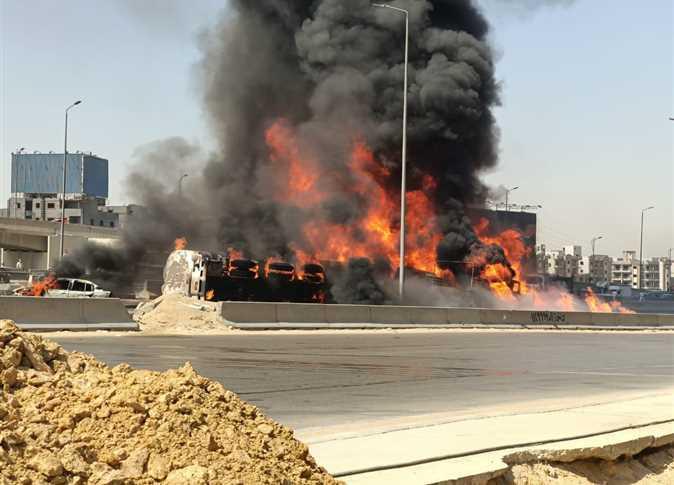
On the evening of 25 November, a fuel tanker overturned and caught fire on Cairo’s Ring Road in the Al-Warraq district of Giza, Egypt.
The reported toll was 31 people dead and 21 injured. Initial reports also said that 27 vehicles were destroyed or damaged, while 39 ambulances were deployed.
The figures describe the scale of the tragedy. They do not, on their own, establish why it happened.
On 26 November, Egyptian prosecutors announced the arrest of the tanker driver on suspicion of causing the collision.
According to the prosecution’s account, as reported by Ahram Online, the suspect admitted driving at 110 kilometres per hour, changing lanes and overtaking before striking the tanker.
The prosecution’s account also said that a tyre on the tanker burst, after which the vehicle hit a barrier, overturned and spilled petrol that ignited.
These are important details, but they must be treated as an initial account of the incident rather than a final technical or judicial determination.
An arrest is not a conviction. A reported admission is not the same as a final court finding. And a tyre failure does not, by itself, establish why the tyre failed or whether anyone was negligent.
What must be established by the investigation?
A fuel tanker is not an ordinary commercial vehicle. Its condition, maintenance, load, driver training and operation all matter.
The road itself also matters. Road design, barriers, traffic conditions and the ability of emergency services to respond can influence the consequences when a vehicle carrying flammable material overturns.
The available evidence does not provide a complete account of these factors in the Al-Warraq incident.
The available material does not include the tanker’s inspection and maintenance records, tyre history, cargo documents or a complete technical accident reconstruction. It also does not provide the CCTV evidence or engineering assessment needed to establish the precise sequence of events independently.
The prosecution’s account is an important part of the emerging investigation, but a full explanation requires technical evidence.
The wider road safety context
Egypt’s national statistics agency, CAPMAS, recorded 5,829 road deaths in 2025, compared with 5,260 in 2024. That represents an increase of approximately 10.8 per cent.
These figures provide national context for road safety concerns. They do not explain the cause of the Al-Warraq tanker disaster and should not be used as proof that a particular regulation failed in this incident. The figures are reported in Ahram Online’s coverage of the CAPMAS road safety statistics.
The comparison with Nigeria is relevant because Nigerian roads also carry articulated lorries, trailers and fuel tankers.
The Federal Road Safety Corps has published safety requirements covering articulated vehicles, including operator registration, safety compliance, insurance and driver certification. However, the existence of regulations does not automatically demonstrate that they are consistently enforced.
A meaningful assessment would require evidence about actual inspections, vehicle compliance, driver qualifications, enforcement activity and comparable accident records. Without that information, it would be wrong to claim that Egypt’s disaster proves the failure of Nigeria’s road safety system.
The incident nevertheless raises questions relevant to every country transporting hazardous cargo on public roads.
Are tankers properly inspected? Are tyres and critical components maintained? Are drivers adequately trained? Are speed and overtaking rules enforced? Are roads designed to reduce the consequences of a vehicle losing control? Can emergency services respond quickly enough when a hazardous load is released?
For Egypt, important evidence will include accident reconstruction, vehicle inspection records, the driver’s licence and training records, maintenance documents, road and barrier assessments, and any available CCTV.
The outcome of the legal proceedings will also matter.
The public needs a clear account of the chain of events, the technical cause and whether any safety obligations were breached. Until that evidence is available, the disaster should not be reduced to one explanation.
STORY 5: UNRWA TRIBUNAL JUDGMENT — WHAT THE EVIDENCE DID AND DID NOT ESTABLISH
The final development concerns the relationship between evidence, due process and institutional accountability.
On 11 November 2026, the United Nations Relief and Works Agency for Palestine Refugees in the Near East Dispute Tribunal delivered its judgment in Abu Awad v Commissioner-General, Judgment Number UNRWA/DT/2026/070.
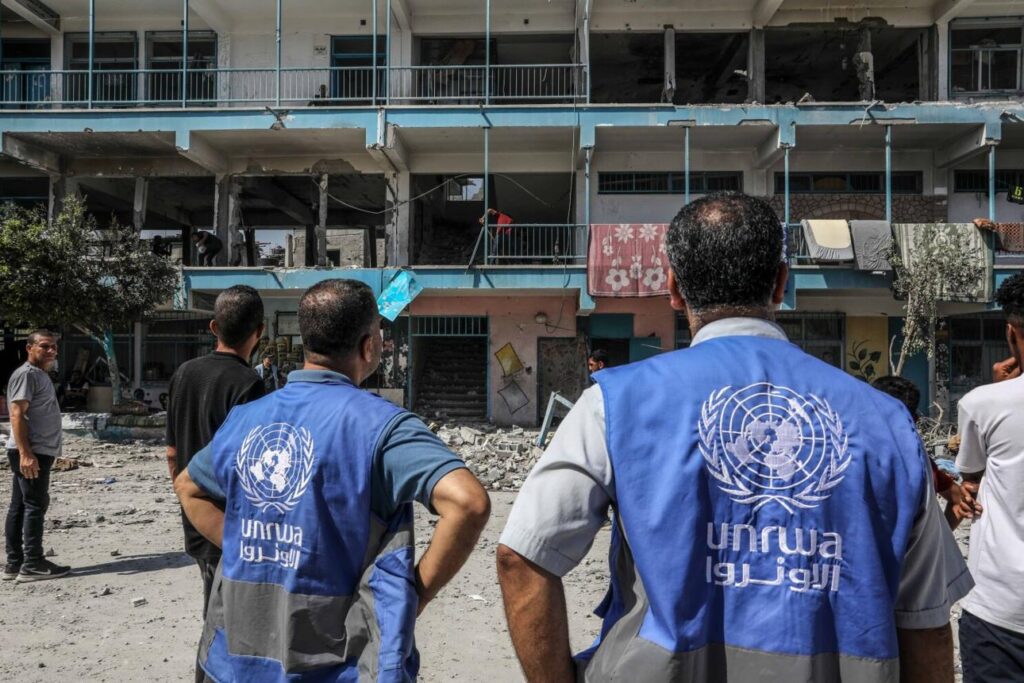
The case concerned Abdel Rahman Abu Awad, a teacher and deputy school principal working at UNRWA’s Gaza Field Office. He was separated from service on 26 January 2024 over an allegation of involvement in the attacks of 7 October 2023.
The tribunal examined the evidence used in the employment decision and whether UNRWA had established a sufficient basis for dismissing him.
Understanding the judgment requires understanding the legal question it addressed. This was an employment-law proceeding, not a criminal trial determining whether the applicant had committed a criminal offence.
The original UNRWA Dispute Tribunal judgment sets out the tribunal’s findings and the reasons for its decision.
The evidentiary limitations
The wider investigation involved allegations concerning 19 named UNRWA employees. According to the judgment, the Office of Internal Oversight Services (OIOS) investigated the allegations.
However, the tribunal identified limitations in the material available. Some information had been provided by Israeli authorities and could not be independently authenticated by OIOS. Security concerns also prevented investigators from interviewing the 19 staff members.
These limitations were relevant to the tribunal’s assessment of whether the evidence was sufficiently reliable to support the employment decision in Abu Awad’s case.
The tribunal found that the evidence did not reliably establish that Abu Awad was the person using a telephone in an incriminating conversation.
It also found that the evidence did not sufficiently support the claim that he was a Hamas platoon commander.
The tribunal concluded that UNRWA had not discharged its evidentiary burden to establish a rational and bona fide basis for his dismissal.
It therefore rescinded the dismissal. The judgment allows UNRWA to pay an amount equivalent to 12 months’ net base salary as an alternative to rescission and also orders US$5,000 in compensation for moral harm.
What the judgment did not decide
There is a crucial qualification.
The tribunal expressly stated that it was not finding that Abu Awad was not a Hamas operative or that he was not involved in the events of 7 October.
The tribunal found that the evidence before it did not meet the required standard to justify the employment dismissal. It did not issue a criminal acquittal, make a definitive finding of innocence or establish that the allegations were true.
These are different legal questions.
The judgment concerns the sufficiency of the evidence used to justify an employment decision. It should not be presented as a criminal court ruling or as a finding that every allegation against every UNRWA employee was false.
The case refers to an investigation involving 19 named employees. That number must not be confused with other public claims about the number of employees dismissed or the outcomes of separate cases. Each case requires its own evidence and legal assessment.
Institutional accountability and what happens next
The UNRWA Dispute Tribunal is a first-instance internal administrative justice body. Its judgments may be appealed to the United Nations Appeals Tribunal. UNRWA explains the tribunal’s role and the appeal process on its official Dispute Tribunal information page.
The available material does not establish the appeal status of this particular judgment. It also does not establish whether the compensation order has been implemented or provide the full evidentiary record behind every allegation involving the other employees.
For Abu Awad, the tribunal’s order reverses the employment decision and provides for compensation.
For UNRWA, the case raises questions about how information supplied by external authorities is authenticated, how investigators deal with security restrictions and how institutions demonstrate that serious employment decisions have a rational evidentiary basis.
For the wider public, the case illustrates why accountability requires more than making an allegation or issuing a denial. It requires a process capable of examining evidence, testing its reliability and explaining the conclusion.
Important questions remain: Will the judgment be appealed? Has the compensation order been implemented? What do other individual judgments establish? And what safeguards will ensure that future employment decisions are supported by evidence capable of withstanding scrutiny?
The judgment’s significance is substantial, but it is specific. In Abu Awad’s case, the tribunal found that the evidence presented did not establish a sufficient basis for dismissal. That is a finding about evidence, procedure and institutional responsibility — not a final determination of every allegation surrounding the events of 7 October.
CONCLUSION: WHEN CRITICAL SYSTEMS COME UNDER PRESSURE, WHO PAYS THE PRICE?
The five developments examined here do not establish that the world is facing one connected crisis. They reveal different forms of pressure on systems that influence international security, economic activity and public welfare.
The Strait of Hormuz demonstrates the scale of global dependence on secure energy transportation, even though the reported incidents do not establish that the waterway was closed. Ukraine’s grain export challenges show how security and insurance can affect the movement of food, while the precise details of the latest reported vessel attack remain unresolved.
The United States’ proposed trade measures could influence manufacturing competition, but their final consequences — including any opportunities for Africa — remain uncertain.
In Egypt, the tanker disaster has exposed serious public safety questions, but a complete technical explanation requires further investigation. In the UNRWA case, the tribunal’s judgment demonstrates the importance of reliable evidence and due process while making clear that an employment-law ruling is not a criminal acquittal.
The common lesson is that systems must be judged not only by whether they continue to function, but by how safely, fairly and responsibly they operate under pressure.
Claims must be tested. Institutions must explain their decisions. Risks must be distinguished from proven consequences. And the people affected must not disappear behind statistics or official statements.
Understanding global systems under pressure means looking beyond the immediate event to the evidence, safeguards and responsibilities that shape its consequences.
That is the bigger story.
The article now has its external links within the relevant paragraphs rather than in a separate references section. The five stories are numbered consistently, and the editorial notes have been removed from the publication copy.
About the Author