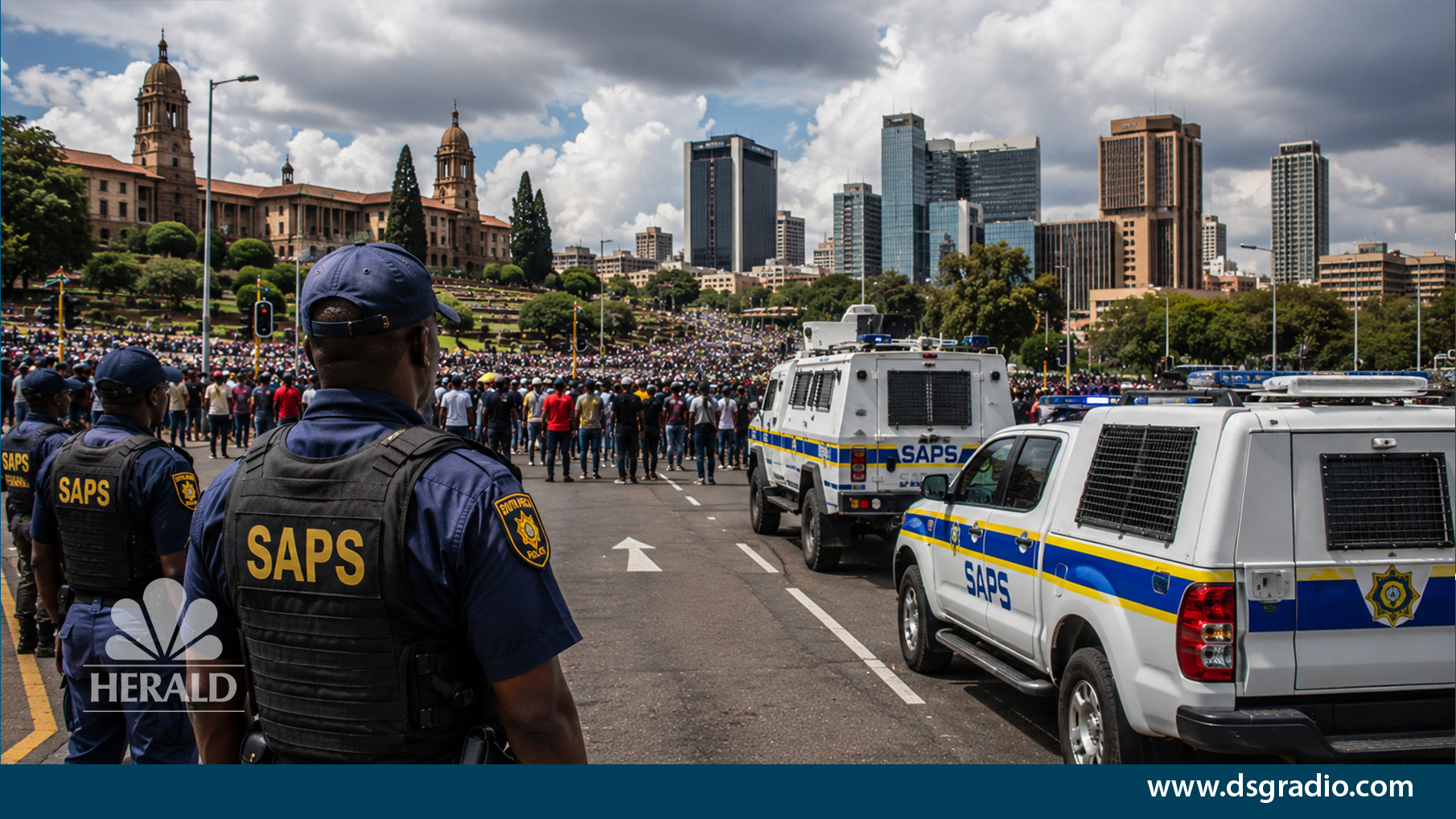
South Africa Protests: Security Tightens Ahead of June 30 Anti-Foreigner Demonstrations
South Africa has launched one of its most extensive nationwide security operations in recent years as authorities prepare for planned anti-foreigner demonstrations scheduled for June 30. Police officers, intelligence personnel and other security agencies have been placed on heightened alert amid fears that the protests could trigger violence, disrupt economic activity and deepen social tensions in Africa’s most industrialised economy.
The planned demonstrations, organised by the “March and March” movement and allied anti-immigration groups, have intensified debate over illegal immigration, unemployment and public safety. Protest organisers are demanding that undocumented foreign nationals leave the country by the end of June and have threatened a nationwide shutdown if their demands are not met.
The South African government has rejected those demands, insisting that immigration enforcement must be carried out within the framework of the country’s Constitution and existing laws. Officials have also strengthened security around government institutions, foreign diplomatic missions and commercial centres while monitoring developments to prevent a repeat of previous outbreaks of xenophobic violence.
The developments have once again placed South Africa at the centre of a wider African conversation about migration, economic hardship and social cohesion, with neighbouring countries closely watching events that could affect thousands of their citizens living and working across South Africa.
South Africa Protests Prompt Nationwide Security Response
The government’s immediate priority has been preventing violence before demonstrations begin.
Security agencies have expanded deployments across several provinces while increasing police visibility around strategic locations, particularly in Pretoria and Johannesburg. Additional patrols, checkpoints and traffic management measures have been introduced around government buildings, foreign embassies and busy commercial districts considered vulnerable during periods of civil unrest.
Authorities are also conducting intelligence-led monitoring of protest activities both online and offline. The objective is to identify potential security threats while ensuring demonstrations remain within the limits of South African law.
South African legislation recognises the constitutional right to peaceful assembly, but that right is subject to legal conditions designed to protect public safety. Demonstrators are prohibited from carrying dangerous weapons, and organisers are expected to comply with regulations governing public gatherings.
The government’s emphasis on preventive security reflects lessons learned from previous episodes of unrest that escalated rapidly despite initial expectations of peaceful demonstrations.
Rather than waiting to respond after violence occurs, authorities appear determined to prevent confrontations before they spread into larger disturbances.
Why the June 30 Demonstrations Matter
Although anti-immigration protests have occurred periodically in South Africa over the past two decades, the June 30 mobilisation has attracted unusual attention because organisers have linked it to a nationwide ultimatum demanding the departure of undocumented migrants.
That deadline has generated anxiety within migrant communities, many of whom fear that isolated protests could evolve into wider acts of intimidation regardless of their legal status.
For businesses, investors and transport operators, uncertainty surrounding the demonstrations also raises practical concerns.
Large-scale protests often affect:
- Public transportation
- Retail operations
- Daily commuting
- Cross-border logistics
- Tourism activities
- Informal trade
Any prolonged disruption could have economic consequences extending beyond the immediate protest areas.
South Africa remains one of Africa’s largest trading hubs, meaning instability in major cities can affect supply chains throughout the Southern African region.
Economic Frustration Lies at the Centre of the Debate
Behind the planned demonstrations lies a broader conversation about economic pressure facing ordinary South Africans.
The country continues to grapple with persistent unemployment, particularly among young people, while households face rising living costs and slow economic growth.
Some protest participants argue that undocumented migrants compete for limited employment opportunities, operate businesses outside formal tax systems and increase pressure on already stretched public services.
These claims have become a central message among anti-immigration groups.
However, migration experts have long argued that the relationship between immigration and unemployment is considerably more complex than public debate often suggests.
Economic performance is influenced by multiple factors including investment levels, education, infrastructure, electricity supply, business confidence and government policy.
As a result, many analysts caution against presenting migration as the sole explanation for South Africa’s economic challenges.
The government has similarly maintained that immigration concerns should be addressed through lawful policy reforms rather than public ultimatums or acts of intimidation.
Why Pretoria Rejected the Protesters’ Ultimatum
The South African government has made clear that it will not recognise demands requiring undocumented migrants to leave the country by a fixed deadline imposed by private organisations.
Instead, officials have reiterated that immigration enforcement remains the responsibility of state institutions operating under existing legislation.
Authorities have also established structures to examine immigration policy and border management through formal government processes rather than public pressure.
This position reflects a broader constitutional principle.
South Africa’s democratic framework protects the right to protest while simultaneously requiring the state to safeguard everyone within its borders from violence, regardless of nationality.
That balancing act has become one of the government’s greatest challenges as June 30 approaches.
Officials must demonstrate their willingness to enforce immigration laws where necessary while preventing unlawful attacks against migrants, refugees and asylum seekers.
Maintaining public confidence in both objectives will likely determine how the government’s response is judged after the demonstrations conclude.
South Africa’s Constitutional Challenge
The current situation illustrates one of the most difficult questions facing modern democracies.
Citizens possess the constitutional right to express dissatisfaction through peaceful protest.
Governments, however, also have a legal duty to protect public order, prevent violence and ensure that constitutional rights are not exercised in ways that threaten the rights and safety of others.
According to information published by South African civic education resources, freedom of assembly is protected under the Constitution but remains subject to laws regulating public gatherings and public safety.
That legal framework explains why authorities have increased intelligence monitoring while preparing extensive police deployments rather than attempting to prohibit demonstrations altogether.
The challenge is therefore not whether citizens may protest.
The challenge is ensuring those protests remain peaceful and lawful.
Lessons from Previous Xenophobic Violence
The government’s extensive preparations cannot be understood without considering South Africa’s previous experiences with xenophobic violence.
Over the past two decades, periodic attacks targeting foreign nationals have resulted in deaths, injuries, destruction of businesses and the displacement of thousands of people.
Those incidents damaged South Africa’s international reputation while placing pressure on diplomatic relations with neighbouring African countries.
Images of migrants fleeing violence, businesses being looted and communities divided by nationality attracted global attention and prompted repeated calls for stronger preventive measures.
The current security deployment suggests authorities are determined to avoid a repeat of those events.
Rather than responding only after violence begins, security agencies appear focused on prevention through intelligence gathering, visible policing and rapid operational readiness.
Whether those measures prove sufficient will become clearer once the planned demonstrations begin.
Regional Implications Extend Beyond South Africa
The significance of the June 30 demonstrations reaches beyond South Africa’s borders.
The country hosts hundreds of thousands of foreign nationals from across Southern and Central Africa, many of whom contribute to sectors including mining, construction, hospitality, retail, agriculture and informal commerce.
Any widespread unrest could therefore have diplomatic consequences for neighbouring governments whose citizens live or work in South Africa.
Previous episodes of anti-foreigner violence prompted regional concern and emergency support for displaced migrants.
As reported by the BBC, the latest tensions have again attracted international attention because of fears that instability could spread beyond isolated protests if not effectively managed.
The situation is therefore being watched closely not only by South African authorities but also by governments throughout the Southern African region.
South Africa Protests and Their Wider Economic Impact
Beyond the immediate security concerns, the June 30 demonstrations have renewed discussion about South Africa’s long-term economic outlook. The country remains Africa’s most industrialised economy, yet it continues to face persistent structural challenges that affect businesses, workers and investors alike.
High unemployment, particularly among young people, has remained one of the country’s most pressing socio-economic issues. Rising living costs, uneven economic growth and frequent power supply challenges have also placed additional pressure on households and businesses.
Against this backdrop, immigration has increasingly become part of public debate. While some citizens believe undocumented migration contributes to job competition and pressure on public services, economists generally argue that unemployment and inequality are driven by a much broader combination of structural economic factors.
Business organisations have repeatedly warned that prolonged unrest—regardless of its cause—can discourage investment, interrupt supply chains and reduce consumer confidence. Even short periods of disruption in Johannesburg or Pretoria can affect transport, logistics and commercial activity across Southern Africa because of South Africa’s position as a regional economic hub.
For investors, stability often matters as much as economic policy. The government’s extensive security preparations therefore send two important messages: that authorities recognise the seriousness of the situation, and that they intend to maintain public order while protecting economic activity.
The Human Dimension Behind the Headlines
Although immigration is frequently discussed in political and economic terms, the current tensions also have a significant human dimension.
Reports indicate that fear has spread within some migrant communities, with concerns that isolated incidents of intimidation could escalate into broader attacks. Previous episodes of xenophobic violence forced families to flee their homes, abandon businesses and seek temporary shelter.
For many foreign nationals legally living and working in South Africa, uncertainty can be as damaging as violence itself. Businesses may close early, parents may keep children at home and workers may avoid travelling through areas where demonstrations are expected.
At the same time, many South Africans participating in or supporting the protests argue that their frustrations stem from genuine economic hardship rather than hostility toward foreigners as individuals. Their concerns include unemployment, illegal immigration, border control and the perceived unequal enforcement of immigration laws.
These competing perspectives illustrate why the issue remains politically sensitive and difficult to resolve through simple solutions.
Labour Unions Urge Workers to Ignore Shutdown Calls
Another notable development has been the response from organised labour.
The Congress of South African Trade Unions (COSATU) and other labour organisations have advised workers not to participate in any proposed nationwide shutdown linked to the protests. They warned that employees who fail to report for work without lawful justification could place their jobs at risk.
The labour movement’s position highlights another layer of the debate.
While trade unions have historically supported workers’ rights to peaceful protest, they have also emphasised the importance of lawful industrial action and protecting employment during periods of political tension.
Their message reflects concern that prolonged disruption could further weaken businesses already facing economic uncertainty.
What the Situation Means for Africa
The developments in South Africa carry significance beyond its borders because migration has become an increasingly important issue across Africa.
Many African economies depend on the movement of workers across borders, while regional organisations continue to promote greater economic integration through trade and labour mobility.
At the same time, governments across the continent face growing public pressure to strengthen border management, improve immigration systems and create more employment opportunities for citizens.
The South African situation therefore reflects a broader continental challenge: how to balance national economic interests, human rights obligations and regional cooperation.
For Nigeria and other African countries whose citizens live, study or conduct business in South Africa, the situation also serves as a reminder of the importance of diplomatic engagement and consular preparedness whenever security concerns arise abroad.
Nigerian Perspective: Why the Story Matters
Nigeria has historically maintained strong economic, diplomatic and cultural ties with South Africa. Thousands of Nigerians reside in South Africa, where they work, study or operate businesses across various sectors.
Periods of heightened tension therefore attract close attention from Nigerian authorities, community organisations and families with relatives living abroad.
Although the current security operation is aimed at preventing violence, any escalation could have implications for Nigerian citizens and other African nationals.
The story also resonates with wider discussions across Africa about migration management, border security and economic opportunity.
Many African countries face similar questions about how to address irregular migration while respecting international obligations and constitutional rights.
For policymakers, the South African experience may offer lessons on the importance of balancing enforcement with dialogue, public communication and lawful governance.
Could Immigration Policy Change?
The June 30 demonstrations may also influence future policy discussions.
Although the South African government has rejected the protesters’ ultimatum, it has acknowledged that immigration management remains an important public policy issue.
Possible areas of future discussion could include:
- Improved border management.
- Faster immigration processing systems.
- Stronger enforcement against undocumented migration.
- Enhanced cooperation with neighbouring countries.
- Measures to protect communities from violence while maintaining lawful migration systems.
However, no specific policy changes beyond the government’s stated committee approach were detailed in the primary source material.
Any future reforms will depend on legislative processes and official government decisions.
For more background on migration-related tensions, read our report on https://dsgheraldnews.com/south-africa-immigration-protests-force-ghanaians-home/
What Happens After June 30?
Several outcomes remain possible once demonstrations begin.
If protests remain peaceful and within the law, authorities may view the extensive security operation as successful prevention rather than reaction.
If isolated incidents occur, police will likely focus on rapid containment to prevent wider unrest.
Should demonstrations become prolonged or disruptive, the consequences could extend beyond public safety to include transport delays, reduced commercial activity and renewed diplomatic concern from neighbouring countries.
At this stage, however, the scale and outcome of the demonstrations remain uncertain.
Details about the expected number of protesters, precise protest locations outside the reported cities and operational plans beyond those already announced were not specified in the original reports.
South Africa Protests Reflect a Larger National Conversation
The June 30 demonstrations represent more than a single day of protest.
They have become a focal point for broader national debates about unemployment, immigration policy, economic opportunity, constitutional rights and public security.
The government’s response demonstrates an effort to protect both democratic freedoms and public order, while avoiding a repeat of the violence that has marked previous periods of anti-foreigner unrest.
Whether those efforts succeed will become clearer after the demonstrations take place.
Regardless of the immediate outcome, the issues driving the protests are unlikely to disappear quickly. Economic pressures, migration management and social cohesion will remain central policy challenges for South Africa long after June 30 has passed.
For Africa as a whole, the situation underscores the importance of addressing migration through lawful institutions, regional cooperation and sustainable economic development rather than confrontation.
As South Africa prepares for one of its most closely watched public demonstrations in recent years, the world will be observing not only how authorities manage security, but also how the country balances constitutional freedoms with the responsibility to protect every person within its borders.
Recommended Coverage
Trump’s NATO Position and Global Security
Explore how changing international security policies could reshape global alliances and influence geopolitical stability.
North Korea’s Nuclear Policy
Read how escalating nuclear tensions continue to affect international diplomacy and global security planning.
Nigeria’s Economy Under Tinubu
An in-depth analysis of Nigeria’s economic trajectory and the policy debates shaping its future.
Owerri West Development
A closer look at how rapid urban growth is increasing demands for effective governance and infrastructure.
Dr. Eberechukwu Uneze Profile
Discover the leadership journey and public contributions of Dr Eberechukwu Uneze.
About the Author