US Iran Peace Deal Faces First Major Test as Ceasefire Comes Under Pressure
US Iran Peace Deal negotiations are facing their toughest challenge just weeks after Washington and Tehran agreed to an interim ceasefire designed to halt one of the Middle East’s most dangerous military confrontations.
Although Washington and Tehran have temporarily paused hostilities to revive diplomacy, fresh military exchanges, disagreements over the Strait of Hormuz, and conflicting accounts surrounding the latest Doha Peace Talks suggest the agreement remains highly fragile.
Rather than marking a decisive breakthrough, recent developments indicate that the ceasefire has merely postponed deeper disputes that could determine whether both nations eventually reach a lasting peace or slide back into open conflict.
Related:https://dsgheraldnews.com/us-iran-peace-deal-under-pressure/
Why the US-Iran Peace Deal Is Already Under Pressure
The interim Memorandum of Understanding signed on June 17 was designed to stop direct military confrontation while negotiators worked toward a comprehensive peace treaty expected before mid-August.
However, events over the weekend exposed just how vulnerable the arrangement has become.
Military exchanges resumed after both governments accused each other of violating ceasefire terms. Although a temporary halt in attacks was later restored, the renewed violence has weakened confidence that the agreement can survive future disputes.
Even diplomatic messaging has become inconsistent.
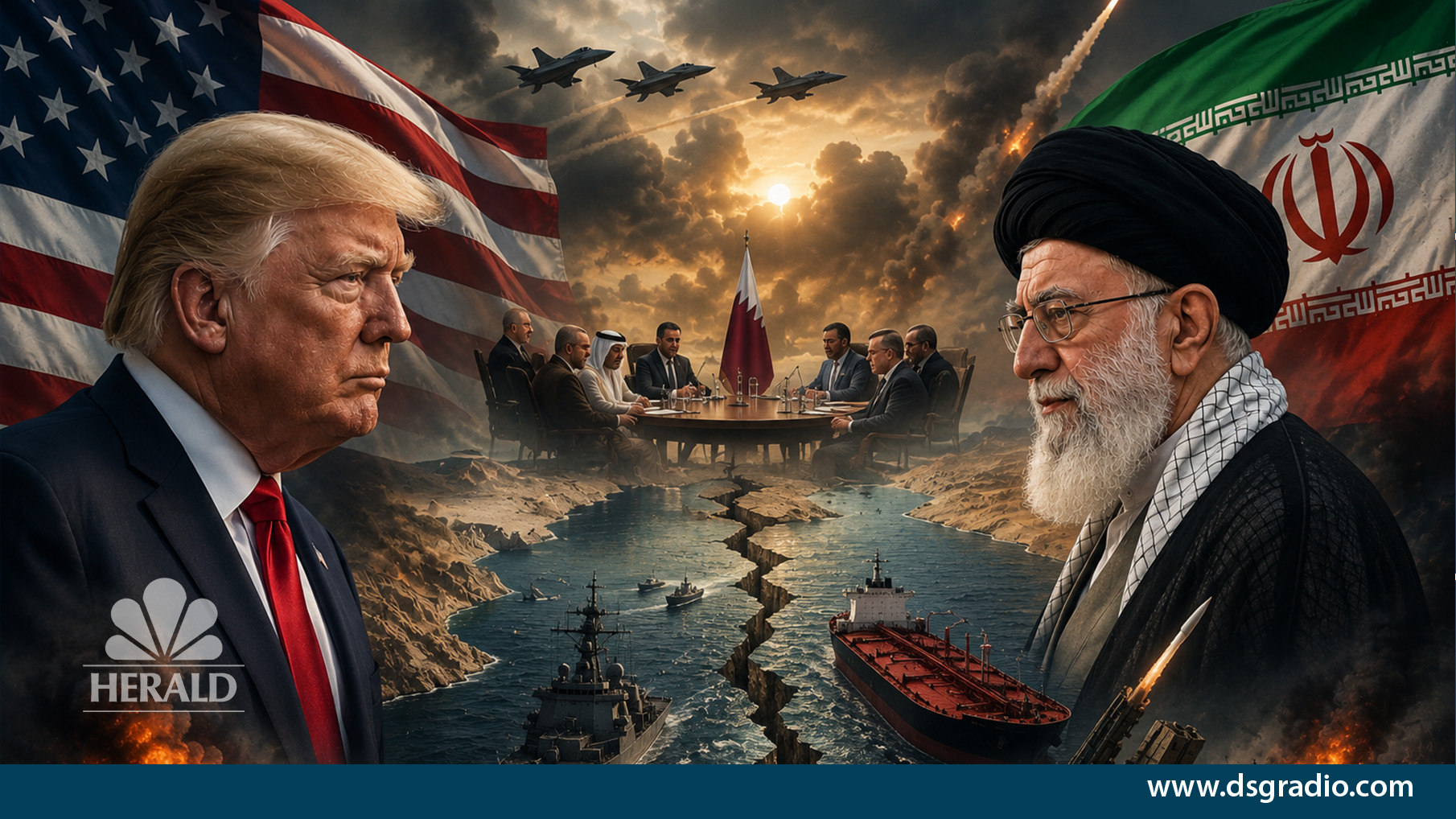
US President Donald Trump announced that Iran had requested direct high-level meetings in Doha, Qatar, describing them as an important step toward advancing negotiations.
Iran, however, publicly rejected that account.
Officials in Tehran insisted their delegation in Doha was handling technical matters relating to frozen financial assets rather than participating in direct political negotiations with American representatives.
These contradictory statements have raised fresh questions over whether both governments remain aligned on the negotiation process itself.
The Strait of Hormuz Dispute
At the centre of the disagreement lies one of the world’s most strategically important waterways—the Strait of Hormuz.
The narrow maritime corridor carries a significant share of global crude oil exports, making its security vital to international trade and energy markets.
The United States maintains that international shipping must enjoy unrestricted and toll-free access through the waterway under international maritime principles.
Iran, however, argues that it possesses historical authority to regulate movement through the strait and rejects outside interference in what it considers its sovereign maritime interests.
The opposing interpretations have become one of the most difficult issues preventing the peace agreement from progressing smoothly.
Military Escalation
The ceasefire came under severe strain after commercial vessels reportedly faced drone attacks within the Strait of Hormuz.
In response, US forces carried out strikes against multiple Iranian military targets, including facilities around Sirik and Qeshm Island.
Iran’s Islamic Revolutionary Guard Corps (IRGC) later responded by launching missile attacks targeting American military installations in Kuwait and Bahrain.
Although both governments later agreed to suspend further strikes, the brief escalation demonstrated how rapidly tensions can return despite ongoing diplomatic efforts.
The latest confrontation has reinforced concerns that isolated military incidents could easily derail negotiations before a permanent settlement is reached.
Frozen Assets Dispute
Economic issues remain another major source of disagreement.
Iran is demanding the immediate release of approximately $6 billion from its frozen assets held in Qatar as part of confidence-building measures.
Washington, however, insists that any release of funds should only occur if Tehran fully complies with ceasefire commitments and demonstrates sustained progress toward a permanent agreement.
This disagreement reflects the wider challenge facing negotiators: neither side appears willing to make significant concessions without receiving guarantees from the other.
That lack of mutual trust continues to complicate diplomatic progress.
Regional Security Challenges
Beyond bilateral disputes, broader regional security issues continue to influence negotiations.
The United States wants any final agreement to reduce tensions involving Iranian-backed regional groups operating across the Middle East.
Iran, meanwhile, continues to link long-term peace discussions to wider geopolitical issues, including Israeli military activities in southern Lebanon.
These competing priorities make negotiations significantly more complex than simply restoring direct relations between Washington and Tehran.
Any comprehensive peace treaty will likely require progress on several interconnected regional security challenges.
Why Doha Matters
Qatar has emerged as one of the few countries maintaining productive diplomatic relationships with both Washington and Tehran.
That position allows Doha to serve as an important neutral venue for sensitive negotiations.
Even if current discussions remain limited to technical issues, maintaining communication channels could help prevent future misunderstandings from escalating into renewed military conflict.
However, conflicting public statements surrounding the talks illustrate how fragile diplomatic trust remains.
Without greater transparency and consistency from both governments, negotiations may struggle to generate lasting confidence.
Economic Impact
The outcome of the US Iran Peace Deal extends far beyond the Middle East.
Any prolonged disruption in the Strait of Hormuz could affect global oil supplies, shipping costs, insurance premiums, and energy prices.
Countries across Europe, Asia, and Africa—including Nigeria—could experience indirect economic effects through increased fuel prices and higher transportation costs if instability returns to one of the world’s busiest maritime routes.
For investors and policymakers alike, the stability of the waterway remains a critical concern.
What Happens Next
Negotiators now face a narrow window to convert the interim agreement into a permanent peace treaty before the reported mid-August deadline.
Several outcomes remain possible.
The optimistic scenario would see both governments resolve outstanding disputes through continued diplomacy, leading to a broader regional de-escalation.
A second possibility is an extension of negotiations, allowing additional time to settle disagreements over maritime security, frozen assets, and regional conflict.
The most worrying scenario would involve another military incident triggering renewed hostilities and collapsing the diplomatic process altogether.
Given recent events, the coming weeks may prove decisive.
Conclusion
The recent ceasefire has undoubtedly prevented a wider military confrontation, but it has not eliminated the underlying disputes driving tensions between the United States and Iran.
Disagreements over maritime authority, economic sanctions, frozen assets, and regional security continue to test the resilience of the US Iran Peace Deal.
The US Iran Peace Deal is likely to remain fragile unless both governments resolve their disagreements over maritime access, regional security, and financial sanctions. Progress on these key issues will determine whether the current ceasefire evolves into a lasting peace agreement or gives way to renewed military confrontation.
Whether diplomacy ultimately succeeds will depend less on public announcements and more on the willingness of both sides to compromise on issues that have divided them for decades.
Until then, the US Iran Peace Deal remains alive—but unmistakably under pressure.
Recommended Coverage
https://dsgheraldnews.com/trump-us-exit-from-nato-raises-global-security-concerns/
https://dsgheraldnews/north-korea-nuclear-policy-sparks-global-security-alarm/
https://dsgheraldnews.com/nigerias-economy-the-tinubu-administration-progress-or-crisis/
Owerri West Growth Fuels Calls for Good Leadership
https://dsgheraldnews.com/dr-eberechukwu-uneze-the-rise-influence-impact/
About the Author