US Iran Peace Deal Faces Growing Threats to Lasting Peace
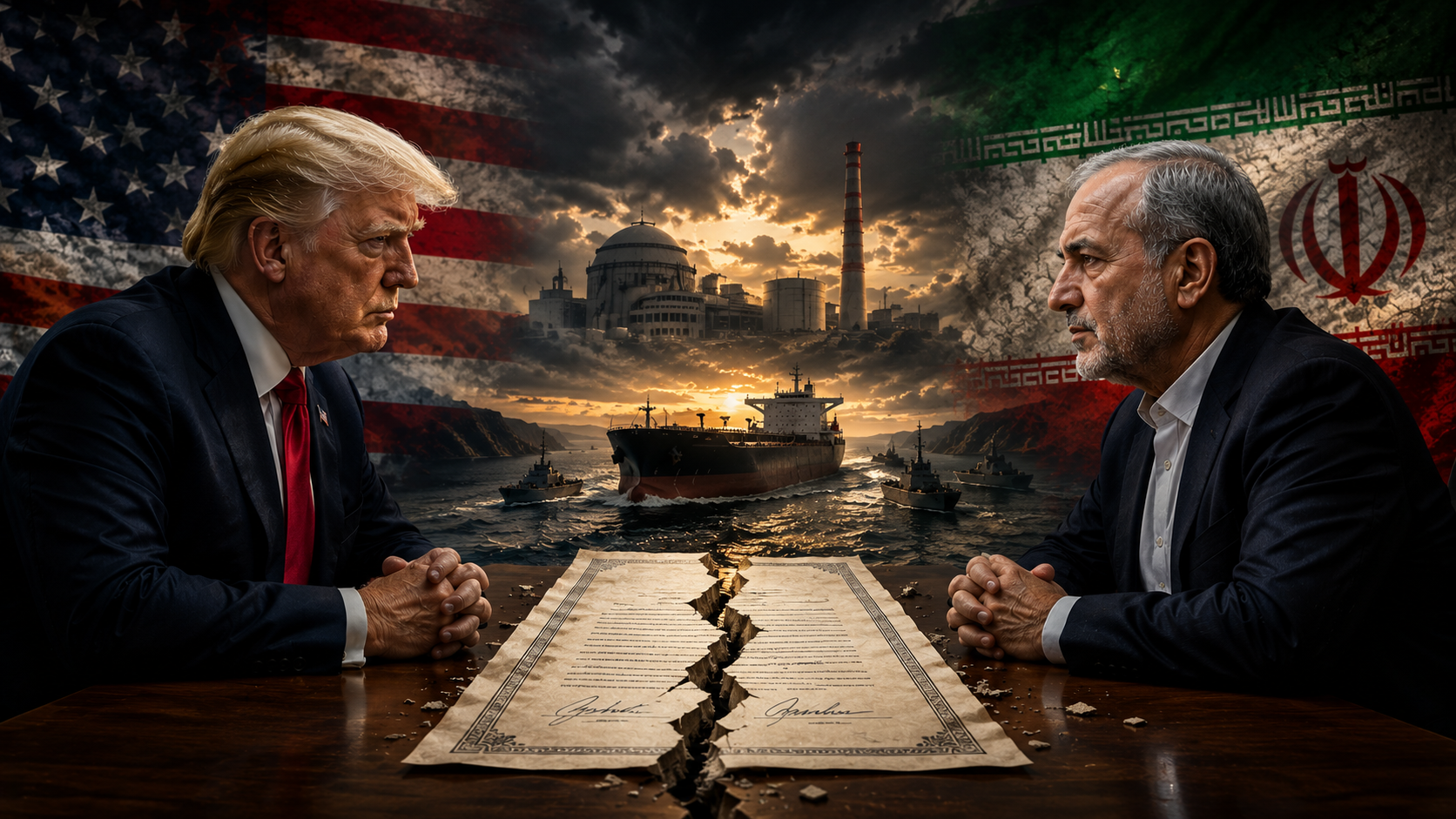
The US Iran Peace Deal, announced through a 14-point memorandum of understanding (MoU) designed to pave the way for a broader peace agreement, is already encountering serious obstacles that could undermine its long-term success. Although the framework established a 60-day period for negotiations after being signed last week, disagreements over nuclear inspections, maritime security in the Strait of Hormuz, and growing political resistance inside the United States have exposed the challenges of transforming diplomatic promises into a durable settlement.
Instead of representing the end of one of the world’s longest-running geopolitical confrontations, the agreement has entered what may prove to be its most delicate phase. Every dispute over inspections, sanctions, military activity or regional security now carries the potential to weaken confidence between both governments and test the commitment of international mediators working to keep negotiations alive.
As reported by CNBC and corroborated by other international media outlets, officials from Washington and Tehran continue to publicly disagree over several key provisions of the agreement, illustrating how different interpretations of the same document could complicate implementation.
For governments, investors, energy markets and countries that depend on stable oil supplies—including Nigeria—the outcome of these negotiations extends well beyond bilateral diplomacy.
Readers interested in the possible economic implications for Nigeria can also read https://dsgheraldnews.com/us-iran-peace-deal-could-ease-fuel-pressure-nigeria/.
Why the US Iran Peace Deal Initially Raised Global Optimism
The announcement of the interim agreement generated cautious optimism because it appeared to halt a dangerous cycle of military escalation that had threatened to destabilize the Middle East.
The framework outlined several confidence-building measures intended to reduce immediate tensions while providing negotiators with a structured 60-day timetable to pursue a permanent agreement.
Among the reported provisions were:
- A temporary reduction in military confrontation.
- Renewed diplomatic engagement.
- International supervision of nuclear commitments.
- Reopening maritime access through the Strait of Hormuz.
- Steps toward releasing frozen Iranian funds under agreed conditions.
Taken together, these measures suggested that both governments were prepared to prioritize diplomacy after months of heightened tensions.
However, peace agreements are rarely tested at the moment they are signed. They are tested during implementation, when competing political interests, national security concerns and domestic pressures begin influencing every decision.
That appears to be exactly where the current agreement finds itself.
Why Nuclear Inspections Have Become the Biggest Test
The most immediate challenge confronting the US Iran Peace Deal concerns international verification of Iran’s nuclear activities.
According to the agreement, the International Atomic Energy Agency (IAEA) will supervise the nuclear aspects of the framework, with Director General Rafael Grossi confirming that technical preparations have begun for inspectors to return to Iranian facilities.
From Washington’s perspective, effective verification is essential.
Successive American administrations have maintained that independent monitoring remains the only credible method of ensuring that nuclear commitments are respected. President Donald Trump has publicly stated that Iran accepted long-term inspections and warned negotiations could collapse if inspection arrangements are weakened.
Iranian officials, however, have disputed that interpretation.
Their public statements indicate they do not accept the broader characterization presented by Washington, exposing an important diplomatic problem: both governments appear to be describing different understandings of the same agreement.
Such contradictions matter because international agreements depend as much on mutual interpretation as on written provisions.
When negotiators publicly disagree before implementation has even begun, confidence among international observers, investors and regional allies can deteriorate rapidly.
Ballistic Missiles Remain Outside the Negotiating Table
Another significant point of disagreement involves Iran’s ballistic missile programme.
President Masoud Pezeshkian has made clear that Tehran does not consider its missile capabilities part of the current negotiations.
That position reflects a long-standing Iranian policy that separates its conventional military deterrence from discussions surrounding its nuclear programme.
For the United States and several regional partners, however, missile development remains closely linked to wider security concerns across the Middle East.
This divergence illustrates one of diplomacy’s recurring challenges.
Even when negotiators successfully reduce one source of conflict, other unresolved disputes continue shaping strategic calculations.
In practical terms, excluding ballistic missiles from current negotiations may allow talks to continue, but it also leaves one of the region’s most sensitive security questions unresolved.
Frozen Funds Continue to Generate Questions
Another unresolved issue concerns approximately $12 billion in Iranian funds expected to become accessible under aspects of the agreement.
Reports indicate disagreement remains over how those funds may ultimately be used.
American officials have argued that released assets should primarily finance humanitarian purchases such as food and medical supplies.
Iran has presented a different interpretation.
Because implementation details remain disputed, the exact spending conditions have not yet been fully clarified publicly.
Until both governments establish a common understanding, financial disagreements could become another source of friction capable of slowing progress.
US Iran Peace Deal Faces New Pressure in the Strait of Hormuz
If nuclear verification represents the diplomatic challenge, maritime security represents the operational challenge.
The Strait of Hormuz remains one of the world’s most strategically important waterways.
A substantial share of globally traded crude oil passes through the narrow shipping corridor connecting the Persian Gulf with international markets.
One of the agreement’s most significant provisions reportedly involved temporarily reopening navigation without tolls while easing the American naval blockade during the initial implementation period.
That arrangement was intended to restore confidence among commercial shipping companies and reassure international energy markets.
Instead, security concerns have quickly resurfaced.
A suspected drone attack on a cargo vessel operating in the Gulf of Oman has renewed fears about the vulnerability of commercial shipping.
Although details surrounding the incident remain limited, the attack reinforced longstanding concerns that even isolated security incidents can rapidly influence insurance costs, freight rates and global energy prices.
The situation became more complicated after the International Maritime Organization reportedly suspended efforts to evacuate stranded seafarers because of deteriorating maritime security conditions.
For international shipping companies, the message is clear.
Even if diplomats continue negotiating successfully, commercial operators must still evaluate real-time security risks before committing vessels to one of the world’s busiest maritime corridors.
Why the Strait Matters Far Beyond the Middle East
The importance of the Strait of Hormuz extends well beyond regional politics.
It represents one of the world’s most important energy supply routes.
Any prolonged disruption has the potential to influence:
- Global crude oil prices.
- Shipping insurance premiums.
- International supply chains.
- Fuel prices in oil-importing countries.
- Inflation across multiple economies.
Nigeria may be an oil-producing nation, but domestic consumers remain highly sensitive to fluctuations in international petroleum markets because of the country’s dependence on imported refined products and evolving downstream market dynamics.
Readers can also explore https://dsgheraldnews.com/iran-us-peace-deal-will-nigerians-pay-less-for-fuel/ for additional analysis of how Middle East developments may affect local fuel prices.
The economic significance explains why governments far beyond the Middle East continue monitoring every development surrounding the agreement.
For many countries, stability in the Strait of Hormuz is not simply a regional issue—it is an economic necessity.
Can Diplomacy Keep the Agreement Alive?
Despite the growing disagreements, the peace framework has not collapsed. Diplomatic activity has continued behind the scenes, suggesting that both sides still see value in preventing the situation from deteriorating into another major regional crisis.
According to the primary source material, technical discussions mediated by Qatar and Pakistan in Switzerland produced two important confidence-building measures:
- The establishment of an emergency communication line intended to reduce misunderstandings affecting commercial shipping.
- The creation of a joint “de-confliction cell” to help monitor the fragile ceasefire between Israel and Hezbollah in Lebanon.
These mechanisms are common features of modern conflict management. They do not resolve the underlying political disputes, but they reduce the likelihood that an isolated military or maritime incident will unintentionally escalate into a broader confrontation.
Their existence also reflects the role of third-party mediators. While Washington and Tehran remain the principal actors, regional and international partners have become essential in keeping communication channels open when direct dialogue becomes politically difficult.
However, mediation can only succeed if both sides continue to honour the commitments already made. If disagreements over inspections, sanctions implementation or maritime operations continue to widen, even the strongest diplomatic channels may struggle to prevent the agreement from unravelling.
Regional Tensions Continue to Complicate the Peace Process
Another challenge facing the US Iran Peace Deal is that it exists within a much wider Middle Eastern security environment.
The agreement is not unfolding in isolation. Conflicts involving Israel, Hezbollah, regional militias and other state and non-state actors continue to shape political calculations across the region.
According to the source material, Israel’s defence ministry has indicated that it has no immediate plans to withdraw troops from southern Lebanon, underscoring the continuing fragility of the ceasefire there.
Although this issue falls outside the core US-Iran negotiations, it illustrates an important geopolitical reality: progress in one diplomatic track can easily be affected by instability elsewhere.
This interconnectedness has long defined Middle Eastern diplomacy. Agreements involving one country often depend on developments involving several others, making comprehensive peace significantly more difficult to achieve.
Domestic Politics in Washington Adds Another Layer of Uncertainty
International diplomacy often depends as much on domestic politics as on foreign policy, and the latest developments in Washington highlight that reality.
President Donald Trump’s handling of the peace agreement has encountered an unusual bipartisan challenge in the United States Senate.
According to the primary source material, senators approved a War Powers Resolution directing the administration to withdraw US forces from hostilities against Iran unless Congress provides explicit authorization. Although the measure is described as largely symbolic because it is a concurrent resolution, the reported 50–48 vote demonstrates that scepticism over the administration’s approach extends beyond political party lines.
The vote does not automatically derail the peace framework. Nevertheless, it sends an important political signal.
Successful international agreements require confidence not only between governments but also within domestic institutions responsible for implementing foreign policy. When elected lawmakers publicly question the strategy behind an agreement, negotiating partners may begin to wonder whether future commitments will survive political change.
For diplomats attempting to build trust over the next 60 days, that uncertainty matters.
Why the Agreement Matters to Global Energy Markets
One reason international attention remains fixed on the US Iran Peace Deal is its potential impact on energy security.
The Strait of Hormuz is widely regarded as one of the world’s most strategically important shipping routes for crude oil and liquefied natural gas. Any disruption to navigation can affect global supply chains within days.
While the interim agreement initially raised hopes that maritime traffic would become more predictable, the suspected drone attack on a cargo ship and renewed debate over shipping regulations have reminded markets that geopolitical risk remains high.
Energy traders generally respond not only to confirmed disruptions but also to perceived risks. When uncertainty increases, shipping insurance costs can rise, freight rates may increase, and commodity prices often become more volatile.
For countries heavily dependent on imported petroleum products—including Nigeria—these developments carry practical implications.
Higher global oil prices can translate into increased transportation costs, inflationary pressure and additional fiscal challenges for governments already managing economic reforms.
Readers looking for further context can also read https://dsgheraldnews.com/us-iran-peace-deal-launches-60-day-talks/ for background on how the negotiations began and what the initial framework proposed.
What the Situation Means for Africa
Although the negotiations involve the United States and Iran, their consequences extend well beyond the Middle East.
Several African economies remain vulnerable to fluctuations in international energy markets. Rising shipping costs and higher crude prices can influence fuel imports, electricity generation, food transportation and inflation.
For Nigeria, the implications are particularly significant.
As Africa’s largest oil producer, Nigeria benefits from stronger crude prices through export earnings. However, domestic consumers and businesses can also face increased costs when international fuel markets become volatile, particularly while the country’s downstream petroleum sector continues adjusting to market-based pricing.
Other African nations that rely almost entirely on imported petroleum products may experience even greater pressure if maritime disruptions persist.
Beyond energy, prolonged instability could also affect international trade routes linking Asia, Europe and Africa.
Historical Lessons Suggest Implementation Is the Hardest Phase
History demonstrates that negotiating a peace framework is often easier than implementing one.
Previous diplomatic efforts involving Iran’s nuclear programme have repeatedly encountered difficulties over verification procedures, sanctions relief and differing interpretations of agreed commitments.
That broader historical context helps explain why current disagreements over inspections have attracted such close international scrutiny.
Verification mechanisms serve two purposes:
- They provide confidence that commitments are being honoured.
- They reduce opportunities for political disputes over compliance.
When both objectives become contested simultaneously, diplomatic momentum can weaken quickly.
The current situation illustrates that challenge.
The agreement itself remains in force, but its long-term credibility now depends on whether negotiators can resolve disagreements before they evolve into larger political confrontations.
The Three Biggest Risks Facing the US Iran Peace Deal
Based on verified developments reported so far, three issues appear most capable of determining whether the agreement succeeds or fails.
1. Nuclear Inspections
Different public interpretations of inspection commitments remain the single greatest diplomatic obstacle.
If Washington and Tehran cannot establish a common understanding of verification procedures, confidence in the agreement could continue to erode.
2. Maritime Security
Commercial shipping requires stability.
Any additional attacks or security incidents in or around the Strait of Hormuz could undermine one of the agreement’s most important confidence-building measures and increase pressure on negotiators.
3. Political Support
International agreements require sustained political backing.
Domestic opposition in Washington, combined with differing political priorities in Tehran, could complicate implementation even if technical negotiations continue making progress.
The Road Ahead
The next several weeks are likely to determine whether the interim framework evolves into a lasting diplomatic breakthrough or becomes another missed opportunity in decades of difficult US-Iran relations.
For now, the agreement remains intact.
Technical discussions continue, mediators remain engaged and communication channels have not been abandoned. Those developments suggest that neither side has formally walked away from negotiations.
At the same time, the growing disagreements over nuclear inspections, maritime security and implementation details demonstrate that signing a memorandum of understanding was only the beginning.
The success of the US Iran Peace Deal will ultimately depend less on the optimism surrounding its announcement than on the willingness of both governments to resolve practical disputes during the 60-day implementation period.
Until then, governments, businesses, financial markets and ordinary citizens around the world—including in Nigeria—will continue watching closely, aware that the outcome could influence global energy prices, regional security and international diplomacy for years to come.
Recommended Coverage
Trump’s NATO Exit Debate and Global Security
Explore how debates over America’s global security commitments could reshape alliances and international defence policy.
North Korea’s Nuclear Policy and Rising Global Tensions
Read how developments in North Korea’s nuclear programme continue to influence international security calculations.
Nigeria’s Economy Under Tinubu
Understand how global geopolitical developments, including energy market volatility, intersect with Nigeria’s economic reforms.
Owerri West’s Development Challenges
A closer look at governance, infrastructure and sustainable development in one of Imo State’s fastest-growing areas.
Dr Eberechukwu Uneze: Leadership Profile
An in-depth profile examining the influence and public service contributions of Dr. Eberechukwu Uneze.
About the Author