The DR Congo Ebola Outbreak is entering one of its most critical phases after nearly 300 people who tested positive for the virus disappeared from the reach of health authorities, raising fresh fears that efforts to contain the epidemic are rapidly unravelling.
According to the Africa Centres for Disease Control and Prevention (Africa CDC), approximately 291 Ebola-positive patients are currently unaccounted for across affected areas of the Democratic Republic of Congo (DRC). The disappearance comes as the country’s Ministry of Health confirmed that the number of infections has climbed to 1,307 confirmed cases, with 377 deaths, making the epidemic the third-largest Ebola outbreak on record.
While Ebola outbreaks have challenged Central Africa for decades, public health officials say this crisis is different. Beyond the growing number of infections, the outbreak is being fuelled by insecurity, attacks on health facilities, widespread displacement, deep-rooted mistrust within communities and the absence of an approved vaccine against the Bundibugyo strain responsible for the epidemic.
The result is a public health emergency that is increasingly difficult to contain—not only for the Democratic Republic of Congo but also for neighbouring countries and the wider African region.
DR Congo Ebola Outbreak Is Becoming Harder to Contain
Containing Ebola depends on one fundamental principle: finding infected individuals quickly, isolating them, tracing their contacts and interrupting further transmission.
Health authorities now acknowledge that this process is breaking down.
Africa CDC officials confirmed that 291 people who had already tested positive for Ebola have gone missing, leaving health workers unable to monitor their condition or determine whom they may have infected after disappearing.
The implications extend far beyond the missing patients themselves.
Every untraced Ebola patient potentially creates dozens of new contacts requiring monitoring. Without effective contact tracing, health officials lose one of the most important tools available to stop transmission before it spreads through families, healthcare settings and communities.
Unlike diseases that spread primarily through the air, Ebola is transmitted through direct contact with infected bodily fluids. This makes rapid identification and isolation of infected individuals essential.
When those patients disappear, the chain of transmission becomes increasingly difficult to reconstruct.
Public health experts have repeatedly warned that even a relatively small number of unmonitored Ebola patients can significantly accelerate outbreaks if they continue moving through communities without medical supervision.
Conflict Is Undermining the Public Health Response
Unlike previous Ebola outbreaks that occurred in relatively stable environments, the current epidemic is unfolding in regions already affected by armed conflict and insecurity.
Health officials say violence has become one of the greatest obstacles to controlling the disease.
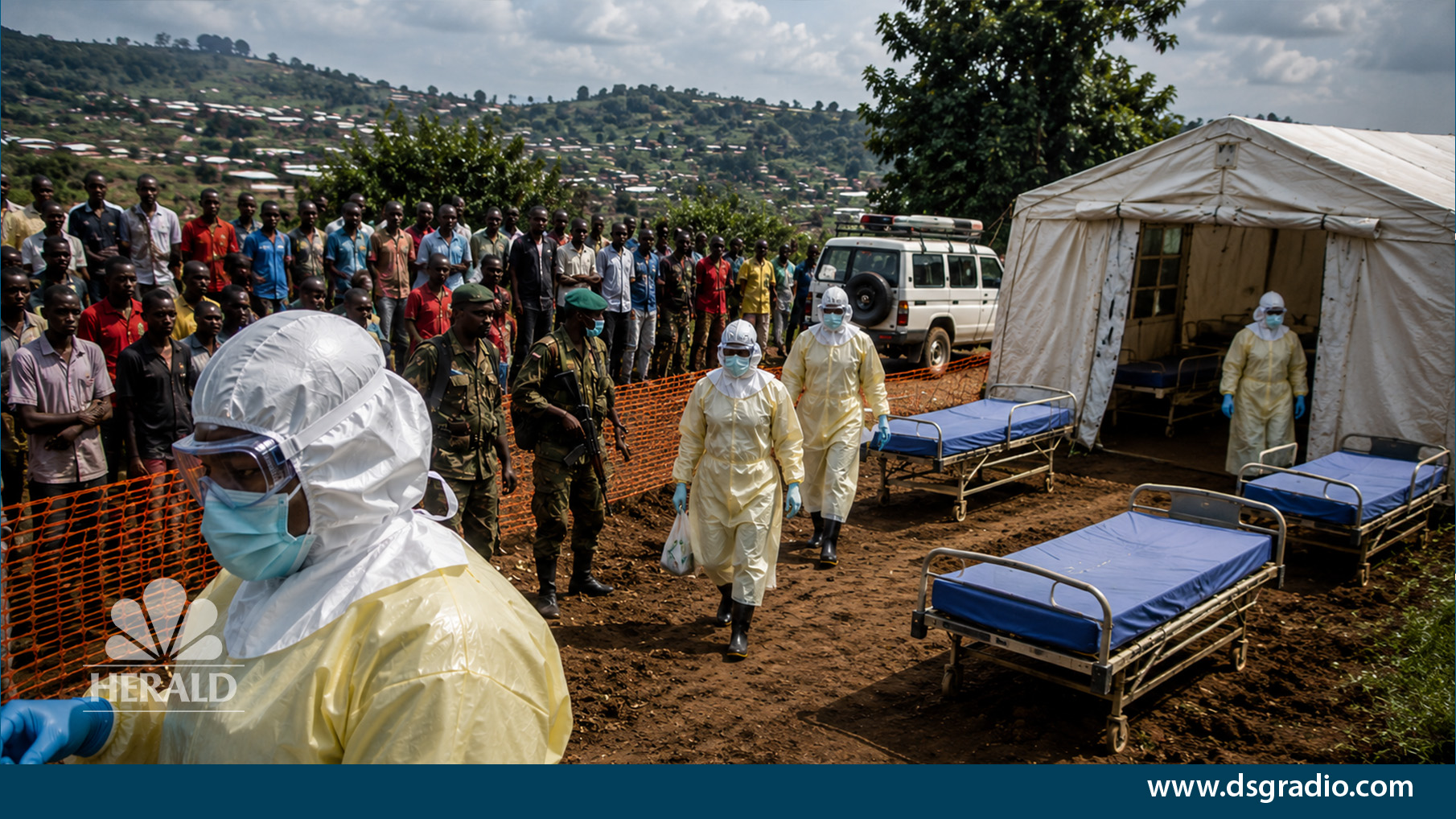
In the town of Mongbwalu, armed groups reportedly attacked health infrastructure, forcing patients to flee. Authorities said 13 of 28 suspected Ebola patients escaped after one such attack disrupted medical operations.
Elsewhere, in Butembo, armed men reportedly abducted a six-year-old Ebola patient together with her mother, highlighting the extraordinary security challenges confronting emergency response teams.
These incidents illustrate how healthcare workers are being forced to balance disease control with personal safety.
Instead of focusing solely on treatment and surveillance, response teams must also navigate active conflict zones where attacks on hospitals, medical facilities and humanitarian workers remain a constant risk.
The situation has complicated vaccination campaigns, laboratory testing, transportation of medical supplies and community outreach programmes.
Health officials warn that every interruption increases the opportunity for Ebola to spread unnoticed.
Community Mistrust Is Compounding the Crisis
Security concerns are only part of the problem.
Health authorities also point to persistent mistrust among some communities as another major factor weakening containment efforts.
Safe burial practices remain one of the most sensitive aspects of Ebola response.
Because Ebola remains highly infectious after death, specially trained teams conduct controlled burials designed to protect surviving relatives and prevent further infections.
However, according to health officials, disagreements frequently arise when families reject official burial procedures.
Some families reportedly remove patients from treatment centres before medical care is completed, while others conceal deaths or secretly conduct traditional burial ceremonies.
These actions, though often driven by cultural or emotional considerations, increase the likelihood of further transmission.
Community resistance has challenged Ebola responses during previous outbreaks in the Democratic Republic of Congo, where rumours, misinformation and distrust of government institutions have sometimes discouraged cooperation with health authorities.
Officials stress that improving community engagement remains just as important as strengthening medical capacity.
DR Congo Ebola Outbreak Cases Continue Rising
The outbreak continues to expand despite ongoing response efforts.
The latest figures released by the DRC Ministry of Health place the country’s confirmed Ebola infections at 1,307, while the death toll has reached 377.
Earlier assessments had recorded 1,274 confirmed infections and at least 360 deaths, demonstrating how rapidly the outbreak continues to evolve.
The epidemic is now recognised as the third-largest Ebola outbreak ever recorded, underscoring both its scale and the challenges facing health authorities.
The virus has spread beyond its original epicentre in Ituri Province, extending into North Kivu, South Kivu and more recently Haut-Uele Province, where authorities traced infections to a patient who travelled from the outbreak’s epicentre.
The expanding geographic footprint significantly complicates surveillance efforts.
Each newly affected province requires additional laboratories, treatment centres, healthcare workers, logistics support and public awareness campaigns.
At the same time, health authorities must continue monitoring thousands of people who may have been exposed to infected individuals.
As the number of affected communities grows, available resources become increasingly stretched.
For earlier developments, read our previous coverage of the 2026 Ebola outbreak in DR Congo.
Why the Bundibugyo Strain Presents a Different Challenge
One reason this outbreak is attracting global attention is the particular Ebola strain involved.
Health authorities say the epidemic is being driven by the Bundibugyo strain of the Ebola virus.
Unlike the Zaire strain—which has approved vaccines and established treatment protocols—the Bundibugyo strain currently has no approved vaccine and no specific licensed treatment.
Readers seeking background information can also read our guide on Ebola virus explained.
This significantly limits the tools available to health responders.
Instead of relying on proven vaccination campaigns that helped control previous outbreaks, authorities must depend heavily on:
- Early detection
- Contact tracing
- Isolation of infected patients
- Community education
- Infection prevention measures
- Strict surveillance
Recognising the urgent need for additional medical options, the Africa Centres for Disease Control and Prevention announced that emergency clinical trials for new antiviral medicines could begin this week.
While officials hope these trials will provide valuable scientific evidence, they are not an immediate solution to the outbreak currently unfolding.
Until effective therapies become available, public health officials continue to emphasise prevention, surveillance and rapid response as the most effective tools for limiting transmission.
The Humanitarian Impact Is Extending Beyond Healthcare
Although Ebola is primarily viewed as a public health emergency, its consequences extend far beyond hospitals.
The United Nations estimates that nearly three million children and adolescents now face heightened risks because the outbreak has disrupted education, healthcare services and broader social support systems.
Children have been among the hardest hit.
Officials report that more than 130 children have already been orphaned in Ituri Province during the early stages of the outbreak, illustrating the devastating social consequences of widespread disease transmission.
Authorities are also working to prevent outbreaks inside overcrowded detention facilities located near affected communities, where close living conditions could allow the virus to spread rapidly if introduced.
The growing humanitarian burden means the crisis is no longer solely about containing a virus—it is also about protecting vulnerable populations from the wider collapse of essential services.
DR Congo Ebola Outbreak Expands Beyond National Borders
While the Democratic Republic of Congo remains the epicentre of the outbreak, health authorities are closely monitoring developments beyond its borders, underscoring the regional dimension of the crisis.
Neighbouring Uganda has confirmed 20 Ebola cases, all reported in the capital, Kampala, with earlier reports indicating two related deaths. The emergence of cases outside the DRC demonstrates how cross-border movement can quickly transform a national outbreak into a regional public health challenge.
Further afield, France has confirmed its first Ebola case linked to the outbreak—a physician who had treated patients in the DRC and later transited through Kinshasa before returning home. French health authorities isolated the patient in line with established infectious disease protocols, reflecting the importance of international surveillance even when the overall risk of widespread transmission outside affected regions remains low.
To strengthen prevention efforts, health agencies have carried out more than 1.7 million health screenings at border crossings in the Democratic Republic of Congo, Ethiopia, Rwanda and South Sudan. These screenings are designed to identify symptomatic travellers early, provide medical assessment where necessary and reduce the likelihood of undetected cross-border transmission.
The outbreak has also influenced public policy within the DRC. Authorities have banned mass gatherings in Kinshasa and six other provinces as part of broader measures aimed at reducing opportunities for the virus to spread.
Operational Challenges Extend Beyond Medicine
Containing an Ebola outbreak requires more than doctors, nurses and treatment centres. It also depends on functioning communications, secure transport routes, reliable electricity and uninterrupted logistics.
Those systems have come under significant strain.
The Logistics and Telecommunications Cluster reported persistent communication difficulties in Mongbwalu, where unstable satellite connectivity and power shortages have affected coordination between emergency response teams. In fast-moving outbreaks, delays in sharing information can slow case investigations, contact tracing and the deployment of medical resources.
Security remains another major obstacle. According to the information provided by health authorities, response teams continue operating in areas where the M23 rebel group controls significant territory in parts of North Kivu and South Kivu. Such conditions make it harder to move personnel, establish treatment centres and maintain continuous surveillance in affected communities.
These operational constraints demonstrate why disease control is closely linked to broader governance, infrastructure and security conditions. Even well-resourced health programmes struggle when conflict disrupts access to vulnerable populations.
Why This Outbreak Matters to Africa
The current outbreak highlights a recurring challenge across parts of Africa: infectious disease emergencies often intersect with humanitarian crises, conflict and fragile health systems.
For many African countries, the lessons extend beyond Ebola itself.
Public health experts have long argued that investment in disease surveillance, laboratory capacity and emergency preparedness offers protection not only against Ebola but also against future outbreaks of other infectious diseases. The COVID-19 pandemic reinforced the importance of early detection, transparent reporting and coordinated regional responses.
The DRC’s experience illustrates how quickly an outbreak can escalate when health systems face simultaneous pressure from insecurity, population displacement and limited medical resources.
The involvement of the Africa Centres for Disease Control and Prevention, theWorld Health Organization (WHO) and other international partners reflects recognition that disease outbreaks in one country can have implications for the entire continent.
Nigerian Relevance: Lessons for Public Health Preparedness
Although Nigeria has not reported cases linked to the current outbreak, developments in the Democratic Republic of Congo carry important lessons for Africa’s most populous nation.
Nigeria successfully contained its 2014 Ebola outbreak through rapid case identification, extensive contact tracing, coordinated public communication and strong collaboration between federal and state health authorities. That response has frequently been cited internationally as an example of effective outbreak management.
The evolving situation in the DRC reinforces the importance of maintaining those capacities.
Nigeria’s extensive land and air connections across Africa mean that vigilance at ports of entry, sustained disease surveillance and public awareness remain essential components of national health security.
The cross-border screening efforts taking place in Central and East Africa also illustrate how regional cooperation has become an increasingly important element of epidemic preparedness.
Global Health Security Under Renewed Scrutiny
The DRC outbreak has renewed discussion about global readiness for infectious disease emergencies.
International health experts increasingly view outbreaks through the broader framework of global health security, recognising that infectious diseases can affect economies, travel, trade and humanitarian operations far beyond their country of origin.
One of the most significant scientific challenges in the current outbreak is the Bundibugyo strain of Ebola.
Unlike the Zaire strain, which has benefited from vaccine development over recent years, the Bundibugyo variant has no approved vaccine or targeted treatment. This has prompted the Africa CDC to announce plans for emergency clinical trials of potential antiviral therapies.
While research may strengthen future response capabilities, scientists caution that clinical trials cannot replace the immediate need for surveillance, isolation, community engagement and sustained international support.
The Cost of Losing Contact With Patients
Perhaps the most troubling aspect of the current outbreak is not simply the number of infections but the disappearance of confirmed patients from official monitoring systems.
Public health responses depend on visibility.
Authorities must know where infected individuals are located, whom they have interacted with and whether they remain capable of transmitting the virus.
When nearly 291 confirmed patients cannot be located, health officials lose valuable opportunities to interrupt transmission chains before they expand.
This challenge is compounded by insecurity, attacks on healthcare facilities, communication difficulties and community mistrust—all factors that reduce the effectiveness of conventional outbreak control measures.
The disappearance of infected patients therefore represents more than an operational setback. It highlights how humanitarian crises can directly undermine disease control efforts, even when experienced medical teams and international organisations are actively involved.
Future Outlook for the DR Congo Ebola Outbreak
The trajectory of the DR Congo Ebola Outbreak will depend largely on whether health authorities can restore effective surveillance, improve security for response teams and strengthen cooperation with affected communities.
The World Health Organization has warned that, in a worst-case scenario where containment efforts fail completely, total infections could exceed 60,000 cases by September. Such projections are not forecasts but planning scenarios intended to guide preparedness efforts and resource mobilisation.
At the same time, emergency clinical trials announced by the Africa CDC may provide valuable scientific data for future treatment options against the Bundibugyo strain.
For now, however, the immediate priorities remain unchanged: locating missing patients, protecting healthcare workers, strengthening contact tracing and preventing further geographic spread.
The Democratic Republic of Congo has faced Ebola outbreaks before, but the combination of armed conflict, operational disruption and a vaccine-resistant strain has created one of the most complex public health emergencies in recent years.
How effectively national authorities, regional organisations and international partners respond over the coming weeks is likely to shape not only the future of this outbreak but also broader efforts to strengthen epidemic preparedness across Africa.
The DR Congo Ebola Outbreak will remain under close international surveillance as health officials work to locate missing patients, contain new infections and prevent wider regional transmission.
Recommended Coverage
Explore how political tensions in Ethiopia are shaping governance, stability and regional security across the Horn of Africa.
An analysis of the former Congolese president’s conviction and its potential implications for the country’s political future.
FG Pursues Treason Charges Against Sylva and Others
A look at Nigeria’s high-profile treason case, the legal issues involved and the wider political implications.
A detailed examination of the judgment, its legal significance and possible consequences for Nigeria’s security landscape.
Discover the professional journey and contributions of Dr Eberechukwu Uneze and why the story continues to attract public interest.
About the Author