Nigeria News Today: Power Plans, Education Targets and Questions of Accountability
Nigeria’s public institutions face a range of responsibilities that affect everyday life, from keeping electricity supplies reliable and expanding access to basic education to protecting communities, investigating fatal accidents, regulating electoral technology and administering justice. The developments selected for Nigeria news today offer a closer look at what authorities and other stakeholders have announced, what actions have been reported and what remains to be established.
The Federal Government is reported to have approved plans for a new Eastern-Western electricity grid intended to address recurring system collapses, while the HOPE-EDU education programme has set ambitious targets for children, teachers and schools. In Borno State, a reported attack on a military position requires further authoritative confirmation. In Ogun State, pig farmers have attributed losses exceeding ₦5 billion to an outbreak they say is linked to African swine fever, although the figures have not been independently verified in the material available for this edition.
The review also examines the recovery of additional components from the site of a fatal Nigerian Air Force aircraft crash in Ondo State, the Independent National Electoral Commission’s position on artificial intelligence ahead of the 2027 general elections, and the ICPC’s reported opposition to a bail application in a pending financial-misconduct case.
These developments are distinct and should not be treated as evidence of one common cause. Their public significance lies in the questions each raises about institutional responsibility, implementation, evidence and accountability. A proposed project is not a completed service; a programme target is not a verified result; and an allegation is not a judicial finding. Understanding those distinctions is essential to assessing Nigeria’s public affairs fairly.
Nigeria Electricity Grid: What Is Known About the Eastern-Western Proposal?
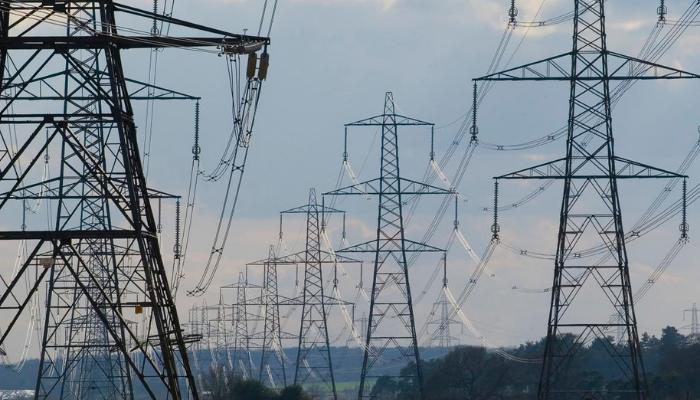
The Federal Government is reported to have approved plans for a new Eastern-Western electricity grid intended to help address Nigeria’s recurring power-system collapses. The proposal, attributed to the Minister of Power, Joseph Tegbe, is potentially significant because electricity reliability affects households, businesses and essential services.
According to The Punch’s report on the proposed new electricity grid, Tegbe announced the proposal at an energy conference in Lagos. A technical audit of power infrastructure is reportedly under way, while preparations for procurement are also being made. The minister indicated that Nigerians could begin to see benefits within two to three years.
That timeframe should be treated as an estimate attributed to the minister, not a guaranteed completion date. The available information does not include a formal approval document, the project’s final engineering design, a confirmed total cost, its funding arrangements or a binding implementation schedule.
Those gaps matter because different stages of an infrastructure project represent different levels of progress. A technical audit can help identify the condition of existing assets and the work that may be required. Procurement preparations can precede the selection of contractors or suppliers. Neither step, by itself, demonstrates that construction has begun or that the electricity system is already more reliable.
The proposal therefore needs to be assessed through the evidence that emerges as it advances. Nigerians would need access to the audit findings, formal project approvals, financing details, procurement records and a credible schedule against which delivery can be measured. The information supplied for this edition does not establish that these documents have been published or that the project has already prevented a grid collapse.
The potential benefits are clear in principle, although they cannot yet be presented as achieved outcomes. More dependable electricity could reduce households’ and businesses’ reliance on petrol and diesel generators. It could also make it easier for businesses to plan operations and for essential services to depend on a steadier supply. The extent of any such benefits would depend on the project’s design, implementation and actual performance.
For additional context on the ministry responsible for the sector, readers can visit the Federal Ministry of Power’s official website.
This is where the distinction between policy intention and public-service delivery becomes important. Government announcements establish what an administration says it intends to do; implementation records and measurable results establish what has actually happened.
For Nigeria’s electricity grid proposal, the central questions remain practical: what exactly has been formally approved, how will the work be financed, what infrastructure will be delivered, and how will improvements in reliability be measured?
Until those questions are answered with verifiable information, the Eastern-Western grid should be understood as a reported intervention under development, not proof that Nigeria’s recurring electricity problems have been resolved.
The same need to distinguish ambitions from delivery applies to another major public-service commitment: the HOPE-EDU basic education programme.
HOPE-EDU Education Programme: A $552.18 Million Commitment and Its Targets
Nigeria’s HOPE-EDU programme has set targets covering millions of children, hundreds of thousands of teachers and tens of thousands of schools and learning centres. The programme’s reported financing totals $552.18 million, according to information attributed to the Universal Basic Education Commission (UBEC). Its scale makes implementation evidence essential to understanding what the initiative is achieving.
HOPE-EDU stands for Human Capital Opportunities for Prosperity and Equity for Quality Basic Education for All. According to the official HOPE-EDU programme website, the programme is co-financed by the International Development Association and the Global Partnership for Education. The reported financing comprises $500 million from the International Development Association and $52.18 million from the Global Partnership for Education.
The stated targets include 29 million children, 500,000 teachers, 65,000 public schools, 10,000 non-formal learning centres and 13,000 classrooms. In a report published on 15 October, The Punch said UBEC Executive Secretary Dr Aisha Garba discussed implementation readiness with chairmen of State Universal Basic Education Boards. The programme was reported to have become effective on 27 February 2026. Readers can consult The Punch’s report on the HOPE-EDU targets for the reported figures and implementation update.
The figures indicate the intended reach of the programme, but their meaning must remain precise. The target of 29 million children must not automatically be interpreted as the number of out-of-school children. Nor does the reported financing total establish that all the money has been disbursed or spent. A programme’s stated coverage is different from the number of beneficiaries who have actually received support.
The programme uses a results-based framework, under which performance is intended to be linked to verified results. This makes evidence of delivery particularly important. The role of state governments and their education boards also means that progress cannot be assessed solely through a national announcement or the programme’s overall financing figure.
The people most directly concerned are children, teachers and school communities. For them, the important questions are not only how much financing has been reported, but whether interventions reach their intended destinations. Are classrooms being delivered and put to use? Are teachers receiving the intended support or training? Are more children accessing basic education? Are literacy and numeracy outcomes improving?
The available material does not establish actual disbursements, completed interventions across participating states or independently verified gains in learning. It also identifies the programme as covering the 2025–2030 period without supplying a single nationwide deadline for completing all classrooms or achieving particular learning outcomes.
A credible assessment of HOPE-EDU will therefore require more than a list of targets. Relevant evidence would include state-level participation, documented expenditure, verified classroom delivery, records of teacher support and credible assessments of children’s learning. Reports should distinguish between commitments, money released, work completed and outcomes measured.
The programme’s reported financing and reach make it an important public-policy development. But its eventual value will depend on whether the resources and implementation arrangements translate into better access to basic education and measurable learning improvements.
While education policy is assessed through delivery over time, security reporting demands a different form of caution: establishing what happened before drawing conclusions about an incident or its consequences.

Nigeria Security: What Is Confirmed About the Reported Mairari Attack?
A reported attack on a military position in Mairari, Guzamala Local Government Area of Borno State, is included in the 15 October edition. However, the information available for the original presenter script did not provide a sufficiently developed account of the incident to establish its precise timeline, the military’s response or a confirmed casualty figure.
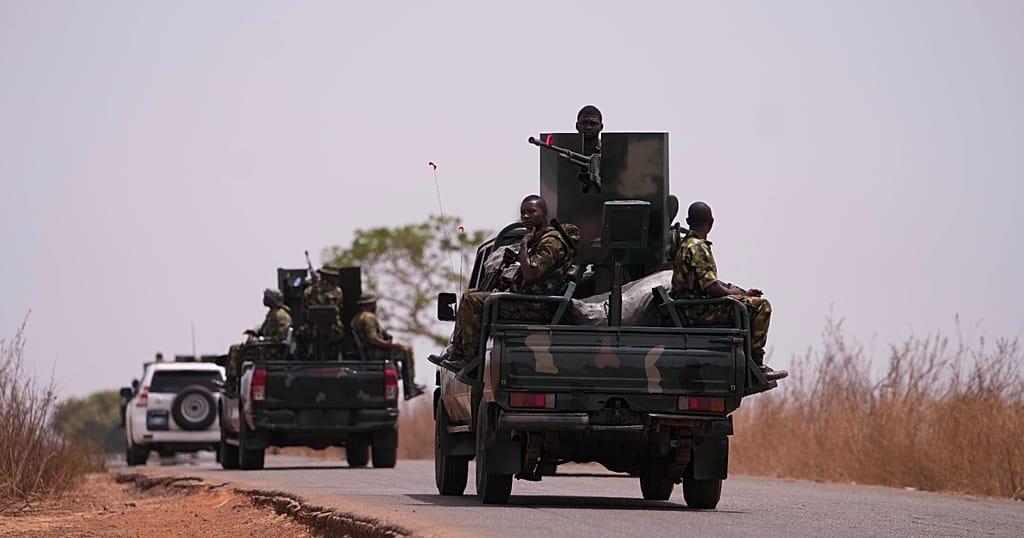
In a report published on 15 October, The Punch reported an attack on a military post in Mairari. The report attributed the attack to suspected Boko Haram fighters and said some soldiers were feared killed. It also reported that the Guzamala Local Government Area chairman, Umar Sheriff, confirmed the incident and said there were no civilian casualties. The article did not establish a final casualty count.
The reported figure of seven soldiers killed is therefore not confirmed by the information reviewed for this edition and should not be presented as an established death toll. The attribution to suspected Boko Haram fighters should likewise be reported with care.
These distinctions are important in security reporting. An initial account may contain details that later change as authorities investigate or release further information. A report attributing an attack to an armed group is not equivalent to an independently established finding of responsibility. Likewise, a reported casualty figure should not be treated as final without reliable corroboration.
The location supplied for the incident is Mairari, in Guzamala Local Government Area of Borno State. Beyond that, the available information does not support a complete reconstruction of how the attack unfolded, what happened afterwards or whether the reported details have subsequently been revised.
The immediate public-interest task is therefore verification. An authorised military statement would help establish the official account, while reliable corroboration would be needed to clarify the chronology and casualties. Any further reporting should distinguish clearly between information confirmed by authorities, information independently corroborated and claims that remain unresolved.
This approach does not diminish the seriousness of a reported attack on a military position. It recognises that accurate information is particularly important when lives may have been lost and when reports can influence public understanding of security conditions.
The outstanding questions are straightforward: what is the verified sequence of events, what response followed, and what casualty information can reliable sources establish? Until better evidence is available, the incident should remain a qualified report rather than a definitive account of a military engagement.
The next narrative concerns reported losses in a civilian industry. Here, too, the distinction between an affected group’s estimate and an independently verified assessment is central to responsible reporting.
Ogun State: Pig Farmers Claim More Than ₦5 Billion in Losses
Pig farmers in the Ikangba and Agoro axis of Odogbolu Local Government Area, Ogun State, say an outbreak they attribute to African swine fever has caused losses exceeding ₦5 billion. According to The Punch’s report on the farmers’ losses, the farmers’ association also claimed that more than 2,000 farmers had been affected.
The farmers reportedly protested and called for compensation, soft loans and other forms of assistance to support recovery. Their requests point to concerns about the reported economic impact on livestock producers. However, the figures remain claims attributed to the association; the material available for this edition does not include an independently audited loss assessment or a verified register of affected farmers.
Ogun State Commissioner for Agriculture and Food Security Bolu Owotomo reportedly said the state had notified the Federal Ministry of Livestock Development and was awaiting feedback. A subsequent report by The Punch, “Swine fever: Ogun alerts FG as farmers lose N5bn”, also reported the farmers’ claims and the state government’s stated position. The report does not establish that financial assistance has been approved or delivered.
The disease attribution also requires appropriate veterinary evidence. The supplied material does not include laboratory confirmation establishing the full extent of the reported outbreak. A reliable assessment would need to clarify whether veterinary authorities have confirmed African swine fever, how many farms are affected and how the claimed financial losses were calculated.
The distinction matters for both farmers and public authorities. Farmers need accurate assessments of the damage they have experienced. Authorities need dependable evidence to determine the nature and extent of an outbreak and to decide what response is justified. Without verified information, the reported total cannot be treated as an independently established measure of the losses.
The potential consequences of a serious livestock disease outbreak extend beyond individual farms. Livelihoods, farm workers and communities that depend on pig production may be affected. But the scale of those consequences in this specific case has not been independently established in the supplied material, so it would be premature to quantify wider economic effects.
The source material also states that African swine fever is not a human-health risk. The World Organisation for Animal Health’s explanation of African swine fever confirms that the disease affects domestic and wild pigs but does not pose a danger to human health. It also describes the disease’s severe consequences for pig populations and farming livelihoods.
The next developments to watch are veterinary confirmation, a documented assessment of affected farms, a transparent explanation of how the loss estimate was reached and a clear response from the relevant state and federal authorities. Any support measures should be described according to their actual status: requested, considered, approved or delivered.
For the farmers, the reported losses form the basis of a demand for help. For the public, the key issue is whether the extent of the problem can be established and whether any official response is supported by reliable evidence. Until that information is available, both the claimed loss total and the number of affected farmers must remain attributed rather than presented as verified figures.

Ondo Aircraft Crash: Air Force Recovers More Components as Investigation Continues
The Nigerian Air Force has reportedly recovered additional components from the site of the fatal crash involving an ATR 42-500 aircraft identified in reporting as NAF 931, at Igbokoda in Ondo State. The recovery was reported on 14 October, with specialist divers from the Nigerian Navy and the Nigerian Safety Investigation Bureau working alongside the Air Force recovery team.
According to The Punch’s report on the latest recovery operation, the teams continued underwater searches and recovery operations, supported by hydrographic surveys, satellite-based search-and-rescue imagery, mud excavation and the pumping of water from relevant areas. The recovery followed the reported announcement on 13 October of a 12-member specialist investigation board.
–
The aircraft crashed on 5 October. Contemporary reports cited in the editorial material stated that all 25 people on board died: five crew members and 20 passengers. That total should be checked against the final official manifest where available.
The recovery of additional components represents a step in collecting physical evidence. It is not, by itself, a finding about the cause of the crash. The supplied information does not establish whether pilot error, a maintenance issue, weather conditions, technical failure or another factor contributed to the accident. Assigning blame or identifying a cause before the investigation establishes the relevant facts would be premature.
The material identifies the Nigerian Air Force as leading the reported investigation arrangements and the Nigerian Safety Investigation Bureau as providing technical support. These roles should not be conflated. The recovery of physical components and the analysis of evidence are parts of the investigative process; the significance of any particular component depends on what examination establishes.
For the families of those reported killed, accurate information and respectful communication from the responsible authorities are essential. For the wider public, a credible investigation can help establish what happened and identify any safety issues requiring attention. These are reasons to follow the evidence carefully, not reasons to reach conclusions before the findings are available.
Several important questions remain open. What are the investigation board’s terms of reference? Has a verified inventory of recovered components been published? What information is available about flight-recorder evidence? How will the authorities communicate interim findings and the final report? The supplied material does not provide answers to all these questions or establish a date for the final report.
The investigation must distinguish evidence collection from analysis and analysis from a final determination. Additional recovered components may assist investigators, but their significance cannot be inferred from the fact of recovery alone.
The next meaningful development will be reliable information about what the recovered material establishes and how the investigation proceeds. Until then, the cause of the crash remains unresolved. Reporting should reflect that uncertainty and avoid speculation about responsibility.
From the collection of physical evidence in an aircraft investigation, the review turns to another question of institutional safeguards: how Nigeria’s electoral commission intends to govern the use of artificial intelligence ahead of the 2027 general elections.
INEC AI Governance: Safeguards Ahead of Nigeria’s 2027 Elections
The Chairman of the Independent National Electoral Commission, Professor Joash Amupitan, says artificial intelligence must not determine the outcome of Nigeria’s 2027 general elections. He made the statement on 14 October at the AI and Democracy Forum 2026 in Abuja, according to the supplied presenter script.
Channels Television’s report on Amupitan’s statement says the INEC chairman argued that technology should serve human agency, institutional efficiency and administrative transparency rather than decide electoral outcomes.
The reported position comes as INEC is developing an artificial-intelligence governance framework and considering possible administrative uses of the technology, including logistics and the detection of anomalies. The distinction at the heart of the statement is between using digital tools to support electoral administration and allowing automated systems to determine election outcomes.
The statement should not be interpreted as a blanket rejection of all artificial intelligence or electoral technology. Equally, the possibility of administrative uses does not establish that a particular system has been authorised, deployed or shown to improve electoral operations. The material supplied for this edition does not establish that an AI system has altered an election result in Nigeria, or that INEC’s proposed AI governance framework has been finalised and fully implemented.
The issue matters because election administration depends on public confidence in rules, procedures and decisions. Voters need to understand how the process is managed; candidates and political parties need fair treatment; and electoral officials need clear instructions about any technology they use.
A governance framework would need to make the permitted uses of AI clear. It would also need to address who oversees automated outputs, when human review is required, how errors can be challenged and what safeguards apply where systems are misused or manipulated content is involved. These are relevant questions for the design and implementation of a formal framework, not proof that specific safeguards have already been adopted.
Existing electoral technology arrangements under the Electoral Act 2022 must also be distinguished from any new AI-specific policy. The supplied material does not set out the proposed framework’s final legal status, its detailed provisions or a confirmed implementation timetable.
The next significant development to watch is the publication or formal confirmation of INEC’s framework. Its provisions, legal basis, oversight arrangements and practical application will matter more than a broad statement of principle alone.
Amupitan has stated a position about the role AI should not play in deciding election outcomes. The remaining question is how that principle will be translated into clear, enforceable safeguards before the 2027 elections. Until the framework is formally established and its implementation can be assessed, claims about what it permits or prevents should remain limited to what the evidence supports.
The final narrative concerns a pending court process. As with electoral governance, the central distinction is between an institution’s stated position and a decision that has actually been made by the authority responsible for determining the matter.
ICPC and Jimi Lawal: Bail Opposition Remains a Pending Court Matter
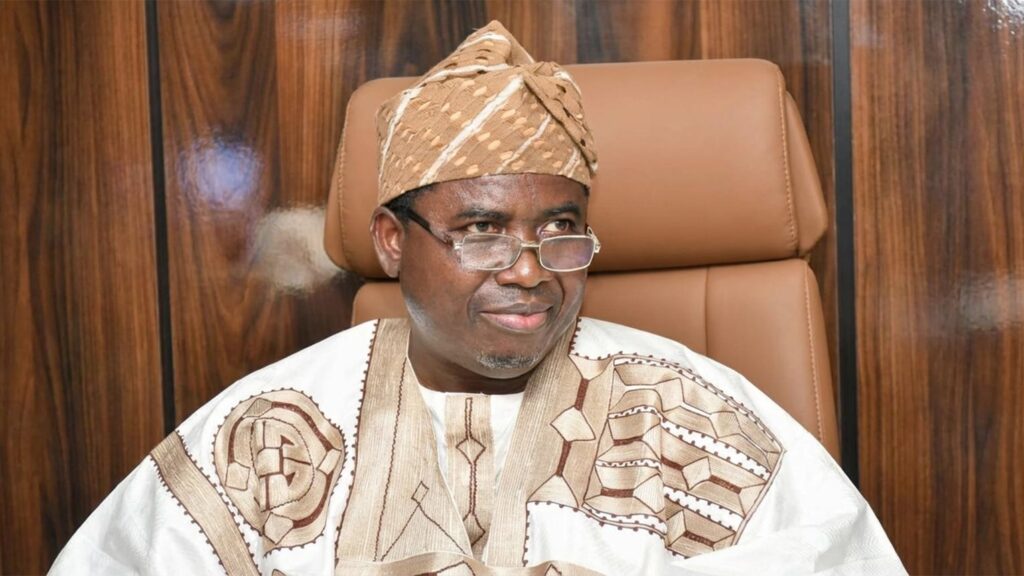
The Independent Corrupt Practices and Other Related Offences Commission (ICPC) has reportedly opposed a bail application filed by Jimi Lawal, the second defendant in an alleged financial-misconduct case involving former Kaduna State Governor Nasir El-Rufai. The supplied editorial material attributes the account to a report by The Punch.
According to The Punch’s report on the ICPC’s opposition to Lawal’s bail application, the prosecution filed a counter-affidavit opposing the application. Prosecution counsel Ibrahim Mukhtar reportedly confirmed the opposition to bail but did not disclose the grounds, explaining that the prosecution had not yet presented its arguments.
The report stated that the bail hearing had been adjourned to 16 October 2026, while the substantive case was reported as adjourned to 8 December 2026. Both dates require confirmation against official court records. The supplied material does not establish the current court position beyond the reported account.
The immediate development is procedural. The prosecution has reportedly opposed the application, but that is not the same as a judicial ruling. The information available for this edition does not establish that the court has granted or refused bail.
That distinction is fundamental. The ICPC can present its position and arguments, while the court must determine the application in accordance with the applicable law and evidence. A counter-affidavit records the prosecution’s response; it does not, by itself, establish that the court has accepted the prosecution’s position.
The available material also does not contain the complete current charge, the bail application or the prosecution’s counter-affidavit. The grounds for opposing bail therefore cannot be described in detail on the basis of the supplied source alone.
The underlying allegations of financial misconduct must likewise remain allegations. They are not findings of guilt, and reporting about the case should not imply that the defendants have been convicted. Responsible coverage requires a distinction between the allegations made in a case, the arguments presented by the parties and any eventual judicial findings.
The next steps are to confirm the hearing date against official court records, obtain relevant filings where available and report any judicial decision only after verification. If the court issues a ruling, the report should explain what the court decided without suggesting that a procedural decision on bail determines the substantive allegations.
The case raises public-interest questions because it concerns an investigation and prosecution involving alleged financial misconduct. But scrutiny of public accountability must be accompanied by accurate reporting of the legal process and the protections owed to defendants.
For now, the available account describes a pending bail application and a reported prosecution objection. The outcome remains unresolved in the supplied material. Any update should reflect the court’s actual decision rather than treating the prosecution’s position as the final word.
Conclusion
Across these seven developments, the most important distinction in Nigeria news today is the difference between a stated intention, an action under way and a result supported by evidence.
The proposed Eastern-Western electricity grid will need formal documentation, financing details, an implementation schedule and measurable improvements before its benefits can be assessed. HOPE-EDU’s reported financing and targets establish the programme’s intended scale, but its progress must be demonstrated through spending records, delivered interventions and learning outcomes. The Mairari security report and the Ogun farmers’ loss estimates require further verification before uncertain details can be presented as established facts.
In Ondo State, the recovery of additional aircraft components is part of evidence collection, not a determination of the crash’s cause. INEC’s stated position on artificial intelligence establishes a principle, while the proposed governance framework’s formal provisions and implementation remain important questions. In the ICPC case, the reported opposition to bail must remain distinct from a judicial decision, and allegations must not be confused with findings of guilt.
These stories concern different institutions and responsibilities; the available evidence does not establish a common cause linking them. Together, however, they show why public commitments and official statements need to be assessed alongside records, implementation and independently supportable outcomes.
For citizens, journalists and policymakers, the task is to keep asking what has actually happened, what can be verified and what remains unresolved. That is the basis for fair scrutiny of public power, credible policy assessment and informed public understanding.
Recommended Articles
1.Africa News Weekend Roundup: September 28 – October 4, 2026
Explore the major political, economic and security developments shaping Africa.
2.Nigeria News Roundup: Reforms, Security and Energy
Read more about the policies, security challenges and energy developments affecting Nigeria.
3.Global News Roundup: War, Energy, AI and the Economy
Understand the international developments influencing economic policy, technology and global affairs.
4.Nigerians Hate Tinubu? What the Data Really Shows
Examine public opinion, political narratives and the evidence behind claims about Nigerians’ views of President Bola Tinubu.
About the Author



