INTRODUCTION
Africa news 18 November 2026 brings together seven important developments shaping the continent and its international relationships in this edition of Africa in Motion, the daily news report from DSG HERALD NEWS. From Mozambique’s politically sensitive trial of opposition leader Venâncio Mondlane to Guinea’s crackdown on illegal gold mining, the report examines developments involving governance, security, criminal investigations, environmental protection and migration policy.
The developments covered in this report span Mozambique, South Africa, Guinea and Sierra Leone, as well as relations between European governments and Rwanda. They include a politically sensitive court case, alleged recruitment of foreign nationals for a war, convictions linked to illegal gold mining, investigations into mass shootings, international efforts to pursue a wanted fugitive and a proposed migration arrangement involving an African country.
The edition also examines recent arrivals along the Atlantic migration route to Spain’s Canary Islands. Although the reported arrivals occurred before the current 24-hour reporting period, the figures provide important context for understanding the continuing pressures facing rescue and reception services.
These stories are not evidence of one single African crisis. They are separate developments with different national circumstances and international implications. Together, they raise important questions about institutional accountability, public safety, environmental protection, cross-border cooperation and human rights.
STORY 1: Mozambique’s Venâncio Mondlane Goes on Trial Over Post-Election Unrest
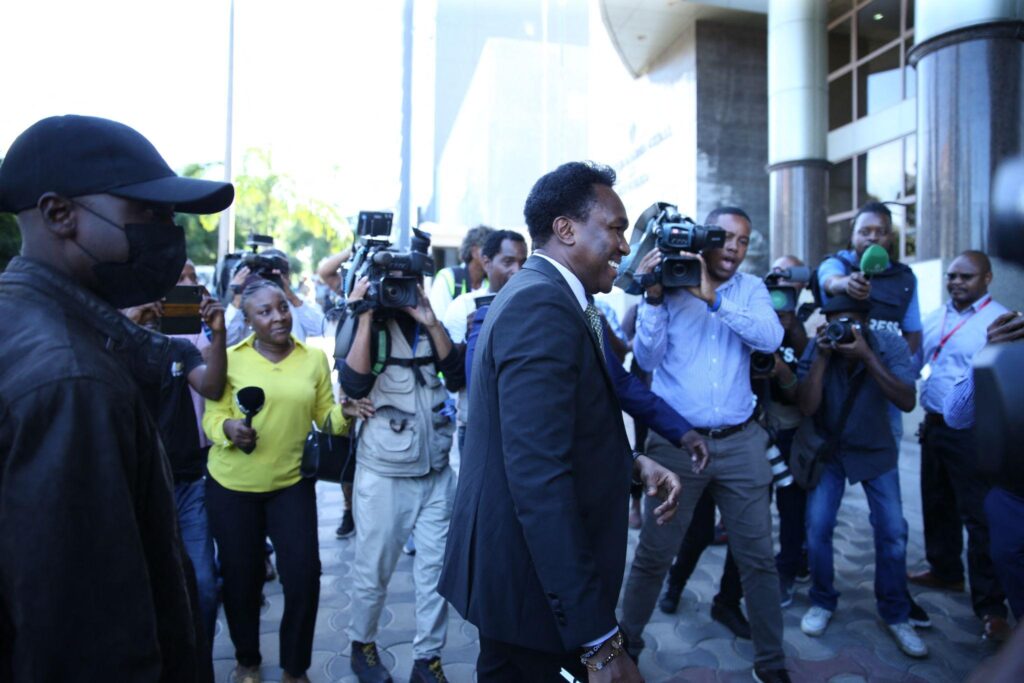
Mozambique’s opposition leader, Venâncio Mondlane, has gone on trial before the country’s Supreme Court over charges connected to the unrest that followed the disputed 2024 presidential election.
The trial opened on Tuesday, 17 November 2026. Mondlane faces five reported charges, including inciting terrorism and civil disobedience. He denies the allegations and has described the prosecution as politically motivated.
The case is unfolding against the background of a prolonged dispute over the 2024 election. Opposition figures alleged that the election was manipulated in favour of the ruling Frelimo party and President Daniel Chapo. The government and the ruling party have rejected those allegations.
Western election observers, however, said the election was not free and fair.
The court has rejected the defence’s initial request to annul the charges. Proceedings are expected to continue for months, while the court has prohibited live broadcasts, citing concerns about instability.
According to Reuters’ report on Mondlane’s trial, the proceedings began at the Supreme Court amid continuing political tensions surrounding the disputed election.
The trial has significance beyond the charges against one opposition leader. The unrest that followed the election had serious human consequences.
Reuters cited a civil-society monitoring group reporting more than 300 deaths. Amnesty International, drawing on figures from Plataforma DECIDE, reported approximately 315 deaths, more than 3,000 injuries and over 4,000 arrests and detentions between October 2024 and January 2025.
These figures are attributed to civil-society monitoring and human-rights reporting. They should not be interpreted as a final official judicial determination. Amnesty International’s investigation into the post-election crackdown provides further detail on the reported human-rights violations and the figures collected by Plataforma DECIDE.
The central question now is whether Mozambique’s institutions can address the allegations against Mondlane while ensuring due process and protecting legitimate political participation.
The prosecution must establish its case, while the defence must have the opportunity to challenge the evidence. The court’s eventual findings will be important in determining the legal outcome.
However, the trial does not, by itself, resolve the wider dispute over the election or establish responsibility for every incident during the protests.
Further proceedings, the full indictment and the evidence presented in court will be important developments to watch.
STORY 2: South Africa Arrests Ten Foreign Nationals in Alleged Russia–Ukraine War Recruitment Case
South African authorities have arrested ten foreign nationals suspected of attempting to travel from South Africa to Russia to participate in the war against Ukraine.
Five of the accused appeared before a Johannesburg court on Tuesday, 17 November, according to Africanews’ report on the court appearance.
The report says nine of the ten are Zimbabwean nationals. That detail is reported by Africanews but should still be distinguished from an independently confirmed finding in official police statements or court records.
The allegations have not been established in court. The accused have not been convicted, and the precise role of each individual has not yet been established in the material available for this edition.
The investigation is significant because South Africa has legislation regulating foreign military assistance.
The Regulation of Foreign Military Assistance Act 15 of 1998, published by the South African government, provides a legal framework governing foreign military assistance by South African citizens, permanent residents and foreign nationals operating from within the country.
South African police have said the investigation involved Interpol and local and international law-enforcement agencies.
The court appearances represent an important step in the investigation, but several questions remain unanswered. Investigators will need to establish who approached the accused, whether recruitment intermediaries were involved, what promises may have been made and what evidence links each individual to the alleged plan.
There is also a wider African dimension.
Africanews cited Ukrainian authorities as claiming that more than 1,700 African nationals from 36 countries had been recruited to fight for Russia. That figure remains a claim attributed to Ukrainian authorities. It has not been independently established in the material available for this edition.
It should also not be interpreted as proof that all African nationals travelling to Russia are combatants.
The case has a potential Zimbabwean dimension if the reported nationalities are confirmed. More broadly, it raises questions for African governments about protecting citizens who may be approached for overseas military activity without fully understanding the legal and personal risks.
Further court appearances, formal charges, bail decisions and clarification of the status of all ten accused will be important next developments.

STORY 3: Guinea Jails 224 in Illegal Gold Mining Crackdown as Enforcement Triggers Regional Displacement
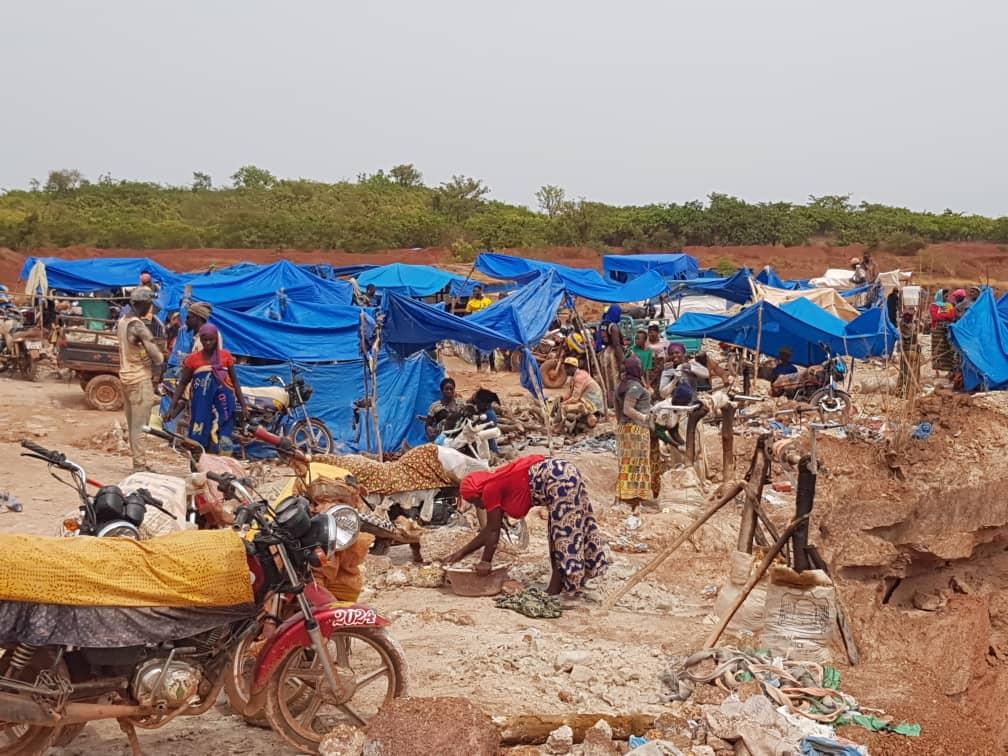
A court in Guinea has sentenced 224 people over illegal gold mining and related environmental offences in the northeastern Siguiri region.
According to Associated Press reporting, the group includes 22 former local officials, each sentenced to two years in prison, and 202 miners, who received three-year prison terms.
The court also imposed financial penalties. The former officials were each fined ten million Guinean francs, while the miners were ordered to pay a combined fine of ten billion Guinean francs, reported as approximately US$1.1 million.
Foreign nationals convicted in the case were also banned from Guinea for ten years.
The convictions form part of a government crackdown on unauthorised gold mining. Authorities have cited environmental damage, including the destruction of farmland and pollution of rivers.
The inclusion of former local officials is particularly significant. The case goes beyond the miners themselves and raises questions about the responsibilities of people who held public positions in the affected communities.
However, the enforcement operation has also been accompanied by reports of violence and displacement.
Associated Press reported that clashes between protesters and security forces left ten people dead and 13 injured. The report also cited Malian authorities as saying that tens of thousands of miners and their family members had moved towards neighbouring Mali.
Those casualty and displacement figures require further independent confirmation. The available reporting does not establish the full circumstances of the deaths, who was responsible or the precise number of people who crossed the border.
There is also an important economic dimension.
The newsroom’s earlier research cited a United Nations Environment Programme estimate, reported by Associated Press, that more than 300,000 people in Guinea depend on unauthorised gold mining for their livelihoods. This is not a count of those convicted in the Siguiri case. It illustrates the scale of economic dependence on the activity.
That dependence creates a difficult challenge for the authorities.
The government has a responsibility to enforce mining laws and protect land and water resources. But when enforcement removes people’s livelihoods, the consequences can extend far beyond those sentenced by the courts.
The central policy challenge is whether Guinea can combine environmental protection and public accountability with credible economic alternatives for people who depend on artisanal mining.
Possible appeals, implementation of the sentences, further official action and clarification of the reported movement of people into Mali will be important developments to follow.
Ultimately, the challenge is not only how many people are punished. It is whether Guinea can protect its natural resources while addressing the economic realities of communities that depend on mining.
STORY 4: South Africa Probes Two Mass Shootings After 17 People Are Killed in Gauteng and KwaZulu-Natal
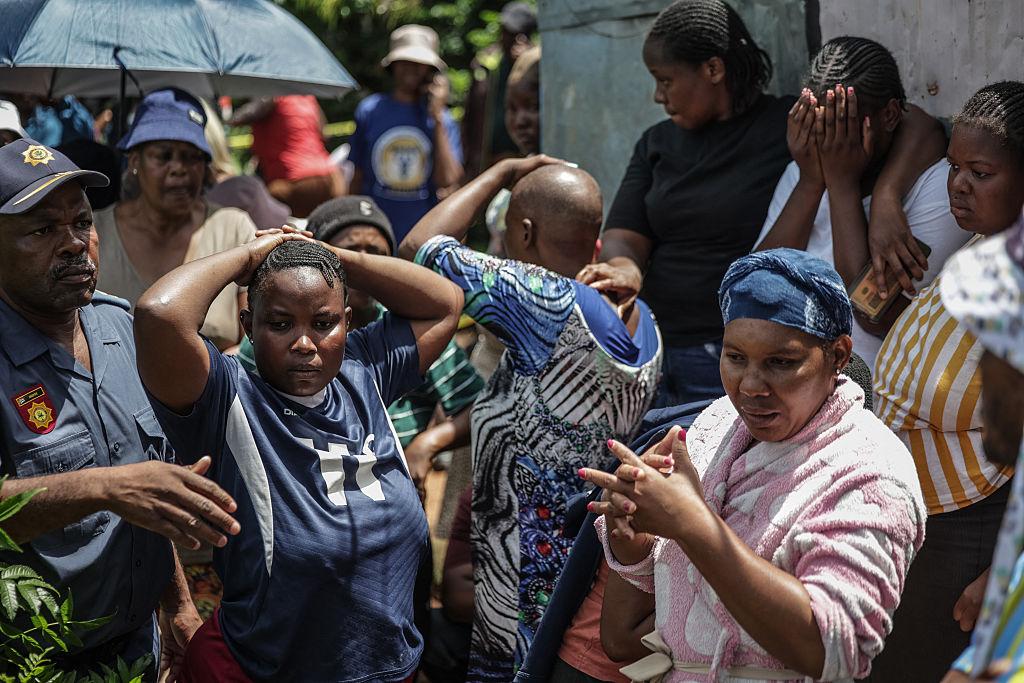
South African police are investigating two separate mass shootings in which 17 people were killed in Gauteng and KwaZulu-Natal.
The attacks happened on the night of Sunday, 15 November. They therefore predate this edition’s 24-hour reporting period, but the investigations remain an important public-safety concern.
In Jeffsville, an informal settlement in Atteridgeville, near Pretoria, nine people were shot dead inside a shack. The victims were six men and three women.
In a separate incident in Sweetwaters, near Pietermaritzburg, eight men were found dead inside a bullet-riddled vehicle.
National Police Commissioner Fannie Masemola condemned the killings.
In an official statement, South Africa’s government news service, SAnews, reported Masemola’s condemnation of the mass shootings. The report confirmed that police were investigating both incidents.
Police have been investigating both incidents, but the available reports do not establish the motives or identify all the perpetrators.
There are also questions about whether the attacks were connected.
Gauteng Police Commissioner Tommy Mthombeni said investigators were examining possible links between the Jeffsville killings and earlier violence. That remains an investigative line. It is not confirmation that the attacks were connected.
The killings have renewed concerns about illegal firearms, the protection of residents and the ability of law-enforcement agencies to prevent repeated mass-casualty violence.
Several important questions remain unanswered. Have suspects been identified? What were the motives? Where did the firearms come from? And were the two crime scenes linked in any way?
Those questions must be answered through police investigations and forensic evidence, not speculation.
For the families of the 17 victims, the immediate reality is loss and uncertainty. For the affected communities, the priority is safety and accountability.
Police updates, forensic findings, the identification of suspects and any formal charges will be important next developments. Until investigators provide evidence, the shootings should not be attributed to gangs, retaliation or any other specific motive.
STORY 5: Netherlands Intensifies Pressure on Sierra Leone Over Wanted Drug Trafficker Jos Leijdekkers
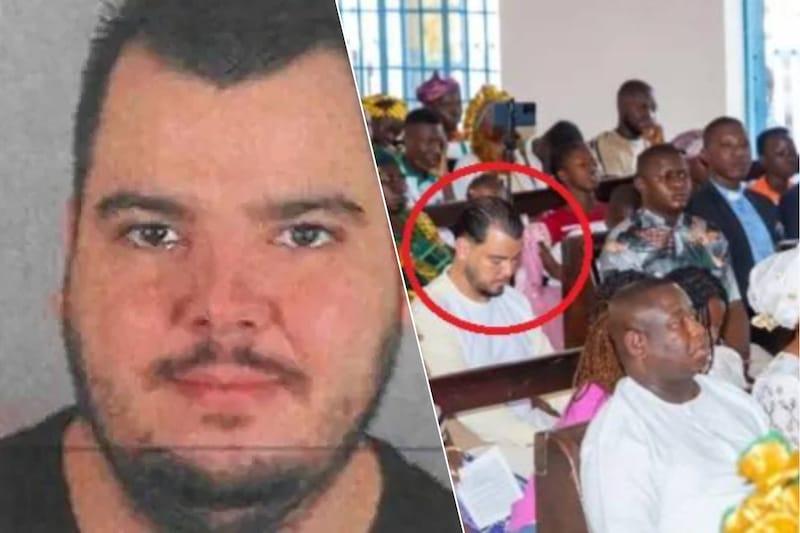
The Netherlands is increasing pressure on Sierra Leone to arrest and extradite Jos Leijdekkers, a Dutch fugitive wanted over serious criminal offences and suspected international cocaine trafficking.
Dutch Justice Minister David van Weel has publicly criticised Sierra Leone’s handling of the case and called for action.
The Netherlands has offered a reward of two million euros for information leading to Leijdekkers’ arrest.
Dutch police say they have known since mid-2024 that the fugitive is in Sierra Leone. The Dutch government also says diplomatic efforts have continued for more than 18 months.
Van Weel has questioned how someone with Leijdekkers’ profile could allegedly be in the country without the authorities knowing his whereabouts.
According to the Dutch police record, a Rotterdam court sentenced Leijdekkers to 24 years in prison on 25 June 2024.
The sentence relates to six drug transports involving nearly 7,000 kilograms of cocaine, an armed robbery in Finland and commissioning a murder. Dutch police also list aliases including Omar Sharif and Omar Sherrif.
The Netherlands Public Prosecution Service’s announcement of the two-million-euro reward provides details of the fugitive’s conviction, the reward and the Dutch authorities’ position that he is believed to be residing in Sierra Leone.
The case highlights the challenges of international law enforcement. A court sentence in one country does not automatically secure the arrest of a fugitive believed to be living in another. Authorities must work through the relevant legal and diplomatic procedures.
Important distinctions remain in this case.
The Dutch authorities’ position is that Leijdekkers is in Sierra Leone and should be arrested and extradited. However, the available reporting does not establish that Sierra Leonean officials are protecting him, that he has been arrested or that an extradition has been completed.
A substantive official response from Sierra Leone has also not been established in the material available for this edition.
The next important development is clarification of whether a formal extradition request has been received, what legal process applies and what action Sierra Leone’s authorities have taken.
The Dutch government’s criticism should not be treated as proof of institutional complicity by Sierra Leone. The case remains a test of cross-border law-enforcement cooperation and the legal processes required to pursue a fugitive internationally.
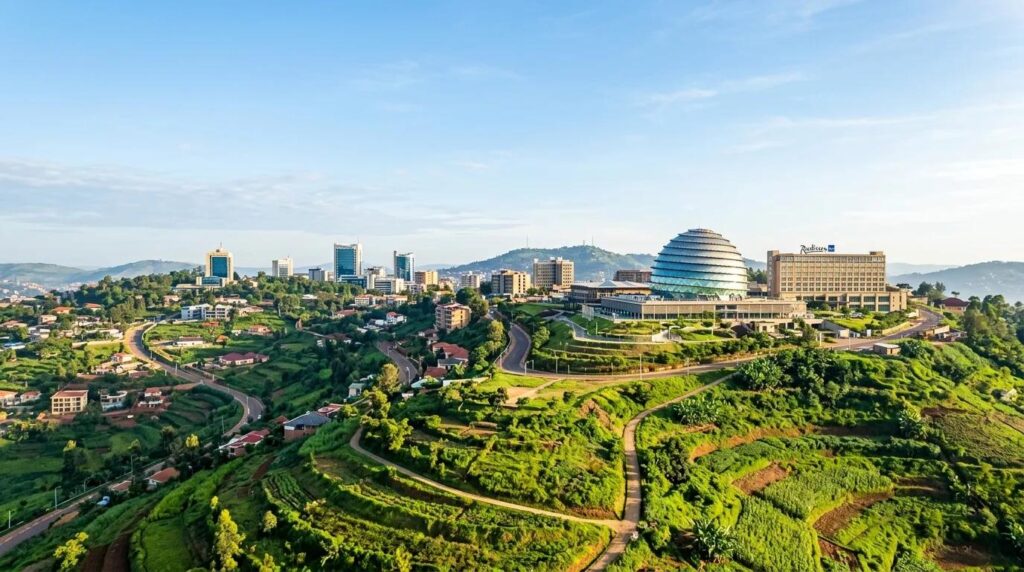
STORY 6: Five EU Countries Negotiate Rwanda Deportation Hub Amid Human Rights Concerns
Five European countries are negotiating with Rwanda over a proposed migrant return arrangement for people whose asylum applications in the European Union have been rejected but who cannot be returned to their countries of origin.
The countries involved are Austria, Denmark, Germany, Greece and the Netherlands.
The proposal was announced in Vienna on 16 November. A Reuters explainer published the following day provided further details of the plan.
The proposed pilot would initially accommodate about 100 people at a time and could handle a few hundred annually. It is intended for adults who have exhausted their legal options to remain in the European Union.
Under the proposed arrangement, people transferred to Rwanda could receive language or other training before integrating into Rwandan society or returning to their home countries.
It is important to distinguish this proposal from the former British plan to send asylum seekers to Rwanda while their claims were still being processed.
The new proposal concerns people whose asylum applications have already been rejected.
The participating European governments say the arrangement could help manage rejected asylum cases, discourage irregular migration and weaken people-smuggling networks.
The governments’ announcement is available in the Danish Ministry of Immigration and Integration’s statement on the proposed Rwanda return hub. Further details of the negotiations and the proposed pilot were reported in Reuters’ 17 November explainer.
However, human-rights organisations and United Nations rights officials have raised concerns about the rights and treatment of migrants transferred to Rwanda.
Significant legal and practical questions remain. What accommodation will be provided? Will those transferred be free to leave? What will the arrangement cost? What legal assistance will migrants receive? And how will their treatment be independently monitored?
Another central issue is responsibility.
Reuters cited the European Union Agency for Fundamental Rights on the continuing obligations and accountability of EU states when they cooperate with third countries. Transferring people to another country does not automatically remove the European governments’ human-rights responsibilities.
For Rwanda, the proposal would place the country within a major European debate about the management of rejected asylum claims. It also raises questions about the terms under which African countries participate in European migration arrangements and the safeguards required to protect people transferred under such agreements.
The proposal has a target start in 2027. That is a stated target, not confirmation that a facility is already operating. No first-transfer date has been established in the material available for this edition.
The next developments will depend on the outcome of negotiations, the publication of the legal terms and clarification of the safeguards and commitments expected from Rwanda.
For now, this remains a proposal under negotiation, not an operational deportation centre.
STORY 7: Nearly 2,200 Migrants Reach Canary Islands in Two Days as Atlantic Route Remains a Major Migration Challenge
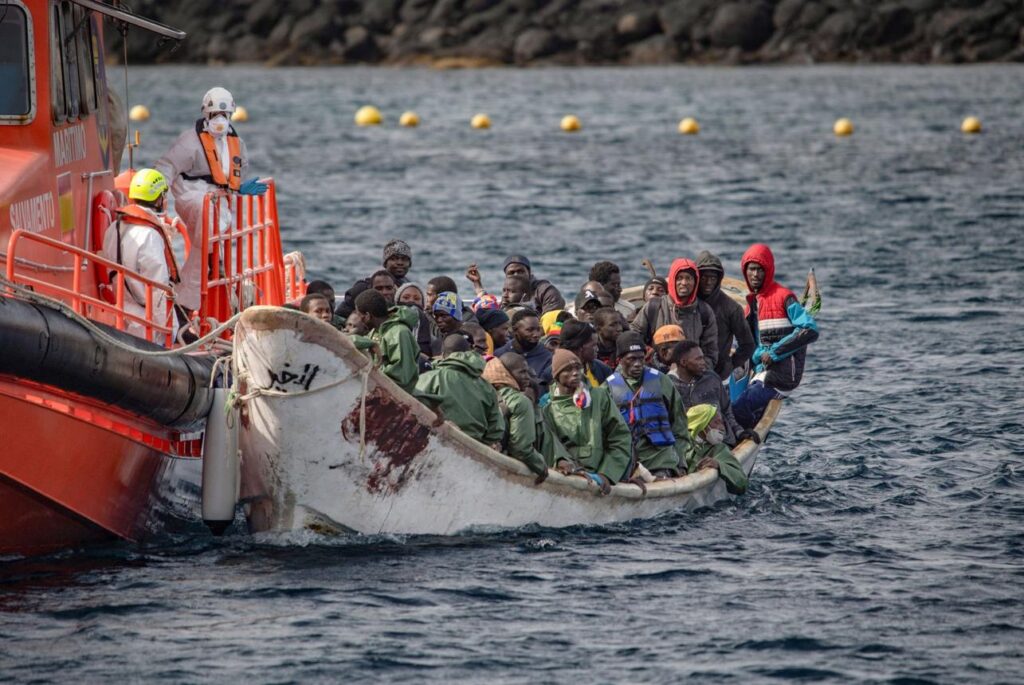
Nearly 2,200 migrants reached Spain’s Canary Islands by boat over two days in mid-November, according to figures reported by the Associated Press from Spain’s maritime rescue service.
Rescue teams assisted 1,324 people aboard 14 boats. Most of those rescued reached the island of El Hierro.
These arrivals occurred before the reporting period for this edition. The Associated Press published its report on 15 November, followed by further reporting from Euronews on 16 November. The figures are therefore recent background to a migration route that continues to place lives at risk, not a new arrival incident from the past 24 hours.
Spain’s Interior Ministry recorded 24,364 sea arrivals in the Canary Islands between 1 January and 15 November 2026.
That compares with 14,690 arrivals during the same period in 2025, an increase of 65.9 per cent. The ministry also recorded 266 boats during the 2026 period.
These are provisional figures for the period ending on 15 November, not final totals for the year. The figures can be checked against the Spanish Interior Ministry’s official migration statistics for 1 January to 15 November 2026.
The Associated Press report on the nearly 2,200 arrivals also described rescue operations involving 14 boats and assistance provided to people arriving on El Hierro.
The Atlantic route connects parts of West Africa with Spain’s Canary Islands. It is dangerous, and some journeys can take days or even weeks.
However, the available reporting does not establish the nationalities of everyone involved in the two-day arrivals or the exact departure points of every boat. It would therefore be inaccurate to attribute all the arrivals to one country.
For people who survive the crossing, arrival is only the beginning of another difficult process. They may need medical care, food, clothing, shelter and assistance with registration and legal procedures.
The Associated Press report described Red Cross personnel providing dry clothes, food and water and registering new arrivals.
The continuing movement also places demands on Spanish rescue and reception services and has implications for the relationship between European destination countries and African countries of origin and transit.
The figures alone do not explain why each person made the journey. Understanding those decisions requires reliable testimony and evidence about conditions in countries of departure and transit.
New rescue-service reports and updated migration statistics from Spain’s Interior Ministry will be important to follow, alongside confirmed information about departure points, nationalities and possible deaths or disappearances at sea.
The figures are a reminder that the Atlantic route remains a substantial challenge for African and European institutions—and a dangerous journey for the people who undertake it.
Conclusion: Accountability, Public Safety and Human Rights Remain Central
The developments examined in Africa news 18 November 2026 reveal different tests facing African states and their international partners.
In Mozambique, the trial of an opposition leader puts due process and political accountability under scrutiny. In South Africa, the alleged recruitment of foreign nationals into a war and the investigation of mass shootings raise separate questions about law enforcement and public safety.
In Guinea, the mining convictions highlight the difficult balance between environmental protection, public accountability and the livelihoods of local communities.
The Netherlands’ pursuit of a fugitive and Europe’s proposed arrangement with Rwanda show how cross-border cooperation can raise important questions about legal responsibility and human rights. Along the Atlantic migration route, arrival figures remind us that policy decisions affect people making dangerous journeys and the institutions expected to respond.
These stories are not evidence of one single African crisis. They are distinct developments that underline a shared responsibility: institutions must establish the facts, enforce laws fairly, protect communities and respect human rights.
The next court proceedings, investigations, diplomatic decisions and migration-policy negotiations will help determine how these developments unfold.
About the Author