INTRODUCTION
Global power and public accountability are increasingly shaped by diplomacy, technology, economic relationships and control over strategic resources. At the same time, the digital systems supporting businesses, governments and everyday transactions are creating new forms of dependence. A vulnerability in one technology provider can expose websites operated by many organisations, while movements in international energy markets can affect household expenses differently across countries.
These developments raise important questions about power, security and accountability.
On the international stage, China, Russia and the United States are pursuing competing interests while maintaining diplomatic engagement. In the digital economy, a security incident involving Optimizely Web Experimentation exposed weaknesses in a service associated with 178 organisations. Meanwhile, inflation figures from the United Kingdom and Nigeria demonstrate why changes in energy prices cannot be understood through crude oil prices alone.
Questions about the use of public resources have also emerged following a journey by United States Homeland Security Secretary Markwayne Mullin on a government aircraft. Separately, reports of disruption to the National Security Agency’s internal communications network have drawn attention to the importance of institutional resilience.
These are five distinct developments, not evidence of one connected crisis. But together, they offer an opportunity to examine how powerful institutions manage their responsibilities, how much people depend on their systems and what the available evidence actually establishes.
STORY 1: China, Russia and the United States — The Diplomatic Contest Behind Global Power
Three of the world’s most influential countries are pursuing competing interests at a time of considerable international uncertainty. Yet diplomatic engagement between their leaders continues, raising questions about the relationship between strategic competition and international cooperation.
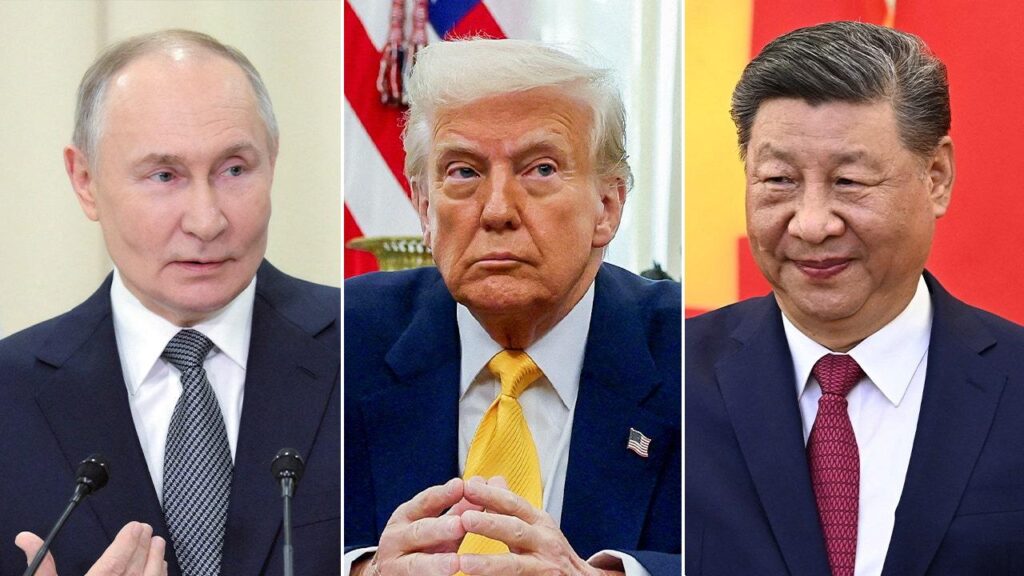
China’s President Xi Jinping, Russia’s President Vladimir Putin and United States President Donald Trump were expected to meet in Shenzhen on 19 November 2026.
China’s Foreign Ministry announced the planned meeting on 16 November, alongside preparations for the Asia-Pacific Economic Cooperation (APEC) Economic Leaders’ Meeting. The announcement is available in the Chinese Ministry of Foreign Affairs statement.
At the reporting cut-off of 18 November, the planned trilateral meeting had not yet taken place. Its outcome therefore remained unknown.
The distinction is important. The diplomatic positions of the three governments can be examined, but the planned engagement cannot be presented as an agreement or a change in the international balance of power.
APEC and the competing interests of major powers
On 18 November, Xi Jinping delivered a keynote address at the APEC CEO Summit.
His message emphasised open trade, stable supply chains and stronger international cooperation. China also presented its vision of a more multipolar international order, in which influence is distributed among several major centres of power.
On the sidelines of APEC, Reuters reported discussions between Xi and Putin. Putin criticised Western sanctions, while Trump had arrived in China ahead of the planned trilateral engagement.
These developments illustrate an important feature of international relations: strategic competition does not necessarily prevent diplomatic engagement.
Countries can disagree sharply over trade, security, technology and foreign policy while continuing to negotiate and maintain diplomatic relationships.
For China, international trade, access to technology, investment and influence over global economic rules are important strategic considerations.
For Russia, the international consequences of its invasion of Ukraine, Western sanctions and its relationships with other major powers remain central concerns.
For the United States, competition with China includes trade, advanced technology and national security.
One important area is access to advanced artificial intelligence chips.
These semiconductors are essential components in powerful computing systems and the development of artificial intelligence. Restrictions on access to advanced chips can therefore influence industrial development, scientific research, military applications and the future competitiveness of national economies.
The precise legal instruments and scope of American restrictions must be examined carefully before drawing conclusions about their full effects.
The European Union has also maintained and expanded sanctions against Russia. Those measures began after Russia’s 2014 annexation of Crimea and expanded substantially following the full-scale invasion of Ukraine in February 2022. The European Council’s explanation of EU sanctions against Russia provides the background and timeline.
The wider contest is therefore not limited to diplomatic statements. It involves economic leverage, technology supply chains, access to markets and the ability of governments to influence international decisions.
What does this competition mean for Africa?
Africa’s position in this international contest deserves particular attention, but the continent should not be treated as a single political or economic bloc.
African countries have different trade relationships, investment needs, debt exposures, security arrangements and diplomatic priorities.
For some governments, stronger relationships with China may offer infrastructure investment, access to markets and economic opportunities.
Others maintain significant economic and security relationships with the United States and European countries. Russia also maintains relationships with selected African governments, particularly in areas involving security and diplomacy.
The central question is not whether African countries must automatically choose one side.
It is whether individual governments can negotiate effectively, protect their national interests and avoid becoming excessively dependent on any single external partner.
The ability to balance competing international relationships may become increasingly important as major powers seek influence over technology, trade, investment and strategic resources.
What the evidence does not yet establish
The positions taken by the three governments should not be confused with proven outcomes.
China’s statements supporting open trade do not establish that every Chinese trade policy follows that principle. Putin’s criticism of Western sanctions does not demonstrate that those measures have failed.
Likewise, diplomatic engagement between Xi, Putin and Trump would not, by itself, establish that their strategic disagreements had disappeared.
The next important evidence would come from the actual record of the 19 November meeting, any official communiqué, statements issued by the participating governments and decisions subsequently implemented.
The larger lesson is that global power is shaped not only by diplomatic appearances but also by economic strength, technological capability and the ability to translate negotiations into practical outcomes.
STORY 2: The Optimizely Security Incident — How 178 Organisations Became Exposed
The growing dependence of businesses on external technology providers has created a complex cybersecurity challenge. Organisations may protect their own websites and internal computer systems while relying on third-party services to deliver important functions to visitors.
A security incident involving Optimizely Web Experimentation in November 2026 demonstrated how a vulnerability in one provider can create exposure across websites associated with many organisations.
On 16 November, security researcher Scott Helme, through Report URI, identified 188 infected scripts associated with 178 organisations. His technical investigation, published by Report URI, provides details of the malicious code and the organisations identified in the investigation.
The organisations named in technical reporting included Zoom, the BBC, CNN, Salesforce, GitLab, IKEA, HSBC, Equifax, Air France-KLM, Ledger and Peacock.
However, the numbers require careful interpretation.
The incident did not establish that the internal databases or computer systems of all 178 organisations had been breached.
The problem involved malicious JavaScript being inserted into customer projects using Optimizely’s Web Experimentation service.
How third-party website scripts create security risks
JavaScript is a programming language commonly used to make websites interactive and to provide functions such as analytics, advertising, personalisation and experimentation.
Many organisations rely on external technology companies to provide some of these services. Instead of hosting every component themselves, they load code supplied by a third-party provider.
This arrangement can make website development and management easier.
However, it also creates a potential security weakness.
If the external provider is compromised, malicious code can potentially be delivered through websites that otherwise appear legitimate and trustworthy.
In this incident, Optimizely acknowledged that an unauthorised party had exploited a vulnerability in its Experimentation service and injected malicious JavaScript into customer projects. The company’s response and technical explanation are discussed in its statement on the Web Experimentation compromise.
The company said it fixed the vulnerability, removed the injected code and secured affected accounts.
What the malicious code was designed to do
Report URI’s technical investigation described several functions within the malicious payload.
These included:
- Cryptocurrency wallet-address substitution.
- Payment-card skimming on affected website forms.
- Collection of certain browser cookies.
- Screenshot capture.
- Attempts to deliver exploit kits targeting vulnerable iPhones and iPads.
The findings are serious because they describe the capabilities of the malicious code.
But there is an important distinction between what malicious code is designed to do and what it actually achieves.
The presence of a payment-card skimmer does not establish how many card details were successfully stolen. Similarly, an attempt to exploit a mobile device does not prove that the device was compromised.
Report URI also reported that approximately US$7,040 had reached attacker-controlled cryptocurrency wallets by 19:25 UTC on 16 November.
That figure represents the researcher’s reported findings at a particular time. It is not a complete estimate of financial losses from the incident.
How the incident developed
The researcher’s timeline shows how quickly the incident unfolded on 16 November.
Report URI first observed an injection at 04:21 UTC. A malicious tracking script was subsequently identified, followed later by the addition of payment-card skimming functionality.
In its scans that evening, Report URI identified 186 infected snippets among 1,611 examined.
By 21:52 UTC, only one of the 188 identified infected snippets remained infected in the researcher’s scan.
These figures describe the researcher’s observations and sample. They should not be interpreted as a complete census of every affected website or visitor.
Exposure is not the same as a confirmed internal breach
There is also evidence that puts the incident into perspective.
Reuters reported that some affected organisations, including Equifax and Zoom, found no evidence of an impact on their own systems or customer data. The incident was also examined in a separate technical report by Krebs on Security.
That distinction matters.
An organisation may have loaded an infected third-party script without suffering a confirmed breach of its internal systems.
Likewise, the presence of malicious code does not establish that every visitor to an affected website lost money or had personal information stolen.
The incident therefore raises several important questions.
How did the attacker obtain the access required to inject malicious code into customer projects?
How many website visitors actually received the infected scripts?
How many payment-card details or other personal information were successfully collected?
Were any devices successfully compromised through the reported exploit attempts?
And what were the total financial losses?
Answering these questions requires technical logs, independent forensic findings and responses from Optimizely and the affected organisations.
The broader lesson is that cybersecurity cannot stop at an organisation’s own servers. It must also consider the external providers, software and digital services integrated into its websites.
In an interconnected internet, a weakness in one provider can create exposure across many otherwise unrelated organisations.

STORY 3: International Energy Markets — Why Fuel Prices Affect the Cost of Living Differently
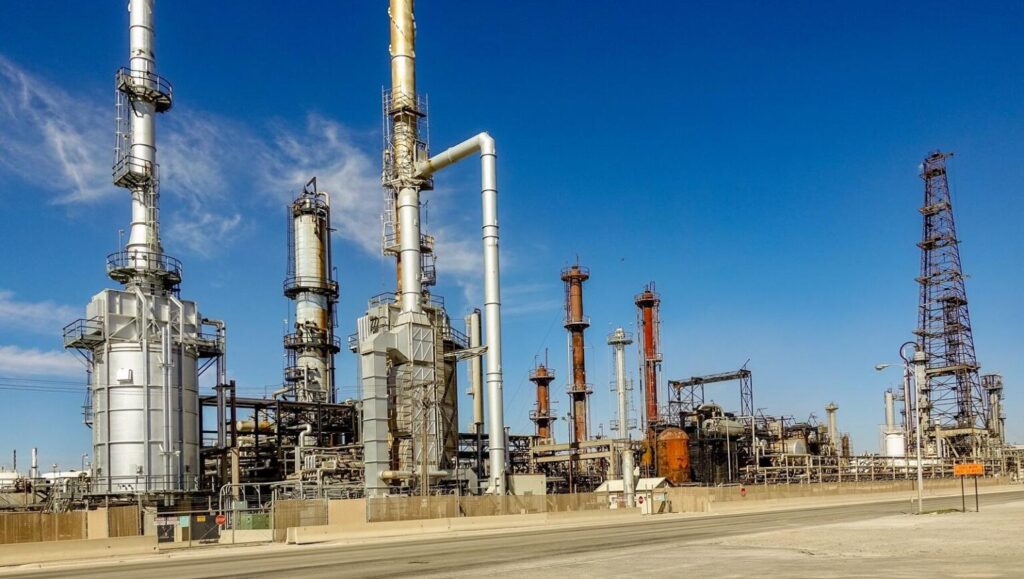
Energy markets influence the cost of transport, manufacturing, food distribution and household expenses. But international movements in crude oil prices do not affect every country in the same way.
The United Kingdom and Nigeria provide a useful comparison because both are exposed to international energy markets while operating under different economic conditions, currencies and domestic petroleum supply arrangements.
Their October 2026 inflation figures illustrate why the relationship between energy prices and the cost of living requires more than a simple comparison of crude oil prices.
What the October inflation figures reveal
On 18 November 2026, the United Kingdom’s Office for National Statistics reported that annual consumer price inflation increased from 3.5 per cent in September to 3.6 per cent in October.
The ONS identified transport, particularly motor fuels, as the largest upward contribution to the change in the annual inflation rate.
Average petrol prices increased by 5.2 pence per litre to 174.7 pence in October.
Diesel prices increased by 7 pence to 199.5 pence per litre.
Annual motor-fuel inflation reached 33.2 per cent.
These figures indicate that motor fuels were an important contributor to the UK’s inflation movement during the period. The full figures and supporting tables are available in the ONS Consumer Price Inflation report for October 2026.
Nigeria’s figures showed a different pattern.
The National Bureau of Statistics reported on 16 November that annual headline inflation declined from 14.63 per cent in September to 14.06 per cent in October.
Annual food inflation also declined, from 19.59 per cent to 19.13 per cent.
However, Nigeria’s month-on-month headline inflation increased from 0.06 per cent in September to 0.43 per cent in October.
Food prices declined by 0.75 per cent month-on-month.
The figures were reported in the October inflation update published by Voice of Nigeria, citing the latest National Bureau of Statistics Consumer Price Index report.
Why falling annual inflation does not mean prices have fallen
The Nigerian figures may appear contradictory at first.
How can annual inflation decline while monthly inflation increases?
The explanation is that the two measurements compare prices over different periods.
Annual inflation measures the change in prices compared with the same period a year earlier.
Month-on-month inflation measures the change between two consecutive months.
A decline in the annual inflation rate does not mean that prices have returned to previous levels. It means that the pace of price increases over the twelve-month comparison has eased.
Meanwhile, an increase in month-on-month inflation indicates that prices increased more quickly between the latest two months than they did in the previous monthly comparison.
This distinction is important for households.
People experience the actual prices they pay for food, transport and other necessities. A lower annual inflation rate does not automatically mean that their daily expenses have become cheaper.
The Nigerian figures therefore need to be interpreted through both measurements rather than through the annual rate alone.
How international energy prices reach consumers
Crude oil is an important starting point in the petroleum supply chain, but the final prices of petrol and diesel depend on several additional factors.
These include:
- The cost of crude oil.
- International prices for refined petroleum products.
- Refining costs and capacity.
- Exchange rates.
- Shipping and other supply costs.
- Domestic availability and stock levels.
- Distribution and retail arrangements.
For Nigeria, exchange rates are particularly important because many petroleum-related costs are linked to the US dollar.
When the naira weakens against the dollar, imported products and dollar-priced inputs can become more expensive in local currency.
However, the effect is not necessarily immediate or identical across all products and locations.
Domestic refining, imports, available stock and distribution costs also influence the final price.
What Nigeria’s September petroleum figures show
The NMDPRA’s September 2026 fact sheet provides an indication of the country’s petroleum market during that period.
It recorded average Brent crude at US$116.77 per barrel and an indicative NFEM exchange rate of ₦1,327.31 to the dollar.
The same fact sheet gave indicative petrol prices of ₦1,371.01 per litre in Lagos and ₦1,420.01 per litre in Abuja.
These are September figures, not October figures. The original figures can be checked in the NMDPRA September 2026 sector fact sheet.
The fact sheet also recorded Dangote Refinery’s petrol production at 47.22 million litres per day.
Domestic receipts were 28.50 million litres per day, while exports were 15.47 million litres per day. Another 3.25 million litres per day was added to stock.
This distinction is important because production is not the same as the quantity received by the domestic market.
Some output was exported, while another portion was added to stock.
The fact sheet also recorded the NNPCL refineries in Port Harcourt, Warri and Kaduna as not producing during the period covered.
These figures help explain why domestic fuel supply cannot be understood by looking at refinery production alone.
Why crude oil and petrol prices do not always move together
The International Energy Agency’s November Oil Market Report, published on 13 November, described a fall in North Sea Dated crude prices.
Prices had declined from an early-October high of approximately US$136 per barrel to about US$93 at the time of the report, as Gulf exports recovered.
The IEA also reported that global refinery runs declined by 1.3 million barrels per day in October, while diesel prices remained elevated.
This illustrates why crude oil prices and finished fuel prices do not always move together.
A fall in crude oil prices does not automatically produce an immediate or equivalent reduction in petrol and diesel prices.
Refined-product prices, exchange rates, refining operations, supply conditions and distribution costs can all influence the final retail price.
The IEA’s full analysis is available in its November 2026 Oil Market Report.
What does this mean for ordinary people?
Energy costs can affect transport operators, farmers, manufacturers, food distributors and businesses that depend on diesel-powered generators.
When transport and operating expenses increase, businesses may pass some of those costs on to consumers.
However, the precise contribution of fuel to a particular increase in food or transport prices must be established through evidence.
That requires household expenditure data, transport-fare records, business operating costs and comparable monthly petroleum-price information.
The available figures do not establish that international crude oil movements alone explain Nigeria’s inflation pattern.
Further analysis would require October Nigerian petroleum supply and pricing data, comparable crude and refined-product prices, exchange-rate movements and evidence of how fuel costs affect households and businesses.
The central lesson is that international energy markets affect countries through different domestic systems. Crude oil is only one part of the explanation for what consumers eventually pay.
STORY 4: Government Aircraft and Public Accountability — Who Pays for Official Travel?
The use of government aircraft by senior public officials raises questions about public resources, official responsibilities and the rules governing personal activities during government travel.
These questions emerged following a journey by United States Homeland Security Secretary Markwayne Mullin to Baton Rouge, Louisiana, on 14 November 2026.
The journey took place shortly after a nationwide ground stop issued by the Federal Aviation Administration on 13 November.
The FAA disruption and the aircraft journey
The FAA said a legacy network data-flooding problem caused instability in its systems.
It reported that air traffic resumed at 8:15 p.m. Eastern Time, with 17 of 22 Air Route Traffic Control Centres affected.
The agency reported approximately 12,462 flight cancellations during the wider disruption period. That figure should not be interpreted as meaning every cancellation was directly caused by the ground stop.
The FAA also said there was no indication of a cyberattack. Its explanation of the incident, including the network problem and flight cancellations, is available in its Nationwide Ground Stop: Questions and Answers.
The Washington Post reported flight records showing that a Department of Homeland Security Gulfstream 700 departed Washington shortly after 5 p.m. on Saturday, stopped in Atlanta and landed in Baton Rouge at 8:03 p.m.
The LSU–Texas football game had kicked off at 7:49 p.m.
The aircraft later departed Louisiana at 12:39 a.m. on Sunday for Tulsa, where Mullin lives, before returning to Washington on Monday.
The flight details and Mullin’s response were reported by The Washington Post.
Mullin said he would not have travelled unless airways had been fully open for 21 hours.
The Department of Homeland Security said he was required by law to use government aircraft for secure communications and continuity of government. It also said he personally pays for flights unrelated to official duties.
Those statements establish the department’s and the secretary’s public explanations. They do not, on their own, provide all the documents required to assess the specific journey.
What do US government aircraft rules say?
United States federal travel regulations recognise different categories of government aircraft use.
These include official travel and what is known as required-use travel.
Required-use travel may be justified by bona fide communications, security requirements or exceptional scheduling needs.
But the existence of this category does not mean that every journey automatically qualifies.
Under 41 CFR §301-10.260, government aircraft use is subject to rules governing authorisation and cost-effectiveness. The related provisions, 41 CFR §§301-10.261–263, address the categories of travel, required-use authorisation and the information that must be included in relevant travel authorisations.
The regulations generally require advance written authorisation, subject to specified exceptions. The relevant authorisation must identify the traveller, agency, official purpose and destination, and address reimbursement where personal or political travel is involved.
Another important provision is 41 CFR §301-70.804.
When personal activity occurs during qualifying required-use travel, reimbursement is not automatically calculated as the full operating cost of the aircraft.
The applicable rule generally compares the relevant coach airfare with the cost of travel without the personal activity.
This distinction matters because the reimbursement calculation depends on the category of travel and the applicable regulatory requirements.
The documents needed to establish accountability
The Washington Post also reported that Mullin was seen in a private box belonging to Ben Bordelon, chief executive of Bollinger Shipyards.
The company reportedly received a US$2.2 billion contract for four Coast Guard cutters in December 2025.
Mullin said he had never met Bordelon before the game. The company did not respond to the Washington Post by publication.
The reported relationship is a matter that can be examined, but it does not establish that an improper arrangement or benefit occurred.
To determine whether the relevant rules were followed, important documents would include:
- The DHS written required-use determination.
- The specific trip authorisation.
- The official mission purpose.
- The reimbursement calculation.
- Proof of any required payment.
- The aircraft’s operating-cost records.
- Relevant ethics or hospitality documentation.
Without these records, it would be premature to declare that the journey was unlawful.
It would also be insufficient to treat an official explanation as a substitute for documentary accountability.
The wider principle is straightforward: when public resources are used, the records should establish the purpose, authorisation and applicable financial obligations.
An allegation, an official response and an evidence-based accountability finding are not the same thing.

STORY 5: NSA Network Disruption — Why Institutional Resilience Matters
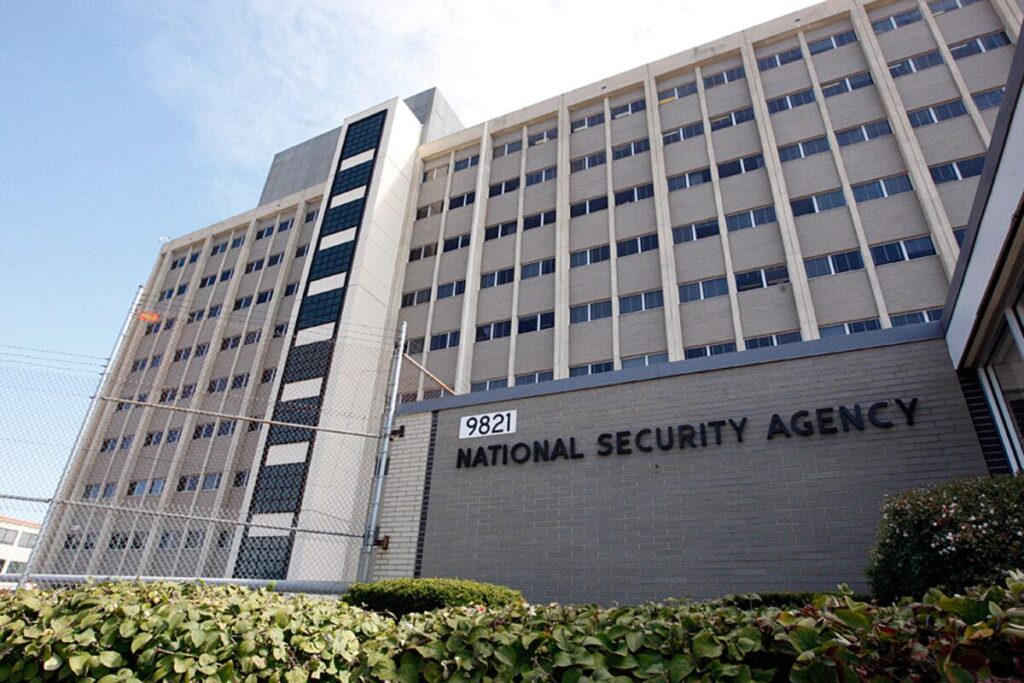
Reports of disruption to the United States National Security Agency’s internal communications network in November 2026 have drawn attention to the importance of maintaining critical systems.
The network, known as NSA Net, is used for the agency’s internal communications.
CNN reported on 17 November that the network was down, citing six people familiar with the matter. The report was subsequently carried by CNN.
The Record subsequently reported intermittent availability, staggered employee arrivals and an account from one source that the system had been unstable for several weeks. Its report, NSA Net faces unspecified disruptions, included the agency’s response.
The NSA, however, offered a different explanation.
What the NSA said about the disruption
The agency said the network experienced temporary degradation during scheduled routine maintenance.
It acknowledged that some internal systems were affected but said mission-critical capabilities remained fully operational.
The NSA also said its infrastructure had multiple layers of redundancy.
In this context, redundancy means having additional systems or pathways that can help an organisation continue essential operations when part of its infrastructure experiences a problem.
For institutions responsible for critical national-security functions, this kind of preparation is an important part of continuity planning.
However, the precise architecture of the NSA’s classified network is not publicly established in the available material. Its internal design and backup arrangements should not be speculated about.
Reuters reported that it could not independently establish the duration or full scope of the disruption. Its report on the agency’s explanation is available through Reuters coverage of the NSA network disruption.
What is established — and what remains unknown?
The available information supports several conclusions.
The NSA acknowledged temporary network degradation and attributed it to scheduled maintenance.
The agency said that mission-critical capabilities remained operational.
Media reports described disruption and intermittent availability.
However, the available evidence does not establish the exact technical problem, how long it lasted, which systems were affected or whether intelligence activities were delayed.
It also does not establish that the incident was a cyberattack.
There is no established evidence connecting the NSA disruption to the FAA ground stop or the separate Microsoft outages mentioned in public reporting.
These distinctions are important because a network disruption does not automatically mean that an organisation has lost its essential operational capability.
At the same time, an official statement does not provide a complete technical account.
Important questions remain about the duration of the disruption, the systems affected, whether backup arrangements were activated and what evidence supports the agency’s statement about mission-critical operations.
For now, the responsible interpretation is to understand the incident as an example of the importance of institutional resilience, while recognising that its technical details remain limited.
CONCLUSION
The five developments examined in this edition reveal different forms of dependence and institutional responsibility.
The international contest involving China, Russia and the United States demonstrates that global influence is shaped by diplomacy, trade, technology and strategic relationships. The planned summit must ultimately be judged by what the participating governments agree and implement.
The Optimizely incident shows how a vulnerability in one technology provider can create exposure across websites associated with many organisations. But exposure must not be confused with confirmed internal breaches or proven financial losses.
The comparison between the United Kingdom and Nigeria demonstrates why energy prices and inflation require careful interpretation. Crude oil prices, exchange rates, refining, supply and distribution all influence what consumers eventually pay.
The government-aircraft case shows why public accountability requires documentary evidence, not official explanations alone. The NSA disruption, meanwhile, illustrates the difference between a technical problem and a confirmed failure of essential operations.
These developments do not establish one connected institutional crisis. They show that governments, businesses and citizens depend on systems whose decisions and performance can have far-reaching consequences.
Understanding global power and public accountability therefore requires more than following announcements. It requires examining the evidence, identifying what remains unknown and asking whether institutions can demonstrate that they have fulfilled their responsibilities.
That is the bigger story behind the headlines.
About the Author