INTRODUCTION
Africa’s political, security and economic landscape continued to attract attention as five significant developments emerged across the continent during the 24-hour reporting period ending on 13 November 2026.
In this edition of Africa in Motion, DSG HERALD NEWS examines a newly published investigation into West Africa’s role in the international cocaine trade, an additional arrest in South Africa over alleged recruitment for the Russia–Ukraine war, and institutional investigations following the disruption of a political gathering in Lagos.
The report also examines preparations for The Gambia’s December presidential election and Ghana’s launch of redesigned banknotes ahead of their planned introduction into circulation.
Although these developments concern different countries and policy areas, they highlight important questions about institutional responsibility, regional security, democratic participation and public confidence.
From the challenges of confronting international criminal networks to the administration of elections and the practical implementation of economic decisions, this edition of Africa news today considers what happened, why it matters and what developments remain to be seen.
STORY 1: West Africa Cocaine Trafficking — New Investigation Raises Security and Governance Concerns
West Africa’s position in the international cocaine trade has come under renewed scrutiny following a newly published investigation by Agence France-Presse, examining how criminal networks use countries in the region as transit points for cocaine moving from South America towards European markets.
The investigation draws attention to the region’s importance within international trafficking routes and the challenges facing governments attempting to disrupt organised criminal networks operating across national borders.
One of the significant examples cited in the report was a major seizure by Liberian police in July 2026. Authorities intercepted approximately four tonnes of cocaine, with an estimated value of $317 million. Reuters reported the seizure of 3,971 kilograms of cocaine in Liberia, valued at approximately $317 million.
Although the seizure occurred several months before the current reporting period, it provides important background to the investigation published on 13 November.
The scale of West Africa’s role in international trafficking
The AFP investigation also cited research by the Global Initiative Against Transnational Organized Crime, which estimated that around 30 per cent of the cocaine consumed in Europe in 2025 passed through West Africa. The organisation’s research on cocaine markets in West Africa examines the region’s trafficking routes, networks and wider impacts.
This figure is an estimate rather than a direct measurement of every shipment passing through the region.
The actual scale of the trade remains difficult to establish because trafficking networks operate covertly. Official seizure figures also represent only shipments detected by law-enforcement agencies, meaning they cannot independently reveal the full volume of illegal drugs moving through international routes.
Countries identified within the wider regional picture include Liberia, Sierra Leone, Guinea-Bissau and Mali.
West Africa’s maritime connections, ports and transport infrastructure make the region strategically important to international trafficking networks. These connections, however, also create challenges for governments responsible for monitoring borders, protecting ports and preventing criminal exploitation of legitimate transport systems.
Governance and public-health implications
The cocaine trade presents challenges beyond law enforcement.
The exploitation of border controls, customs systems and public institutions can undermine governance and weaken public confidence. Where criminal networks gain access to institutional weaknesses, their activities can become more difficult to detect and prosecute.
There are also concerns about cocaine being diverted into local markets. This creates additional public-health challenges, particularly in communities where prevention, treatment and rehabilitation services may be limited.
The investigation also referred to former Liberian vice-president Jewel Howard-Taylor, who was reported to have been arrested over alleged involvement in an international trafficking network.
The allegations remain allegations. They do not establish guilt, and the legal status and evidence surrounding the matter require confirmation through appropriate court and law-enforcement records.
What happens next?
The wider challenge for West African governments is whether major drug seizures and public warnings can translate into sustained action against the networks behind international trafficking.
That requires more than intercepting individual shipments. It involves intelligence-sharing, maritime surveillance, stronger port security, credible investigations and effective prosecution across national borders.
For West Africa, the central issue is not simply how many tonnes of cocaine authorities can seize. It is whether governments can identify and dismantle the criminal networks that make international trafficking possible.

STORY 2: South Africa Arrests Tenth Suspect in Alleged Russia–Ukraine War Recruitment
South African authorities arrested a tenth foreign national in an investigation into alleged efforts to recruit people in South Africa to participate in the Russia–Ukraine war.
The 38-year-old suspect was arrested in Gauteng on 11 November, according to reporting by The Citizen.
The arrest followed the earlier detention of nine foreign nationals in an operation involving South Africa’s Directorate for Priority Crime Investigation, commonly known as the Hawks, Interpol Pretoria, police crime intelligence and other law-enforcement partners.
The development has attracted attention because of growing concerns about African nationals being recruited to participate in a foreign conflict.
What is known about the arrests?
The Associated Press reported that the first nine suspects were Zimbabwean nationals.
However, the identity and nationality of the tenth suspect were not disclosed in the reporting available for this edition.
It would therefore be inaccurate to assume that all ten suspects share the same nationality or are alleged to have played identical roles.
The investigation concerns alleged recruitment for foreign military activity and possible breaches of South Africa’s Regulation of Foreign Military Assistance Act of 1998.
The law provides the relevant legal framework for the investigation. However, the arrests do not establish guilt. The allegations against each individual must be tested through the legal process.
African citizens and the consequences of foreign recruitment
The case has attracted wider attention because of figures reported by African governments concerning their citizens’ involvement in the Russia–Ukraine war.
According to Associated Press reporting, Zimbabwe said that 15 of its citizens had been killed and that it was seeking the return of 66 others.
Kenya has reportedly said that more than 1,000 of its citizens had been recruited.
These figures are attributed to the respective governments through AP reporting. They should not be treated as independently verified totals without further official documentation.
The human consequences of foreign recruitment can be severe.
People who enter a foreign conflict may face injury, death, coercion or difficulty returning home. Their families may also struggle to establish where they are or what has happened to them.
For African governments, the issue raises questions about how citizens are approached, what information they receive before travelling and whether recruitment arrangements comply with national laws.
Important questions remain unanswered
Several issues still require clarification.
Who organised the recruitment? What was promised to those approached? Were deception or coercion involved? What evidence connects the arrested suspects to particular recruitment networks?
The arrest of a tenth suspect shows that the investigation continued beyond the initial operation. It does not, by itself, establish that an entire recruitment network has been dismantled.
The next developments to watch include court proceedings, further official statements and evidence establishing the alleged roles of the individual suspects.
The case highlights the responsibility of African governments to protect their citizens from unlawful recruitment and exploitation while ensuring that investigations and prosecutions follow due process.

STORY 3: Nigeria — Lagos Police and House of Representatives Investigate Disruption of Peter Obi Political Gathering
Authorities in Nigeria began investigating the reported disruption of a political gathering organised for Peter Obi in Lagos, bringing renewed attention to the protection of political participation ahead of the country’s 2027 general elections.
The Lagos State Police Command was investigating the incident at Classique Event Place, along Kudirat Abiola Way, Oregun, where supporters had assembled while waiting for Obi, the presidential candidate of the Nigeria Democratic Congress.
According to a report by PUNCH, suspected attackers entered the venue and disrupted the gathering.
However, the available reporting did not establish the complete sequence of events, the identities of those responsible or their motive. There was also no verified casualty figure in the supplied reporting.
Police investigation and parliamentary scrutiny
The Lagos State Police investigation was accompanied by a separate response from the National Assembly.
On 12 November, the House of Representatives adopted a motion of urgent public importance and established an ad hoc committee to investigate reported political violence, attacks on political gatherings and disruptions of political activities ahead of Nigeria’s 2027 general elections.
These were two separate institutional actions.
The police were investigating the reported Lagos incident, while the parliamentary committee was established to examine wider reports of political violence and disruption.
Neither action constituted a finding of guilt against any individual or political organisation.
The distinction is important because investigations and parliamentary inquiries are processes for establishing facts and examining institutional responses. They should not be treated as proof that a particular person or organisation is responsible.
Why political participation matters
Political gatherings allow candidates, political parties and supporters to organise, communicate their positions and participate in public debate.
When people are intimidated or prevented from attending political events, their ability to participate freely in democratic activity can be weakened.
This becomes particularly important as Nigeria approaches another general election cycle.
The safety of political gatherings is therefore not simply an issue for individual candidates or political organisations. It concerns the wider democratic environment in which citizens exercise their rights to assemble, associate and participate in public affairs.
What should investigators establish?
The credibility of the police investigation will depend on whether investigators establish what happened through witness accounts, verified footage, venue records and other available evidence.
The House of Representatives committee will also need to demonstrate impartiality. Its mandate, terms of reference and willingness to examine allegations involving different political interests will matter.
At the time covered by this edition, the identity and political affiliation of the alleged attackers remained unestablished. Their motive, whether anyone was injured and whether the incident was organised were also unresolved.
The next developments to watch are the findings of the Lagos Police Command and the proceedings of the House of Representatives committee.
Beyond the immediate incident, the case raises an important democratic principle: elections require more than the formal administration of voting. Citizens must also be able to organise, assemble and participate without intimidation.

STORY 4: The Gambia Presidential Election — Five Candidates Cleared as December Poll Approaches
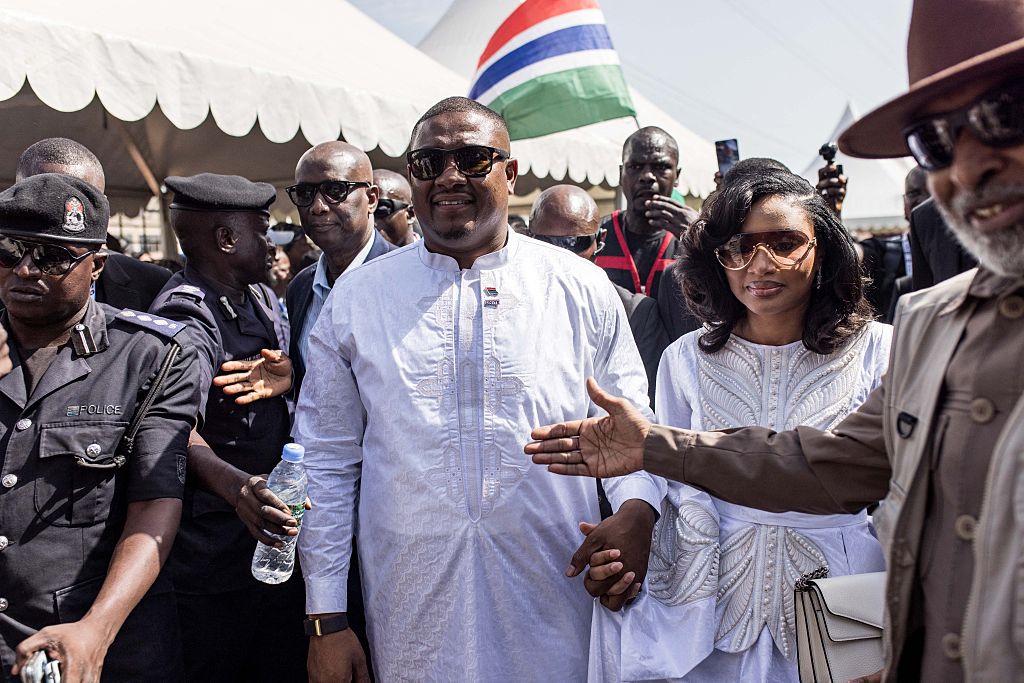
The Gambia moved closer to its presidential election scheduled for 5 December 2026, with five presidential aspirants having had their nomination papers accepted at the stage covered by the latest report.
The development marks an important step in the country’s electoral process, although the five accepted nominations did not necessarily represent the final list of qualified candidates.
Who are the five candidates?
The five candidates identified by The Point were:
- Adama Barrow: Incumbent president and candidate of the National People’s Party.
- Ousainou ANM Darboe: Candidate of the United Democratic Party.
- Talib Ahmed Bensouda: Candidate of UNITE.
- Modou Lamin Sima: Candidate of the Alliance of Progressive Citizens.
- Isatou Touray: Former vice-president contesting as an independent candidate.
Their nomination papers had been accepted at the stage covered by the report.
However, acceptance of nomination papers at one stage does not mean that the final list of qualified candidates is limited to five.
Nomination process and electoral requirements
The nomination period began on 3 November and was expected to end on 14 November.
At the time of the report, other aspirants were still required to submit additional registered-voter signatures or undergo further verification.
The Independent Electoral Commission was therefore expected to provide subsequent updates establishing the final list.
This distinction matters because the acceptance of nomination papers is only one part of an electoral process.
The credibility and competitiveness of an election also involve the consistent application of electoral rules, the handling of complaints, campaign conditions, access to media and the ability of voters to make informed choices.
Political competition and representation
The five candidates represent different political platforms and routes into the presidential contest.
President Adama Barrow is seeking another mandate. Ousainou Darboe represents the United Democratic Party, while Talib Bensouda and Modou Lamin Sima are contesting under their respective party platforms.
Isatou Touray’s independent candidacy also brings attention to women’s representation in presidential politics.
However, the presence of a female candidate alone does not establish equality of opportunity or political influence. Those broader questions depend on the conditions under which candidates compete and the opportunities available to participate in the political process.
What happens before the December election?
The next major procedural development is the conclusion of nominations and publication of the final qualified-candidate list.
With the presidential election scheduled for 5 December, attention will increasingly turn towards the campaign, the candidates’ policy positions and the commission’s management of the electoral process.
For The Gambia, the credibility of the election will depend on transparent procedures and the consistent application of the rules.
The current nomination figures should therefore be understood as a snapshot of the process, rather than a final assessment of the country’s electoral competition.
STORY 5: Ghana New Cedi Banknotes — Heritage Series Set for December 1 Circulation
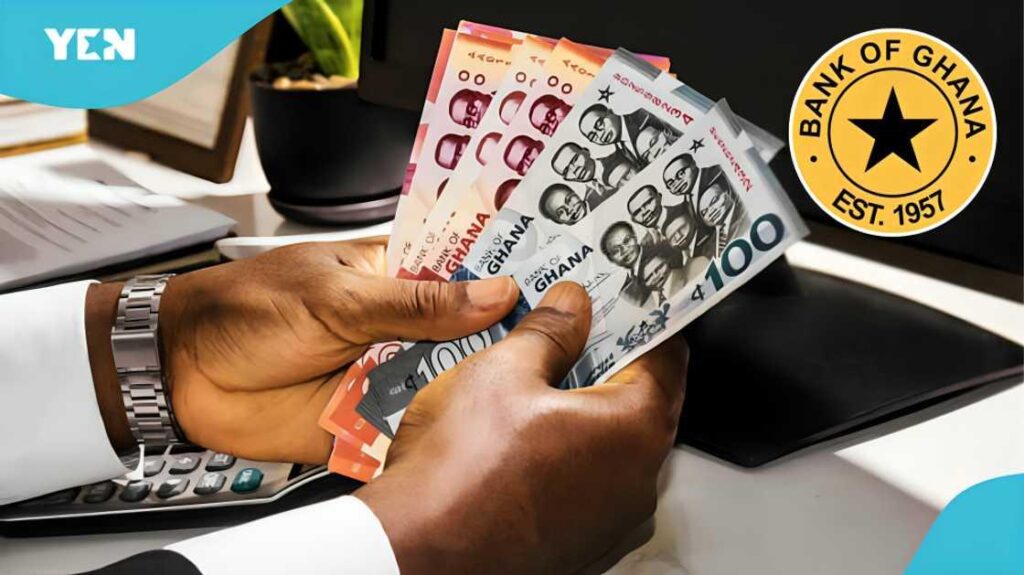
Ghana formally launched a redesigned series of banknotes known as the Ghana Cedi Heritage Series, with general circulation scheduled to begin on 1 December 2026.
President John Dramani Mahama launched the new notes at the Bank of Ghana in Accra on 12 November. The launch was also reported by the Presidency of Ghana.
The redesign represents a significant currency-administration development for Ghana, with the central bank preparing for a transition involving new banknotes while retaining existing notes as legal tender.
What is changing with the new Cedi notes?
According to the Presidency, the redesigned banknotes are smaller, printed on reinforced cotton paper and equipped with enhanced security features.
Their designs incorporate national heroes, historic sites and Adinkra symbols.
The 200-cedi note bears the image of Ghana’s first president, Kwame Nkrumah.
Bank of Ghana Governor Dr Johnson Asiama announced the planned circulation date and confirmed that existing banknotes would remain legal tender. The Bank of Ghana’s official launch remarks provide further details about the new series.
This means the old and new series are expected to circulate alongside each other during the transition. Existing notes do not become invalid simply because the new series has been launched.
Public education and accessibility
The central bank also announced a public education campaign and a Cedi mobile application intended to help citizens understand the new notes, including people with visual impairments.
This is an important part of currency administration because changes to banknotes affect more than banks and financial institutions.
Market traders, transport operators, small businesses, retailers and households that rely heavily on cash will all need clear information about the transition.
Public awareness will be important in helping people recognise the new notes, understand their features and avoid confusion during the changeover.
The economic questions behind the redesign
There is an important distinction between the launch of the banknotes and their performance in everyday use.
The stated improvements in durability and security are intended benefits. They had not yet been demonstrated through general circulation because the new notes were not scheduled to enter circulation until 1 December.
The practical test will involve distribution, public understanding and the ability of financial institutions and businesses to manage the changeover.
There are also unanswered questions.
The information available for this edition did not establish the total printing and distribution cost, the full technical specifications of the security features, the initial number of notes to be released or the expected savings from improved durability.
These details will be important in assessing the economic case for the redesign.
For citizens and businesses, the immediate message is straightforward: Ghana has launched a new banknote series, but existing notes remain legal tender.
The next milestone is 1 December, when the new notes are scheduled to enter general circulation.
The success of the change will depend not only on the design of the currency, but also on efficient distribution, public education, accessibility and the central bank’s ability to maintain confidence throughout the transition.
CONCLUSION
The five developments examined in this edition of Africa in Motion reflect different challenges and decisions across the continent.
West Africa’s cocaine-trafficking corridor highlights the difficulty of confronting criminal networks operating across national borders. South Africa’s recruitment investigation raises questions about the protection of African citizens from exploitation in foreign conflicts. In Nigeria, the reported disruption of a political gathering has placed peaceful political participation and institutional accountability under renewed scrutiny.
In The Gambia, the presidential nomination process is moving towards the December election, while Ghana is preparing to introduce redesigned banknotes into circulation.
These stories do not share one cause, but they demonstrate why public institutions must be judged by more than announcements and formal decisions.
Investigations must establish credible findings. Electoral procedures must be transparent. Economic policies must work in practice.
Understanding Africa news today requires examining not only what happened, but also how decisions affect citizens, institutions and the continent’s future.
About the Author