Ali Khamenei Burial Signals Iran’s Uncertain Future
The Ali Khamenei Burial has brought one of the most influential chapters in modern Iranian history to a close, but it has also ushered in a new period of political uncertainty. More than four months after Ayatollah Ali Khamenei was killed in a joint US-Israeli strike on his compound in Tehran, he was laid to rest at the revered Imam Reza Shrine in Mashhad following days of nationwide mourning and religious ceremonies that attracted millions of mourners across Iran and Iraq.
The burial, held in the early hours of Friday, concluded an extraordinary state funeral that had been postponed by the outbreak of war following the February 28 attack. While the ceremony formally honoured the country’s longest-serving supreme leader, it also highlighted the profound political, military and diplomatic challenges confronting Iran as it navigates a leadership transition amid continuing tensions with the United States and Israel. According to reporting by Al Jazeera, the funeral became one of the largest public gatherings in the Islamic Republic’s recent history, underscoring Khamenei’s enduring influence within Iran’s political and religious establishment.
Rather than signalling closure, however, the funeral appears to have opened another chapter in an increasingly volatile Middle East. Questions surrounding Iran’s future leadership, the durability of the fragile ceasefire with Washington, and the broader regional balance of power now dominate political discussions both inside and outside the country.
Ali Khamenei Burial Marks the End of an Era
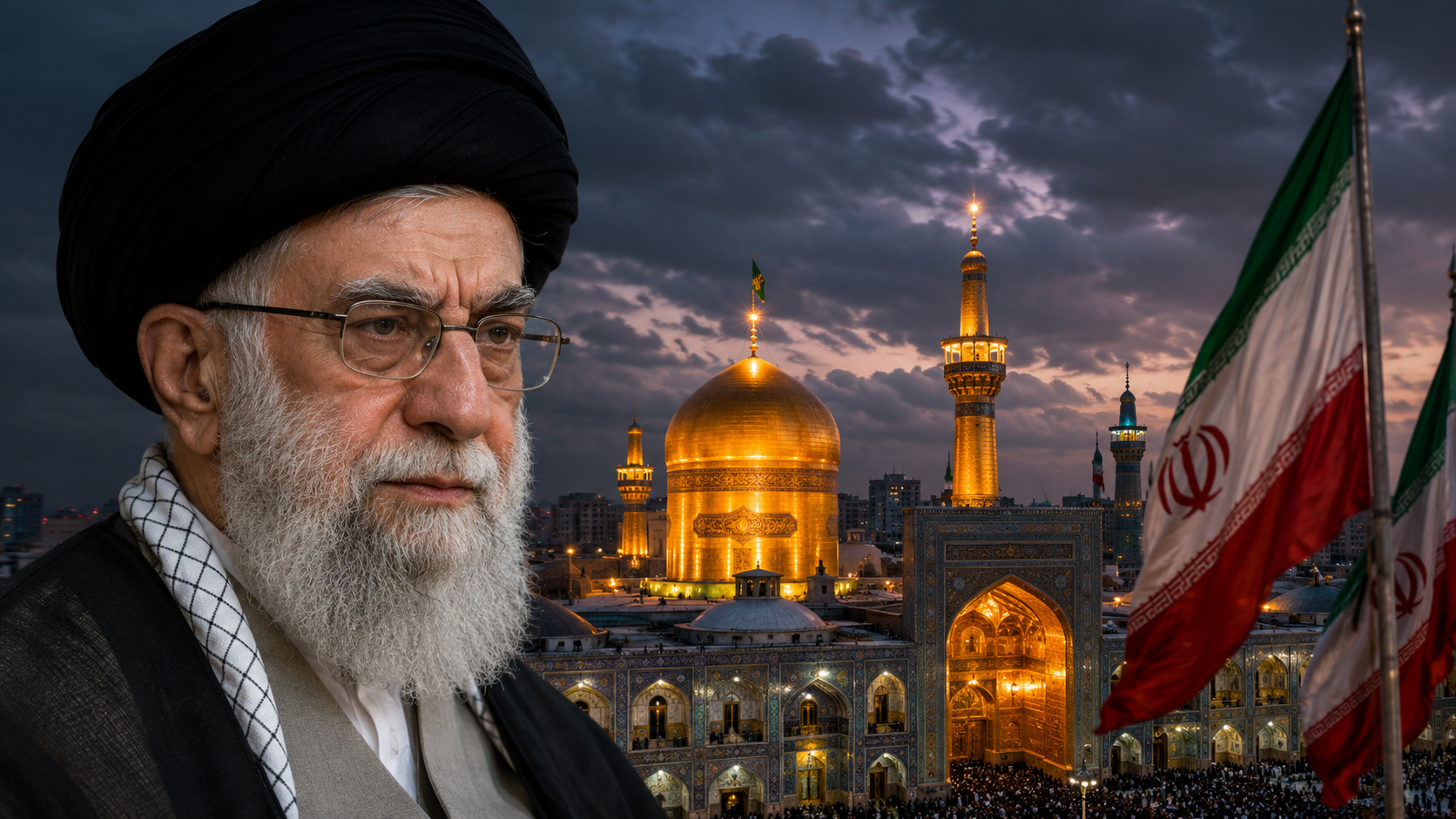
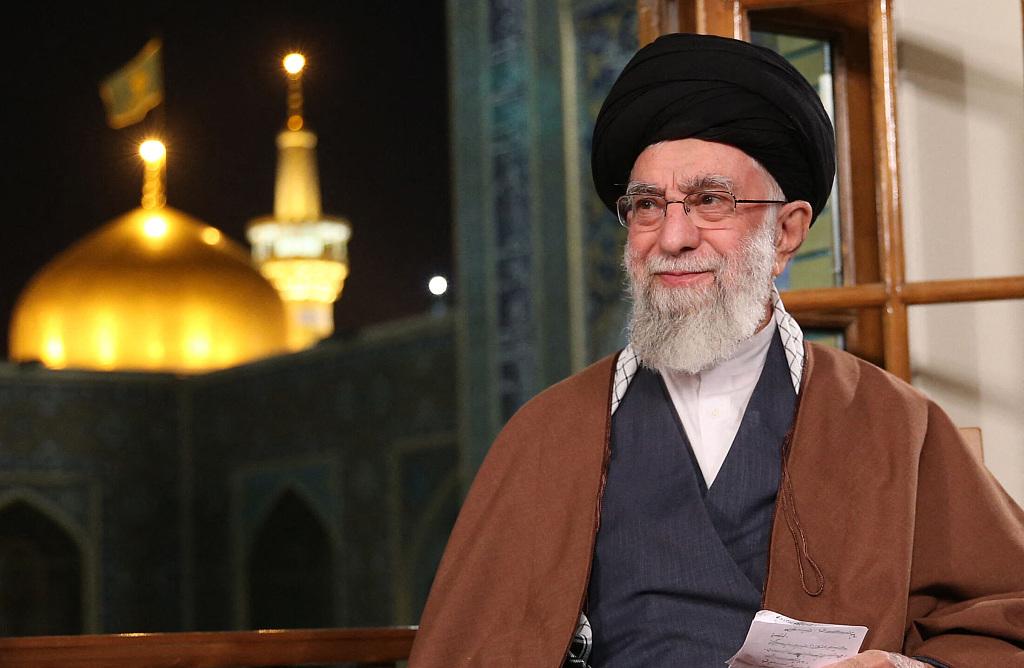
The decision to bury Ayatollah Ali Khamenei at the Shrine of Imam Reza carried deep symbolic importance. Located in Mashhad, Khamenei’s birthplace, the shrine is regarded as the holiest site in Iran and one of the most significant destinations for Shia Muslims worldwide.
For decades, Khamenei served not only as Iran’s supreme political authority but also as the country’s highest religious figure. Since assuming leadership in 1989 following the death of Ayatollah Ruhollah Khomeini, he shaped Iran’s domestic governance, foreign policy, military doctrine and regional alliances.
His burial therefore represented far more than a personal farewell.
It symbolised the conclusion of nearly four decades during which a single figure exercised ultimate authority over virtually every aspect of Iranian state affairs, from constitutional oversight to military strategy and foreign relations.
The ceremony itself remained private, but it followed several days of public mourning involving millions of Iranians who lined streets across multiple cities to pay their final respects. The unprecedented scale of participation reflected both the religious significance of the occasion and the central role Khamenei played in the identity of the Islamic Republic.
Why Mashhad Was Chosen
Mashhad occupies a unique place within Iran’s religious landscape.
Every year, millions of pilgrims travel to the city to visit the Shrine of Imam Reza, the eighth Imam in Shia Islam. The shrine’s golden dome has become one of the country’s most recognisable landmarks and serves as both a spiritual centre and a symbol of Iran’s religious heritage.
Khamenei reportedly requested that he be buried there, linking his final resting place to one of Shia Islam’s most sacred locations rather than to Tehran, where he exercised power for decades.
Choosing Mashhad also reinforced his personal connection to the city where he was born and educated before emerging as one of the leading figures of Iran’s 1979 Islamic Revolution.
The decision has strengthened the shrine’s already significant historical status, ensuring it will likely become an even more prominent destination for supporters seeking to commemorate his legacy.
A Funeral That Crossed National Borders
Unlike many state funerals confined to one capital city, Khamenei’s final journey stretched across several of the most important religious centres in Shia Islam.
The ceremonies began in Tehran, where thousands gathered at the Grand Mosalla religious complex before an enormous procession carried his coffin through the capital toward Azadi Square.
The funeral then moved to Qom, Iran’s leading centre of Shia scholarship, before crossing into neighbouring Iraq.
In Iraq, mourners welcomed the procession in Najaf and Karbala, cities regarded among the holiest destinations in the Shia Muslim world because of their association with Imam Ali and Imam Hussein.
Only after completing those ceremonies was the coffin flown back to Mashhad for burial.
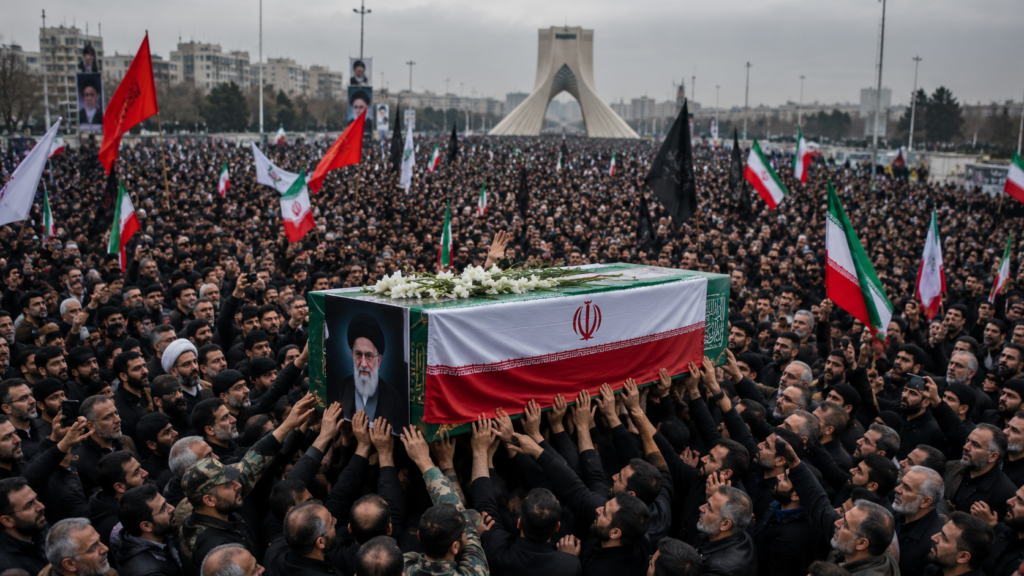
The route underscored Khamenei’s influence beyond Iran’s borders and highlighted the religious networks that continue to connect Shia communities across the Middle East.
Millions Turn Out Despite Months of Conflict
The funeral processions unfolded against the backdrop of one of the region’s most dangerous military confrontations in recent years.
Despite ongoing security concerns and the disruption caused by months of conflict, millions participated in mourning ceremonies across Iran.
State media estimated attendance at more than 15 million people throughout the week-long events, although independent verification of those figures was not immediately available. Regardless of the precise number, visual images from Tehran, Mashhad, Qom and Iraq showed exceptionally large crowds gathering throughout the ceremonies.
The turnout demonstrated that Khamenei’s death remains a defining national event for many Iranians, even as the country continues to confront severe economic pressures, international sanctions and heightened security challenges.
Leadership Questions Move to the Forefront
While millions focused on honouring the late supreme leader, political observers were paying close attention to another development—the continued absence of Mojtaba Khamenei.
Widely identified as Khamenei’s designated successor, Mojtaba did not appear publicly during the funeral ceremonies.
His absence has fuelled renewed discussion about Iran’s leadership transition.
Although reports cited in the source material indicate he sustained injuries during the February strike, Iranian authorities have released few official details regarding his condition or future public role. As a result, uncertainty continues to surround both the timeline and practical implementation of the country’s succession process.
That uncertainty has become one of the defining political stories emerging from the funeral.
For Iran’s allies, rivals and international partners alike, the question is no longer simply how the country honours its former leader—but how it intends to govern after him.
Renewed Military Tensions Overshadow the Funeral
Although the Ali Khamenei Burial concluded an elaborate week of mourning, events unfolding around the ceremony underscored that Iran’s security crisis remains far from over.
Reports emerged of multiple explosions near Bushehr—home to one of Iran’s nuclear facilities—and in other southern locations only hours before Khamenei was laid to rest. Iranian media reported the incidents, although the United States Central Command said American forces had not carried out strikes inside Iran during that period. The conflicting accounts reflected the fog of an ongoing conflict in which information is often contested and rapidly evolving.
The uncertainty surrounding those explosions illustrated the fragile security environment confronting Iranian authorities. Even as millions gathered to mourn a national leader, concerns over potential military escalation remained firmly in the background.
For many analysts, the timing served as a reminder that the funeral could not be separated from the broader conflict that claimed Khamenei’s life and continues to reshape regional politics.
A Fragile Ceasefire Under Growing Pressure
The funeral also coincided with renewed strains on a ceasefire that had been intended to create space for diplomatic negotiations between Iran and the United States.
According to the source material, Washington and Tehran reached a preliminary agreement in June to reduce hostilities while broader negotiations continued. However, that arrangement has faced repeated violations, with both sides accusing each other of launching attacks after the agreement took effect.
Fresh clashes in strategic waterways and subsequent military operations further weakened confidence that the truce could hold.
Although neither side has signalled an immediate return to full-scale war, the latest exchanges demonstrate how quickly isolated incidents can threaten wider regional stability.
This uncertain environment means Iran’s next leadership will inherit not only domestic political responsibilities but also one of the most complex security situations the country has faced in decades.
Mojtaba Khamenei’s Absence Raises Succession Questions
Perhaps the most closely watched aspect of the funeral was not who attended, but who did not.
Mojtaba Khamenei, widely regarded as the late leader’s designated successor, remained absent throughout the public ceremonies.
While reports referenced in the source material suggest he has remained out of public view following injuries sustained during the February attack, Iranian officials have released limited information regarding his condition or the timeline for his emergence as the country’s new supreme leader.
His absence inevitably fuelled speculation among regional observers and foreign governments.
However, several important facts remain clear:
- Iranian authorities have not announced any change to the succession process.
- No official statement has indicated that Mojtaba Khamenei has been replaced as the expected successor.
- Much of the discussion outside Iran remains based on political analysis rather than confirmed government announcements.
That distinction is important because succession within Iran’s political system carries profound constitutional, religious and security implications.
For international governments, investors and diplomatic observers, clarity over Iran’s leadership structure will influence future assessments of the country’s domestic stability and foreign policy direction.
The Symbolism Behind Imam Reza Shrine
Choosing the Imam Reza Shrine as Khamenei’s final resting place was about more than personal preference.
The shrine is regarded as the spiritual heart of Shia Islam in Iran and attracts millions of pilgrims annually from across the Muslim world.
By being buried there, Khamenei’s legacy becomes permanently linked with one of the faith’s most revered religious sites.
Political leaders throughout history have often used burial locations to reinforce historical narratives.
In Khamenei’s case, resting beside one of Shia Islam’s holiest shrines reinforces his image not simply as a head of state but as a religious figure whose influence extended beyond government institutions into Iran’s ideological identity.
That symbolism is likely to remain important for future Iranian administrations seeking to preserve continuity during a period of political transition.
Regional Allies Send a Powerful Political Message
The funeral attracted representatives from several groups aligned with Tehran’s regional interests, including delegations from Hamas, Palestinian Islamic Jihad, Hezbollah and Yemen’s Houthi movement. Their presence highlighted the extensive network of relationships Iran has cultivated across the Middle East over several decades.
While the gathering was primarily a religious and state occasion, it also carried diplomatic significance.
The attendance of these delegations reinforced Iran’s continuing influence among allied movements despite months of conflict and international pressure.
At the same time, it reminded rival governments that leadership transitions inside Iran are closely watched because they can affect regional alliances, security calculations and future diplomatic engagement.
Why the World Is Watching Iran’s Next Chapter
The significance of the Ali Khamenei Burial extends well beyond Iran’s borders.
As one of the Middle East’s most influential political and military powers, Iran plays a central role in issues ranging from Gulf security and global energy markets to nuclear diplomacy and regional conflict.
Any uncertainty surrounding its leadership naturally attracts worldwide attention.
Governments across Europe, Asia, Africa and the Americas will closely monitor how Iran manages its political transition, maintains domestic stability and approaches future negotiations with international partners.
For neighbouring countries, the stakes are particularly high.
A stable transition could create opportunities for renewed diplomacy and economic cooperation.
Conversely, prolonged uncertainty or renewed confrontation could deepen instability across an already fragile region.
For African countries, including Nigeria, developments in the Gulf also carry economic implications because geopolitical tensions frequently influence global oil prices, shipping routes and broader energy markets.
Strong energy price fluctuations can affect fuel costs, inflationary pressures and government revenues in oil-producing economies, making stability in the Middle East an issue with consequences far beyond the region itself.
The Geopolitical Outlook After the Ali Khamenei Burial
The Ali Khamenei Burial may have concluded one of the largest state funerals in Iran’s modern history, but it has also marked the beginning of a critical transition whose consequences could shape the Middle East for years to come.
The immediate challenge facing Tehran extends beyond selecting or consolidating its next supreme leader. The country must simultaneously manage domestic expectations, preserve institutional stability, respond to external security threats and navigate an increasingly complex diplomatic environment.
Whether Iran adopts a more cautious foreign policy or maintains its longstanding strategic posture will largely determine how regional dynamics evolve over the coming months.
Much will also depend on the durability of existing state institutions. Iran’s political system was designed to function beyond individual personalities, yet the death of a leader who served for nearly four decades inevitably tests the resilience of that structure.
International governments will therefore be watching not only who exercises authority, but also how decisions are made during this transitional period.
Global Diplomacy Faces Another Test
The funeral has unfolded at a time when diplomacy across the Middle East remains exceptionally fragile.
Relations between Iran and the United States have deteriorated significantly following the events surrounding Khamenei’s death, while tensions with Israel continue to influence regional security calculations.
Although neither side has publicly indicated an immediate intention to resume full-scale war, recent military exchanges demonstrate that the possibility of further escalation cannot be dismissed.
For international mediators, the priority is likely to remain preventing isolated incidents from developing into a broader regional conflict.
Countries maintaining diplomatic relations with both Tehran and Washington may also seek opportunities to encourage renewed dialogue, recognising that prolonged instability carries consequences far beyond the Middle East.
Economic Implications Extend Beyond Iran
Political uncertainty in Iran rarely remains a domestic issue.
As one of the world’s major energy-producing nations, developments inside the country frequently influence international oil markets, shipping routes and investor confidence.
Periods of heightened tension around the Persian Gulf and the Strait of Hormuz have historically contributed to fluctuations in global crude oil prices.
For Nigeria and many other African economies, such developments can have mixed consequences.
Higher oil prices may increase export revenues for oil-producing nations, but they can also raise transportation costs, fuel prices and inflation, creating additional economic pressures for households and businesses.
This broader economic dimension explains why leadership developments in Tehran are closely followed not only by diplomats but also by financial markets, energy companies and central banks worldwide.
Media Attention Will Shift from the Funeral to Governance
During the past week, international headlines focused primarily on funeral ceremonies, mourning crowds and symbolic gestures surrounding Khamenei’s burial.
In the weeks ahead, however, attention is expected to move towards more substantive questions.
Among the issues likely to dominate global coverage are:
- How Iran’s new leadership consolidates authority.
- The future direction of Tehran’s foreign policy.
- Prospects for renewed diplomatic engagement with Western nations.
- Regional security following recent military exchanges.
- The impact of political transition on Iran’s economy.
- The country’s nuclear programme and international negotiations.
These developments will ultimately define Khamenei’s political legacy more than the funeral itself.
Why This Story Matters Beyond the Middle East
Although centred on Iran, the story resonates internationally because of the country’s influence on global security, energy markets and international diplomacy.
For readers across Africa, Europe, Asia and the Americas, the significance lies not only in the passing of a long-serving leader but also in the uncertainty surrounding one of the world’s most strategically important regions.
Leadership transitions in influential nations often create periods of adjustment.
How smoothly Iran manages this transition will affect regional alliances, international negotiations and broader geopolitical stability.
The funeral therefore represents both an ending and a beginning—closing a defining chapter in Iran’s modern history while opening another whose direction remains uncertain.
Conclusion
The Ali Khamenei Burial was far more than a ceremonial farewell.
It symbolised the end of nearly four decades under one of the Middle East’s most influential political and religious figures while highlighting the profound challenges now confronting the Islamic Republic.
The massive public turnout demonstrated Khamenei’s enduring significance to many Iranians, yet the absence of his expected successor, continuing regional tensions and renewed military exchanges underscored that the country’s future remains uncertain.
As Iran enters a new political era, the decisions taken in Tehran will be closely watched across the world.
Whether the transition leads to greater stability, renewed diplomacy or further confrontation will shape not only Iran’s future but also the broader security landscape of the Middle East and beyond.
For now, the burial has brought one historic chapter to a close. The next chapter—defined by leadership, diplomacy and regional security—is only beginning.
Recommended Coverage
Iran-US Peace Deal Signals End to Months of Conflict
YOU CAN ALSO read our analysis of the Iran-US peace deal to understand how diplomatic efforts unfolded before fresh tensions returned. It provides essential background on the fragile negotiations shaping today’s developments.
Trump Iran Strike Delay Sparks Fears of Wider Middle East Crisis
YOU CAN ALSO explore how earlier military decisions increased fears of a wider Middle East conflict. The report explains the events that paved the way for the current geopolitical uncertainty.
US-Iran Strategy Timeline Reveals Contradictions
YOU CAN ALSO follow our detailed timeline of US-Iran relations to better understand the strategic decisions, diplomatic shifts and military actions that continue to shape the region today.
About the Author