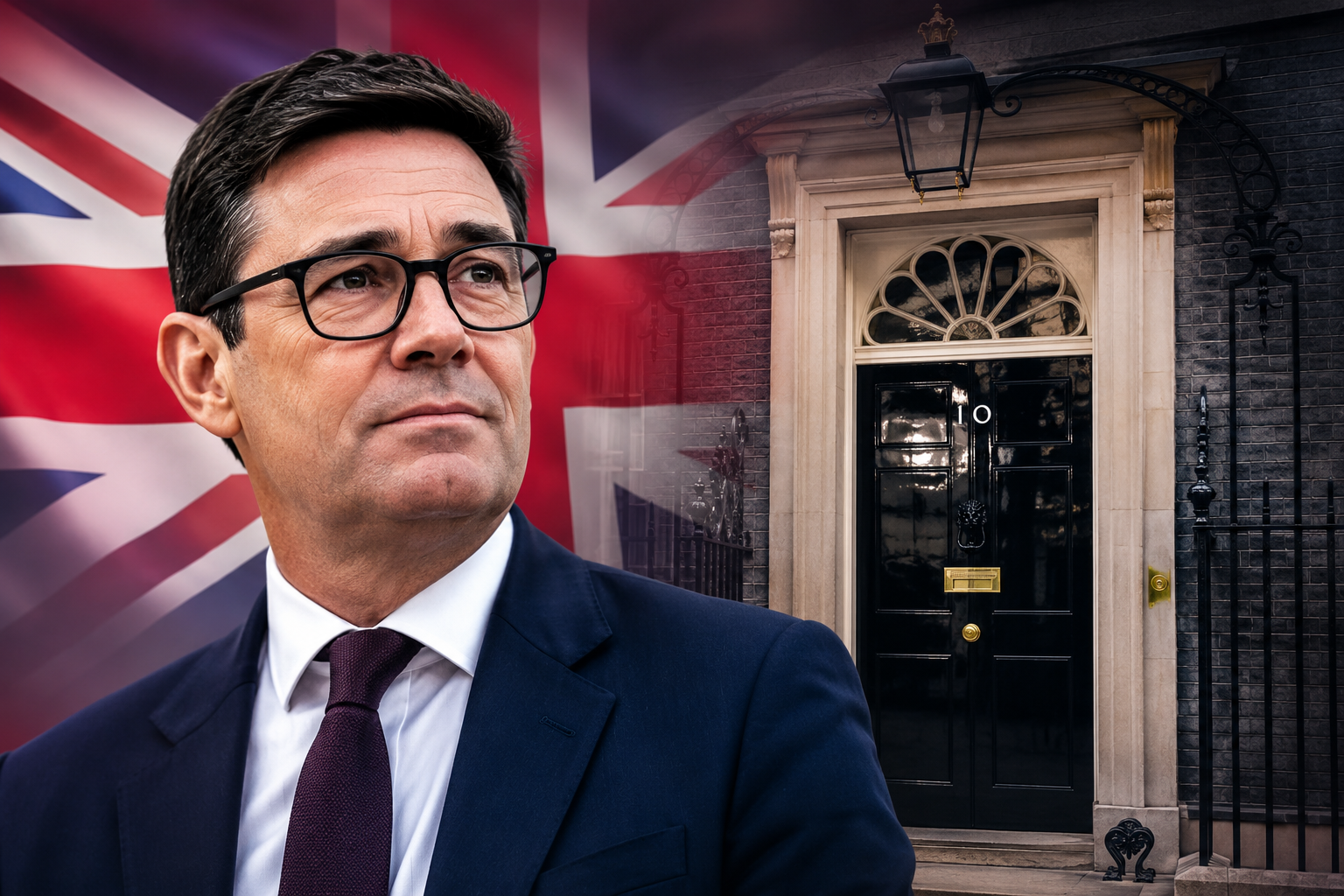
Andy Burnham PM: How Labour’s New Leadership Could Reshape Britain’s Political Future
Andy Burnham PM is on the brink of taking office as the United Kingdom’s next Prime Minister after securing the backing of 322 Labour Members of Parliament (MPs) on the opening day of formal leadership nominations. The overwhelming show of support places the former Greater Manchester mayor in a commanding position to replace Sir Keir Starmer and potentially usher in a new era for British politics.
With Labour MPs rallying behind a single candidate, Burnham’s expected rise to 10 Downing Street represents far more than a routine leadership transition. It reflects an attempt by Britain’s governing party to restore public confidence following recent electoral setbacks, redefine its governing philosophy, and reposition itself ahead of future political challenges. According to the source material, Burnham’s emergence has been strengthened by the decision of potential rivals Al Carns and Wes Streeting not to contest the leadership, effectively clearing his path to the premiership.
Beyond the immediate political drama, Burnham’s leadership is expected to influence domestic governance, regional development, public ownership debates and Britain’s approach to international affairs. Those policy signals have already generated considerable interest among political observers, investors and Britain’s international partners.
Andy Burnham PM Nears a Coronation-Style Victory
Burnham’s leadership campaign gathered extraordinary momentum almost immediately after formal nominations opened.
Receiving support from 322 Labour MPs—approximately four-fifths of Labour’s parliamentary membership—placed him within touching distance of an uncontested victory. Under Labour’s nomination rules, a rival would require the backing of at least 81 MPs to force a competitive leadership ballot.
With only one additional nomination needed to make it mathematically impossible for any challenger to qualify, Burnham effectively secured what many commentators describe as a “coronation” rather than a conventional leadership contest.
The absence of significant opposition also demonstrated a remarkable level of unity within Labour’s parliamentary ranks—an uncommon development in British politics, where leadership contests often expose ideological divisions and competing political ambitions.
Why Labour United Behind Burnham
Several factors appear to have contributed to Burnham’s overwhelming support.
Perhaps the most important was the decision by two prominent figures—former junior defence minister Al Carns and former Health Secretary Wes Streeting—to withdraw from the contest and publicly endorse Burnham instead.
Those endorsements carried symbolic importance.
Rather than splitting Labour’s parliamentary support among competing factions, senior figures chose to consolidate behind one candidate, sending a clear message that party unity had become a higher priority than internal competition.
For Labour MPs still recovering from disappointing electoral performances, presenting a united front may have been viewed as essential to restoring confidence both inside Parliament and among the wider electorate.
Political unity can also help reassure financial markets, public institutions and international allies during periods of governmental transition, reducing uncertainty that often accompanies changes in national leadership.
The Timeline to Downing Street
If events continue according to Labour’s published leadership timetable, Burnham’s transition into office is expected to unfold over several carefully planned stages.
Key dates include:
- July 16 – Formal nominations close.
- July 17 – Andy Burnham is expected to be formally declared Labour Party leader.
- July 20 – Sir Keir Starmer is expected to submit his resignation to King Charles III, who would then invite Burnham to form a government.
This constitutional process reflects the conventions of the UK’s parliamentary system.
Unlike presidential systems, British voters do not directly elect the Prime Minister. Instead, the monarch appoints the individual who commands the confidence of the House of Commons—normally the leader of the governing party.
Because Labour already holds government, Burnham’s appointment would not require a general election. Instead, it would represent a transfer of leadership within the governing party while maintaining parliamentary continuity.
Keir Starmer’s Departure Changed Labour’s Political Landscape
Burnham’s rapid rise cannot be understood without examining the circumstances surrounding Sir Keir Starmer’s resignation.
Starmer announced his intention to step down after Labour suffered significant losses during local elections, where Nigel Farage’s Reform UK party made substantial gains. Those results intensified questions about Labour’s electoral strategy and its ability to maintain public support.
Although leadership changes are not unusual in British politics, they often follow moments of political pressure, electoral disappointment or internal calls for renewal.
For Labour, replacing its leader became an opportunity to reset both its political messaging and its governing priorities before future national electoral tests.
Burnham’s selection therefore represents not only a change in personalities but also an attempt to reposition Labour’s broader political identity.
From Manchester Mayor to National Leader
Andy Burnham’s political career has followed an unusual trajectory compared with many recent British prime ministers.
After serving in senior government positions during previous Labour administrations, Burnham moved away from Westminster politics to become the Mayor of Greater Manchester, a role that transformed his national profile.
As mayor, he became widely recognised for championing regional investment, transport reform, public services and local decision-making. His outspoken advocacy during periods of national crisis earned him the nickname “King of the North”, reflecting both his popularity across northern England and his willingness to challenge central government policies.
His return to Parliament through the Makerfield by-election positioned him for an unexpected comeback at the centre of British politics.
Rather than rebuilding influence gradually, Burnham has moved rapidly from local government leadership to the threshold of Britain’s highest political office—a transition few politicians achieve.
Why Burnham’s Return Matters
Burnham’s political journey illustrates a broader shift in British politics.
For decades, power has remained heavily concentrated in London, with regional leaders often having limited influence over national policy. Burnham’s rise suggests that political experience gained outside Westminster can now serve as a pathway to national leadership.
His background also strengthens his credibility on issues affecting local councils, public transport, housing and regional economic development—areas likely to feature prominently under his administration.
For many supporters, his experience governing Greater Manchester provides practical executive credentials rather than purely parliamentary experience, potentially shaping a different leadership style from many of his predecessors.
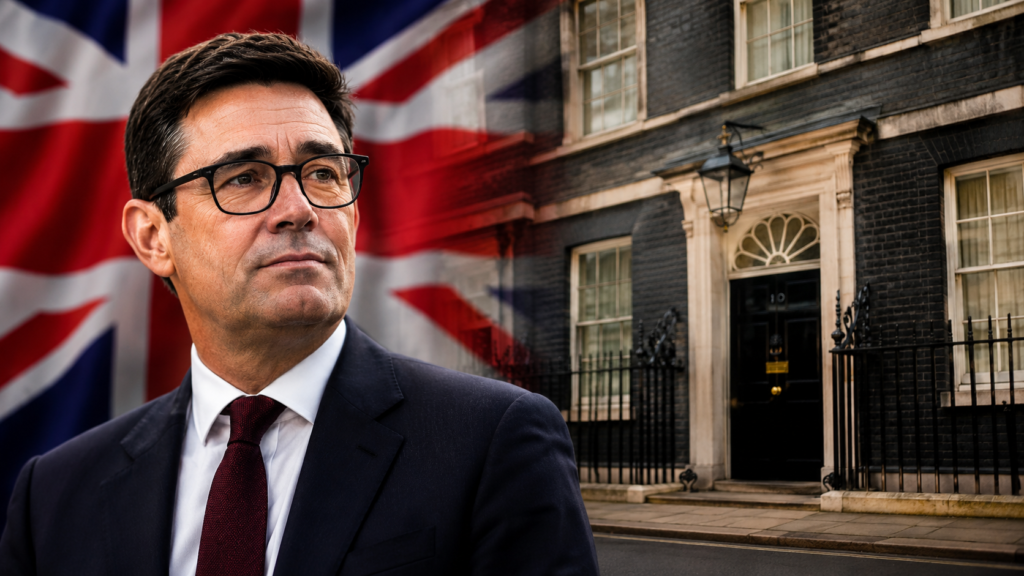
Andy Burnham PM and the Policy Agenda That Could Redefine Britain
While Andy Burnham’s expected appointment has been driven by Labour’s internal leadership process, public attention is already shifting toward what his government could look like in practice.
Unlike leadership contests centred solely on personalities, Burnham has begun outlining policy priorities that suggest a different governing philosophy from recent administrations. His proposals indicate a stronger emphasis on decentralisation, greater public involvement in key services and a reassessment of certain foreign policy positions.
If implemented, these ideas could influence not only how Britain is governed but also how power is distributed across the country.
Andy Burnham PM’s Vision for Regional Government
One of Burnham’s most notable proposals is the creation of what has been described as a “No. 10 North”—a dedicated Downing Street presence in Manchester designed to strengthen regional decision-making.
The proposal reflects his long-standing argument that economic opportunities and political authority should not remain concentrated in London.
As Mayor of Greater Manchester, Burnham consistently argued that local leaders often understand regional priorities better than central government departments. His experience overseeing transport, housing and local economic development has shaped his belief that communities should have greater control over decisions affecting their daily lives.
Supporters argue that increased devolution could:
- Accelerate local infrastructure projects.
- Improve regional transport systems.
- Expand affordable housing initiatives.
- Encourage investment outside London.
- Reduce bureaucratic delays in public services.
Critics, however, may question whether greater regional autonomy could create inconsistencies in public service delivery or increase pressure on local government finances.
Regardless of the debate, decentralisation appears likely to become one of the defining themes of Burnham’s administration.
Public Control Over Essential Services
Another significant element of Burnham’s agenda involves increasing community influence over key utilities.
According to the source material, Burnham has pledged to give the public greater control over the water and energy sectors, signalling a possible departure from policies that have relied heavily on private sector management.
Although the details of any legislative proposals have not yet been outlined, the commitment reflects a wider debate taking place across Britain regarding:
- Rising household utility costs.
- Energy security.
- Water infrastructure investment.
- Environmental sustainability.
- Consumer protection.
Supporters believe stronger public oversight could improve accountability and prioritise long-term investment over short-term profits.
Others caution that structural reforms involving major utility providers would require significant planning, legal adjustments and financial resources.
Much will depend on how Burnham’s government translates campaign commitments into practical policy.
A Potential Shift in Britain’s Foreign Policy
Foreign affairs may also experience noticeable changes under Burnham’s leadership.
Among his most closely watched statements has been his public apology regarding Labour’s initial response to the conflict in Gaza and his indication that a future government under his leadership would adopt a tougher position toward Israel in specific policy areas.
According to the source material, Burnham has suggested reviewing sanctions and trade restrictions relating to Israeli settlements considered illegal under international law.
These remarks could carry important diplomatic implications.
The United Kingdom has traditionally balanced its relationships with Israel, Palestinian authorities, the United States and European allies. Any substantial shift in foreign policy would therefore require careful diplomatic engagement.
Analysts will likely monitor whether Burnham’s administration maintains existing strategic partnerships while pursuing a revised humanitarian or diplomatic approach to Middle East issues.
As with any incoming government, campaign statements often undergo further refinement once ministers assume office and begin working within established foreign policy frameworks.
Challenges Await the Incoming Government
Despite Labour’s overwhelming parliamentary support for Burnham, becoming Prime Minister would mark the beginning—not the end—of his political challenge.
The new government would inherit a range of complex issues requiring immediate attention.
Among them are:
Economic Growth
Britain continues to face pressure to stimulate investment while managing public finances responsibly.
Cost of Living
Many households remain concerned about inflation, housing affordability and energy prices.
Public Services
Healthcare, education and local government services continue to face demands for increased funding and improved efficiency.
Regional Inequality
Reducing economic disparities between London and other parts of the country remains a long-standing political objective.
International Relations
Managing relationships with European partners, the United States and other global allies will remain central to Britain’s foreign policy agenda.
Addressing these challenges will test Burnham’s ability to convert political popularity into effective governance.
What Burnham’s Rise Means Beyond Britain
Leadership changes in the United Kingdom often attract global attention because of the country’s influence in international diplomacy, finance and security.
Britain remains:
- A permanent member of the United Nations Security Council.
- A leading member of NATO.
- One of the world’s largest economies.
- An influential player in global financial markets.
- A significant development and humanitarian partner.
Consequently, any shift in British leadership has implications extending beyond domestic politics.
Governments, investors and international organisations frequently reassess policy expectations following changes at 10 Downing Street.
Burnham’s priorities on regional development, public services and foreign affairs could therefore shape international perceptions of Britain’s policy direction over the coming years.
Why the Story Matters to Africa and Nigeria
Although the leadership transition is taking place thousands of kilometres from Africa, its effects could still be relevant across the continent.
The United Kingdom maintains extensive diplomatic, economic and educational relationships with many African countries, including Nigeria.
Potential areas of interest include:
- Bilateral trade agreements.
- Development cooperation.
- Student visa and education policies.
- Climate partnerships.
- Security cooperation.
- Investment opportunities.
For Nigeria, Britain remains one of its most significant historical and economic partners. Any adjustments to British domestic or foreign policy may indirectly influence commercial relationships, migration discussions and diplomatic engagement.
While Burnham has not announced specific Africa-focused initiatives, political observers across the continent are likely to monitor his government’s approach to international partnerships once he assumes office.
The coming weeks will therefore be watched not only in Westminster but also by governments, businesses and citizens with interests in Britain’s evolving role on the global stage.
The Political Significance of Andy Burnham PM’s Expected Leadership
Andy Burnham’s anticipated arrival at 10 Downing Street marks more than a change of leadership within the Labour Party. It reflects a broader political moment in which Britain’s governing party is seeking to redefine its priorities following electoral setbacks and growing public demands for change.
Unlike many leadership transitions driven by prolonged internal rivalries, Burnham’s rise has been characterised by a rapid consolidation of parliamentary support. The backing of 322 Labour MPs, coupled with the withdrawal of potential challengers, has projected an image of unity at a time when the party is eager to demonstrate stability.
Whether that unity translates into effective governance will become clearer only after Burnham formally assumes office and begins implementing his policy agenda.
Can Labour Rebuild Public Confidence?
One of the most immediate tests facing Burnham will be restoring confidence among voters.
Recent political developments highlighted growing public dissatisfaction with aspects of Labour’s performance, culminating in Sir Keir Starmer’s decision to resign after disappointing local election results. Those outcomes underscored the challenge of maintaining public support in a rapidly changing political environment.
Burnham now inherits a government expected to balance several competing priorities:
- Delivering economic stability.
- Improving public services.
- Addressing regional inequalities.
- Managing international relationships.
- Demonstrating visible progress within a relatively short period.
Success in these areas could strengthen Labour’s standing ahead of future elections, while failure may reopen internal debates about the party’s direction.
Why Political Observers Are Watching Closely
Political analysts are likely to focus on several key questions during Burnham’s first months in office:
Will decentralisation become reality?
Burnham has consistently argued that regional authorities should have greater powers over housing, transport and local development. Observers will watch to see whether these proposals translate into concrete legislation.
Can economic reforms gain public support?
Any effort to increase public influence over utilities such as water and energy will require careful policy design, consultation and parliamentary backing.
Will foreign policy change significantly?
Burnham’s comments regarding Gaza and Britain’s relationship with Israel have attracted international attention. Analysts will examine whether those positions evolve into official government policy after taking office.
Can Labour remain united?
Leadership transitions often create new expectations within governing parties. Maintaining parliamentary unity while introducing major reforms will be one of Burnham’s most important political tasks.
What Happens Next?
According to the published leadership timetable, Labour’s nomination process concludes on July 16, after which Andy Burnham is expected to be formally confirmed as party leader on July 17.
If that process proceeds without unexpected developments, Sir Keir Starmer is expected to submit his resignation to King Charles III on July 20. The King would then invite Burnham to form a government under the conventions of the United Kingdom’s constitutional monarchy.
This sequence would complete the formal transfer of executive authority without the need for a general election, reflecting the UK’s parliamentary system in which the governing party can change its leader while retaining power in the House of Commons.
Conclusion
The emergence of Andy Burnham PM represents one of the most significant political developments in Britain this year. Backed by an overwhelming majority of Labour MPs, Burnham appears poised to take charge at a time when the country faces important decisions on economic management, regional development, public services and international diplomacy.
His leadership campaign has emphasised devolving power away from Westminster, strengthening community influence over essential services and signalling a willingness to reassess aspects of Britain’s foreign policy. Whether those ambitions become lasting reforms will depend on parliamentary support, economic realities and the government’s ability to maintain public confidence.
For the wider international community—including African nations such as Nigeria—the leadership transition will be watched with interest because of the United Kingdom’s continuing influence on trade, diplomacy, education and global security.
As Britain prepares for a new chapter in its political history, Burnham’s greatest challenge will be transforming broad parliamentary support into effective governance capable of addressing the expectations of voters at home while maintaining Britain’s role on the global stage.
Recommended Coverage
G7 Summit 2026 Dominated by Iran, Ukraine Talks
Britain’s next Prime Minister will inherit major foreign policy challenges. Explore how conflicts in Iran and Ukraine continue to shape decisions among the world’s leading democracies.
Somaliland Recognition Reshapes Horn of Africa Politics
Leadership changes in major global powers often influence international diplomacy. Discover how political recognition and shifting alliances are reshaping geopolitics beyond Europe.
About the Author