Macky Sall UN Bid Gains Senegal’s Full Backing After Dramatic Policy Reversal
The Macky Sall UN Bid has received a significant boost after the Senegalese government officially reversed its earlier position and announced full support for the former president’s campaign to become the next United Nations Secretary-General. The decision follows a high-level meeting in Dakar between former President Macky Sall and his successor, President Bassirou Diomaye Faye, ending months of uncertainty over whether Senegal would support one of its most prominent political figures on the global stage.
The announcement represents far more than a routine diplomatic endorsement. It marks a notable shift in Senegal’s domestic political landscape while strengthening Africa’s campaign to secure one of the world’s most influential international leadership positions. By directing the country’s foreign ministry and diplomatic missions worldwide to actively promote Sall’s candidacy, President Faye’s administration has transformed what was once viewed as an individual campaign into an officially backed national and continental effort. As reported by France 24, the foreign ministry described Sall’s campaign as one that could benefit both Africa and multilateral diplomacy.
With the selection process for the next UN Secretary-General already underway, Senegal’s endorsement changes the diplomatic dynamics surrounding the race. It also sends an important signal to African governments that previously hesitated to unite behind a single candidate for the organisation’s top office.
Why Senegal’s Decision Matters
The government’s endorsement is significant because it reverses months of political distance between the current administration and the former president.
When President Bassirou Diomaye Faye assumed office in 2024, his government inherited a political environment shaped by years of tension surrounding Macky Sall’s final period in power. The new administration repeatedly criticised aspects of the former government’s record, including allegations relating to political repression during protests and claims concerning the management of public finances. Those disagreements made Senegal’s reluctance to endorse Sall’s international ambitions appear unsurprising.
That position has now changed.
Following direct discussions between both leaders in Dakar, President Faye authorised the country’s diplomatic network to campaign actively for Sall’s election as Secretary-General. According to the official announcement, the government now considers the candidacy to represent Senegal’s broader national interest rather than the ambitions of an individual politician.
The policy reversal illustrates how strategic diplomatic objectives can sometimes outweigh domestic political differences. Rather than allowing internal disagreements to define Senegal’s position internationally, the government has chosen to present a united front in support of an African candidate seeking one of the world’s highest diplomatic offices.
From Political Rivals to a Shared National Campaign
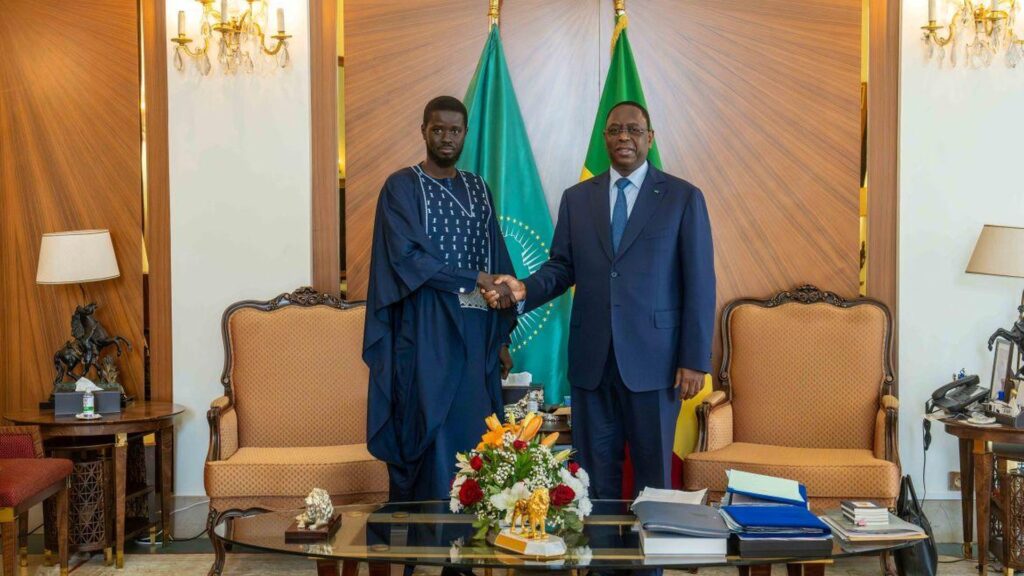
One of the most striking aspects of the development is the symbolism behind the meeting between Macky Sall and President Faye.
The visit marked Sall’s first return to Dakar since leaving office and relocating to Morocco. Until that point, relations between the former and current administrations had remained politically sensitive, reflecting the broader divisions that characterised Senegal’s transition of power.
The meeting therefore carried importance beyond discussions about the United Nations.
It demonstrated that dialogue remained possible between political rivals despite years of criticism and competing political narratives. Shortly afterwards, the government’s decision to fully endorse Sall’s candidacy suggested that national diplomatic priorities had taken precedence over partisan disputes.
For observers across Africa, the episode may serve as an example of how domestic political reconciliation can influence foreign policy decisions. Whether the improved relationship develops further remains uncertain, but the endorsement itself represents one of the most visible signs of cooperation between Senegal’s current and former leadership since the 2024 transition.
An African Campaign Rather Than an Individual Ambition
Senegal’s endorsement also reinforces a broader message emerging from the African Union: that Africa continues to seek stronger representation in global governance.
Although Macky Sall was initially nominated through Burundi’s support during its African Union presidency, consensus across the continent has not always been guaranteed. Several member states reportedly withheld their support during earlier discussions, reflecting differing political priorities and regional calculations.
By officially joining the campaign, Senegal increases both the political legitimacy and diplomatic momentum behind Sall’s candidacy. Government officials have framed the campaign not simply as support for a former president but as an opportunity to advance African leadership within the United Nations system.
If that narrative gains wider acceptance among African governments, the endorsement could encourage additional diplomatic efforts aimed at consolidating continental backing before the UN selection process advances.
Understanding the UN Secretary-General Selection Process
The renewed momentum behind the Macky Sall UN Bid comes at a crucial point in the United Nations’ leadership transition.
UN Secretary-General António Guterres is expected to complete his second five-year term in December 2026, with the next Secretary-General assuming office on January 1, 2027. According to the source material, the formal selection process began in July 2026, opening the door for governments and regional blocs to intensify lobbying efforts on behalf of their preferred candidates.
Although the UN Charter outlines the appointment process, the election is shaped by both diplomacy and geopolitics. Candidates require broad international support, beginning with a recommendation from the UN Security Council before the General Assembly confirms the appointment.
That reality means campaigns often extend far beyond a candidate’s qualifications. Diplomatic relationships, regional alliances, international credibility and consensus among major powers frequently determine who ultimately secures the position.
For Macky Sall, Senegal’s endorsement removes one of the most significant obstacles any candidate could face—uncertainty over support from their own country.
A Crowded International Contest
While Sall’s candidacy has gained fresh momentum, the race remains highly competitive.
The source material identifies former Chilean President Michelle Bachelet and International Atomic Energy Agency Director General Rafael Grossi among the declared or proposed contenders for the position.
Each candidate brings distinct diplomatic credentials and international experience.
This means Senegal’s endorsement should be viewed as an important political milestone rather than a guarantee of success.
Instead, the decision strengthens Sall’s diplomatic standing as campaigns continue among UN member states over the coming months.
The Political Controversies That Continue to Shadow Sall
Despite the government’s decision to back his international campaign, Macky Sall’s presidency remains politically sensitive within Senegal.
According to the supplied reports, President Bassirou Diomaye Faye’s administration had previously accused the former government of violent political repression during demonstrations that resulted in dozens of deaths. The administration has also alleged that unfavourable economic information was concealed during Sall’s final years in office.
Those allegations partly explain why the current administration initially declined to endorse his UN campaign.
Similarly, Sall’s return to Dakar attracted both supporters and critics.
Thousands reportedly welcomed the former president upon his arrival, while opponents used the occasion to renew calls for accountability over deaths linked to political unrest during his presidency.
These contrasting reactions highlight the complex legacy Sall leaves behind.
Internationally, he is recognised for his experience as a head of state and his involvement in continental diplomacy.
Domestically, political debates surrounding his administration continue to shape public opinion.
The government’s endorsement does not erase those divisions, but it demonstrates a willingness to separate national diplomatic interests from unresolved domestic political disagreements.
Why Africa Is Paying Close Attention
The significance of Senegal’s announcement extends beyond one country’s foreign policy.
For many African governments, the race for UN Secretary-General represents an opportunity to strengthen the continent’s influence within one of the world’s most important international institutions.
Africa comprises more than one-quarter of UN member states and plays a central role in peacekeeping operations, development programmes and climate discussions.
Yet African representation in the organisation’s highest leadership positions has remained limited.
By fully backing Macky Sall, Senegal is attempting to consolidate continental support around an African candidate capable of competing on the global stage.
Whether additional African governments rally behind that effort could prove decisive during the coming months.
Implications for African Diplomacy
Senegal’s policy reversal also illustrates an important diplomatic lesson.
Foreign policy frequently evolves as governments reassess national interests.
Although domestic political disagreements remain significant, international diplomacy often requires broader strategic calculations.
In this instance, President Faye’s administration appears to have concluded that supporting a Senegalese candidate for one of the world’s most influential diplomatic offices serves both national and continental interests.
That decision could encourage stronger cooperation among African states seeking greater influence within multilateral organisations.
It may also reinforce calls for Africa to coordinate more effectively when competing for major international positions.
Why This Matters Beyond Senegal
Although centred on Senegalese politics, the development carries wider implications for countries across Africa, including Nigeria.
Nigeria has consistently advocated stronger African representation within international organisations and has frequently called for reforms that give developing nations a greater voice in global governance.
An African Secretary-General would inevitably attract significant attention throughout the continent, particularly regarding issues such as:
- Peace and security.
- Climate change.
- Sustainable development.
- Global health.
- International finance.
- Security Council reform.
While the Secretary-General serves the interests of the United Nations rather than individual regions, symbolic representation can influence diplomatic priorities and strengthen Africa’s visibility within international decision-making.
The Road Ahead
The endorsement announced by Senegal marks only one stage in what is expected to be a lengthy diplomatic process.
Candidates will continue engaging governments, regional organisations and international partners as lobbying intensifies before the Security Council begins formal consideration of nominations.
Whether Macky Sall ultimately succeeds will depend on support extending well beyond Africa.
Nevertheless, Senegal’s decision has fundamentally altered the narrative surrounding his campaign.
Instead of running without the backing of his own government, Sall now enters the next phase with official national endorsement and an expanded diplomatic platform.
That alone significantly strengthens his international standing.
Conclusion
The Macky Sall UN Bid has entered a new chapter following Senegal’s unexpected decision to reverse its earlier position and offer full government support for the former president’s campaign to become the next United Nations Secretary-General.
The move reflects more than a diplomatic endorsement. It signals a rare moment of political pragmatism in which national and continental interests have taken precedence over recent domestic divisions.
As the race to succeed António Guterres gathers pace, Senegal’s policy reversal is likely to become one of the defining developments in Africa’s diplomatic engagement with the United Nations.
Whether Macky Sall ultimately secures the organisation’s highest office remains uncertain.
What is already clear, however, is that Senegal has transformed his candidacy from an individual political ambition into an officially endorsed national campaign—one that could shape Africa’s voice in global diplomacy for years to come.
Recommended Coverage
Somaliland Recognition Reshapes Horn of Africa Politics
Explore how diplomatic recognition and shifting alliances are redefining political dynamics across Africa. The story offers valuable context on the continent’s growing role in global affairs.
Putin-Xi Meeting Highlights Growing China-Russia Power Alliance
Understand how changing global power alliances influence international diplomacy and leadership contests, including the race for key positions within the United Nations.
G7 Summit 2026 Dominated by Iran, Ukraine Talks
Discover how today’s biggest geopolitical challenges are shaping international cooperation and why global leadership at the United Nations has never been more important.
About the Author