Introduction
Nigeria’s public institutions, essential services and regulatory systems came under scrutiny in five developments covered by the Nigeria: Power, Policy & People daily review for 20 October 2026. The reporting period runs from 5:30 a.m. on 19 October to 5:30 a.m. on 20 October, West Africa Time, and focuses on developments reported within that window.
The Nigeria daily news review examines a sharp reported fall in electricity generation, the extension of two federal service chiefs’ tenures, a National Agency for Food and Drug Administration and Control (NAFDAC) operation at a suspected counterfeit alcoholic-drinks facility in Aba, a diesel tanker fire beneath Otedola Bridge in Lagos, and a report placing the Nigerian passport 181st in an IziVisa ranking.
These developments differ in their immediate circumstances and consequences. The electricity disturbance raises questions about the reliability of essential infrastructure and the information available to electricity customers. The service-chief extensions bring succession planning and institutional performance into focus. In Aba, the investigation centres on suspected counterfeit production and the evidence needed to establish product safety. The Lagos tanker fire highlights the importance of road-crash investigations, while the passport ranking demonstrates why international indices must be interpreted carefully.
The available reporting establishes important facts, but it does not answer every question. The precise cause and full customer impact of the grid disturbance remain unclear. The formal legal basis for the service-chief extensions requires examination. Laboratory findings and distribution evidence are needed to determine the implications of the Aba operation. The final cause of the tanker crash and the resolution of conflicting passport figures also require follow-up.
Examining these stories together offers a clearer understanding of the decisions, evidence and accountability questions shaping Nigerian public affairs.
Story 1: Nigeria Electricity Grid Disturbance and the Question of Reliability
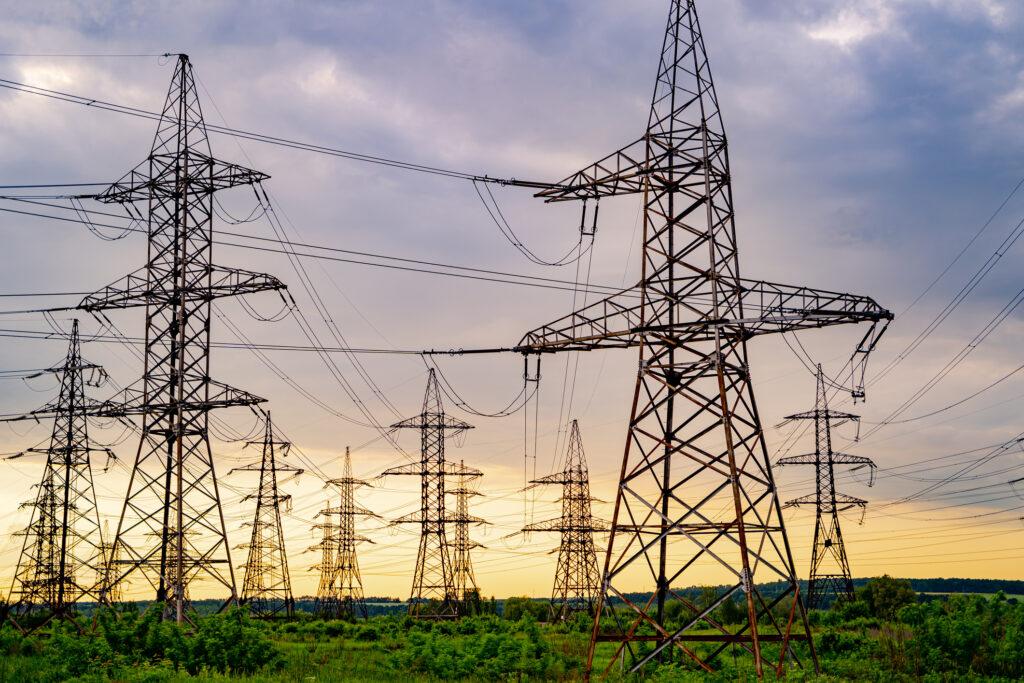
Nigeria’s electricity system experienced a significant disturbance on Monday, 19 October, following a sharp fall in reported power generation. The figures reported by Punch Newspapers indicate a substantial change between two readings, while the explanation provided by the Nigerian Independent System Operator (NISO) places the incident within the country’s electricity transmission network.
Punch reported that generation stood at approximately 3,840 megawatts at 7 a.m. By around 1 p.m., the figure had fallen to 476.70 megawatts. The difference represents a decline of approximately 87.6 per cent between those two readings.
The size of the reported fall makes the incident important, but the figures need to be interpreted accurately. They represent two readings taken at different times, not an average for the entire day. They also do not, by themselves, establish how much electricity individual customers received or how widely supply was interrupted.
What NISO said about the disturbance
NISO attributed the incident to multiple trippings on Nigeria’s 330-kilovolt transmission network at approximately 12:40 p.m. The operator said corrective measures undertaken with the Transmission Company of Nigeria (TCN) restored normal operations.
NISO also described the event as a partial system disturbance, disputing descriptions of it as a nationwide grid collapse. That distinction is important because a sharp reduction in reported generation and a confirmed nationwide loss of electricity supply are not interchangeable descriptions.
The available account establishes that NISO reported a disturbance, identified multiple transmission-network trippings and stated that normal operations were restored. It does not establish the precise initiating fault behind the incident.
For that reason, explanations involving equipment failure, poor maintenance, gas shortages or the responsibility of a particular institution would be premature without additional technical evidence. The reported trippings describe the operator’s explanation of the incident; they do not necessarily answer every question about what initiated the disturbance.
Why the figures matter to Nigerians
Electricity is an essential service for households, businesses and public institutions. A disturbance can therefore raise immediate questions about supply continuity and the ability of customers to understand what happened.
However, the supplied reporting does not establish how many customers experienced interruptions, which communities were affected, how long any outages lasted or whether particular businesses suffered losses. Those consequences should not be presented as confirmed merely because generation fell sharply between two readings.
The same distinction applies to the restoration statement. NISO’s account that normal operations were restored is an important reported development, but it does not independently quantify the duration or geographical extent of any disruption before restoration.
For readers trying to understand the Nigeria electricity grid disturbance, the next stage of reporting should establish what the relevant technical records show and how the reported incident affected electricity supply. Clear information about the timing of the disturbance, the restoration process and the areas affected would help distinguish the system-level event from its practical consequences for customers.
Power, policy and accountability
The incident places attention on the institutions responsible for operating and maintaining the electricity transmission system. NISO supplied the reported explanation of the disturbance, while TCN was identified as participating in corrective measures.
That does not establish institutional fault. Responsible scrutiny requires evidence about the initiating event, the sequence of trippings, the corrective actions taken and the restoration process before conclusions are drawn about performance or responsibility.
The key questions are therefore specific: What technical fault initiated the disturbance? What do subsequent operating records establish? How quickly was normal operation restored? What was the verified effect on customers?
The answers matter more than assumptions based on a single dramatic figure.
For now, the principal finding is a substantial reported reduction in generation between two readings, accompanied by NISO’s account of a partial system disturbance and subsequent restoration. The precise cause and full customer impact remain unresolved. Further technical information is necessary to establish the incident’s complete significance for electricity reliability in Nigeria.
Story 2: Nigeria Government Policy and the Extension of Two Service Chiefs’ Tenures
President Bola Tinubu approved 18-month extensions for the heads of the Nigerian Correctional Service and the Nigeria Immigration Service, according to a Presidency announcement dated 19 October 2026.
The officials concerned are Sylvester Ndidi Nwakuche, Controller-General of the Nigerian Correctional Service, and Kemi Nanna Nandap, Comptroller-General of the Nigeria Immigration Service. Under the announced extensions, Nwakuche’s tenure is to end on 26 May 2028, while Nandap’s is to end on 30 June 2028.
The Presidency said the decision followed a recommendation by the Minister of Interior, Olubunmi Tunji-Ojo. It explained that the extensions were intended to address a succession gap and give the relevant service boards additional time to appoint successors.
The announcement places leadership continuity and succession planning at the centre of the discussion about the two institutions. It also raises questions about the formal process supporting the extensions and how institutional performance should be assessed during the additional period.
The stated reason for the extensions
According to the Presidency, the decision was intended to address a succession gap and provide more time for the relevant boards to appoint successors. This is the stated rationale for the extensions in the reporting supplied for the edition.
The distinction between the announcement and its eventual consequences matters. An extension establishes an announced change to the tenure arrangements; it does not, by itself, establish that succession planning has been completed or that the services will perform better as a result.
The announcement also identifies the Minister of Interior’s recommendation as part of the decision-making process. The available material does not provide the full recommendation, the detailed deliberations behind it or the complete formal instruments implementing the extensions.
Those documents would be necessary to examine the decision’s legal basis in detail. The formal extension instruments and applicable legal provisions remain matters requiring verification before definitive conclusions can be drawn about the procedure.
Continuity, institutional performance and succession
Continuity in leadership can be relevant to an institution’s operations, but its value cannot be assessed solely by the length of a tenure extension. The practical questions concern how the institutions carry out their responsibilities, how their leadership is held accountable and whether succession arrangements progress during the additional period.
The supplied reporting does not establish measurable improvements or deterioration resulting from the extensions. It would therefore be inaccurate to describe the decision as a demonstrated success or failure on the basis of the announcement alone.
Likewise, the stated intention to address a succession gap should not be confused with evidence that the gap has already been resolved. The Presidency’s explanation identifies the purpose of the decision; the actual progress of appointments would need to be established separately.
For the Nigerian Correctional Service and the Nigeria Immigration Service, the relevant public-interest questions concern both leadership and institutional delivery. Nigerians need to know whether the services are functioning effectively and accountably, while the formal arrangements for appointing successors should be clear and properly documented.
What should be watched next?
The first issue is documentary: the formal instruments and applicable legal provisions should be examined to clarify how the extensions were authorised.
The second is institutional: the progress of succession arrangements should be assessed against the stated purpose of giving the relevant boards more time to appoint successors.
The third is performance. Any assessment of the extensions should rely on evidence about the services’ work and governance, rather than assuming that continued leadership automatically produces better outcomes.
The Nigeria government policy dimension of this development lies in the distinction between an announced executive decision and the evidence needed to assess its implementation and results. The Presidency has provided a rationale, but the announcement alone does not resolve every procedural or performance question.
The central issue is whether leadership continuity is accompanied by effective public service, transparent procedures and a clear succession process. Those are the standards against which the implications of the extensions can be examined without speculating about motives or presuming an outcome that the available evidence does not establish.

Story 3: NAFDAC Counterfeit Alcohol Operation in Aba Raises Consumer-Safety Questions
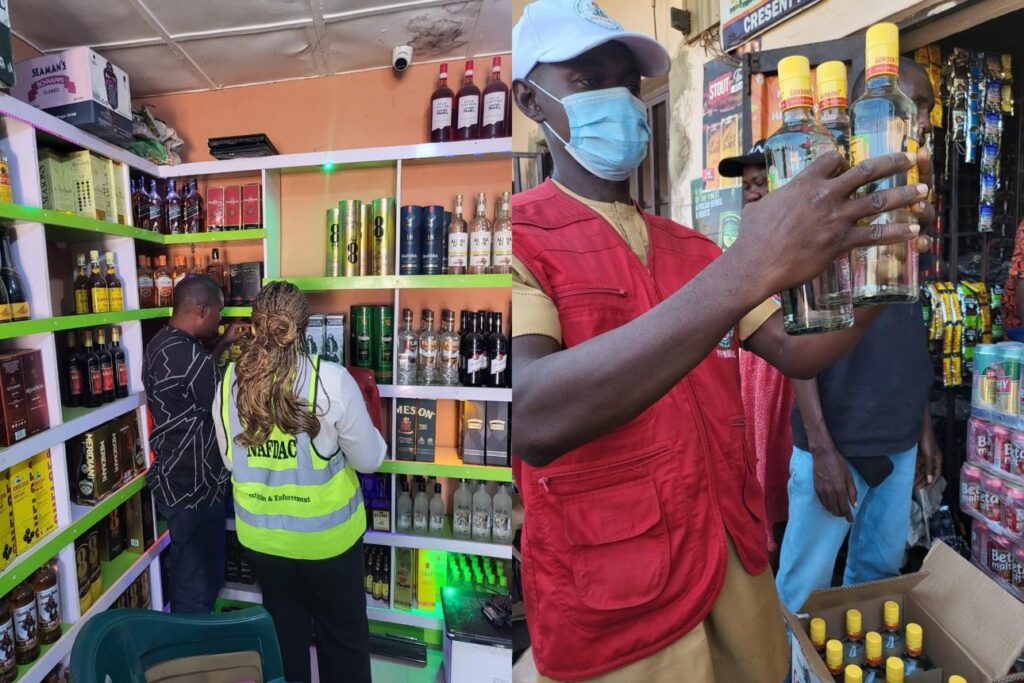
The National Agency for Food and Drug Administration and Control (NAFDAC) reported uncovering a suspected counterfeit alcoholic-drinks production facility at No. 25 Omenazu Street in Aba, Abia State. The operation raises questions about suspected product counterfeiting, the composition of the recovered liquids and whether finished products entered distribution channels.
According to NAFDAC’s account reproduced by Punch Newspapers, officials found bottles, packaging materials, sealing equipment, ethanol and containers holding liquid mixtures. Some packaging reportedly bore the names Sir Edwards Scotch Whisky and Scottish Hills Whisky.
NAFDAC estimated the value of the equipment, materials and facility components at more than ₦500 million. The agency also said the suspected operator fled when officials arrived.
The reported valuation is a significant detail, but its meaning must be kept precise. It refers to equipment, materials and facility components, not a confirmed estimate of sales, profits or losses suffered by consumers.
What the reported operation establishes
The available account establishes that NAFDAC reported an enforcement operation at a suspected counterfeit alcoholic-drinks production facility in Aba. It also records the materials and equipment described by the agency and the reported valuation.
However, the operation and the suspected nature of the activity should not be converted into a definitive finding of criminal guilt. The identity and legal status of the suspected operator have not been independently established in the reporting reviewed for this edition.
The same caution applies to the products and liquids reportedly found at the location. Packaging bearing particular product names is relevant to an investigation into suspected counterfeiting, but it does not establish the chemical composition or safety of the recovered contents.
The available information also does not establish whether finished products were distributed to retailers or consumed by members of the public. Those are separate questions that require evidence.
Why laboratory findings and distribution evidence matter
The consumer-safety significance of the operation depends in part on what testing establishes about the recovered liquids. Laboratory findings would help determine their composition and whether there is evidence of a product-safety risk.
Distribution evidence is equally important. Investigators would need to establish whether finished products entered the market, where they may have gone and whether there is evidence of exposure among consumers. The supplied reporting does not answer these questions.
It would therefore be premature to claim that consumers were poisoned, that injuries occurred or that a specific quantity of unsafe alcohol reached the market. The potential danger associated with unsafe counterfeit alcoholic beverages explains why the investigation matters, but the actual risk in this case must be established through evidence.
The reported ₦500 million valuation should also remain in its proper category. It is not evidence of ₦500 million in consumer losses, sales or profits. Treating it as any of those figures would misrepresent what the agency reportedly valued.
Regulatory enforcement and public accountability
The NAFDAC counterfeit alcohol operation highlights the role of regulatory enforcement in investigating suspected product counterfeiting and addressing possible risks to consumers. But the public significance of an operation cannot be assessed fully from the initial discovery and valuation alone.
The next relevant developments are the results of laboratory testing, clarification of the seized inventory, evidence about possible distribution and any subsequent enforcement or legal action. These would help establish the nature of the suspected activity and its implications.
Clear communication is important because the public needs to distinguish a suspected offence from an established finding, and a possible product hazard from a confirmed case of consumer harm. Accurate reporting also requires avoiding the implication that a product has been proven unsafe merely because its packaging appeared among materials recovered during an operation.
The investigation should consequently be followed on the basis of its documented findings. The initial account provides grounds for scrutiny, but it does not settle the questions about product composition, market distribution or legal responsibility.
For consumers, the central issue is whether evidence establishes a genuine safety risk and what action follows. For regulators, the relevant questions concern the findings of the investigation and the clarity with which its results are communicated. Until more information is available, the operation should be described as an investigation into suspected counterfeit production, with its full implications still to be established.
Story 4: Otedola Bridge Tanker Fire and the Need for Road-Safety Accountability
A diesel-laden tanker crashed and caught fire beneath Otedola Bridge on the Lagos–Ibadan Expressway on Monday afternoon, 19 October 2026. The incident was reported to have occurred at approximately 4:10 p.m.
The Federal Road Safety Corps (FRSC) preliminarily attributed the crash to speeding. Two adult male occupants were reported injured. Channels Television reported that they suffered severe burns, while the initial FRSC account recorded no fatalities. Emergency agencies, including traffic-management and fire-service personnel, responded to the incident.
The incident highlights the immediate risks associated with a road crash involving a vehicle carrying combustible material. However, the final cause of the crash and the subsequent outcomes for those injured remain matters requiring confirmation.
What the initial reports establish
The initial reporting describes a tanker crash and fire beneath Otedola Bridge, two reported injuries and an emergency response. It also records the FRSC’s preliminary attribution of the crash to speeding.
The word preliminarily is important. An initial attribution is not necessarily the conclusion of a completed investigation. Establishing the cause requires examination of the circumstances of the crash and relevant evidence, including the driver’s conduct, the tanker’s condition and road conditions.
The supplied material does not provide a final investigative report. It would therefore be inappropriate to present speeding as a definitively established cause or to assign responsibility beyond what the initial account supports.
The casualty information also needs careful treatment. Two occupants were reported injured, with Channels Television reporting severe burns. The initial FRSC account recorded no fatalities, but the later medical conditions of the injured occupants have not been confirmed in the material supplied for this edition.
The public-safety implications
A fire involving a diesel tanker creates risks for the vehicle’s occupants, other road users and nearby infrastructure. The incident therefore warrants attention beyond the immediate description of the crash.
Nevertheless, the available reporting does not establish the extent of infrastructure damage, the duration of any traffic disruption or the final medical outcomes for the injured occupants. Those details should not be assumed.
The distinction between an initial report and a final finding is especially important in road-safety reporting. A preliminary explanation can guide further investigation, but conclusions about the cause should reflect the evidence eventually established.
What the follow-up should establish
A more complete account would need to clarify the final findings of the investigation, including whether the preliminary attribution to speeding was confirmed and what other relevant factors, if any, were established.
Verified updates about the injured occupants and any infrastructure damage would also help complete the public record. These details matter because the consequences of a crash should be reported accurately, without exaggerating harm or treating an early account as a final determination.
The road-safety dimension of the incident is clear: crashes involving vehicles transporting combustible materials can have consequences beyond the occupants of the vehicle. But a specific prevention lesson should be tied to the findings rather than built on assumptions about the cause.
The initial reporting establishes that the tanker crashed and caught fire, two occupants were reported injured, and emergency responders attended the scene. The FRSC’s attribution to speeding remains preliminary in the supplied account.
The next step is a verified account of the investigation and the outcomes for those involved. Until that information is available, the responsible approach is to report the established facts, preserve the qualifications surrounding the cause and avoid presenting unconfirmed details as settled conclusions.

Story 5: Nigerian Passport Ranking Requires Careful Interpretation
A report by Punch Newspapers placed the Nigerian passport at 181st out of 196 in an assessment published by IziVisa. The report listed 24 visa-free destinations, 16 destinations offering visas on arrival and 43 destinations accessible through electronic visas.
The figures raise questions about Nigeria’s international travel access, but two qualifications are essential. First, the electronic-visa count conflicts with another figure recorded in the research for this edition. Second, a separate ranking of 90th cited for July 2026 came from the Henley Passport Index, a different ranking system.
These distinctions matter because a ranking position does not, on its own, establish why a passport occupies that position or whether a particular country has changed its entry policy.
The discrepancy in the electronic-visa figures
The Punch report listed 43 destinations accessible through electronic visas. However, the IziVisa African ranking table recorded in the research for this edition listed 46 electronic-visa destinations.
The difference must be resolved against the original index before either figure is used definitively. The supplied material does not establish which count is correct or explain the discrepancy.
This matters because the destination categories form part of the reported assessment. Presenting one figure as settled while omitting the conflicting figure would conceal a relevant uncertainty.
The reported totals for visa-free destinations and visas on arrival should likewise be understood as figures attributed to the report, rather than as independently verified entry rules for every destination.
Why the two ranking positions are not directly comparable
The 90th position cited for July 2026 referred to the Henley Passport Index methodology. The 181st position in the current report referred to IziVisa. These are different ranking systems, and the supplied reporting does not establish that their methodologies or classifications are directly comparable.
A difference between the two positions therefore cannot automatically be interpreted as a measured fall from 90th to 181st. To make that conclusion responsibly, the underlying measures would need to be comparable, with their methods and relevant destination classifications understood.
Nor does a ranking difference alone prove that countries have withdrawn visa-free access from Nigerian citizens. A claim about a change in a particular country’s entry policy requires evidence about that country’s actual requirements.
The ranking is worth examining, but the figures should not be made to support a conclusion they do not establish.
What the ranking means for travellers
For Nigerians travelling for education, business, tourism, employment or family reasons, the practical question is whether entry into a particular destination is permitted and under what conditions.
A general passport ranking cannot replace destination-specific entry requirements. Travellers need accurate information about the rules applicable to their intended destination rather than relying exclusively on a ranking position.
The Nigerian passport ranking should therefore be read as a reported assessment requiring clarification, not as proof of a specific policy decision or sudden loss of travel access. The conflicting electronic-visa figures need to be reconciled, and the methodology of the IziVisa assessment should be considered before drawing wider conclusions.
Any claim that a country has changed its visa policy should be checked against reliable official information. That is particularly important when the claim concerns a specific destination or an alleged withdrawal of an existing entry arrangement.
The immediate editorial task is to clarify the original index’s figures and methodology and to avoid treating two different ranking systems as one continuous measurement. Until that is done, the reported position is a point for examination rather than sufficient evidence of a particular cause or change in government policy.

Conclusion: Evidence, Institutions and the Questions That Remain
The five developments in this Nigeria daily news review reveal different aspects of the responsibilities carried by public institutions and the importance of reliable information. They do not establish one common cause or a single explanation for Nigeria’s wider challenges. Their significance lies in the specific decisions, incidents and unresolved questions each brings into view.
The electricity disturbance highlights the need for technical explanations of major changes in generation and verified information about their effects on customers. The extensions granted to two service chiefs place succession arrangements, formal procedures and institutional performance under scrutiny. In Aba, laboratory results and evidence about distribution will be central to determining the implications of NAFDAC’s operation. The Otedola Bridge tanker fire requires a clear account of the final cause and the outcomes for the injured occupants. The passport ranking requires reconciliation of conflicting figures and careful treatment of different ranking methodologies.
Across these developments, the distinction between an announcement and an established outcome remains important. An official explanation, a preliminary finding, an estimated valuation or a ranking can inform public understanding, but each has limits that must be respected.
For Nigerians, meaningful accountability depends on clear records, verifiable findings and accurate communication about what has happened and what remains unresolved. For journalism, the responsibility is to report those distinctions without exaggeration or speculation.
That is the purpose of the Nigeria: Power, Policy & People daily review: to move beyond headlines and help readers understand what the evidence establishes, why it matters and which questions still deserve answers.
About the Author