Nigeria News Roundup: Infrastructure, Economic Pressure, Security and Accountability
Introduction
Nigeria news during the week of 12–18 October 2026 reflected the continuing challenges facing public institutions as they manage essential infrastructure, economic pressures, national security, electoral preparations and accountability. Several developments drew attention to a central question in public affairs: how can official announcements, investigations and policy decisions be translated into results that citizens can verify?
A gas pipeline explosion in Aleto, Eleme Local Government Area of Rivers State, placed infrastructure safety at the centre of the week’s public-interest concerns. The Nigerian National Petroleum Company Limited confirmed the explosion on a pipeline belonging to its subsidiary, NNPC Gas Infrastructure Company Limited. The cause and full extent of the impact remained under assessment.
The economic picture was mixed. Dangote Petroleum Refinery reported a major improvement in its financial performance, while Nigeria’s headline inflation rate declined in September. Yet food inflation remained high, wage negotiations continued to matter to workers, and questions about public finances highlighted the difference between improving indicators and household experience.
Security operations and reported arrests also featured prominently, alongside disputes involving electoral administration, public expenditure and a proposed constitutional amendment to permit state police. Separately, proceedings in Niger State concerning deaths in custody and questions following a Nigerian Air Force aircraft crash kept public accountability in focus.
These five narratives examine the week’s major developments, their implications and the questions that remained unresolved at the end of the review period.
1. Nigeria News: Pipeline Safety and the Test of Public Service Delivery
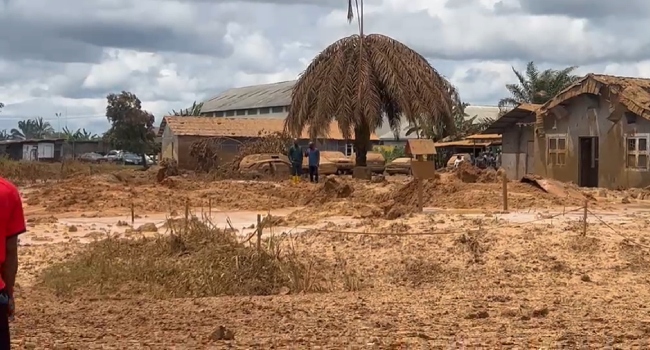
The gas pipeline explosion in Aleto, Eleme Local Government Area of Rivers State, was one of the week’s most significant infrastructure and public-safety developments. The incident occurred on Thursday, 15 October 2026. Initial reports indicated that at least 20 people had been injured and that homes and businesses had sustained damage. The final casualty figures and full extent of the property damage had not been established in the initial reporting.
NNPC confirmed the incident on 16 October, identifying the affected pipeline as belonging to NNPC Gas Infrastructure Company Limited, a subsidiary of the national oil company. In its official statement on the Eleme pipeline incident, the company said the subsidiary had activated emergency response procedures and isolated the affected section to limit further impact. It also said it was working with the Nigerian Midstream and Downstream Petroleum Regulatory Authority, security agencies and other stakeholders to assess the consequences for people, property and the environment.
The company’s statement confirmed the incident and the initial response, but it did not establish what caused the explosion. A report by Channels Television on the pipeline incident is not the relevant source for the pipeline allegations; the specific eyewitness account should therefore be linked to the original report carrying that testimony before publication. An allegation that the pipeline had been leaking for approximately three weeks before the explosion, and that community leaders had raised concerns, remains an allegation rather than an established finding about the cause or responsibility.
The next stage requires a credible account of the circumstances surrounding the incident. Investigators need to establish the sequence of events, whether any safety failures contributed to the explosion and whether corrective action is necessary. Authorities also need to provide verified information about injuries, property damage, environmental impact and any support made available to affected residents.
The incident illustrates why pipeline safety cannot be treated solely as an operational matter for energy companies. Where industrial infrastructure is located near residential communities, an accident can threaten lives, damage homes and disrupt livelihoods. Public confidence depends not only on emergency response but also on transparent investigations and credible explanations of what happened.
Water supply, healthcare and electricity delivery
Other reported developments during the review period raised questions about essential services, although they involved different circumstances and should not be treated as parts of a single problem.
Figures concerning Lagos water supply referred to population coverage of 1.03 per cent and actual daily production equivalent to three per cent of installed capacity. These figures were reported in Premium Times’ coverage of Lagos Water Corporation’s figures. Population coverage and production relative to installed capacity are different measurements, and neither should be used without clarifying the geographical scope, period and methodology.
Installed capacity describes what a system is designed to produce under specified conditions. Actual production measures what it produces in practice. Population coverage, by contrast, concerns how many people receive or can access the service under the definition used. Those figures can reveal different aspects of performance, but they cannot be compared as though they were interchangeable.
In Katsina State, health workers reportedly embarked on a one-week strike, disrupting services at affected facilities. Premium Times reported on the strike and its effect on hospital services. The status of the dispute at the end of the review period requires confirmation. The key questions include whether the affected facilities resumed normal operations, whether the parties reached an agreement and whether patients experienced continuing disruption.
In Talasse, Balanga Local Government Area of Gombe State, a one-megawatt solar mini-grid was commissioned during the period. The project was reported as designed to benefit approximately 6,000 households and businesses after years without reliable electricity from the national grid. Premium Times reported on the commissioning, while Voice of Nigeria provided further details about the project.
The project’s practical value will depend on implementation, access, operational reliability and the number of households and businesses actually served. These outcomes need to be assessed through reliable performance data after the system becomes operational.
Across the different developments, the public-interest question is whether commitments translate into dependable services. In Rivers State, that means a transparent pipeline investigation. In Lagos, it means reliable and clearly defined water-supply statistics. In Katsina, it means establishing the outcome of the labour dispute. In Gombe, it means determining whether the mini-grid is delivering electricity to the people it is intended to serve.
For Nigeria news audiences, infrastructure performance is measured not only by announcements, installed capacity or emergency statements. It is also measured by safety, access, reliability and the availability of credible information when something goes wrong.
2. Nigerian Economy: Refinery Gains, Inflation and Household Pressure
Nigeria’s economic developments during the review period presented a mixed picture. Dangote Petroleum Refinery reported a major improvement in its financial performance, and headline inflation declined in September. At the same time, food-price increases, wage negotiations and questions about public finances remained important to households and policymakers.
Dangote Refinery’s reported turnaround and IPO
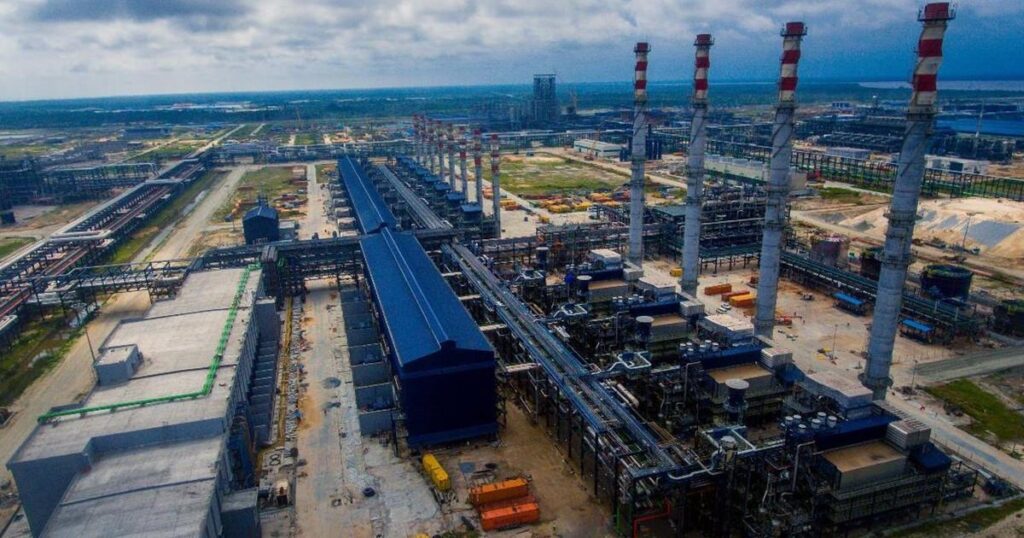
Reuters reported on 13 October that Dangote Petroleum Refinery recorded a net profit of $4.73 billion between January and September 2026, compared with a loss of $117.2 million during the corresponding period in 2025. Revenue for the period was reported at $22.48 billion. The figures were published in Reuters’ report on the refinery’s financial turnaround.
Reuters also reported that the company had extended the closing date for its proposed $1.6 billion initial public offering to 27 October 2026. Its separate report on the extension of the proposed refinery IPO provided additional information about the offering.
The reported figures mark a substantial change in the company’s financial performance over the two periods being compared. The IPO could also broaden participation in the ownership of one of Nigeria’s most significant industrial investments. However, the company’s reported profitability, the eventual outcome of the proposed share offering and the effects on Nigeria’s wider economy are separate questions.
A refinery’s financial results do not automatically establish that fuel prices will fall, household purchasing power will improve or the wider economy will benefit equally. Those outcomes depend on additional factors, including domestic pricing, supply conditions, distribution costs, investment decisions and the wider economic environment.
The proposed offering also remained a future event at the end of the review period. Its reported extension gave prospective investors additional time, but the extension itself did not establish the final amount raised or the eventual performance of the shares.
The key developments to watch were therefore the final terms and outcome of the offering, further company disclosures and evidence of how the refinery’s performance affects supply, investment and the wider energy market.
Inflation declined, but food prices remained a concern
Nigeria’s headline inflation rate reportedly declined from 15.39 per cent in August to 14.63 per cent in September 2026. Food inflation was reported at 19.59 per cent. The figures were attributed to data from the National Bureau of Statistics and covered in Reuters’ September inflation report and Premium Times’ report on the figures.
The distinction between inflation and the overall price level is important. A lower inflation rate means prices are increasing more slowly than before; it does not necessarily mean prices have fallen. Consumers may continue to pay high prices for food, transport, housing and other essentials even when the annual inflation rate moves down.
Food inflation is particularly significant because food is an unavoidable part of household expenditure. The reported rate indicated that food-price pressure remained substantial even as headline inflation eased. The effect on individual households will vary according to income, location, family size and spending patterns.
Consequently, the decline in headline inflation should be understood as an economic indicator rather than conclusive proof that the cost-of-living challenge has been resolved. A fuller assessment requires looking at actual prices, wages and the purchasing power of households over time.
Public finances and the difference between targets and outcomes
Federal finances also came under scrutiny following figures from a World Bank assessment reported by Punch. According to the report, federal interest payments reached ₦7.7 trillion against revenue of ₦6.2 trillion between January and June 2026. The figures were published in Punch’s report on Nigeria’s debt-interest payments. The government reportedly disputed aspects of the assessment.
The underlying report and the government’s response need to be read together before the comparison is presented as a settled conclusion. Definitions, accounting periods and the precise categories being compared are material to interpreting the figures. The reported discrepancy raises a serious question about revenue and debt-servicing costs, but the details must be accurately established.
A separate World Bank Group publication dated 11 October said the Group was helping mobilise up to $5.79 billion in private financing in Nigeria during fiscal year 2026. The initiative combines policy reforms, investment platforms, risk mitigation and commercial financing. The World Bank Group’s explanation of the $5.79 billion financing initiative makes clear that the figure represents financing the Group is helping to mobilise, rather than proof that the full amount has already been raised, disbursed or spent.
The distinction matters because an investment target describes an intended outcome. Its economic value will depend on the financing actually mobilised, the projects supported and the results those projects produce.
Wage negotiations also remained relevant to the economic picture. The source reporting cited a national minimum wage of ₦70,000 and reported disagreement between the Federal Government and the Nigeria Labour Congress over the timing of new minimum-wage negotiations. The precise status of those discussions should be confirmed before publication updates describe any agreement or change.
For workers, the central concern is purchasing power: whether income can meet essential expenses. That cannot be established from the minimum-wage figure alone; it requires considering the prices of food, transport, housing and other necessities.
The economic developments of the week therefore resist a simple verdict of either recovery or decline. The refinery’s reported results, falling headline inflation and the World Bank Group’s financing target are important, but food-price pressure, wage questions and disputed fiscal figures remain part of the picture. The next assessment should focus on verified outcomes rather than treating announcements and indicators as proof that household conditions have improved.
3. Nigeria Security: Operations, Arrests and the Test of Effectiveness
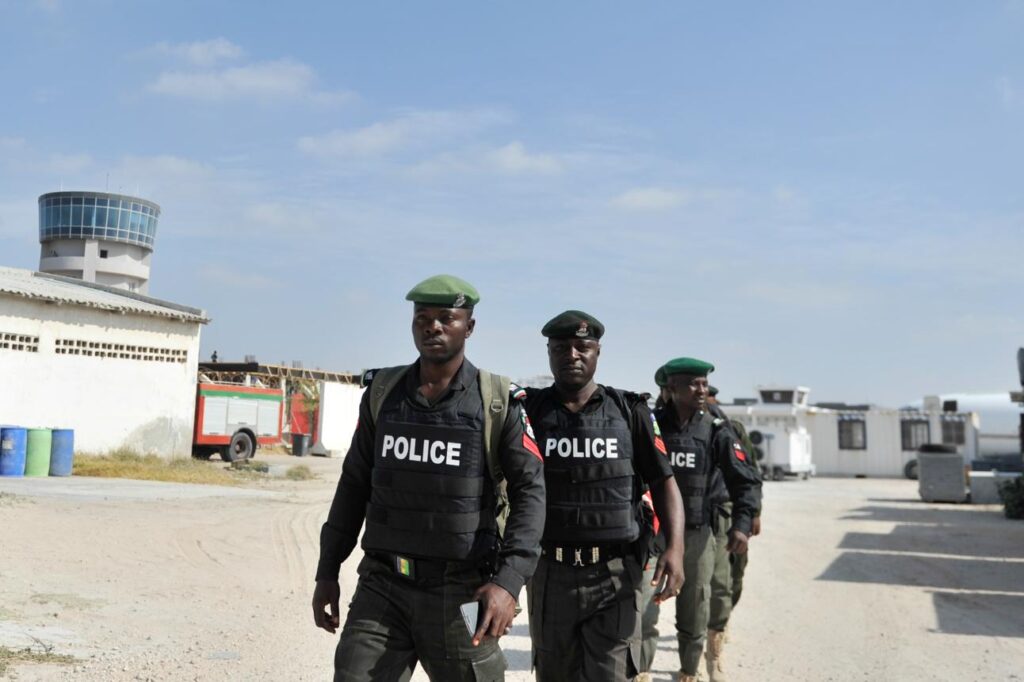
Nigeria security developments during the review period included a reported presidential directive to intensify operations against terrorist and bandit camps, arrests linked to the abduction of prospective National Youth Service Corps members in Imo State, an attack on a police station in Abia State and a drug-enforcement seizure.
These developments involved separate incidents and institutions. They should be assessed individually rather than presented as evidence of one coordinated security situation.
Imo abduction case: five suspects arrested
Twenty prospective NYSC members were abducted in Imo State on 1 October 2026 while travelling towards their assigned orientation camps. Channels Television reported that the victims regained their freedom on 7 October after a joint security operation.
The case returned to public attention during the review period after security operatives reportedly arrested five suspects between 10 and 14 October in operations in Rivers and Abia states. Three other suspects reportedly escaped with gunshot injuries. The arrests were reported by Channels Television and Punch.
The arrests represent a further development in the investigation, but they do not establish guilt. The suspects’ alleged roles must be examined through the relevant investigative and legal processes. The reported rescue of the victims and the later arrests are also distinct stages in the case and should not be conflated.
Deadly attack on an Abia police station
In another incident, Channels Television reported that unidentified gunmen attacked Uratta Police Station in Abia State. Two police officers were confirmed dead, while three others were reported injured. Police said investigations were ongoing to identify and apprehend those responsible.
The attack raised questions about the protection of police facilities and the safety of officers. However, the available reporting did not establish the identities or motives of the perpetrators, and it would be premature to attribute responsibility to a particular group without evidence.
The Imo abduction case and the Abia police station attack are separate incidents. No evidence in the reporting reviewed establishes a connection between them.
Security directives and international assistance
President Bola Tinubu reportedly directed security chiefs to intensify rescue operations and action against terrorist and bandit camps. Army Chief Lieutenant General Waidi Shaibu also visited Maiduguri and the headquarters of Operation Hadin Kai. Channels Television reported on the presidential directive and the army chief’s visit.
Such directives and visits demonstrate official attention to security operations, but they are not, by themselves, evidence that security conditions have improved. That assessment requires verified information about operational outcomes, protection of communities, rescues, investigations and the ability of security agencies to prevent further attacks.
The European Union was also reported to be preparing €20 million in defence assistance. Unless delivery is confirmed through an official announcement or reliable reporting, the package should be described as planned or prospective support, not as assistance already received by Nigerian security agencies.
Separately, the National Drug Law Enforcement Agency reported that it intercepted 349 bags of tramadol hydrochloride powder valued at more than ₦6.98 billion. The seizure was covered in the agency’s official account of recent drug interceptions and by Premium Times.
The reported value and quantity should be checked against the agency’s original statement before publication. The seizure represents an enforcement action, but its broader impact depends on the investigation, any subsequent legal proceedings and whether the operation disrupts the networks responsible for distribution.
Across these developments, the distinction between activity and outcomes is central. Directives, visits, arrests and seizures may be important steps, but their effectiveness must be assessed through verifiable results. Arrests must be followed by lawful proceedings; investigations must establish responsibility; and operations must contribute to safer communities.
The next developments to watch include updates on the Imo abduction investigation, the police inquiry into the Abia attack, confirmation of any European Union assistance delivery and further information about the NDLEA case. Until then, the responsible approach is to report the actions taken without assuming that the wider security challenges have been resolved.
4. Nigeria Politics: Election Preparations, Electoral Funds and State Police
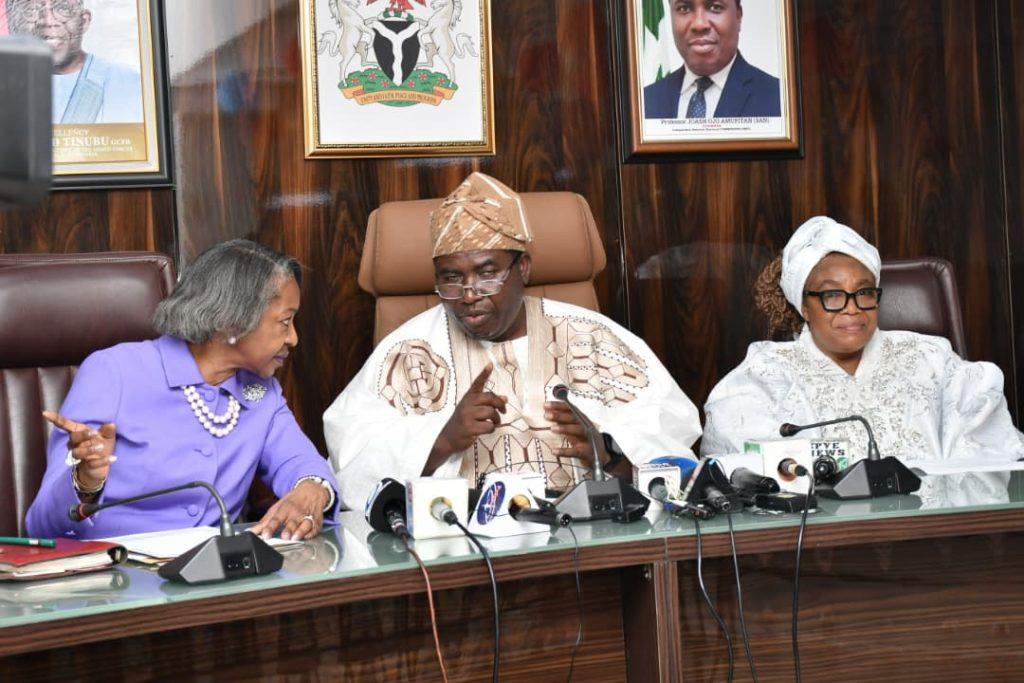
Nigeria politics during the review period included disputes over candidate lists, a reported lawsuit concerning electoral funds and progress—or, more precisely, limited progress—on a proposed constitutional amendment to permit state police. These developments involve different legal and administrative processes, but each raises questions about the accuracy of official records, institutional accountability and the stages required before a proposal becomes law.
Candidate lists and electoral administration
In Gombe State, Isa Pantami and the Peoples Democratic Party reportedly challenged his exclusion from a governorship candidate list following a court-ordered rerun of a party primary. Channels Television reported on INEC’s omission of Pantami’s name, while a subsequent report explained INEC’s position on omitted governorship candidates.
The dispute concerns the party’s primary process and the relevant candidate-list decision. Its outcome depends on the applicable rules, official records and any decisions reached through the appropriate legal process.
In Edo State, a list of State House of Assembly candidates reportedly contained duplicate entries. Premium Times reported on the duplicate candidate names in INEC’s list. The state office of the Independent National Electoral Commission was reported to have referred the matter to the commission’s headquarters.
The Gombe and Edo developments are different cases and should not be treated as the same dispute. They nevertheless highlight the importance of accurate records and timely explanations during election preparation. Errors or contested decisions can create uncertainty for candidates and voters, while clear administrative responses can help establish what the official records show.
The precise status of the Gombe challenge and INEC’s response to the reported Edo list issue should be confirmed before publication updates describe a final resolution.
Electoral funding and public accountability
The Socio-Economic Rights and Accountability Project reportedly filed a lawsuit concerning more than ₦126 billion in electoral funds that it alleges were inadequately accounted for. Channels Television reported on SERAP’s lawsuit against INEC, and Premium Times also covered the case.
The allegation must be treated as a claim subject to legal examination, not as proof of wrongdoing. Filing a lawsuit does not establish that a public institution or individual has acted unlawfully. That determination depends on the evidence, the parties’ arguments and the eventual legal outcome.
The status of the case, the specific expenditure under challenge and any response from the relevant institutions should be confirmed from court records or statements by the parties.
Public expenditure is a legitimate matter of scrutiny, especially when it involves funds intended to support elections and democratic institutions. But responsible reporting must distinguish between questions raised by a claimant and findings established by a court.
State police amendment falls short of the required threshold
The proposed constitutional amendment to permit state police also featured prominently. As of 15 October, five of Nigeria’s 36 State Houses of Assembly—Edo, Osun, Oyo, Rivers and Zamfara—had reportedly approved the proposal. Punch reported that five assemblies had approved the state police proposal.
The reported approvals were a step in the constitutional process, but they did not mean that the amendment had been completed or that state police services had been established and become operational. The remaining constitutional requirements still mattered.
The debate also involves questions beyond the number of state assemblies supporting the proposal. Any state policing framework would raise issues concerning the distribution of policing powers, oversight, accountability and safeguards against abuse. The reported approvals alone do not settle how those matters would be addressed.
The presidential security directive concerning the January 2027 election period should be considered separately from the candidate-list disputes, the electoral-funds lawsuit and the state police proposal. Security planning and electoral administration both affect election readiness, but they involve different responsibilities and processes.
The next developments to watch include court decisions on candidate disputes, INEC’s response to the reported records issue, progress in the electoral-funds lawsuit and further action on the constitutional amendment. Each should be reported according to what the relevant institutions and legal processes actually establish.
For Nigeria politics, the key issue is not simply whether disputes have emerged or a proposal has received some approvals. It is whether official records are accurate, allegations are examined fairly, legal processes are respected and constitutional changes pass through the required stages.
5. Public Accountability: Deaths in Custody and the Search for Answers
Two separate cases involving loss of life kept public accountability in focus during the review period: a judicial inquiry into the deaths of suspected illegal miners while in the custody of the Nigeria Security and Civil Defence Corps in Niger State, and a Nigerian Air Force aircraft crash that reportedly killed 25 people. The incidents differ in their circumstances and must be investigated independently, but both involve important questions that require credible answers.
Niger State inquiry into deaths in custody
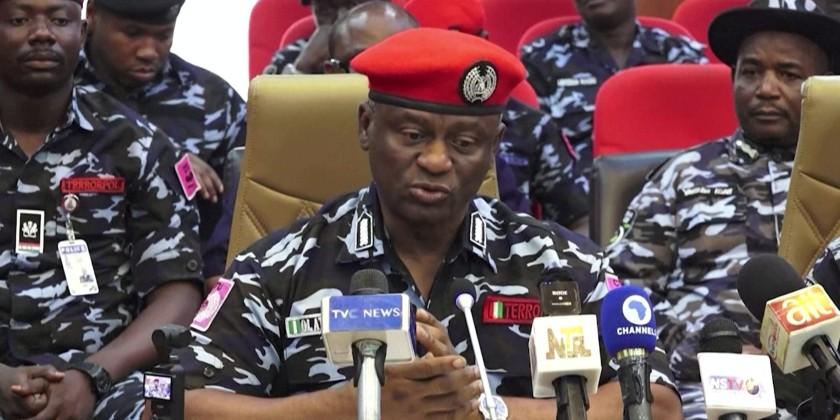
The inquiry into the deaths of suspected illegal miners in NSCDC custody continued during the review period. The suspended Niger State commandant, Suberu Aniviye, reportedly told the inquiry that the deaths could have been prevented and apologised to the bereaved families. Channels Television reported on his testimony before the commission of inquiry.
The testimony is important to the inquiry, but it is not, by itself, a final legal determination of responsibility. The circumstances surrounding the deaths must be established through the proceedings and the evidence presented. Any conclusion about individual responsibility should follow that process.
A discrepancy in the reported death toll also requires clarification. State authorities reported 37 deaths, while a mortuary official reportedly testified that 33 bodies had been received. The discrepancy does not establish why the numbers differ or prove that any particular institution or individual was responsible. It does, however, make accurate records and a clear explanation essential.
The inquiry needs to establish the number of deaths, the circumstances surrounding them and whether failures occurred in the treatment or supervision of people in custody.
For the families, credible findings are central to understanding what happened and whether responsibility should be assigned. The wider public interest concerns the protection owed to people held in state custody and the accountability of officials responsible for their care.
Families seek answers after Nigerian Air Force crash
A separate case concerns the Nigerian Air Force aircraft crash of 5 October. Reuters reported on 16 October that families of those killed were still seeking answers. The crash reportedly killed all 25 people aboard, including 19 military personnel and six civilians. President Bola Tinubu had ordered an investigation, while the cause had not been disclosed in the reporting. Read Reuters’ report on the families awaiting answers after the Nigerian military aircraft crash.
The date of the crash and the date of the subsequent report are different. The incident occurred on 5 October, before the review period began, but new reporting about the families’ concerns appeared during the week under review. This distinction is important in a retrospective account.
The families’ search for information concerns not only the cause of the crash but also communication about the investigation and the recovery process. Reuters reported concerns from relatives about the limited information they had received. These accounts underline the need for timely and credible communication when an investigation concerns a fatal incident.
The cause of the crash had not been established in the reporting reviewed here, and no completed investigation report was confirmed. It would therefore be premature to attribute the incident to a particular technical failure, operational decision or individual action.
The Niger State inquiry and the Air Force crash should not be connected through an assumed common cause. Their circumstances are different. What they share is the need for reliable information when lives have been lost and important questions remain unanswered.
These cases demonstrate why accountability reporting must distinguish between testimony, allegations, official statements and final findings. Such distinctions do not weaken scrutiny; they help ensure that conclusions are based on evidence rather than speculation.
The next developments to watch include the findings of the Niger State inquiry, clarification of the reported death figures and confirmed updates from the Air Force investigation. Until those findings become available, the public record should preserve the outstanding questions without treating uncertainty as proof of a particular explanation.
Conclusion: Nigeria News and the Test of Results
The developments reported between 12 and 18 October 2026 presented a varied picture of Nigeria’s public affairs. Dangote Petroleum Refinery’s reported financial performance and the decline in headline inflation were important economic indicators, while food-price pressure, wage discussions and disputed fiscal figures showed why no single measure can describe the experience of households or the condition of public finances.
The pipeline explosion in Rivers State renewed attention on infrastructure safety. Reports concerning water supply, healthcare disruption and a solar mini-grid highlighted the need to distinguish plans and installed capacity from reliable services. Security directives and enforcement actions also featured prominently, but their wider impact will depend on verified operational outcomes, lawful proceedings and credible investigations.
In politics, candidate-list disputes, a lawsuit concerning electoral funds and limited reported approvals for a proposed state police amendment showed the importance of accurate records, due process and clarity about what has—and has not—been decided. Meanwhile, the Niger State inquiry and the Air Force crash investigation left important questions awaiting established findings.
For Nigeria news audiences, the central lesson is the importance of evidence. Institutions must explain their decisions, implement their commitments and communicate credible results. Allegations must remain distinct from findings, targets must not be mistaken for achievements, and proposed measures must not be described as completed outcomes.
The next stage of these stories will depend on verified information: investigation findings, legal decisions, service-delivery results and evidence that announced plans have been implemented. Those developments will provide a firmer basis for assessing what has changed and what remains unresolved.
Recommended Articles from DSG Herald News
Explore more in-depth reporting on the major developments shaping Nigeria, Africa and the wider world in these related editions of the DSG HERALD NEWS Weekend News Roundup.
1. Nigeria Weekend News Roundup: Economy, Security and Politics
Read our review of Nigeria’s major developments from 4–10 October 2026, covering economic expectations, security challenges, the reported military aviation disaster, preparations for the 2027 general elections and public-sector accountability.
2. Africa News Roundup: Security Tensions, Flooding and Debt Pressures
Explore the developments shaping Africa during the week of 4–10 October 2026, including regional security concerns, anti-migrant violence in South Africa, a reported Ebola case in Kenya, flooding in Senegal and economic financing challenges.
3. Global News Roundup: Security Risks, Financial Pressure and Institutional Resilience
Examine the international developments of 4–10 October 2026, including Middle East security concerns, global financial pressures, major reported AI financing plans, Germany’s support for Ukraine and severe weather threats across the Americas.
Stay informed with DSG HERALD NEWS for comprehensive reporting and context on the stories shaping Nigeria, Africa and the world.
About the Author