124 Nigerians Deportation: Why DHS Issued New Removal List and What Happens Next
The United States has intensified its immigration enforcement efforts by placing 124 Nigerian nationals on a new deportation registry reserved for foreign nationals convicted of serious crimes. The list, published by the U.S. Department of Homeland Security (DHS) on July 8, 2026, identifies the individuals under what officials describe as the agency’s “worst-of-the-worst” criminal category, a designation used for non-citizens facing removal after convictions for serious offences.
While the announcement has attracted widespread attention because it includes the names and photographs of those marked for removal, the development is significant for reasons that go beyond the publication of the registry itself. It reflects the United States’ continuing emphasis on removing undocumented foreign nationals with criminal convictions, highlights the legal processes involved in deportation proceedings, and raises diplomatic and humanitarian questions that have drawn a response from Nigerian authorities.
The decision also comes against the backdrop of broader U.S. immigration reforms aimed at strengthening border security, enforcing existing immigration laws and reducing the backlog of individuals who have already received final removal orders. Understanding why these Nigerians were placed on the registry—and what happens next—provides a clearer picture of how deportation policies are being implemented.
What Is the DHS “Worst-of-the-Worst” Registry?
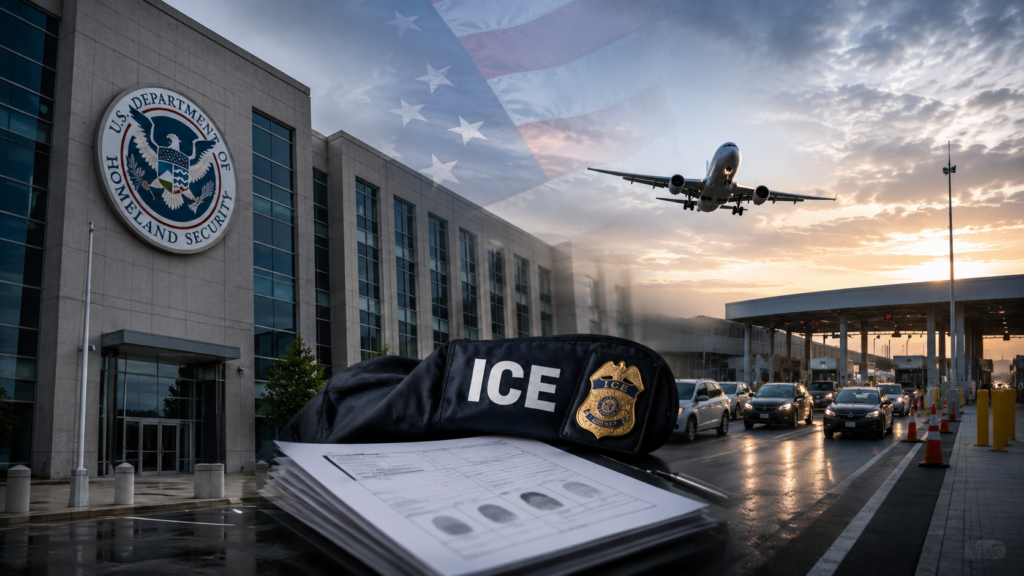
The latest registry forms part of DHS’s effort to prioritise the removal of non-U.S. citizens convicted of serious criminal offences. According to the information released, the 124 Nigerians listed were not selected because of their nationality but because of individual criminal convictions that placed them within the agency’s highest enforcement priority.
Officials say the offences associated with those on the list include:
- Wire fraud
- Identity theft
- Domestic violence
- Narcotics smuggling
- Other serious criminal offences
Although the published information identifies the affected individuals, it does not disclose the specific court records or sentences attached to each case. As a result, the precise circumstances surrounding every individual conviction were not specified in the original report.
The designation does not create new criminal charges. Instead, it reflects an immigration enforcement decision taken after criminal proceedings have already occurred and after immigration authorities determine that removal from the United States is appropriate under existing law.
Why the 124 Nigerians Deportation Story Matters
At first glance, the publication of another deportation list may appear to be a routine immigration announcement. However, the latest development carries broader implications for immigration policy, international relations and public understanding of how deportation systems operate.
For the United States, the registry reinforces a policy of prioritising public safety by focusing enforcement resources on foreign nationals convicted of serious crimes.
For Nigeria, the announcement raises practical and diplomatic questions surrounding the reception, reintegration and welfare of citizens returning after deportation.
For the wider public, it highlights the distinction between immigration violations and criminal convictions—two issues that are often discussed together but are treated differently under U.S. law.
The story therefore extends beyond the identities of those listed. It illustrates how governments balance immigration enforcement, domestic security concerns and international diplomatic obligations.
How the Deportation Process Typically Works

Although the publication of the registry has generated significant attention, appearing on the list does not necessarily mean an individual will board a flight immediately.
In most deportation cases, removal follows a structured legal process that can include:
- Completion of criminal sentences.
- Immigration detention where applicable.
- Administrative processing by immigration authorities.
- Travel documentation arrangements.
- Coordination with the receiving country.
- Final transportation after legal requirements have been satisfied.
The original report notes that U.S. Immigration and Customs Enforcement (ICE) has not announced specific deportation dates or flight schedules for the 124 Nigerians listed.
However, authorities indicate that once removals take place, deportees are expected to arrive through Murtala Muhammed International Airport in Lagos.
The absence of publicly announced timelines suggests that administrative and legal procedures remain ongoing before the deportations are completed.
Nigeria Seeks Humane Treatment for Citizens Facing Deportation
As news of the latest deportation registry emerged, the Nigerian government responded by urging U.S. authorities to ensure that the rights of affected citizens are respected throughout the removal process.
According to the information provided, Nigeria’s Minister of State for Foreign Affairs, Ambassador Bianca Odumegwu-Ojukwu, appealed to U.S. authorities to guarantee humane treatment for those facing deportation. She also requested that affected individuals be given sufficient time to settle their personal affairs and manage their assets before they are removed from the United States.
Although the minister’s appeal does not challenge the authority of the United States to enforce its immigration laws, it reflects Nigeria’s concern for the welfare of its citizens during the deportation process.
For many deportees, removal often involves abrupt changes that can affect employment, housing, family relationships and financial commitments. Nigerian officials have therefore emphasized that deportations should be carried out in a manner consistent with internationally recognized human rights standards.
The request also highlights the importance of diplomatic engagement whenever large-scale deportations involve citizens of another country.
A Wider Immigration Enforcement Strategy
The deportation of the 124 Nigerians should not be viewed as an isolated event. Instead, it forms part of a broader immigration enforcement strategy that has become increasingly visible over the past year.
According to the source material, an earlier operation conducted in February 2026 identified another 79 Nigerians under the same DHS “worst-of-the-worst” initiative.
The repeated publication of such registries suggests that U.S. immigration authorities are continuing to prioritize cases involving foreign nationals convicted of serious criminal offences.
Beyond these individual operations, the available figures indicate that immigration authorities are managing a significantly larger caseload involving Nigerians with final removal orders.
The report states that approximately 3,690 Nigerians currently remain within an ICE backlog of individuals who have already received final removal orders from U.S. immigration authorities.
That figure does not mean all those individuals are scheduled for immediate deportation. Final removal orders can remain pending for various administrative, diplomatic or legal reasons before actual removal takes place.
Consequently, the latest registry represents only one part of a much broader immigration enforcement process.
Understanding Final Removal Orders
One aspect of the story that has generated public interest is the reference to thousands of Nigerians reportedly holding final removal orders.
A final removal order is an immigration determination that authorizes the removal of a non-citizen from the United States after legal proceedings have been completed.
However, receiving a final removal order does not automatically translate into immediate deportation.
Several factors can delay implementation, including:
- Travel document verification.
- Diplomatic coordination between countries.
- Administrative processing.
- Court-related developments.
- Logistical arrangements for transportation.
Because of these factors, immigration authorities often maintain backlogs involving individuals whose removal has already been legally approved but has not yet been carried out.
This distinction helps explain why thousands of people may remain under removal orders even while only a limited number are included in specific deportation operations.
Why Visa Restrictions Also Matter
The latest deportation registry comes after previous immigration measures affecting Nigerian citizens.
According to the source material, Washington had earlier introduced partial visa restrictions aimed at addressing concerns over visa overstays and identity management issues.
Although visa policies and deportation operations are separate government actions, both form part of a broader immigration framework intended to regulate entry into the United States and ensure compliance with immigration laws.
Visa restrictions generally affect prospective travelers seeking permission to enter the country, while deportation proceedings concern individuals already present in the United States who become subject to removal under immigration law.
Together, these measures illustrate the increasing emphasis U.S. authorities are placing on immigration compliance and border management.
Balancing Public Safety and Human Rights
Immigration enforcement often sits at the intersection of public safety, national security and human rights.
Governments have a responsibility to enforce their immigration laws and remove individuals who no longer have the legal right to remain within their borders, particularly where serious criminal convictions are involved.
At the same time, international norms encourage authorities to ensure that deportations are carried out fairly, transparently and with respect for human dignity.
This balance explains why discussions surrounding deportation frequently extend beyond legal enforcement to include humanitarian considerations, diplomatic cooperation and the protection of fundamental rights.
Nigeria’s request for adequate notice and humane treatment reflects these broader concerns, even as U.S. authorities continue implementing their immigration policies.
What the Latest Deportation Registry Means for Nigeria–U.S. Relations

The publication of the new DHS registry also underscores the broader relationship between Nigeria and the United States on immigration, law enforcement and diplomatic cooperation.
The two countries have maintained long-standing ties in areas including trade, education, security and counterterrorism. Immigration has increasingly become another area requiring close collaboration, particularly as both governments seek to address issues such as identity verification, visa compliance and the return of citizens who are subject to removal orders.
When deportations involve large numbers of people, coordination between the sending and receiving countries becomes essential. This includes verifying nationality, issuing travel documents where necessary and ensuring that arrival procedures are properly managed.
While the latest registry has generated public discussion, there has been no indication from either government that it represents a deterioration in bilateral relations. Instead, it reflects ongoing cooperation within existing immigration and diplomatic frameworks, even where both countries may emphasise different priorities.
The United States has focused on enforcing its immigration laws, while Nigeria has stressed the importance of protecting the dignity and rights of its citizens throughout the process.
Public Attention Should Focus on Facts, Not Assumptions
Announcements involving deportations often generate strong reactions on social media, but experts generally caution against drawing broad conclusions from such developments.
One important distinction is that the DHS registry concerns individuals convicted of serious criminal offences, rather than Nigerian nationals as a whole. The actions announced by U.S. authorities are directed at specific cases that have passed through the criminal justice and immigration systems.
Likewise, inclusion on the registry should not be interpreted as reflecting the conduct of the wider Nigerian community living in the United States.
Millions of Nigerians abroad contribute significantly to their host countries through education, healthcare, technology, entrepreneurship and other professions. Their achievements remain separate from the criminal cases highlighted in the deportation announcement.
Maintaining this distinction is important to avoid unfair generalisations and to ensure public debate remains grounded in verified facts rather than stereotypes.
Why This Story Extends Beyond Immigration
Although the immediate issue concerns deportation, the wider significance lies in how governments manage migration in an increasingly interconnected world.
Immigration policy today intersects with several areas of public policy, including:
- National security
- Criminal justice
- International diplomacy
- Border management
- Human rights
- Identity verification
- International travel
The latest DHS action illustrates how these issues often overlap. A criminal conviction can trigger immigration consequences, while deportation itself may require cooperation between multiple government agencies across different countries.
For policymakers, such cases highlight the importance of balancing public safety with legal due process and international obligations. For ordinary readers, they provide insight into the complex procedures that operate behind headline announcements.
What Happens Next?
While the registry has now been published, several aspects of the process remain unresolved.
According to the information available, U.S. Immigration and Customs Enforcement (ICE) has not disclosed when the deportations will begin or the schedule for any removal flights.
Before removals take place, authorities are expected to complete the necessary legal and administrative procedures associated with each case.
Once those processes are concluded, the affected individuals are expected to be repatriated through Murtala Muhammed International Airport in Lagos, as indicated in the DHS announcement.
Whether additional names will be added to future registries remains unclear. However, the earlier February 2026 operation and the reported backlog of Nigerians with final removal orders suggest that immigration enforcement involving Nigerian nationals is likely to remain an issue of public interest in the months ahead.
Conclusion
The 124 Nigerians deportation registry is more than a list of names—it offers a window into the evolving priorities of U.S. immigration enforcement and the legal processes that accompany the removal of foreign nationals convicted of serious crimes.
While the United States continues to emphasise public safety and the enforcement of immigration laws, Nigeria has called for humane treatment and respect for the rights of its citizens during the deportation process. These parallel positions demonstrate that immigration enforcement is not only a legal matter but also a diplomatic and humanitarian one.
As the situation develops, attention will likely remain focused on when the deportations will occur, how both governments manage the process and whether future enforcement actions follow a similar pattern. For readers, the story serves as a reminder that behind every headline are complex legal procedures, international cooperation and policy decisions that extend well beyond the initial announcement.
Recommended Coverage
Romance Scam Network: FBI Tightens Global Crackdown
Explore how U.S. law enforcement is expanding its global crackdown on transnational fraud and cybercrime, including cases linked to international criminal networks. It offers important context to America’s broader enforcement priorities.
Ted Cruz’s Nigeria Plateau Killings Spark U.S. Concern
Discover how security developments in Nigeria continue to shape discussions in Washington and influence the broader U.S.-Nigeria relationship beyond immigration and deportation issues.
US-Iran Strategy Timeline Reveals Contradictions
See how U.S. foreign and security policies are evolving across different regions, providing valuable context for understanding the government’s broader approach to international enforcement and diplomacy.
About the Author