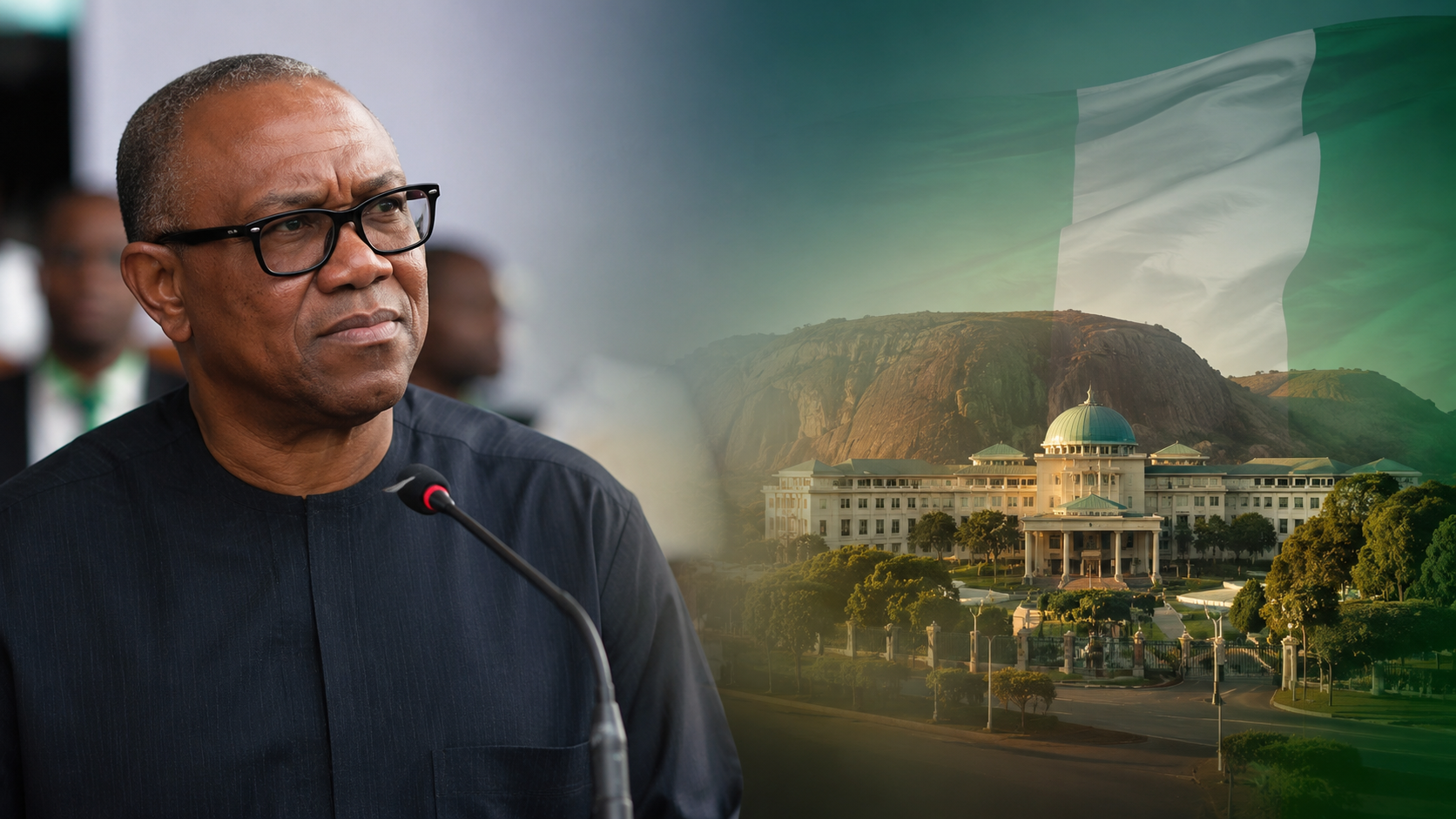
Peter Obi Safety Claims Rejected by Presidency
The Nigerian Presidency has rejected Peter Obi’s safety claims, dismissing allegations that the Federal Government is deliberately targeting the former Labour Party presidential candidate and current Nigeria Democratic Congress (NDC) flagbearer ahead of the 2027 presidential election. The sharp exchange has widened political divisions, drawn reactions from leading opposition figures, and intensified debate about political tolerance, democratic freedoms and the tone of public discourse as preparations for the next general election gather momentum.
The Presidency’s response came after Obi, during an interview with media personality Chude Jideonwo earlier this week, expressed fears that persistent harassment and intimidation could prevent him from remaining politically active through the next election cycle. Presidential spokesman Bayo Onanuga has since rejected those claims, insisting the Tinubu administration is focused on governance rather than political persecution.
The dispute has now evolved beyond a disagreement between two political camps into a broader national conversation about political competition, security, public confidence and democratic accountability.
Peter Obi Safety Claims Spark Fresh Political Debate
Political disagreements are common in democracies, but allegations involving personal safety often receive heightened public attention because they touch on citizens’ confidence in democratic institutions.
During the widely circulated interview, Obi alleged that government actions were making both his personal and professional life increasingly difficult. He suggested that official actions had gone beyond ordinary political rivalry and amounted to deliberate attempts to frustrate him.
Among the concerns he highlighted were what he described as repeated efforts to obstruct his movements, discourage public interactions and isolate him politically. He also referred to an airport incident involving his vehicle, presenting it as one example of what he believes is a broader pattern of intimidation.
Although Obi stopped short of directly accusing named officials of orchestrating the alleged actions, his comments created immediate political interest because of their timing and because they were made by a leading opposition figure expected to remain influential ahead of 2027.
His remarks quickly spread across television, digital platforms and social media, generating widespread discussion among political observers and supporters.
Presidency Rejects the Allegations
The Presidency responded forcefully, rejecting every major allegation raised during the interview.
In a statement issued by presidential spokesman Bayo Onanuga, the Federal Government described Obi’s claims as false, baseless and politically motivated.
According to the Presidency, there is no official campaign to harass political opponents, adding that President Bola Tinubu’s administration remains focused on implementing economic reforms and improving governance rather than engaging in political persecution.
Officials argued that portraying the government as hostile towards opposition leaders creates an inaccurate picture of the country’s political environment.
The response also suggested that Obi’s remarks were capable of generating unnecessary public anxiety while attracting political sympathy ahead of future electoral contests.
The Presidency further maintained that democratic competition should remain based on policies and ideas rather than what it described as unsupported allegations.
Airport Incident Becomes a Major Point of Disagreement
One of the most discussed aspects of the exchange concerns Obi’s account of an incident at an airport involving his vehicle.
During the interview, Obi suggested that airport authorities treated him differently from other travellers by locking his vehicle while allowing others to leave without similar restrictions.
For his supporters, the incident reinforced concerns that opposition figures may face selective treatment by public institutions.
The Presidency, however, offered a different explanation.
According to government officials, the incident resulted from routine enforcement of airport parking regulations rather than any politically motivated action.
Officials insisted that existing rules applied equally to all motorists and argued that presenting the matter as political harassment distorted what they described as a straightforward administrative issue.
Because both sides continue to present differing accounts, the incident has become one of the central issues in the wider political debate.
Questions Over Business Interests
Another issue raised during the exchange relates to Obi’s business interests.
While discussing his broader concerns, Obi suggested that pressure was being exerted on aspects of his economic activities.
The Presidency dismissed that allegation, pointing specifically to Fidelity Bank, where Obi has previously been associated with significant shareholding interests.
Government officials argued that the bank continues to perform successfully under current economic conditions, saying this contradicts suggestions that the administration is attempting to undermine Obi financially.
By highlighting the institution’s continued operations, the Presidency sought to demonstrate that there is no coordinated effort to weaken businesses connected to political opponents.
The disagreement illustrates how economic issues have increasingly become intertwined with political debates in Nigeria, particularly during periods leading up to national elections.
Opposition Figures Rally Around Obi
The Presidency’s response did not end the controversy.
Instead, it prompted strong reactions from several opposition leaders who argued that disagreements over politics should never raise concerns about an individual’s personal safety.
Former Vice President Atiku Abubakar publicly warned that nothing should happen to Peter Obi, stressing that democratic competition must never descend into threats or intimidation.
Former Kano State Governor Rabiu Musa Kwankwaso also joined calls urging authorities to ensure the safety of opposition politicians regardless of political affiliation.
Meanwhile, the Peter Obi Media Office maintained its position that the concerns expressed during the interview should not be dismissed lightly.
The media office argued that government institutions have a responsibility to guarantee the safety of every Nigerian citizen, particularly individuals participating openly in the country’s democratic process.
It further stated that the Federal Government would bear responsibility should any harm come to Obi or members of his political team.
These reactions significantly broadened the discussion beyond Obi’s original interview, transforming it into a wider conversation about political rights, state responsibility and democratic participation.
Why the Story Extends Beyond One Political Dispute
Although the immediate disagreement centres on statements made by Peter Obi and the Presidency’s response, the wider significance lies in what the exchange represents for Nigeria’s evolving political landscape.
As political parties gradually reposition themselves ahead of the 2027 elections, public narratives surrounding political freedom, institutional neutrality and democratic participation are becoming increasingly prominent.
Political observers note that elections are influenced not only by campaign promises but also by public confidence in the fairness of institutions responsible for protecting democratic participation.
Consequently, debates involving political tolerance often receive substantial public attention because they shape perceptions of the country’s democratic health.
Historical Context: Political Rivalry and Democratic Competition
Nigeria’s democratic journey has frequently been marked by intense political rivalry, particularly during periods leading up to presidential elections. Opposition parties have often alleged unequal access to political space, while successive governments have generally rejected accusations of using state institutions against political opponents.
Against that backdrop, the latest exchange between Peter Obi and the Presidency reflects a familiar pattern in Nigerian politics—one in which competing narratives seek to shape public perception long before voters head to the polls.
The emergence of new political alignments ahead of 2027 has further heightened political activity. Obi’s move to the Nigeria Democratic Congress (NDC) has already attracted significant national attention, making his public statements closely watched by supporters, critics and political analysts alike.
While political rhetoric often intensifies as elections approach, experts generally caution that public confidence in democratic institutions depends on political disagreements remaining peaceful and grounded in facts.
What We Know So Far
Based on publicly available information and official statements, the following points are currently established:
- Peter Obi publicly expressed concerns about his personal safety during an interview with Chude Jideonwo.
- He alleged that government actions were deliberately making his political and business activities more difficult.
- The Presidency has categorically denied every allegation.
- Presidential spokesman Bayo Onanuga described the claims as false and politically motivated.
- The Presidency said the airport incident cited by Obi resulted from enforcement of parking regulations rather than political targeting.
- Government officials also rejected suggestions that Obi’s business interests are under pressure.
- Opposition leaders, including former Vice President Atiku Abubakar and Rabiu Musa Kwankwaso, have urged authorities to ensure Obi’s safety.
- The Peter Obi Media Office insists the concerns should not be dismissed and has called on the Federal Government to guarantee his security.
At the time of publication, no independent evidence had been publicly presented to conclusively verify the competing claims made by either side.
Why the Story Matters Ahead of 2027
Although Nigeria’s next presidential election remains some time away, political narratives often begin taking shape years before campaigns officially commence.
Statements involving personal safety can influence public confidence because they raise broader questions about political participation, freedom of association and equal treatment under the law.
For governing parties, such allegations can create reputational challenges even when strongly denied.
For opposition parties, they may reinforce long-standing arguments about political space and democratic competition.
The resulting public debate therefore extends beyond individual personalities to larger questions concerning institutional credibility.
Political analysts also note that election seasons increasingly unfold not only through campaign rallies but across television interviews, digital platforms and social media conversations, where narratives spread rapidly and influence public opinion.
The Role of Public Institutions
The dispute has once again drawn attention to the importance of public institutions maintaining public confidence.
Institutions such as security agencies, airports, regulatory bodies and other government agencies frequently become subjects of public debate whenever allegations of selective treatment arise.
Successive governments have consistently maintained that these institutions operate according to established laws and administrative procedures.
Opposition politicians, however, occasionally argue that implementation can appear inconsistent during politically sensitive periods.
Regardless of political affiliation, many governance experts emphasize that institutional neutrality remains one of democracy’s most valuable assets.
Public trust is strengthened when official decisions are transparent, consistently applied and clearly communicated.
Public Reaction Reflects Deep Political Divisions
The exchange has generated extensive reactions across television programmes, newspapers and social media platforms.
Supporters of Peter Obi argue that his concerns deserve serious consideration and should not be dismissed without careful examination.
Others agree with the Presidency’s position that political disagreements should not automatically be interpreted as evidence of official persecution.
As with many politically sensitive issues in Nigeria, public opinion has largely reflected existing political loyalties.
Nevertheless, many commentators from different ideological backgrounds have converged on one point: democratic competition should remain peaceful and respectful regardless of political differences.
International Perspective
Established democracies around the world have experienced similar disputes involving opposition leaders raising concerns about political pressure or institutional bias.
International democratic standards generally encourage governments to respond to such allegations transparently while ensuring that all political actors enjoy equal legal protection.
Likewise, opposition leaders are expected to substantiate serious allegations with credible evidence wherever possible.
Political observers often note that public confidence is strengthened when institutions respond through facts, accountability and openness rather than prolonged political confrontation.
Although Nigeria’s democratic experience is shaped by its own unique political realities, debates about political tolerance are not exclusive to the country.
Media’s Responsibility in Politically Sensitive Stories
The disagreement also highlights the role of responsible journalism during politically charged periods.
Media organisations have an obligation to present competing claims fairly, distinguish verified facts from allegations and provide readers with sufficient context to understand why an issue matters.
Balanced reporting becomes particularly important where allegations cannot be independently verified.
In this case, both Peter Obi’s concerns and the Presidency’s response represent important components of the story.
Providing readers with both perspectives allows audiences to make informed judgments while preserving journalistic credibility.
As reported by Premium Times, the Presidency strongly rejected Obi’s allegations, while Punch reported reactions from opposition figures calling for his safety to be protected.
What Happens Next?
Attention will now likely shift to whether either side provides additional evidence supporting its position.
Political observers will also monitor whether future public statements reduce tensions or further deepen political divisions.
With political realignments continuing ahead of the 2027 elections, exchanges between the government and opposition leaders are expected to remain significant features of Nigeria’s public discourse.
Future developments may also depend on whether new political alliances emerge, additional official statements are released or further incidents become part of the national conversation.
For now, the immediate focus remains on the competing narratives presented by Peter Obi and the Presidency.
Looking Ahead to the 2027 Election
The road to Nigeria’s 2027 presidential election is still unfolding, but recent events suggest that political narratives are already taking shape.
Campaign strategies are likely to extend well beyond traditional rallies, with interviews, digital platforms and social media playing increasingly influential roles in shaping voter perceptions.
For political parties, maintaining public confidence may prove as important as presenting policy proposals.
For democratic institutions, continued commitment to neutrality and transparency will remain essential.
For citizens, the challenge will be assessing competing political claims while relying on verified information rather than partisan rhetoric.
Conclusion
The dispute surrounding Peter Obi safety claims has evolved into more than a disagreement over a television interview. It has become part of a broader national conversation about political tolerance, institutional credibility and the tone of democratic engagement ahead of Nigeria’s 2027 presidential election.
While Peter Obi maintains that he faces deliberate political intimidation, the Presidency has firmly rejected those allegations, insisting that the administration remains focused on governance and economic reforms rather than political persecution.
As opposition leaders continue calling for restraint and protection of democratic rights, the episode underscores the importance of responsible political communication, institutional transparency and adherence to the rule of law.
Whether the controversy fades or develops into a defining issue ahead of 2027 will depend on future events, official actions and the broader political climate. For now, it serves as another reminder that healthy democracies are strengthened not only by elections but also by the ability of institutions and political actors to manage disagreement through accountability, dialogue and respect for democratic principles.
Recommended Coverage
Nigeria Political Realignment Deepens as NDC Rises
You can also explore how Nigeria’s changing political alliances are reshaping the road to the 2027 elections and why the rise of the NDC is attracting nationwide attention.
Appeal Court Rebukes Judge in ADC Deregistration Case
You can also explore how recent court decisions involving opposition parties are influencing Nigeria’s political landscape and the legal battles shaping the country’s democratic future.
Nigeria’s Economy: The Tinubu Administration — Progress or Crisis?
You can also explore an in-depth assessment of the Tinubu administration’s economic policies, a key issue at the centre of growing political debates ahead of the 2027 presidential election.
About the Author