Andy Burnham First Week Raises Funding Questions
Big Promises, Bigger Questions Over Cost and Delivery
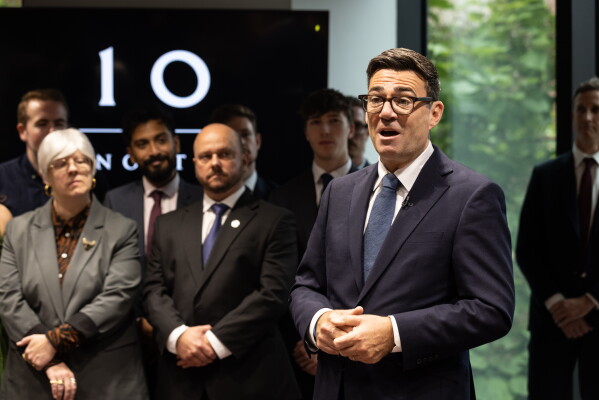
Britain’s new Prime Minister, Andy Burnham, has ended his first week in office with a series of ambitious policy announcements aimed at easing the cost-of-living crisis, supporting businesses, reducing rough sleeping and reshaping how government operates. Working from the newly established No. 10 North in Manchester for the first time, Burnham has sought to project an image of a government that intends to move quickly and govern differently.
Yet while the announcements have generated political momentum and attracted widespread public attention, they have also prompted growing scrutiny from economists and policy analysts over one central question: Can the government realistically deliver these promises without placing additional strain on Britain’s public finances?
The package of measures announced during Burnham’s opening week carries an estimated value of about £1.5 billion, according to the government’s own estimates. Although relatively modest when compared with Britain’s projected annual public spending of roughly £1.4 trillion, several of the initiatives have raised questions about how they will ultimately be financed and whether they can be sustained under the government’s existing fiscal rules.
Rather than simply marking a routine first week in office, Burnham’s early decisions have become an important indicator of the governing style he hopes to establish—one that places strong emphasis on visible action, regional empowerment and immediate responses to household financial pressures. However, translating political ambition into sustainable public policy remains the far greater challenge.
Andy Burnham First Week Signals a Fast Political Start
Few newly appointed prime ministers enjoy a prolonged honeymoon period, particularly at a time when households continue to grapple with rising living costs, pressure on public services and uncertainty surrounding economic growth.
Burnham has responded by unveiling a sequence of policy announcements almost daily during his first week.
Among the most significant measures are:
- A reduction in VAT on domestic electricity bills.
- A return to the £2 cap on bus fares across England, excluding London.
- Additional funding to tackle rough sleeping.
- Reduced business rates for pubs, clubs and live music venues.
- The launch of No. 10 North in Manchester as a new operational government base.
Collectively, these announcements appear designed to achieve two political objectives.
First, they seek to demonstrate that the new administration is prepared to act immediately on issues affecting ordinary households.
Secondly, they reinforce Burnham’s long-standing argument that decision-making in Britain should become less concentrated in London and more responsive to communities across England.
The establishment of No. 10 North is perhaps the clearest symbol of that broader political philosophy.
Rather than governing exclusively from Westminster, Burnham has indicated that Manchester will become a regular working base for senior ministers and hundreds of civil servants, describing it as a centre for delivering practical solutions rather than simply administering government from Whitehall.
Cost-of-Living Measures Form the Centrepiece of Burnham’s Agenda
Although Burnham announced reforms spanning housing, local government and business taxation, the common thread running through most of his first-week decisions is the cost of living.
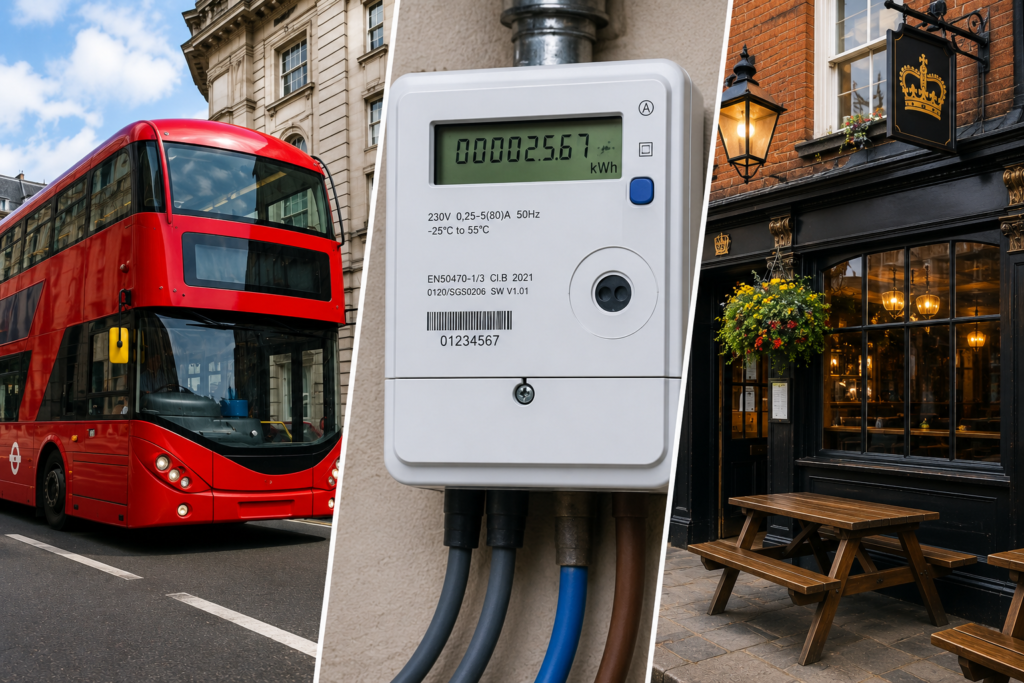
For millions of households, the most immediately noticeable proposal is the planned removal of VAT from domestic electricity bills during the current financial year.
According to government estimates, the measure could reduce annual electricity costs for a typical household by approximately £45 from the autumn.
The announcement comes at a time when energy affordability continues to dominate political debate across Britain, with consumers still facing the effects of elevated electricity prices in recent years.
Similarly, the decision to restore the £2 bus fare cap from January 2027 is intended to make public transport more affordable while encouraging greater use of local bus services.
Support for hospitality businesses also features prominently.
The government has proposed reducing business rates for pubs, clubs and live music venues by 20% from April 2027, with ministers estimating that a typical pub could save around £1,100 annually.
For many independent businesses still recovering from years of economic disruption, such relief could provide valuable financial breathing space.
Burnham has also pledged £340 million over five years to help end rough sleeping in England, describing the issue as one of his government’s earliest priorities.
Taken together, these policies suggest a deliberate effort to address everyday financial concerns rather than focusing initially on large-scale constitutional or institutional reform.
No. 10 North Represents More Than a Symbolic Move
Among Burnham’s most distinctive early decisions is the creation of No. 10 North, located in Manchester.
While Downing Street insists the initiative will involve no additional cost to taxpayers, the move carries political significance well beyond its financial implications.
For decades, critics have argued that Britain’s political and economic decision-making has remained heavily concentrated in London.
Successive governments have promoted regional development through various programmes, yet many communities outside the capital continue to argue that genuine power has remained centralised.
Burnham has attempted to address this criticism by positioning Manchester as an additional centre of government activity.
Senior ministers are expected to spend regular periods working there, while up to 300 civil servants are anticipated to relocate over the coming year.
Supporters see the initiative as an important step towards decentralising government.
Critics, however, argue that symbolism alone will not achieve meaningful constitutional change unless accompanied by significant transfers of authority and long-term investment.
Questions also remain regarding the project’s future, with the permanent headquarters reportedly not expected to be completed until 2032, raising uncertainty about how the initiative will evolve over time.
The Biggest Challenge May Be Funding Rather Than Policy
While the government’s announcements have received considerable attention, economists argue that the more difficult debate concerns financing.
Several proposals have already prompted questions about whether the identified funding sources are sufficient.
For example, ministers say the VAT reduction on electricity bills will be financed by cancelling the previous government’s planned digital identity programme.
However, according to the Office for Budget Responsibility, that programme itself had not been fully funded, meaning its cancellation does not automatically generate the savings required to finance the VAT reduction.
Similarly, the government’s proposal to finance the bus fare cap by replacing certain international climate grants with loans has also drawn scrutiny.
Analysts note that projected savings depend on future loan repayments and interest receipts, both of which remain uncertain.
These issues do not necessarily mean the policies cannot proceed.
However, they illustrate why funding assumptions are receiving almost as much attention as the policies themselves.
As Britain prepares for future Budget statements and spending reviews, ministers are likely to face increasing pressure to demonstrate precisely how these commitments will fit within existing fiscal rules without requiring substantial tax increases or reductions elsewhere in government spending.
Political Momentum Must Now Meet Economic Reality
One of the clearest messages emerging from Andy Burnham’s first week is that his administration wants to be seen as a government that acts quickly.
Rather than spending weeks outlining long-term strategies before unveiling policies, Burnham has chosen to announce a succession of practical measures that directly affect household budgets, public transport, local businesses and homelessness.
Politically, this approach offers several advantages.
It allows the government to demonstrate early momentum, dominate the news agenda and reassure voters that it recognises the financial pressures facing many families.
However, political momentum alone cannot guarantee successful government.
As previous administrations have discovered, the transition from announcing policies to implementing them often exposes financial, legal and administrative challenges that are less visible during the first days in office.
For Burnham, the coming months are likely to determine whether his energetic start represents the foundation of long-term reform or simply an effective political introduction.
Opposition Parties Are Already Testing the Government’s Credibility
Although Burnham’s early announcements have attracted attention, they have also prompted an immediate response from political opponents.
Conservative leaderKemi Badenoch questioned whether the government’s early agenda amounted to meaningful reform or simply a collection of popular announcements.
She argued that Burnham appeared to be governing with the informal style of his years as Mayor of Manchester rather than fully embracing the responsibilities of leading the United Kingdom.
Her criticism highlights one of the central political debates likely to shape the new administration.
Supporters argue that Burnham’s leadership style reflects a more accessible and practical approach to government.
Critics counter that successful national leadership requires more than symbolic decisions and headline-grabbing announcements. They contend that voters will ultimately judge the government by its ability to deliver measurable improvements while maintaining economic stability.
As Parliament resumes its regular legislative work, opposition parties are expected to scrutinise every major spending proposal, particularly where funding arrangements remain unclear.
Large Promises Could Create Even Bigger Fiscal Pressures
The announcements made during Burnham’s opening week represent only a small part of the broader agenda he has previously outlined.
Several of the government’s larger ambitions remain without detailed implementation plans.
Among them is Burnham’s pledge to oversee what he has described as the biggest council house building programme since the post-war period.
While no official cost has yet been attached to that commitment, estimates cited in the source material suggest that matching historical levels of council house construction could require around £13 billion annually in public subsidy.
Housing is not the only area expected to place additional demands on the Treasury.
The government has also indicated support for higher defence spending in the coming years, with Chancellor John Healey previously advocating an increase in defence expenditure from 2.7% to 3% of GDP by 2030. According to estimates referenced in the source material, achieving that objective could require approximately £9 billion each year in additional funding.
Other proposals—including possible changes to income tax thresholds and wider public service reforms—could further increase spending commitments.
Taken individually, each proposal may appear manageable.
Collectively, however, they illustrate why economists are paying close attention to the government’s fiscal strategy rather than simply the popularity of individual policies.
Fiscal Rules May Become Burnham’s Toughest Political Constraint
Throughout his first week, Burnham has repeatedly indicated that his administration intends to respect the government’s existing fiscal rules.
Those rules include commitments not to borrow for day-to-day spending and to ensure that public debt falls as a proportion of the economy by the end of the parliamentary term.
Maintaining those commitments while introducing additional public spending could prove difficult.
Governments generally have only a limited number of options when seeking to finance new expenditure.
These include:
- Increasing tax revenues.
- Reducing spending elsewhere.
- Improving economic growth sufficiently to generate additional government income.
- Reallocating existing departmental budgets.
Each option carries political risks.
Tax increases may prove unpopular with households and businesses.
Spending cuts can affect public services.
Budget reallocations may create resistance across government departments.
Faster economic growth, while desirable, cannot be guaranteed.
For that reason, the Autumn Budget and future Spending Reviews are expected to become major tests of Burnham’s economic strategy.
What Andy Burnham’s First Week Means Beyond Britain
Although the story is centred on British politics, its significance extends beyond the United Kingdom.
Governments across Europe and other advanced economies continue to confront similar pressures:
- Rising living costs.
- Sluggish economic growth.
- Pressure to increase defence spending.
- Demands for affordable housing.
- Calls to decentralise political power.
Burnham’s first week therefore represents more than a domestic political transition.
It offers an early example of how governments are attempting to balance immediate public support with longer-term fiscal discipline.
For policymakers in other countries—including Nigeria and across Africa—the experience highlights a familiar challenge.
Citizens increasingly expect governments to deliver rapid improvements in living standards, yet public finances often limit how quickly those expectations can be met.
The balance between political ambition and economic sustainability is therefore becoming a defining issue not only in Britain but in many democracies.
What This Means for Nigeria and Africa
Although Burnham’s policies are designed for the United Kingdom, developments in the British economy often carry wider international implications.
The UK remains one of Nigeria’s major trading partners and a significant destination for investment, education and migration.
If Burnham’s economic strategy succeeds in boosting consumer confidence and economic activity, it could strengthen demand for international trade and encourage investment flows.
Conversely, if fiscal pressures force spending cuts or tax increases, slower economic growth in Britain could indirectly affect businesses and investors with links to the UK.
The story also offers lessons for African policymakers.
Many governments across the continent face similar questions about how to finance ambitious social programmes while maintaining responsible public finances.
The debate unfolding in Britain therefore reflects broader global discussions about sustainable government spending, fiscal discipline and public accountability.
The Road Ahead
The first week of a new prime minister rarely defines an entire administration.
Nevertheless, it often establishes priorities, governing style and public expectations.
Andy Burnham has chosen to begin with visible action, focusing on household costs, regional development and practical measures intended to demonstrate immediate leadership.
Whether those decisions become lasting reforms will depend less on the announcements themselves than on the government’s ability to finance, legislate and implement them.
In the months ahead, Parliament, economists, businesses and voters are likely to pay close attention to forthcoming Budget decisions, detailed spending plans and evidence that the promised reforms can be delivered within Britain’s fiscal framework.
Burnham’s energetic start has undoubtedly captured public attention.
The far more difficult task now begins: converting political momentum into sustainable government policy.
What’s Next to Watch
Andy Burnham’s opening week has undoubtedly established the tone of his premiership, but the coming months will determine whether the early announcements evolve into lasting reforms or encounter political and financial obstacles.
Several developments are likely to shape public opinion and parliamentary debate:
1. The Autumn Budget
The government’s first major fiscal test will come when the Treasury presents its Budget. This is expected to provide detailed costings for many of Burnham’s first-week commitments and explain how they fit within the government’s fiscal rules. Questions surrounding funding for the VAT reduction on electricity bills, transport subsidies and business rate relief are likely to feature prominently.
2. Delivery of Cost-of-Living Policies
The success of the government’s early agenda will depend not only on announcing policies but also on implementing them effectively. Households and businesses will be looking for tangible reductions in everyday costs rather than long-term promises.
3. The Future of No. 10 North
The Manchester-based government office represents one of Burnham’s most distinctive initiatives. Observers will closely monitor whether it becomes a meaningful centre of decision-making or remains largely symbolic.
4. Housing and Infrastructure
Burnham has signalled ambitions for major council house construction and wider public investment. Detailed plans, funding mechanisms and implementation timelines remain to be announced.
5. Political Opposition
Conservative and other opposition parties are expected to intensify scrutiny of the government’s spending plans, testing whether Burnham’s administration can maintain public support while balancing economic discipline with political ambition.
Key Takeaways
Burnham’s first week has highlighted several defining characteristics of his leadership:
- A determination to act quickly on the cost-of-living crisis.
- A strong emphasis on decentralising government through No. 10 North.
- An attempt to demonstrate immediate political momentum.
- A willingness to introduce policies with direct impact on households and businesses.
- An emerging debate over whether the government’s funding strategy can support its ambitions.
While the estimated £1.5 billion package announced during the first week represents only a small fraction of overall UK public expenditure, it has already shifted political attention from campaign promises to questions of affordability and delivery.
Recommended Coverage
Andy Burnham PM: New Leader Could Reshape UK
Discover who Andy Burnham is, how he rose to power, and why many believe his leadership could redefine British politics. Read the background story that explains the man behind the new government.
Andy Burnham Minister Unveils Economic Vision
Explore the broader economic strategy behind Burnham’s early policy decisions and understand how his long-term vision compares with the promises made during his first week in office.
G7 Summit 2026 Dominated by Iran, Ukraine Talks
Britain’s domestic agenda cannot be separated from global events. See how international security, the Ukraine conflict and Middle East tensions could influence the new prime minister’s economic and foreign policy priorities.
Conclusion
Andy Burnham has begun his premiership with an unmistakable sense of urgency. His first week has been marked by a succession of policy announcements aimed at easing household pressures, supporting businesses and signalling a different style of government.
The announcements have generated momentum and reinforced Burnham’s image as a leader determined to move quickly. At the same time, they have sparked legitimate questions about funding, fiscal sustainability and long-term delivery.
Ultimately, the success of Burnham’s opening agenda will not be measured by the number of promises made during his first week, but by whether those commitments survive the scrutiny of Parliament, the Treasury and the British public.
The coming months will therefore provide the first real indication of whether Burnham’s ambitious start can develop into a durable programme of government—or whether financial realities will force difficult compromises
About the Author