China Exports Africa: A Test for Local Industry
China’s accelerating export drive is creating a new economic test for Africa as manufacturers across the continent try to build industries capable of creating jobs, competing in global markets and reducing dependence on imported manufactured goods.
The issue has become more important as China’s domestic economy struggles with weaker consumption while its export machine remains remarkably strong. Reuters reported that Chinese exports rose 23.9% year-on-year in July 2026, while the country’s trade surplus reached about $112.5 billion. AP also reported that high-tech exports increased sharply and vehicle shipments rose significantly during the first seven months of the year.
For Africa, that creates a complicated choice.
Chinese products can provide consumers and businesses with cheaper goods, machinery, vehicles, electronics and technology. Chinese investment can also support infrastructure and industrial projects.
But the same competitive advantage that makes Chinese products attractive can place pressure on African companies that are still trying to reach scale.
The central question is therefore no longer simply how much Africa imports from China.
It is whether Africa can trade with China while still building industries strong enough to compete with China.
China Exports Africa as Domestic Demand Weakens
The latest phase of China’s global trade strategy comes against a difficult domestic backdrop.
China remains one of the world’s largest manufacturing and exporting powers, but its domestic economy has faced weaker consumer demand and profitability pressures in several industries.
The result is a striking imbalance.
China has enormous productive capacity, while some parts of its domestic economy are not generating enough demand to absorb that output.
That has increased the importance of foreign markets.
The Reuters analysis supplied to DSG Herald describes this development as a second “China shock”, pointing to the expansion of Chinese exports in sectors including electric vehicles, batteries, solar products and advanced manufacturing.
The current export surge is also different from China’s first major wave of global manufacturing expansion.
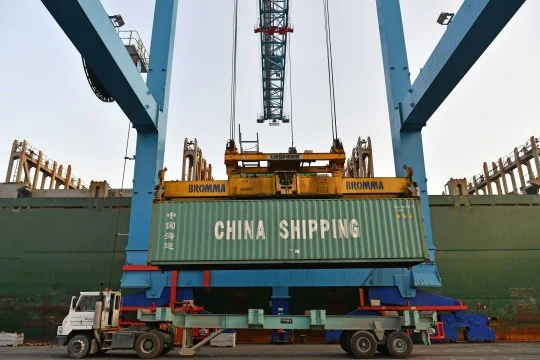
The earlier transformation accelerated after China joined the World Trade Organization in 2001. Chinese factories became deeply integrated into global supply chains, supplying everything from textiles and electronics to machinery and consumer goods.
The new phase is increasingly concentrated in more sophisticated sectors.
Electric vehicles, batteries, renewable-energy equipment, electronics and components used in artificial intelligence infrastructure are now central to China’s export strength.
That matters for Africa because the continent is simultaneously trying to industrialise.
African Manufacturing Faces a Difficult Race
Africa does not enter this competition from the same starting point as China.
Many African economies are still working to overcome high electricity costs, weak transport networks, expensive financing, limited industrial infrastructure and fragmented domestic markets.
Manufacturers also frequently face difficulties obtaining machinery, components and other inputs at competitive prices.
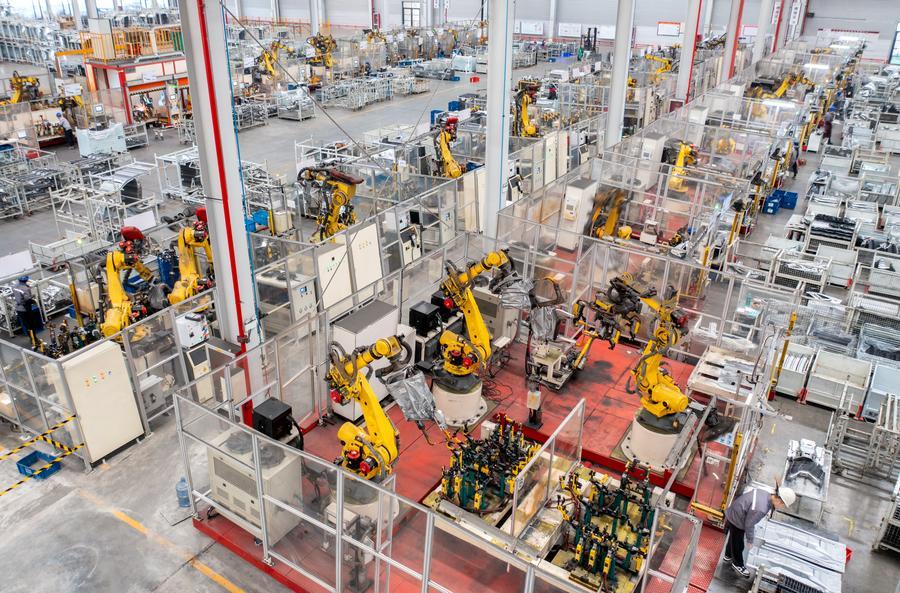
Chinese producers, by contrast, benefit from enormous production networks and highly developed supply chains.
That does not automatically mean African companies cannot compete.
It does mean the competitive environment is becoming more demanding.
The challenge is particularly important because Africa needs productive employment on a massive scale.
A growing population can become an economic advantage when workers are absorbed into productive industries.
But population growth without sufficient employment opportunities can create pressure on governments, households and urban economies.
This is why the debate over African manufacturing is much larger than a dispute about imported goods.
It is ultimately a debate about jobs.
The Consumer Benefit Cannot Be Ignored
There is an important danger in discussing Chinese imports only as a threat.
For millions of African consumers, lower-priced products can provide real economic benefits.
A household that cannot afford a more expensive imported product may be able to buy a cheaper alternative.
Businesses can also use imported Chinese machinery, equipment and components to reduce costs.
Construction companies can obtain equipment.
Farmers can access machinery.
Businesses can obtain electronics and solar equipment.
Transport operators can purchase vehicles at different price points.
In economies where incomes remain relatively low, affordability matters.
This means African governments face a difficult policy balance.
Protecting every domestic producer from foreign competition could raise prices and reduce consumer choice.
But leaving every sector completely exposed could make it difficult for emerging industries to reach the scale required to compete internationally.
The real policy challenge is therefore more sophisticated than simply choosing between free trade and protectionism.
Africa needs to determine which industries can realistically become competitive, what support they require and how long that support should last.
China’s Africa Trade Strategy Has Another Side
There is also another part of the China-Africa trade relationship that deserves attention.
China is not only exporting to Africa.
It is also attempting to increase access for African products into the Chinese market.
In May 2026, China expanded zero-tariff treatment to all 53 African countries with which it has diplomatic relations. Chinese authorities said the policy was intended to expand African access to the Chinese market and support industrialisation and agricultural modernisation.
Chinese government data said China’s imports from Africa rose 23.5% year-on-year in May and June following the expansion of zero-tariff treatment.
That development complicates the argument that China-Africa trade is simply a one-way flow of Chinese manufactured products into African markets.
The bigger issue is what Africa sells in return.
If African countries mainly export raw materials while importing finished and increasingly sophisticated Chinese products, the relationship can reinforce existing patterns of economic dependence.
If, however, African producers can use greater market access to export processed agricultural products, manufactured goods and higher-value products, the relationship could contribute to industrial upgrading.
That distinction is critical.
Nigeria Sits at the Centre of the Debate
For Nigeria, the implications are particularly significant.
Nigeria has one of Africa’s largest consumer markets and a substantial manufacturing base, but its industries continue to face major structural challenges.
The country needs imported machinery and equipment to support production, while local manufacturers also compete with imported finished products.
China’s growing role therefore presents both an opportunity and a competitive challenge.
The opportunity is clear.
Nigerian businesses can potentially access Chinese machinery, technology, components and investment at competitive prices.
The challenge is whether those imports are helping Nigerian companies become more productive or simply replacing products that Nigerian factories could eventually produce.
That distinction should shape Nigeria’s industrial policy.
The objective should not be to prevent Nigerians from buying affordable products.
It should be to create conditions in which Nigerian manufacturers can eventually produce competitive alternatives—and perhaps export them across Africa.
That requires cheaper and more reliable electricity, better logistics, access to affordable capital, predictable regulations and stronger industrial infrastructure.
Without those conditions, tariffs alone cannot create competitive manufacturing.
China and Nigeria Are Already Deepening Economic Ties
The relationship between the two countries is also becoming more structured.
In March 2026, China and Nigeria signed a Framework Agreement on Economic Partnership for Shared Development. China’s Ministry of Commerce said the framework would cover cooperation involving manufacturing, agriculture, trade, investment and digital trade, with an emphasis on improving Nigeria’s competitiveness and integration into the global economy.
That development demonstrates why Nigeria’s relationship with China cannot be reduced to the question of imports.
The relationship includes investment, trade, infrastructure, technology and industrial cooperation.
The challenge for Nigerian policymakers is to ensure that these areas reinforce domestic productive capacity.
A partnership that helps a Nigerian company manufacture more efficiently can have a very different economic effect from one that simply makes importing finished products easier.
AfCFTA Could Change the Equation
One of Africa’s biggest structural disadvantages is market fragmentation.
A manufacturer operating in one African country may have a relatively small domestic market.
That makes it difficult to achieve the production volumes needed to compete with Chinese manufacturers.
The African Continental Free Trade Area offers a potential solution.
A more integrated continental market could allow African manufacturers to sell across multiple countries instead of depending entirely on demand at home.
This matters because manufacturing becomes more competitive when companies can operate at scale.
A Nigerian manufacturer that can reliably sell across West Africa—and eventually much further across the continent—has a larger potential market than one restricted primarily to Nigeria.
That is where AfCFTA becomes more than a trade agreement.
It can become an industrialisation strategy.
African governments could use the continental market to develop regional supply chains, coordinate industrial policies and encourage production in sectors where individual countries may struggle to compete alone.
The Solar Industry Shows Both Sides
The renewable-energy sector provides an important illustration of the opportunity and the challenge.
Recent reporting by AP highlighted efforts by countries including Nigeria, South Africa, Morocco and Ethiopia to develop greater domestic solar manufacturing capacity while China remains dominant across much of the global solar supply chain.
China’s dominance gives African countries access to relatively affordable solar equipment at a time when electricity shortages remain a major development obstacle.
But Africa also wants to move further up the value chain.
That means moving beyond assembling imported components toward developing deeper local manufacturing capabilities.
The lesson extends beyond solar.
The question facing African economies is not whether they should use Chinese technology.
They almost certainly will.
The question is whether they can use that technology as a stepping stone toward stronger domestic industrial capabilities.
The Technology Gap Is Becoming More Important
The competition is also moving beyond traditional low-cost manufacturing.
China’s export growth is increasingly linked to advanced sectors.
Reuters reported strong demand for AI-related technologies in July, including a near doubling in semiconductor exports and a 40.7% increase in high-tech exports.
AP similarly reported that high-tech exports increased substantially while vehicle shipments surged during the first seven months of 2026.
This matters because Africa’s industrial challenge is no longer simply about competing in textiles or basic consumer goods.
The future will increasingly involve:
- electric vehicles;
- batteries;
- solar technology;
- artificial intelligence infrastructure;
- electronics;
- advanced machinery;
- telecommunications equipment; and
- other technology-intensive industries.
If Africa remains primarily a consumer of these technologies, the continent may capture only part of their economic value.
If African companies can eventually participate in their production, assembly, software, maintenance and supply chains, the benefits could be much larger.
China’s Export Surge Is Also Forcing a Policy Choice
African governments therefore face three broad choices.
1. Open the market completely
This approach maximises access to cheaper goods and may benefit consumers in the short term.
But weaker domestic industries may struggle to survive.
2. Protect local industries aggressively
Tariffs, quotas and other restrictions can provide domestic manufacturers with breathing room.
But excessive protection can create inefficient companies, increase prices and reduce incentives to innovate.
3. Use targeted industrial policy
This is potentially the most difficult but also the most strategic option.
Governments can identify industries with genuine potential, provide temporary support and demand measurable improvements in productivity, investment and employment.
The objective would not be permanent protection.
It would be to help companies become competitive enough to survive without it.
That distinction could become central to Africa’s response to the new China export cycle.
What Africa Should Watch Next
The most important indicators will not simply be the volume of Chinese goods entering African markets.
Policymakers should also watch what happens to African production.
Several questions matter.
Are local factories expanding or closing?
Are African companies becoming exporters or remaining dependent on domestic demand?
Are Chinese companies establishing production facilities in Africa or mainly selling finished goods?
Are African workers gaining technical skills through new investments?
Are African countries moving from raw-material exports toward processed products?
Is AfCFTA creating the scale required for continental manufacturing?
These questions provide a better measure of the China-Africa relationship than import figures alone.
China Can Be Competitor, Investor and Customer
There is another reason the debate needs balance.
China can simultaneously be a competitor, investor, supplier and customer.
An African manufacturer may compete against a Chinese company in one product while buying Chinese machinery for another.
A Chinese company may sell finished goods in Africa while also establishing a factory on the continent.
African exporters may depend on China as a market for agricultural or mineral products while trying to increase the value added before those products leave the continent.
The relationship is therefore not simply China versus Africa.
It is a complex economic relationship in which African countries need to improve their negotiating position.
The strongest position for Africa would be one in which it can trade with China without being structurally dependent on China.
The Real Battle Is Over Industrial Capacity
That is why the current China export surge deserves to be viewed through a broader lens.
The issue is not whether Chinese products are good or bad.
Nor is it whether Africa should cut itself off from Chinese trade.
Neither approach captures the economic reality.
China’s manufacturing scale is already deeply embedded in global trade.
Africa needs access to that production, technology and capital.
But Africa also needs its own factories, supply chains, technical skills and competitive businesses.
The continent’s objective should therefore be to turn trade into a pathway toward greater productive capacity.
That means asking what comes after the import.
If Nigeria imports a machine from China, can that machine help a Nigerian company produce goods locally?
If African countries import solar technology, can they gradually build more of the supply chain themselves?
If Chinese companies establish factories in Africa, can those investments create skills, local suppliers and technology transfer?
If African countries export raw materials to China, can more of those materials eventually be processed before export?
Those are the questions that will determine whether China-Africa trade becomes a foundation for industrialisation or reinforces existing dependence.
Recommended Coverage
China’s Tariff-Free Africa: 53 Nations Get Duty Waiver
China’s expanding access to African products adds another dimension to the trade relationship and raises the question of whether Africa can turn market access into greater industrial value.
China-Djibouti Relations Reveal High-Stakes Power Battle
Trade is only one part of China’s African strategy. This coverage examines the wider strategic influence behind Beijing’s growing presence on the continent.
China Boosts AI and Tech Innovation With New Government Plan
China’s industrial competition is moving beyond low-cost goods into advanced technology, making the technological dimension of Africa’s industrial challenge increasingly important.
What This Means for Nigeria
Nigeria should not approach China’s growing export capacity simply as a threat to be blocked.
Nor should it treat cheap imports as an unlimited benefit.
The more strategic objective is to make Nigerian companies competitive.
That means reducing the cost of production, improving infrastructure, expanding access to finance, strengthening technical education and making it easier for productive businesses to operate.
Nigeria also needs to use the size of its domestic market strategically.
A large consumer population can be an asset if it supports domestic production.
But it can become a vulnerability if it simply creates a huge market for imported goods.
The difference depends on industrial policy.
Nigeria’s participation in AfCFTA makes the issue even more important.
The country has the potential to become one of the continent’s major manufacturing and distribution hubs. But that potential will depend on whether Nigerian producers can achieve sufficient scale, quality and cost competitiveness.
China’s experience demonstrates what industrial scale can achieve.
Africa cannot reproduce China’s development model exactly, because the continent consists of many different economies and political systems.
But African countries can learn the underlying lesson:
productive capacity matters.
A New Phase in China-Africa Economic Relations
The first major China shock transformed global manufacturing.
The emerging second phase could be different.
China is entering a world with more tariffs, more geopolitical competition and more pressure from major economies to reduce dependence on Chinese supply chains. At the same time, Chinese companies are becoming more technologically advanced and increasingly capable of producing in markets outside China.
Africa will inevitably be part of that transformation.
The continent has something China needs: growing markets, natural resources, a large future workforce and increasing demand for infrastructure, energy and technology.
Africa also needs what China has: manufacturing capacity, technology, investment and access to large-scale supply chains.
That creates bargaining power—but only if African countries use it collectively and strategically.
Conclusion: Africa Must Become More Than a Market
The most important question raised by China’s export surge is therefore not whether Africa can stop Chinese goods.
It is whether Africa can build enough productive capacity that Chinese trade becomes part of its development strategy rather than a substitute for one.
The continent needs affordable products.
It needs investment.
It needs technology.
It needs infrastructure.
And it needs trade.
But it also needs factories.
It needs competitive companies.
It needs skilled workers.
And it needs industries capable of selling African-made products to the rest of the world.
That is the real test created by the latest China export boom.
For Africa, the choice should not be between shutting China out and opening the doors without conditions.
The more ambitious goal is to trade with China while building the capacity to compete with China.
If African governments can achieve that balance, China’s enormous manufacturing strength could become a source of technology, investment and market opportunity.
If they cannot, the continent risks becoming an even larger destination for other people’s manufactured goods while struggling to create the industries and jobs its young population needs.
The China-Africa economic relationship is entering a new phase.
The outcome will depend not only on what China exports to Africa, but on what Africa decides to build for itself.
About the Author