Nigeria workers strike action has begun as public servants under the Joint National Public Service Negotiating Council (JNPSNC) commence a three-day warning strike over economic hardship, petrol prices, wage support and the proposed negotiation of a new national minimum wage.
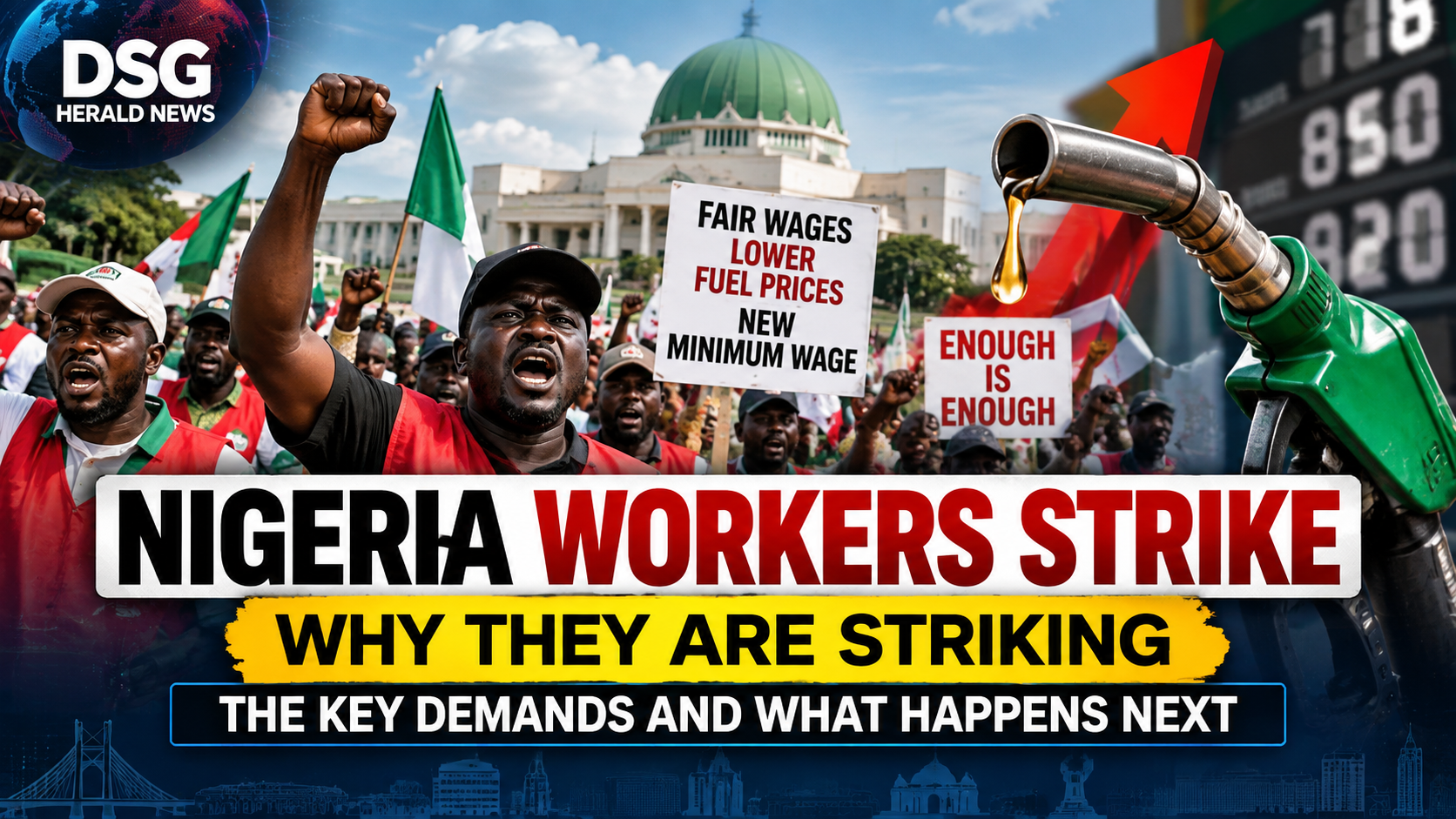
The industrial action, which started at midnight on Friday, October 2, is scheduled to continue until Sunday, October 4, following a directive contained in a circular dated October 1 and signed by JNPSNC National Secretary, Olowoyo Gbenga. The council directed public servants across federal, state and local government services to participate. Pasted text
The immediate dispute centres on demands the council says were previously submitted to President Bola Tinubu in a September 21 letter. Those demands include a reduction in petrol prices, an immediate wage award and the commencement of negotiations for a new national minimum wage ahead of 2027. Pasted text
The development turns what had been a warning from organised public-sector labour into an active industrial dispute, placing the cost of living, workers’ purchasing power and the future of wage negotiations back at the centre of Nigeria’s economic debate.
Why Nigeria Workers Are on Strike
The JNPSNC says the decision to proceed with the Nigeria workers strike followed what it described as the Federal Government’s failure to respond adequately to its requests.
The council’s October 1 circular recalled its earlier position that if President Tinubu did not address the demands contained in its September 21 letter, the planned warning strike would proceed.
The circular subsequently directed the strike to begin at midnight on October 2 and end on October 4. It also instructed public servants in federal, state and local government services to join the action. Pasted text
Current reporting confirms that the warning strike commenced on October 2. TheCable reported that public servants under the JNPSNC began the three-day action over what the council described as unresolved demands. [TheCable](https://www.thecable.ng/public-servants-begin-three-day-strike-over-fgs-failure-to-slash-petrol-price-to-n500-per-litre/?utm_source=chatgpt.com)
The council’s explanation is centred on the economic conditions confronting workers.
In its circular, it described the economic and mental hardship facing workers and their dependants as becoming “unbearable and frustrating”. Pasted text
That language is important because it shows that the strike is being presented by the union council not as a dispute over a single workplace issue, but as a response to a broader combination of wages, transport costs, fuel prices and household expenses.
The Five Key Demands Behind the Strike
Although the strike is being described broadly as an action over economic hardship, the demands attached to it are relatively specific.
1. Petrol Price Reduction
One of the central demands is for the Federal Government to reduce the pump price of petrol to **N500 per litre**.
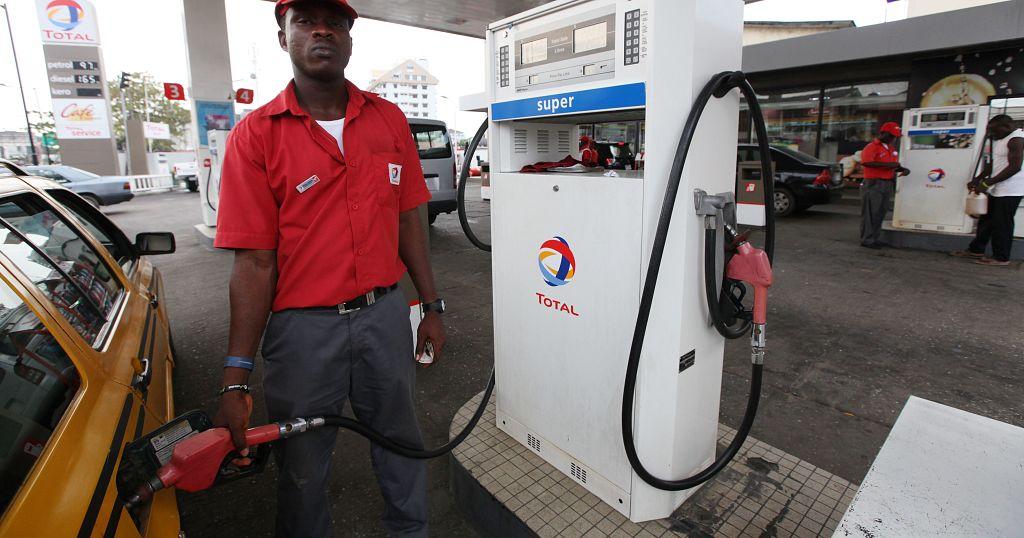
The demand has become a major point of the dispute because fuel prices affect transportation and the operating costs of businesses and households.
The JNPSNC had called for government action to reduce the price of Premium Motor Spirit, commonly known as petrol, as part of measures to cushion workers against the rising cost of living. Current reports confirm that the N500-per-litre demand remained central to the strike decision. [TheCable](https://www.thecable.ng/public-servants-begin-three-day-strike-over-fgs-failure-to-slash-petrol-price-to-n500-per-litre/?utm_source=chatgpt.com)
The significance for workers is straightforward: transport is one of the household expenses most directly affected by petrol prices, particularly for people who commute regularly.
The council therefore links the fuel-price demand to the wider question of workers’ real purchasing power.
2. An Immediate Wage Award
The second major demand is an immediate **wage award for workers**.
The JNPSNC says such a measure would help cushion the effect of prevailing economic conditions on workers, their dependants and vulnerable Nigerians. Pasted text
A wage award is distinct from a permanent change to the statutory minimum wage. It is being demanded here as an immediate relief measure while broader wage negotiations are contemplated.
The distinction matters.
The workers’ position, as reported, is therefore not simply that a new minimum wage should eventually be negotiated. They are also asking for immediate relief while those longer-term discussions take place.
3. Negotiations for a New National Minimum Wage
The third central demand is the establishment of a process for negotiating a new national minimum wage ahead of 2027.
The JNPSNC wants a tripartite committee established to begin negotiations. Pasted text
Reporting ahead of the strike indicates that the council had called for negotiations toward a new minimum wage of at least **N500,000 from 2027**. That figure should be understood as the council’s reported demand, rather than an existing national minimum wage or an agreed government figure. [Vanguard News](https://www.vanguardngr.com/2026/10/hardship-federal-state-lg-workers-begin-3-day-warning-strike-nationwide-today/?utm_source=chatgpt.com)
This distinction is critical.
Nigeria’s minimum-wage question is separate from the immediate three-day warning strike. The strike is an industrial action; the proposed minimum-wage negotiations are part of the longer process that the council wants government to initiate.
The council’s argument is that beginning negotiations early would reduce the possibility of delays once a new wage becomes due.
4. Measures to Cushion the Cost of Living
Beyond the three principal demands, the council has called for measures capable of reducing the economic pressure facing workers and their families.
The source material describes increases in essential goods, transportation and household expenses as factors contributing to declining purchasing power. Pasted text
The JNPSNC’s position therefore links wages to the wider cost structure facing households.
A salary increase on paper does not necessarily translate into greater purchasing power if transportation, food, energy and other basic expenses rise at the same time.
That is one reason the current dispute is broader than a conventional wage negotiation.
5. A Government Response to the Workers’ September 21 Letter
The fifth issue is procedural but central to the dispute: the workers want the government to respond to the demands contained in their September 21 communication to President Tinubu.
The October 1 circular specifically cited the government’s failure to address the requests as the reason for proceeding with the strike. Pasted text
The strike therefore represents the escalation of an unresolved exchange between the organised public-sector unions and the Federal Government.
The immediate question is no longer whether the workers will strike. They have commenced the warning action. The question is what happens after the three-day period.
The Strike Comes Against a Wider Cost-of-Living Dispute
The Nigeria workers strike is taking place against a backdrop of continued concern about the purchasing power of workers.
The JNPSNC says the cost of essential goods, transportation and other household expenses has placed increasing pressure on workers and their dependants. Pasted text
The council’s argument connects three different economic pressures:
**fuel costs → transportation costs → household purchasing power.**
For many workers, these pressures interact.
Higher transportation costs can increase the expense of getting to work. Higher operating costs can affect businesses and the prices of goods and services. Higher household expenses can then reduce the amount of income available for food, education, housing, healthcare and other needs.
The workers are therefore presenting their demands as interconnected rather than isolated.
Why the Minimum Wage Question Is Returning
The demand for a new minimum-wage negotiation process gives the current strike a longer-term dimension.
The council is not asking only for immediate relief. It also wants the government to begin preparations for a new national wage arrangement expected to become relevant in 2027.
The request for a tripartite committee is significant because national minimum-wage negotiations involve government, employers and organised labour.
Current reporting identifies the proposed committee as part of the JNPSNC’s demands. [Vanguard News](https://www.vanguardngr.com/2026/10/hardship-federal-state-lg-workers-begin-3-day-warning-strike-nationwide-today/?utm_source=chatgpt.com)
That means the current warning strike can be viewed in two timeframes.
The first is immediate: **petrol prices and wage relief.**
The second is longer term: **how Nigeria determines the next national minimum wage.**
The two issues are related because workers are seeking immediate relief while also pushing for a process that could establish a new wage framework.
What the Three-Day Warning Strike Means
The JNPSNC has directed public servants at federal, state and local government levels to participate. Pasted text
The practical effect will depend on the level of compliance across different public institutions and locations.
The council has called for mobilisation and dissemination of the strike directive among workers. Pasted text
Because the action is scheduled for three days, its immediate purpose is to communicate the seriousness of the workers’ demands while leaving open the possibility of further engagement after the warning period.
A warning strike is therefore different from an indefinite strike.
The three-day timeframe provides a defined period of industrial action during which the unions can assess the government’s response and determine what comes next.
The supplied source does not specify what further industrial action would automatically follow if the demands remain unresolved. That detail was not specified in the original report.
What the Government Has to Respond To
The dispute leaves the Federal Government facing a set of demands that combine immediate economic relief with a longer-term wage process.
At the centre are:
**N500-per-litre petrol demand**
**Immediate wage award**
**New national minimum-wage negotiations**
**Tripartite committee**
**Measures to cushion economic hardship**
Current reports indicate that the JNPSNC had set September 30 as its deadline for government action before proceeding with the October 2 warning strike. [Vanguard News](https://www.vanguardngr.com/2026/10/hardship-federal-state-lg-workers-begin-3-day-warning-strike-nationwide-today/?utm_source=chatgpt.com)
That deadline has now passed, and the strike has commenced.
The next phase therefore depends on engagement between the government and organised labour.
Why This Matters Beyond the Workers
The dispute matters beyond public-sector employees because public servants provide services through federal, state and local government institutions.
The JNPSNC itself explicitly called on workers across the three levels of government to participate. Pasted text
Consequently, any broad compliance with the strike could affect the functioning of government offices and public-facing services during the three-day period.
At the same time, the workers’ demands reflect concerns that extend beyond government employees.
Petrol prices, transportation costs and household expenses affect workers and non-workers alike. The council itself framed the dispute in terms of the wider population, including dependants and vulnerable Nigerians. Pasted text
This is what gives the strike its broader economic relevance.
The Political and Economic Context
The dispute also sits within the broader relationship between government economic policy and household welfare.
The JNPSNC’s demands effectively ask the Federal Government to address the gap between workers’ earnings and the costs they face.
That does not mean the strike itself settles the question of what policies would achieve those objectives. Those are matters for negotiation between the government, organised labour and other stakeholders.
What is clear from the council’s position is that workers want immediate measures as well as a formal process for determining the next national minimum wage. Pasted text
The government’s response will therefore have to address both the immediate and longer-term dimensions of the dispute.
—
What Happens After October 4?
The scheduled warning strike ends on Sunday, October 4.
The supplied circular does not specify a predetermined action beyond that date.
That leaves several issues unresolved: whether government and labour representatives will enter fresh negotiations, whether the demands will be modified, and whether the warning strike will be followed by additional industrial action if no agreement is reached.
Those developments cannot be assumed in advance.
For now, the established position is that the JNPSNC has ordered a three-day warning strike and has identified petrol prices, wage support and minimum-wage negotiations among its principal demands.
The council says it took the decision because the economic and mental hardship affecting workers had become increasingly difficult. Pasted text
—
The Bigger Question for Nigerian Workers
At its heart, the Nigeria workers strike is about the relationship between **income and the cost of living**.
The JNPSNC is asking for immediate relief through a wage award, lower petrol prices and a process for negotiating a new minimum wage.
The government, meanwhile, faces the challenge of responding to those demands within the wider economic environment.
The three-day warning strike is therefore both an industrial action and a signal of unresolved disagreement over how the economic pressure facing workers should be addressed.
For Nigerian workers, the immediate issue is whether the action produces a meaningful response.
For the government, the challenge is how to address the demands while managing the broader economic consequences of any policy response.
And for the wider public, the outcome could provide an indication of how the next phase of Nigeria’s wage and cost-of-living debate develops.
For now, the warning strike runs from **October 2 to October 4, 2026**.
What follows after those three days will depend on what happens at the negotiating table.
Related DSG Herald News Coverage
Dangote Refinery Petrol Price Hike Hits N1,275
Nigeria Poverty Rate Hits 63 Per Cent Despite Inflation Drop – World Bank
50kg Rice Price Drops to N58,000: Relief for Nigerians
About the Author



