The Systems Under Pressure: What Global Prices, War and Climate Risks Really Tell Us
A rise in consumer prices, a proposed arrangement to protect essential shipping, disruptions affecting wartime communications and a surge in satellite fire detections may appear to be separate stories. They are. Yet each raises a question with implications far beyond the immediate headline: when a system comes under pressure, how much can the available evidence tell us about what has changed, why it happened and what could follow?
The latest developments span the United States, the Strait of Hormuz, Ukraine and Brazil’s Amazon region. US inflation figures show that consumer prices increased in September 2026, with gasoline accounting for a substantial share of the monthly rise. Around the Strait of Hormuz, a United Nations task force is working on arrangements intended to facilitate essential trade, while Reuters has reported a proposed mechanism involving vessel coordination and cargo verification. In Ukraine, reports of disruptions have renewed questions about dependence on communications infrastructure. In Amazonia, monitoring figures point to a sharp increase in fire detections.
Each development deserves scrutiny. But a measured price increase does not, by itself, establish its cause. A shipping proposal is not proof that cargo is moving. Restrictions affecting a commercial communications service do not automatically demonstrate that intelligence-sharing has stopped. Satellite fire detections do not directly measure the area burned.
These distinctions form the central question of this Beyond the Headlines review: how do we recognise a genuine warning about a system under pressure without overstating what the evidence proves?
The answer begins with examining the figures, understanding the institutions and mechanisms involved, and identifying what remains unresolved.
US Inflation in September 2026: What Do the Numbers Actually Show?
The United States recorded a significant monthly increase in consumer prices in September 2026, with energy costs playing a prominent role. The figures provide evidence of the movement in prices, but they do not independently explain every factor behind it.
According to the US Bureau of Labor Statistics (BLS), the Consumer Price Index (CPI) rose by 0.6 per cent month-on-month and 3.7 per cent year-on-year. The figures were published on 14 October. Read the official September 2026 Consumer Price Index release.
The CPI measures changes in the prices paid by consumers for a defined basket of goods and services. The monthly figure compares September with August, while the annual figure compares September 2026 with September 2025. They describe different time periods and should not be treated as interchangeable measures.
One component stands out. US gasoline prices increased by 9.1 per cent during September, while the energy index rose by 5.2 per cent. The BLS reported that gasoline accounted for more than half of the monthly increase in the overall CPI.
That contribution matters because fuel prices can affect both household budgets and the cost of operating businesses. However, the data do not establish that energy explains every part of inflation, or that a single international development caused the increase.
How energy costs can reach households
The effects of higher fuel prices can spread through several stages of an economy.
Households may pay more to refuel their vehicles. Transport operators may face increased operating expenses. Manufacturers and distributors may pay more to move raw materials and finished products. Businesses must then decide whether to absorb those costs, pass some of them on to customers or adjust their operations.
The eventual effect on consumer prices depends on several factors, including how large and persistent the energy-price movement is, exchange rates, taxes, subsidies, consumer demand and other production costs.
The timing also matters. Some businesses may adjust prices quickly, while others may do so later or absorb part of the increase. A movement in fuel prices therefore does not translate into an identical price increase for every product or service.
The distinction is important for readers trying to understand the practical consequences of an inflation report. The data identify a measurable change; explaining the full chain of causes requires additional evidence.
Singapore and China provide different economic contexts
Developments elsewhere offer useful context, but they do not provide a direct explanation for the US figures.
On 14 October, Singapore’s Monetary Authority maintained the existing rate of appreciation of its exchange-rate policy band. The authority reported that core inflation had risen to 2.1 per cent year-on-year in July and August, compared with 1.5 per cent in the second quarter. It identified higher import costs as one contributing factor.
Read the Monetary Authority of Singapore’s October 2026 monetary policy statement for its assessment of inflation and its policy decision.
Singapore’s core-inflation measure excludes certain items, including accommodation and private transport, and is intended to help assess underlying price pressures. Its exchange-rate-centred monetary policy framework also differs from the interest-rate framework used by the US Federal Reserve.
The two countries’ inflation figures consequently measure different baskets of prices over different periods and operate within different policy systems. Comparing them without those qualifications could give readers a misleading impression of what the numbers mean.
China’s trade figures offer another perspective. Reuters reported that Chinese exports rose 36.3 per cent year-on-year in September, while imports increased by 31 per cent. Read Reuters’ report on China’s September 2026 export and import figures.
Those figures describe the growth of trade flows. They do not, on their own, establish the state of household purchasing power across China or explain the causes of inflation in the United States.
What the inflation evidence does not establish
The available figures support a clear conclusion: US consumer prices rose in September, and gasoline made a substantial contribution to the monthly increase. Singapore’s monetary authority also identified higher import costs as a factor in its assessment of inflation.
What remains unproven is the precise contribution of any particular geopolitical disruption to the US inflation movement. The figures alone do not demonstrate that events around the Strait of Hormuz caused the September increase.
Establishing such a connection would require evidence tracing the relevant disruption through energy markets, supply costs and consumer prices, alongside other possible explanations.
This is the difference between measuring an economic outcome and explaining it. It also leads to a more specific question: if a strategic shipping route becomes difficult to use, what could that mean for an essential input into food production?

Strait of Hormuz Fertiliser Shipments: Can a Proposed Mechanism Protect Essential Supplies?
The Strait of Hormuz is an important strategic shipping passage. Disruptions around the route can raise concerns about the movement of essential goods, but the consequences depend on what is being transported, how long disruption lasts and whether alternatives are available.
Fertiliser illustrates the potential stakes. Farmers depend on fertiliser to support crop production, while countries that import it may be vulnerable to delays, higher costs or uncertainty over access to suppliers.
However, the effects would not necessarily be identical across countries. National inventories, alternative suppliers, the types of fertiliser involved and agricultural planting calendars can all influence the scale and timing of any impact.
The central issue is therefore not simply whether shipping faces difficulties. It is whether those difficulties prevent essential cargo from reaching the places that need it.
What the United Nations task force is intended to do
In March 2026, the United Nations established a task force to develop mechanisms addressing humanitarian needs associated with disruption around the Strait of Hormuz.
The task force is led by the United Nations Office for Project Services (UNOPS) and includes the United Nations Conference on Trade and Development, the International Maritime Organization and the International Chamber of Commerce.
In its official statement of 27 March 2026, UNOPS described the task force’s role in developing a mechanism for safe, orderly and predictable maritime transit, with a focus on fertiliser and related raw materials.
On 14 October, Reuters reported details of a proposed shipping mechanism involving a coordination centre in Oman, cargo verification and a possible minimum of five vessels passing daily. Read Reuters’ report on the proposed Hormuz fertiliser mechanism.
The reported figure of five vessels a day requires careful interpretation. It formed part of a proposal; it was not confirmation that five vessels were actually passing each day under an operational arrangement.
The reporting said the mechanism had not yet been implemented and that it depended on agreement between the relevant parties. Its actual operation and results therefore cannot be inferred from the proposal alone.
Why a proposal is not the same as an operational solution
A proposed shipping mechanism must pass through several stages before it can produce measurable results.
The relevant parties need to agree on the terms. The coordination centre and cargo-verification arrangements must be workable. Shipping operators must be able and willing to participate. Security conditions, insurance costs and commercial decisions must also permit vessels and cargo to move.
A proposal can represent a meaningful diplomatic or technical development without immediately changing conditions at sea.
Even if an arrangement becomes operational, its effectiveness cannot be judged solely by the announcement. Relevant questions include whether vessels are transiting, whether fertiliser cargoes are reaching their destinations, whether delays and costs are changing, and which countries or agricultural sectors are benefiting.
Answering those questions would require evidence from vessel movements, cargo records, freight rates, insurance costs and country-specific import data.

Could shipping disruption lead to food-supply problems?
Fertiliser is an important agricultural input, but a disruption to shipping does not automatically mean that every country will face shortages or that a global food crisis is already under way.
The consequences depend on the availability of existing stocks, alternative sources of supply, the type of fertiliser affected and the timing of deliveries relative to agricultural requirements.
Different causes may also contribute to shipping difficulties. Security threats, insurance costs, diplomatic disagreements and individual operators’ decisions may all play a role. The evidence available here does not quantify their relative contributions.
For that reason, it would be premature to assign a single cause to every delay or to forecast a uniform food-security outcome across affected countries.
What must happen next?
The next important step is to establish the latest positions of the relevant governments and obtain an authoritative update from UNOPS on whether the proposed mechanism has moved beyond the planning stage.
Its effectiveness would then need to be assessed against actual operating evidence.
For now, the supported conclusion is limited but important: the United Nations has established a task force with a fertiliser-trade remit, and Reuters has reported a specific proposed transit arrangement. Its implementation and measurable effects must be confirmed through authoritative updates and evidence of actual shipments.
The test is not merely whether a plan exists. It is whether the plan works under real operating conditions.
That question about dependence on essential systems takes us from international shipping to Ukraine, where energy infrastructure and communications services have become part of a much broader wartime vulnerability.
Ukraine’s Communications Risks: Why Starlink and Intelligence-Sharing Must Be Distinguished
During war, communications and infrastructure can be essential to military coordination, public services and the functioning of communities. Disruptions can have serious consequences, but understanding those consequences requires identifying precisely which system was affected and what the evidence establishes.
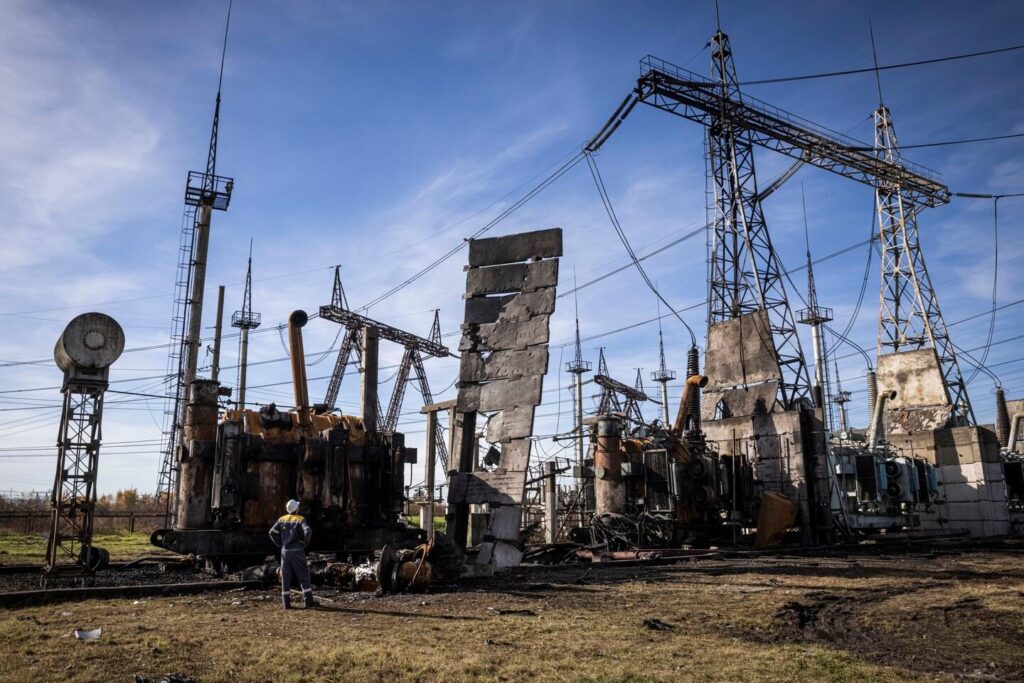
On 14 October, reporting described Russian attacks on Ukrainian energy infrastructure and associated outages. Separate reports raised questions about restrictions affecting Starlink satellite communications and possible consequences for Ukrainian operations.
The developments have renewed attention on Ukraine’s reliance on infrastructure and services that may be affected by decisions outside its direct control. But they must be examined separately rather than combined into a single claim about the withdrawal of external support.
Three distinct systems, three different questions
The first issue is damage to energy infrastructure. Attacks and associated outages raise questions about the reliability of essential services and the consequences for the affected areas.
The second is access to commercial satellite communications. The Associated Press reported restrictions affecting Starlink service and setbacks for Ukrainian drone operations. Read the Associated Press report on Starlink restrictions and Ukrainian drone operations.
The third is intelligence-sharing. This involves the provision of information gathered and assessed through separate arrangements. It is not the same as access to a commercial communications service.
A report of restrictions affecting one satellite service does not, by itself, establish that intelligence-sharing has stopped.
This distinction is supported by the European Commission’s position as reported by The Guardian. The Commission said it had no indication that US intelligence-sharing with Ukraine had ceased. It declined to comment on the reported Starlink disruption. Read The Guardian’s 14 October report on intelligence-sharing and Starlink.
That statement is relevant, but its meaning must also be kept within bounds. It does not prove that every support arrangement remained unchanged or settle the technical details of the reported communications restrictions.
What is known about the reported restrictions?
The reporting identifies restrictions affecting Starlink and describes operational setbacks. However, the material available for this review does not establish the precise technical cause, full scope or duration of the restrictions, or the complete scale of their operational consequences.
Those questions require a clearer technical timeline, relevant responses from Starlink and the authorities involved, and independent assessment of the reported effects.
There is also a question of motive. Reporting described Ukrainian concerns about possible political motives behind the restrictions. Those concerns are part of the reporting, but they are not proof of the decision-maker’s motive.
Without further evidence, the explanation for the restrictions should not be presented as settled.
Any further investigation must also avoid disclosing sensitive military positions or operational details that could expose people to additional risk.
The broader lesson about dependence
The underlying issue extends beyond one service or one conflict. Organisations that rely heavily on a particular communications provider may face vulnerabilities if access changes unexpectedly.
But dependence alone does not establish the scale of the damage caused by a disruption. That requires evidence of what changed, who was affected, how long the change lasted and what alternatives were available.
For now, the available material supports a cautious conclusion: restrictions affecting Starlink were reported, and operational setbacks were described. It does not establish that US intelligence-sharing with Ukraine stopped, nor does it prove a political motive for the communications restrictions.
The lesson is not that the reports are unimportant. It is that the seriousness of a possible disruption makes precise attribution more necessary, not less.
The next subject presents a similar challenge in a different form. In Amazonia, the central evidence consists of fire-monitoring figures. Understanding their significance requires knowing exactly what those figures count.
Amazon Fires in October 2026: What the Detection Figures Reveal — and What They Do Not
A sharp increase in fire detections across Brazil’s Amazon region is a warning that warrants attention. But determining the scale, causes and consequences of the fires requires more than comparing headline percentages.
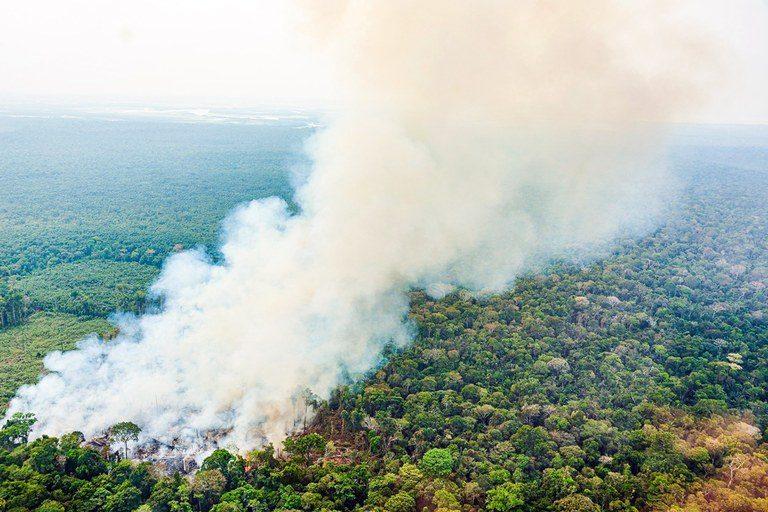
Reuters reported that 1,679 fires were recorded in Amazonas state during the first two weeks of October 2026, an increase of 253 per cent compared with the same period in 2025. Read Reuters’ report on the surge in fires in Brazil’s Amazon region.
The report also described smoke-related health complaints and emergency declarations in at least 36 municipalities.
These reports point to a serious situation requiring closer examination. However, the community impacts need location- and date-specific verification before they can be quantified further.
A separate INPE-based monitoring summary recorded 7,865 fire detections through 13 October 2026, compared with 3,639 during the equivalent period in 2025.
The figures refer to different reporting periods. The count of 1,679 concerns the first two weeks of October in Amazonas state, while the cumulative figure of 7,865 covers a period through 13 October. They should not be merged into one statistic or treated as measurements of precisely the same interval.
Fire detections are not the same as land burned
One of the most important distinctions in environmental reporting is the difference between satellite detections, distinct fires and the area affected by fire.
Satellite monitoring systems identify locations with signals consistent with fire activity. Those detections are useful for tracking patterns and identifying places requiring attention. However, a detection is not necessarily a unique fire, and a count of detections does not directly establish how much land has burned.
A single fire may generate multiple detections, while the number of detections alone does not show the full extent or intensity of the damage.
Consequently, a 253 per cent increase in detections should not be interpreted as a 253 per cent increase in burned land.
To establish the extent of damage, monitoring figures must be assessed alongside burned-area estimates, weather records and other relevant evidence.
This does not diminish the significance of the reported increase. It identifies what additional measurements are needed to understand it accurately.
What role might weather play?
Weather is one factor that investigators must consider.
On 1 October, Brazil’s National Institute for Space Research (INPE) and partner agencies issued a bulletin describing a high probability of a very strong El Niño during October to December. The bulletin warned of elevated fire risk in parts of Brazil if drier conditions developed.
Read the official INPE announcement on Brazil’s El Niño monitoring bulletin.
An outlook of this kind can help authorities understand potential risks and prepare for conditions that may favour fire activity. But a climate-risk outlook is not proof that El Niño caused any particular fire.
The relationship between weather and fire activity is also not the only question. Drier conditions and heat can increase the likelihood that fires start or spread, while human land-use practices, deliberate burning and the effectiveness of enforcement may also be relevant.
These factors can coexist. The evidence supplied for this review does not quantify their relative contributions to the reported increase in detections.
It would therefore be premature to declare that all, or even most, of the fires were deliberately set. Suspicion about possible causes is not a comprehensive finding about the origin of individual fires.
What are the consequences for communities?
Reuters reported smoke-related complaints and emergency measures. Exposure to smoke can be a concern for residents, while local services may face additional pressure during periods of intense fire activity.
However, a reliable assessment of the scale of the health impact would require verified air-quality readings, health records and properly sourced local testimony.
Similarly, claims about ecological damage and effects on livelihoods require evidence beyond satellite detection counts.
The reported community concerns should not be dismissed simply because the full scale of the consequences has not yet been established. Instead, they should prompt more precise reporting about affected locations, exposure levels, emergency responses and the duration of the conditions.
What evidence should come next?
The monitoring figures should be checked against the original satellite records. Researchers and authorities need to compare detections with estimates of burned area, rainfall, temperature and drought indicators.
Claims about deliberate burning should be supported by investigation findings rather than inferred from a rising fire count.
The available evidence supports the conclusion that fire detections increased substantially during the reported periods. It also supports the need to investigate the environmental conditions and community impacts.
It does not yet establish the cause of each fire, the exact area burned or the proportion attributable to any single factor.
That is not a reason to dismiss the warning. It is a reason to measure the problem properly.
The final subject raises a related question about evidence, but in a different field: how should the public interpret a scientific model that reportedly identifies a possible recovery pathway for a major ocean circulation system?
Atlantic Ocean Circulation and AMOC: What Can a Scientific Model Prove?
Editorial status: HOLD — primary research and supplementary methods require authentication and review before publication.
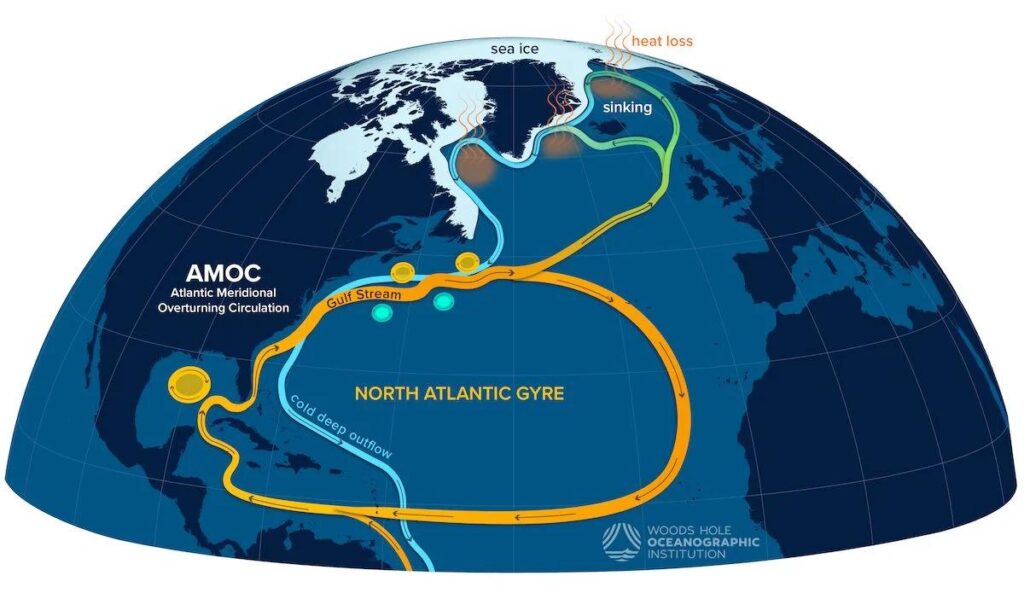
The Atlantic Meridional Overturning Circulation (AMOC) is a large-scale ocean circulation system that transports heat and influences climate patterns. Scientists investigate how it may weaken, approach a tipping point or recover under different conditions.
The subject is consequential, but the reported findings cannot responsibly be presented as independently verified until the underlying research has been examined.
On 14 October, Reuters reported on a study attributed to the Danish Meteorological Institute and published in Science Advances. According to Reuters, the study identified a modelled pathway through which AMOC could recover under the conditions tested. Reuters also reported that the modelled recovery could take centuries and described a simulated warming scenario reaching seven degrees Celsius. Read Reuters’ report on the AMOC recovery study.
The Danish Meteorological Institute subsequently published its own explanation of the findings. Its official research announcement on AMOC weakening and possible recovery is a useful primary institutional reference, but it does not replace examination of the original research paper and supplementary methods.
These are findings as reported by Reuters and described by the institute. The supplied research material does not contain an authenticated copy of the original paper or its supplementary methods. The detailed scientific conclusions therefore remain subject to verification.
Why the original paper matters
Scientific models examine how a system behaves under defined assumptions and conditions. To understand a reported recovery pathway, researchers and editors need to establish how the study defined recovery, what conditions it tested, how the model represented the circulation system and what limitations the authors identified.
The reported seven-degree warming scenario also requires examination in the context of the original methods. Without that information, the result could be misunderstood or presented too broadly.
The term recovery needs similar care. A modelled recovery that takes centuries is not equivalent to an immediate reversal of climate impacts. Nor does a pathway observed within a model establish that the real-world system cannot cross a tipping point.
Other research identified in the supplied dossier has examined AMOC tipping thresholds and the circulation system’s sensitivity to freshwater input from Greenland. Those studies do not automatically contradict the reported recovery finding. Different models may examine different conditions and answer different scientific questions.
The comparison must be made by examining the research itself, rather than framing the issue as a simple contest between alarming and reassuring headlines.
What remains unresolved?
Before the segment can be approved, the original paper must be obtained and authenticated. Its methods and supplementary material need to be examined, including the assumptions behind the reported warming scenario and the meaning of the conclusions about reversibility.
Independent scientific assessment is also needed to establish how far the findings can reasonably inform the wider understanding of AMOC risk.
Until those checks are complete, the responsible conclusion is limited: Reuters reported a study identifying a possible recovery pathway under tested model conditions, but the supplied material does not establish how broadly the result applies to the real world.
It does not prove that AMOC collapse is impossible, that the risk of a tipping point has passed or that a particular regional climate outcome is guaranteed.
The segment must remain on hold until the primary evidence has been authenticated and reviewed. If that work is not completed, the newsroom needs a documented editorial decision before recording or publishing the material.
The wider lesson is that a scientific model should be judged by what it actually tests and establishes, not by the degree of reassurance or alarm suggested by a headline.
The Common Thread: How to Recognise a Warning Without Overstating the Evidence
The five subjects examined here concern different systems, institutions and forms of evidence. The material does not establish a direct causal connection among them. Their common ground is the need to distinguish an observed development from the explanation attached to it.
The US inflation figures measure a rise in consumer prices and identify gasoline as a substantial contributor to the monthly increase. They do not establish that one geopolitical event caused the entire movement.
The Strait of Hormuz story concerns a proposed mechanism intended to facilitate essential trade. Its significance depends on whether the arrangement is agreed, implemented and shown to improve the movement of cargo.
In Ukraine, reported communications restrictions and operational setbacks deserve scrutiny. But a disruption affecting a commercial communications service is not proof that intelligence-sharing stopped, and reported concerns about motive do not establish why the restrictions occurred.
In Amazonia, the fire-monitoring figures indicate a substantial increase in detections over the periods reported. Yet detections are not equivalent to distinct fires or burned area, and the available evidence does not establish a single cause for the increase.
The AMOC study presents a different challenge: a reported model result cannot be treated as a guarantee about the future until the underlying research has been examined.
These distinctions are not technical details to be buried beneath a dramatic headline. They determine what the public can reasonably conclude.
A strong report must identify what changed, establish how it was measured, trace the evidence behind the explanation and state where the available information stops. It must also recognise that different systems require different forms of verification. Economic statistics, shipping records, technical communications evidence, satellite monitoring and climate models cannot be assessed as though they were interchangeable.
The next stage of reporting is therefore practical rather than rhetorical: obtain the missing primary evidence, confirm the status of proposed arrangements, establish the technical scope of reported disruptions and compare environmental detections with measurements of actual damage.
The result may be a firmer conclusion, a narrower one or a finding that the available evidence remains insufficient. Each outcome is preferable to claiming certainty that the evidence cannot support.
Conclusion
The question running through these developments is not simply whether global systems are under pressure. It is how accurately that pressure can be measured, explained and understood.
The September US inflation figures establish that consumer prices rose and that gasoline contributed substantially to the monthly increase. They do not identify a single cause for the entire movement. Around the Strait of Hormuz, a reported shipping proposal could become significant if it facilitates actual cargo movements, but its implementation and effectiveness must be confirmed through authoritative updates and evidence of actual shipments. In Ukraine, reported communications restrictions raise legitimate questions about dependence and operational consequences, without proving that intelligence-sharing stopped or settling the question of motive. In Amazonia, increased fire detections warrant investigation, but the figures alone cannot establish the area burned or explain the causes.
The AMOC report requires a different next step: authentication and scientific review of the original paper and supplementary methods before its findings can be presented.
Taken together, these cases show why global systems under pressure must be examined through evidence rather than inference. A warning can be important even when its full cause or consequences remain uncertain.
Reliable journalism does not eliminate uncertainty by overstating what is known. It makes uncertainty visible, identifies the evidence needed to resolve it and updates its conclusions when that evidence becomes available.
Understanding the bigger story begins with knowing not only what the evidence supports, but also where its limits lie.
Recommended Articles
1.Africa News Weekend Roundup: September 28 – October 4, 2026
Explore the major political, economic and security developments shaping Africa.
2.Nigeria News Roundup: Reforms, Security and Energy
Read more about the policies, security challenges and energy developments affecting Nigeria.
3.Global News Roundup: War, Energy, AI and the Economy
Understand the international developments influencing economic policy, technology and global affairs.
4.Nigerians Hate Tinubu? What the Data Really Shows
Examine public opinion, political narratives and the evidence behind claims about Nigerians’ views of President Bola Tinubu.
About the Author



