Introduction
Africa’s changing security environment, economic outlook and public institutions feature prominently in this Africa news review for 16 October 2026. Across the continent, developments reported during the preceding 24 hours have raised questions about civilian protection, the affordability of essential goods, regional economic integration and the ability of governments to respond effectively to public concerns.
In the Horn of Africa, renewed tensions between Ethiopia and Eritrea have prompted calls for restraint amid reports of civilian harm in the Tigray region. Meanwhile, the International Monetary Fund has raised its 2026 growth forecast for Sub-Saharan Africa, although inflation, debt-servicing costs and declining development assistance continue to complicate the outlook.
Elsewhere, higher fuel prices in Kenya highlight the potential domestic effects of international energy-market pressures. Ethiopia’s reported entry into Africa’s cross-border payment network offers another opportunity for regional integration, but the practical benefits will depend on implementation.
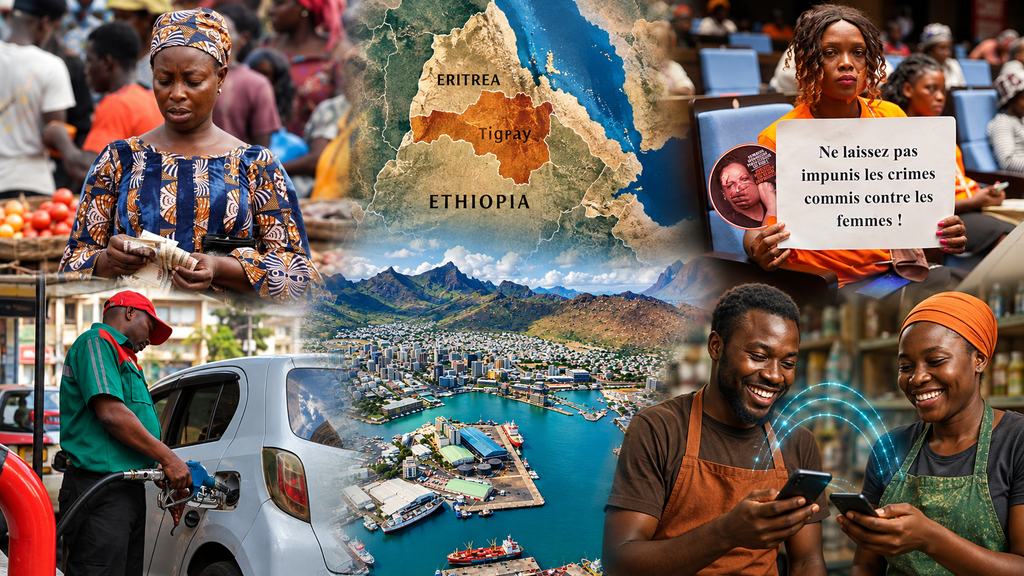
In Mauritius, unrest has brought policing, water shortages and living costs into focus. Cameroon is also facing renewed demands for stronger legal protection against gender-related killings.
These developments involve different countries and circumstances. Together, they underline a central question: how should progress be measured when diplomatic engagement, economic forecasts and policy proposals must still translate into tangible results?
Story 1: Ethiopia–Eritrea Tensions Raise Fresh Concerns About Civilian Safety
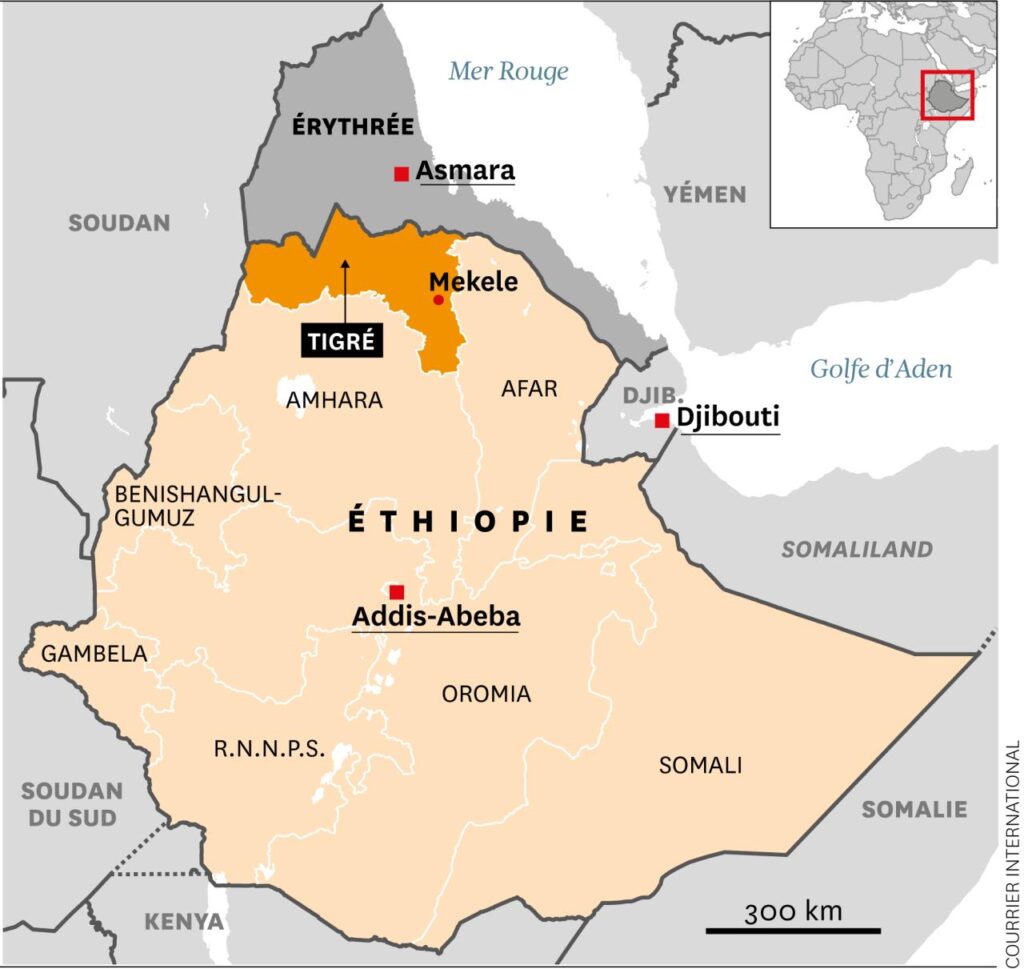
The United States has called for de-escalation amid renewed fighting in northern Ethiopia and heightened tensions between Ethiopia and neighbouring Eritrea. The diplomatic intervention comes as reports of civilian harm have raised concerns about the security situation in and around the Tigray region.
According to an Associated Press report published on 15 October, US Secretary of State Marco Rubio spoke by telephone with Ethiopian Prime Minister Abiy Ahmed on 14 October. Rubio called for dialogue and restraint amid the renewed tensions.
However, the positions of the two neighbouring countries remain contested. Ethiopian authorities have accused Eritrean forces of crossing into or occupying Ethiopian territory, while Eritrean officials have disputed Ethiopia’s account and criticised its position. The full extent of the alleged military movements has not been independently established in the reporting cited for this edition.
Civilian protection remains the immediate concern
The Associated Press reported that Human Rights Watch had received accounts of civilians killed and injured by shelling in southern Tigray. Health facilities were also reportedly forced to close. However, the reporting did not establish who was responsible for the shelling.
A resident also told the news agency that Eritrean soldiers had withdrawn from Fatsi, near the border, after which Ethiopian federal forces entered the town. That account does not establish the complete military situation across the wider area.
The current tensions carry particular significance because the region continues to deal with the consequences of earlier conflict. Ethiopia and Eritrea reached a peace agreement in 2018, while a separate agreement in 2022 brought the major phase of the Tigray war to an end.
Researchers at Ghent University, cited by the Associated Press, estimated that approximately 500,000 civilians died in connection with the 2020–2022 war. That historical estimate includes deaths associated with violence, famine and the collapse of health services. It is not a casualty figure for the current escalation.
For communities in affected areas, the immediate questions concern safety, access to medical care and the ability of humanitarian organisations to reach people in need. For regional governments and diplomatic actors, the challenge is to prevent competing territorial claims and military incidents from developing into a wider confrontation.
Rubio’s intervention confirms that diplomatic engagement is taking place, but it does not establish that tensions have eased. As of the reporting period, there was no confirmed new formal peace agreement, no verified current casualty total and no confirmation that a new full-scale war between Ethiopia and Eritrea had begun.
Further assessment will depend on independently verified information about troop movements, statements from both governments, reliable civilian casualty reporting and evidence of concrete diplomatic action.
For now, the central question is whether dialogue can contain the risks and protect civilians before the situation deteriorates further.
Story 2: IMF Raises Sub-Saharan Africa Growth Forecast to 4.5%, but Risks Persist
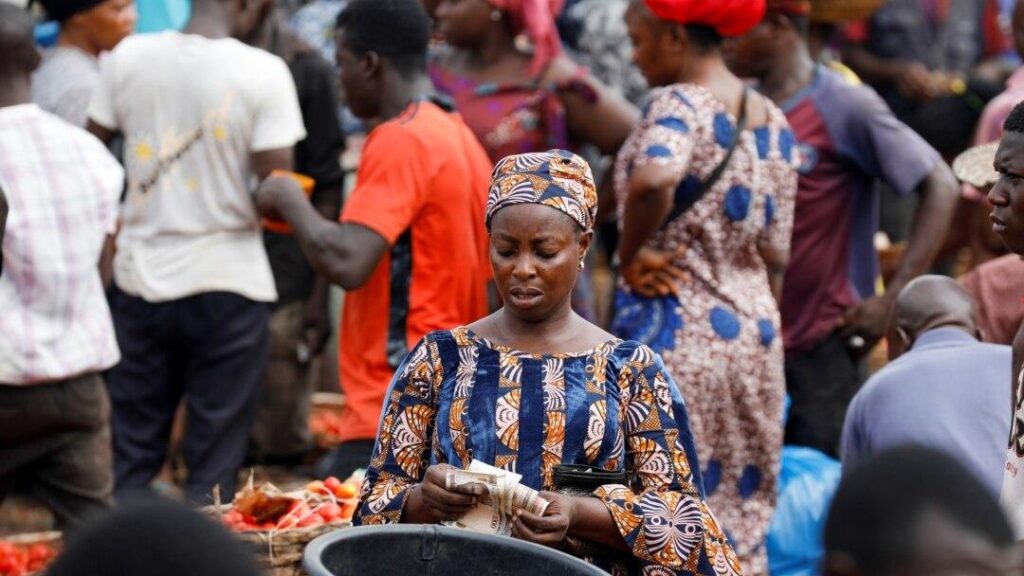
The International Monetary Fund has raised its forecast for Sub-Saharan Africa’s economic growth in 2026 to 4.5%, up from its April projection of 4.3%. Reuters reported the revised outlook on 15 October, describing an economic environment in which activity across the region has proved more resilient than previously anticipated.
The upward revision is a positive signal for the region. However, the improved growth outlook comes with important qualifications. Inflation is expected to remain a concern, debt-servicing costs continue to pressure government finances, and declining development assistance could further limit the resources available to governments.
According to the figures reported by Reuters, the IMF’s median inflation forecast is 4.3% for 2026 and 5% for 2027, compared with 3.4% in 2025. These are regional projections, not inflation rates for every African country. They nevertheless indicate that stronger projected economic activity is expected to coexist with continued price pressures.
Debt costs and development assistance constrain public finances
Public finances present another challenge. Interest payments reportedly absorb about 12% of government revenue across the region. The IMF also projected a further 12% decline in bilateral development assistance in 2026, following a fall of roughly one-quarter in 2025.
These figures point to a difficult balancing act. Governments must meet debt obligations while trying to finance infrastructure, public services and development priorities. When a larger share of revenue goes towards interest payments, the room available for other spending can become more limited.
Climate exposure adds another risk. According to the IMF figures reported by Reuters, a modelled El Niño-related shock could reduce regional growth by half a percentage point and increase inflation by 2.6 percentage points in 2027. This is a scenario, not a prediction that such an outcome will necessarily occur.
What does the forecast mean for ordinary people?
A stronger regional growth rate does not automatically mean that workers’ real incomes are rising, employment opportunities are expanding or essential goods are becoming more affordable. Those outcomes depend on national economic conditions and on how the benefits of growth are distributed.
The effects also vary between countries. Commodity exporters may benefit from higher prices for particular exports, while economies that depend heavily on imported energy and other essential goods may face additional costs. Exchange rates, tax revenue, debt exposure and the structure of each economy influence how much room governments have to respond.
For households, inflation can erode purchasing power. For governments, high debt-service costs can reduce flexibility over public spending. These are risks identified by the economic outlook, not proof that specific programmes have already been cut or that every household is experiencing the same level of hardship.
The revised forecast is an improvement on the IMF’s earlier projection. But the inflation outlook, debt burden and development-assistance projections qualify that progress.
National inflation releases, government budgets, debt developments and data on wages and employment will provide important evidence of how the outlook translates into everyday economic conditions.
Ultimately, the measure of economic progress is not only how quickly an economy grows, but also whether that growth supports more secure livelihoods and improved living conditions.
Story 3: Kenya Raises Petrol, Diesel and Kerosene Prices as Import Costs Increase
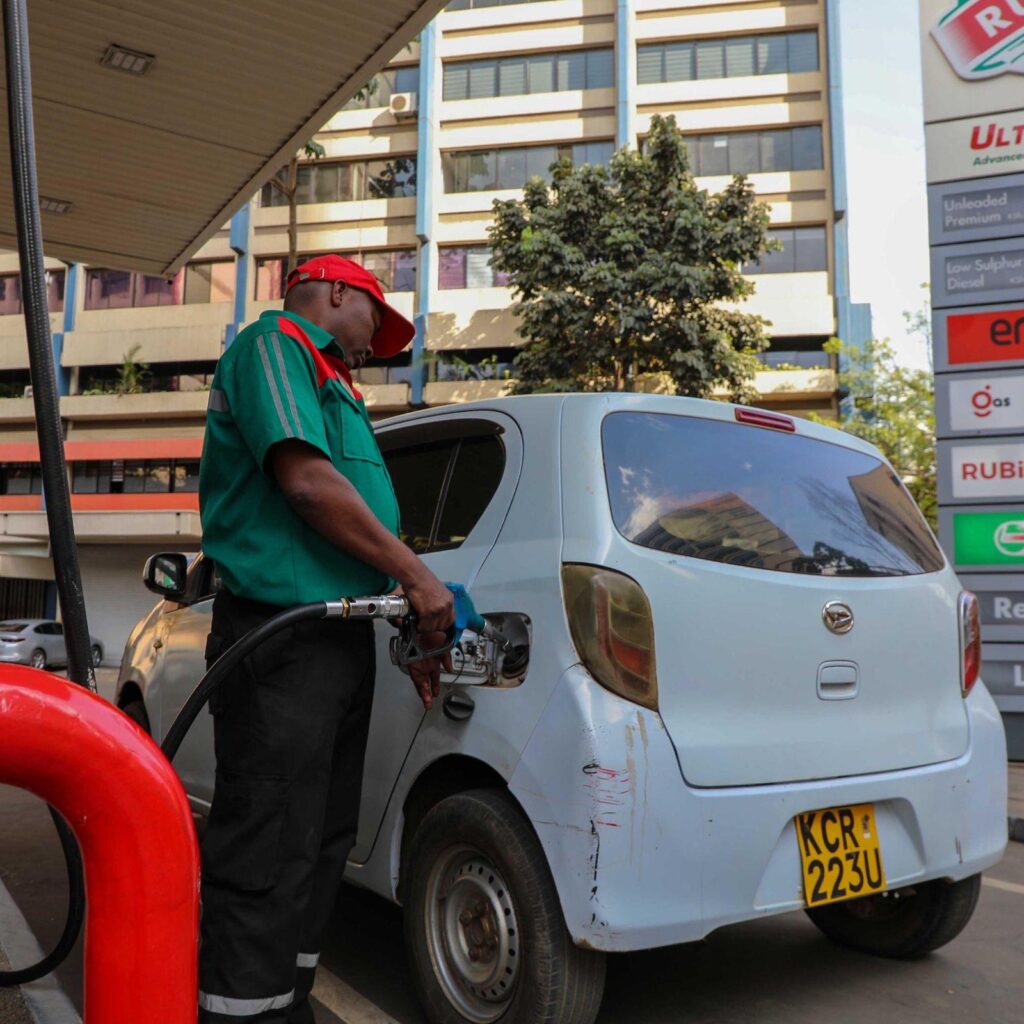
Kenya has introduced higher maximum retail prices for petrol, diesel and kerosene, adding to concerns about the cost of transport, distribution and household energy.
The new prices took effect on 15 October following a monthly review by the Energy and Petroleum Regulatory Authority, known as EPRA. The pricing period is scheduled to run until 14 November unless the regulator makes a change earlier. The official EPRA price notice sets out the applicable maximum prices.
In Nairobi, the maximum price for super petrol is now KSh226.96 per litre. Diesel is capped at KSh227.76 per litre, while kerosene is capped at KSh219.87 per litre.
Compared with the previous pricing period, the reported increases in Nairobi are KSh12.93 per litre for petrol, KSh9.90 for diesel and KSh28.49 for kerosene.
Potential effects on transport and household spending
The adjustment illustrates how developments beyond Kenya’s borders can influence domestic energy costs. However, the reporting cited for this edition does not establish the precise contribution of international oil prices, shipping, insurance, taxes, exchange rates and other factors to each increase.
The potential domestic effects extend beyond motorists. Petrol is an important cost for motorists and transport operators. Diesel supports commercial transport, freight and a range of industrial activities. Kerosene remains important for some households that use it for cooking or lighting.
If transport operators and businesses pass additional costs on to customers, fares and the prices of distributed goods could rise. If businesses absorb the increases instead, their profit margins could come under pressure. Neither outcome should be assumed without further evidence from transport operators, businesses and consumer-price data.
There is also an important geographical distinction. The figures cited apply to Nairobi. EPRA’s maximum retail prices vary by location, so these are not the exact prices applicable throughout Kenya. A regulated maximum is a price ceiling, not proof that every retailer charges precisely the same amount.
The increase has a relevant connection to the IMF’s warning that inflation remains a concern across Sub-Saharan Africa. However, Kenya’s fuel-price adjustment does not demonstrate that the IMF forecast caused the increase, nor does it prove that every African economy faces the same conditions.
The reporting also referred to tax-relief measures, but the information cited for this edition does not establish their full legal details or quantify how much relief may have offset the increases.
The next questions concern the real-world impact. Have public transport fares or freight rates changed? Are distribution costs feeding into consumer prices? How much of the adjustment reflects imported-fuel costs and other pricing components?
Those questions require evidence beyond the official price schedule. The price increases are documented, but their wider consequences still need to be measured. The current pricing period is scheduled to end on 14 November, when another review is expected unless the regulatory position changes earlier.
Story 4: Ethiopia Joins Africa’s PAPSS Network, but Business Benefits Depend on Implementation
Ethiopia’s central bank has reportedly joined the Pan-African Payment and Settlement System, known as PAPSS, a platform designed to facilitate cross-border transactions in African local currencies.
Reuters reported the development on 15 October. The system aims to reduce some of the friction involved in making payments between African countries. For eligible transactions, its model is designed to support payments in local currencies and reduce reliance on conventional correspondent-banking arrangements and intermediary currencies such as the US dollar.
Reuters identified Eyob Tekalign as governor of the National Bank of Ethiopia and reported that he described the move as part of efforts to modernise Ethiopia’s financial system and deepen economic connections with the rest of Africa.
PAPSS was launched in January 2022 with ten commercial banks, according to Reuters. By 15 October 2026, the report said the network covered more than 15 countries and included more than 150 commercial banks. Countries identified among its participants included Nigeria, Zambia, Malawi, Kenya and Tunisia. Reuters also reported that South Africa remained outside the network at that time.
These figures describe the network as reported on that date and should not be treated as permanent totals.
What PAPSS could mean for African businesses
Businesses trading across African borders need reliable ways to pay suppliers, settle invoices and receive money. Payment delays, transaction charges and currency requirements can complicate cross-border commerce, particularly for smaller firms with limited cash-flow flexibility.
According to the official PAPSS explanation of how the system works, the network is designed to facilitate payments between African countries in local currencies, with processes for instant payment, prefunding and settlement.
A system that makes eligible payments easier could help reduce some of those barriers and support wider African trade integration, including the ambitions of the African Continental Free Trade Area.
But joining a network is not the same as making its services available to businesses.
The reporting cited for this edition does not establish which Ethiopian commercial banks will offer PAPSS services, when those services will begin, what fees will apply or how quickly transactions will settle. It also provides no verified evidence that Ethiopian businesses have already reduced costs or increased trade as a result of joining.
The practical value will depend on implementation. Banks must participate, businesses must be able to access the service, and transactions must be reliable and affordable. Currency-conversion arrangements and the availability of local-currency liquidity will also influence the experience of users.
PAPSS is designed to address payment-related barriers. It cannot, by itself, remove tariffs, transport costs, customs delays, regulatory differences or other obstacles to trade between African countries.
The real test is therefore not simply whether another country joins the network. It is whether businesses can use the system successfully and whether it delivers measurable improvements in cost, speed and reliability.
Ethiopia’s reported entry is an institutional development with potential significance, rather than proof that the intended benefits have already been achieved. The next milestones include official details from PAPSS and the National Bank of Ethiopia, announcements by participating commercial banks, and evidence of completed transactions, including their costs and settlement times.

Story 5: Mauritius Extends Curfew After Unrest Over Police Shooting, Water Shortages and Living Costs
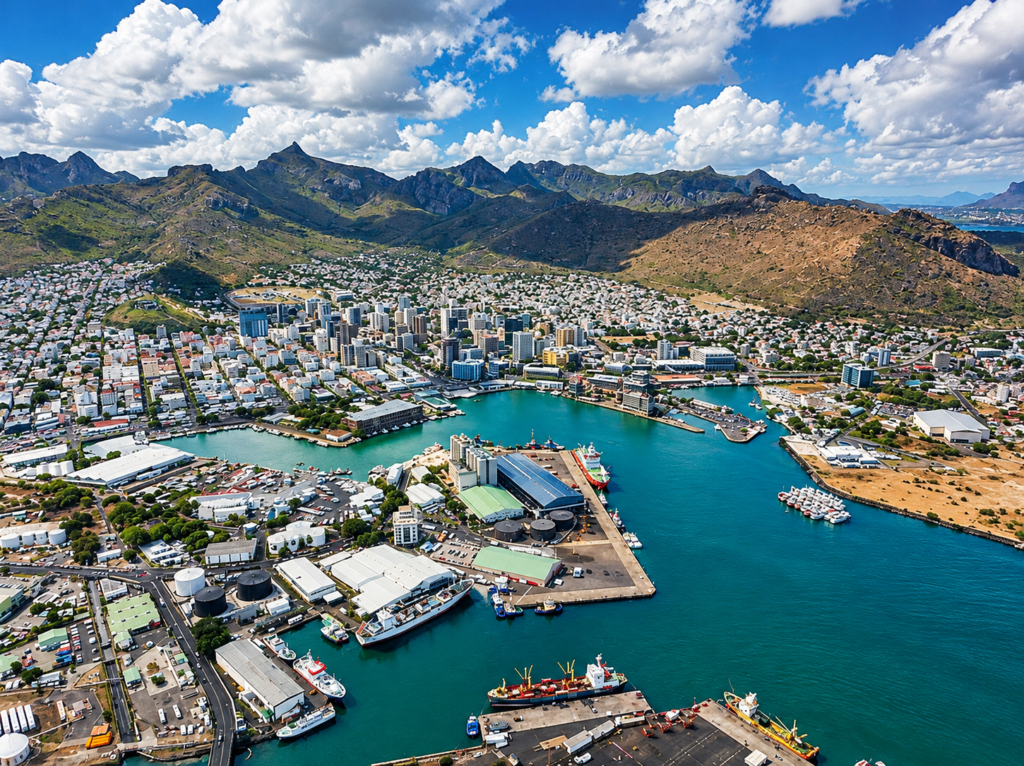
Mauritius has extended temporary curfew arrangements and strengthened security measures following days of unrest linked to a police shooting, water shortages and rising living costs.
The Associated Press reported the developments on 15 October, as authorities faced the challenge of restoring public order while responding to concerns surrounding the protests.
The unrest intensified after a police officer shot and wounded a 27-year-old woman in Camp Levieux, near Port Louis, on 9 October. The officer was arrested while police investigated the circumstances of the shooting. That arrest does not establish guilt, and the reporting cited for this edition provides no final investigative finding.
The shooting became a major focus of public anger, but the unrest also unfolded against economic and water-supply pressures.
Inflation and water availability add to public concerns
According to figures cited by the Associated Press, annual inflation reached 4.1% in September 2026, compared with 3.4% in September 2025.
Water availability was another concern. On 8 October, overall reservoir capacity stood at 57.1%, compared with 87.4% a year earlier. The Mare aux Vacoas reservoir was reported to be at 35.7% capacity.
These figures help explain the pressures surrounding the protests, but they do not establish that every demonstrator was motivated by the same grievance. The reporting supports a combination of reported triggers and underlying pressures rather than a single explanation for all the unrest.
The government’s response included curfew arrangements, additional police deployments and reinforced checkpoints. The Associated Press reported that 94 people had been arrested through Tuesday, including 16 minors and one police officer. Police also reported 26 further arrests during Wednesday night’s operations.
Those figures must remain tied to their original reporting dates. Arrests are not convictions, and the totals do not establish the guilt of those detained.
The security measures also affected public services. The Associated Press reported that school classes were cancelled for Thursday and Friday, and some examinations were postponed.
Restrictions on movement can affect work, education and commerce, even when authorities introduce them in response to immediate public-order concerns. Mauritius is an island state whose economy relies substantially on tourism and financial services. Disruption to transport, public safety or essential services can affect residents and businesses, although the reporting cited for this edition does not quantify the economic losses associated with this episode.
The response must address more than public order
The central governance question is whether authorities can restore safety while addressing the concerns that contributed to the unrest.
That requires a credible investigation into the police shooting, transparent communication about security measures and practical steps to improve access to water.
As of the reporting period, the final findings of the police investigation, the complete scope of the government’s water-supply response and the status of all restrictions after the reported curfew period had not been established in the reporting cited for this edition.
The curfew itself should not be treated as proof that the underlying grievances have been resolved.
The next developments to watch are the investigation’s findings, official announcements about restrictions, the resumption of affected school activities and evidence of measures to improve water supply. Further reporting should also establish how households and businesses are coping with shortages and rising prices.
Mauritius’s experience is a specific national situation, not proof of a continent-wide pattern. It nevertheless raises important questions about public accountability, essential services and the balance between public order and citizens’ rights.
Story 6: Cameroon Faces Calls for Stronger Femicide Law as Nearly 70 Gender-Related Killings Are Reported in 2026
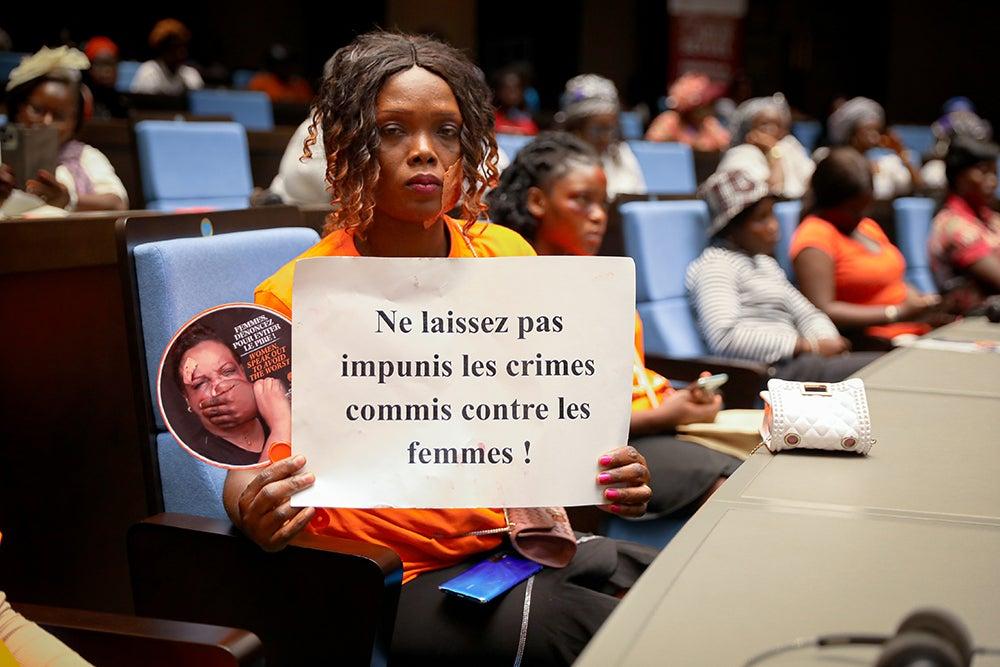
Cameroon is facing renewed demands for stronger legal protection against gender-related killings after the Ministry of Women’s Affairs reportedly recorded nearly 70 women killed in 2026 for reasons related to their gender.
The figures were reported by the Associated Press on 15 October. AP also cited government estimates of at least 50 gender-related killings in 2023 and 67 in 2024.
The reported 2026 figure highlights a serious concern. However, the numbers should not be treated as a fully comparable statistical series until their definitions, reporting periods and collection methods have been examined. Cases that go unreported or remain unresolved may also be missing from the figures.
Demonstrations in cities including Yaoundé and Douala have called for stronger protection and accountability.
Proposed legislation remains a pending step
The government was reported to be preparing a bill that would establish femicide as a distinct criminal offence and strengthen broader protections against gender-based violence. According to the Associated Press, the proposal was expected to be submitted to parliament for consideration in November 2026.
At the time covered by the reporting, the bill remained a proposed reform. The reporting does not establish that it had been formally introduced, debated, passed or implemented.
One case that brought renewed attention to the issue involved Geraldine Achiah, an elementary school teacher who died in September. The Associated Press reported that her relatives alleged her husband beat her following a marital dispute. The report said her husband denied killing her and had been charged with murder while awaiting trial. The allegations remain attributed, and the reporting cited for this edition contains no final judicial finding.
The wider debate is not simply about whether a separate criminal offence should exist. It also concerns the quality of investigations, access to justice, witness protection, prosecution standards and support for people experiencing violence.
A distinct legal offence may improve recognition and data collection, depending on how it is defined and implemented. But legislation alone cannot guarantee prevention or accountability.
The ministry’s figures provide an important starting point. A fuller assessment requires the underlying dataset and comparable information on reported cases, arrests, prosecutions and convictions. The proposed bill also needs to be examined to establish precisely what legal changes are being considered and what safeguards or enforcement measures would accompany them.
The next milestone is whether the bill is formally submitted to parliament and whether a confirmed date for consideration is announced. Developments in relevant criminal proceedings, updated official statistics and any new protection measures will also be important indicators.
Cameroon’s debate centres on whether public concern can lead to meaningful legal and institutional change. The proposal deserves scrutiny, but its effectiveness must ultimately be judged by the protections it establishes and the results institutions deliver.
Conclusion: Measuring Progress Through Evidence and Accountability
This Africa news review brings together developments that do not share a single cause but reveal different pressures and opportunities across the continent.
The IMF’s improved growth forecast and Ethiopia’s reported entry into a continental payment network point to opportunities for economic resilience and integration. Yet inflation, debt costs and uncertainty about the practical benefits of new systems show why progress must be measured beyond projections and membership announcements.
Renewed tensions in the Horn of Africa underline the importance of credible diplomacy and civilian protection. In Mauritius, unrest has brought policing, water access and living costs into focus. In Cameroon, debate over proposed femicide legislation raises questions about legal protection, justice and institutional accountability.
These developments involve different countries, institutions and circumstances. They should not be reduced to one continent-wide explanation.
The more precise lesson is that meaningful progress depends on what institutions deliver, how decisions affect people and whether unresolved problems receive credible responses. For Africa, the next chapter of each story must be judged through evidence, implementation and accountability.
Recommended Articles
1.Africa News Weekend Roundup: September 28 – October 4, 2026
Explore the major political, economic and security developments shaping Africa.
2.Nigeria News Roundup: Reforms, Security and Energy
Read more about the policies, security challenges and energy developments affecting Nigeria.
3.Global News Roundup: War, Energy, AI and the Economy
Understand the international developments influencing economic policy, technology and global affairs.
4.Nigerians Hate Tinubu? What the Data Really Shows
Examine public opinion, political narratives and the evidence behind claims about Nigerians’ views of President Bola Tinubu.
About the Author