Nigeria digital postcode is now a reality, following the Federal Government’s launch of a new National Digital Alphanumeric Postcode System designed to give every addressable building in the country a unique 11-character digital postcode.
The new system, operated by the Nigerian Postal Service (NIPOST), is intended to provide a more precise and standardized way of identifying buildings across Nigeria.
For decades, locating an address in Nigeria has often depended on landmarks, street descriptions and verbal directions — from “opposite the school” to “after the filling station.” The Nigeria digital postcode is designed to introduce a more structured digital reference for those locations.
But what exactly is the new postcode, how does it work, and what does it mean for Nigerians?
The answer goes beyond simply adding another number to an address.
The new system could have applications across e-commerce, logistics, emergency response, address verification, public-service delivery and other location-based services.
Here are 7 key facts about Nigeria’s new digital postcode system.
1. Nigeria now has a postcode for the building itself
The most important distinction is that the new Digital Postcode identifies a physical building or addressable location, not the person living or working there.
NIPOST’s official FAQ states that the postcode belongs to the building. If a resident moves, the postcode remains associated with the old building and the resident uses the postcode assigned to the new location. Multiple people, households or organisations using the same building can therefore share its postcode. NIPOST Postcode
This makes the Digital Postcode fundamentally different from a personal identification number.
It answers a location question: Where is this place?
It does not, by itself, answer another question: Who lives or works there?
That distinction also matters for businesses. A company operating from a particular premisNIPOST says the digital postcode can support services such as delivery, address verification, e-commerce and other location-based applications.es can use the postcode associated with that location, but if the business moves to another building, the postcode changes with the physical location.

NIPOST also cautions that the Digital Postcode is not the same thing as a conventional address. Rather, the two are designed to work together: the familiar address provides descriptive information, while the postcode provides a standardized 11-character digital reference. NIPOST Postcode
2. The 11-character code breaks a location into five levels
The new system is designed to narrow a location progressively from a broad geographic area down to an individual building.
NIPOST identifies five levels:
- State
- Local Government Area
- District
- Area
- Building
Nigeria’s new digital postcode system builds on a postal addressing environment that has existed for years, but introduces a more granular digital reference for individual buildings.
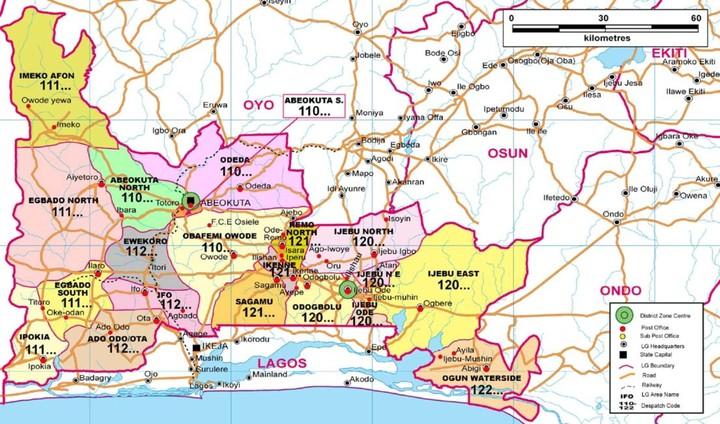
The official platform illustrates the structure with an example such as FC 02 A09 DB 09, where the first part identifies the wider geographic level and the final section narrows the reference to the building. The Federal Capital Territory, for example, uses FC as its state-level code. NIPOST Postcode
This hierarchical structure is important because it makes the code useful not only for individual users but also for systems that need to organize large numbers of locations.
A delivery company, for example, could use the postcode as a standardized reference for a destination. A government agency could use location information for planning. A business could associate a customer record with a physical location without depending entirely on free-form descriptions.
The system therefore turns a location that might previously have been described with several lines of directions into a standardized digital reference.
3. It is designed to reduce Nigeria’s dependence on landmarks
For decades, navigating Nigerian addresses has often involved descriptions such as “opposite the filling station,” “after the junction” or “beside the blue gate.”
These descriptions can work when the person receiving the directions knows the neighbourhood. But they are much harder for systems to process consistently.
NIPOST has described the problem in practical terms, using the example of a delivery rider repeatedly calling a customer because an address depends on landmarks and verbal instructions. Its explanation of the new system argues that a standardized building-level code can provide people and digital systems with a common reference. NIPOST Postcode
That distinction becomes increasingly important as commerce becomes more digital.
An online customer may enter an address at checkout. A retailer needs to process that information. A logistics company then needs to assign the delivery. A driver needs to locate the destination.
If each stage interprets an address differently, errors can occur.
The Digital Postcode is intended to provide a common location reference across those stages.
That does not mean landmarks or written addresses disappear. NIPOST explicitly says the Digital Postcode works alongside the conventional address. It also says users can continue using mapping services such as Google Maps for navigation. NIPOST Postcode
The difference is that the postcode gives the location a standardized identity that other systems can store and recognize.
4. Deliveries and e-commerce are among the clearest applications
The commercial implications may become one of the most visible parts of the new system.
Nigeria’s expanding e-commerce and delivery sectors depend heavily on the ability to locate customers accurately. NIPOST says the Digital Postcode can be used in areas including e-commerce checkout, delivery, customer records and logistics. NIPOST Postcode
Consider a typical online order.
A customer may currently provide a street address, estate name, nearby landmark and additional delivery instructions. The retailer stores the information, the logistics company processes it and a rider eventually calls the customer for directions.
A standardized postcode creates another reference point that can remain consistent across those systems.
NIPOST says organisations can integrate the Digital Postcode into their platforms through APIs, web and mobile software development kits and bulk access. Its official platform specifically identifies customer and merchant address verification, delivery workflows and business location services as potential uses. NIPOST Postcode
This means the project’s significance is not limited to NIPOST.
Its value will depend partly on whether other institutions actually adopt the postcode as part of their own systems.
The government can provide the location infrastructure, but retailers, banks, logistics companies, technology platforms and other service providers have to incorporate it into their workflows for the broader network effect to develop.
5. Emergency response is another major reason the system matters
The value of precise addressing becomes particularly clear during emergencies.
The Federal Government says the new postcode could allow families to provide more accurate locations when seeking emergency assistance. NIPOST also identifies emergency response among the services the system is intended to support. Punch Newspapers
The basic problem is simple.
In an emergency, explaining a location through landmarks can consume valuable time, particularly when the responder is unfamiliar with the area.
A standardized location reference can reduce the amount of verbal interpretation required.
The Digital Postcode does not by itself guarantee that an ambulance, fire service, police unit or other responder will arrive quickly. That would depend on much more than the address — including emergency infrastructure, dispatch systems, roads, communication networks and the availability of responders.
But accurate location information can form one part of that chain.
The same principle applies to public services.
If government agencies need to identify where facilities, households, businesses or communities are located, a standardized digital location reference provides a common geographic framework.
6. Businesses and government can build on the postcode
The new system is also being positioned as digital infrastructure rather than simply a postal reform.
NIPOST’s platform provides tools for organisations to integrate Digital Postcode into applications and workflows. Organisations can use the system to verify customer and merchant addresses, look up building postcodes and associate businesses with their locations. NIPOST Postcode
Potential applications extend across several sectors.
Financial services
Banks and fintech companies routinely collect address information from customers. A standardized location reference could provide an additional way to structure and validate location data.
But there is an important limitation: a postcode identifies a location; it does not by itself prove that a particular person lives there.
NIPOST makes this distinction explicit in its materials on address verification. Location validation and proof of residence are separate issues. NIPOST Postcode
Logistics
Delivery companies can use the postcode as a consistent destination reference.
E-commerce
Online retailers can incorporate it into checkout and delivery workflows.
Government
Public institutions could use standardized location information for planning and service delivery.
Property and asset management
Organisations managing buildings, branches, facilities or physical assets can associate those locations with a consistent digital reference. NIPOST Postcode
The broader implication is that the postcode can become a common location layer across otherwise separate digital systems.
7. Nigerians do not need to replace their entire address system
One of the easiest misconceptions to have about the new system is that Nigerians must abandon their existing addresses.
That is not how NIPOST describes it.
The Digital Postcode is intended to complement the conventional address rather than eliminate it.
NIPOST’s FAQ explains that an address remains the familiar description of where a building is located, while the Digital Postcode provides a standardized 11-character reference for that location. Users can use both together. NIPOST Postcode
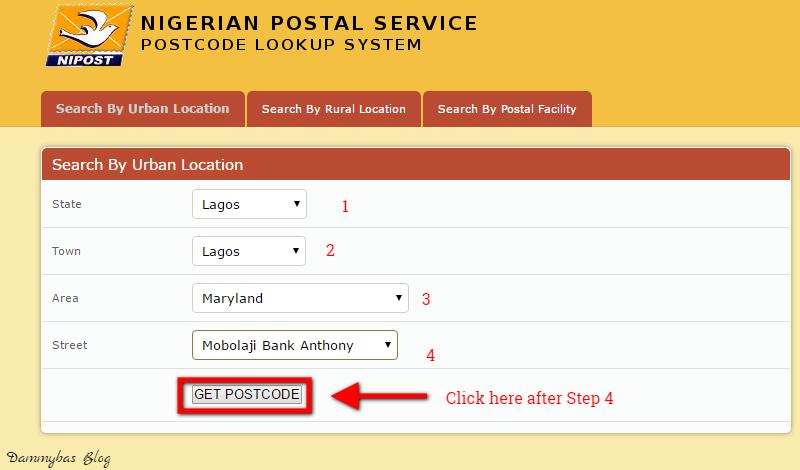
The official platform allows Nigerians to search for, save and share their postcodes. NIPOST also provides a process for locations that have not yet been captured in the system. NIPOST Postcode
The organization says individuals can find, save and share their Digital Postcodes for free through the website and app. NIPOST Postcode
That makes adoption relatively simple at the individual level.
The more difficult question is institutional adoption.
For the system to deliver its full potential, it would need to become familiar not only to individuals but also to the businesses and public institutions that handle location data every day.
The bigger issue is what Nigeria does with the infrastructure
The launch of a national digital postcode solves one important problem: giving physical locations a standardized digital reference.
But the existence of a postcode is only the beginning.
Its usefulness will depend on adoption.
A customer can find a postcode, but an online retailer has to accept it. A retailer can accept it, but the logistics provider needs to process it. A logistics provider can process it, but its operational systems and drivers need to use the information effectively.
The same applies to government.
A standardized building-level location system could support planning and public services, but agencies would need to integrate location information into their own databases and workflows.
NIPOST’s decision to provide API, SDK and bulk-access options is therefore significant because it moves the project beyond a consumer-facing postcode lookup tool toward a system other digital platforms can incorporate. NIPOST Postcode
This is also where the project intersects with Nigeria’s broader digital transformation agenda.
The Minister of Communications, Innovation and Digital Economy, Bosun Tijani, described accurate postcodes as part of the infrastructure needed to support President Bola Tinubu’s ambition of building a $1 trillion economy. He said the infrastructure could help more Nigerians participate in trade and economic activity. Punch Newspapers
That is an official government position about the potential role of the system, rather than evidence that the postcode itself will produce a particular economic outcome.
What the new Digital Postcode does — and does not — solve
The distinction is important.
What it can provide
- A standardized reference for a physical building
- A consistent location identifier for people and organizations
- A digital reference that can be shared
- A framework for address-related technology integration
- A potential improvement to delivery and location workflows
- A common geographic reference for some government and business services
What it does not automatically provide
- Faster emergency response by itself
- Proof that someone lives at a particular address
- Automatic navigation without mapping or routing tools
- Guaranteed successful deliveries
- A replacement for the complete written address
- Automatic adoption by every Nigerian business or government agency
NIPOST’s own guidance makes several of these distinctions clear. The postcode identifies where a building is; navigation services help determine how to get there. NIPOST Postcode
That distinction may become increasingly important as Nigerians begin using the system.
The ₦50 billion–₦80 billion question
The government has also linked the new system to the economic cost of poor addressing.
Channels Television reported that Tijani cited an estimated ₦50 billion to ₦80 billion annual loss associated with missed and failed deliveries caused by poor addressing. NIPOST’s Postmaster General, Tola Odeyemi, has also been reported as citing a similar range in discussing the cost of poor addressing. Channels Television
That figure should be understood as an officially cited estimate, rather than treated as an independently established national accounting figure.
The important point is the underlying problem: poor location information creates friction.
For a business, that friction can mean failed deliveries, repeated calls, additional transport costs and dissatisfied customers.
For government, it can complicate service planning.
For households, it can mean spending time explaining where they are.
A standardized location reference cannot eliminate every one of those problems, but it is designed to reduce the location ambiguity that contributes to them.
A digital postcode could become more valuable as Nigeria becomes more digital
The significance of the system may therefore grow over time.
As more commerce, banking, logistics, government services and business operations move online, digital systems increasingly need structured information about physical locations.
Nigeria’s Digital Postcode is designed to provide precisely that layer.
The official NIPOST platform describes the system as a GIS-located address for every building in Nigeria and provides tools through which organizations can integrate the postcode into digital services. NIPOST Postcode
This creates a bridge between Nigeria’s physical geography and its digital economy.
A building remains a physical object. But once that building has a standardized digital reference, different systems can refer to the same location without relying entirely on free-form descriptions.
That is potentially useful across logistics, commerce, financial services, government planning and other location-dependent activities.
The real test, however, will be practical adoption.
What Nigerians should do now
The Federal Government has urged Nigerians to find their Digital Postcodes and begin using them.
The official NIPOST platform allows users to search for a building’s postcode, while the mobile app provides options to find, save and share codes. NIPOST Postcode
For ordinary users, the most practical approach is simple:
Find the code for your building, verify that the location is correct, save it and share it when a service provider needs your precise location.
NIPOST advises users not to create or guess a postcode. The correct code should be obtained through the official postcode platform. NIPOST Postcode
For businesses, the next step is potentially more significant: determine whether the postcode can be incorporated into customer records, delivery processes, address verification or other location-dependent workflows.
Nigeria’s new address question
For generations, the Nigerian address has often been a mixture of street names, house numbers, estates, landmarks, junctions and verbal instructions.
The new Digital Postcode does not erase that system.
It adds something different: a standardized digital reference tied to the physical building.
That distinction may sound technical, but it has practical consequences.
When a family sends its location to a visitor, when a customer orders a product online, when a logistics company processes a delivery or when a government agency needs to identify a facility, they all need the same basic piece of information:
Where exactly is the place?
Nigeria’s new Digital Postcode is an attempt to provide a standardized answer.
Whether it becomes a routine part of everyday Nigerian life will ultimately depend on how widely citizens, businesses, technology companies and public institutions adopt it.
For now, however, the change is official: Nigeria has moved to a building-level digital postcode system, and Nigerians can begin finding and using their codes.NIPOST Postcode
About the Author



