Bangkok Bar Fire Kills 28 as Safety Probe Focuses on Electrical Fault
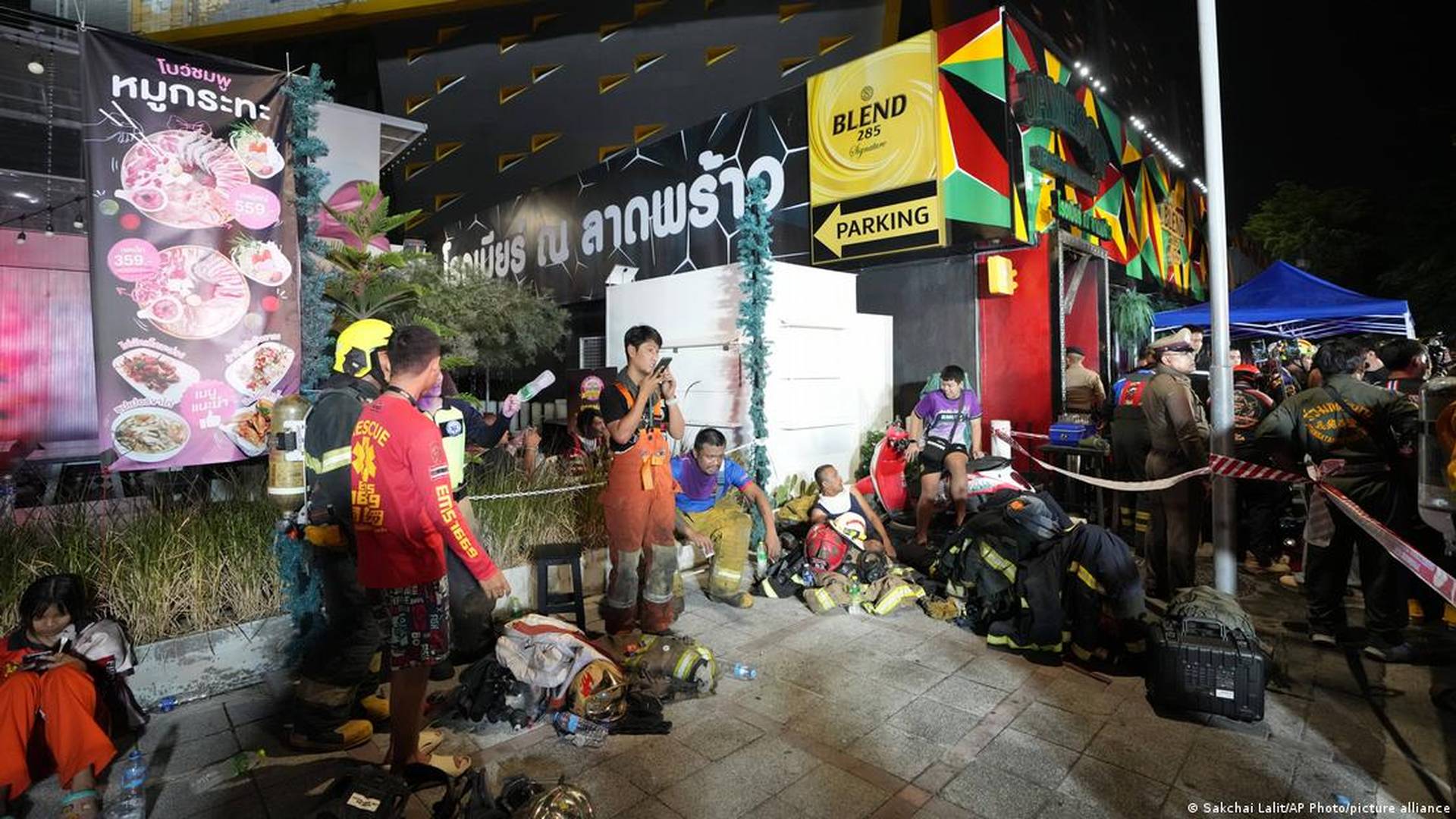
A devastating Bangkok bar fire has left at least 28 people dead and dozens more injured after flames tore through a crowded nightlife venue in Thailand’s capital, prompting a sweeping investigation into suspected electrical failures, emergency escape routes and fire safety compliance. The blaze erupted late Sunday at Rong Beer Na Lat Phrao, a popular restaurant and bar in Bangkok’s Chatuchak district, where authorities believe a combination of smoke, darkness and the rapid spread of flames trapped many patrons inside.
As investigators begin piecing together what happened, the tragedy has reignited questions about whether longstanding fire safety concerns in Thailand’s entertainment sector are being adequately addressed. According to a BBC report, officials are examining several possible contributing factors, although no official cause has yet been confirmed.
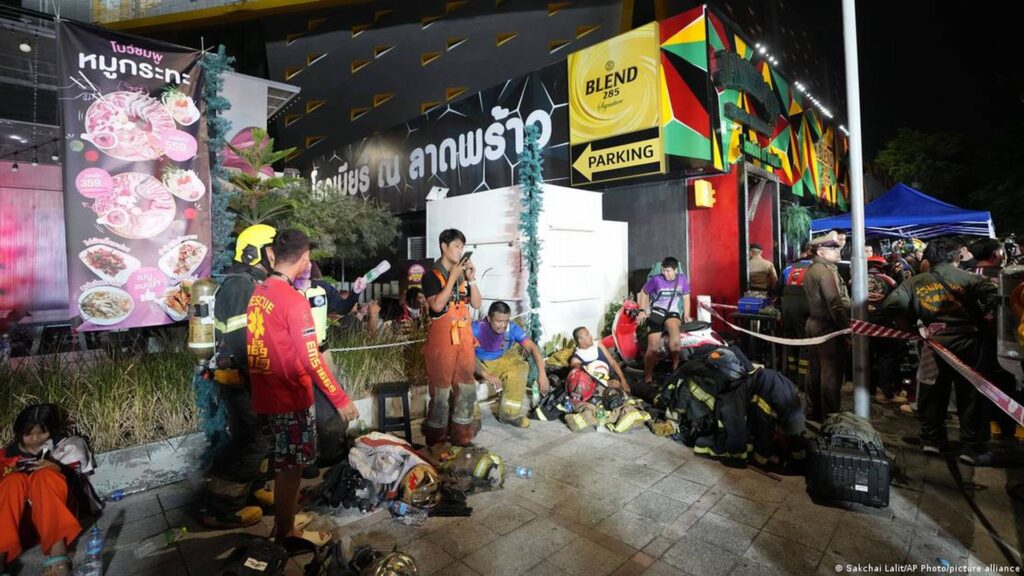
The Bangkok bar fire has raised fresh concerns about fire safety standards in entertainment venues across Thailand.
A Night of Entertainment Turns Into Disaster
The fire broke out shortly before midnight on Sunday while customers were enjoying live music at Rong Beer Na Lat Phrao, one of the better-known nightlife venues in Bangkok’s northern Chatuchak district.
Witnesses said the blaze appeared to start near the performance stage before rapidly spreading across the ceiling and interior of the building. Within moments, electricity inside the premises reportedly failed, plunging customers into darkness as thick smoke filled the venue.
The combination of smoke, panic and poor visibility quickly transformed what had been an ordinary evening into a deadly emergency.
Videos circulating online showed terrified patrons rushing toward the exits while others struggled to escape as flames engulfed parts of the entrance. Some survivors were seen with their clothing on fire as they fled the building.
Firefighters responded shortly after midnight after reportedly being alerted by a passing motorist. Emergency crews managed to bring the blaze under control within about 30 minutes, preventing it from spreading to nearby buildings.
Despite the swift response, the fire had already inflicted catastrophic damage.
Victims Trapped by Smoke and Darkness
One of the most disturbing discoveries made by rescue teams came after firefighters entered the building.
Authorities found many of the victims inside the venue’s bathrooms.
National Police Chief Kitrat Panphet said the evidence suggested that frightened customers had attempted to escape the smoke by moving toward the rear of the building before sheltering inside the toilets when visibility deteriorated.
Investigators believe many victims became disoriented after power was cut, making it increasingly difficult to locate emergency exits.
Initial assessments indicate that smoke inhalation accounted for most of the deaths rather than direct burns.
This finding is consistent with many enclosed-building fires, where toxic smoke often becomes fatal within minutes, especially when evacuation routes become blocked or difficult to locate.
The tragedy has therefore shifted public attention from the fire itself to the broader issue of evacuation planning and emergency preparedness inside crowded entertainment venues.
Dozens Hospitalised as Families Await Answers
Thai authorities confirmed that at least 71 people were injured during the incident.
Among them:
- 25 remain in critical condition
- 14 sustained moderate injuries
- 32 suffered minor injuries
The owner of Rong Beer Na Lat Phrao is reportedly among those receiving intensive medical treatment.
Hospitals across Bangkok continued treating survivors while authorities worked to identify all victims and notify their families.
The emotional toll quickly became evident outside the bar as relatives gathered hoping for information.
One of the most heartbreaking accounts came from Kaew-udon Poungppany, a 24-year-old man from Laos, who described desperately trying to rescue his younger brother.
According to his account, he grabbed a fire extinguisher and attempted to force his way back through the entrance but was overwhelmed by the flames and smoke before reaching those trapped inside.
His younger brother did not survive.
Another survivor told journalists she had stepped outside for a cigarette only moments before hearing what she described as a loud explosion, narrowly escaping the disaster.
When she returned, she witnessed emergency responders carrying the body of a friend with whom she had been socializing just minutes earlier.
These accounts have become central to investigators’ efforts to reconstruct the timeline of the disaster while illustrating how quickly conditions inside the building deteriorated.
Bangkok Bar Fire Investigation Begins
While investigators have yet to announce an official cause, early findings point toward a possible electrical malfunction.
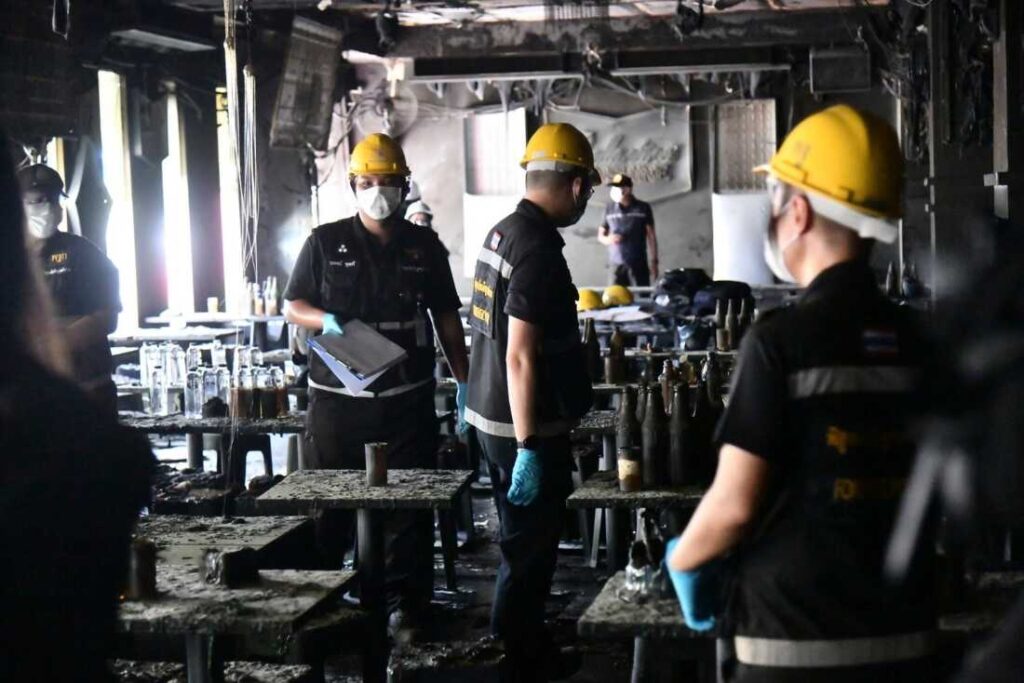
Bangkok’s Disaster Prevention and Mitigation Department said preliminary evidence suggests the blaze may have originated from an electrical short circuit involving an air-conditioning unit located near the stage.
Officials have cautioned, however, that this remains a preliminary assessment.
Forensic specialists are continuing to examine electrical systems, structural materials and witness testimony before issuing definitive conclusions.
Authorities have stressed that no single explanation has yet been confirmed and that the investigation remains ongoing.
The findings are expected to determine whether criminal negligence, building code violations or equipment failures contributed to the scale of the tragedy.
Why the Bangkok Bar Fire Spread So Quickly
One of the central questions emerging from the Bangkok bar fire is why the blaze escalated so rapidly despite firefighters arriving within a relatively short period after being alerted.
Although investigators have not reached final conclusions, officials have identified several factors that may have contributed to the speed at which the fire engulfed the venue.
Bangkok Governor Chatchart Sittipunt said early inspections suggest that highly flammable decorative materials attached to the ceiling may have accelerated the spread of flames across the interior.
If confirmed, the finding would reinforce longstanding concerns among fire safety professionals about the use of combustible materials in enclosed entertainment venues.
Fire investigators are also examining reports that some people were discovered unconscious close to an emergency exit.
While authorities have not concluded that escape routes were blocked, the discovery has raised questions about whether evacuation routes were fully accessible when the fire broke out.
Forensic officers are expected to examine:
- The building’s electrical wiring.
- The air-conditioning system.
- Emergency lighting systems.
- Fire alarms.
- Exit signage.
- Interior construction materials.
- Compliance with local fire regulations.
Officials have stressed that these issues remain under investigation and should not be interpreted as confirmed causes until forensic examinations are complete.
Smoke Inhalation Becomes the Deadliest Threat
Although dramatic images of flames dominated social media coverage, investigators believe smoke—not fire itself—was responsible for most fatalities.
According to Suriyachai Raviwan, Director of Bangkok’s Disaster Prevention and Mitigation Department, initial evidence indicates that the majority of victims died after inhaling toxic smoke.
This distinction is significant because smoke often spreads much faster than visible flames, particularly inside enclosed buildings where ventilation is limited.
When electricity fails during a fire, darkness compounds the danger by making exit signs difficult to locate and increasing panic among occupants.
In crowded entertainment venues, even a delay of a few minutes can dramatically reduce evacuation chances.
Safety experts have long warned that smoke inhalation remains one of the leading causes of death during nightclub and restaurant fires worldwide.
The Bangkok tragedy appears to follow this pattern, highlighting the importance of effective smoke detection systems, emergency lighting and clearly marked evacuation routes.
Experts say the Bangkok bar fire highlights the importance of emergency preparedness, effective smoke detection systems and clearly marked escape routes.
Government Orders Investigation and Support for Victims
The scale of the disaster prompted an immediate response from senior Thai officials.
Prime Minister Anutin Charnvirakul visited the scene early Monday, where he received briefings from emergency responders and spoke with a musician who had been performing when the fire erupted.
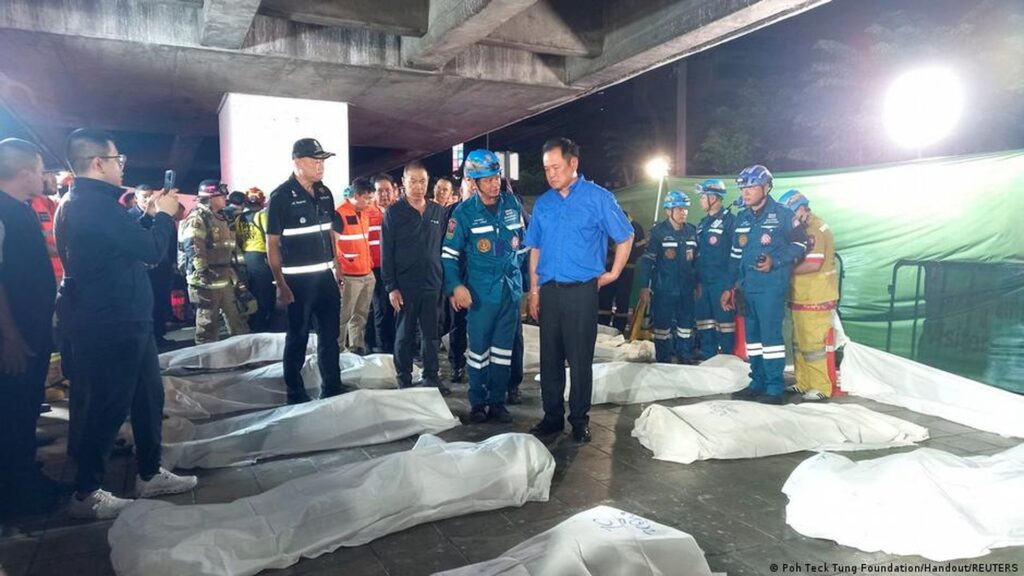
According to the Prime Minister, the performer described hearing what sounded like a blast before smoke and flames spread rapidly through the building.
The musician reportedly said many customers fled toward the rear of the venue and attempted to hide inside bathrooms after visibility deteriorated.
Authorities have since pledged a comprehensive investigation into every aspect of the incident.
Officials say the inquiry will examine:
- Building safety compliance.
- Fire prevention measures.
- Electrical installations.
- Emergency preparedness.
- Licensing requirements.
- Possible regulatory violations.
The Chatuchak District Office has ordered the premises closed for 30 days while forensic investigations continue.
Meanwhile, the Thai government has announced financial assistance for affected families.
Authorities said relatives of those who lost their lives would receive compensation of 29,300 Thai baht, while injured survivors undergoing treatment would receive 4,000 Thai baht.
Officials described the payments as immediate relief measures rather than final compensation.
Officials say the Bangkok bar fire investigation will continue until the exact cause of the disaster is confirmed.
Thailand’s Long Battle With Nightlife Fire Safety
The Bangkok disaster is not an isolated event.
Instead, it adds to a troubling history of deadly fires in Thailand’s entertainment industry.
Despite repeated promises by successive governments to strengthen fire safety regulations, tragic incidents have continued to occur over the past two decades.
Among the most notable cases:
- 2009: Sixty-six people died after a devastating nightclub fire during New Year celebrations in Bangkok, with more than 200 others injured.
- 2022: Twenty-two people were killed in a nightclub fire in Chon Buri Province, south of Bangkok.
Each tragedy prompted renewed public debate over:
- Enforcement of building regulations.
- Fire inspections.
- Electrical safety.
- Occupancy limits.
- Emergency evacuation planning.
Following previous disasters, authorities pledged tougher enforcement and stricter licensing requirements.
However, critics have argued that implementation has often lagged behind policy announcements, leaving some entertainment venues vulnerable to preventable risks.
The latest tragedy is therefore expected to renew calls for stronger inspections and more rigorous enforcement of existing fire safety laws rather than simply introducing new regulations.
As investigators continue their work, many observers believe the findings could influence future safety standards across Thailand’s hospitality and nightlife industries.
Lessons From the Bangkok Bar Fire
The Bangkok bar fire has once again highlighted the devastating consequences that can arise when fires break out in enclosed public spaces.
Although investigators have yet to determine the exact cause of the blaze, the early evidence points to a combination of circumstances that dramatically increased the risk to those inside the venue.
Among the issues under examination are:
- A suspected electrical short circuit involving an air-conditioning unit.
- The possible role of flammable ceiling decorations in accelerating the spread of fire.
- Whether emergency exits remained fully accessible during the evacuation.
- The loss of electricity, which reportedly plunged the venue into darkness.
- The heavy smoke that appears to have caused most fatalities.
Fire safety professionals frequently note that modern entertainment venues require more than fire extinguishers and emergency exits. Regular inspections, clearly marked evacuation routes, emergency lighting, smoke detection systems and staff emergency training all play vital roles in reducing casualties when disasters occur.
The findings of Thailand’s investigation are therefore expected to be closely watched not only within the country but also by hospitality operators, regulators and safety experts across the region.
Regional and Global Relevance
Although the tragedy occurred in Thailand, its implications extend far beyond Bangkok.
Across Asia and Africa, rapidly expanding nightlife industries have transformed city centres into major entertainment hubs, attracting thousands of visitors each night. As the sector grows, governments increasingly face pressure to ensure that safety regulations evolve alongside commercial development.
For African countries, including Nigeria, the incident serves as a reminder of the importance of enforcing building codes and emergency preparedness in public venues such as:
- Restaurants
- Nightclubs
- Event centres
- Hotels
- Cinemas
- Concert arenas
- Religious gathering venues
Nigeria has also experienced fatal building fires in commercial and public spaces over the years, often prompting renewed discussions about electrical safety, overcrowding and emergency response capacity.
While each incident has unique circumstances, experts generally agree that preventive enforcement is more effective than post-disaster reforms.
The Bangkok tragedy therefore contributes to a wider international conversation about public safety standards and the responsibility of both venue operators and regulatory authorities.
The Bangkok bar fire has also sparked wider discussions about building safety, emergency planning and fire prevention across Asia and Africa.
Investigation Continues as Families Mourn
As forensic investigators continue examining the scene, officials have cautioned against drawing premature conclusions about what caused the blaze.
Authorities are expected to review witness statements, electrical systems, building materials, emergency infrastructure and licensing records before issuing a final report.
For the families of the victims, however, the investigation represents only one part of a much larger journey.
Many are now preparing funeral arrangements while others remain at hospitals waiting for critically injured relatives to recover.
Outside Rong Beer Na Lat Phrao, the visible signs of destruction remain stark.
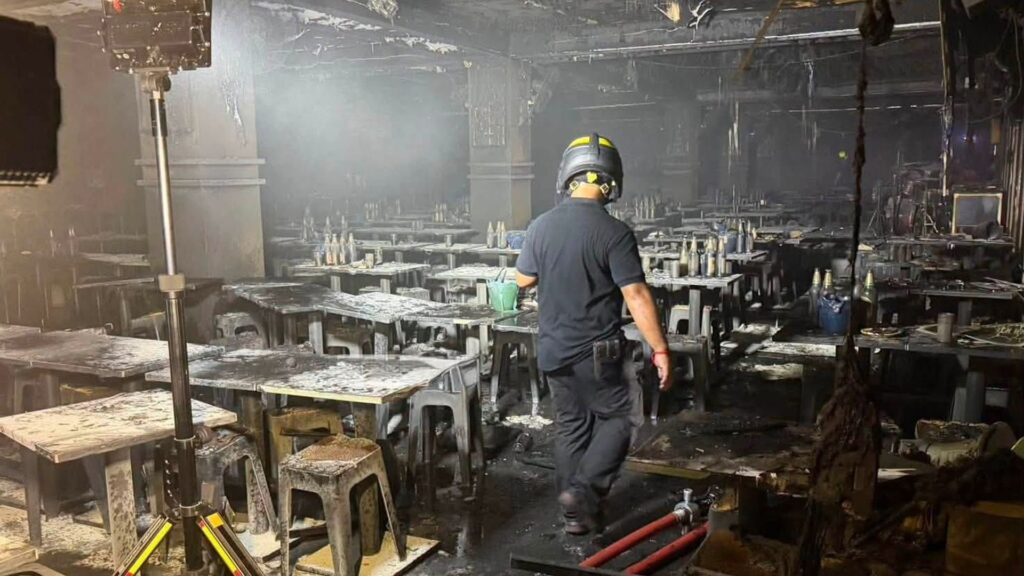
The venue has been cordoned off, its windows shattered and its interior blackened by smoke and flames. Burned furniture and damaged structural materials have been removed as investigators continue documenting evidence.
The smell of smoke still lingers around the site, serving as a powerful reminder of how quickly an evening of music and social gathering turned into one of Thailand’s deadliest bar disasters in recent years.
What Happens Next?
The coming weeks are expected to determine whether criminal charges, regulatory action or broader policy reforms will follow.
Investigators are likely to focus on several key questions:
- What exactly ignited the fire?
- Did the building comply with Thailand’s fire safety regulations?
- Were emergency exits functioning and accessible?
- Did interior materials contribute to the rapid spread of flames?
- Could additional safety measures have reduced the loss of life?
The answers could shape future inspections and licensing requirements for entertainment venues across Thailand.
For venue owners, emergency responders and policymakers, the investigation may provide important lessons for preventing similar tragedies.
For the public, it underscores the importance of fire safety awareness and the need for effective emergency planning wherever large crowds gather.
As authorities work toward definitive findings, the Bangkok bar fire stands as a sobering reminder that public safety depends not only on regulations but also on consistent enforcement, preparedness and accountability.
Conclusion
The Bangkok bar fire has shaken Thailand and drawn international attention to the risks associated with crowded entertainment venues after at least 28 people lost their lives. While investigators continue to examine the suspected electrical fault and other potential contributing factors, the tragedy has already sparked renewed debate over building safety, emergency preparedness and regulatory oversight.
Whether the investigation ultimately points to equipment failure, structural shortcomings or lapses in safety compliance, its findings are likely to influence future fire safety policies in Thailand and beyond. Until then, the blackened remains of Rong Beer Na Lat Phrao stand as a solemn reminder of the human cost when disaster strikes in places meant for leisure and celebration.
Recommended Coverage
Congo Ebola Outbreak Highlights Africa’s Health System Struggles
Major emergencies often expose weaknesses in national response systems. Discover how Africa’s Ebola crisis revealed similar challenges in emergency preparedness and public safety.
Bundibugyo Ebola Outbreak Puts Nigeria on High Alert
From deadly fires to disease outbreaks, rapid emergency response can save lives. Find out why Nigeria remains on alert as health officials monitor the Ebola situation.
Kenya Mental Health Gains From Free Grooming Therapy
Tragedies leave lasting emotional scars on survivors and communities. Explore how an innovative mental health initiative in Kenya is helping people recover from trauma and rebuild their lives.
About the Author