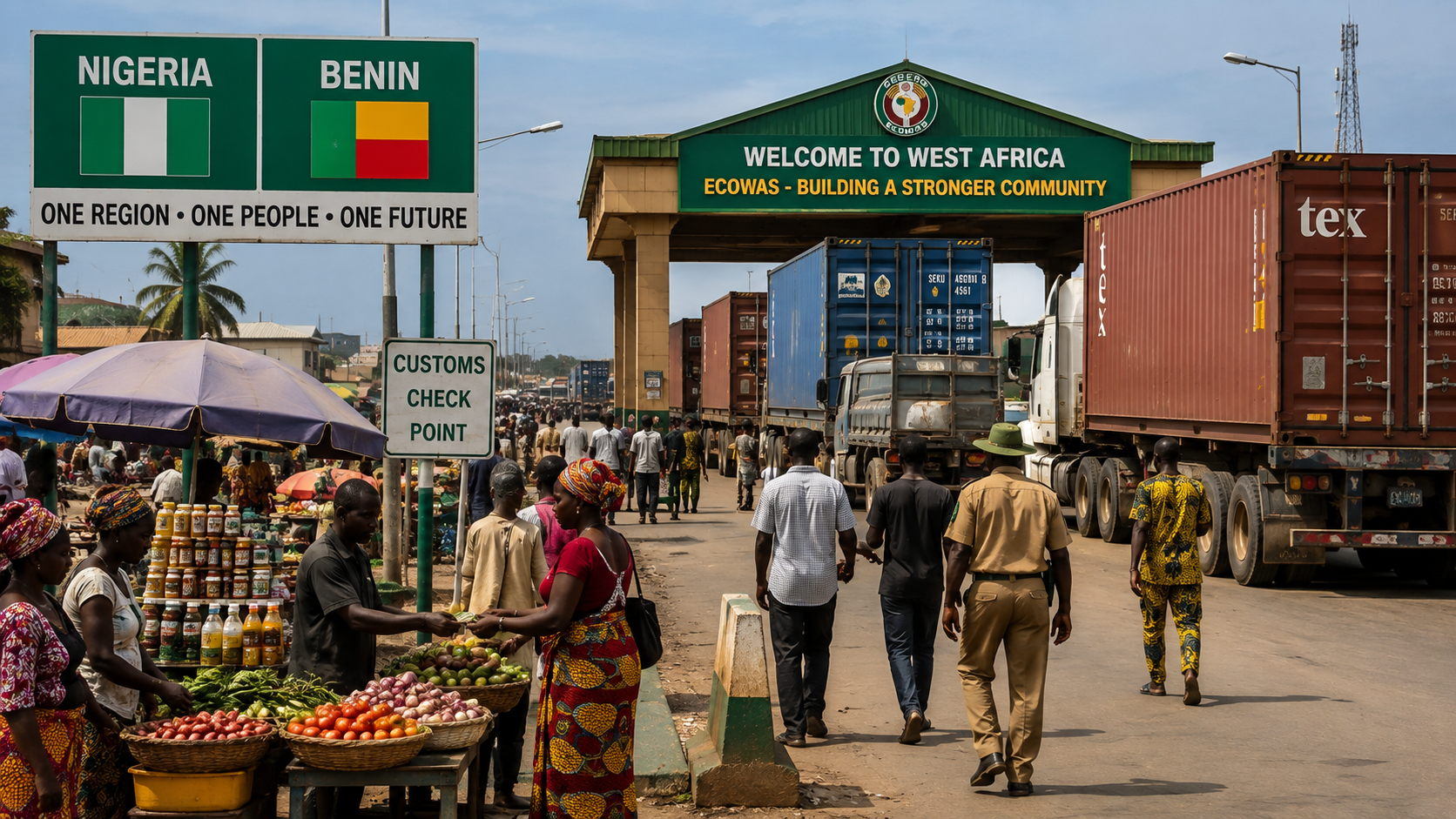
Cross-border traders stand to benefit most if the ECO reduces currency conversion costs and simplifies regional commerce across ECOWAS member states.
ECOWAS ECO Currency Faces Defining Test in 2027
Can West Africa’s long-awaited single currency finally become reality, or is another delay still a real possibility?
For decades, West Africa has pursued an ambitious dream: a single currency that could simplify trade, strengthen regional integration and reduce dependence on multiple national currencies. That vision has returned to the spotlight after the Economic Community of West African States (ECOWAS) formally reaffirmed its commitment to launch theECOWAS ECO Currency on July 1, 2027, describing the project as a cornerstone of regional economic transformation. Yet while the renewed deadline has generated optimism across the region, it has also revived familiar questions. Can ECOWAS finally overcome the economic, political and institutional barriers that have repeatedly delayed the project? And what would the ECO mean for Nigeria, businesses and nearly 450 million people across West Africa if it succeeds?
A Vision That Goes Beyond Money
Imagine a Nigerian entrepreneur travelling from Lagos to Accra, then to Freetown, Banjul and Conakry without stopping to exchange currencies at every border.
Picture transport companies calculating freight charges without worrying about fluctuating exchange rates.
Think about small traders who no longer lose part of their earnings to currency conversion fees before making a single sale.
For millions of West Africans, these are not abstract economic theories. They represent practical challenges encountered every day while conducting business across national borders.
This is the promise behind the ECOWAS ECO Currency.
Rather than being simply another banknote or coin, the ECO is envisioned as a shared monetary system designed to make economic activity across West Africa easier, faster and more predictable. According to ECOWAS leaders, the currency is intended to deepen regional integration, encourage investment, expand intra-African trade and reduce the exchange-rate volatility that often complicates commerce between neighbouring countries.
However, while the vision is compelling, achieving it has proven far more difficult than announcing it.
ECOWAS Renews Its Commitment
The latest push came during the 69th Ordinary Session of the ECOWAS Authority of Heads of State and Government, held in Lungi, Sierra Leone, where regional leaders issued a final communiqué reaffirming their commitment to introducing the ECO on July 1, 2027.
The decision reflects ECOWAS’ determination to revive one of its most ambitious integration projects after years of postponements and missed deadlines.
According to the communiqué, the regional bloc views the common currency as an essential instrument for:
- strengthening regional economic integration
- promoting sustainable economic growth
- increasing intra-regional trade
- reducing exchange-rate uncertainty
- improving long-term economic resilience
Leaders also acknowledged encouraging signs within the regional economy, pointing to declining inflation in some member states, improving public debt indicators and expectations of a more favourable economic outlook heading into 2026. At the same time, they recognised that fiscal deficits remain a significant concern for several countries.
For supporters of the project, the announcement signals renewed political commitment.
For sceptics, it raises another question: what makes this deadline different from previous ones?
Why the ECO Matters More Than Ever
West Africa is home to one of Africa’s fastest-growing populations and possesses enormous economic potential.
Yet despite decades of regional cooperation, doing business across ECOWAS borders often remains more complicated than many traders would like.
Businesses must navigate:
- multiple national currencies
- varying exchange rates
- conversion charges
- banking restrictions
- differing monetary policies
Each additional financial barrier increases transaction costs and reduces competitiveness.
Supporters argue that a common currency could help address many of these challenges by providing greater monetary stability across participating economies.
Potential benefits frequently associated with a successful regional currency include:
Lower Transaction Costs
Businesses would spend less on currency conversion when trading within ECOWAS member states.
Easier Cross-Border Trade
Companies could negotiate contracts using one common currency rather than constantly adjusting for exchange-rate fluctuations.
Greater Investor Confidence
Investors generally value predictable monetary environments. A stable regional currency could improve confidence in long-term investment planning.
Stronger Regional Integration
A successful monetary union would complement broader efforts to deepen economic cooperation across West Africa and support regional trade initiatives.
Reduced Exchange Rate Volatility
While currency fluctuations cannot disappear entirely, supporters believe a common monetary framework could reduce some of the instability businesses currently face.
These objectives help explain why the ECO continues to attract political support despite years of delays.
The Road to 2027 Will Not Be Automatic
One of the most significant announcements made by ECOWAS concerns how the currency will be introduced.
Rather than requiring every member state to adopt the ECO simultaneously, leaders have chosen a phased implementation strategy.
This means participation in the first rollout will depend on whether individual countries satisfy agreed economic convergence criteria.
Under the current framework, countries are expected to maintain:
- single-digit inflation
- sustainable levels of public debt
- fiscal deficits not exceeding four per cent of Gross Domestic Product
- broader macroeconomic stability
Only countries meeting these benchmarks are expected to participate in the initial phase.
Others will receive additional support before joining later stages of implementation.
This gradual approach reflects an important lesson from previous attempts: successful monetary unions require economic alignment, not simply political declarations.
Nigeria’s Role Will Be Closely Watched
Among the countries actively working toward the convergence targets are:
- Nigeria
- Ghana
- Liberia
- Sierra Leone
- Guinea
- The Gambia
Nigeria’s position naturally attracts particular attention.
As the region’s largest economy by several measures and one of ECOWAS’ most influential members, Nigeria’s economic performance will significantly affect confidence in the broader project.
Earlier discussions by Nigerian financial authorities also highlighted ongoing reforms aimed at strengthening fiscal sustainability, improving foreign exchange management and promoting regional economic cooperation. These reforms have been presented as part of Nigeria’s wider efforts to support monetary convergence within ECOWAS.
Whether those reforms will be sufficient to satisfy all convergence requirements remains one of the questions that observers will continue to monitor as 2027 approaches.
More Than a Currency—Building an Institution
Launching the ECO involves much more than designing new banknotes.
A successful monetary union requires institutions capable of managing monetary policy across multiple sovereign states.
According to the ECOWAS roadmap, important building blocks remain under development, including:
- future regional monetary institutions
- cross-border payment infrastructure
- legal frameworks
- financial coordination mechanisms
Regional leaders also confirmed that the name “ECO” has been officially registered with the African Intellectual Property Organisation and directed the ECOWAS Commission to pursue broader trademark protection internationally. While largely administrative, the move reflects continued institutional preparation for the proposed currency.
Why the ECO Has Been Delayed So Many Times
If the ECOWAS ECO Currency sounds familiar, it is because the project has been discussed for years.
The idea of a common West African currency is not new. Successive ECOWAS leaders have repeatedly expressed support for monetary integration, setting various target dates over the years. Yet each proposed launch has been postponed as member states struggled to satisfy the economic and institutional conditions required for a successful currency union.
The repeated delays have not necessarily reflected a lack of political ambition. Instead, they have highlighted the complexity of creating a shared monetary system among countries with different economic structures, fiscal policies and development priorities.
Unlike introducing a new national currency, building a regional currency requires participating countries to surrender a degree of independent monetary control while maintaining confidence that the shared system will remain stable for everyone involved.
That is a far more demanding task than simply agreeing on a launch date.
The Economic Gap Between Member States
One of the biggest challenges facing the ECO is the wide variation in economic performance across ECOWAS member states.
Although West African countries share common regional aspirations, their economies often move at very different speeds.
Some countries experience relatively stable inflation while others struggle with rising prices.
Public debt levels vary considerably.
Exchange rates follow different paths.
Government borrowing requirements also differ significantly.
These differences matter because a common currency functions most effectively when participating economies move broadly in the same direction.
If one country experiences high inflation while another maintains price stability, a shared monetary policy becomes far more difficult to manage.
Similarly, large fiscal deficits in one member state could place pressure on confidence across the wider monetary union.
Recognising these risks, ECOWAS has maintained strict convergence requirements rather than allowing automatic participation.
According to the agreed framework, countries hoping to join the first phase of the ECO must demonstrate sustained macroeconomic discipline, including:
- Single-digit inflation.
- Sustainable public debt.
- Fiscal deficits not exceeding four percent of Gross Domestic Product.
- Broader macroeconomic stability.
The decision to adopt a phased approach reflects an acknowledgement that not every member state is currently positioned to satisfy these conditions simultaneously.
The CFA Franc Question Remains Unresolved
Another major challenge involves the relationship between the proposed ECO and the existing West African CFA franc.
Eight Francophone countries already share the CFA franc through the West African Economic and Monetary Union (UEMOA), operating under a long-established monetary framework.
Integrating this existing arrangement into a broader ECOWAS-wide currency system presents complex legal, institutional and operational questions.
Among the issues that observers continue to examine are:
- How existing monetary arrangements would transition.
- The future relationship between participating central banking structures.
- Exchange mechanisms during any transition period.
- Institutional governance of the new regional currency.
The source material notes that this issue remains operationally unresolved, making it one of the most significant technical questions still facing the project.
While ECOWAS has reaffirmed its commitment to the ECO, successfully addressing these institutional questions will be essential before implementation can move forward.
Building the Institutions Before Printing the Currency
Currencies do not succeed because new banknotes are printed.
They succeed because the institutions supporting them inspire confidence.
Behind every successful monetary union are systems responsible for:
- Monetary policy.
- Banking supervision.
- Financial regulation.
- Payment settlement.
- Economic surveillance.
- Crisis management.
For the ECO, several institutional components remain under development.
According to the ECOWAS roadmap, work continues on establishing future regional monetary institutions and strengthening cross-border payment systems capable of supporting a common currency across multiple sovereign nations.
This means that the road to 2027 is not simply about political declarations. It also depends on the practical work of building financial infrastructure capable of supporting millions of transactions every day.
Political Stability Matters Too
Economic convergence alone will not determine whether the ECO succeeds.
Political cooperation is equally important.
Recent years have brought significant political changes within West Africa, including constitutional crises, military-led governments in some countries and evolving regional relationships.
The source material also notes geopolitical strains arising from the withdrawal of certain member states from the broader ECOWAS framework, creating additional challenges for regional coordination.
Although ECOWAS continues negotiations with affected countries on broader regional issues, maintaining long-term political cohesion will remain an important factor in implementing any shared monetary system.
A common currency ultimately depends not only on economics but also on sustained trust among participating governments.
What Could the ECO Mean for Nigeria?
For Nigerians, discussions about the ECOWAS ECO Currency naturally lead to one important question.
What happens to the naira?
The current ECOWAS roadmap does not suggest an immediate replacement of national currencies across all member states. Instead, participation will occur in phases, with only qualifying countries joining the initial rollout.
However, if Nigeria eventually participates in a successful regional monetary union, several potential implications emerge.
Easier Regional Trade
Nigerian exporters selling goods to neighbouring countries could benefit from reduced currency conversion costs and greater pricing certainty.
Manufacturers trading within ECOWAS might find cross-border transactions simpler and potentially less expensive.
Improved Investment Environment
Greater monetary predictability could encourage investors seeking larger regional markets rather than focusing on individual national economies.
For multinational companies considering West African expansion, a common currency could reduce some of the financial complexity associated with operating across multiple jurisdictions.
Increased Regional Competition
At the same time, Nigerian businesses could face stronger competition from companies across the region operating within the same monetary environment.
While consumers might benefit from broader market access, businesses would also need to improve efficiency to remain competitive.
Monetary Policy Considerations
One of the most significant long-term questions concerns monetary policy.
National central banks currently retain responsibility for many domestic monetary decisions.
Participation in a regional currency arrangement typically requires greater coordination within a shared monetary framework.
How such responsibilities would evolve under the ECO remains part of the broader institutional work that ECOWAS continues to develop.
Who Stands to Benefit Most?
If implemented successfully, several sectors could experience significant opportunities.
Cross-Border Traders
Smaller businesses that regularly move goods between ECOWAS countries could spend less time and money managing currency exchanges.
Manufacturers
Regional supply chains could become more efficient if companies no longer need to account for multiple fluctuating exchange rates.
Investors
A larger integrated market with greater monetary predictability could improve confidence in long-term investment planning.
Logistics Companies
Freight operators transporting goods across West Africa may benefit from more streamlined financial transactions.
Consumers
If increased competition encourages greater efficiency, consumers could eventually benefit from wider product choices and potentially lower transaction costs, although actual price outcomes would depend on broader economic conditions.
Who Could Face Greater Challenges?
While the ECO offers significant opportunities, it also presents risks that policymakers will need to manage carefully.
Countries struggling to meet convergence targets could remain outside the initial rollout for longer than anticipated.
Governments may also face difficult policy choices as they balance domestic economic priorities with regional commitments.
Differences in inflation, debt levels and fiscal management could continue to test confidence within the proposed monetary union if convergence is not sustained over time.
These challenges help explain why ECOWAS has emphasised gradual implementation rather than immediate adoption across all member states.
Can ECOWAS Deliver This Time?
That is the question hanging over every discussion about the ECOWAS ECO Currency.
For many observers, the issue is no longer whether West Africa needs a common currency. The economic arguments for deeper regional integration have been debated for years. Instead, attention has shifted to whether ECOWAS can finally translate decades of planning into practical implementation.
The decision to reaffirm a July 1, 2027 launch date demonstrates that regional leaders remain committed to the project. However, commitment alone will not determine success.
The months leading up to 2027 will be defined by measurable progress rather than political declarations.
Several key milestones will be closely watched:
- Can participating countries consistently meet the agreed convergence criteria?
- Will inflation remain under control across qualifying economies?
- Can governments maintain sustainable debt levels and fiscal discipline?
- Will the required financial institutions and payment systems be fully operational?
- Can member states maintain political cooperation despite regional tensions?
The answers to these questions will ultimately determine whether the ECO becomes a historic achievement or another postponed ambition.
What Makes the 2027 Roadmap Different?
One feature distinguishes the current roadmap from some earlier expectations.
ECOWAS is no longer insisting that every member state adopt the currency simultaneously.
Instead, the organisation has embraced a phased implementation strategy, allowing only countries that satisfy agreed economic conditions to participate in the initial rollout, while others receive support to join later.
This approach reflects a more pragmatic understanding of the region’s economic diversity.
Rather than allowing weaker convergence to undermine the entire project, ECOWAS is attempting to build the monetary union gradually, beginning with countries that demonstrate sufficient macroeconomic stability.
Supporters argue that this could improve the credibility of the launch.
Critics, however, may question whether a phased rollout could slow broader regional integration if too many countries remain outside the initial group.
Either way, the strategy represents a recognition that lasting monetary unions are built on economic readiness as much as political ambition.
The Wider African Context
The significance of the ECO extends beyond West Africa.
Across the continent, African governments continue to pursue deeper economic integration through initiatives aimed at expanding intra-African trade, improving transport links and strengthening regional value chains.
A successful ECOWAS common currency could complement these broader ambitions by reducing financial barriers within one of Africa’s largest regional markets.
For businesses operating across borders, a more integrated monetary environment could simplify commercial transactions and support investment planning.
For policymakers elsewhere on the continent, the ECO could become an important case study in regional economic cooperation.
Conversely, if the project experiences further delays, it may reinforce concerns about the practical challenges of implementing complex regional integration initiatives.
In that sense, the outcome of the ECO project could influence perceptions of Africa’s wider economic integration agenda for years to come.
What This Means for Ordinary West Africans
Discussions about regional currencies often focus on central banks, finance ministers and heads of state.
But ultimately, the success or failure of the ECO will be judged by its impact on ordinary people.
A successful currency should make daily economic life easier.
Small traders should find it simpler to buy and sell goods across borders.
Manufacturers should be able to source supplies with greater certainty.
Young entrepreneurs should gain easier access to regional markets.
Investors should feel more confident committing long-term capital.
Consumers should benefit from more efficient regional trade.
These are the practical outcomes that citizens will expect if the ECO becomes reality.
If those benefits fail to materialise, public confidence in the project may prove difficult to sustain.
The Importance of Public Confidence
History shows that successful currencies depend on more than economic indicators.
They also depend on trust.
People must believe that the currency will hold its value.
Businesses must feel confident accepting it for transactions.
Financial institutions must trust the systems supporting it.
Governments must demonstrate continued commitment to agreed economic rules.
That is why transparency, policy consistency and institutional credibility will be just as important as inflation targets or fiscal benchmarks.
The ECO is not merely a financial instrument.
It is a test of regional confidence.
A Project That Extends Beyond Economics
The ECOWAS summit that reaffirmed the ECO also addressed a wide range of regional priorities, including security, counterterrorism, humanitarian concerns, food security, free movement, digital governance, infrastructure development and regional cooperation. These discussions underline that the proposed currency is part of a broader vision for stronger regional integration rather than a stand-alone initiative.
That wider context matters.
A common currency is more likely to succeed when supported by improved transport networks, efficient payment systems, secure borders, stronger institutions and sustained political cooperation.
In other words, the ECO should not be viewed as the destination.
It is one component of a much larger regional integration agenda.
Analysis: Reasons for Optimism and Reasons for Caution
Based on the available information, there are credible reasons for both optimism and caution.
Reasons for Optimism
- ECOWAS has publicly reaffirmed a firm launch date of July 1, 2027.
- The bloc has adopted a phased implementation strategy rather than an all-or-nothing approach.
- Clear convergence criteria provide measurable benchmarks for participation.
- Administrative preparations continue, including protection of the ECO name through intellectual property registration.
- The project remains central to ECOWAS’ long-term vision for economic integration.
Reasons for Caution
- Significant economic differences persist among member states.
- Not all countries currently satisfy the convergence requirements.
- Important institutional structures are still being developed.
- The relationship between the ECO and the CFA franc framework remains unresolved in the supplied material.
- Regional political and geopolitical challenges could complicate implementation.
These factors suggest that while meaningful progress has been made, the success of the 2027 target will depend on sustained implementation rather than announcements alone.
Conclusion: The Real Test Begins Now
TheECOWAS ECO Currency represents one of the most ambitious economic projects in West Africa’s modern history.
If successfully implemented, it could reduce barriers to trade, strengthen regional cooperation and create new opportunities for businesses and consumers across the region.
Yet history also reminds us that ambitious regional projects require more than political will. They demand fiscal discipline, institutional strength, economic convergence and enduring cooperation among participating nations.
The reaffirmation of a July 2027 launch date is therefore not the conclusion of the story—it is the beginning of its most important chapter.
For Nigeria, the region’s largest economy, and for millions of West Africans, the coming months will reveal whether decades of planning can finally deliver lasting economic transformation.
The real question is no longer whether West Africa needs a common currency.
The need is widely recognised.
The real challenge is whether ECOWAS can deliver on one of Africa’s longest-standing economic promises.
If the bloc succeeds, the ECO could become a landmark in African economic integration.
If the deadline slips again, it may deepen doubts about one of the continent’s most ambitious regional initiatives.
By July 2027, West Africa may not simply be introducing a new currency.
It may be testing the strength of its shared economic future.
Recommended Coverage
Nigeria’s Economy: The Tinubu Administration — Progress or Crisis?
Can Nigeria’s economy meet the demands of a regional single currency? Explore our in-depth analysis of the country’s economic direction under the Tinubu administration.
FAAC Allocation Hits ₦2.257 Trillion in April
Government finances play a key role in meeting ECOWAS’ economic benchmarks. See how Nigeria’s record FAAC allocation could influence fiscal stability.
Dangote Petrol Price: Naira Sales
Before West Africa embraces the ECO, the strength of the naira remains crucial. Discover how Dangote’s fuel pricing policy is shaping Nigeria’s currency debate.
About the Author