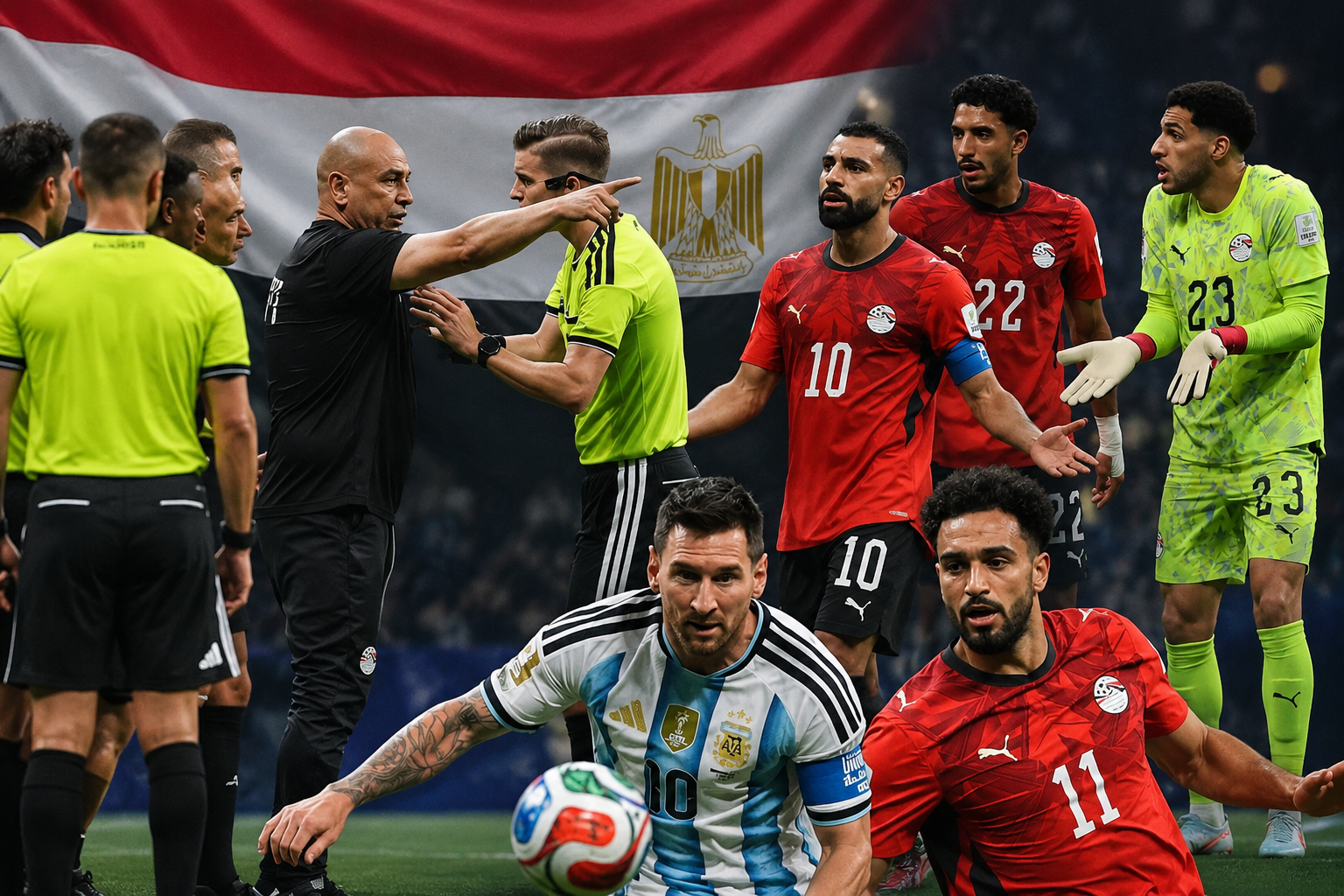
Egypt FIFA Complaint Demands Referee Investigation
CAIRO, Egypt — The Egypt FIFA complaint has become one of the biggest talking points of the 2026 FIFA World Cup after the Egyptian Football Association (EFA) formally petitioned FIFA to investigate French referee François Letexier and his entire officiating team over their handling of Egypt’s dramatic Round of 16 defeat to Argentina. The complaint goes beyond questioning individual decisions, urging football’s governing body to remove the officials from the remainder of the tournament while raising broader concerns about consistency in video review and refereeing standards. According to reports by the BBC, the EFA argues that several crucial decisions significantly influenced the outcome of the match.
Rather than focusing solely on the controversial 3-2 loss, Egypt’s protest represents an official attempt to place the spotlight on FIFA’s refereeing system itself. The association contends that the issue extends beyond a single match, touching on the credibility of officiating at football’s biggest tournament and the confidence participating nations place in the Video Assistant Referee (VAR) system.
For FIFA, the complaint presents another high-profile test of its commitment to transparency in officiating. The Egypt FIFA complaint has quickly become one of the defining controversies of the 2026 FIFA World Cup, shifting attention away from the scoreline and toward broader questions about referee accountability, VAR consistency and FIFA’s disciplinary procedures. While referee performances are routinely reviewed internally after World Cup matches, it is relatively uncommon for a national federation to publicly demand both a formal investigation and the removal of an entire officiating crew before the tournament concludes.
Egypt FIFA Complaint Escalates Refereeing Debate
The EFA’s formal submission follows one of the most dramatic knockout fixtures of the tournament. Egypt appeared firmly in control after establishing a two-goal advantage against defending world champions Argentina, only for the South Americans to stage an impressive comeback and secure a 3-2 victory that sent them into the quarter-finals.
Although comebacks are part of football, Egyptian officials insist that a series of controversial refereeing decisions fundamentally altered the direction of the contest. Their complaint argues that several key moments either denied Egypt legitimate scoring opportunities or benefited Argentina without receiving equal scrutiny from match officials and VAR.
Central to the federation’s protest is its allegation of inconsistent decision-making. According to the complaint, video review intervened decisively when Egypt scored but was not applied with the same level of scrutiny during incidents involving Argentina. This perceived imbalance forms the foundation of Egypt’s appeal to FIFA and has become the principal argument advanced by the country’s football authorities.
Why the Complaint Matters Beyond One Match
While FIFA has not publicly responded to the complaint, the issue has attracted international attention because it touches on wider questions surrounding officiating at elite tournaments. The expansion of VAR was intended to reduce controversial decisions by allowing referees to review critical incidents involving goals, penalties, direct red cards and mistaken identity.
However, debates have increasingly shifted from whether VAR should exist to how consistently it is applied. Football analysts believe the Egypt FIFA complaint has renewed international debate over whether FIFA should provide greater transparency in its reviews of controversial officiating decisions during major tournaments. Critics across different competitions have argued that similar incidents are sometimes judged differently, creating uncertainty among players, coaches and supporters.
Egypt’s complaint therefore goes beyond disappointment over elimination. It challenges whether identical standards were applied throughout a match that ultimately decided which nation advanced to the World Cup quarter-finals.
The case also underscores the growing willingness of football associations to pursue formal channels when they believe officiating has affected major tournament outcomes. Whether FIFA decides to issue a public response or handle the matter through its internal referee assessment procedures may influence how future disputes of a similar nature are addressed.
From an African perspective, the complaint has generated particular interest because Egypt remains one of the continent’s most successful football nations. Many supporters across Africa will be watching closely to see whether FIFA provides additional clarification regarding the decisions highlighted by the EFA or maintains its traditional approach of reviewing referee performances without public disclosure.
As the tournament moves into its decisive stages, the controversy has ensured that discussions surrounding officiating standards remain almost as prominent as the football itself.
Key Allegations Behind the Egypt FIFA Complaint
At the heart of the Egypt FIFA complaint are several incidents that the Egyptian Football Association believes demonstrate inconsistent officiating and selective use of the Video Assistant Referee (VAR) system during the Round of 16 encounter against Argentina. The Egypt FIFA complaint argues that the disputed incidents should be viewed collectively rather than individually, with the Egyptian Football Association maintaining that the overall pattern of officiating affected the balance and fairness of the match. The federation argues that while no single decision determined the outcome, the cumulative effect of multiple controversial calls significantly altered the course of the match.
Disallowed Goal Sparks Early Controversy
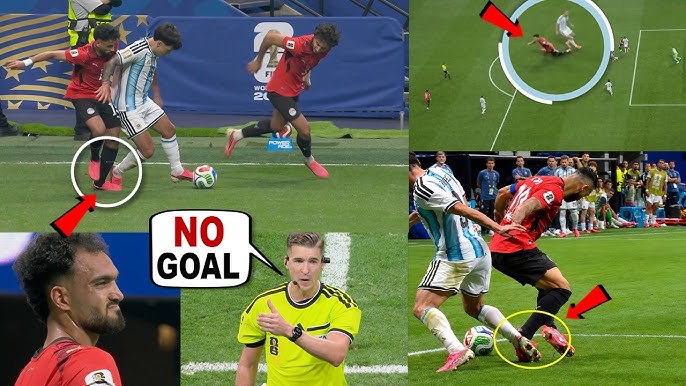
One of Egypt’s principal grievances concerns a goal scored by Mostafa Ziko while the Pharaohs were leading 1-0.
Following a VAR review, referee François Letexier ruled that Egyptian midfielder Marwan Attia had committed a foul on Argentina defender Lisandro Martínez earlier in the attacking move. As a result, the goal was disallowed.
From Egypt’s perspective, the decision changed the psychological momentum of the contest. Had the goal stood, the team would have extended its advantage and placed Argentina under even greater pressure.
Although VAR exists to correct what officials identify as “clear and obvious errors,” Egypt maintains that the intervention in this instance reflected an unusually strict interpretation of the Laws of the Game.
Penalty Appeals Rejected
The EFA also claims its players were denied two important penalty opportunities during the second half.
According to the complaint:
- Mohamed Salah was allegedly brought down inside Argentina’s penalty area during one attacking move.
- In another incident, Hamdy Fathy was reportedly pulled by Alexis Mac Allister inside the box.
Egypt argues that neither incident received the level of review expected in a World Cup knockout match.
The federation believes these decisions deprived the team of potential scoring opportunities during critical stages of the game and contributed to Argentina’s eventual comeback victory.
Questions Over VAR Consistency
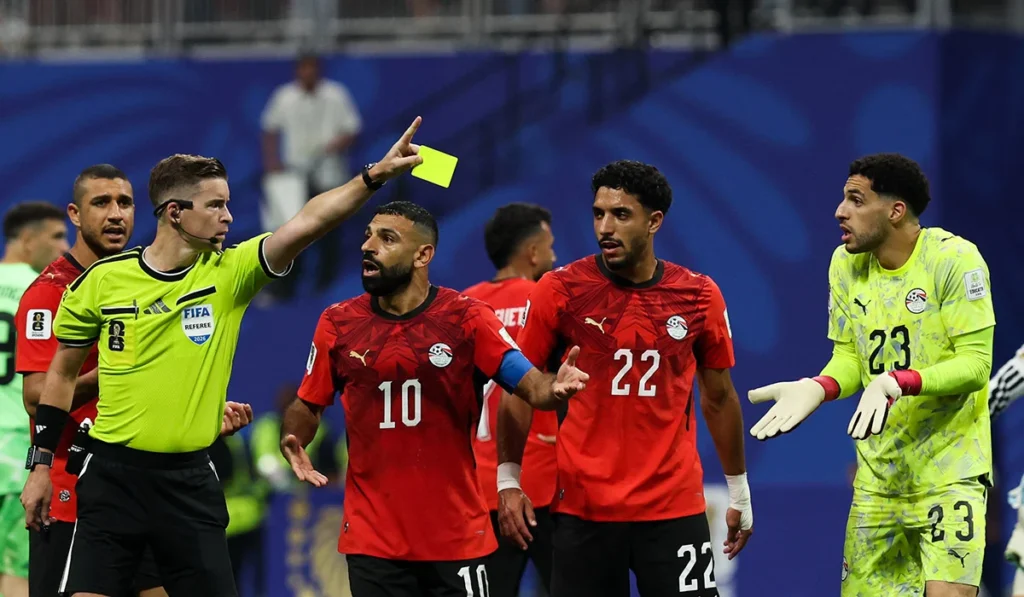
Perhaps the most significant issue raised by Egyptian officials concerns the consistency of VAR intervention.
According to the complaint, video officials actively reviewed and overturned Egypt’s goal but did not recommend similar scrutiny for alleged fouls committed during the build-up to Enzo Fernández’s decisive winning goal.
The EFA describes this as evidence of a “double standard” in officiating rather than isolated human error.
While FIFA has consistently defended VAR as a tool designed to improve accuracy, debates over selective intervention have become increasingly common across domestic leagues and international competitions.
For Egypt, the concern is not simply whether mistakes occurred but whether similar incidents were judged using the same standard throughout the match.
By highlighting these concerns, the Egypt FIFA complaint has intensified discussions about whether the current application of VAR delivers the consistency expected at football’s highest level.
Strong Reactions From Egypt’s Football Leadership
The controversy quickly extended beyond the federation’s official complaint, with senior figures in Egyptian football openly expressing their dissatisfaction.
Hany Abo Rida Calls for Action
EFA President Hany Abo Rida formally submitted the complaint to FIFA, urging football’s governing body to investigate referee François Letexier and his officiating crew.
Beyond requesting an investigation, the federation asked FIFA to remove the officials from the remainder of the World Cup—an unusually strong demand that reflects the seriousness with which Egypt views the disputed decisions.
Such requests are relatively rare during major international tournaments and underscore the federation’s belief that confidence in the integrity of officiating has been undermined.
Coach Hossam Hassan Questions Fairness
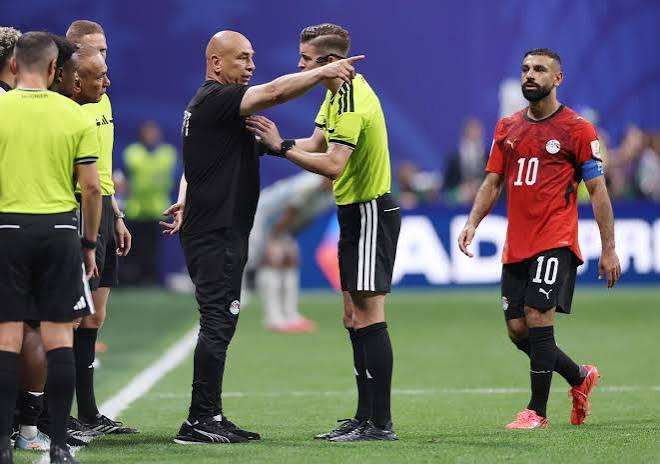
Egypt head coach Hossam Hassan expressed visible frustration after the match.
According to the source material, Hassan argued that his side had suffered a clear injustice and suggested that the officiating appeared to favour Argentina’s continued participation in the tournament, remarking that officials seemed to have “wanted Messi to stay in the running.”
Those remarks have attracted considerable attention internationally because they imply concerns extending beyond individual refereeing decisions. However, they remain the coach’s personal assessment and have not been substantiated by independent evidence.
Aboutrika Echoes Public Frustration
Former Egypt international Mohamed Aboutrika also criticised the officiating, claiming the Pharaohs faced not only their opponents but circumstances they believed worked against them.
His comments echoed the disappointment expressed by many Egyptian supporters on social media, where debates over VAR decisions dominated discussion after the final whistle.
While such reactions illustrate the depth of public frustration, they represent opinions rather than verified findings.
What FIFA Is Likely to Do
As of the time covered by the source material, FIFA had not issued a public response to Egypt’s complaint.
Historically, FIFA rarely comments in detail on referee evaluations while a tournament is still underway.
Although FIFA has yet to issue a public statement, the Egypt FIFA complaint is expected to undergo the governing body’s established internal review process for referee performances during the tournament.
Instead, officiating performances are typically reviewed internally by FIFA’s Referees Committee. These assessments can influence whether officials are assigned to future matches, but the governing body does not usually disclose the full findings publicly.
Even when federations submit formal protests, the threshold for overturning a match result is exceptionally high.
Under FIFA regulations, protests concerning refereeing decisions rarely lead to replayed matches because judgments made by match officials are generally regarded as final unless there is evidence of a clear breach of competition rules rather than subjective interpretation.
Consequently, while Egypt’s complaint may trigger an internal review, football analysts generally consider it unlikely to alter Argentina’s progression to the quarter-finals.
Historical Precedents Suggest Limited Remedies
World Cup history contains several examples of national associations challenging controversial officiating decisions.
Egypt itself previously raised concerns following the2018 FIFA World Cup, while Italy lodged protests after contentious refereeing during the 2002 FIFA World Cup.
In both cases, although the incidents remained subjects of debate among supporters and football analysts, the tournament results were not reversed.
These precedents suggest that FIFA’s response—if any—is more likely to focus on reviewing officiating standards than reconsidering completed match outcomes.
For many observers, the Egypt FIFA complaint represents another significant test of FIFA’s willingness to strengthen confidence in refereeing standards without altering completed World Cup results.
For this reason, many observers view the current complaint as an effort to promote greater accountability and consistency in future matches rather than a realistic attempt to have Egypt reinstated in the competition.
As Argentina prepares for its quarter-final against Switzerland, attention will now shift to whether FIFA offers any public clarification or allows its established internal review process to address the concerns raised by the Egyptian Football Association.
Conclusion: A Test of FIFA’s Commitment to Officiating Transparency
The Egypt FIFA complaint has evolved into more than a post-match protest. It has become part of a wider debate over how football’s governing body manages officiating standards during the world’s biggest sporting event.
Although history suggests that Egypt’s elimination is unlikely to be reversed, the federation’s formal appeal places renewed attention on the consistency of VAR interventions, referee accountability and FIFA’s internal review processes. The outcome of the complaint could influence public confidence in how controversial decisions are handled during future international tournaments.
For African football, the case is particularly significant. Egypt remains one of the continent’s most successful football nations, and many supporters across Africa will closely watch whether FIFA provides greater transparency regarding the concerns raised by the Egyptian Football Association or continues its longstanding practice of handling referee assessments behind closed doors.
Regardless of FIFA’s eventual decision, the Egypt FIFA complaint has already become one of the tournament’s most discussed officiating disputes and is likely to remain a reference point in future debates over referee accountability and VAR implementation.
Until FIFA issues an official response, the controversy is expected to remain one of the defining talking points of the 2026 FIFA World Cup, even as Argentina prepares for its quarter-final clash with Switzerland.
Recommended Coverage
2026 FIFA World Cup: Messi and Mbappe Rewrite History
Explore how football’s biggest stars continued to shape the tournament with historic performances and record-breaking moments.
DR Congo World Cup Journey Faces Health Restrictions
Read how health regulations affected one of Africa’s representatives during the 2026 FIFA World Cup.
FIFA U-20 Women’s World Cup: Nigeria Faces Spain and China
See how Nigeria prepared for another major FIFA tournament as the Falconets faced two global football powers.
About the Author