INTRODUCTION
The global news roundup for 4–10 October 2026 reflects a week in which governments, businesses and public institutions faced difficult questions about security, financial stability, technological competition and their ability to protect communities. From reported attacks involving Saudi airport facilities to rising French government borrowing costs, proposed artificial intelligence financing and Germany’s additional support for Ukraine, the developments highlighted the challenges of turning decisions into practical results.
The week also brought renewed attention to the continuing humanitarian concerns surrounding Gaza and the demands placed on emergency services by severe weather threats across the Americas. Although these developments unfolded in different regions and involved different actors, they raised a common question: how effectively can institutions respond when their resources, credibility and capacity are under pressure?
In the Middle East, reported attacks on Saudi aviation facilities intensified concerns about civilian safety while uncertainty persisted over the implementation of the Gaza ceasefire. In financial markets, French borrowing costs reportedly approached five per cent even as the United States stock market finished the week higher. Meanwhile, reports of a proposed $40 billion SpaceX financing plan illustrated the scale of capital associated with artificial intelligence infrastructure.
Europe’s support for Ukraine remained another major development, with Germany announcing additional assistance and reporting a broader set of bilateral agreements. In the Americas, Hurricane Isaias and Hurricane Simon placed emergency preparedness, infrastructure protection and reliable public information in focus.
Together, these five narratives provide a broader picture of the week’s international developments, while highlighting the difference between announced intentions, confirmed actions and outcomes that remain uncertain.
1. INTERNATIONAL SECURITY: MIDDLE EAST CONFLICT AND THE PRESSURE ON CEASEFIRE EFFORTS
Reported attacks involving Saudi airport facilities and continuing uncertainty over the Gaza ceasefire placed civilian protection and regional security at the centre of the Middle East narrative during the week of 4–10 October 2026.
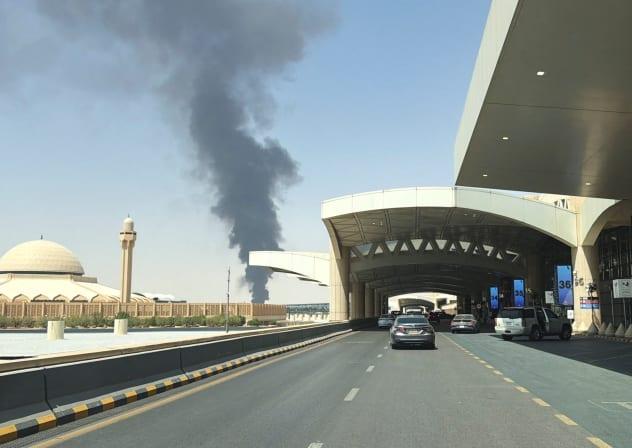
Reports covering 7–8 October described attacks involving airports in Saudi Arabia, including King Khalid International Airport in Riyadh and facilities in Abha. Saudi authorities reportedly reported three deaths across the incidents, although the precise casualty breakdown and circumstances surrounding each death require further confirmation.
Read the Reuters report on attacks on Saudi airports and the escalation of fighting in Yemen.
The Houthi movement also claimed responsibility for attacks on Saudi targets. That claim must be distinguished from independently verified information about the incidents, including the extent of the damage, the circumstances of the casualties and the operational details of the reported attacks.
The developments raised concerns about the security of civilian aviation facilities. Airports are important transport links for passengers, workers and commercial activity. Attacks involving these facilities can create safety risks and raise questions about the protection of essential transport infrastructure.
However, the available source material does not establish every detail of the reported incidents. A responsible assessment must therefore distinguish between official casualty reports, claims of responsibility and information independently corroborated by other sources. The two airport-related developments should not be presented as one coordinated campaign without supporting evidence.
Gaza ceasefire remains a separate humanitarian concern
Attention also returned to Gaza on 7 October, the third anniversary of the Hamas-led attack on Israel in 2023. The anniversary renewed focus on the conflict’s continuing human consequences and the unresolved challenges surrounding ceasefire implementation.
The supplied reporting describes continuing humanitarian needs and uncertainty over whether ceasefire arrangements are producing meaningful improvements in civilian safety and access to assistance. The existence of a ceasefire arrangement does not, by itself, demonstrate that violence has ended or that humanitarian conditions have improved sufficiently.
The source material also refers to a reported figure of more than 1,400 Palestinian deaths since the ceasefire, attributed to Gaza health authorities. An Associated Press report on the stalled Gaza ceasefire and continuing deaths discusses that figure and the unresolved terms of the agreement.
The figure should be attributed to Gaza health authorities, with the reporting date made clear. It should not be described as an independently verified total unless independent verification is established.
The distinction matters because casualty figures in conflict reporting must be attributed carefully, especially when the reporting period, methodology or independent corroboration is unclear.
The Saudi airport incidents and the situation in Gaza are separate developments. Their shared relevance lies in the wider questions they raise about civilian protection, regional stability and the effectiveness of security arrangements, not in any established operational connection between them.
What to watch
Further official Saudi updates are needed to clarify casualties, damage and responsibility for the reported attacks. In Gaza, confirmed information about ceasefire implementation and humanitarian access will be essential to determining whether conditions are improving.
The wider significance of these international security developments will depend on verified evidence of what happened and what follows. Announcements, claims and diplomatic arrangements must ultimately be assessed against their practical consequences for civilians.
2. GLOBAL ECONOMY: FRENCH BORROWING COSTS RISE AS MARKETS SEND MIXED SIGNALS
Financial markets offered contrasting signals during the week, with French government borrowing costs reportedly approaching five per cent while the US stock market finished 9 October higher. The developments highlighted the difficulty of interpreting financial conditions through a single indicator.
A reported market snapshot placed France’s ten-year government bond yield at 4.994 per cent on 9 October. The Stage 4 editorial material described the yield as having reached a 24-year high, although the precise market data and measurement time should be confirmed before publication as a definitive historical comparison.
For broader context, see Reuters’ analysis of global markets and rising government borrowing costs. The Reuters report on French debt concerns and the European Central Bank’s response provides additional context on France’s fiscal pressures. Neither link should be taken as independent confirmation of the precise 4.994 per cent figure without checking the underlying market data.
Government bond yields are important because they influence the cost at which governments borrow money and refinance existing debt. When yields rise, issuing new debt or replacing maturing obligations can become more expensive.
Higher borrowing costs can put pressure on public finances by increasing interest expenses. Depending on a government’s overall financial position, that may reduce the room available for other spending priorities or complicate decisions about future budgets.
Nevertheless, a higher yield does not automatically establish that a government is facing an imminent debt crisis. It is one measure of market pricing and perceived risk, and its significance depends on the wider economic and fiscal context.

US stock-market strength does not tell the whole story
The United States provided a contrasting market indicator. The S&P 500 closed at a reported 7,811.54 points on 9 October.
That closing level reflected strength in the US equity market during the session. However, share prices and government bond yields measure different aspects of financial conditions. A higher stock-market close does not necessarily mean that government borrowing costs are falling or that financing is becoming easier for every business and household.
The supplied reporting also cites an elevated US ten-year Treasury yield. However, the exact market snapshot requires reconciliation before it can be compared directly with the French figure. The available material does not justify treating the two figures as perfectly comparable measurements without confirming their timing and source.
The broader issue is that financial markets can move in different directions at the same time. Investors may remain willing to buy shares while government bond markets reflect other concerns about borrowing, inflation, fiscal policy or risk. The figures supplied for this week do not establish a single explanation for every market movement.
For governments, the practical challenge remains financing public services and existing obligations while making choices about future spending. For businesses and financial institutions, borrowing costs form part of the environment in which investment and risk decisions are made. The actual consequences vary by country and sector, and the available evidence does not establish a specific impact on every household or business.
IMF–World Bank meetings provide the next assessment point
The next major milestone identified in the source material is the IMF–World Bank Annual Meetings in Bangkok, scheduled for 12–18 October 2026. The dates and venue are confirmed by the official IMF Annual Meetings page.
Briefings on the World Economic Outlook and Global Financial Stability Report were scheduled for 13 October, followed by the Fiscal Monitor briefing on 14 October. The meetings provide an opportunity to examine the international economic outlook, financial stability risks and government fiscal pressures. Their findings, however, must be assessed from the reports as released rather than anticipated in advance.
The source material also refers to a reported Indian interest-rate increase, but that claim remained unverified in the supplied brief. It should therefore be excluded from the roundup unless confirmed through an appropriate official source.
For the global economy, the week’s central message is one of financial pressure and mixed signals, not proof that a global crisis has begun. French borrowing costs reportedly approached five per cent, US equities ended the week higher, and important questions remained about government financing.
The international assessments and any confirmed fiscal-policy announcements will provide the next evidence for evaluating these pressures.
3. AI INVESTMENT: SPACEX FINANCING REPORT HIGHLIGHTS THE COST OF TECHNOLOGICAL COMPETITION
Artificial intelligence is increasingly a competition over computing infrastructure and access to capital, as well as the development of software and more capable systems. A reported financing plan involving SpaceX and Nvidia chips illustrated the scale of investment being considered in the sector.
According to Financial Times reporting cited in the supplied editorial material, the proposed SpaceX plan was valued at about $40 billion. The reported structure included $30 billion in investment-grade debt and $10 billion in bank loans, with a possible closing in 2027.
Read the Financial Times report on SpaceX’s proposed $40 billion borrowing plan and rising credit risk. A separate report from UOL on the proposed financing also describes the reported structure.
These figures describe a reported financing plan, not a completed transaction. The arrangement could change before completion, and its eventual terms and financial implications would depend on the final structure and whether the plan proceeds.
That distinction is important when assessing large technology investments. A reported plan demonstrates what is being considered, but it does not establish that funding has been secured, that the proposed purchases have been completed or that the investment will generate the expected returns.
Why AI infrastructure requires substantial capital
Advanced AI systems depend on significant computing resources. These include specialised chips, data centres, electricity and supporting infrastructure. Securing the necessary capacity can require substantial investment before the full commercial value of that capacity is known.
Financing can enable companies to expand more quickly, but it also introduces obligations and risks. Borrowing creates repayment requirements, while large infrastructure projects depend on assumptions about future demand, operating costs and potential revenue.
If future returns fall short of expectations, debt-financed expansion can create additional financial pressure. The reported SpaceX plan therefore raises questions about the relationship between technological ambition, access to computing resources and the sustainability of the financing involved.
The supplied material also mentioned a separate Broadcom financing report exceeding $50 billion. However, the underlying claim was not sufficiently established in the source brief. It should not be presented as a confirmed transaction or included as a verified figure in the final account.
The focus should remain on the reported SpaceX proposal and the wider financial questions it illustrates.

US government coordination adds a policy dimension
The AI narrative also included a reported announcement by US President Donald Trump on 4 October concerning a proposed “Super Intelligence Force” intended to coordinate the federal response to artificial intelligence.
The Washington Post report on the proposed force and its stated safety objectives provides context for the initiative. The formal details described in the supplied material—particularly its mandate, membership, legal authority and implementation arrangements—should be checked against official documentation.
A reported announcement should not be confused with evidence that a new body is fully operational or has already delivered measurable results.
The two developments illustrate separate dimensions of the AI race. Companies are seeking the resources needed to compete in computing infrastructure, while governments are considering how to coordinate their response to a technology with economic and national-security implications.
The resulting questions include how large investments will be financed, whether future revenues can justify their costs, how much electricity and infrastructure will be required, and what oversight will apply to powerful AI systems.
What comes next
Official company disclosures and financing confirmations will be needed to establish whether the reported SpaceX plan proceeds. Government documentation will be required to clarify the status and responsibilities of the US initiative.
For now, the reported figures demonstrate the scale of the financial ambitions associated with AI, but they do not establish the eventual outcome. The distinction between a proposed investment and a completed transaction remains central to responsible reporting on the sector.
4. INTERNATIONAL SECURITY: GERMANY DEEPENS ITS SUPPORT FOR UKRAINE
Germany’s continuing support for Ukraine was a major European security development during the week, as Chancellor Friedrich Merz visited Kyiv and announced additional assistance. The commitments covered military support and energy infrastructure, while a separate set of bilateral agreements was reported to have a much larger combined value.
Merz visited Kyiv on 4 October 2026 and met Ukrainian President Volodymyr Zelenskyy. The supplied reporting describes more than €1.3 billion in additional German assistance for Ukraine.
The official statement from Ukraine’s presidential office confirms the announced package and outlines the results of the meeting. The German Federal Government’s report on Merz’s visit provides Germany’s account of the visit.
The reported package included €1 billion in military assistance and €350 million allocated to energy infrastructure ahead of winter. The announcement reinforced Germany’s stated commitment to supporting Ukraine’s defence and essential services during the continuing war.
However, the announcement of assistance is not the same as confirmation that every component has been delivered. Its practical effect will depend on the nature of the support, the delivery schedule and its eventual use.
The €8.5 billion agreement figure requires context
Ukraine’s presidential office also reported that Germany and Ukraine had reached 15 agreements and signed related documents valued at more than €8.5 billion.
That figure should not be interpreted as €8.5 billion in cash already spent or assistance already received. The agreements and documents may encompass a broader set of commitments, procurement arrangements and cooperation projects. Their precise composition and relationship to the separately reported assistance package require clarification.
The two figures should not be added together without establishing whether their components overlap. They describe different categories of reported support and cooperation, and treating them as one combined aid total could misrepresent the commitments.
The distinction is important for evaluating international assistance. A government can announce funding, sign an agreement or commit to a procurement arrangement, but each represents a different stage in the process. Delivery and implementation determine what resources become available in practice.
Infrastructure remains part of the wartime challenge
The supplied reporting also describes Russian attacks on Ukrainian transport infrastructure and Ukrainian attacks on targets inside Russia. These are separate military developments within the wider war and should not be conflated with the announcement of German assistance.
Transport networks help move people and supplies, while energy infrastructure supports electricity, heating and other essential services. The protection and maintenance of these systems remain important as Ukraine prepares for winter under continuing wartime pressure.
The additional German assistance has implications for military support, energy security and the maintenance of civilian services. However, the available material does not establish that the new package has already altered battlefield conditions or resolved Ukraine’s infrastructure challenges.
Its significance will depend on the timing and delivery of the support and the implementation of the bilateral agreements.
What to watch
Further official German announcements will be needed to confirm delivery schedules and the implementation status of the reported assistance. Updates on the bilateral agreements and verified information about Ukraine’s energy and transport infrastructure will also be important.
The week’s developments show the continuing role of international commitments in supporting Ukraine. But the practical measure of those commitments will be what is delivered, which needs are addressed and how effectively essential services can be sustained during the war.

5. GLOBAL NEWS: HURRICANES ISAIAS AND SIMON TEST EMERGENCY PREPAREDNESS
Severe weather threats in the Americas placed emergency preparedness and infrastructure resilience in focus during the week of 4–10 October 2026. The supplied editorial material identified two separate tropical cyclones: Hurricane Isaias, reported to have made landfall near Destin, Florida, and Hurricane Simon, which strengthened to Category Four in the eastern Pacific as it approached Mexico.
The storms occurred in different locations and must be treated as separate events. Their shared relevance lies in the demands they placed on warnings, emergency response, electricity services and public information.
According to reporting cited in the supplied brief, Isaias reached Florida’s Gulf Coast with sustained winds of 105 miles per hour, making it a high-end Category Two hurricane. The material also reported an emergency declaration covering 27 Florida counties.
The Associated Press report on Hurricane Isaias making landfall near Destin provides reporting on its winds, damage and impact across the Gulf Coast.
Power outages were among the reported consequences. However, the source material contained conflicting estimates of the number of customers without electricity. One account cited more than 400,000 customers in Florida and Alabama, while another reported more than 664,000.
Those totals cannot responsibly be presented as one definitive figure without checking their timestamps, geographic coverage and underlying utility data. Until that reconciliation is completed, the discrepancy should remain explicit rather than being resolved by choosing one estimate arbitrarily.
Hurricane Simon and the distinction between forecasts and impacts
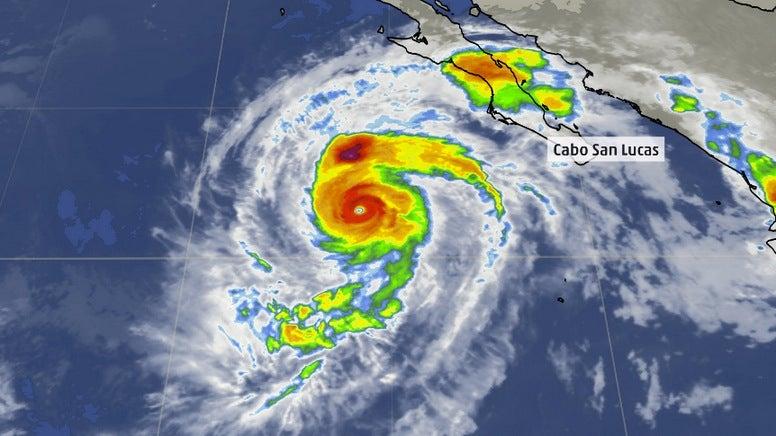
The second storm, Hurricane Simon, was reported to have strengthened to Category Four, with sustained winds of around 145–150 miles per hour at the time of the cited reports.
The Reuters report on Hurricane Simon strengthening to Category Four off Mexico’s coast provides the storm’s reported intensity, location and expected hazards.
The supplied reporting also described forecasts of heavy rainfall, estimating 10–20 inches in some areas and isolated totals potentially reaching 30 inches. These were forecast figures, not confirmed rainfall totals.
The distinction between a forecast and an observed impact is essential during an emergency. Forecasts help authorities and communities prepare for possible conditions, while later assessments establish what actually happened. Heavy rainfall can increase the risk of flooding and mudslides, but the extent of the danger depends on local conditions and the storm’s movement.
Subsequent reporting from Reuters described the continuing effects of the storms, including power outages in the United States and dangerous rainfall in Mexico. See the Reuters update on multiple hurricanes affecting the United States and Mexico.
The supplied material described warnings and emergency-preparedness measures in threatened areas. It did not establish a final death toll or a complete recovery timetable for either storm during the original reporting period.
Communities depend on reliable warnings and essential services
For residents in threatened areas, the immediate concerns include access to accurate warnings, evacuation arrangements where required, electricity, transport and other essential services. For emergency authorities, the challenge is to communicate risks clearly and update the public as conditions change.
Power outages can disrupt homes and businesses, while damage to transport and other infrastructure can complicate emergency response and recovery. The scale of those consequences must be established through verified assessments rather than inferred from a storm’s category alone.
The supplied evidence does not establish a direct climate cause for either storm, and the two events should not be presented as connected. Their significance for this roundup is the need for effective preparation, reliable information and accurate reporting during severe weather.
What comes next
Official storm assessments, verified casualty and damage figures, utility-restoration updates and current guidance from relevant meteorological and emergency-management authorities are the next important sources of information.
For Isaias, the conflicting power-outage totals require reconciliation. For Simon, forecast rainfall must remain distinct from observed totals until official assessments are available.
The storms close the week’s five-narrative sequence with a practical question about public safety: how well can communities and essential services respond when severe weather threatens lives and livelihoods? The answer depends on verified information about impacts, the effectiveness of emergency measures and the pace of restoration.
CONCLUSION
The global news roundup for 4–10 October 2026 brought together five distinct narratives shaped by security concerns, financial pressure, technological investment, international assistance and severe weather. Although these developments did not share a single cause, each highlighted the importance of institutional capacity and measurable results.
In the Middle East, reported attacks on Saudi airport facilities and continuing uncertainty over Gaza underscored the need for verified information and effective civilian protection. In financial markets, French borrowing costs reportedly approached five per cent even as US equities ended the week higher, illustrating why individual indicators cannot provide a complete picture of economic conditions.
The AI financing reports raised questions about the scale and sustainability of investment in computing infrastructure, while Germany’s commitments to Ukraine highlighted the difference between announced assistance and delivered support. Meanwhile, Hurricane Isaias and Hurricane Simon placed the accuracy of warnings, emergency preparedness and infrastructure recovery at the centre of the weather narrative.
The next developments will depend on confirmed security updates, international economic assessments, official AI disclosures, progress on Ukraine assistance and reliable storm assessments.
Across these stories, the central issue remains implementation. The significance of a commitment is ultimately measured not only by its announcement, but by the evidence of what it delivers.
Recommended Articles from DSG Herald News
For more context, analysis and background on the major issues shaping Nigeria, Africa and the world, explore these related reports from DSG Herald News:
- Africa News Weekend Roundup: September 28 – October 4, 2026 — Explore the major developments shaping Africa’s political, economic, security and social landscape.
- Nigeria News Roundup: Reforms, Security and Energy — Read more about the policies, security challenges and energy-sector developments influencing Nigeria’s future.
- Global News Roundup: War, Energy, AI and the Economy — Understand the international events and emerging trends reshaping global politics, technology, energy and economic affairs.
- Nigerians Hate Tinubu? What the Data Really Shows — Examine the debate surrounding President Bola Ahmed Tinubu’s administration and what available evidence reveals about public opinion.
Stay informed with DSG Herald News for in-depth reporting, credible analysis and perspectives on the stories that matter across Nigeria, Africa and the world.
About the Author



