Nigeria’s Military Aviation Record: What the Crashes Reveal
Nigeria’s military aviation record has come under renewed scrutiny after a Nigerian Air Force ATR-42 aircraft crashed in Ondo State, killing all 25 people aboard and becoming the latest in a series of military aircraft losses recorded since 2021. The incident has brought the broader question of Nigeria military aircraft crashes back into focus, with aviation experts calling for a comprehensive review of maintenance, airworthiness, operational procedures, safety oversight and accident investigation. The underlying incident and five-year chronology were reported in the original Punch report on Nigeria’s military air crashes.
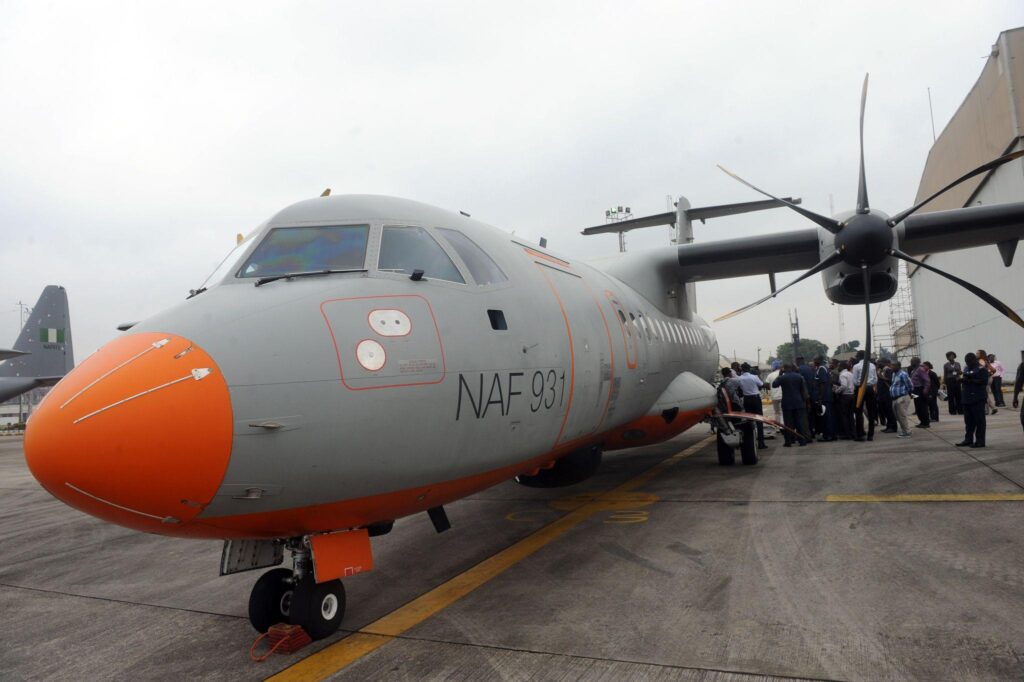
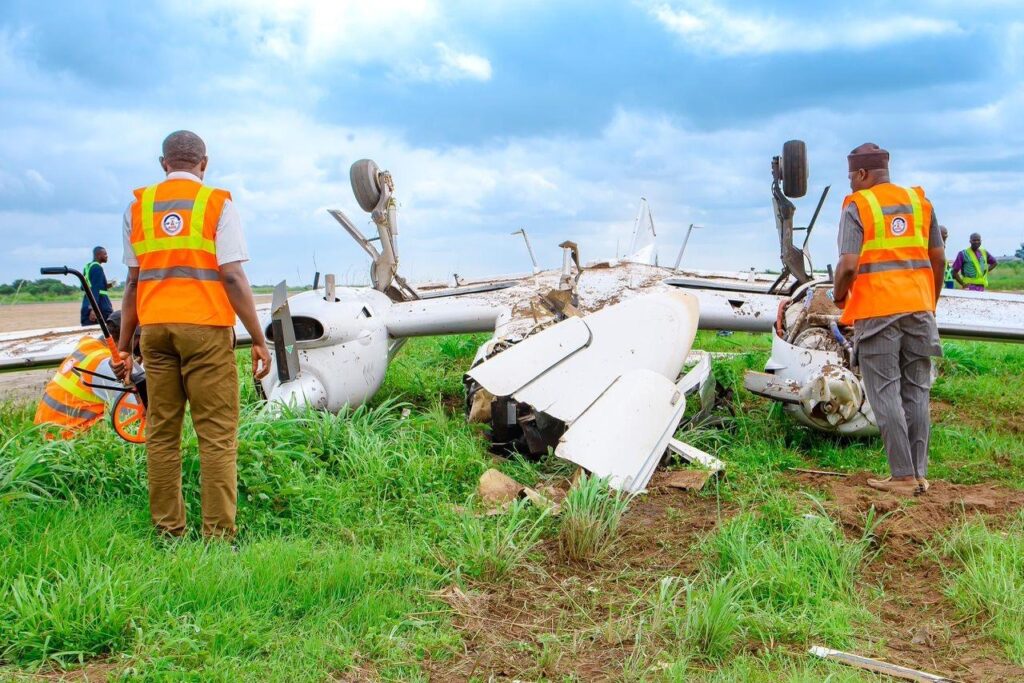
The latest crash occurred on Monday in the Igbokoda area of Ilaje Local Government Area, where NAF 931, an ATR-42, was carrying out a routine mission from Benin City in Edo State to Lagos. Air traffic controllers lost contact with the aircraft at about 9:13am. The Nigerian Air Force later confirmed that all 25 people aboard — 20 passengers and five crew members — died.
The tragedy is significant not only because of the lives lost but because it adds to a record that now includes at least 10 military aircraft incidents between 2021 and October 2026, with at least 68 confirmed and presumed deaths according to the supplied analysis. The incidents have involved fighter aircraft, helicopters, training aircraft, transport aircraft and unmanned aerial vehicles, operating in circumstances ranging from combat and training to routine missions, casualty evacuation and post-maintenance checks.
The available record, however, does not establish a single explanation for the crashes. Individual incidents occurred under different circumstances, and the latest ATR-42 accident cannot be attributed to mechanical failure, maintenance problems or any other specific cause until investigators establish what happened.
Nigeria Military Aircraft Crashes: The Latest Tragedy
The Ondo State crash immediately placed the safety of Nigeria’s military aviation fleet under renewed examination.
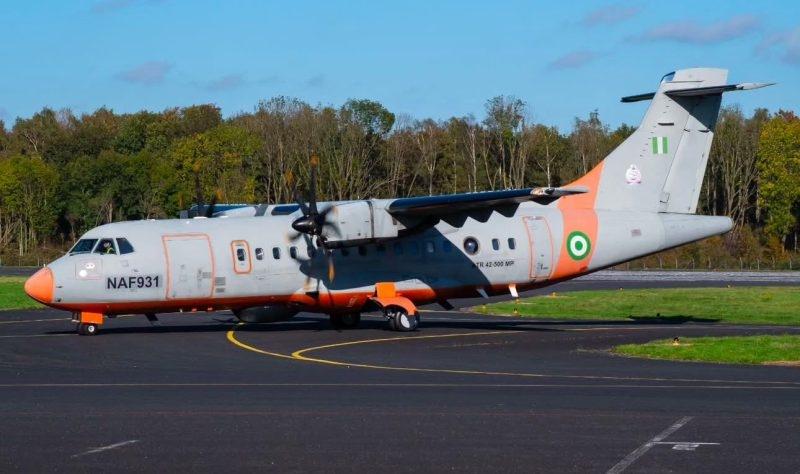
NAF 931 was operated by the Nigerian Air Force’s 81 Air Maritime Group in Benin City. The ATR-42-500MP platform is designed primarily for maritime patrol and Intelligence, Surveillance and Reconnaissance operations, but its capabilities also include search and rescue and limited transport missions. The aircraft has also been deployed in military operations in the North-east.
The circumstances of the crash made recovery particularly difficult. The aircraft came down in a swampy area near the Naval Base in Igbokoda, with the wreckage sinking into difficult terrain. Conventional vehicles and boats were unable to reach the site, prompting the Ondo State Government to deploy specialised swamp buggies. State Commissioner for Health Banji Ajaka said two such vehicles were deployed to reach the submerged wreckage.
The response extended beyond the recovery operation. President Bola Tinubu directed the Nigerian Air Force to investigate the cause of the accident and declared three days of national mourning for those who died. Defence Headquarters also ordered a probe into the circumstances surrounding the crash.
The investigation will therefore be central to understanding the accident. Until its findings are established, claims about what caused the aircraft to crash remain premature.
That distinction matters because the growing discussion about Nigeria military aircraft crashes risks turning a pattern of accidents into an assumption that all of them share the same technical or operational cause. The record supplied for this analysis does not support such a conclusion.
A Five-Year Pattern of Military Air Crashes
The scale of the record becomes clearer when the incidents are viewed chronologically.
The most concentrated period was 2021, when several Nigerian military aircraft were lost within months.
On February 21, 2021, a NAF Beechcraft King Air 350i crashed shortly after taking off from Abuja while heading towards Minna in Niger State. All seven military personnel aboard died.
On March 31, an Alpha Jet conducting operations in Borno State disappeared from radar. The wreckage was later found in the Sambisa Forest, while its two pilots remained unaccounted for and were presumed dead.
On May 21, a NAF King Air 350 crashed near Kaduna International Airport, killing all 11 people aboard, including then Chief of Army Staff Lt. Gen. Ibrahim Attahiru. The accident prompted a joint investigation by the Nigerian Air Force and the then Accident Investigation Bureau, which subsequently submitted an interim report to the Chief of Air Staff.
In July 2021, another NAF Alpha Jet was lost after being shot down in Zamfara State. Its pilot, Flight Lieutenant Abayomi Dairo, survived after ejecting from the aircraft.
The losses continued into 2022 and 2023.
In 2022, a NAF Super Mushshak training aircraft crashed in Kaduna, killing its two pilots. In 2023, an FT-7NI trainer aircraft crashed in Makurdi, Benue State, although both pilots survived.
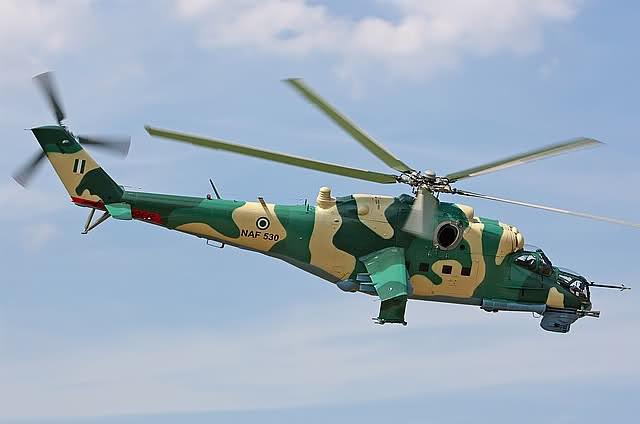
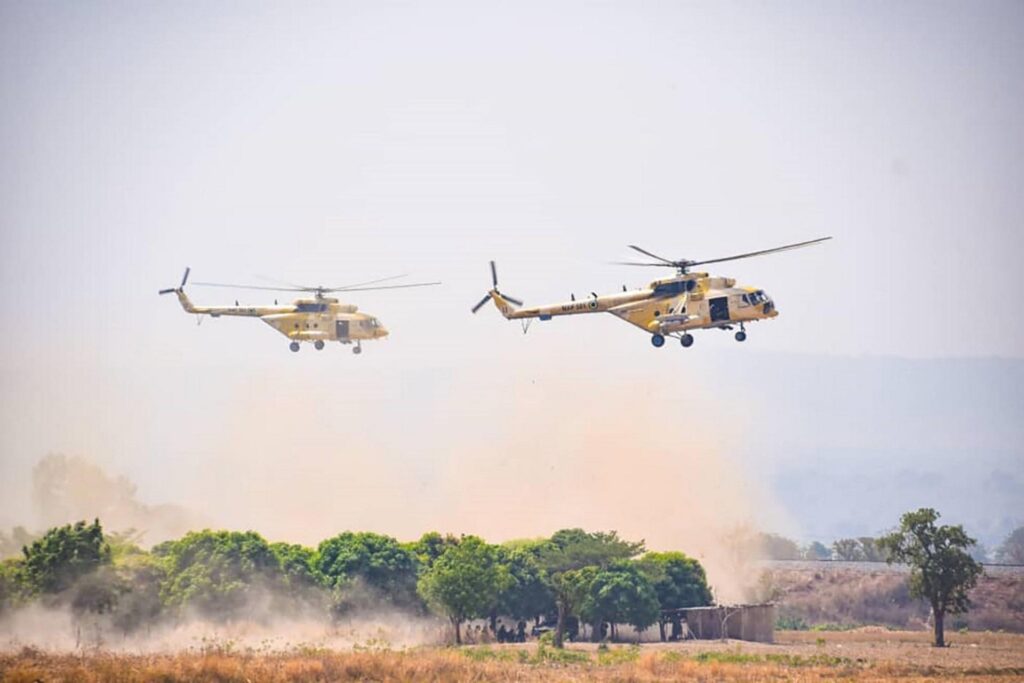
A month later, an NAF Mi-171 helicopter conducting a casualty evacuation mission crashed at Chukuba village in Shiroro Local Government Area of Niger State. Eleven people were killed.
In December 2023, a Mi-35P helicopter crashed shortly after take-off from the NAF Base in Port Harcourt, Rivers State. Its five crew members survived.
The record then included non-fatal losses.
In 2025, an Alpha Jet experienced an in-flight emergency during a post-inspection functional check flight near Kainji in Niger State. Both pilots ejected safely.
In January 2026, a NAF CH-4B unmanned aircraft was lost during a surveillance operation in Niger State, although there were no human casualties.
The October 2026 ATR-42 crash has now added another fatal incident to the record.
Taken together, the incidents demonstrate a diverse pattern rather than a single type of accident. Some involved combat or hostile action, others training, routine missions, casualty evacuation or post-maintenance activity. That diversity is one reason aviation experts are calling for a system-wide safety assessment rather than a narrow investigation of individual aircraft.
The Human and National Cost
The most immediate cost of Nigeria military aircraft crashes is measured in lives.
Military aviation places personnel in inherently demanding operating environments, particularly when aircraft are used for combat, surveillance, evacuation and logistics. When an aircraft is lost, however, the consequences extend beyond the crew.
The incidents recorded since 2021 have involved pilots, military personnel, passengers and other people carried aboard aircraft during different types of missions. The latest ATR-42 crash alone resulted in 25 deaths.
The loss of aircraft also represents the loss of public assets. Military aviation platforms are expensive and often specialised, meaning that replacing them can involve substantial procurement, training, logistics and infrastructure requirements.
There is also an operational consequence. Every aircraft lost reduces available capacity at a time when the Nigerian military relies heavily on air assets for counter-insurgency operations, surveillance, casualty evacuation, logistics and other internal security duties.
This makes aviation safety an operational issue as well as an accident-investigation issue.
A fleet that loses aircraft repeatedly can face reduced availability, increased pressure on remaining platforms and greater demands on personnel and maintenance systems. The supplied source does not establish the extent to which these effects have occurred across the Nigerian military fleet, but experts argue that the wider operational burden placed on the military should form part of the safety discussion.
What Is Behind the Crashes?
One of the most important findings in the available record is what it does not establish.
There is no confirmed single cause connecting all of the incidents.
The aircraft involved were different. Their missions were different. The environments were different. Some incidents occurred during combat or hostile action, while others occurred during training, routine operations, casualty evacuation or post-maintenance activities.
That means it would be misleading to reduce the entire record to one explanation.
The source specifically states that individual investigations have pointed to different circumstances and that the latest ATR-42 accident cannot be attributed to maintenance or mechanical failure until the investigation has been concluded.
Nevertheless, the frequency and diversity of the incidents have prompted questions about several areas of military aviation safety:
- aircraft maintenance;
- airworthiness standards;
- operational procedures;
- engineering systems;
- safety oversight;
- investigation processes;
- operating conditions; and
- the demands placed on military aircraft.
These are questions for investigators and aviation institutions rather than conclusions that can be drawn before evidence is established.
That distinction is especially important in the aftermath of a fatal crash. A credible investigation must determine what happened in the specific accident rather than simply assigning the latest incident to a broader pattern.
Nigeria Military Aviation Safety Comes Under Scrutiny
Aviation analyst and Aviation Round Table member Olumide Ohunayo argues that the frequency of military aviation accidents warrants an urgent review of the Air Force’s safety systems.
Ohunayo acknowledged that estimates of military aviation accidents over a longer period vary. He argued, however, that even the lower estimate represented a serious concern when compared with commercial aviation.
His central argument is that the loss of military personnel and public assets should not be treated exclusively as an internal military matter.
He has called for stronger cooperation between the Nigerian Air Force, the Nigeria Civil Aviation Authority and the Nigerian Safety Investigation Bureau.
The NCAA describes itself as Nigeria’s civil aviation regulatory body, with responsibilities that include aviation safety regulation and oversight. Its published responsibilities include regulation of aircraft operations, air navigation and aerodrome operations.
Ohunayo also wants the Air Force to review its operational manuals, procedures and processes and to involve aviation regulators, accident investigators and other professionals in identifying weaknesses.
His argument is essentially about institutional learning: if accidents are repeatedly treated as isolated military events, opportunities to identify common safety weaknesses may be missed.
The role of the Nigerian Safety Investigation Bureau is particularly relevant to this debate.
The NSIB describes itself as an independent Nigerian government agency responsible for investigating transportation accidents and serious incidents with the objective of determining circumstances and causes and issuing safety recommendations, rather than apportioning blame.
Its published accident-report archive provides access to formal investigation reports, safety records and technical findings. NSIB Aircraft Accident Reports
That creates a clear distinction between military responsibility for investigating its aviation accidents and the calls from aviation stakeholders for greater professional cooperation.
The Case for Wider Safety Audits
Ohunayo’s proposal extends beyond the Nigerian Air Force.
He has argued that safety audits should cover military aviation sections and paramilitary organisations whose aviation operations are outside the regulatory framework of the NCAA.
He has also called for international support from auditors experienced in military and paramilitary aviation operations.
The proposal reflects a broader principle: safety systems are strengthened not simply by investigating accidents after they occur, but by identifying weaknesses before they produce another loss.
Ohunayo also advocated the involvement of the NSIB in reviewing past accidents and assisting with investigations of recent incidents, arguing that the purpose should be to improve safety and reduce future recurrence.
The debate therefore extends beyond one aircraft or one accident.
It concerns whether Nigeria’s military aviation institutions have sufficiently comprehensive systems for capturing lessons from previous incidents, translating those lessons into operational changes and independently assessing whether reforms are working.
The ATR-42 Question
The history of NAF 931 has attracted particular attention following the latest crash.
The Nigerian Air Force had two ATR-42-500MP aircraft before the accident: NAF 930 and NAF 931. Both were operated by the 81 Air Maritime Group in Benin City and were used primarily for maritime patrol and Intelligence, Surveillance and Reconnaissance missions, alongside search-and-rescue and limited transport functions.
The two aircraft were acquired from Italian aerospace manufacturer Alenia Aeronautica under a $73 million contract signed in March 2007. The agreement covered two aircraft, crew training and logistical support. NAF 930 was delivered in December 2009, while NAF 931 arrived in March 2010.
That means the aircraft involved in the latest accident had been in Nigerian service for more than 16 years.
But age alone does not establish that an aircraft is unsafe.
The maintenance history supplied in the source shows that NAF 930 underwent major maintenance at Rheinland Air Service in Germany after accumulating 5,000 operational flight hours over a decade. It was flown to Germany in September 2019 and returned to Nigeria in July 2020.
NAF 931 was also taken to the same facility for maintenance in 2022 and returned to Nigeria in late 2024.
These details are relevant to any investigation into the aircraft’s history, but they should not be interpreted as evidence that maintenance or aircraft age caused the Ondo crash.
That determination belongs to investigators.
The more useful question is whether Nigeria’s military aviation system has sufficiently robust processes for managing ageing specialised aircraft, documenting maintenance, monitoring airworthiness and ensuring that operational demands remain consistent with aircraft capabilities.
Nigeria’s Growing Military Aviation Burden
The safety debate is also taking place against the background of an expanding military workload.
Group Capt. John Ojikutu has argued that the wider security responsibilities assigned to the military should be examined alongside aviation safety.
His concern is that the military has increasingly been deployed for internal security operations, including counter-insurgency activities, placing additional demands on personnel and air assets.
Nigeria’s military aircraft are consequently expected to perform a wide range of functions, including surveillance, logistics, casualty evacuation and combat-related operations.
This operational reality matters because aircraft safety does not exist in isolation from how aircraft are used.
A military aviation system may have to balance operational urgency with training requirements, maintenance schedules, aircraft availability, crew readiness and the demands of prolonged security operations.
Ojikutu’s argument, as presented in the source, is that Nigeria’s broader security architecture and the division of responsibilities between the military and police also deserve examination.
The implication is not that operational pressure itself caused any particular crash. Rather, it suggests that aviation safety should be considered within the wider system in which military aircraft are deployed.
What Needs to Change?
The recommendations emerging from the debate point towards a system rather than a single intervention.
First is stronger safety auditing.
A comprehensive review could examine aircraft maintenance systems, engineering units, operational procedures, airworthiness processes and accident-prevention mechanisms across military and relevant paramilitary aviation organisations.
Second is greater institutional cooperation.
The calls for closer cooperation between the Nigerian Air Force, NCAA, NSIB and other aviation professionals reflect an argument that safety expertise should not operate in separate institutional silos.
The NCAA’s published safety framework includes aviation safety regulation, oversight and inspection functions, providing an established institutional reference point for understanding how civilian aviation safety oversight operates in Nigeria.
Third is better use of lessons from previous accidents.
If investigations identify weaknesses, the value of those investigations ultimately depends on whether their lessons are translated into practical changes.
Fourth is attention to maintenance infrastructure and supply chains.
The supplied expert recommendations include reviewing engineering units, improving local aircraft maintenance capability and addressing spare-parts and logistics challenges.
Fifth is operational oversight.
Aircraft must be used within appropriate operational parameters, with decisions about personnel, equipment and mission requirements aligned with the capabilities and limitations of the aircraft.
Finally, there is the question of fleet renewal.
The source’s recommendations include addressing ageing equipment and strengthening supply chains. But fleet replacement is a major procurement and financial decision, and the available material does not establish which specific aircraft should be replaced or the financial scale of any required renewal programme.
The appropriate response therefore requires evidence-based assessment rather than an assumption that every older aircraft is inherently unsafe.
What Happens Next?
The immediate priority remains the investigation into the Ondo State crash.
The Nigerian Air Force has been directed to establish what happened to NAF 931, while Defence Headquarters has also ordered a probe. The President’s declaration of three days of national mourning has underscored the national significance attached to the loss.
The outcome of that investigation will matter for more than the latest accident.
If investigators identify a specific technical, operational or environmental cause, the findings could point to targeted corrective measures. If broader systemic weaknesses emerge, the case for a wider military aviation safety audit will become stronger.
The larger record already provides a reason for examining the system.
At least 10 military aircraft incidents have been recorded in the period covered by the supplied analysis, involving different aircraft and different operational circumstances. The pattern does not prove that one common failure exists. It does, however, provide sufficient reason for aviation stakeholders to demand a closer examination of how military aviation safety is managed.
For Nigeria, the challenge is particularly important because military air assets have become central to the country’s security operations.
The country needs aircraft that can perform demanding missions, but it also needs systems capable of determining when aircraft, crews and equipment are operating within safe limits. It needs investigations that produce lessons, maintenance systems that respond to those lessons and oversight mechanisms capable of identifying weaknesses before another accident occurs.
The latest ATR-42 crash therefore leaves two separate questions.
The first is specific: What caused NAF 931 to crash in Ondo State?
The second is broader: What can Nigeria learn from the accumulated record of military aviation incidents since 2021?
The answer to the first question must come from the investigation.
The answer to the second will depend on whether the country treats the latest tragedy as another isolated accident — or as an opportunity to examine the wider safety system supporting Nigeria’s increasingly demanding military aviation operations.
For Nigeria military aircraft crashes, the most consequential measure of what happens next will not be the number of investigations announced. It will be whether the findings lead to measurable improvements in safety, oversight, operational procedures and the protection of the personnel and public assets entrusted to the country’s military aviation system.
About the Author



