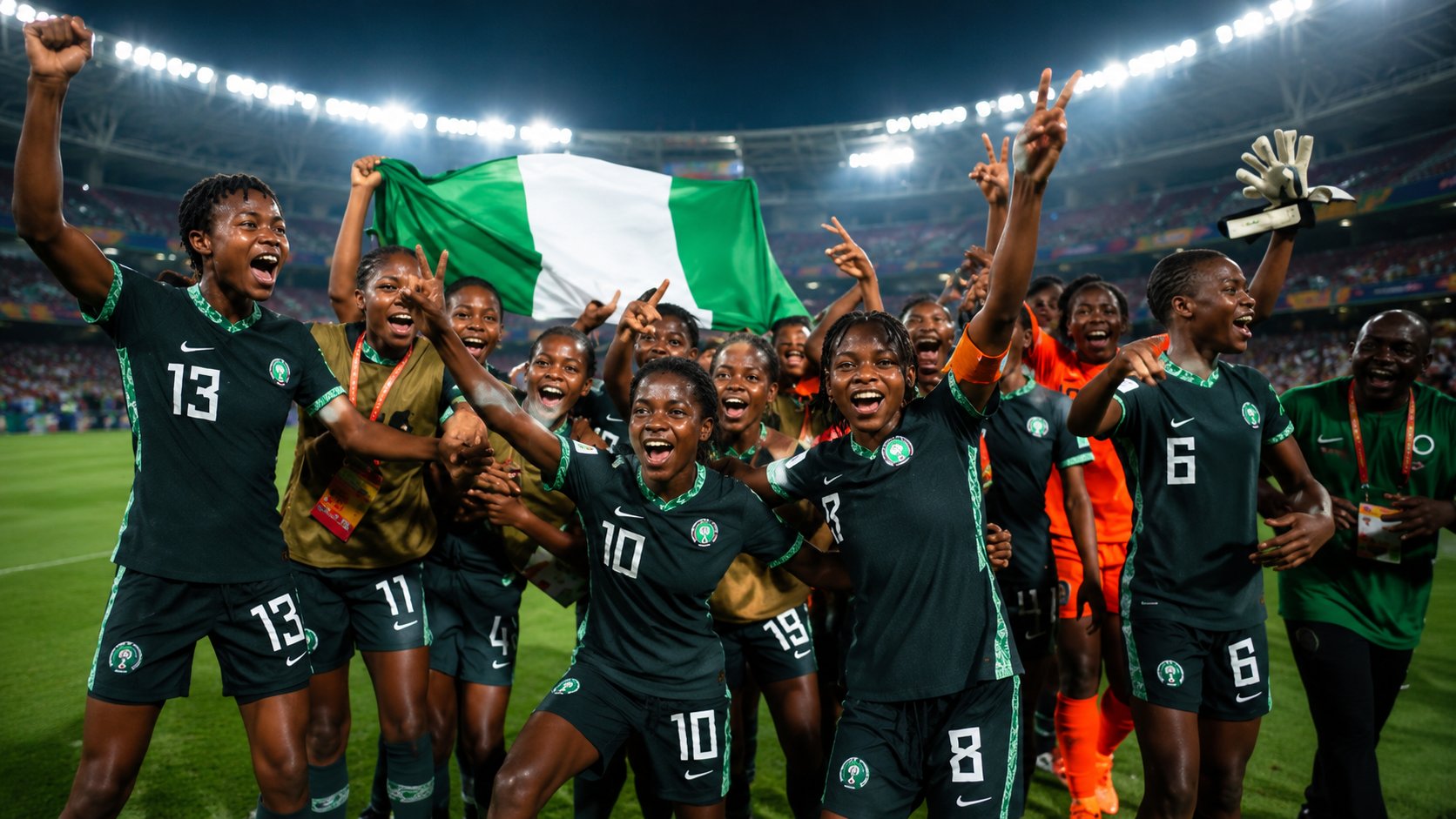
Nigeria U17 Women World Cup: Flamingos Seal Morocco 2026 Qualification with Dominant Campaign
Nigeria’s qualification for the 2026 FIFA U-17 Women’s World Cup is more than the story of a dramatic victory over Benin. It reflects the consistency, resilience and growing strength of the country’s youth women’s football programme, with the Flamingos once again proving they remain one of Africa’s leading forces ahead of the tournament in Morocco.
The Nigeria U17 Women World Cup qualification campaign has once again confirmed the Flamingos as one of Africa’s strongest youth football teams.
Nigeria’s U-17 women’s national team, the Flamingos, have secured their place at the2026 FIFA U-17 Women’s World Cupafter defeating Benin Republic 5-3 in the second leg of their final qualifying playoff, completing an impressive 8-5 aggregate victory.
The qualification means Nigeria will once again represent Africa at the global tournament, scheduled to take place in Morocco from October 17 to November 7, 2026. The expanded competition will feature 24 teams, with Africa represented by five nations, including host country Morocco.
While the scoreline against Benin captured attention, the bigger story is Nigeria’s commanding qualification campaign, one that showcased attacking quality, squad depth and a generation of young players eager to build on the Flamingos’ growing reputation on the world stage.
Nigeria U17 Women World Cup Qualification Marks Another Milestone
For Nigerian football supporters, qualification has become an expectation whenever the Flamingos begin a FIFA U-17 Women’s World Cup campaign. Yet every successful journey tells a different story.
This latest qualification underlines the remarkable consistency of the national youth programme, which continues to produce players capable of competing against Africa’s finest before challenging the world’s elite.
Unlike many qualification campaigns decided by narrow margins or defensive resilience, Nigeria’s route to Morocco was built largely on attacking football.
Across both qualifying rounds, the Flamingos consistently demonstrated confidence in possession, clinical finishing and the ability to respond under pressure.
Against Benin, those qualities were tested more severely than at any point during the campaign.
Holding only a narrow 3-2 advantage from the first leg, Nigeria entered the decisive fixture knowing another disciplined performance would be needed to avoid an upset.
Instead, the team produced another attacking masterclass that removed any lingering doubts about their qualification credentials.
Queen Joseph Emerges as the Face of Nigeria’s Victory
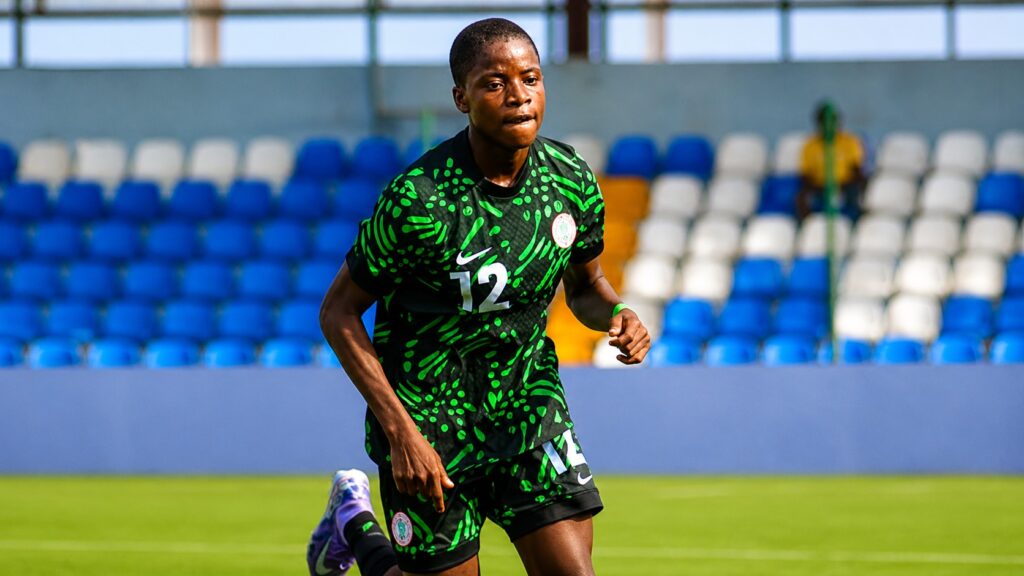
The Nigeria U17 Women World Cup journey has produced several standout performers, with Queen Joseph emerging as one of the competition’s biggest stars.
Every successful campaign produces standout performers.
For Nigeria, Queen Joseph delivered one of the defining individual performances of the qualifiers.
Her hat-trick against Benin transformed what could have become a nervy contest into another memorable victory for the Flamingos.
Joseph’s movement inside the penalty area, composure from the penalty spot and instinctive finishing repeatedly troubled Benin’s defence throughout the encounter.
Beyond the three goals, her performance reflected the confidence running through the entire Nigerian squad.
Rather than relying on a single attacking outlet, the Flamingos demonstrated multiple scoring options throughout qualification, making them one of Africa’s most dangerous youth teams.
The victory also highlighted contributions from Mary Akpan Dunstan and Esther Enne Stephen, whose early goals established the platform for Nigeria’s eventual success.
The variety of goalscorers throughout the qualifying campaign illustrates the team’s attacking balance—an important asset ahead of facing stronger opposition at the World Cup.
A Qualification Campaign Built on Consistency
Although the dramatic encounter against Benin will dominate headlines, Nigeria’s qualification was built long before the final playoff.
The Flamingos opened their campaign with complete authority against Guinea.
The two-legged contest ended in an emphatic 11-0 aggregate victory, underlining the significant gap in quality between both teams.
Nigeria first claimed a commanding away victory before producing another dominant display at home to complete one of the most convincing results in the African qualifiers.
Several players announced themselves during that round.
Harmony Chidi emerged among the campaign’s most prolific forwards, while Queen Joseph, Oluwakemi Adegbuyi, Mary Dunstan and Precious Oscar all contributed goals.
The attacking spread demonstrated the strength of Nigeria’s player development pipeline.
Rather than depending on one star player, the squad consistently shared goals and responsibilities.
That collective approach remained evident during both meetings with Benin.
The first leg, played in Ikenne, proved more competitive than many observers expected.
Benin twice fought back into the game, exposing areas Nigeria needed to improve before the return fixture.
Instead of allowing that contest to become a warning sign, the Flamingos used the experience to produce a more mature display in Togo.
The result was another high-scoring victory and a deserved qualification.
Benin Push Nigeria All the Way
While Nigeria deservedly advances to Morocco, Benin’s campaign deserves recognition.
The visitors demonstrated enormous determination across both legs and refused to allow the Flamingos an easy passage.
Much of that resistance came through striker Romaine Gandonou, whose performances established her as one of the breakout players of the African qualifiers.
Her goals against Nigeria once again highlighted her ability to exploit defensive spaces and convert opportunities under pressure.
Finishing the qualification campaign with an impressive scoring record, Gandonou showed why women’s youth football across West Africa continues to improve rapidly.
Benin ultimately fell short against one of the continent’s strongest youth teams, but their performances suggested a programme capable of becoming increasingly competitive in future qualification cycles.
For African women’s football, that growing competitiveness is an encouraging development.
As more countries invest in youth structures, qualification tournaments are becoming more demanding, raising overall standards across the continent.
Morocco 2026 Presents a New Opportunity
For the Nigeria U17 Women World Cup squad, qualification is only the beginning as attention turns to competing against the world’s best in Morocco.
Qualification alone will not satisfy the ambitions of Nigeria’s coaching staff or supporters.
Attention now shifts towards Morocco, where the Flamingos will attempt to build on recent FIFA U-17 Women’s World Cup performances.
Nigeria enters the tournament with growing international credibility.
The team’s historic bronze-medal finish in 2022 demonstrated that African teams can compete consistently against the traditional global powers in women’s youth football.
That achievement raised expectations heading into subsequent tournaments.
Although Nigeria exited at the quarter-final stage during the 2024 edition, the experience provided another valuable step in the development of many young players within the country’s football system.
The 2026 tournament now offers another opportunity to convert experience into an even stronger challenge for the title.
Unlike previous editions, the expanded 24-team format will create new tactical and competitive challenges.
Longer tournaments demand greater squad depth, physical conditioning and consistency across multiple matches.
Fortunately for Nigeria, the qualification campaign has already provided encouraging evidence that the Flamingos possess several of those qualities.
Their ability to score freely, recover from setbacks and maintain attacking intensity throughout the qualifiers suggests a squad capable of competing beyond the group stages.
With qualification now secured, preparations will gradually shift from simply reaching the World Cup to ensuring Nigeria arrives in Morocco capable of challenging the world’s strongest youth teams.
Building on a Proud World Cup Legacy
Nigeria’s qualification for Morocco 2026 also reflects a tradition of excellence that has made the Flamingos one of the most respected teams in African youth football.
Over the years, the country’s U-17 women’s programme has consistently produced technically gifted players who have progressed to higher levels of the game. The FIFA U-17 Women’s World Cup has become an important platform for exposing young Nigerian talents to international competition while preparing many of them for future careers with the Falconets and, ultimately, the Super Falcons.
The team’s historic third-place finish at the 2022 FIFA U-17 Women’s World Cup remains Nigeria’s best performance in the competition. That campaign demonstrated that African teams could compete toe-to-toe with traditional football powerhouses, earning admiration for the Flamingos’ fearless style and tactical discipline.
Although Nigeria’s journey ended in the quarter-finals of the 2024 edition, the experience reinforced the importance of maintaining a strong youth development pipeline. Every tournament provides valuable lessons for players and coaches, helping shape future squads capable of challenging for global honours.
Qualification for Morocco 2026 therefore represents far more than another tournament appearance. It is another opportunity to continue building Nigeria’s reputation as one of the world’s leading producers of women’s football talent.
What the Qualification Means for Nigerian Women’s Football
The Nigeria U17 Women World Cup success is another major boost for women’s football development across Nigeria and reinforces the country’s reputation in youth competitions.
The Flamingos’ latest achievement arrives at a time when women’s football is enjoying increasing recognition across Africa.
Growing television audiences, improved youth competitions and greater investment by football associations have contributed to the sport’s rapid development. Nigeria has remained one of the continent’s standard bearers, with consistent performances at youth and senior levels helping to inspire a new generation of female footballers.
Success at age-grade competitions also carries wider significance.
Every strong showing by the Flamingos encourages grassroots participation, increases visibility for women’s football and provides aspiring players with role models capable of demonstrating that international success is achievable.
For football administrators, qualification offers another opportunity to strengthen youth development programmes, coaching education and talent identification across Nigeria.
Maintaining success at international tournaments requires sustained investment rather than relying solely on natural talent. The emergence of players such as Queen Joseph, Harmony Chidi, Mary Akpan Dunstan, Esther Enne Stephen and several other promising youngsters reflects years of development that must continue if Nigeria hopes to remain among the world’s elite.
Africa’s Growing Influence on the Global Stage
The expanded 24-team FIFA U-17 Women’s World Cup also represents an important milestone for African football.
With Morocco qualifying automatically as hosts and four additional qualification places available, the continent will enjoy its largest-ever representation at the tournament.
This increased participation reflects FIFA’s broader commitment to expanding opportunities for women’s football while acknowledging the remarkable progress being made across Africa.
Nigeria’s challenging encounters against Benin also illustrate the narrowing competitive gap within African youth football.
While the Flamingos ultimately progressed comfortably over two legs, Benin’s attacking approach and the impressive performances of striker Romaine Gandonou demonstrated the improving quality emerging across West Africa.
Greater competitiveness benefits the continent as a whole.
Teams that qualify after overcoming increasingly difficult opponents often arrive at global tournaments better prepared for the tactical and physical demands of international football.
For Nigeria, facing determined opponents during qualification may ultimately prove beneficial when the competition begins in Morocco.
Preparation Now Becomes the Priority
With qualification secured, attention will naturally shift towards preparations for the World Cup itself.
Preparing the Nigeria U17 Women’s World Cup squad will now become the Nigerian Football Federation’s immediate priority before Morocco 2026.
The months leading up to Morocco 2026 are likely to include training camps, friendly matches and technical assessments aimed at refining the team’s tactical approach.
Coaches will seek to improve defensive organisation, attacking transitions and squad chemistry while ensuring players remain physically prepared for the demands of tournament football.
Preparation will be particularly important given the expanded format, which is expected to feature more matches and a deeper field of competitive teams from every football confederation.
Nigeria’s coaching staff will also be keen to maintain the attacking identity that characterised the qualification campaign while strengthening areas exposed during both matches against Benin.
Balancing defensive solidity with attacking freedom could determine how far the Flamingos progress once the tournament begins.
Supporters Already Looking Beyond Qualification
For many Nigerian football fans, qualification is only the first objective.
Attention has quickly shifted towards whether this talented generation can surpass previous achievements and compete for the country’s first FIFA U-17 Women’s World Cup title.
The optimism surrounding the current squad is understandable.
Throughout the qualifiers, the Flamingos combined attacking efficiency with resilience under pressure, responding positively whenever opponents threatened to regain momentum.
Those qualities often separate successful tournament teams from those that struggle during the knockout stages.
Supporters will also hope several emerging stars continue their rapid development before Morocco 2026.
Players who shine at youth tournaments frequently become future senior internationals, making the competition an important stepping stone within Nigeria’s football structure.
The performances of today’s Flamingos may well shape the future of the Super Falcons over the coming decade.
Nigeria Heads to Morocco with Renewed Confidence
The Nigeria U17 Women World Cup qualification campaign ultimately tells the story of a team that earned its place through consistent performances rather than a single memorable result.
From the commanding victories over Guinea to the entertaining playoff against Benin, Nigeria demonstrated why it remains one of Africa’s strongest youth football nations.
Queen Joseph’s hat-trick provided the headline moment in the decisive match, but the broader campaign showcased the collective quality that has become the hallmark of this young squad.
With Morocco preparing to host the expanded FIFA U-17 Women’s World Cup from 17 October to 7 November 2026, Nigeria now has several months to transform qualification success into genuine title ambition.
Expectations will undoubtedly be high, particularly after the bronze-medal finish in 2022 and the quarter-final appearance in 2024.
Whether the Flamingos can go one step further remains to be seen.
What is already certain, however, is that Nigeria will once again arrive on football’s biggest youth stage carrying the hopes of a nation and the confidence earned from another impressive qualifying campaign.
As preparations intensify, the focus will no longer be on reaching Morocco—it will be on how far the Flamingos can go once they get there.
If the Flamingos maintain this momentum, the Nigeria U17 Women World Cup campaign in Morocco could become the country’s greatest achievement at this level.
Recommended Coverage
FIFA U20 Women’s World Cup: Nigeria Faces Spain, China
Nigeria’s future stars continue to shine on the global stage. See how another national women’s team is preparing for a major FIFA tournament and what it means for Nigerian football.
AFCON 2027 Qualifiers: Nigeria’s Path to Glory Emerges
Discover how Nigeria’s football ambitions extend beyond youth competitions as the country’s national teams pursue continental and global success across multiple tournaments.
World Cup 2026 Semifinals: Elite Four Chase Glory
As the Flamingos prepare for Morocco 2026, explore how the world’s biggest football tournament is shaping the future of the beautiful game and inspiring the next generation of stars.
About the Author