Rivers Church Flood Sparks Calls for Action
Persistent rainfall has once again exposed the growing flood vulnerability of communities in Rivers State after a church auditorium in Eleme Local Government Area was completely inundated, forcing members of the congregation to abandon their sanctuary and hold Sunday worship outdoors. The incident, which follows recent flood warnings issued by the Nigerian Meteorological Agency (NiMet), has reignited concerns about inadequate drainage infrastructure, poor urban flood management and the increasing risks associated with Nigeria’s rainy season.
Although no injuries were reported, the disruption of worship at New Covenant Anglican Church, Ogale Parish, has become another visible reminder of how recurring floods are affecting not only homes and businesses but also public institutions and places of worship across vulnerable communities.
The development has prompted renewed appeals for urgent government intervention as emergency officials continue assessing the wider impact of flooding in parts of Rivers State.
Rivers Church Flood Disrupts Sunday Worship
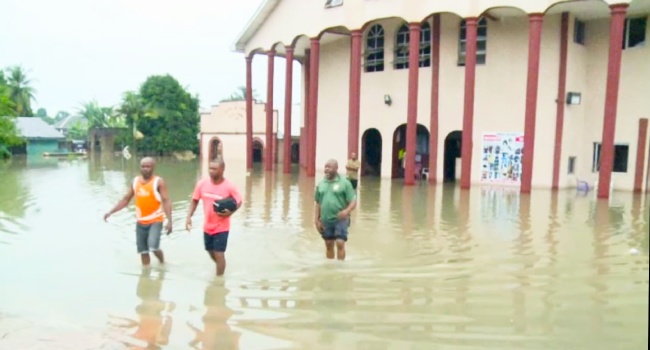
For members of New Covenant Anglican Church, Sunday service took an unexpected turn after floodwaters rendered their church auditorium unusable.
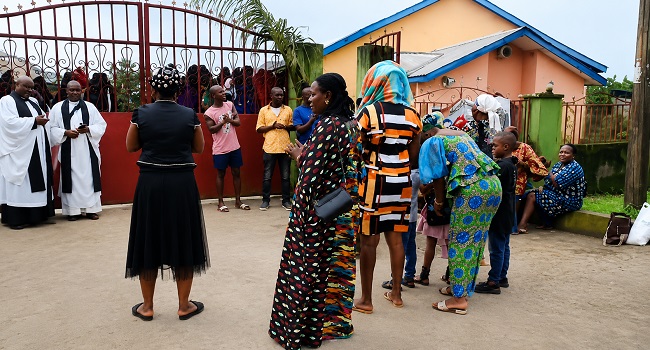
Instead of cancelling worship, the congregation gathered in an unflooded open area within the church premises where they continued their prayers and fellowship. Images and video from the scene showed worshippers standing closely together outdoors while the church building remained surrounded by floodwater.
The determination of the congregation to continue worship despite difficult conditions has drawn attention on social media, with many Nigerians praising their resilience while expressing concern over the state of infrastructure that allowed the flooding to occur.
Church leaders said the flooded auditorium could not safely accommodate worshippers because water had inundated the premises following days of persistent rainfall.
While the incident temporarily interrupted normal church activities, it also highlighted a broader challenge confronting many communities during Nigeria’s annual rainy season.
Heavy Rainfall Overwhelms Local Drainage Systems
Although heavy rainfall is common during this period of the year, residents say the extent of flooding reflects longstanding drainage deficiencies in parts of Rivers State.
When drainage channels become blocked by refuse, sediment or uncontrolled development, rainwater struggles to flow naturally into rivers and designated waterways. Instead, it accumulates around roads, residential buildings and public facilities.
The flooding at the church appears to illustrate this recurring pattern.
According to the available information, continuous downpours overwhelmed the surrounding drainage system, causing water levels to rise until the church auditorium became completely inaccessible.
Urban planners have frequently noted that rapid population growth, poor waste disposal practices and inadequate maintenance of drainage infrastructure combine to increase flood risks in many Nigerian cities during periods of intense rainfall.
Although Rivers State experiences significant rainfall every year because of its coastal location, experts have consistently argued that improved drainage maintenance can substantially reduce the impact of seasonal flooding in many communities.
Outdoor Worship Reflects Community Resilience
Despite losing access to their sanctuary, church members demonstrated remarkable determination by relocating their service outdoors rather than cancelling it entirely.
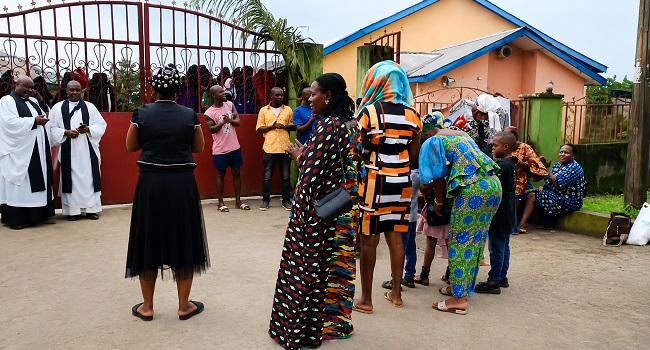
The gathering reflected both religious commitment and community solidarity as worshippers adapted quickly to difficult circumstances.
Across Nigeria, faith-based organisations often play an important role during emergencies by providing temporary support, emotional encouragement and assistance to affected families.
This latest incident therefore represents more than a disrupted church service. It demonstrates how communities frequently adjust to environmental challenges while waiting for long-term infrastructure solutions.
For many observers, the images of worshippers praying under the open sky symbolised resilience in the face of adversity rather than defeat.
However, community leaders insist resilience alone cannot replace proper infrastructure planning.
Residents argue that repeated flooding should no longer be accepted as an unavoidable seasonal occurrence when practical engineering solutions are available.
Church Members Appeal for Immediate Government Intervention
Following the flooding, church members appealed to the Rivers State Government, emergency management agencies and public-spirited individuals for urgent assistance.
According to those affected, the flooding has significantly disrupted church activities and created challenges for the congregation.
They are requesting immediate intervention to:
- Restore the flooded church building.
- Improve drainage around the community.
- Reduce future flood risks.
- Protect public facilities from similar incidents.
- Strengthen long-term flood-control measures.
Residents also urged authorities to prioritise regular drainage maintenance rather than waiting until heavy rainfall has already caused significant damage.
Many believe preventive action would be considerably less expensive than repeated emergency responses after flooding occurs.
NiMet Warning Adds Urgency to Rivers Church Flood Concerns
The flooding incident comes only days after the Nigerian Meteorological Agency (NiMet) identified Rivers State among locations expected to experience above-normal rainfall and possible flash flooding during the peak of Nigeria’s rainy season. The warning has strengthened concerns that communities already vulnerable to flooding could face additional risks if preventive measures are not implemented promptly.
NiMet routinely issues seasonal weather outlooks to help governments, emergency agencies, farmers, transport operators and residents prepare for periods of intense rainfall.
These advisories are designed to encourage proactive measures such as:
- Clearing blocked drainage channels.
- Monitoring flood-prone communities.
- Relocating vulnerable residents where necessary.
- Strengthening emergency response systems.
- Raising public awareness on flood safety.
The flooding at New Covenant Anglican Church has therefore become an example of why early warnings alone are not enough if infrastructure remains unable to cope with heavy rainfall.
Experts have repeatedly argued that weather forecasts achieve their greatest value when accompanied by timely action from government institutions, local authorities and communities.
NEMA Begins Assessments in Flood-Affected Communities
As concerns grow over the wider impact of flooding, the National Emergency Management Agency (NEMA), through its Port Harcourt Operations Office, has begun field assessments in affected communities, including areas around Oyigbo.
The assessments are expected to determine:
- The extent of flood damage.
- Communities requiring emergency assistance.
- Infrastructure affected by rising water.
- Immediate humanitarian needs.
- Areas facing continued flood risks.
Such evaluations typically provide authorities with the information needed to coordinate relief efforts and identify priority locations for intervention.
Although complete assessment reports were not immediately available, emergency officials are expected to continue monitoring rainfall patterns as the rainy season progresses.
Why Flooding Continues to Affect Rivers State
Rivers State experiences some of Nigeria’s highest annual rainfall because of its location within the country’s coastal and Niger Delta region.
While heavy rainfall itself cannot be prevented, experts say several human factors often worsen flooding, including:
- Poorly maintained drainage systems.
- Illegal structures obstructing waterways.
- Improper waste disposal that blocks drainage channels.
- Rapid urban expansion without adequate stormwater planning.
- Low-lying terrain vulnerable to water accumulation.
When these factors combine with prolonged rainfall, roads, homes, schools, markets and public buildings become increasingly susceptible to flooding.
Communities in Rivers State have experienced similar challenges during previous rainy seasons, prompting repeated calls for more sustainable flood-management strategies.
Urban development specialists have consistently emphasised that long-term investments in drainage infrastructure are more effective than relying solely on emergency relief after floods occur.
Flooding Carries Wider Economic and Social Costs
Although this incident primarily disrupted religious activities, flooding often produces far-reaching consequences that extend beyond damaged buildings.
Communities affected by recurring floods frequently experience:
- Temporary business closures.
- Transportation disruptions.
- Damage to public infrastructure.
- Increased health risks from contaminated water.
- Loss of educational and religious activities.
- Financial pressure on households and institutions.
For faith-based organisations, damage to church facilities may also interrupt community programmes, charity initiatives and educational activities conducted within church premises.
Residents argue that protecting public facilities—including churches, schools and healthcare centres—should form part of broader disaster preparedness planning.
As Nigeria’s urban centres continue to grow, infrastructure resilience is becoming an increasingly important public policy issue.
Residents Renew Calls for Sustainable Solutions
The latest flooding has renewed demands for lasting rather than temporary responses to seasonal flooding.
Community members say emergency interventions remain important, but preventing future incidents should receive equal attention.
Among the priorities frequently suggested by residents are:
- Comprehensive drainage rehabilitation.
- Routine desilting of waterways before the rainy season.
- Enforcement against illegal structures blocking drainage paths.
- Improved urban planning.
- Greater investment in flood-control infrastructure.
- Stronger collaboration between government agencies and local communities.
Many residents believe these measures would significantly reduce the frequency and severity of flooding that disrupts everyday life across vulnerable areas.
The incident involving New Covenant Anglican Church has therefore become part of a broader conversation about how Nigerian cities prepare for increasingly intense seasonal rainfall.
Flood Resilience Requires More Than Emergency Response
The flooding that forced members of New Covenant Anglican Church to worship outdoors is one of many reminders that Nigeria’s annual rainy season continues to test the resilience of communities, public infrastructure and emergency response systems. While the congregation’s decision to continue its service in an open space demonstrated remarkable determination, the incident also underscored the urgent need for long-term solutions that reduce the impact of seasonal flooding before lives and livelihoods are disrupted.
Across Nigeria, heavy rainfall has become an annual challenge for residents in low-lying and densely populated areas. Yet disaster management experts have consistently maintained that effective flood mitigation depends on preparation long before the first storms arrive.
Key preventive measures often include:
- Routine inspection and maintenance of drainage systems.
- Removal of waste blocking waterways.
- Enforcement of environmental sanitation regulations.
- Improved urban planning and building control.
- Investment in modern flood-control infrastructure.
- Public awareness campaigns on flood preparedness.
Such interventions not only reduce the risk of flooding but also help protect schools, hospitals, markets, roads, businesses and places of worship that serve as vital centres of community life.
A Broader Lesson for Public Infrastructure
Although the flooded church has become the most visible symbol of this incident, the underlying issue extends well beyond a single building.
Flood-related disruptions increasingly affect public services, transportation networks, commercial activities and educational institutions in several parts of Nigeria during periods of intense rainfall.
Infrastructure specialists have long argued that addressing these challenges requires coordinated action involving government agencies, local councils, community organisations and residents. Drainage projects, regular maintenance and stricter enforcement against activities that obstruct natural waterways remain central to reducing flood risks.
The incident in Eleme therefore serves as another practical example of how environmental challenges can quickly become social and economic concerns when preventive infrastructure falls short.
Community Spirit Shines Despite Adversity
While the images of worshippers gathering outdoors captured public attention, they also reflected the resilience that often defines communities during emergencies.
Rather than allowing the flooded conditions to halt their activities, members of the congregation adapted to the situation and completed their worship service in a safer, unflooded section of the church premises.
Their response has resonated with many Nigerians who viewed the incident as an example of perseverance in difficult circumstances.
However, community resilience should complement—not replace—effective public infrastructure and disaster preparedness.
Residents maintain that churches, schools and other public institutions should not have to depend solely on adaptability when practical engineering and environmental management solutions can significantly reduce flood risks.
Looking Ahead
With the rainy season still underway, authorities are expected to continue monitoring flood-prone communities across Rivers State and other vulnerable parts of Nigeria.
The ongoing assessments by the National Emergency Management Agency (NEMA), combined with NiMet’s seasonal weather outlook, are likely to guide future emergency planning and response efforts. At the same time, many residents hope that lessons from incidents such as the flooding of New Covenant Anglican Church will translate into tangible investments in drainage rehabilitation, flood-control infrastructure and environmental management.
For communities like Ogale in Eleme Local Government Area, the expectation is not merely for emergency assistance after floods occur, but for lasting solutions that prevent similar disruptions in the future.
Conclusion
The Rivers church flood is more than an isolated incident affecting one congregation. It highlights broader concerns about the vulnerability of public infrastructure to seasonal rainfall, the importance of acting on meteorological warnings and the urgent need for stronger flood-mitigation strategies.
As worshippers returned to prayer beneath the open sky, their determination offered a powerful image of resilience. Yet the incident also delivered a clear message to policymakers and community leaders alike: sustainable drainage systems, effective urban planning and proactive environmental management remain essential to protecting lives, livelihoods and public institutions during Nigeria’s increasingly challenging rainy seasons.
As reported byChannels Television, the flooding has already prompted appeals for urgent intervention from church members, while emergency officials continue to assess conditions in affected communities. Whether this latest incident becomes a catalyst for lasting infrastructure improvements may depend on how quickly those responsible translate warnings into action.
Recommended Coverage
Nigeria Security Crisis: Reps Push State Police, Forest Guards
Disasters demand more than emergency relief—they require effective coordination and community protection. Discover how lawmakers are proposing stronger local security structures to improve emergency response and public safety nationwide.
Owerri West Growth Fuels Calls for Good Leadership
Flooding often exposes the consequences of poor infrastructure planning. Explore why effective leadership and sustainable urban development remain essential for building safer and more resilient communities.
Free Public Library Brings New Hope to Irete Students
Communities thrive through investments that strengthen public institutions. See how one grassroots initiative is creating lasting opportunities and inspiring local development beyond times of crisis.
About the Author